
Views: 215 Author: CORTECH Publish Time: 2026-10-28 Origin: Site


Content Menu
● China's Geological Core Drilling Industry: Why Buyers Source Here
>> A concentrated manufacturing ecosystem
>> What the latest exploration data means for equipment buyers
● Selection Criteria: How to Evaluate a Geological Core Drill Manufacturer
● Top 10 Geological Core Drill Manufacturers in China
>> 1. CORTECH Drilling Equipment Co., Ltd.
>> 2. Jiangsu Sinocoredrill Exploration Equipment Co., Ltd.
>> 3. H.H. Drill-Tech Drilling Machinery Co., Ltd.
>> 4. Wuxi Jinfan Drilling Equipment Co., Ltd.
>> 5. Zhengzhou Hanfa Prospecting Machinery Co., Ltd.
>> 6. Changsha Changtan Geological Equipment Co., Ltd.
>> 7. Jiangsu XITEC Environmental & Drilling Equipment Company Co., Ltd.
>> 8. Henan Rancheng Machinery Co., Ltd.
>> 9. Glorytek Industry (Beijing) Co., Ltd.
>> 10. CCTEG Xi'an Research Institute (Group) Co., Ltd.
● Manufacturer Comparison: Capacity, MOQ, and Certification Transparency
● Geological Core Drill Buyer's Guide: What to Specify Before Requesting Quotations
>> Define the drilling duty before selecting the machine
>> Specify materials by component, not by slogan
>> Evaluate complete-system performance
>> Understand CE, ISO, and environmental claims
● Common Procurement Traps—and How to Avoid Them
>> Material or component substitution after approval
>> Comparing incompatible depth claims
>> Confusing a broad catalog with direct manufacturing
>> Treating export data as proof of specialist market leadership
● An Overlooked Insider Check: Can the Rig Meet Its Ratings Simultaneously?
● Factory Verification, Pilot Orders, and Logistics
>> Use a staged qualification process
>> Agree on acceptance before paying the deposit
>> Plan shipment around the exact configuration
● Conclusion: Choose a Documented Engineering Partner
● FAQ
>> 1. How can I verify whether a manufacturer's ISO certificate is genuine and still valid?
>> 2. How can I compare two rigs both advertised as having a 1,000-meter drilling capacity?
>> 3. Should I accept an alternative hydraulic pump or engine if the supplier says it is equivalent?
>> 4. Who is responsible for compliance when a Chinese manufacturer builds a private-label rig?
>> 5. How should a buyer structure a performance guarantee when geology is unpredictable?
Choosing a Geological Core Drill manufacturer in China requires more than comparing drilling-depth ratings and equipment prices. For procurement managers, the real objective is to find a supplier that can deliver reliable drilling performance, consistent manufacturing quality, appropriate compliance documentation, and dependable support throughout the equipment's operating life.
China offers several distinct sourcing options: specialist hydraulic diamond drilling rig manufacturers, integrated rig-and-tool suppliers, established geological equipment businesses, and research-led mining equipment organizations. The companies below illustrate those different capabilities rather than representing interchangeable alternatives.
This guide starts with the practical questions that should determine supplier qualification:
- Can the factory demonstrate engineering ownership of the proposed rig?
- Are materials, purchased components, and inspection results traceable?
- Does the drilling specification match your actual rod size, geology, and operating conditions?
- Can the supplier demonstrate delivery capacity rather than simply quote a short lead time?
- Are customization, commissioning, and spare-parts responsibilities documented?
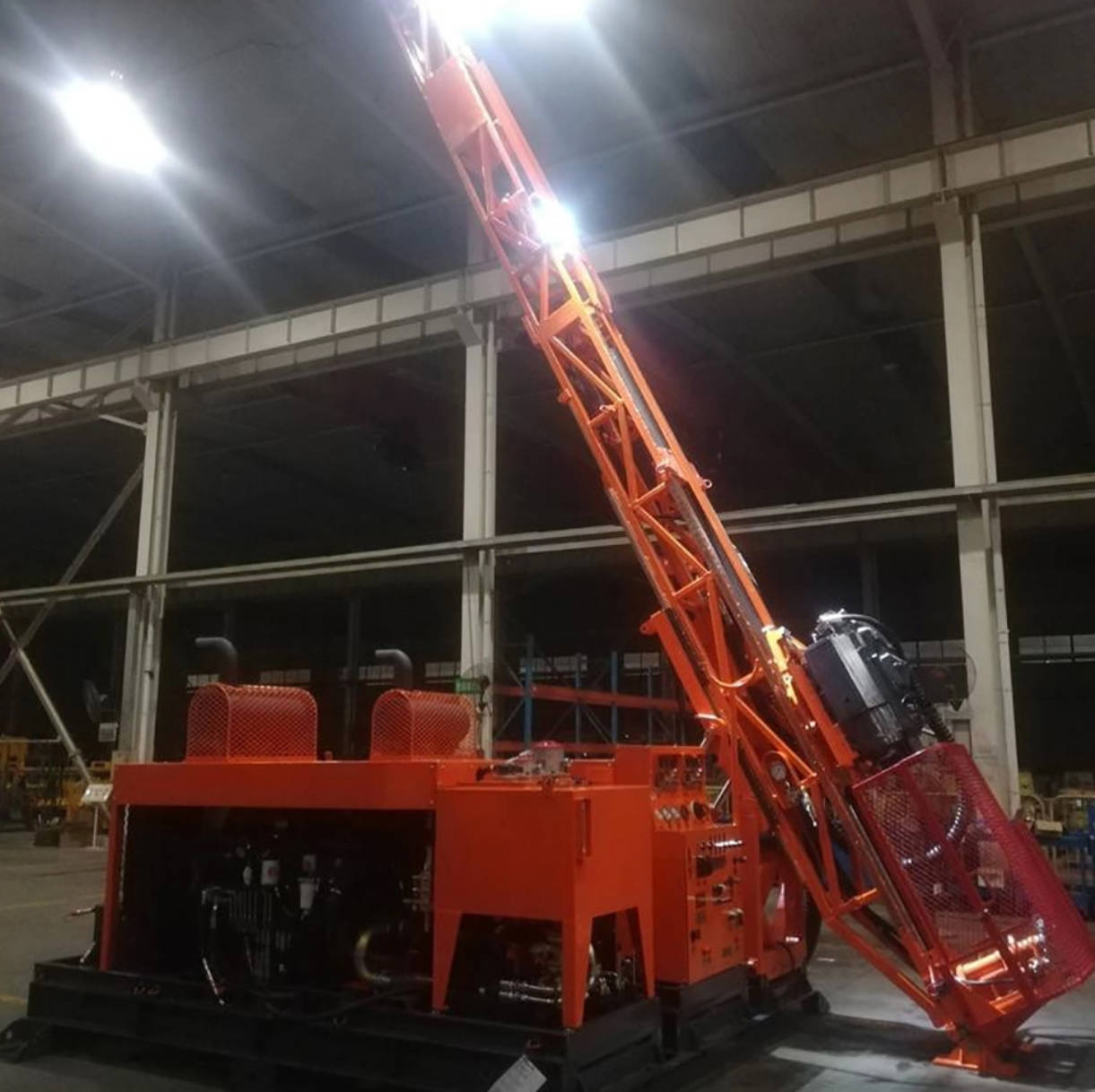
Jiangsu provides a useful starting point for geological drilling equipment sourcing. Sinocoredrill operates in Wuxi, Jinfan identifies its manufacturing location in Wuxi, XITEC lists a Wuxi address, and H.H. Drill-Tech operates in Lianyungang. Together, these businesses demonstrate a concentration of geological rigs, drilling tools, machining capabilities, and related engineering services within the province.
Henan offers another relevant sourcing base. Hanfa and Rancheng operate from Zhengzhou and offer drilling equipment across geological exploration and other applications. Changsha provides additional geological equipment sourcing options through Changtan.
For overseas buyers, this geographical concentration creates opportunities to combine factory visits and compare different manufacturing approaches. However, a supplier's location within an established cluster does not prove its production quality. Factory-specific evidence remains essential.
S&P Global's World Exploration Trends 2026 report places global nonferrous mineral exploration budgets at $12.40 billion in 2025, down approximately 0.6% year over year. Its October 27, 2026 update subsequently reported an expectation of $16.5 billion for 2026, supported by renewed gold and copper exploration spending. The 2026 number is an expectation, not a finalized year-end expenditure total.
These figures describe exploration budgets—not the market size of geological core drilling rigs or China's equipment exports. Nevertheless, they provide relevant purchasing context: changing exploration activity can affect demand for drilling fleets, replacement equipment, tooling, and field support.
Buyers should therefore request current production schedules and component availability rather than assume that historical lead times remain achievable.
The shortlist below uses publicly available evidence of product relevance, manufacturing identity, engineering capability, and customer support. No numerical supplier scores are assigned because comparable audited operating data is unavailable.
For an actual sourcing project, the following qualification framework is more useful than a simple popularity ranking.
| Evaluation area | Evidence to request | Procurement significance |
|---|---|---|
| Manufacturing identity | Business license, factory address, production walkthrough, subcontractor disclosure | Establishes who actually manufactures the contracted equipment |
| Engineering capability | Hydraulic schematics, approved drawings, design-change records, model-specific calculations | Shows whether customization is engineered or merely cosmetic |
| Quality control | Incoming inspection records, material traceability, assembly checks, final test reports | Makes quality claims auditable |
| Production capacity | Current work-in-progress schedule, bottleneck processes, recent delivery records | Tests whether the promised delivery date is credible |
| Compliance | Applicable declarations, technical documentation, certificate scope and validity | Reduces destination-market access risk |
| Service readiness | Spare-parts catalog, commissioning plan, escalation contacts, warranty procedure | Clarifies support after shipment |
| OEM/ODM capability | Written customization scope, drawing ownership, documentation responsibility | Prevents misunderstandings about private-label and design work |
The central principle is verification: a manufacturer's reputation can justify an initial conversation, but only project-specific evidence should justify an order.

CORTECH specializes in the research, development, and manufacture of all-hydraulic diamond drilling rigs. Its company profile reports that it has supplied more than 1,200 diamond core drilling rigs to over 55 countries. The same profile describes integrated OEM capabilities and a transition to a second generation of hydraulic drilling rigs. These are company-reported figures and statements, not independently audited findings.
- Establishment year: Not stated on the reviewed company-profile page; verify against the contracting entity's business license.
- Market coverage: International operations across more than 55 countries, according to CORTECH; regional revenue distribution is not disclosed.
- Core strength: Focused hydraulic diamond drilling expertise and integrated engineering/OEM capabilities.
- OEM/ODM scope: OEM capability is explicitly stated. Detailed ODM responsibilities, intellectual-property ownership, and model-specific customization require written agreement.
For smaller drilling brands and specialist distributors, CORTECH is worth evaluating as an engineering-led alternative to purchasing a fixed catalog configuration. Relevant discussion points include chassis selection, operating layout, climate adaptation, maintenance access, branding, and documentation.
Its value proposition should be assessed through specification flexibility and lifecycle cost—not an unsupported claim that it always offers the lowest price. Buyers should also test communication efficiency during qualification: request a consolidated technical response, a named engineering contact, and a revision-controlled proposal.
The reviewed profile identifies COREMASTER1800X, COREMASTER1300L, and COREMASTER500L models, with former CSD designations also shown. Buyers should ensure quotations, manuals, spare-parts lists, and compliance documents consistently identify the exact offered model and revision.
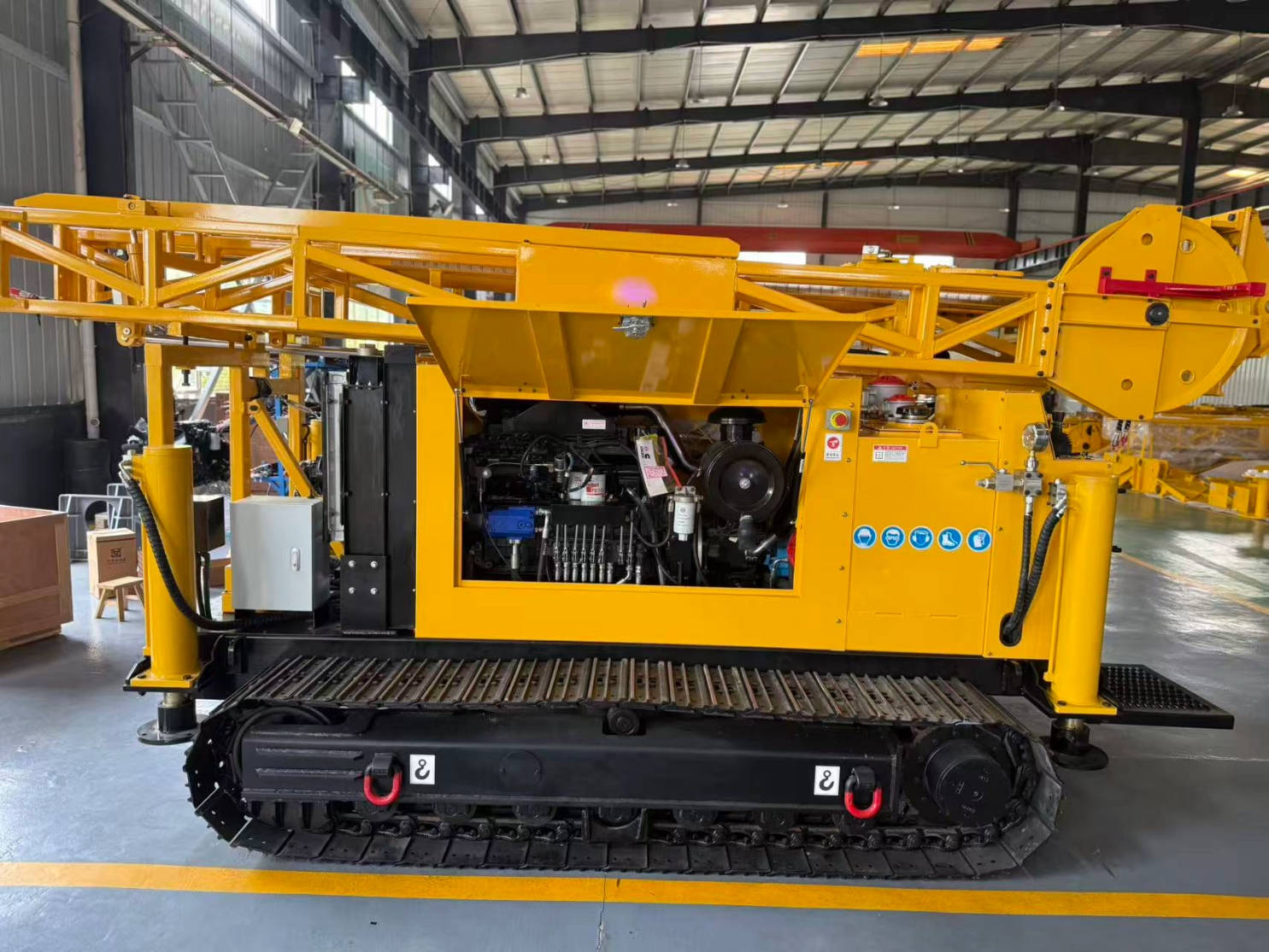
Sinocoredrill offers hydraulic surface core drilling rigs, portable core drilling equipment, underground core drilling rigs, and supporting drilling tools. Its website identifies 2006 as its establishment year and states that it has ISO 9001-related quality certification and CE documentation. These claims require certificate-level verification before procurement.
- Establishment year: 2006.
- Market coverage: International mineral exploration and drilling applications; the reviewed page does not quantify its principal regional markets.
- Core strength: Combined supply of drilling rigs and wireline drilling tools.
- OEM/ODM scope: Request written confirmation of private labeling, component substitutions, engineering changes, and design ownership; the reviewed page does not establish a complete ODM offering.
Sinocoredrill is relevant when buyers want to evaluate the rig, drill rods, core barrels, bits, and other supporting equipment as one procurement package. However, bundled sourcing should not replace dimensional and thread-compatibility checks.
H.H. Drill-Tech identifies 2015 as the establishment date of its current company, following the transfer of the assets, staff, liabilities, and professional business of the former Lianyungang Huanghai Machinery organization. Its predecessor history traces back to a state-owned exploration machinery factory established in 1970. These dates describe different stages of the business and should not be presented as interchangeable.
- Establishment year: 2015 for the current company; predecessor operations date to 1970.
- Market coverage: Domestic and overseas geological drilling applications; its website includes a hydraulic core drilling project in Mongolia.
- Core strength: Medium- and deep-hole wireline drilling equipment and broader geotechnical machinery.
- OEM/ODM scope: A manufacturer marketplace profile lists OEM and ODM capability; buyers should validate the actual engineering and commercial scope.
This manufacturer merits consideration for buyers seeking an established geological equipment engineering background. Do not count "Huanghai" and H.H. Drill-Tech as two independent suppliers without checking their corporate relationship.
Jinfan's manufacturer profile states that it was founded in 2003 and supplies anchoring rigs, marine geological exploration rigs, core drilling machines, reverse-circulation drilling equipment, and supporting tools. It reports business coverage in more than 30 countries and regions, including the United States, Germany, and Canada.
- Establishment year: 2003.
- Market coverage: More than 30 countries and regions, according to its profile; named markets are not a verified ranking of sales destinations.
- Core strength: Geological drilling combined with anchoring and marine investigation equipment.
- OEM/ODM scope: Configuration engineering and private-label rights require quotation-stage confirmation; the reviewed profile does not define a complete OEM/ODM contract scope.
Jinfan is relevant for buyers whose equipment requirements extend beyond conventional mineral exploration. Compare a dedicated wireline core drilling configuration with any proposed multipurpose machine rather than assuming that broader application coverage guarantees equal performance in every drilling method.
Hanfa states that its group was established in 1998 and serves customers in more than 100 countries. Its catalog covers core drilling, water-well drilling, engineering drilling, DTH drilling, and other equipment categories, including the HF-1000D hydraulic core drilling rig.
- Establishment year: 1998, according to the group profile.
- Market coverage: More than 100 countries; published project examples include Russia, the Philippines, and Mexico.
- Core strength: Broad drilling equipment coverage and export-oriented supply.
- OEM/ODM scope: A related Hanfa website advertises OEM/ODM drilling rigs. Confirm that the contracting entity will carry the agreed manufacturing, warranty, and engineering obligations.
Hanfa can be relevant to procurement teams sourcing several drilling equipment categories. The important qualification task is confirming which factory and engineering team will manufacture the specific geological core drill.
Changtan's company history states that its manufacturing background dates to 1958. Its product offering includes geological exploration and investigation equipment, drilling rigs, mud pumps, and drilling accessories, with dedicated listings for hydraulic core drilling rigs.
- Establishment year: The website states "founded in 1958"; buyers should confirm how that historical claim relates to the present legal entity.
- Market coverage: Worldwide customers are referenced, but regional market shares are not disclosed.
- Core strength: Geological investigation equipment and supporting drilling packages.
- OEM/ODM scope: Not established in the reviewed sources; request confirmation of branding, mounting, control, and documentation customization.
Changtan deserves consideration where buyers need rigs and auxiliary equipment together. Distinguish spindle-type equipment with hydraulic feed from fully hydraulic wireline diamond drilling systems before comparing quotations.
XITEC, also presented as XITAN Technology, describes itself as an engineering machinery manufacturer integrating research, design, production, sales, and service. Its website claims more than 60 years of drilling manufacturing history and lists core drilling and geological exploration equipment alongside environmental and foundation-related machinery.
- Establishment year: The current entity's incorporation date is not established in the reviewed material; "60+ years" is a company heritage claim.
- Market coverage: Domestic and export business; published shipment examples include Nepal.
- Core strength: Geological equipment combined with environmental investigation and multipurpose drilling.
- OEM/ODM scope: Project adaptation should be discussed directly; private-label and full ODM rights are not established by the reviewed pages.
XITEC is a relevant candidate for engineering-geology and investigation programs. For continuous mineral coring, require a model-specific operating demonstration rather than treating every geological drilling model as a dedicated wireline exploration rig.
Rancheng states that it was founded in 2010 in Zhengzhou and designs and manufactures drilling rigs, mud pumps, air compressors, and drilling tools. Its core drilling catalog includes portable rigs and fully hydraulic wireline models such as the RCJ800C and RCJ1600C.
- Establishment year: 2010.
- Market coverage: Export activity is evident, but the reviewed pages do not establish the largest regional markets.
- Core strength: Multiple core drilling formats and supporting equipment.
- OEM/ODM scope: Obtain a written customization matrix; comprehensive OEM/ODM terms are not established in the reviewed material.
Its catalog provides a useful reminder that depth ratings depend on tooling size. For example, the RCJ800C listing provides different drilling capacities for BTW, NTW, HTW, and PQ configurations. Those are catalog ratings, not universal field guarantees.
Glorytek describes itself as an integrated manufacturer and exporter of drilling equipment and drilling parts. Its website identifies core drilling rigs, customization availability, exports to more than 50 countries, and customer cases associated with the United Kingdom, Australia, and Nepal.
- Establishment year: Not disclosed on the reviewed homepage; "20+ years' experience" does not independently establish incorporation.
- Market coverage: More than 50 countries, according to the company.
- Core strength: Broad drilling equipment sourcing and export support.
- OEM/ODM scope: Customization is advertised, but full ODM responsibility and design ownership require confirmation.
Glorytek also lists ISO, CE, BV, and SGS-related credentials. These labels are not equivalent: buyers should determine whether each item refers to management-system certification, product conformity evidence, supplier inspection, or a test report. Verify the relevant manufacturing site as well as the sales entity.
CCTEG Xi'an states that it was founded in 1956. Its activities combine coal geology, exploration, drilling equipment, mine water-hazard management, directional drilling, and related engineering services.
- Establishment year: 1956, according to its institutional profile.
- Market coverage: Domestic and international markets; regional sales proportions are not disclosed.
- Core strength: Research-led mining geology, drilling systems, and integrated geological services.
- OEM/ODM scope: Personalized engineering services are described, but this should not be interpreted as a standard private-label manufacturing program.
This is a specialist inclusion rather than a direct substitute for every surface mineral-exploration rig supplier. It is particularly relevant to coal-mine geological assurance and specialized drilling projects. Buyers seeking a conventional surface diamond wireline rig should first confirm an exact model and application match.
The available sources do not provide comparable, audited annual rig production figures or model-specific minimum order quantities for these ten suppliers. Consequently, assigning numerical capacities or assuming "MOQ: one unit" would create false precision.
In the table, "request confirmation" means the information was not established in the reviewed sources—not that the manufacturer lacks the capability or documentation.
| Manufacturer | Main sourcing focus | Annual rig production capacity | Rig MOQ | Certification or compliance evidence reviewed |
|---|---|---|---|---|
| CORTECH | All-hydraulic diamond core rigs | Not disclosed; 1,200+ rigs supplied is cumulative, not annual capacity | Request confirmation | Obtain current model-specific compliance documents; profile text alone is insufficient. |
| Sinocoredrill | Rigs and wireline tooling | Not disclosed | Request confirmation | ISO 9001-related and CE claims published; verify scope and validity. |
| H.H. Drill-Tech | Geological and deep-hole drilling | Not disclosed | Request confirmation | Obtain certificates and declarations for the offered model. |
| Jinfan | Core, marine, anchoring, and RC drilling | Not disclosed | Request confirmation | Model-specific documentation requires confirmation. |
| Hanfa | Multiple drilling equipment categories | Not disclosed | Request confirmation | Confirm exact manufacturer and offered-model documentation. |
| Changtan | Geological investigation rigs and accessories | Not disclosed | Request confirmation | Current certificates require confirmation. |
| XITEC | Geological and environmental drilling | Not disclosed; heritage and installed-base claims are not annual output | Request confirmation | Technical-center and enterprise recognition do not replace product compliance. |
| Rancheng | Portable and hydraulic core rigs | Not disclosed | Request confirmation | Obtain offered-model documentation. |
| Glorytek | Drilling equipment and export packages | Not disclosed | Request confirmation | ISO/CE/BV/SGS labels published; clarify document type and scope. |
| CCTEG Xi'an | Specialized mining drilling and geological systems | Not disclosed | Project-specific confirmation | Determine application-specific requirements and model coverage. |
A useful capacity check asks for current assembly slots, hydraulic test-bench availability, critical purchased-component lead times, and actual delivery records. Factory floor area and employee numbers alone do not establish how many compliant rigs can be delivered on time.
The following recommendations are a proposed procurement framework, not evidence that every shortlisted supplier follows these practices.
Your request for quotation should specify:
1. Target drilling depth and the exact rod and core-barrel system.
2. Expected rock strength, abrasiveness, fracturing, and groundwater conditions.
3. Required drilling angles and site access restrictions.
4. Ambient temperature, altitude, and available utilities.
5. Required mobility: crawler, trailer, skid, truck-mounted, or modular.
6. Expected daily operating hours and local maintenance capability.
7. Destination-country safety, emissions, and documentation requirements.
A quotation stating only "1,000-meter Geological Core Drill" leaves too much undefined. Require the supplier to connect that depth claim to a tooling size, borehole orientation, drilling-fluid assumptions, and operating conditions.
Avoid accepting "high-quality alloy steel" as the complete material specification.
For critical components, request:
- Material designation and the applicable material standard.
- Heat-treatment condition and agreed mechanical properties.
- Inspection and traceability requirements.
- Welding procedures and inspection records for relevant structures.
- Thread dimensions, gauges, and acceptance criteria for supplied tooling.
- Approved hydraulic component models and substitution rules.
A grade such as 42CrMo should not be treated as universally appropriate for every shaft, rod, gear, or structural part. Require the manufacturer to justify the material and treatment against the component's actual duty.
Ask for torque-speed data rather than a single maximum torque figure. Likewise, distinguish feed force, pullback force, hoisting capacity, and continuous operating capability.
Include the mud pump, cooling system, filtration, rod handling, guarding, and maintenance access in the technical evaluation. A well-specified power unit does not by itself establish that the entire drilling system is suitable.
For EU procurement, the European Commission identifies Machinery Directive 2006/42/EC as the current machinery framework before the mandatory application of Regulation (EU) 2023/1230 on January 20, 2027. The relevant timing concerns placing machinery on the market, not simply the purchase-order date. This matters for equipment ordered in late 2026 for delivery in 2027.
Ask for the applicable declaration of conformity, machine identification, risk-assessment documentation, instructions, and supporting technical evidence. A CE logo or generic certificate image is not an adequate procurement file.
The EN 16228 series addresses drilling and foundation equipment safety through common and machine-specific parts. Ask a competent assessor to establish which parts and editions apply; citing an unrelated foundation-equipment standard does not establish conformity for a geological rig.
Do not request "CE/RoHS certified" as one undifferentiated requirement. Require the supplier or compliance adviser to identify which legislation applies to the complete rig and its electrical equipment, and to explain any exclusions. Likewise, ISO certification should be evaluated separately from product conformity and environmental performance.
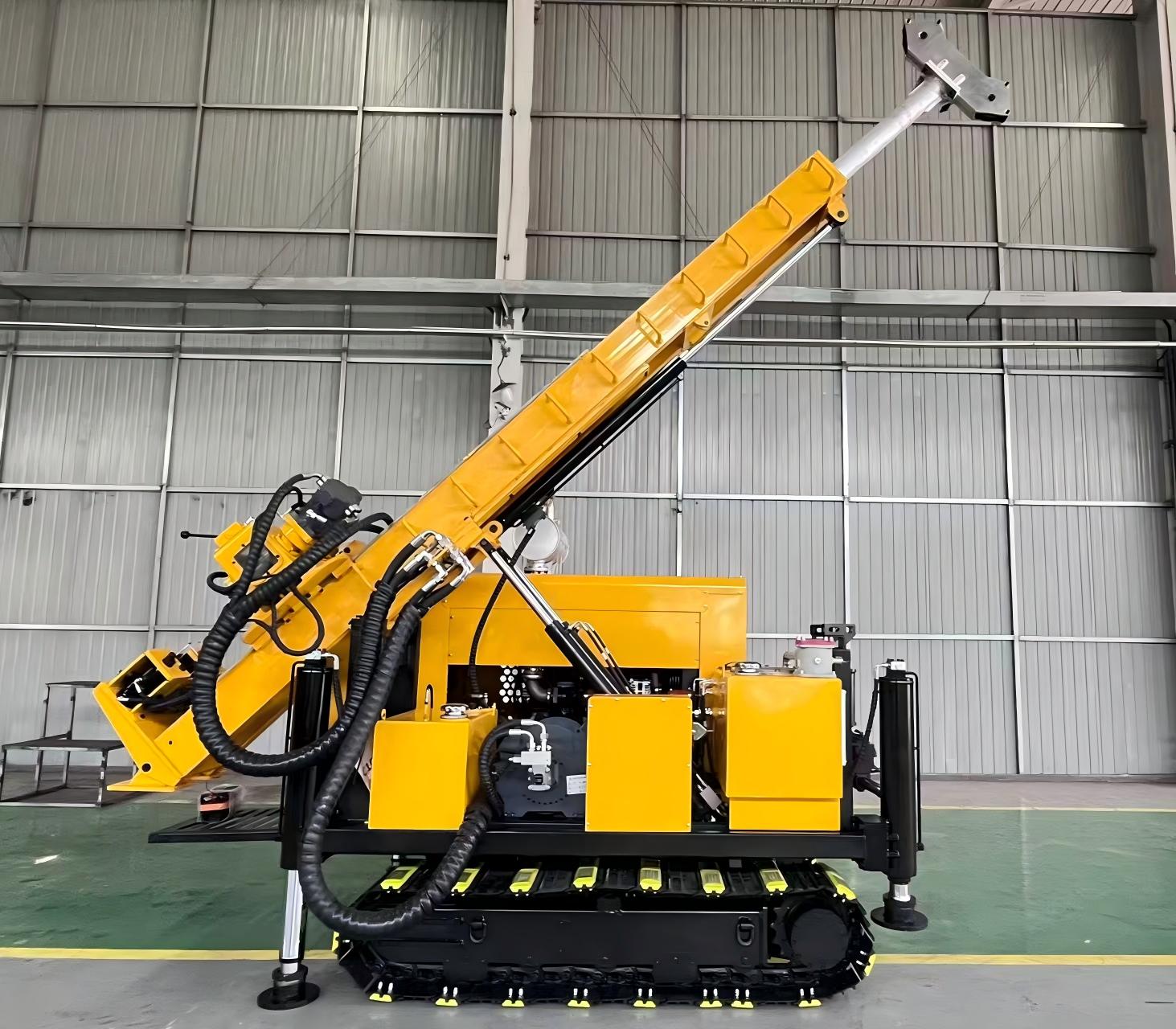
A demonstrated rig may differ from the shipped machine if component substitution is not controlled.
Prevention measures include an approved bill of materials, component model numbers, serial-number photographs, agreed material records, and a contract clause requiring approval before substitutions.
Two rigs advertised at the same depth may use different rod sizes or assumptions.
Require a common technical comparison sheet and reject quotations that leave the tooling system undefined. Rancheng's size-dependent catalog ratings illustrate why the diameter basis must remain visible.
Some equipment businesses combine manufacturing, subcontracting, and export services. That arrangement is not automatically unacceptable, but accountability must be clear.
Identify the factory, exporter, design owner, warranty provider, and spare-parts supplier before paying a deposit. Require the contract to allocate responsibility across those parties.
World Bank WITS provides international merchandise trade data, but category definitions must be examined before drawing conclusions. Broad boring machinery or drilling-tool categories should not be presented as a precise measure of hydraulic geological core rig exports. This guide therefore does not invent a China market-share figure from unrelated trade classifications.
A particularly useful procurement question is whether the machine can deliver the required torque, rotational speed, feed action, and auxiliary functions together under sustained operating conditions.
Separate maximum values on a brochure do not demonstrate simultaneous capability.
For preliminary engineering screening, rotary mechanical power can be estimated as:
P (kW)=T (N⋅m)×n (rpm)/9550
This calculation does not establish actual rig performance: hydraulic losses, pump allocation, engine derating, cooling, and auxiliary demand still require assessment.
Use it to frame a factory acceptance test:
1. Define representative operating points within the claimed continuous envelope.
2. Record speed and torque together.
3. Record hydraulic pressure, flow, and oil temperature.
4. Operate relevant auxiliary functions under an agreed safe procedure.
5. Verify cooling performance and protection functions.
6. Identify the tested machine's serial number and configuration.
7. Retain raw data and acceptance records.
The aim is not to force every maximum simultaneously. It is to prove that the required drilling duty is achievable without relying on unrelated peak ratings.
Begin with a remote document review, followed by a factory audit where the order value and project risk justify it.
Ask to inspect:
- Actual machining and assembly activities.
- Incoming component identification.
- Hydraulic testing arrangements.
- Nonconformance and corrective-action records.
- Calibration records for relevant measuring equipment.
- Spare-parts storage and documentation control.
For a capital drilling rig, a "sample" is usually better structured as a paid pilot unit, witnessed test, or reference-site demonstration—not a small representative sample.
The purchase agreement should define the configuration, test protocol, documentation package, shipment conditions, training, commissioning, and warranty process.
Separate factory acceptance from site acceptance. Factory testing can assess machine functions and agreed load conditions; site acceptance addresses installation and performance under the specified field conditions.
Avoid an unconditional meters-per-day guarantee without defining geology, tooling, crew, shift length, and other operating variables.
Before booking freight, confirm:
- Overall packed dimensions and weights.
- Center of gravity and engineered lifting points.
- Mast transport position and dismantling requirements.
- Securing, corrosion protection, and storage provisions.
- Treatment and marking requirements for wood packaging, where applicable.
- Customs classification and destination documentation.
- Treatment of batteries, fluids, and other regulated items.
- Incoterms responsibilities, insurance, and discharge arrangements.
Specify the first-service spare-parts package before dispatch. Filters, seals, sensors, and other selected parts should be identified by part number rather than described only as "standard accessories."
The most useful Geological Core Drill shortlist is not a list of companies that all claim to be the largest or cheapest. It distinguishes specialist hydraulic rig manufacturers from multipurpose equipment suppliers and research-led mining organizations.
CORTECH is a relevant first contact for buyers seeking all-hydraulic diamond drilling equipment and integrated OEM support. Its reported international installed base and stated engineering capabilities justify technical evaluation, while price competitiveness, response efficiency, customization depth, and current compliance still require project-specific verification.
Send CORTECH a structured project brief covering target depth, tooling size, geology, drilling angle, climate, destination market, and customization requirements. Request a configuration-specific proposal, supporting documentation, a spare-parts plan, and an agreed acceptance-test procedure. That creates a stronger basis for a long-term partnership than comparing headline prices alone.
Request the complete certificate, including its number, legal entity, site address, scope, issuer, issue date, and expiry date.
Check the certificate through the issuing certification body's official verification process and, where applicable, an accredited-certification database. Confirm current status rather than relying only on the printed expiry date.
Also check scope: certification covering trading or sales alone should not be presented as evidence that a particular factory's manufacturing processes are certified. If a database search returns no result, ask the issuer directly before concluding that the certificate is invalid.
Require both suppliers to use the same comparison basis:
- Rod and core-barrel dimensions.
- Hole angle and intended geology.
- Drill-string mass and pullback assumptions.
- Torque-speed operating range.
- Mud-pump duty.
- Ambient temperature and altitude.
- Continuous versus intermittent ratings.
Then request an explanation of the limiting conditions. A depth rating should be treated as a defined engineering claim, not an unconditional guarantee for every site.
Only after a documented technical review.
Ask for the alternative model's performance data, operating limits, service support, emissions suitability, interface compatibility, and effect on the rig's overall compliance documentation.
If accepted, update the approved bill of materials and repeat affected acceptance checks. The contract should prohibit unapproved substitutions, including changes to control components and software where relevant.
Do not assume that applying your brand leaves every legal obligation with the factory.
Before contracting, obtain destination-specific advice on the responsibilities of the manufacturer, brand owner, importer, and other relevant parties. Define who signs declarations, retains technical documentation, supplies instructions, manages design changes, and handles corrective action.
For EU deliveries spanning the January 20, 2027 transition, establish the applicable machinery regime with reference to when the product is placed on the market.
Separate machine capability guarantees from drilling-production targets.
Machine guarantees can address agreed operating parameters, function checks, protection systems, and factory acceptance results. Field-performance provisions should define the formation, tooling, crew competence, operating procedures, measurement method, and exclusions.
Where uncertainty is high, use a staged site trial with documented corrective-action procedures rather than relying on a single unconditional productivity number.
1. CORTECH — Company Profile. Source for hydraulic diamond drilling specialization, integrated OEM capability, reported cumulative deliveries, country coverage, and current product naming. [cortechdrilling]
2. Jiangsu Sinocoredrill — Company and Product Overview. Source for establishment year, rig categories, tooling integration, and published certification claims. [sinocoredrills]
3. H.H. Drill-Tech — Corporate History and Geological Drilling Equipment. Sources distinguish the current company’s 2015 establishment from predecessor operations dating to 1970. [hh-jx]
4. H.H. Drill-Tech — Manufacturer Marketplace Profile. Supporting source for the advertised OEM/ODM offering; contractual scope requires verification. [coredrillingrig.en.made-in-china]
5. Wuxi Jinfan — Manufacturer Company Profile. Source for the stated 2003 founding date, product categories, and reported international coverage. [jinfandrilling.en.made-in-china]
6. Hanfa — Official Group and Product Websites. Sources for group history, drilling categories, international coverage, and advertised OEM/ODM services. [hanfagroup]
7. Changsha Changtan — Company History and Hydraulic Core Drilling Catalog. Sources for the stated manufacturing history and product relevance. [geotechnicaldrillrig]
8. XITEC — Company Overview, Product Catalog, and Export News. Sources for manufacturing heritage claims, geological equipment, and shipment examples. [xitecdrilling]
9. Henan Rancheng — Company Overview and Core Drilling Catalog. Sources for the stated 2010 establishment and tooling-size-dependent drilling capacities. [ranchengmachine]
10. Glorytek — Official Company Website. Source for customization availability, reported export coverage, company facilities, and certification-related labels. [glorytekdrills]
11. CCTEG Xi’an — Institutional and Product Overview. Source for its stated 1956 founding date and specialized mining geology and drilling activities. [xianccteg]
12. S&P Global — World Exploration Trends 2026. Source for 2025 global nonferrous exploration budgets and year-over-year change. [spglobal]
13. S&P Global — Daily Update, October 27, 2026. Source for the reported expectation of $16.5 billion in 2026 nonferrous exploration budgets. [spglobal]
14. European Commission — Machinery Legislation. Official source for the current directive and transition to Regulation (EU) 2023/1230. [single-market-economy.ec.europa]
15. EUR-Lex — Machinery Safety Requirements. Official summary of the new machinery regulation and its application date. [eur-lex.europa]
16. BSI/ANSI — EN 16228 Series Preview. Supporting standards source for the distinction between common and machine-specific drilling equipment safety requirements. [webstore.ansi]
17. World Bank — World Integrated Trade Solution. Official international merchandise trade-data resource; classification-specific analysis is necessary before making export-market claims. [wits.worldbank]


