
Views: 213 Author: CORTECH Publish Time: 2026-10-26 Origin: Site


Content Menu
● Underground Core Drill vs. Surface Core Drill: Key Differences
● What Makes a Mining Area "Narrow"?
>> Underground Restrictions Extend Beyond Tunnel Width
>> Surface Restrictions Require a Different Assessment
● Underground Core Drills for Confined Mine Workings
>> Limitations Underground Buyers Should Recognize
● Surface Core Drills for Restricted Surface Sites
>> A Practical Choice When Surface Access Already Exists
● Drilling Performance: Compare More Than Maximum Depth
>> Hole Direction Changes Capacity
>> Core Quality Depends on the Complete System
● Practical Insight 1: Validate the Entire Working Envelope
● Practical Insight 2: Compare Cost per Accepted Geological Result
● Practical Insight 3: Compare Collar Locations Before Comparing Machines
● Safety, Maintenance, and Environmental Considerations
>> Underground Core Drill Priorities
>> Surface Core Drill Priorities
● How to Choose the Right CORTECH Configuration
>> 1. Which core drill is better for narrow mining areas?
>> 2. Can an underground core drill operate on the surface?
>> 3. Does a smaller rig always need a smaller working area?
>> 4. Can surface and underground rigs both use wireline coring?
>> 5. Is underground core drilling always cheaper?
>> 6. What should buyers verify before ordering?
Choosing an underground core drill vs. surface core drill for narrow mining areas starts with one question: where can you safely position the rig to obtain the geological information you need? An underground core drill generally suits restricted mine workings and multidirectional drilling from existing tunnels. A surface core drill generally suits exploration from ground level, including compact sites where access, stability, and mast clearance are adequate.
However, "narrow" does not automatically mean "underground." A restricted surface bench and a low underground chamber present different engineering problems.
From a drilling-equipment selection perspective, the priority should be operating clearance, not simply machine width. The right fully hydraulic wireline diamond core drilling rig must accommodate the complete drilling cycle—not merely fit through the entrance.

Both equipment categories recover cylindrical rock samples for geological evaluation. Their main differences concern installation, hole orientation, mobility, and the infrastructure surrounding the drilling operation.
| Selection factor | Underground core drill | Surface core drill |
|---|---|---|
| Typical location | Mine tunnels, exploration chambers, existing workings | Surface pads, benches, remote exploration sites |
| Main spatial constraint | Tunnel cross-section and working clearance | Pad dimensions, access route, overhead clearance |
| Hole orientation | Model-dependent upward, horizontal, and downward drilling | Commonly downward vertical or inclined drilling |
| Equipment arrangement | Often separate drilling unit, power pack, and console | Often integrated crawler, skid, or modular configuration |
| Access challenge | Tunnel bends, gradients, lifting limits, mine traffic | Roads, terrain, bridges, transport and unloading |
| Supporting infrastructure | Mine power, ventilation, drainage, ground support | Site access, water supply, power or fuel, fluid containment |
| Strongest application | Drilling targets accessible from underground workings | Exploring deposits accessible from surface collars |
These are category-level tendencies, not universal specifications. A compact underground machine may also perform surface work, while a small surface rig still requires a properly designed working area.
A narrow underground drilling location may restrict:
- Mast positioning and feed travel.
- Rod loading, breakout, and storage.
- Operator movement and emergency escape.
- Power-pack placement and maintenance access.
- Water hoses, electrical cables, and return-fluid routing.
- Transport through corners and changes in elevation.
A machine that passes through a tunnel may still be unsuitable for drilling inside it. Transport dimensions describe movement; operating dimensions describe whether the crew can actually work.
For a surface core drill, limited space may mean a narrow mountain bench, small exploration pad, or constrained access corridor.
The assessment must include mast erection, ground-bearing capacity, edge stability, support equipment, and rod-handling space. Compact transport dimensions alone do not establish that a site is suitable.
My recommended starting point is a scaled layout showing the complete drilling installation, rather than a comparison of machine footprints.
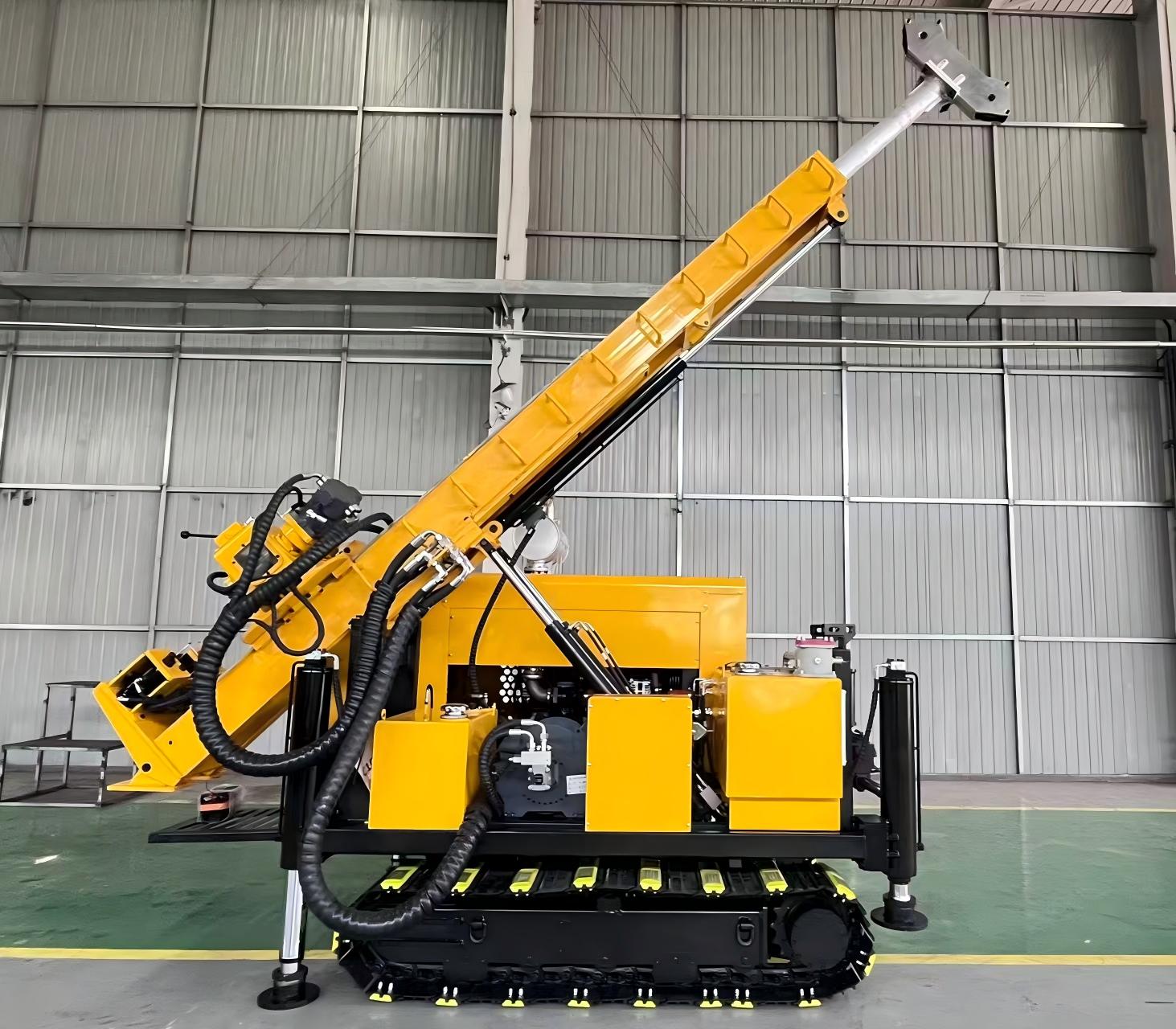
An underground diamond core drilling rig can investigate targets from existing mine levels. Depending on the machine and tooling, drilling may proceed downward, horizontally, or upward.
This flexibility supports fan drilling, where several holes originate from one chamber to investigate different parts of an orebody.
CORTECH's CKD600G, for example, is described as a fully hydraulic underground wireline coring rig suitable for boreholes at different inclinations in mine tunnels. Its published application scope also includes surface drilling and geological exploration.
The distinction is important: equipment categories describe intended applications, but suitability still depends on the actual installation.
Separating the drilling unit, hydraulic power unit, and control console can help arrange equipment around underground constraints.
However, modular does not necessarily mean lightweight or manually portable. Each component must be checked against the mine's lifting capacity, transport envelope, and installation procedure.
Longer connecting hoses and cables also require careful routing. Improving access in one area should not create obstructions elsewhere.
An underground core drill cannot compensate for an unsuitable chamber.
Ground support, anchoring, ventilation, electrical protection, drainage, and emergency access remain essential design considerations. The mine must also confirm that drilling activities can coexist with nearby production and transport.
If an exploration chamber must be excavated specifically for the program, include that development work in the comparison with surface drilling.
A surface core drilling rig can investigate a deposit without first establishing underground access.
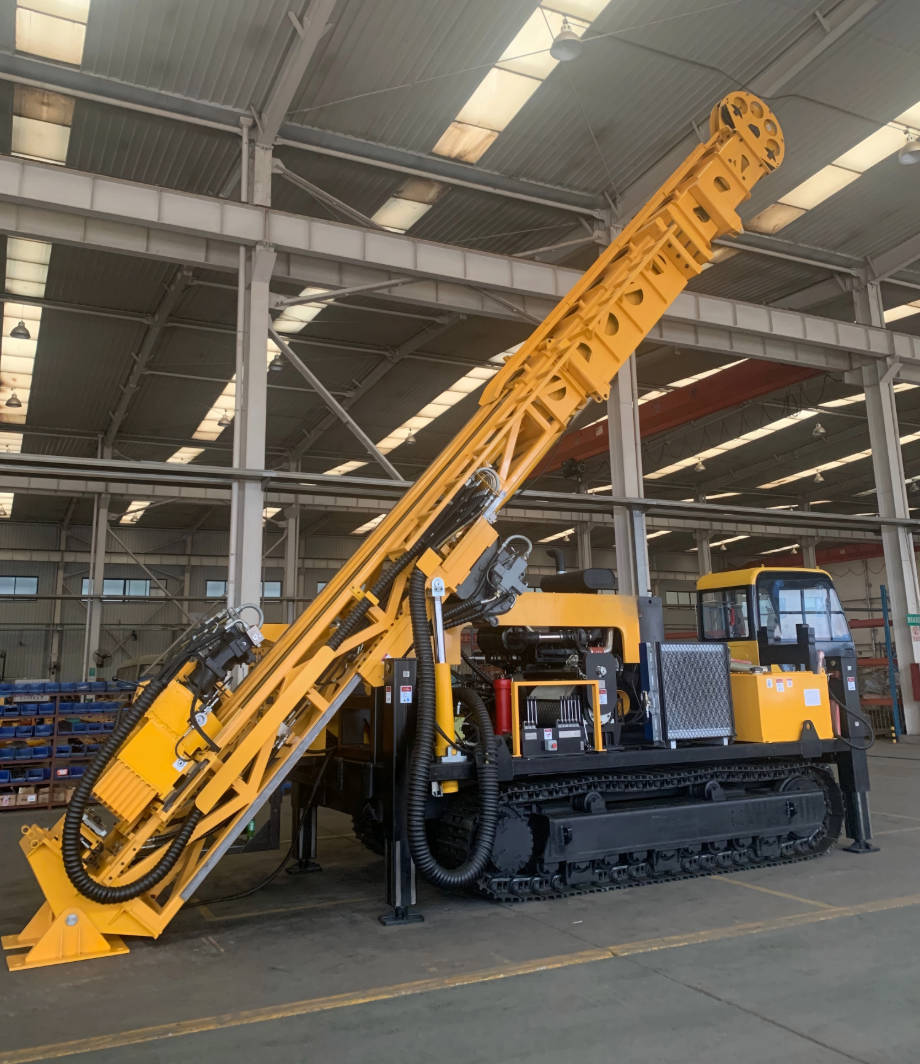
Where a suitable collar location and stable pad exist, this can make surface drilling the more practical starting point. CORTECH's CSD500L, for example, is specifically intended for surface coring of solid mineral deposits and supports diamond wireline coring.
Nevertheless, a surface location is not automatically easier. Access construction, water delivery, weather exposure, and fluid management can dominate the installation plan.
Crawler-mounted surface rigs can simplify relocation between accessible pads. Skid-mounted and modular arrangements may suit other transport conditions.
The best configuration depends on the route and drilling program, not mobility labels alone.
Ask suppliers to distinguish:
1. Transport configuration.
2. Mast-raising requirements.
3. Drilling configuration.
4. Rod-handling envelope.
5. Maintenance and component-removal space.
This prevents a common purchasing mistake: selecting a machine that can reach the pad but cannot operate efficiently once installed.
A single headline depth is insufficient when comparing an underground core drill with a surface core drill.
CORTECH's published CKD600G reference capacities illustrate the issue:
| Published rod designation | Downward depth | Horizontal depth | Upward depth |
|---|---|---|---|
| A, 45 mm | 1,000 m | 650 m | 750 m |
| B, 55.5 mm | 750 m | 470 m | 650 m |
| N, 71 mm | 600 m | 370 m | 370 m |
| H, 89 mm | 350 m | 210 m | 210 m |
These are manufacturer reference figures, not guaranteed project results. They should not be transferred to other models or interpreted as core diameters.
Actual capability depends on the rod system, borehole conditions, inclination, tooling, and operating requirements. Industry underground-coring service tables likewise distinguish upward, downward, and horizontal capacities.
Neither equipment category inherently guarantees better samples.
Core recovery and sample integrity depend on formation conditions, bit selection, barrel configuration, flushing, drilling parameters, and operator execution.
For fractured or weak ground, discuss sampling requirements before finalizing the rig. The geological objective may justify different tooling, shorter runs, or other operating adjustments.
A fast hole that produces inadequate samples is not a successful exploration result.
A useful confined-space assessment follows five steps.
1. Map the route. Record minimum openings, corners, gradients, overhead services, and lifting restrictions.
2. Draw the operating layout. Include the mast, power pack, console, pump, rods, core handling, and fluid system.
3. Check every movement. Review mast positioning, rod loading, breakout, maintenance, and component removal.
4. Preserve protected access. Keep escape routes and required access clear throughout the drilling cycle.
5. Obtain technical approval. Have the supplier and responsible mine personnel review the proposed arrangement.
For context, the CKD600G's published main-unit transport dimensions are 3,700 × 1,790 × 2,160 mm. Its separate power unit measures 2,980 × 1,210 × 1,560 mm.
Those figures demonstrate why "rig size" should not mean the main drilling unit alone. Neither set of dimensions establishes the minimum safe chamber size.
Purchase price and drilling rate provide only part of the economic picture.
A more useful project comparison considers:
- Mobilization and installation.
- Surface pad construction or underground chamber development.
- Energy, water, consumables, and labor.
- Rod handling, maintenance, and relocation.
- Surveying, sample handling, and repeat drilling.
- Rehabilitation and demobilization.
An original decision-support metric is:
Project drilling cost ÷ meters accepted for geological interpretation.
The definition of "accepted" should be agreed with the geological team. It may include recovery, sample integrity, survey quality, and successful intersection of the intended target.
This is an evaluation framework, not an established industry benchmark. Its value is that it connects equipment selection to useful information rather than raw drilled meters.
Consider a hypothetical narrow-vein investigation.
One option uses an existing underground chamber close to the target. Another uses a surface pad farther away.
The underground option may require less drilling to reach the mineralized zone. However, limited chamber availability, mine traffic, and service installation could offset that advantage.
The surface option may require a longer hole but provide simpler equipment access and fewer production conflicts.
Before choosing, compare:
- Distance and drilling direction to the target.
- Expected intersection geometry.
- Geological information collected along the full hole.
- Installation readiness.
- Survey and deviation-management requirements.
- Total schedule and cost.
This scenario is illustrative, not a documented CORTECH project. It shows why the shortest hole and the smallest machine are not automatically the best combination.
Underground planning should address rotating equipment, rod handling, hydraulic energy, ground conditions, ventilation, and water management.
Electric drive avoids local diesel-engine exhaust from the drilling power unit, but it does not eliminate ventilation requirements. Heat and other underground contaminants still require assessment.
Upward drilling also requires suitable tooling and procedures for controlling rods, core retrieval, and returning water.
Surface planning should address pad stability, overhead hazards, weather, access gradients, rotating equipment, and fluid containment.
For both categories, request clear information on guarding, emergency stops, isolation procedures, maintenance access, and available handling systems.
Hands-free or mechanized rod handling can reduce exposure to certain handling tasks. It does not replace training, maintenance, or a site-specific risk assessment.

Choose an underground core drill when existing mine access, suitable chamber geometry, and the required hole orientations favor underground installation.
Choose a surface core drill when suitable surface collars can deliver the required geological coverage and the site can accommodate the complete drilling system.
Before requesting a quotation, prepare:
- Target depth and hole inclination.
- Required core size and rod system.
- Formation conditions and expected groundwater.
- Access-route and operating-area drawings.
- Available electrical supply, water, and lifting equipment.
- Required mounting arrangement and handling options.
Contact CORTECH with this information and request a configuration review covering both CORE U/G DRILL and CORE SURFACE DRILL options. Ask for model-specific capacity tables, transport drawings, operating layouts, and the proposed tooling package before making a purchasing decision.
An underground core drill generally suits confined mine workings. A compact surface core drill may better suit a restricted surface pad. Choose according to collar location, operating clearance, target geometry, and supporting infrastructure.
Some can. CORTECH lists surface drilling among the CKD600G's applications. Confirm the proposed mounting, power supply, hole orientation, and operating arrangement for the specific project.
No. Separate power packs, pumps, rods, operator access, and maintenance space can substantially increase the complete installation footprint.
Yes, appropriately configured rigs in both categories can use wireline coring. Confirm compatibility among the rig, rods, core barrel, retrieval equipment, and intended drilling direction.
No. Existing access and shorter target distances may help, but chamber development, service installation, transport restrictions, and production interference can increase costs.
Verify direction-specific depth capability, tooling compatibility, transport dimensions, operating clearance, utilities, handling arrangements, maintenance access, and the supplier's proposed configuration.
1. CORTECH. ["CKD600G."] Primary manufacturer source for intended applications, direction-specific reference capacities, electric motor configuration, modular-unit dimensions, and technical parameters. Published capacities are reference values rather than site-specific guarantees. [en.cortech]
2. CORTECH. ["CSD500L."] Manufacturer description identifying the model's surface mineral-coring application and suitability for diamond wireline coring. [en.cortech]
3. Boart Longyear. ["Underground Coring."] Industry source covering modular underground installations, direction-specific drilling capabilities, core-quality objectives, directional services, and hands-free rod handling. Its equipment figures are not CORTECH specifications. [boartlongyear]
4. Boart Longyear. ["Exploration: Underground."] Technical product overview supporting the discussion of underground diamond coring, wireline systems, and interchangeable modular equipment arrangements. [boartlongyear]
5. Boart Longyear. ["Environmental, Health and Safety."] Industry source for hazard identification, risk assessment, engineering controls, and drilling safety management. It does not replace local regulations or a mine-specific safety review. [boartlongyear]


