
Views: 218 Author: CORTECH Publish Time: 2026-11-01 Origin: Site


Content Menu
● Underground Core Drilling Rig vs. Surface Rig: Quick Comparison
● What Are Fan Drilling and Angle Drilling?
>> Fan Drilling: Multiple Holes From One Station
>> Angle Drilling: One Inclined Hole or an Entire Program
● Why Underground Core Drilling Rigs Suit Complex Fans
>> Feed-Frame Positioning Matters More Than the Label
>> Compact Equipment Still Needs Operating Space
● Where a Surface Core Drilling Rig Has the Advantage
>> Surface Access Can Simplify the Exploration Program
>> Surface Rigs Can Perform Fan Drilling Within Limits
● Technical Comparison: What Determines Drilling Performance?
>> Feed Force, Pullback, and Hole Direction
>> Rotation and Flushing Must Match the Tooling
>> Wireline Retrieval Requires Direction-Specific Planning
● An Overlooked Comparison: Cost per Accepted Target Intersection
● A Practical Workflow for Selecting the Right Rig
>> 1. Build the Complete Hole Schedule
>> 2. Check the Full Working Envelope
>> 3. Verify Capacity by Direction
>> 4. Review Every Non-Drilling Activity
>> 5. Agree on an Acceptance Checklist
● Safety and Core Quality Must Be Compared Together
>> Rod Handling Deserves Specific Attention
● Match Your Drilling Plan With CORTECH
>> 1. Can a surface rig drill a fan of holes?
>> 2. Can an underground core drilling rig operate on the surface?
>> 3. Does 180-degree movement mean full directional coverage?
>> 4. Is maximum drilling depth the same for every angle?
>> 5. Which rig provides better core recovery?
>> 6. What information should I provide when requesting a quotation?
An underground core drilling rig is generally the stronger choice for multi-angle fan drilling from confined mine workings. A surface rig usually makes more sense when targets are accessible from surface pads and the program primarily requires downward inclined holes. However, choosing between an underground core drilling rig and a surface rig requires more than comparing their maximum drilling depths.
The real decision involves hole geometry, working clearance, rod handling, core recovery, and total program cost.
At CORTECH, our focus is the development, manufacture, and sale of fully hydraulic wireline diamond core drilling equipment for surface and underground applications. Our selection principle is straightforward: start with the required hole paths, then identify the rig configuration that can execute them safely and efficiently.
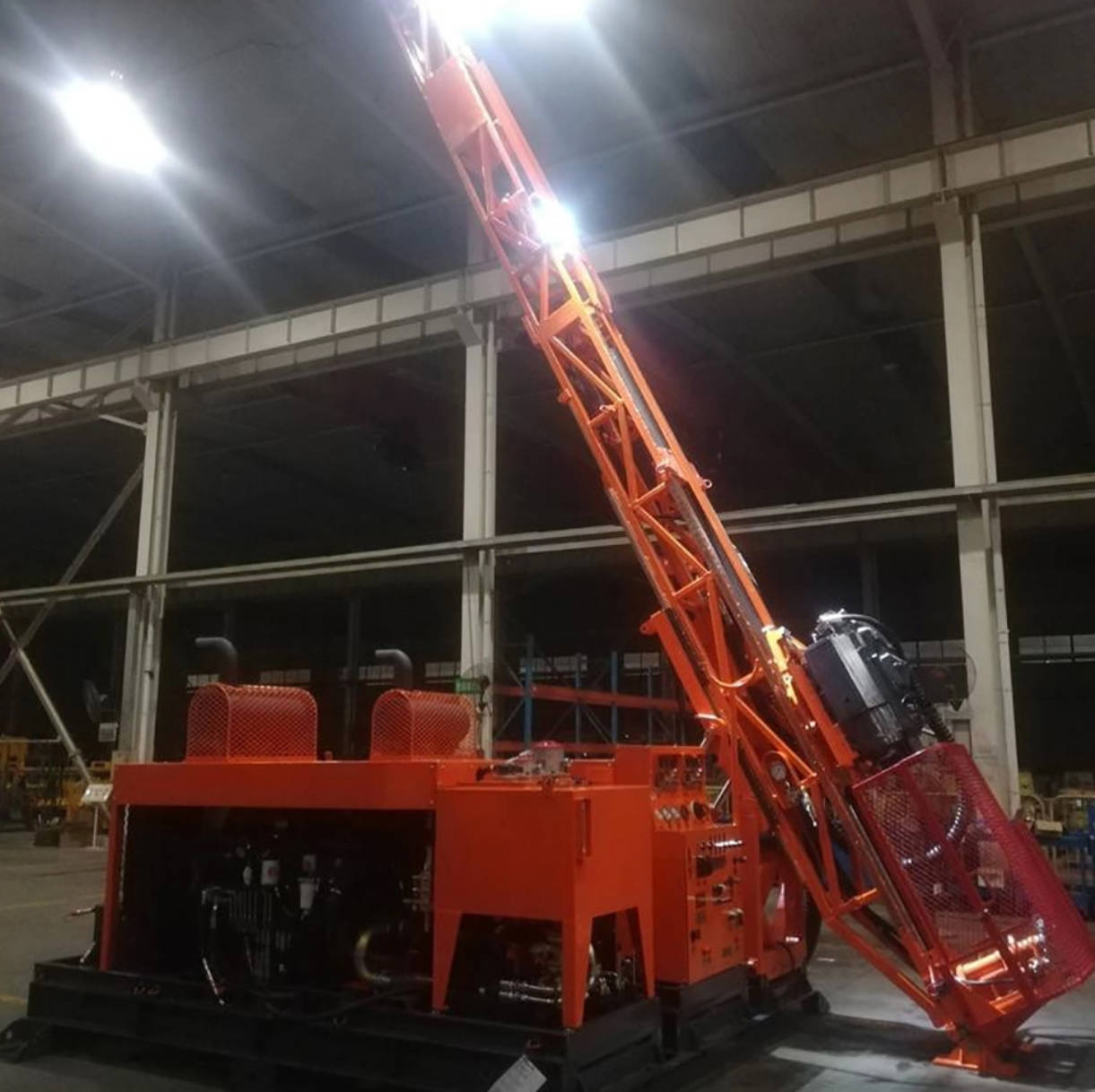
The following comparison describes common configurations, not universal limits. Individual machines may cross these boundaries.
| Selection factor | Underground core drilling rig | Surface core drilling rig |
|---|---|---|
| Typical operating location | Drill bays, tunnels, and mine galleries | Surface pads and exploration sites |
| Common drilling geometry | Upward, horizontal, and downward holes, subject to configuration | Primarily downward vertical and inclined holes |
| Fan drilling suitability | Strong where positioning equipment supports the complete fan | Suitable for fans within the approved mast and positioning range |
| Space priority | Compact working envelope and modular access | Pad layout, mast clearance, and transport access |
| Rod handling | Must fit restricted working clearance | May accommodate longer rod handling arrangements |
| Power considerations | Electrical supply, hydraulic cooling, and ventilation constraints | Available power package, fuel logistics, and site conditions |
| Main selection risk | Assuming the rig fits because its transport dimensions fit | Assuming mast inclination provides unrestricted directional coverage |
| Best starting point | Underground collar locations and complete fan geometry | Surface access and target intersection geometry |
The most important distinction is geometry: where the hole starts and how the drilling system reaches its intended direction.

Fan drilling creates several holes from a common station or closely spaced collar locations. Their inclinations, azimuths, or both differ to investigate a volume of rock.
Underground exploration teams can use a fan to sample around a drill bay without relocating the entire installation for every hole.
However, "one station" does not necessarily mean one identical collar point. The positioner, surrounding rock, and handling clearance determine the available collar locations.
A useful purchasing question is:
Can this configuration complete every planned hole without moving the base installation?
Angle drilling refers to drilling at a specified inclination rather than only vertically downward. Both surface and underground rigs can perform inclined drilling within their approved operating envelopes.
Always confirm the angle convention. A specification measured from vertical cannot be compared directly with one measured from horizontal.
Also separate inclination from azimuth. Tilting a feed frame changes its vertical orientation; covering different horizontal directions may require a turntable, another positioning mechanism, or complete rig repositioning.
Underground drilling equipment commonly combines a compact feed frame with positioning equipment suited to restricted spaces.
Manufacturer documentation illustrates the distinction. Epiroc's Diamec Smart 4 describes a positioner that moves the feed frame through 180 degrees, from vertically downward to vertically upward. A turntable is separately available for horizontal adjustment.
This is an important engineering lesson: 180-degree feed movement does not automatically establish unrestricted horizontal coverage.
For an underground diamond core drilling rig, request:
- Approved inclination and azimuth ranges.
- Required accessories for each movement.
- Working-envelope drawings at extreme angles.
- Winch and wireline routing arrangements.
- Restrictions affecting rod loading and core recovery.
A machine may fit through a tunnel yet lack room to drill.
The complete underground drilling envelope includes the feed frame, power pack, controls, hoses, rod storage, handling equipment, and operator access. It must also accommodate the movement required when changing angles.
My recommendation is to review a working-layout drawing rather than approving a rig from overall dimensions alone.
That drawing should show the most difficult hole in the fan, not merely the easiest horizontal setup.
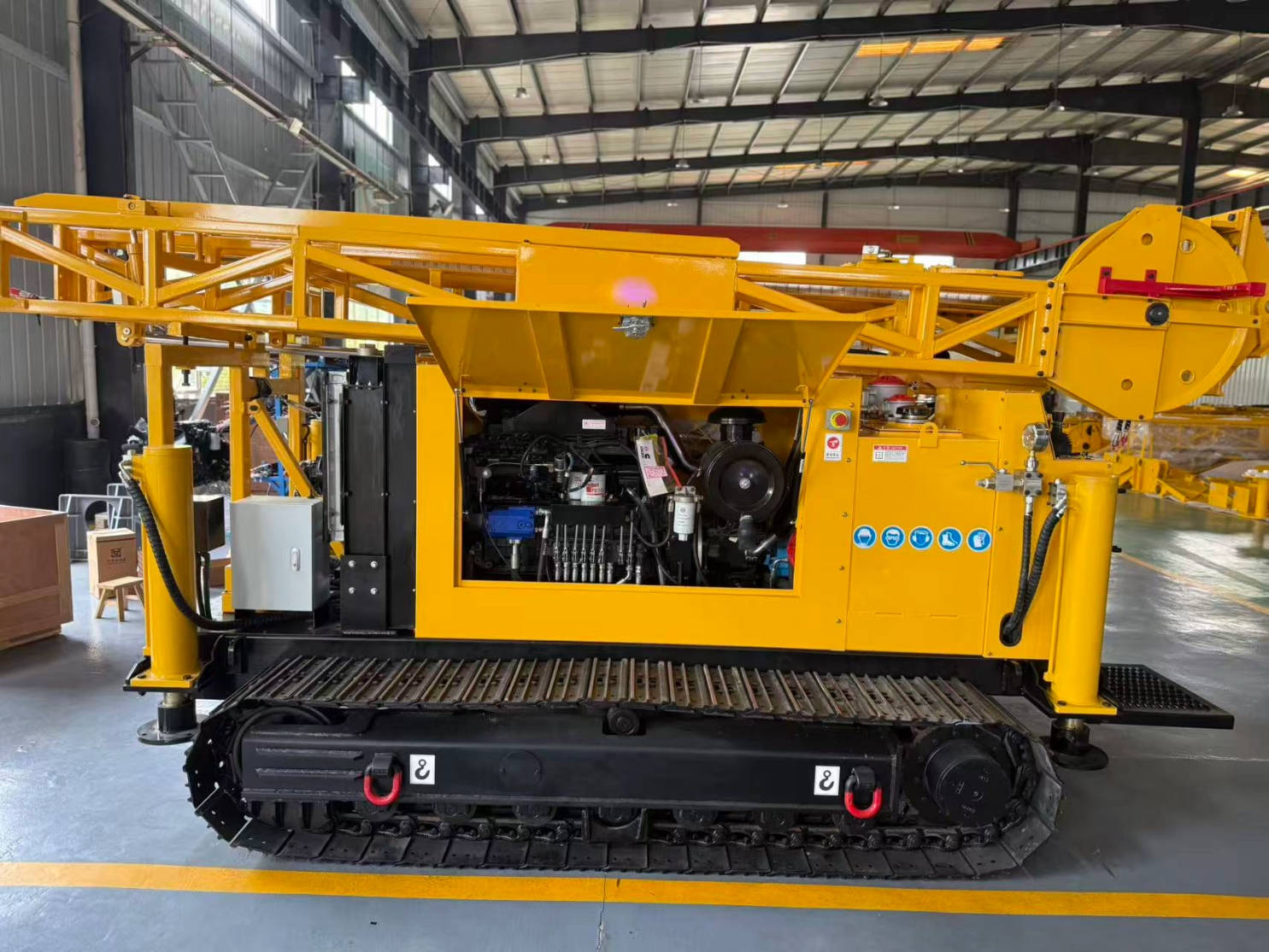
A surface diamond core drilling rig is often the practical starting point when underground workings do not exist or cannot provide suitable collar locations.
It can drill downward inclined holes toward the target without requiring a new underground drill chamber. However, access roads, pad construction, drainage, and environmental requirements remain part of the comparison.
Surface positioning also offers opportunities for different mast and rod-handling arrangements, provided the selected machine and site support them.
The advantage is not automatically higher drilling speed. It is the ability to establish workable collars from accessible ground.
Surface rigs are not restricted to isolated vertical holes. They can drill multiple inclined holes from one pad when the mast range, base orientation, and stability arrangements permit.
Nevertheless, a surface mast designed for downward drilling should not be assumed suitable for horizontal or upward drilling.
Request an approved configuration for the actual hole schedule. A broad statement such as "suitable for angle drilling" is insufficient when a program includes shallow inclinations or changing azimuths.
Maximum depth is not a single transferable value.
Upward, horizontal, and downward drilling impose different demands on the feed system and drill string. Ground conditions, tooling, core-breaking requirements, and operating practices also affect achievable depth.
For example, Epiroc lists different upward and downward depth guidelines for the Diamec Smart 4. Boart Longyear's LM90 technical documentation likewise separates capacity by direction and shows how reversing its feed cylinder changes upward drilling capability.
These examples are not CORTECH specifications. They demonstrate why buyers need direction-specific capacity information.
Ask suppliers to match capacity to:
1. Rod and core-barrel system.
2. Planned hole direction.
3. Target depth.
4. Feed-system configuration.
5. Assumed drilling conditions.
Peak torque and maximum rotational speed do not independently describe useful drilling performance.
Request the torque available at the operating speed required by the selected bit and hole size. Review flushing capacity alongside expected hole length, ground conditions, and circulation losses.
For both underground and surface applications, the objective is controlled drilling with recoverable core—not simply the highest figure on a specification sheet.
Wireline coring allows retrieval of the inner tube without routinely removing the complete drill string. However, the retrieval arrangement must suit the hole orientation.
Do not assume that equipment selected for a downward hole can be transferred unchanged to a horizontal or upward application.
Confirm compatible inner-tube equipment, deployment and recovery procedures, fluid requirements, and the handling arrangements at the collar.
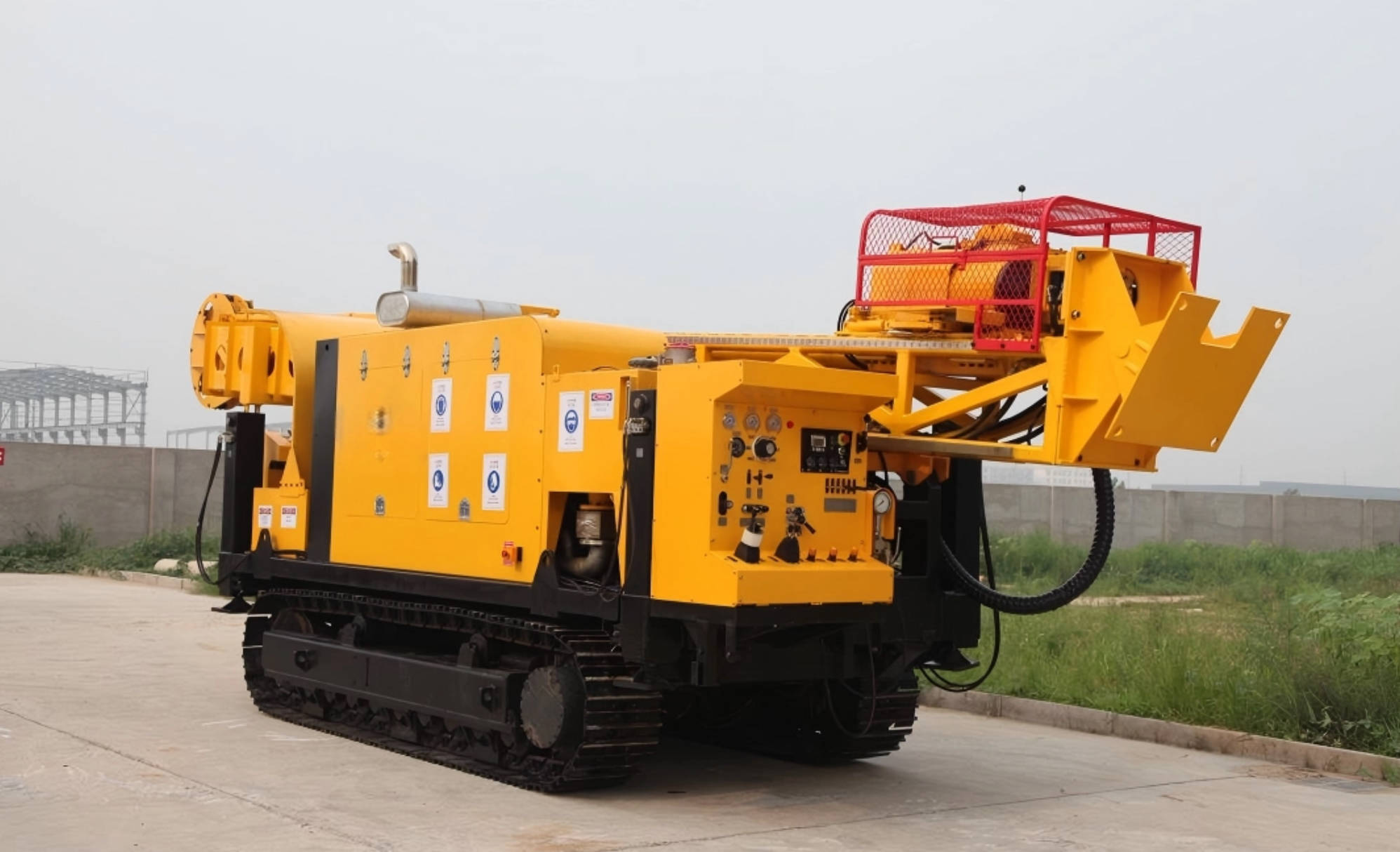
Comparing purchase prices or drilled meters alone can favor the wrong machine.
A more useful planning metric is:
Cost per accepted target intersection=Total allocated program cost/Number of intersections meeting project requirements
"Accepted" should be defined before drilling. It may depend on target position, core recovery, survey confidence, and geological usefulness.
Consider a hypothetical program:
- A surface option requires fewer installation constraints but longer holes.
- An underground option offers shorter target access but requires chamber preparation.
- One configuration completes the fan from one installation; the other needs repeated repositioning.
Either could be cheaper overall. No universal saving can be claimed without site-specific inputs.
Include mobilization, chamber or pad preparation, services, drilling time, angle changes, surveying, consumables, and unsuccessful holes. This connects the machine decision to the information the project actually needs.
List each collar, azimuth, inclination, depth, and required core size.
Identify the shallowest, steepest, longest, and most difficult-to-access holes. These often determine the required configuration.
For underground work, assess drill-bay dimensions and access restrictions.
For surface work, assess pad space, ground support, mast clearance, and handling access.
Include people, tooling, and maintenance activities in both layouts.
Request documented feed, pullback, and depth guidance for the specified tooling and hole orientation.
Separate standard equipment from optional positioners, handlers, clamps, and wireline systems.
Map rod loading, connection and breakout, inner-tube recovery, angle changes, and maintenance.
A rig can have adequate drilling capacity yet perform poorly if these tasks are awkward within the available space.
Before purchase, define how the proposed configuration will be checked.
Useful items include positional coverage, handling clearance, control access, emergency functions, and the compatibility of supplied tooling. Use a representative operating demonstration where feasible.
Underground assessment should address ground support, escape access, ventilation, water management, hydraulic heat, and interaction with other mine activities.
Electrical hydraulic power removes a local diesel exhaust source where used, but it does not eliminate ventilation or cooling requirements.
Surface assessment should address pad stability, mast setup, weather exposure, vehicle movement, overhead hazards, and safe access around handling equipment.
Neither category is inherently safe without a suitable installation and operating procedure.
Manufacturer literature identifies rod-handling equipment as an option for reducing manual effort and improving operating conditions.
However, "mechanized" does not necessarily mean fully hands-free.
Review the actual sequence for loading rods, making connections, breaking joints, and handling inner tubes. Confirm which tasks still require personnel near moving components.
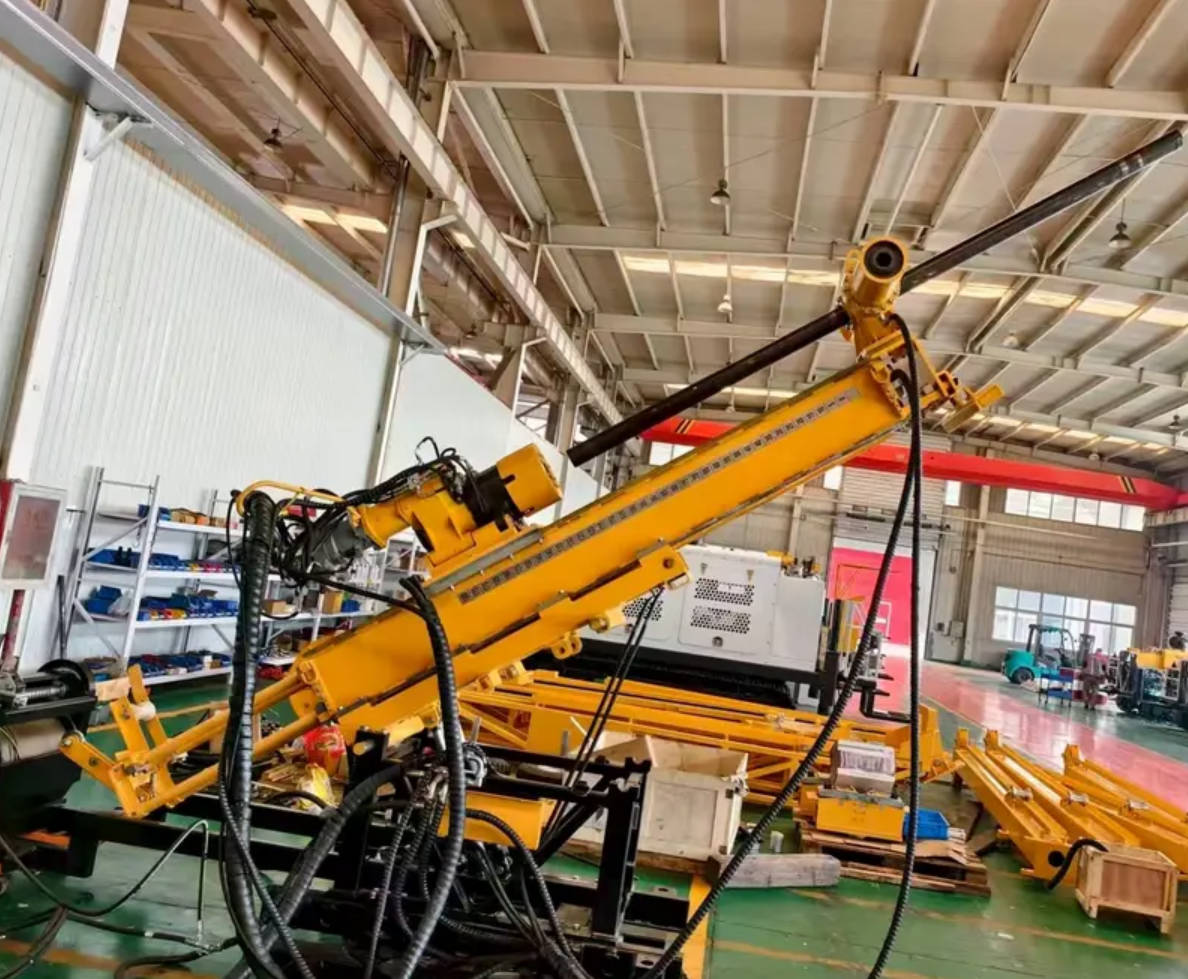
Choose an underground core drilling rig when existing workings provide suitable access and the program requires a configurable multi-angle installation.
Choose a surface rig when surface collars offer the more practical route to the target and the planned holes fit its approved operating range.
For a project-specific CORTECH equipment review, send your hole schedule, target depths, core sizes, drill-bay or pad dimensions, available power, and access restrictions. Ask our team to assess the proposed configuration against the complete fan—not only the deepest hole.
Yes. A surface rig can drill multiple holes from one pad when its approved mast angles, positioning range, and stability arrangements cover the planned fan. Some configurations may require repositioning between holes.
Some machines support both applications. Epiroc's Diamec Smart 4 is one documented example. Suitability remains configuration-specific and includes mounting, weather protection, power, and handling arrangements.
No. It may describe feed-frame movement from downward to upward in one plane. Horizontal directional coverage depends on the positioner, turntable, surrounding clearance, and installation.
No. Direction, drill-string weight, feed configuration, tooling, and ground conditions affect capacity. Request guidance for the actual hole orientation rather than relying on one headline depth.
Neither category guarantees better recovery. Tooling, ground conditions, flushing, operating settings, and drilling practices matter. Select a rig that supports controlled operation with the required core-barrel system.
Provide hole directions, depths, core sizes, ground information, access dimensions, available services, and handling requirements. Include the complete fan layout so the supplier can identify configuration limits before quotation.
1. Epiroc. "Diamec Smart 4." Manufacturer product information covering underground and surface applications, 180-degree feed positioning, optional horizontal adjustment, directional depth guidelines, and capacity limitations. [epiroc]
2. Boart Longyear. "LM90 Underground Coring Drill: Technical Overview." March 2018. Manufacturer technical document hosted by Mitchell Drilling International; covers positioning, reversible feed configuration, directional depth guidance, and optional rod handling. [mitchelldrillinginternational]
3. Epiroc. "Diamec 232." Manufacturer product information describing a compact underground core drilling rig for narrow tunnels and galleries. [epiroc]
4. Mining Innovation Commercialization Accelerator Network. "Diamond Drill Rod Handling." Industry challenge describing rod-handling tasks, physical demands, and differences between underground and surface handling contexts. [micanetwork]
5. CORTECH. "Exploration Diamond Drilling Surface." Manufacturer application overview describing surface exploration equipment and modular drilling configurations. Used for general product-category context, not model-specific performance guarantees. [cortechdrill]


