
Views: 215 Author: CORTECH Publish Time: 2026-10-30 Origin: Site


Content Menu
● What Are the Other Names for a Core Drill?
>> Is "Core Drill" the Machine or the Cutting Tool?
● Why Is a Core Drill Called a Diamond Core Drill?
>> Diamond Drilling and Core Drilling Are Related, Not Identical
● What Makes a Wireline Core Drill Different?
>> How Wireline Core Retrieval Works
>> Why the Distinction Matters
● Core Drill Names by Operating Environment
>> Heli-Portable or Modular Core Drill
>> Underground Core Drilling Rig
● Which Similar Drilling Terms Are Not True Synonyms?
● A Practical Framework for Naming the Right Core Drill
>> Three Illustrative Procurement Scenarios
>>> Road-Accessible Exploration Site
>>> Underground Resource Investigation
● How to Compare Core Drilling Rigs Beyond Their Names
>> 1. Define the Required Core and Hole
>> 2. Describe the Ground Conditions
>> 3. Evaluate Hydraulic Performance as a System
>> 4. Review Handling, Maintenance, and Support
● How Core Quality Should Influence Equipment Selection
● Specify Your CORTECH Core Drilling Requirements Clearly
>> 1. What Is the Most Common Alternative Name for a Core Drill?
>> 2. Is a Core Drill the Same as a Diamond Drill?
>> 3. What Is Another Name for a Wireline Core Drill?
>> 4. Can a Concrete Core Drill Replace an Exploration Core Drill?
>> 5. Does a Wireline Core Drill Retrieve Samples Without Removing the Rods?
>> 6. Which Core Drill Type Should I Specify to CORTECH?
Another name for a core drill is a coring drill. In mineral exploration and rock sampling, it is also commonly called a diamond core drill, diamond drilling rig, or core drilling rig. When the equipment retrieves samples through the drill rods using a cable-operated system, the more precise name is a wireline core drilling rig.
These names overlap, but they do not always describe identical equipment. A contractor cutting an opening through concrete and an exploration team recovering rock from deep underground may both use the term "core drill"—yet their machines, tooling, and purchasing requirements differ considerably.
For CORTECH, which manufactures full-hydraulic diamond core drilling equipment, the most useful terminology connects three things: how the rock is cut, how the sample is recovered, and where the rig operates.

The right alternative name depends on whether you are describing the machine, drilling method, or application.
| Alternative name | What it emphasizes | Important distinction |
|---|---|---|
| Coring drill | Producing or recovering a cylindrical core | The broadest alternative term |
| Core drilling rig | The complete drilling machine | More specific than a drill bit or attachment |
| Diamond core drill | A diamond cutting system | Describes the cutting technology |
| Diamond drilling rig | Equipment used for diamond drilling | Common in mineral exploration |
| Wireline core drilling rig | Retrieval through the drill rods | Describes the sample-recovery system |
| Exploration core drill | Geological investigation | Describes the drilling purpose |
| Concrete core drill | Coring concrete structures | A different application from deep mineral exploration |
My preferred approach to technical terminology is simple: use the shortest name that still communicates the correct equipment category.
"Coring drill" works for a general explanation. "Full-hydraulic wireline diamond core drilling rig" is more useful when discussing an exploration equipment purchase.
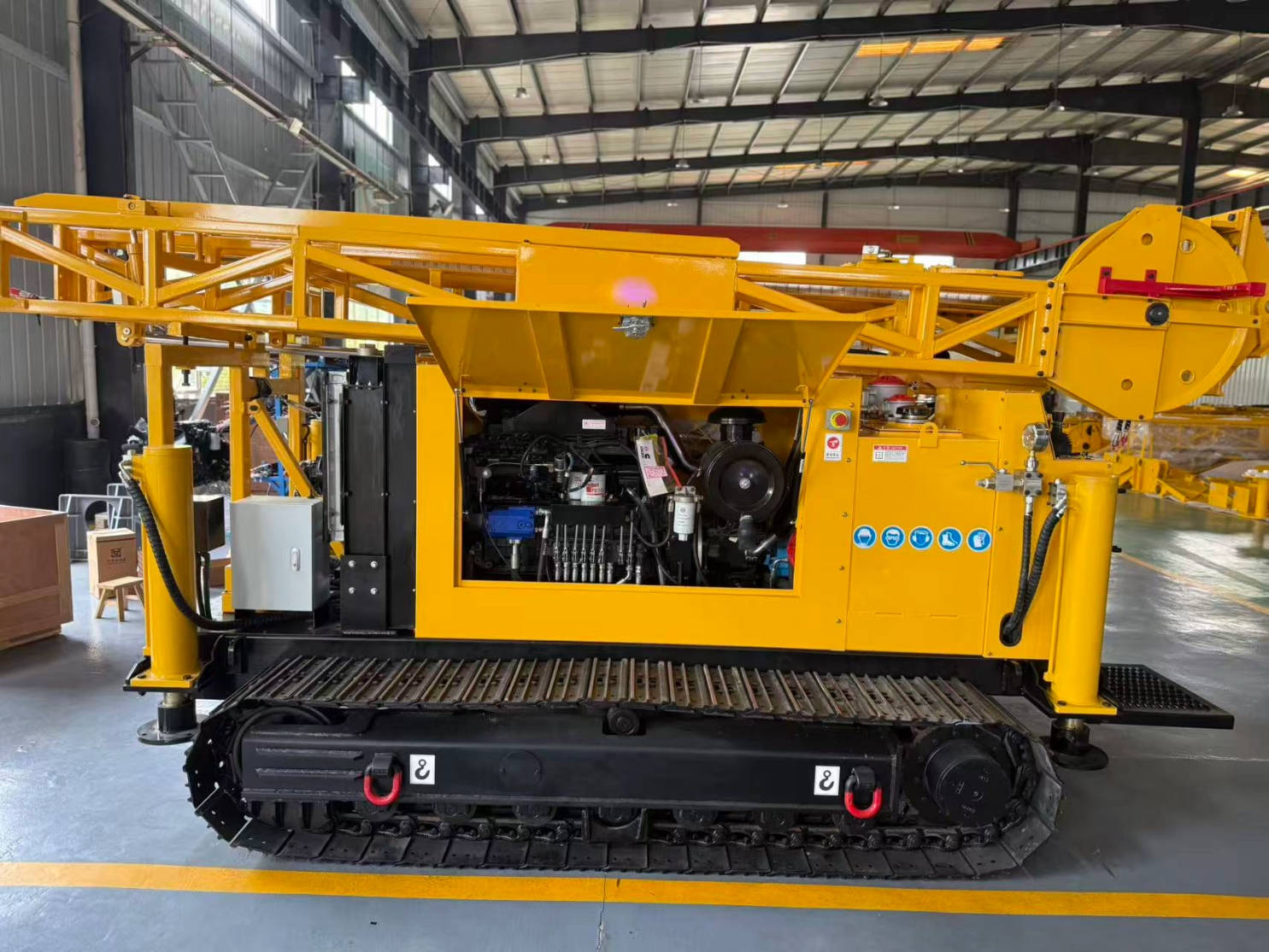
The phrase can be ambiguous.
A core drill bit is the annular cutting tool that cuts around the sample. A core drilling rig supplies the rotation, feed, and supporting functions needed to advance the tooling.
For equipment inquiries, distinguish among:
- The complete drilling rig.
- The diamond core bit.
- The core barrel assembly.
- Drill rods and casing.
- The wireline retrieval system.
This small clarification prevents quotations for tooling when the buyer actually needs a complete machine.
A diamond core drill uses a diamond cutting structure to cut an annular path through rock. Instead of removing all material across the hole diameter, it leaves a cylindrical section that enters the core barrel.
That recovered cylinder is the core.
Geologists examine core to understand rock types, mineralization, structures, and changes with depth. Selected intervals may also undergo laboratory analysis.
The word "diamond" therefore identifies the cutting technology—not the material being explored. A diamond core drilling rig can support exploration for many commodities, not just diamonds.
Core drilling describes the sampling objective. Diamond drilling describes the cutting method.
In hard-rock exploration, the two often occur together. However, other coring techniques exist, including sonic coring. Buyers should not assume that every machine advertised as a core drill uses the same drilling process.
Likewise, "diamond drilling" alone does not establish whether a rig uses conventional or wireline core recovery.
A technically complete description should identify both the cutting method and the retrieval arrangement.
A wireline core drill allows the sample-containing inner tube to be retrieved through the drill rods while the rod string remains in the borehole.
An overshot attached to a wireline cable engages the inner tube's head assembly. The assembly is then recovered using the wireline hoist.
This differs from conventional core recovery, which generally requires withdrawing the drill string to retrieve the core barrel.
The basic operating sequence is:
1. The diamond bit cuts around the rock core.
2. The core enters the inner tube inside the outer barrel.
3. Drilling stops when the run is complete or conditions require retrieval.
4. The overshot travels through the drill rods and engages the head assembly.
5. The wireline system retrieves the inner tube.
6. The recovered core is handled, recorded, and stored before drilling resumes.
The sequence is explanatory, not an operating procedure. Actual work must follow the equipment manual and site-specific safety requirements.
Wireline retrieval reduces the need to remove the full drill string for each core run. Its practical value becomes particularly important as holes deepen and rod handling becomes more time-consuming.
However, wireline equipment does not eliminate all rod trips. Bit changes, damaged tooling, and borehole problems may still require withdrawing the string.
It also does not guarantee intact samples. Ground conditions, barrel selection, drilling parameters, and handling practices remain important.

Surface, heli-portable, and underground describe deployment conditions. They are not competing definitions of core drilling.
A rig can simultaneously be a diamond core drill, a wireline drilling rig, and a surface exploration drill.
A surface core drilling rig operates from a prepared position above ground. Depending on the machine and project, mounting arrangements may include crawler tracks or skids.
Buyers should consider:
- Access to drilling locations.
- Ground support and working-platform requirements.
- Target depth and core size.
- Mast positioning and drilling angles.
- Water supply and support equipment.
CORTECH's CORE SURFACE DRILL category addresses this operating environment.
The key buying question is not simply whether a rig works at the surface, but whether its configuration matches the planned drilling program.
A heli-portable core drill is designed around transport to difficult-access locations. Modular construction allows equipment to be separated into transportable assemblies.
CORTECH's CORE HELI DRILL category serves this type of requirement.
However, "modular" does not automatically mean suitable for every helicopter operation. Before purchase, verify individual module weights, dimensions, lifting arrangements, and the complete transport plan.
Aircraft capability, altitude, weather, and local operating conditions must be assessed by the responsible aviation and logistics specialists.
A lightweight rig is only useful if the complete drilling package can reach the site.
An underground core drill operates within mine workings or other underground spaces. Access dimensions, positioning, anchoring, and hole orientation become central selection factors.
CORTECH's CORE U/G DRILL category addresses underground diamond core drilling.
For an underground quotation, provide the available working envelope rather than only the target depth. A machine may have adequate drilling capacity but still be unsuitable for the available chamber or access route.
Some names appear beside "core drill" in equipment searches but should not be treated as interchangeable.
| Related term | Why it is not an exact synonym |
|---|---|
| Borehole drilling rig | Describes hole creation without specifying core recovery |
| Rotary drilling rig | Describes rotational drilling; it may or may not recover core |
| Reverse-circulation drill | Typically recovers cuttings rather than continuous cylindrical core |
| Geotechnical drill | Describes an investigation purpose and may support multiple methods |
| Concrete core drill | Usually refers to construction coring rather than exploration drilling |
A particularly important distinction is between wireline coring and rotary drilling. Wireline coring itself uses rotation; "wireline" describes retrieval rather than a separate rock-cutting action.
For buyers, this means an equipment comparison should separate application, cutting method, and recovery method instead of mixing them into one list.
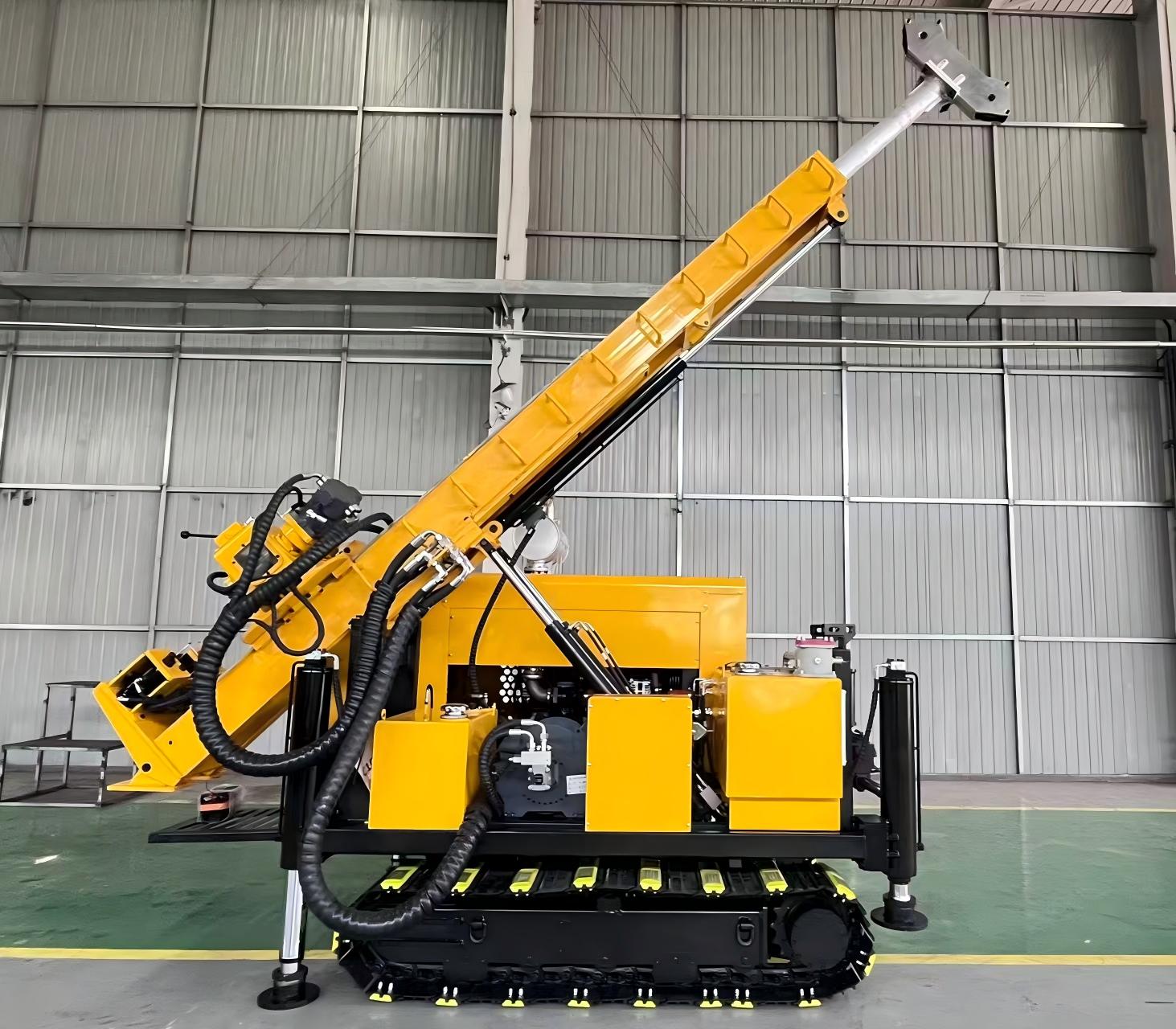
A useful equipment description follows this order:
Application + operating environment + recovery method + cutting method + machine type.
For example:
"Mineral exploration surface wireline diamond core drilling rig."
Add "full-hydraulic" when the drive and control configuration is relevant to the inquiry.
Not every phrase needs to appear in every sentence. The purpose is technical clarity, not a longer equipment name.
These examples illustrate selection logic; they are not reported customer projects.
An exploration team needs rock samples from locations accessible by established roads.
The initial inquiry should identify a surface wireline diamond core drilling rig, then specify core size, depth, geology, and mobility requirements.
Road access alone does not determine the correct rig capacity.
A team must mobilize equipment where road construction is impractical.
A heli-portable modular core drill may be appropriate. The evaluation should include the heaviest module, support equipment, fuel, water arrangements, and assembly requirements.
Assessing only the main rig weight leaves a major logistics gap.
A mine needs core samples from drill stations inside existing workings.
The appropriate starting category is an underground diamond core drilling rig. Chamber dimensions, drilling orientations, anchoring conditions, and available utilities should accompany the inquiry.
These scenarios show why the operating environment often matters more than the alternative name itself.
An equipment label is a starting point, not a performance specification.
My recommended evaluation order begins with sample requirements and site constraints, then moves to machine capability.
State the intended core size, target depth, and hole inclination.
Do not compare advertised maximum depths without checking the rod system and assumptions behind them. A depth rating tied to one configuration does not automatically apply to another.
Provide available information about rock hardness, abrasiveness, fracturing, and unstable intervals.
These conditions influence tooling selection and operating strategy. A suitable rig cannot compensate for every mismatch between the bit, barrel, and formation.
Review torque across the usable speed range, feed control, pullback capability, and hydraulic cooling requirements.
Maximum rotational speed alone says little about performance in difficult ground.
Ask how the proposed configuration supports the actual tooling and drilling conditions rather than treating one headline specification as decisive.
Clarify rod handling, guarding, emergency controls, maintenance access, operator training, and spare-parts availability.
For remote projects, serviceability deserves particular attention. A component that is difficult to inspect or replace can create operational problems even when the machine's drilling specifications appear suitable.
The objective is not merely to drill meters. It is to recover material that supports reliable geological interpretation.
USGS guidance emphasizes systematic core description, handling, and sampling. That makes sample management part of the drilling program—not an activity to consider only after equipment arrives.
A practical review should address:
- Whether the barrel arrangement suits the expected formation.
- How drilling conditions will be monitored.
- How core will be removed and transferred.
- How depth intervals and sample identity will be preserved.
- How handling damage will be distinguished from natural fractures.
A useful question for any supplier is: "How does this proposed equipment package support our sampling objectives under the expected ground conditions?"
That question produces a more meaningful discussion than asking only for the fastest core drill.

CORTECH develops and manufactures full-hydraulic diamond core drilling equipment across CORE SURFACE DRILL, CORE HELI DRILL, and CORE U/G DRILL categories.
To request a project-specific recommendation, send:
- Application and expected geology.
- Target depth, core size, and drilling angles.
- Surface, remote-access, or underground conditions.
- Transport and working-space limits.
- Available power and water.
- Required tooling, training, and service support.
Ask CORTECH for a matched rig-and-tooling proposal with stated capacity assumptions and transport details. This turns a broad search for another name for a core drill into an actionable equipment specification.
"Coring drill" is a straightforward general alternative. In hard-rock exploration, "diamond core drill" and "core drilling rig" provide more application-specific descriptions.
Not always. "Core drill" describes equipment that produces or recovers a core. "Diamond drill" identifies diamond cutting technology. The terms frequently overlap in mineral exploration.
"Wireline core drilling rig" and "wireline diamond drilling rig" are useful alternatives. The second name also identifies the cutting technology.
The shared terminology does not make the machines interchangeable. Concrete coring equipment and mineral exploration rigs differ in intended application, drilling depth, tooling, and support requirements.
During normal core retrieval, the inner tube travels through the rods while the drill string remains in place. Other tasks, including bit replacement, can still require rod withdrawal.
Start with the operating environment: surface, heli-portable, or underground. Then provide depth, core size, geology, access restrictions, and utilities so the proposed configuration can be evaluated properly.
1. U.S. Geological Survey. [Application of Drilling, Coring, and Sampling Techniques to Test Holes and Wells]. Technical reference supporting the discussion of coring methods, diamond drilling, and wireline barrel arrangements. [pubs.usgs]
2. Boart Longyear. [The Ins and Outs of Wireline Core Retrieval Systems]. June 5, 2017. Technical explanation of inner tubes, head assemblies, overshots, and wireline retrieval. [boartlongyear]
3. U.S. Geological Survey. [Guidelines for Logging, Describing and Sampling Cores and Cuttings of Rock from Drill Holes]. Open-File Report 79-1522, 1979. Guidance supporting the discussion of core handling, description, and sampling. [pubs.usgs]
4. CORTECH. [Hydraulic Core Drilling Rig Solutions]. Manufacturer information supporting descriptions of surface, heli-portable, modular, and underground equipment categories. [cortechdrilling]
5. CORTECH. [CORE U/G DRILL]. Official underground core drilling product category. [cortechdrilling]
6. Boart Longyear. [Surface Exploration Drilling Products]. Industry terminology and equipment information covering diamond coring, wireline and conventional systems, tooling, and hydraulic drilling rigs. [boartlongyear]
7. Boart Longyear. [Coring Rods and Casing Catalogue]. Technical reference supporting the importance of alignment, handling, inspection, and operating limits. [boartlongyear]
8. Boart Longyear. [Exploration Products]. Reference distinguishing diamond coring equipment, modular underground drilling systems, and sonic drilling technology. The procurement framework and hypothetical scenarios in this article are editorial synthesis, not measured project results. [boartlongyearproducts]


