
Views: 246 Author: CORTECH Publish Time: 2026-10-04 Origin: Site


Content Menu
● What Does a Drilling Rig Manufacturer Do?
● Main Types of Companies That Manufacture Drilling Rigs
● Why Full-Hydraulic Wireline Core Drilling Rigs Matter
>> Key Advantages of Wireline Diamond Core Drilling
● Who Manufactures Core Drilling Rigs for Mineral Exploration?
● CORTECH: A Manufacturer of Full-Hydraulic Core Drilling Rigs
>> CORE SURFACE DRILL for Land-Based Exploration
>> CORE HELI DRILL for Remote and Modular Operations
>> CORE U/G DRILL for Underground Exploration
● How to Evaluate a Drilling Rig Manufacturer Before Buying
>> 1. Start With the Geological Objective
>> 2. Define the Required Core Size
>> 3. Compare Depth Claims Carefully
>> 4. Examine Serviceability, Not Just Performance
>> 5. Assess Core Recovery as a Project Metric
● A Practical Buyer Checklist for Core Drilling Rigs
● What Separates a Reliable Manufacturer From a Trading Company?
● Field Insight: The Rig Is Only as Good as the System Around It
● Choose a Drilling Rig Manufacturer Based on Project Reality
>> 1. Who manufactures drilling rigs for mineral exploration?
>> 2. What is the difference between a water well rig and a core drilling rig?
>> 3. Why is wireline coring useful for deep holes?
>> 4. How do I choose between a surface rig and a heli-portable drilling rig?
>> 5. What is an underground core drilling rig used for?
>> 6. What information should I send to a drilling rig manufacturer?
>> 7. Is the highest rated drilling depth always the best choice?
When buyers ask, "Who manufactures drilling rigs?", the useful answer is not simply a list of company names. The better question is: Which drilling rig manufacturer has the engineering capability, product range, quality control, and service commitment required for your specific drilling project?
Drilling rigs are manufactured by specialized equipment companies serving mining exploration, geotechnical investigation, water-well construction, underground development, oil and gas, foundation engineering, and environmental sampling. For projects that require intact geological samples, the most relevant suppliers are manufacturers of diamond core drilling rigs, especially full-hydraulic wireline core drilling rigs.
At CORTECH, we focus on the research, manufacture, and supply of full-hydraulic wireline diamond core drilling equipment. Our product scope includes CORE SURFACE DRILL systems for surface exploration, CORE HELI DRILL systems for modular and helicopter-portable operations, and CORE U/G DRILL systems for underground core drilling. From a practical drilling perspective, a rig should not be selected only by its rated depth or initial price. It should be judged by the quality of core it can recover, the safety it supports, the speed at which it can be moved and set up, and the lifetime value it creates in the field.

A drilling rig manufacturer designs, engineers, fabricates, assembles, tests, and supports equipment used to create boreholes in the ground. However, the scope of manufacturing differs greatly from one supplier to another.
Some companies primarily build water well rigs, which are designed to construct wells and access groundwater. Others manufacture blast-hole rigs for open-pit mining, rotary rigs for oil and gas, directional rigs for utility installation, or foundation rigs for piling projects.
A manufacturer focused on diamond core drilling rigs serves a different purpose. The objective is not just to drill a hole. It is to recover a representative cylindrical rock sample that geologists, engineers, and mining companies can log, analyze, and use for technical decisions.
Reliable exploration samples matter because resource estimation, geological interpretation, geotechnical assessment, and drilling decisions depend on sample quality. SRK Consulting notes that reliable sampling is essential for accurate resource estimates, and that sampling programs should be designed to reduce bias, contamination, and unrepresentative material.
For this reason, a professional core drilling rig manufacturer must understand more than mechanical fabrication. The company must understand:
- Wireline coring systems
- Diamond bit selection
- Drill rod and core barrel compatibility
- Hydraulic power transmission
- Feed force and rotation control
- Mud circulation and borehole stability
- Rod handling safety
- Core recovery and sample protection
- Field maintenance requirements
- Remote-site transport limitations
A rig is only one part of the drilling system. The best result comes when the rig, rods, core barrel, overshot, diamond bit, mud system, and crew procedures work together.
The drilling equipment industry includes multiple categories of manufacturers. Buyers should first identify the drilling method and sample requirement before comparing suppliers.
| Manufacturer Type | Main Application | Typical Output | Buyer Priority |
|---|---|---|---|
| Water well drilling rig manufacturer | Groundwater wells and irrigation | Water-producing borehole | Depth, air compressor, casing capacity |
| Oil and gas rig manufacturer | Hydrocarbon drilling | Large-diameter deep well | Hoisting capacity, pressure control, automation |
| Blast-hole rig manufacturer | Surface mining production | Blast holes for explosives | Fast penetration and hole accuracy |
| Foundation drilling rig manufacturer | Piling and civil construction | Large-diameter foundation holes | Torque, crowd force, stability |
| Geotechnical drilling rig manufacturer | Soil and rock investigation | Engineering samples and test holes | Mobility, sampling versatility |
| Diamond core drilling rig manufacturer | Mineral exploration and geology | Intact rock core | Core recovery, depth capacity, wireline efficiency |
| Underground core drilling rig manufacturer | Mine-site exploration | Directional or underground core samples | Compact layout, underground mobility, safety |
| Portable or heli-portable rig manufacturer | Remote exploration | Core samples from restricted-access sites | Modular weight, transport flexibility |
For mining exploration, geological mapping, mineral-resource drilling, and detailed rock engineering, buyers should prioritize a manufacturer with proven experience in full-hydraulic wireline diamond core drilling.
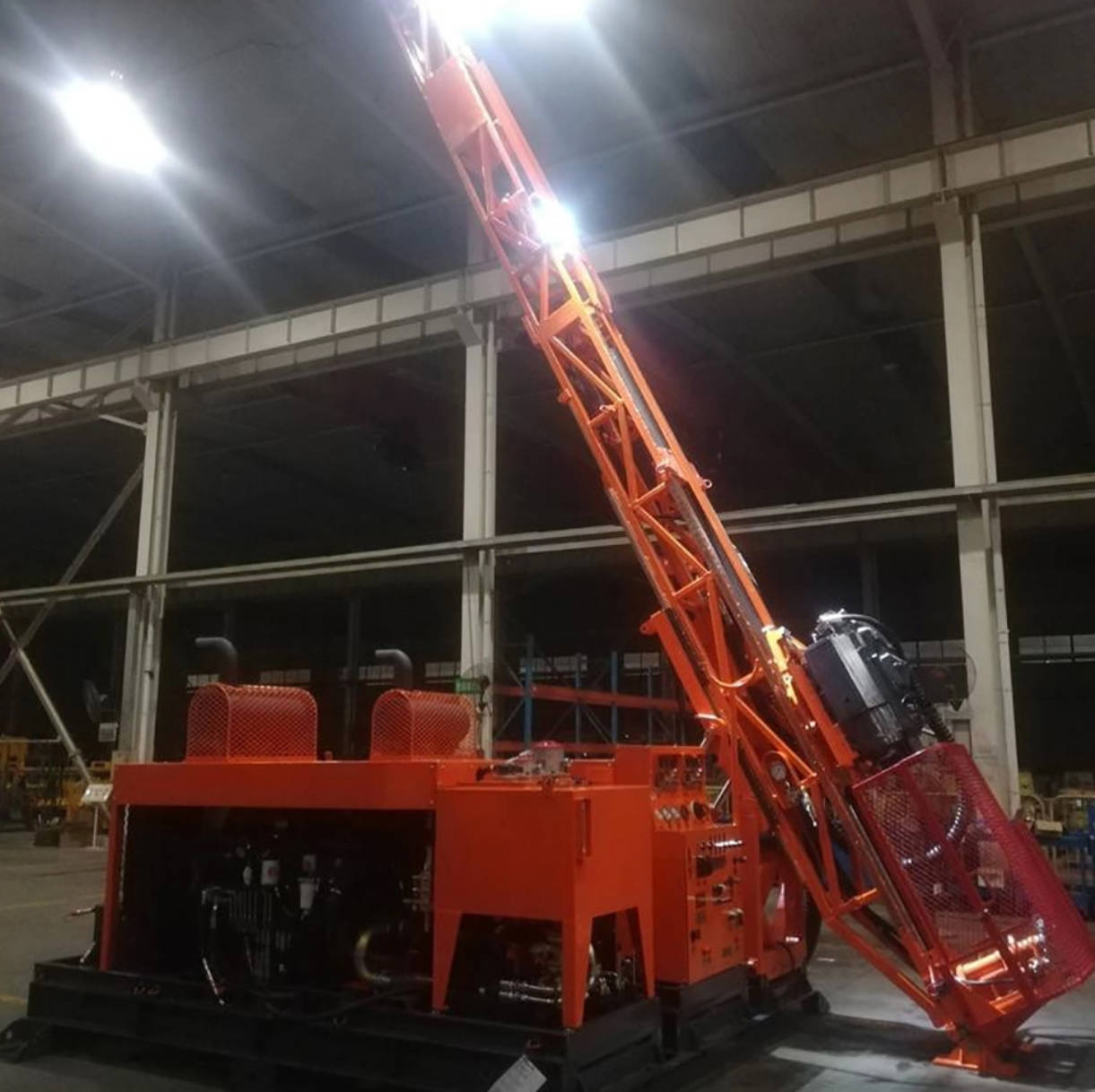
A full-hydraulic core drilling rig uses hydraulic systems to control key drilling functions, including rotation, feed, pullback, clamping, and rod handling. This configuration can offer smoother control and reduce the mechanical complexity associated with older transmission systems.
More importantly, modern wireline coring changes the operational workflow. Rather than pulling the entire drill string every time the core barrel is full, the crew retrieves the inner tube through the drill rods using an overshot and wireline system.
This can significantly reduce non-productive time in deeper holes.
- Faster core retrieval without pulling the full drill string after every run
- Lower handling time in deep holes
- Reduced physical workload for the drill crew
- Improved operational continuity when drilling deeper exploration holes
- Better support for sample-focused drilling
- Greater value from each drilled meter when core quality is a project priority
The value of wireline drilling becomes clearer as hole depth increases. On a shallow hole, conventional methods may remain practical. On a deep exploration program, repeated rod pulling can consume substantial time, create additional handling exposure, and slow down geological decision-making.
International diamond drilling equipment systems also rely on standardized dimensions and nomenclature. These standards define important aspects of drilling equipment compatibility, including core sample sizes and standardized system components.
That compatibility is important. A drilling rig manufacturer should not treat rods, bits, core barrels, and related tooling as secondary purchases. Buyers should confirm which systems the rig supports and whether spare parts can be sourced consistently in their operating regions.
Core drilling rigs for mineral exploration are manufactured by established global brands, regional engineering companies, specialized drilling-equipment producers, and integrated suppliers that provide both drilling machinery and consumables.
However, not every company that advertises a "core drill" is equally suitable for deep mineral exploration. A compact construction core drill, for example, is very different from a hydraulic wireline diamond rig designed to drill hundreds or thousands of meters in hard rock.
When evaluating who manufactures drilling rigs for exploration, buyers should look beyond the brand name and verify whether the manufacturer can provide the following:
1. A drilling rig matched to the target depth and core size
2. A compatible wireline coring system
3. Hydraulic controls appropriate for difficult formations
4. Adequate pullback and feed capacity
5. A transport format suitable for the project site
6. Spare parts and technical documentation
7. Remote troubleshooting support
8. Operator training or commissioning guidance
9. Consumables, including drill rods, core barrels, bits, and reaming shells
10. A clear warranty and after-sales process
At CORTECH, this is the practical approach we recommend: buy a drilling solution, not merely a drilling machine.
A project can lose far more money from downtime, poor core recovery, damaged rods, unavailable seals, incompatible tools, or difficult rig relocation than it saves from a lower purchase price.
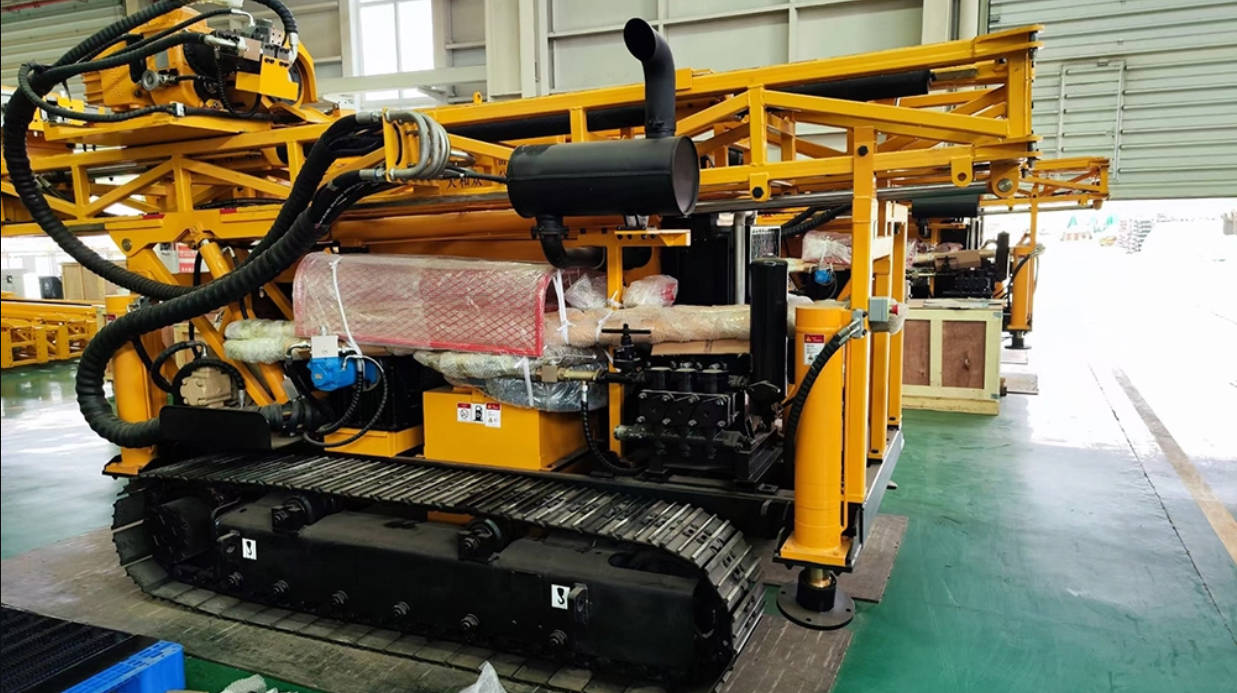
CORTECH manufactures full-hydraulic wireline diamond core drilling rigs for mining exploration, geological investigation, and underground drilling applications.
Our product categories are designed around distinct field conditions.
A CORE SURFACE DRILL is designed for surface drilling programs where mobility, depth capacity, stability, and operational efficiency must be balanced.
Typical applications include:
- Mineral exploration drilling
- Geological prospecting
- Engineering geology
- Hydropower investigation
- Infrastructure route investigation
- Deep rock sampling
- Resource-definition drilling
For surface programs, buyers should evaluate the terrain first. Flat ground, steep hillsides, remote forest roads, desert platforms, and high-altitude sites create very different rig requirements.
A crawler-mounted or track-mounted configuration may help teams move across uneven terrain. A skid-mounted system can be suitable where rig transport is planned with cranes, trucks, or site-specific lifting arrangements.
A CORE HELI DRILL is designed for exploration areas with restricted access. In mountainous terrain, heavily forested regions, islands, or environmentally sensitive areas, traditional heavy rigs may be difficult or impossible to transport.
The core principle of a heli-portable drilling system is modularity. The rig is separated into manageable components that can be transported by helicopter or other limited-access logistics methods.
Buyers should not judge a modular rig only by total machine weight. They should ask:
- What is the weight of the heaviest individual module?
- How many lifts are required for mobilization?
- Can modules be safely handled at the drill pad?
- How long does assembly and commissioning take?
- How is the mud system transported?
- What consumables must be staged in advance?
- Can the rig maintain performance under altitude and temperature constraints?
For remote programs, logistics planning is part of drilling performance. A rig that drills quickly but is difficult to mobilize may not be the best overall project choice.
A CORE U/G DRILL is engineered for underground drilling environments, where space restrictions, ventilation, underground haulage, borehole orientation, and operator safety require specialized design.
Underground exploration drilling can help mine operators define extensions of mineralization, investigate orebody continuity, collect structural data, and support mine planning from existing workings.
An underground rig should be evaluated for:
- Compact dimensions
- Maneuverability in underground headings
- Rod handling arrangement
- Operator visibility
- Hydraulic hose protection
- Borehole-angle flexibility
- Service access
- Noise and environmental considerations
- Integration with mine-site safety procedures
In underground drilling, every meter of available space matters. A machine may have excellent drilling capacity on paper but still be unsuitable if it cannot be positioned, serviced, or safely operated in the mine environment.

From an equipment-selection perspective, I recommend a structured evaluation rather than relying on brochure claims.
Ask what information the drilling program must deliver.
For example:
- Is the project looking for mineralized structures?
- Does the team need high-quality oriented core?
- Are fractured zones expected?
- Is geotechnical logging required?
- Are deep holes planned?
- Is the project in hard, abrasive rock?
- Is borehole deviation a major concern?
The correct rig configuration depends on the geological objective, not merely on a desired drilling depth.
Core diameter affects geological confidence, sample handling, geotechnical logging, assay preparation, and drilling productivity.
Larger core can provide more material and better structural information, but it also increases drilling demand. Smaller core may improve penetration in some situations, but the geological team must confirm that the sample size remains suitable for the program.
A manufacturer should be able to discuss supported core sizes, drill rod systems, and matching tooling rather than simply quoting a maximum depth.
Rated depth is not a guarantee of field performance. Actual drilling depth depends on multiple variables:
- Rock hardness
- Hole angle
- Core size
- Borehole condition
- Water supply
- Mud properties
- Bit selection
- Drill crew skill
- Rod condition
- Altitude and temperature
- Maintenance discipline
A responsible manufacturer should explain the conditions behind every depth rating.
A drilling rig performs only when it remains operational. Ask about routine maintenance points, hydraulic component access, filter replacement, hose routing, spare-parts lists, fault-diagnosis procedures, and remote technical support.
The best manufacturers prepare customers for ownership. They provide documentation, commissioning support, maintenance intervals, and practical spare-parts recommendations.
High drilling speed is valuable, but it is not the only measure that matters. If a hole advances quickly while losing critical intervals, the project may lose the geological information it needs.
Core recovery can be expressed as:
Core Recovery Rate=Recovered Core Length/Drilled Run Length×100%
The result should be interpreted alongside rock condition, drilling method, bit selection, fluid management, and sample handling practices. Recovery is particularly important in mineralized zones, faulted ground, weak formations, and geotechnical intervals.
Before requesting a quotation, prepare a project brief with the information below.
| Item to Provide | Why It Matters |
|---|---|
| Target drilling depth | Determines rig capacity and hoisting requirements |
| Required core diameter | Affects rods, core barrel, bit, and depth capability |
| Ground conditions | Helps select bit type, fluid strategy, and rig setup |
| Hole angle | Influences feed, anchoring, and drilling configuration |
| Surface or underground location | Determines mobility and machine layout |
| Access limitations | Identifies need for crawler, skid, modular, or heli-portable rig |
| Power source | Affects diesel, electric, or other configuration choices |
| Water availability | Influences mud system and logistics planning |
| Climate and elevation | Affects cooling, transport, and field preparation |
| Expected drilling schedule | Supports spare-parts planning and production targets |
| Local service capability | Helps define training and support requirements |
A well-prepared technical inquiry helps the manufacturer recommend a more accurate solution. It also reduces the risk of buying a rig that is over-specified, underpowered, difficult to transport, or incompatible with planned tooling.
A trading company can be useful for sourcing, especially when buyers need multiple categories of equipment. But for complex drilling projects, direct manufacturer capability can provide important advantages.
A reliable drilling rig manufacturer should be able to explain:
- How the hydraulic circuit supports drilling control
- Why a selected rotation head fits the intended drilling method
- Which components are manufactured in-house or sourced externally
- How equipment is assembled and tested
- What inspection checks are completed before shipment
- How the company handles warranty claims
- Which consumables and wear parts should be kept on site
- How technical support is delivered after installation
Transparency is a strong indicator of supplier quality.
The buyer should request factory information, product documentation, application references where appropriate, component specifications, and a clear list of what is included in the quotation.
A professional supplier will also ask detailed questions. If a supplier can quote a complex core drilling rig without asking about geology, target depth, core size, borehole angle, site access, and operating conditions, the recommendation may not be sufficiently engineered.
In real drilling operations, performance is rarely determined by the rig alone.
A strong drilling result usually comes from the combination of:
- A correctly matched rig
- Quality drill rods and threads
- Suitable diamond bits
- Proper core barrel selection
- Effective drilling fluid management
- Skilled operators
- Preventive maintenance
- Accurate core handling and logging
- Reliable spare-parts support
This is why experienced buyers assess suppliers as long-term technical partners. The supplier's value is not limited to the equipment delivery date. It continues through commissioning, crew familiarization, troubleshooting, replacement parts, and future drilling-program changes.
Responsible mining expectations also increasingly extend across worker safeguards, social performance, environmental stewardship, and ethical business practices. Equipment manufacturers can support these project goals by designing for safer handling, efficient energy use, maintainability, and dependable drilling performance.
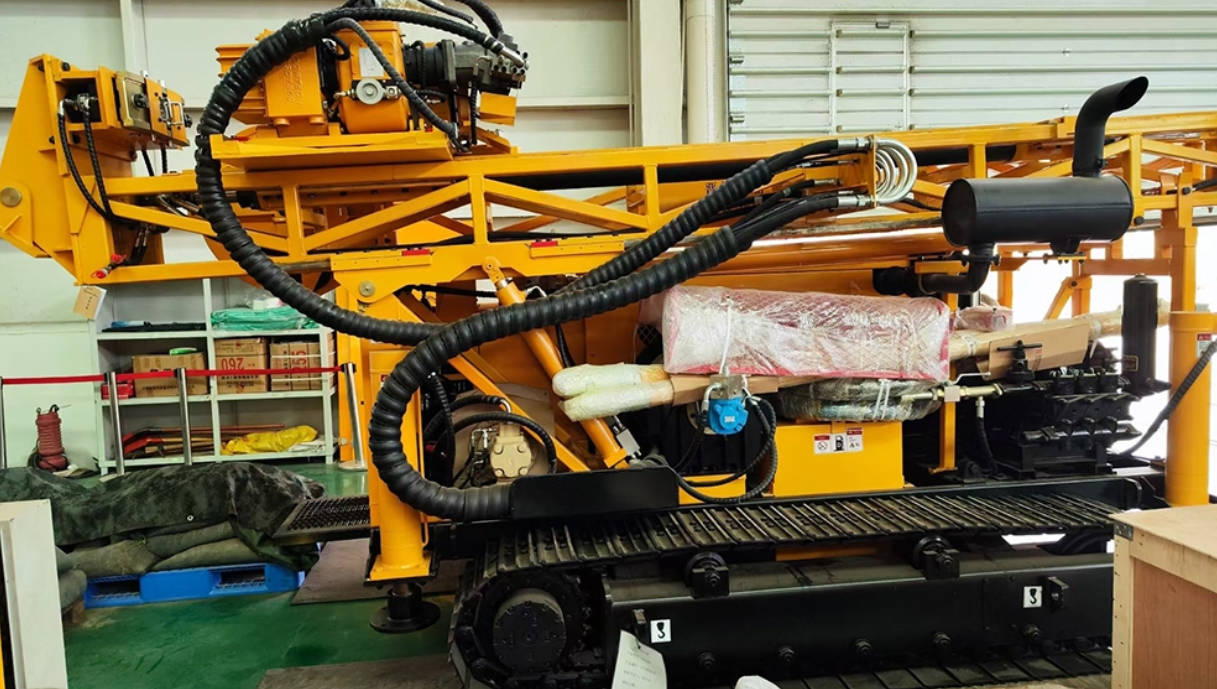
The answer to "Who manufactures drilling rigs?" depends on the type of hole you need to drill and the result you need to achieve. For water wells, a water-well specialist may be appropriate. For piling, a foundation-rig supplier may be the right choice. For mineral exploration and high-quality rock samples, a dedicated manufacturer of full-hydraulic wireline diamond core drilling rigs is the more relevant partner.
For projects involving surface exploration, helicopter-supported access, or underground drilling, CORTECH provides specialized solutions through its CORE SURFACE DRILL, CORE HELI DRILL, and CORE U/G DRILL product ranges.
Before purchasing, provide your target depth, core size, geological conditions, access constraints, and operating environment. A properly configured drilling system can improve mobility, reduce avoidable downtime, protect sample quality, and create stronger value throughout the drilling program.
Contact CORTECH with your project parameters to discuss a full-hydraulic wireline core drilling solution matched to your site, drilling target, and logistics plan.
Drilling rigs for mineral exploration are manufactured by specialized mining and geological drilling-equipment companies. For diamond core drilling, buyers should look for suppliers with experience in wireline coring, hydraulic systems, core barrels, rods, bits, and exploration-site support.
A water well rig is designed to create a borehole that can access groundwater, while a core drilling rig is designed to recover intact cylindrical rock samples. Core drilling prioritizes geological information, sample integrity, and core recovery.
Wireline coring allows the inner tube containing the core sample to be retrieved through the drill rods. This reduces the need to pull the full rod string after each run, which can save substantial time in deep holes and reduce rod-handling activity.
Choose a surface rig when the drill site can be accessed by road, track, or conventional transport equipment. Choose a heli-portable or modular rig when access is severely restricted by mountains, forests, islands, environmental limitations, or the absence of suitable roads.
An underground core drilling rig is used inside mines and underground workings to collect geological, structural, and mineralization data. It can support orebody definition, mine-extension drilling, geotechnical investigation, and operational planning.
Send the target depth, desired core size, rock conditions, hole angle, project location, access conditions, power requirements, water availability, climate, expected work schedule, and any special safety or transport restrictions.
No. The best rig is the one that matches your actual drilling conditions. An oversized rig may increase cost, transport complexity, and operating requirements. An undersized rig may cause slow drilling, excessive wear, and unplanned downtime.
1. Epiroc Exploration and Geoscience Team. [International Standards for Diamond Drilling Equipment]. Explains standardized dimensions, nomenclature, and core sample size differences across diamond drilling equipment systems.
2. SRK Consulting. [Exploration Sampling, Analysis, and QA/QC]. Discusses the importance of reliable exploration samples, QA/QC, representative sampling, and the relationship between drilling data quality and resource estimation.
3. International Council on Mining and Metals. [Consolidated Mining Standard Initiative]. Provides context on evolving responsible-mining expectations, including ethical practices, worker and social safeguards, social performance, and environmental stewardship.
4. Epiroc. [The Drillers Blog]. Technical resource collection covering diamond drilling equipment, drilling practices, equipment care, and selection considerations.
5. International Council on Mining and Metals. [ICMM]. Industry organization addressing responsible mining practices, innovation, safety, and sustainable development in mining and metals.


