
Views: 247 Author: CORTECH Publish Time: 2026-07-01 Origin: Site


Content Menu
● Why Rig Selection Matters in Challenging Conditions
● Understanding Full‑Hydraulic Wireline Diamond Core Rigs
● Key Types: CORE SURFACE, HELI, and U/G Drills
● Lessons from Real‑World Challenging Rig Work
● How to Select the Right Core Rig: A Practical Framework
>> 1. Define Project Constraints
>> 2. Match Rig Architecture to Environment
>> 3. Evaluate Hydraulic and Control Capabilities
>> 4. Consider Lifecycle Cost, Not Just Purchase Price
● Why CORTECH's CORE SURFACE, HELI, and U/G Rigs Stand Out
● Benefits: Productivity, Safety, and Data Quality
● A Step‑by‑Step Rig Selection Checklist
● Case‑Style Scenario – Tunneling Pit with Mixed Methods
● Expert Tips for Maximizing Rig Performance
● Call to Action: Partner with CORTECH for Your Next Challenging Project
● FAQ
>> FAQ 1: How do I decide between CORE SURFACE DRILL and CORE HELI DRILL?
>> FAQ 2: Are full‑hydraulic rigs suitable for both mineral exploration and geotechnical projects?
>> FAQ 3: What kind of support does CORTECH offer after delivery?
>> FAQ 4: How important is operator training for new full‑hydraulic rigs?
>> FAQ 5: Can CORTECH customize rigs for specific OEM/ODM requirements?
As a field engineer working on complex exploration and geotechnical projects, I've learned that choosing the right core drilling rig can make the difference between a safe, efficient job and a costly, risky one. In recent years, full‑hydraulic wireline diamond core drilling rigs—such as CORE SURFACE DRILL, CORE HELI DRILL, and CORE U/G DRILL from CORTECH—have become my go‑to solution for demanding surface and underground projects. [geoprobe]

Challenging drilling projects—tunneling pits, steep slopes, soft formations, or tight underground headings—are unforgiving environments. A poorly matched rig can cause excessive downtime, safety incidents, or even loss of boreholes due to instability or equipment failure. [youtube]
From a practical standpoint, the "right rig" is one that delivers sufficient capacity, flexibility, and safety while remaining economical over the project's full lifecycle. In many cases, this means choosing a versatile hydraulic rig that can adapt quickly to different drilling methods, formations, and access constraints. [geoprobe]
Key takeaway: In difficult jobs, rig selection is not just an equipment decision—it is a risk management strategy.
Full‑hydraulic wireline diamond core rigs occupy a unique space at the intersection of productivity, precision, and safety. [cortechdrilling]
Core features typically include: [cortechdrilling]
- Full‑hydraulic drive for smoother control, higher efficiency, and reduced mechanical wear.
- Wireline coring systems allowing continuous coring without tripping the entire drill string.
- Modular designs for surface, underground, and heli‑portable deployment.
- High‑torque rotation heads and multiple speed ranges to handle mixed formations.
- Integrated safety systems such as emergency shut‑off, guards, and ergonomic controls.
Modern rigs like CORTECH's surface diamond core series are designed for depths around 1000 m (NQ size) or higher, depending on configuration, making them suitable for mineral exploration, geotechnical investigations, and deep resource evaluation. [youtube]
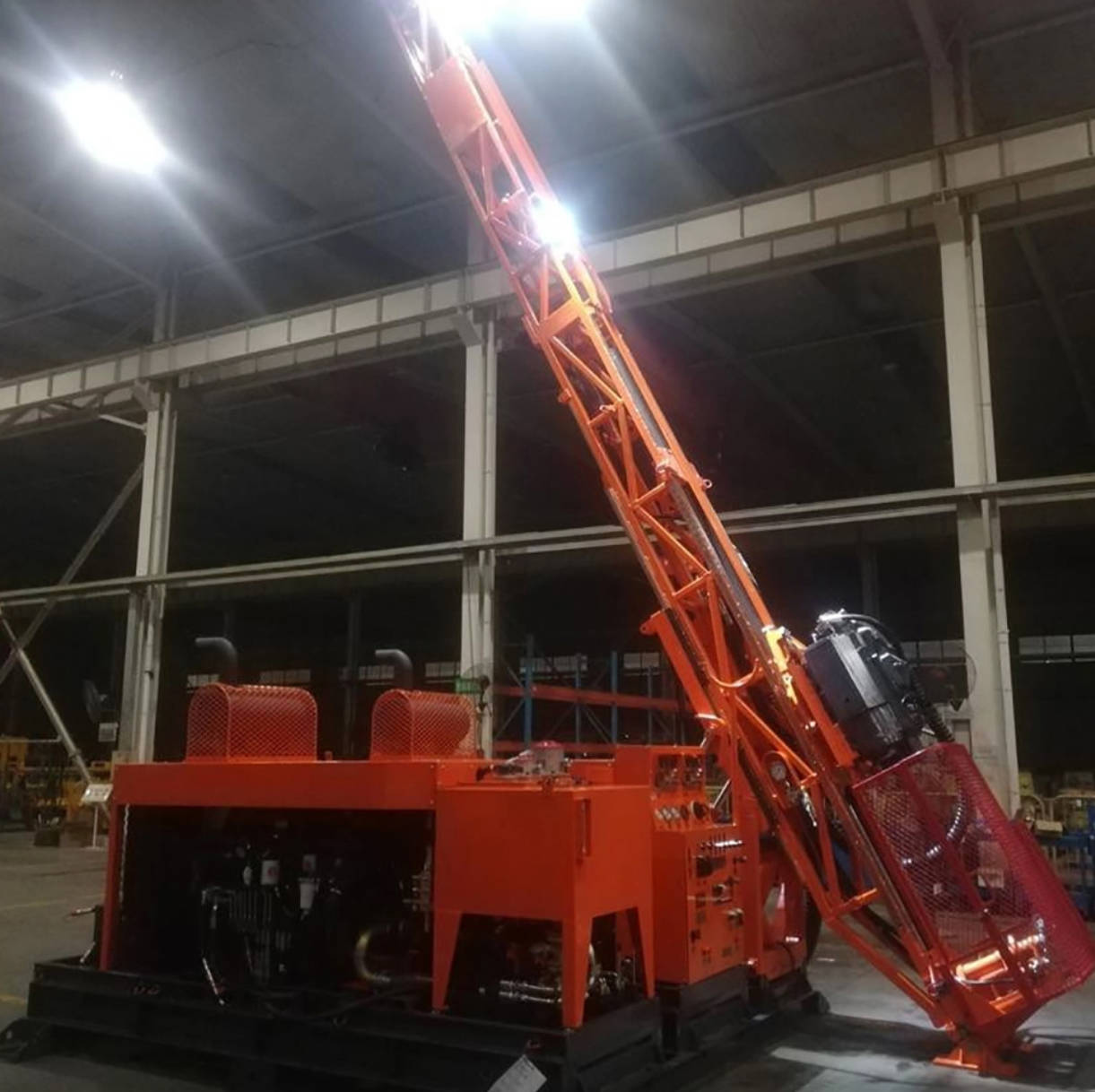
Different project environments demand different rig architectures. [cortechdrilling]
CORE SURFACE DRILL rigs are designed for high‑precision diamond core drilling from the surface, typically used in mineral exploration, deep resource evaluation, and large geotechnical programs. [cortechdrilling]
Typical characteristics: [cortechdrilling]
- Mounted on tracks or skids for better mobility on rough terrain.
- Depth capabilities suited for mid‑ to deep‑range exploration with NQ and HQ sizes.
- Flexible power packs (diesel or electric) depending on site constraints.
- Integrated mud pumps and rod handling options.
These rigs are ideal when you need a stable platform, full control over drilling parameters, and repeatable core quality across multiple boreholes in a campaign. [cortechdrilling]
CORE HELI DRILL rigs are designed for heli‑portable or modular deployment into remote or difficult‑to‑access sites. [cortechdrilling]
Key advantages: [cortechdrilling]
- Lightweight modular sections for transport by helicopter or small vehicles.
- Rapid set‑up and tear‑down in remote locations.
- Suitable for frontier exploration where no access roads or heavy infrastructure exist.
From an engineer's view, these rigs are essential when you need to reach the resource without over‑building logistics, especially in mountainous or environmentally sensitive areas. [cortechdrilling]
CORE U/G DRILL rigs target underground core drilling, installed in drifts, headings, and tunnels. [cortechdrilling]
Distinctive traits: [cortechdrilling]
- Compact footprints for narrow headings and low backs.
- Anchoring systems for floor, wall, or back installation.
- Focus on operator safety in confined, potentially gassy environments.
These rigs allow you to drill from underground outwards or upwards, shortening borehole lengths and reducing surface disturbance. [cortechdrilling]
Existing industry case stories show how the right multipurpose rig can deliver value in tight, complex sites. In one documented example, a contractor used a versatile rig in a tunneling pit where cranes were needed to position the equipment and space was extremely limited. [geoprobe]
The rig's ability to perform multiple methods in a single day—such as direct‑push, augering, or rotary work—meant less mobilization, less downtime, and lower overall cost for the client. Crew feedback emphasized safety, compactness, and flexibility as deciding factors when taking on jobs other contractors refused. [geoprobe]
These experiences align with what I see on full‑hydraulic diamond rigs: when one rig can cover multiple methods and formations, your project risk and total cost drop significantly. [youtube]
To select the right CORE SURFACE DRILL, CORE HELI DRILL, or CORE U/G DRILL, you need a structured evaluation process. [cortechdrilling]
Start by understanding the real constraints you face: [cortechdrilling]
- Access (surface roads, portals, tunnels, helicopter access)
- Depth and core size (NQ, HQ, PQ targets)
- Formation type (hard rock, fractured zones, unconsolidated layers)
- Environmental limitations (noise, emissions, footprint)
- Safety regulations and site‑specific standards
- Budget and schedule (capex, opex, target meterage per shift)
This information narrows down which rig class is feasible before you even look at specific models. [cortechdrilling]
Once constraints are clear, map them to rig types. [cortechdrilling]
Typical mapping:
| Project Scenario | Preferred Rig Type | Reason |
|---|---|---|
| Deep surface exploration (>800 m NQ) | CORE SURFACE DRILL | Stable platform, high power, integrated mud system cortechdrilling |
| Remote mountain or jungle exploration | CORE HELI DRILL | Modular, heli‑portable, light logistics cortechdrilling |
| Underground resource definition | CORE U/G DRILL | Compact, installable in headings cortechdrilling |
| Tunneling pits / limited headroom | Compact surface or U/G rig | Small footprint, crane deployable geoprobe |
This environment‑rig matching greatly reduces the risk of mis‑specifying the equipment. [geoprobe]
Rig performance is not only about rated depth—it's about control, consistency, and safety. [youtube]
Key parameters to assess: [youtube]
- Rotation torque and speed ranges for different bit sizes.
- Feed and pullback forces for challenging formations and long strings.
- Hydraulic system reliability (pump quality, filtration, cooling).
- Control layout and ergonomics to reduce operator fatigue and errors.
- Integration with rod handlers, winches, and safety devices.
Full‑hydraulic rigs generally offer finer control and better responsiveness than purely mechanical designs, which is crucial when coring in fractured or variable formations. [youtube]
From a management perspective, total cost of ownership often outweighs upfront price. [cortechdrilling]
When comparing suppliers: [cortechdrilling]
- Look at fuel efficiency and energy use per meter drilled.
- Evaluate maintenance intervals and spare parts availability.
- Assess technical support and training capabilities.
- Check field feedback from other contractors and mining companies.
Manufacturers such as CORTECH deliver full‑hydraulic rigs to dozens of countries each year, supported by established after‑sales networks, which can significantly reduce downtime and lifecycle cost. [youtube]

CORTECH has focused for decades on researching and developing full‑hydraulic drilling rigs, with a product portfolio covering surface, underground, and reverse circulation applications. Their rigs are tailored to different geological deposits and exploration methods, making them particularly suitable for complex field conditions.
Key strengths from an engineer's viewpoint:
- High productivity: Many CORTECH rigs are designed for fast penetration while maintaining core integrity.
- Reliability: Robust structures and proven hydraulic components improve uptime.
- Safety: Operator‑oriented controls and safety features reduce incident risk.
- Flexibility: OEM/ODM capabilities allow configuration to specific customer needs.
With more than 200 full‑hydraulic rigs delivered annually to dozens of countries, CORTECH has established a strong reputation in the diamond core drilling segment.

From the field, the benefits of a well‑selected rig translate directly into measurable outcomes: [youtube]
- Higher meterage per shift due to efficient hydraulic systems and wireline coring.
- Reduced non‑productive time (NPT) from fewer breakdowns and easier maintenance.
- Improved safety performance through better controls and rig stability.
- Consistent core quality, which feeds more reliable geological and geotechnical models.
In challenging projects—like tunneling pits where rigs must be crane‑deployed into confined spaces—a compact, multifunctional rig has already proved its ability to outperform traditional setups. [geoprobe]
To help teams operationalize the selection process, I recommend a simple five‑step checklist you can apply before every major project.
1. Clarify objectives.
Define target depth, core size, and data quality requirements. [cortechdrilling]
2. Assess site access and constraints.
Determine whether surface, heli, or underground access is most practical. [cortechdrilling]
3. Shortlist rig types.
Preselect between CORE SURFACE DRILL, CORE HELI DRILL, and CORE U/G DRILL based on access and environment. [cortechdrilling]
4. Evaluate two or three candidate models.
Compare torque, feed force, power pack options, and control systems, plus OEM support and after‑sales capabilities. [cortechdrilling]
5. Run a risk and cost review.
Estimate total cost of ownership and identify key operational risks (e.g., formation changes, weather, logistics) that the rig must accommodate. [cortechdrilling]
By formalizing this process, project managers and drilling supervisors can standardize rig selection decisions and avoid ad‑hoc choices under time pressure. [geoprobe]
Let's consider a realistic scenario inspired by documented industry practice: a contractor is tasked with geotechnical drilling in a tunneling pit, including core sampling and in‑situ testing. [geoprobe]
Challenges: [geoprobe]
- Limited working space and headroom.
- Need for multiple methods: augers, mud rotary, and coring.
- Strict safety constraints for crane‑deployed equipment.
Solution approach:
- Deploy a compact full‑hydraulic rig with multifunction capability, similar to CORTECH's modular core rigs. [youtube]
- Use CORE SURFACE DRILL configurations with track mounting for stability and ease of repositioning. [cortechdrilling]
- Optimize drilling sequence to perform coring and other methods with the same rig, minimizing mobilization events. [geoprobe]
Results observed in similar projects: [youtube]
- Reduced total job duration because one flexible rig handled multiple tasks.
- Improved safety as crews adapted to a single control layout and rig platform.
- Lower overall cost due to fewer rigs, fewer transport moves, and simplified site logistics.
Even with the best rig, performance depends on how you operate and maintain it. [cortechdrilling]
Expert tips from the field: [youtube]
- Standardize operating procedures. Ensure drillers follow consistent protocols for start‑up, coring, and shut‑down.
- Monitor key hydraulic parameters. Watch temperatures, pressures, and flow rates to catch issues early.
- Use OEM‑approved spare parts and consumables. This reduces failures and keeps rigs within design specifications.
- Train crews on new rigs. Formal training from OEMs like CORTECH shortens the learning curve and boosts safety.
- Document performance per hole. Track penetration rates, downtime causes, and core recovery to refine future rig choices.
These practices allow you to extract maximum value from your rig fleet and ensure that each project builds experience for the next. [cortechdrilling]
If you're planning a challenging surface, remote, or underground drilling project, partnering with a manufacturer that specializes in full‑hydraulic diamond core rigs can significantly reduce risk and improve outcomes. [cortechdrilling]
With years of experience and a global customer base, CORTECH offers CORE SURFACE DRILL, CORE HELI DRILL, and CORE U/G DRILL solutions that can be configured to your specific geological, logistical, and regulatory requirements. [cortechdrilling]
Take the next step:
- Review your upcoming project's requirements.
- Shortlist the most suitable CORTECH rig type.
- Contact CORTECH's engineering team to discuss configuration, OEM/ODM options, and lifecycle support. [cortechdrilling]
Choosing between CORE SURFACE DRILL and CORE HELI DRILL mainly depends on access and logistics. When roads and heavy transport are available, a surface rig offers higher capacity and more integrated systems; when access is limited to helicopter or light vehicles, a heli‑portable modular rig is the better choice. [cortechdrilling]
Yes. Full‑hydraulic wireline diamond rigs are widely used for hard‑rock mineral exploration and high‑precision geotechnical programs, thanks to their control, efficiency, and core quality. By adjusting coring tools, drilling parameters, and data acquisition practices, the same rig can support both types of projects within its design envelope. [cortechdrilling]
CORTECH provides technical support, training, spare parts supply, and remote troubleshooting to customers worldwide. Their rigs are delivered to dozens of countries every year, and this global footprint is backed by a service network designed to minimize downtime and extend equipment life. [youtube]
Operator training is critical because hydraulic control systems, safety features, and maintenance procedures differ from older mechanical rigs. Formal training, ideally conducted with the OEM's technical staff, improves safety, protects the rig from misuse, and helps crews achieve target penetration rates faster. [cortechdrilling]
Yes. CORTECH is known for its OEM/ODM‑friendly approach, working closely with customers to adapt rig configurations to local standards, unique project requirements, or branded solutions. This flexibility allows drilling contractors, mining houses, and engineering firms to obtain rigs that align closely with their operational and branding strategies. [cortechdrilling]
1. Geoprobe Systems. "Right Rig for Challenging Drill Rig Work." Geoprobe Articles. <https://geoprobe.com/articles/right-rig-challenging-drill-rig-work> [geoprobe]
2. CORTECH Drilling. "CORTECH – Tagagawa ng Buong Hydraulic Diamond Core Drilling Rigs." <https://www.cortechdrilling.com/fil/> [cortechdrilling]
3. CORTECH Drilling. "China CORE SURFACE DRILL Manufacturer." <https://www.cortechdrilling.com/core-surface-drill.html> [cortechdrilling]
4. CORTECH Drilling. "Core Surface Drill Rigs for High Precision Diamond Core Drilling Projects." <https://www.cortechdrilling.com/core-surface-drill-rigs-for-high-precision-diamond-core-drilling-projects.html> [cortechdrilling]
5. CORTECH Drilling. "Product Category." <https://www.cortechdrilling.com/productcategory.html> [cortechdrilling]
6. CORTECH Drilling. "How to Choose an Innovative Core Surface Drill Manufacturer: An Engineer's Field Perspective." <https://www.cortechdrilling.com/mn/how-to-choose-an-innovative-core-surface-drill-manufacturer-an-engineer-s-field-perspective.html> [cortechdrilling]
7. CORTECH Drilling Equipment Co., Ltd. "High Capacity Diamond Core Surface Drilling Rigs" (Video). <https://www.youtube.com/watch?v=_ScleK-F3d0> [youtube]
8. CORTECH Drilling. "News – CORTECH Drilling." <https://www.cortechdrilling.com/News.html> [cortechdrilling]
9. CORTECH Drilling Equipment Co., Ltd. "Surface Diamond Core Drilling Rig CSD1300G/1300L" (Video). <https://www.youtube.com/watch?v=M1gWZL5RPs0> [youtube]


