
Views: 222 Author: CORTECH Publish Time: 2026-05-13 Origin: Site


Hydraulic boring rigs deliver deeper, cleaner and more controllable civil‑engineering bores than traditional auger drills, especially where accuracy, safety and geotechnical data quality matter. At the same time, augers still win on simplicity and low‑cost production drilling in shallow, uniform soils. [sinocoredrill]
Civil engineers today are under pressure to build faster, safer and more sustainably, while still controlling project cost. Choosing between a hydraulic boring rig and a traditional auger drill directly affects cycle times, QA/QC, and long‑term asset risk. From my experience working with drilling teams and from CORTECH's focus on all‑hydraulic core rigs for mineral and geotechnical projects, this choice is no longer "just equipment" – it's a strategic decision that shapes design assumptions, groundwater control and foundation performance. [linkedin]
In this article, I will compare hydraulic boring rigs (including modern all‑hydraulic rope‑core diamond systems similar to CORTECH's CORE SURFACE DRILL line) with traditional auger drills from a civil‑engineering perspective, using real‑world workflows, current drilling‑method data and on‑site best practices. The goal is to show when you should stay with a cost‑effective auger and when upgrading to hydraulic boring rigs delivers a measurable return in productivity, risk reduction and data quality. [ppmco]
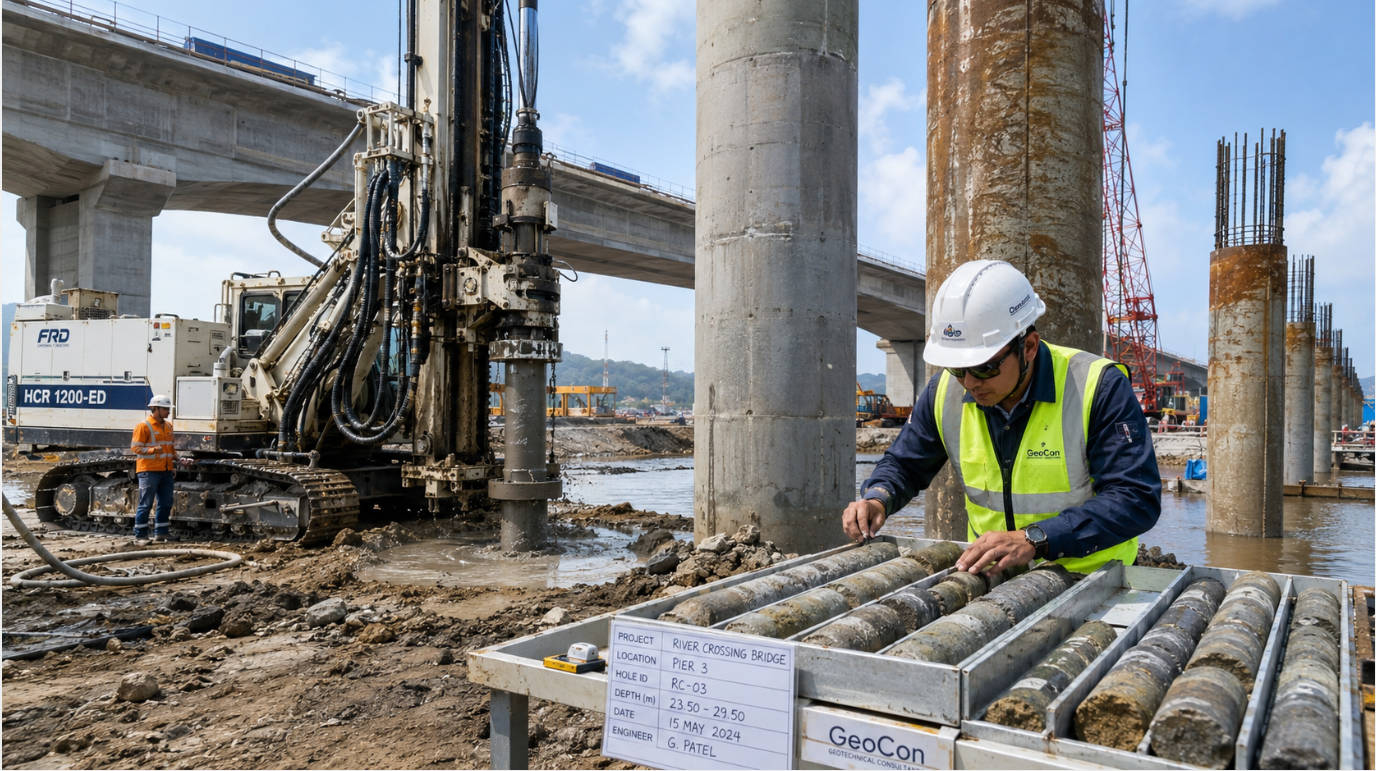
A hydraulic boring rig is a drill rig that uses a closed‑loop hydraulic system to power rotation, feed, hoisting and auxiliary functions instead of purely mechanical drives. In the surface core‑drilling segment, all‑hydraulic diamond rigs are now standard for deep mineral exploration and advanced geotechnical investigations, because they provide high torque at low RPM, smooth feed and excellent control over penetration rate. [cortechdrilling]
Modern rigs can be crawler‑mounted or skid‑mounted, with options for rope‑core diamond drilling, automated rod handling and digital instrumentation of torque, pullback and fluid circulation. From an engineer's standpoint, that means better repeatability from hole to hole, tighter control of verticality and the ability to drill deeper boreholes in harder formations than traditional auger systems can manage. [sinocoredrill]
A traditional auger drill uses a helical flight (the auger) to cut and transport soil up the borehole as it rotates. In civil engineering, augers are widely used for shallow to medium‑depth work in unconsolidated or moderately stiff soils, such as house foundations, small‑diameter piles, environmental sampling and utility pole holes. [ppmco]
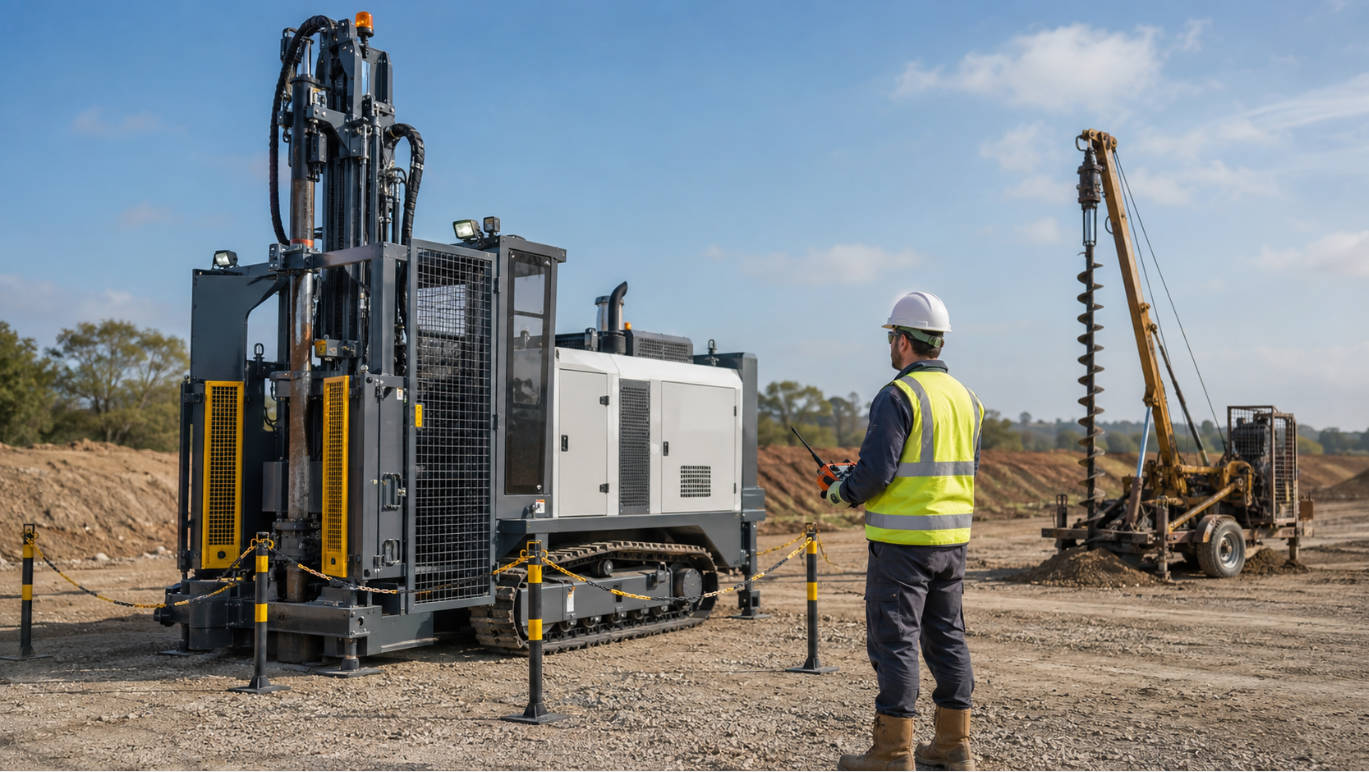
Because augers are mechanically simple, they are robust, easy to learn and inexpensive to mobilize, which is why many contractors rely on them for routine boring. However, their performance drops in very hard strata, highly variable formations or when you need intact core samples instead of disturbed cuttings, and maintaining straightness or tight tolerances in deeper holes becomes challenging. [sinocoredrill]
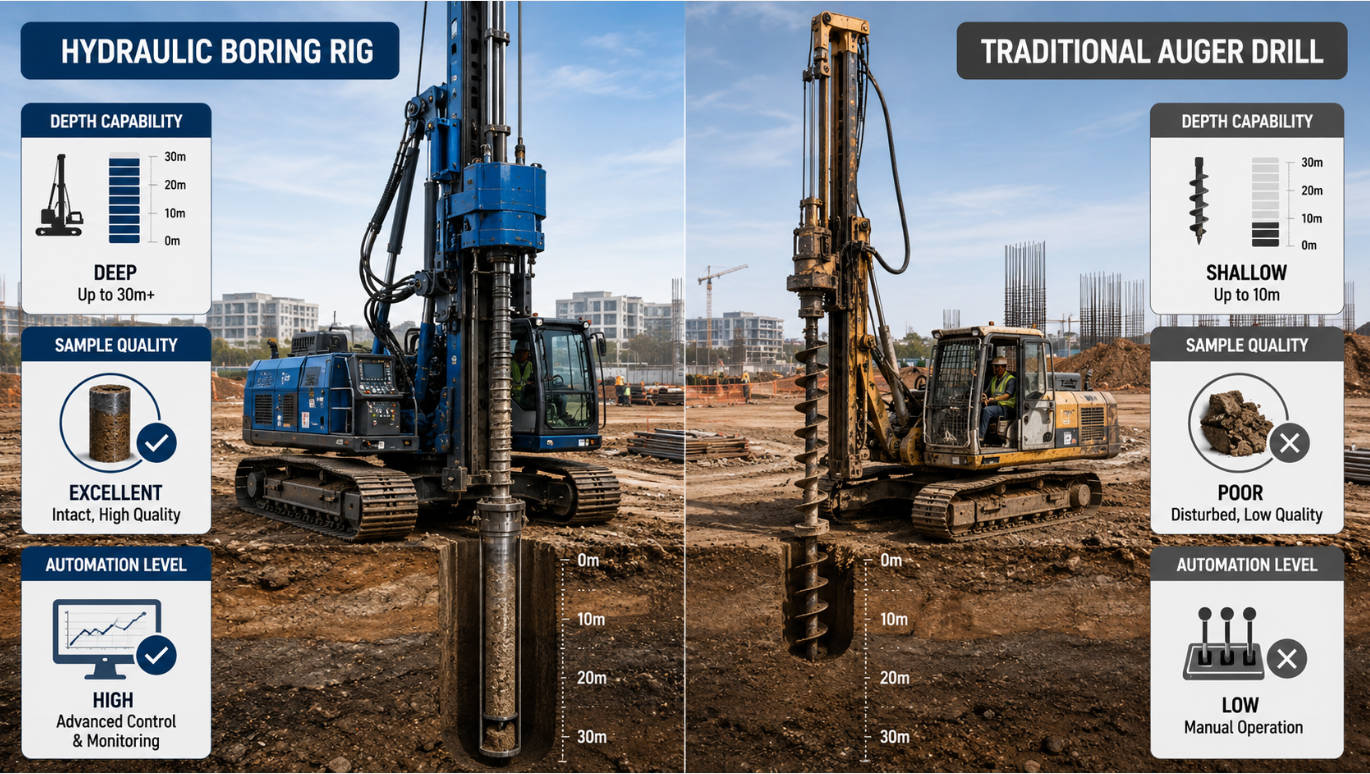
| Dimension | Hydraulic Boring Rig (incl. diamond core) | Traditional Auger Drill |
|---|---|---|
| Typical depth capability | Hundreds to thousands of meters sinocoredrill | Usually shallow to moderate depths ppmco |
| Ground conditions | Soft soils to hard rock ppmco | Unconsolidated to moderately stiff soils ppmco |
| Sample quality | High‑quality core (intact) sinocoredrill | Disturbed cuttings; limited core ppmco |
| Borehole accuracy | High verticality and positional control sinocoredrill | Harder to control at depth |
| Automation & monitoring | Advanced hydraulic and digital options linkedin | Usually basic mechanical controls |
| Capex and mobilization cost | Higher sinocoredrill | Lower sinocoredrill |
| Setup time | Longer but optimized for longer campaigns | Fast for small jobs |
| Best for | Deep, critical or data‑intensive bores | Shallow, repetitive and cost‑sensitive work |
The fundamental trade‑off is depth, control and data quality versus simplicity and upfront cost. For projects where boreholes underpin design assumptions – major foundations, slope stability, dams, tunnels – hydraulic rigs allow engineers to design on the basis of reliable core and precise logs, rather than interpolating from disturbed auger samples. [concreteinsight]
In medium to hard formations, hydraulic rigs with diamond or rotary bits maintain stable penetration rates because torque and feed can be tuned to formation changes in real time. Sonic and rotary methods, both typically mounted on hydraulic drill rigs, are documented as significantly faster than traditional auger methods in many geology and engineering applications. [ppmco]
Augers can be faster for very shallow, soft‑soil bores, especially where there is minimal need for cleaning or sampling. But once you move beyond a few meters, efficiency drops sharply due to frequent auger flights clearing, more risk of collapse in saturated or loose strata and time lost correcting deviated holes. [ppmco]
Hydraulic core rigs deliver continuous or near‑continuous intact core that supports precise logging of layer boundaries, fractures, RQD and permeability indicators. In current market analyses, automation and digitization of core‑drilling operations are highlighted as key trends for improving data reliability and reducing human error in logging. [linkedin]
Traditional augers produce loose cuttings, which are adequate for basic soil classification but weak for detailed geotechnical parameters. That gap matters for civil engineering: pile capacity, settlement and liquefaction assessments all depend on reliable subsurface characterization, especially in complex urban or infrastructure projects. [concreteinsight]
Hydraulic boring rigs have higher capital cost, but their energy efficiency per meter often improves in harder ground and deeper bores because hydraulic power is transmitted more effectively than purely mechanical systems. Over a campaign with dozens of deep boreholes, the fuel and non‑productive time savings can offset higher day rates. [sinocoredrill]
Augers, by contrast, are cheap to run for short jobs. For contractors doing many small, shallow holes in similar ground conditions, the simplicity of augers keeps maintenance and fuel consumption modest, which is why they remain popular in local foundation and utility work. [sinocoredrill]
From a safety and ESG standpoint, hydraulic rigs are increasingly aligned with emerging standards in civil infrastructure and mineral exploration. Modern hydraulic core rigs integrate features like enclosed rod handling, remote controls and automated hoisting that reduce manual handling and exposure around rotating equipment. [linkedin]
Auger rigs can be operated safely, but many older platforms lack advanced guarding or automated handling, increasing the risk profile on busy civil jobsites. In sensitive urban environments or environmentally regulated projects, the ability of hydraulic rigs to support cleaner fluid circulation, reduced noise and more precise hole control also simplifies compliance. [linkedin]
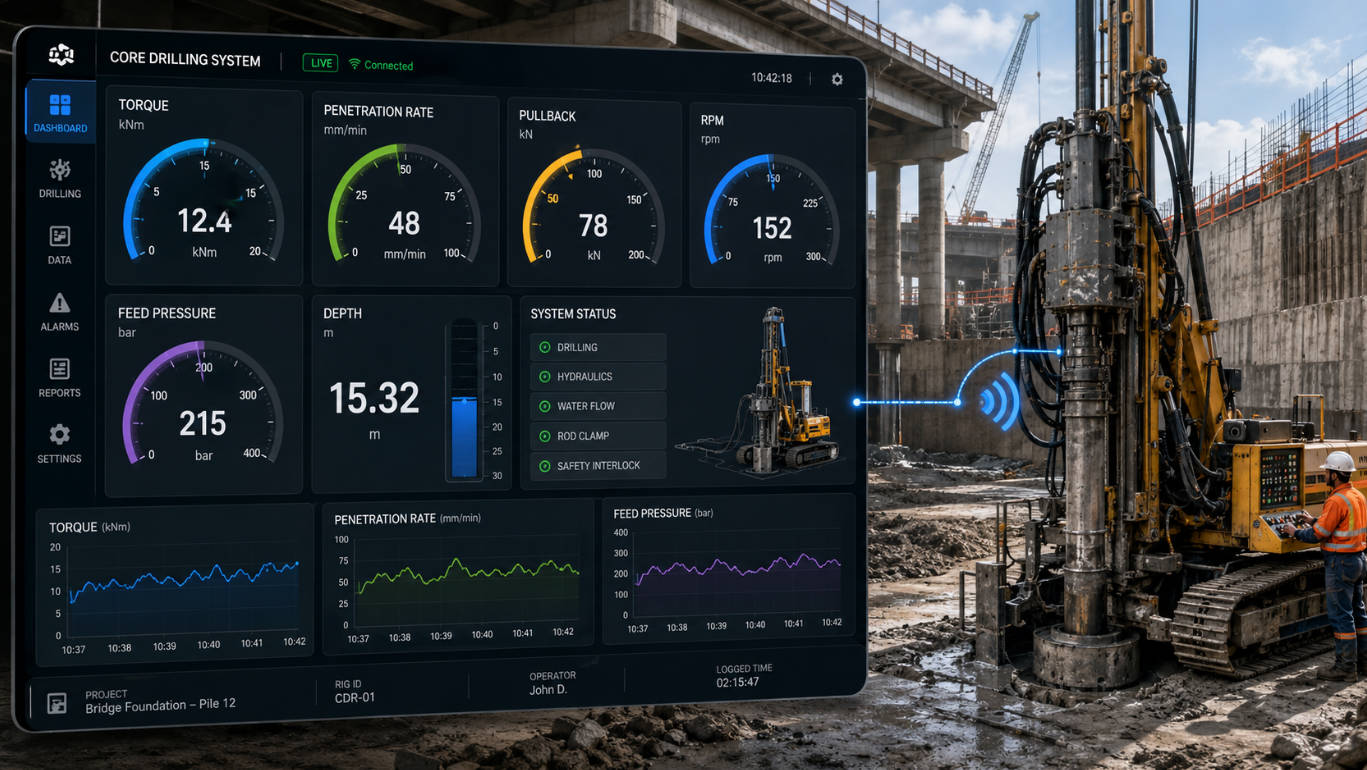
Industry reports on core drilling and concrete coring highlight a clear trend: automation, smart sensors and real‑time data capture. Hydraulic rigs are the natural platform for these upgrades, because hydraulic systems already integrate proportional valves and monitoring points that can be digitized. [cortechdrilling]
For civil‑engineering teams, this means:
- Real‑time monitoring of torque, pullback and penetration to detect anomalies. [concreteinsight]
- Automated logging support by linking drilling parameters to depth. [linkedin]
- Improved QA/QC in design reports and better traceability for regulators. [concreteinsight]
Traditional auger rigs are usually not instrumented to this level, so site engineers must rely more heavily on manual notes and intermittent sampling. As project owners demand higher transparency, this digitalization advantage will increasingly favor hydraulic boring solutions. [linkedin]
Drawing on what we see in the core‑drilling and civil‑infrastructure markets, typical patterns look like this. [concreteinsight]
Best use‑cases for hydraulic boring rigs (incl. diamond core):
- Deep foundation investigations for bridges, high‑rises and dams. [ppmco]
- Tunnelling and underground space projects requiring detailed rock mass characterization. [concreteinsight]
- Slope stability and landslide risk studies in complex geology. [ppmco]
- Combined mineral exploration and infrastructure planning in the same corridor. [linkedin]
Best use‑cases for traditional auger drills:
- Small building foundations in uniform soils. [ppmco]
- Temporary shoring, fence posts, sign and utility pole installations. [sinocoredrill]
- Shallow environmental borings where only basic soil description is needed. [ppmco]
- Projects with extreme budget constraints and limited depth requirements. [sinocoredrill]
As a manufacturer focused on all‑hydraulic diamond core rigs, CORTECH operates in the segment where precision, depth and core quality are non‑negotiable. The company provides surface, heli‑portable and underground core rigs with hydraulic systems optimized for stable rotation and feed in complex formations. [licdrii.goldsupplier]
From that vantage point, three key insights stand out for civil engineers evaluating hydraulic boring rigs vs. auger drills:
1. Data vs. cost is the real trade‑off. For high‑risk or high‑value structures, the cost of poor data (change orders, remediation, litigation) far exceeds the incremental investment in hydraulic boring rigs and proper core drilling. [concreteinsight]
2. Hybrid fleets are often optimal. Many contractors now maintain both auger rigs for shallow, repetitive work and hydraulic core rigs for critical boreholes, optimizing total fleet ROI. [sinocoredrill]
3. Upgradability matters. All‑hydraulic rigs give you a path to add automation, digital monitoring and rig‑upgrade packages, extending equipment life and aligning with future standards. [cortechdrilling]
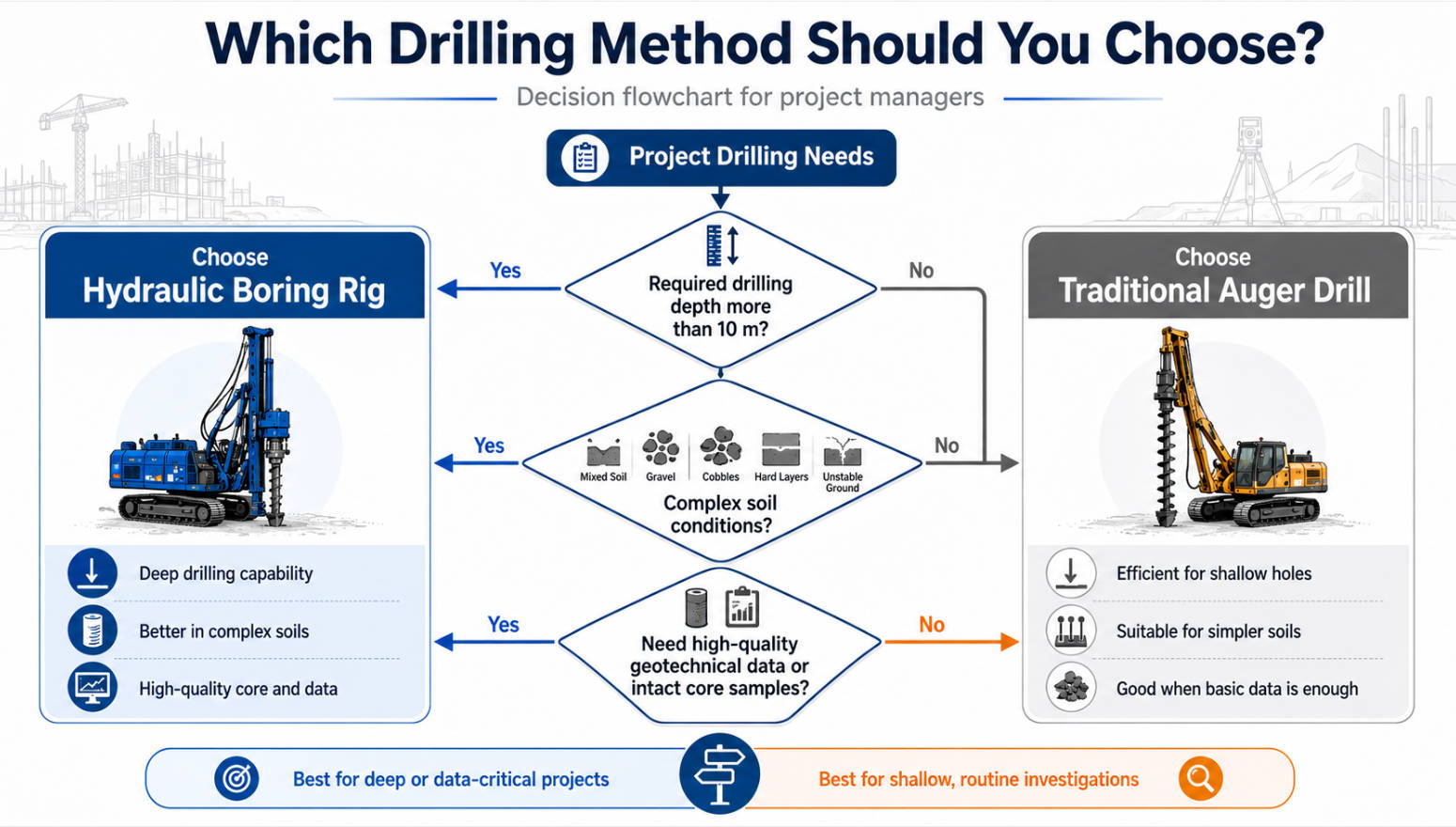
When deciding between a hydraulic boring rig and a traditional auger drill on your next project, walk through this simple checklist:
1. Required depth
- More than 30–50 m or variable formations? Favor a hydraulic boring rig. [sinocoredrill]
2. Ground conditions
- Hard rock, mixed strata or boulders? You need rotary or core drilling on a hydraulic rig, not just augers. [ppmco]
3. Data quality requirements
- Are you relying on detailed RQD, fracture patterns or permeability estimation? Use hydraulic core drilling for intact core. [concreteinsight]
4. Risk profile of the structure
- Bridges, high‑rises, dams, tunnels or slopes near populated areas justify investment in higher‑quality boreholes. [concreteinsight]
5. Budget and time
- For low‑risk, shallow works with tight budgets, a traditional auger drill may still be the most efficient tool. [sinocoredrill]
Beyond the drilling phase, better subsurface data translates into better design, more accurate pile lengths, optimized ground‑improvement scopes and fewer surprises during construction. With core‑drilling data captured via hydraulic rigs and increasingly enhanced with digital logging, design assumptions can be validated instead of guessed. [linkedin]
For asset owners, this means reduced lifecycle risk, fewer serviceability issues and stronger documentation to support financing and insurance. As regulatory and ESG scrutiny increases, the documentation provided by hydraulic boring campaigns can become a competitive differentiator in infrastructure tenders. [linkedin]
If your civil or infrastructure projects are moving into deeper, more complex ground conditions, it may be time to revisit your reliance on traditional auger drills. By integrating hydraulic boring rigs – including all‑hydraulic rope‑core diamond systems – into your fleet or partnering with a specialist contractor, you can significantly upgrade your project's data quality, safety and long‑term performance. [linkedin]
To explore how CORTECH‑style hydraulic core rigs and solutions can be tailored to your civil‑engineering requirements, consider organizing a pilot bore program on your next high‑value project and benchmarking cycle times, safety and data quality against your existing auger operations. [licdrii.goldsupplier]
Hydraulic drilling rigs configured for rotary or core drilling can reach hundreds to thousands of meters, depending on rig size and ground conditions. Traditional auger drills are generally limited to shallow and moderate depths in unconsolidated soils before efficiency and borehole quality decline. [ppmco]
Hydraulic rigs have higher purchase and mobilization costs, but they often deliver lower cost per meter in deep or complex formations thanks to better penetration control, fewer problems and higher data yield. For small, simple jobs, traditional augers remain cheaper overall. [sinocoredrill]
In practice, most contractors run mixed fleets. Hydraulic boring rigs take over high‑risk, deep or data‑intensive work, while augers handle routine shallow holes where detailed core is not required. This hybrid strategy balances CAPEX and project efficiency. [ppmco]
Automation and digital monitoring on hydraulic rigs enable real‑time tracking of drilling parameters, more consistent quality and better documentation for engineering and compliance. This trend is reshaping core drilling and concrete coring practices across construction and infrastructure projects. [linkedin]
Yes. High‑quality core from hydraulic drilling supports more accurate stratigraphic models, strength parameters and groundwater assessments, which can optimize pile lengths, reduce over‑design and prevent costly redesign during construction. In critical structures, this directly impacts safety and lifecycle cost. [concreteinsight]
1. Attachment Authority. "Comparing the Benefits of Augers vs Drills." 2024. [attachmentauthority]
2. Sino Core Drill. "Drill Rig vs. Auger: Key Differences and Applications." 2024. [sinocoredrill]
3. PPM Consultants. "Drilling Methods 101: The Pros and Cons." [ppmco]
4. LinkedIn. "Cortech Drilling Equipment Co. Ltd – Company Profile." [linkedin]
5. Cortech Drilling Equipment Co. Ltd. "Hydraulic Core Drilling Rig Solution – CORE SURFACE DRILL and related products." [cortechdrilling]
6. Company profile: Beijing Cortech Drilling Equipment Co., Ltd., Made‑in‑China / Global B2B profile. [made-in-china]
7. LinkedIn Article. "Exploring United States Core Drilling Rig Market Dynamics – automation and digitization trends." [linkedin]
8. Concrete Insight. "Top Trends in Concrete Cutting and Coring for Construction in 2025." [concreteinsight]


