
Views: 217 Author: CORTECH Publish Time: 2026-11-18 Origin: Site


Content Menu
● Diamond Core Drill vs. Conventional Drill: What Each Method Recovers
>> How a diamond core drill preserves rock structure
>> What "conventional drill" means in this comparison
● Diamond Core Drilling vs. Conventional Drilling: Side-by-Side Comparison
● When to Choose Diamond Core Drilling for Rock Sampling
>> Mineral exploration: Distinguish grade from geological context
>> Geotechnical investigation: Recover what the design team needs to test
>> Reconnaissance: Use conventional drilling when chips are sufficient
● Field Example: Why High Core Recovery Can Still Mean Low RQD
● How to Specify a Wireline Surface Core Drill
>> Choose NQ, HQ, or PQ around the sample requirement
>> Match the barrel to the weakest interval that matters
>> Ask for capacity at the planned diameter, depth, and angle
● Procurement Checklist: Compare Cost per Accepted Sample Metre
● Request a CORTECH Surface Core Drill Configuration
>> 1. Can a conventional drill collect rock samples for laboratory analysis?
>> 2. Is diamond core drilling always slower than conventional drilling?
>> 3. What is the difference between core recovery and RQD?
>> 4. Should I choose NQ or HQ for mineral exploration?
>> 5. Can RC drilling and diamond core drilling be used in the same program?
A diamond core drill is the better choice for core drilling for rock sampling when the project needs intact specimens, visible fractures, or a record of how rock layers meet. A conventional drill is often the better choice when the job calls for rock chips, preliminary geochemical screening, or simply advancing a borehole. The deciding question is not which rig drills faster. It is whether the sample it brings back can answer the geological or engineering question that justified drilling the hole.
From CORTECH's perspective as a manufacturer of fully hydraulic surface diamond core drilling rigs, the most useful specification starts with the sample, not the machine. Define what the geologist or laboratory needs to see, measure, or test. Then work backward to the drilling method, core diameter, and rig configuration.
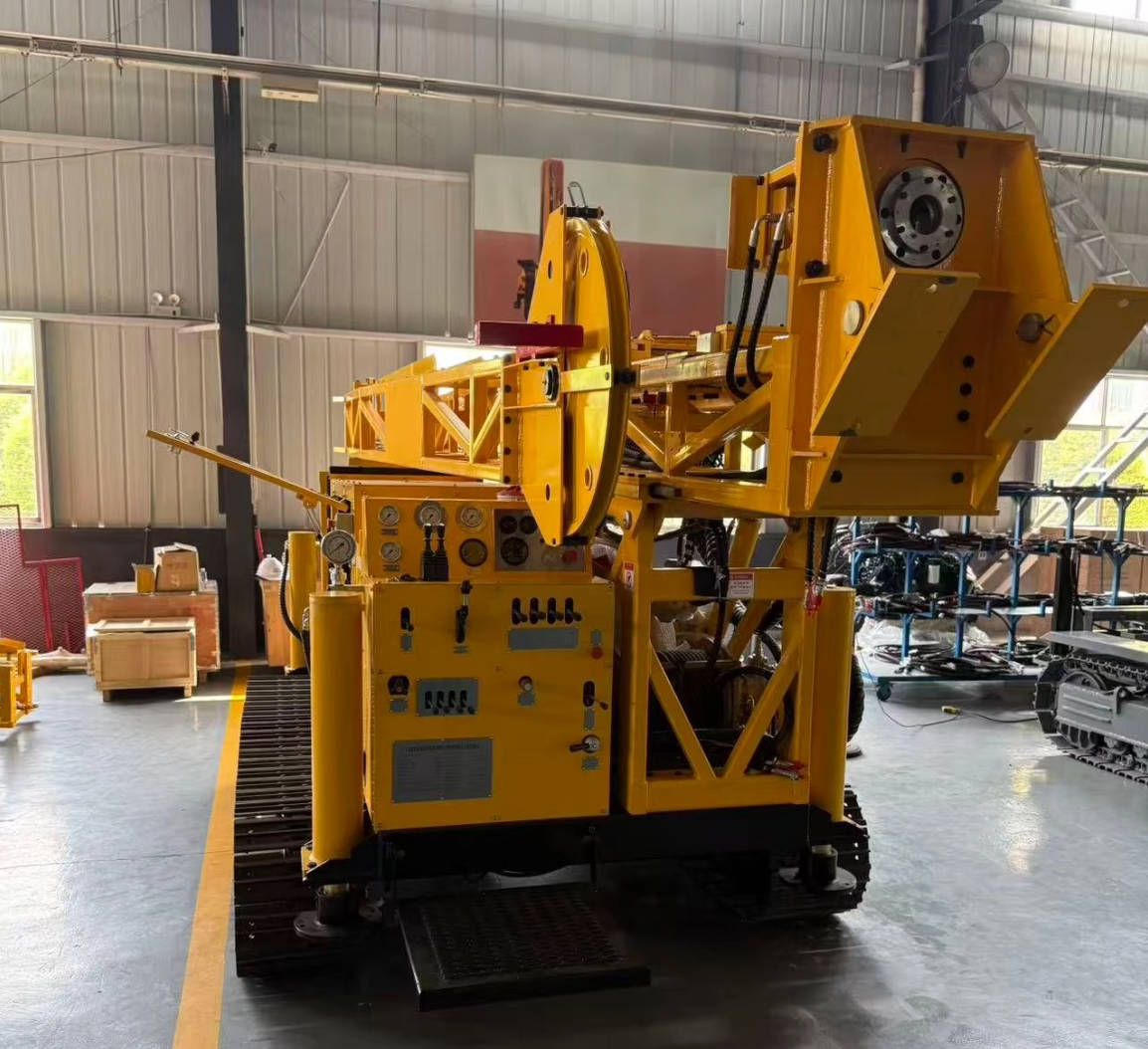
A diamond core bit cuts a ring around a central cylinder of rock. As the bit advances, the cylinder enters a core barrel. The recovered core is laid out in depth order so the logging team can examine features such as lithology, weathering, veins, fractures, and contacts between rock types. Where recovery is good, the core preserves relationships that loose fragments cannot show.
In wireline diamond core drilling, an overshot—a retrieval tool lowered on a cable—engages the inner tube and brings it to the surface. The drill rods can stay in the hole during routine core retrieval, although they still need to be pulled for tasks such as changing the bit. The operational benefit becomes more significant as the hole deepens and a full rod trip takes longer.
Here, conventional drilling means non-coring methods that break rock into fragments rather than recover a cylinder. The term can include rotary and percussion methods. Reverse circulation (RC) is one example, not a synonym for all conventional drilling: in mineral exploration RC, cuttings return to the surface through the inner passage of dual-wall rods. Conventional coring, by contrast, also recovers rock cylinders; its distinction from wireline coring is how the core barrel is retrieved.
Cuttings can be suitable for identifying rock types or assaying selected intervals when the sampling system controls loss, contamination, and interval mixing. What they cannot do is reconstruct the original geometry of a fracture, vein, or contact. That difference matters when a laboratory assay is only one part of the required deliverable.

| Decision factor | Diamond core drilling | Conventional non-coring drilling |
|---|---|---|
| Recovered material | Cylindrical core laid out in depth order | Chips or cuttings collected by interval |
| Geological detail | Shows preserved contacts, veins, and fractures where recovery allows | Supports chip logging and compositional screening but not direct observation of original geometry |
| Laboratory use | Can provide specimens for strength or density testing, subject to size and condition | Can provide material for suitable chemical assays but not intact strength specimens |
| Ground-quality logging | Supports core recovery and rock quality designation measurements | Cuttings alone cannot provide those measurements |
| Productivity | Includes coring, retrieval, and sample handling time | Can be faster where chip samples meet the program's objectives |
| Main sampling risk | Core loss, drilling-induced breaks, or disturbance of weak zones | Sample loss, contamination, or mixing between intervals |
| Typical role | Structural logging, geotechnical investigation, targeted mineral exploration | Reconnaissance, chip-based geochemical sampling, or borehole advancement |
Treat the productivity comparison as a planning assumption, not a purchasing guarantee. A faster method only reduces project cost when the resulting sample is acceptable. Conversely, paying to core every metre adds little value if the project only needs intact rock from a few target intervals.
An assay can tell you how much of a target element was measured in a sampled interval. Core can help explain where that mineralization occurs: in a vein, at a contact, or dispersed through the host rock. This becomes particularly useful when teams need to correlate zones between holes or decide where to drill next. For structural measurements that must be related to real-world directions, specify oriented core and the associated borehole survey requirements. A cylinder of rock is not automatically an oriented specimen.
For a foundation, slope, or tunnel investigation, identifying the rock type may not be enough. The engineer may also need to assess discontinuities, weathering, or the strength of intact rock. Specify the intended tests before selecting a core diameter. A recovered sample can be adequate for visual logging but too short, fractured, or small to prepare the required laboratory specimen.
If the first stage is designed to screen many targets by chemistry, a conventional non-coring method can be a practical choice. One option is to use RC drilling for initial screening and reserve diamond coring for selected targets where structure, continuity, or intact samples matter. The key is to define in advance what result will trigger the switch, rather than discovering after drilling that the sample cannot support the next decision.

Core recovery and RQD answer different questions. Core recovery is the recovered length divided by the drilled run length. Rock quality designation, or RQD, is the percentage of that same run made up of sound core pieces meeting the applicable length criterion, commonly around 100 mm. Follow the project's logging standard for the exact threshold and for distinguishing natural discontinuities from drilling-induced breaks.
Consider an illustrative 3.00 m run:
| Measure | Length used | Result |
|---|---|---|
| Core recovery | 2.85 m of recovered core | 95% |
| RQD | 1.50 m of qualifying sound pieces | 50% |
The crew recovered almost the entire interval, but only half the drilled length qualified for RQD. That difference may reflect closely spaced natural breaks or unsound material, but it also warrants a review of handling and drilling damage. Lay out the run in order, check whether fresh breaks fit together, and document any missing or disturbed zones. RQD is a useful index, not a substitute for a fracture log or an explanation of where core was lost.
Common nominal core diameters for standard double-tube wireline systems are NQ at 47.6 mm, HQ at 63.5 mm, and PQ at 85.0 mm. These are core diameters, not borehole diameters. Confirm dimensions for the exact barrel and tube configuration rather than assuming every system with the same letter designation recovers the same diameter.
- NQ is worth evaluating when the test plan accepts a smaller specimen and the target depth or rod-handling requirements constrain the setup.
- HQ offers about 78% more core volume per metre than NQ at equal recovery, calculated from the nominal diameters. That extra material can help when several tests or archive requirements compete for the same interval.
- PQ is worth considering when the program needs substantially more sample material. Verify that the rig and tooling can handle the larger system at the planned depth and angle.
A standard double-tube barrel may meet the program's needs in competent rock. For weak, fractured, or weathered target intervals, evaluate a triple-tube system. Its additional liner can help support the sample during removal and logging. Confirm the resulting core diameter with the supplier, and consider specifying shorter runs where a weak seam is important enough to justify extra retrieval time. No barrel configuration guarantees complete recovery.
A maximum-depth figure is not enough to compare fully hydraulic surface core drilling rigs. Ask suppliers to state the rod and barrel configuration behind the rating and to confirm suitability for the planned inclination. Compare rotary torque and speed ranges, pullback capacity, wireline winch capacity, and the equipment needed for flushing, casing, and rod handling. List site constraints separately so each supplier quotes against the same access, water, and setup conditions.
For tender evaluation, compare bids using cost per accepted sample metre alongside the drilling rate. Define an accepted metre before requesting quotes—for example, a target interval that meets the agreed requirements for recovery, logging, and specimen condition. This is a proposed procurement metric, not an industry standard. Its purpose is to make the cost of unusable samples and repeat work visible.
1. Define acceptance by interval. A missing mineralized seam or critical weathered zone can matter more than a high average recovery across the hole.
2. Compare the same cost scope. Include mobilization, consumables, casing, water supply, sample handling, and any agreed allowance for repeat drilling.
3. Request a representative trial interval when feasible. Evaluate rock similar to the target formation, not only an easy section near the collar.
4. Record the outcome as well as the metres. Track recovery, usable specimens, sample loss, and downtime alongside penetration rate.
For illustration, a 100 m program that costs US$12,000 and delivers 80 accepted metres costs US$150 per accepted metre. A US$13,500 program delivering 95 accepted metres costs about US$142 per accepted metre. The second program costs more upfront, but less per usable metre under the stated acceptance rule.
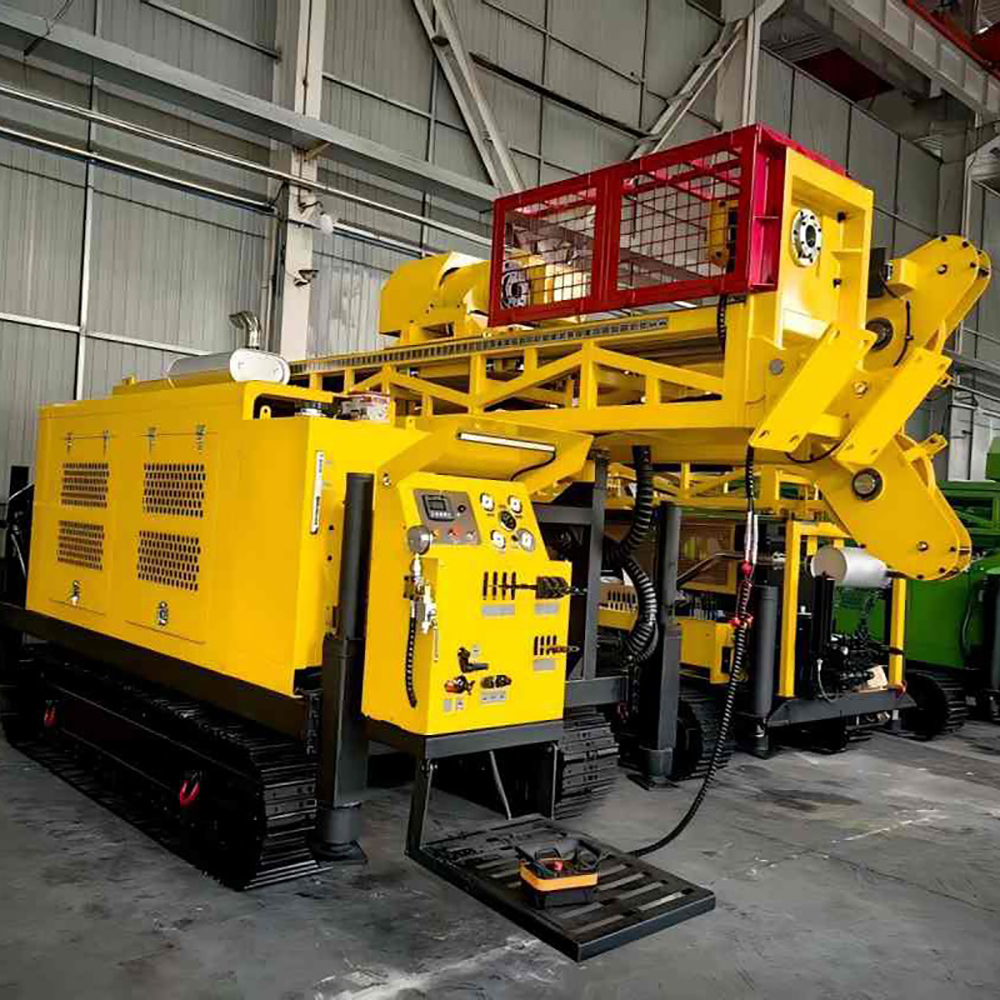
Send CORTECH your target depth and inclination, preferred wireline size, expected rock conditions, access and water constraints, and sample acceptance criteria. Request a configuration that specifies the fully hydraulic surface core drilling rig, compatible rods and barrels, wireline retrieval equipment, and the assumptions behind the quoted capacity. If NQ and HQ are both viable, ask for both configurations under the same hole plan so you can compare sample volume, handling requirements, and depth capability directly.
Yes. Properly collected cuttings can be suitable for chemical assays or chip identification. They generally cannot replace intact core for specimen-based strength tests or logging the original geometry of contacts and fractures.
No universal ranking applies. Compare the total cycle for each method, including retrieval, sample handling, and repeat work. Wireline retrieval reduces the need to pull the full rod string for each core run, but core logging and handling still take time.
Recovery measures how much of the drilled run came back as core. RQD measures how much came back as qualifying sound pieces under the specified logging procedure. A run can have high recovery and low RQD.
Choose NQ if it meets your assay, logging, and archive requirements and fits the hole plan. Consider HQ when you need more material per interval or larger specimens. Confirm the diameter with the laboratory before finalizing the tooling.
Yes. RC can support initial geochemical screening, while selected diamond holes provide intact samples for structural logging, laboratory testing, or follow-up investigation. Treat them as complementary methods with different deliverables.
1. U.S. Geological Survey. [Application of Drilling, Coring, and Sampling Techniques to Test Holes and Wells]. Technical manual covering rotary drilling, cutting recovery, and hydraulic rotary coring. [pubs.usgs]
2. Federal Highway Administration. [Scourability of Rock Formations]. Guidance on foundation investigations, core barrel selection, and RQD. [fhwa.dot]
3. U.S. Geological Survey. [Research Drilling Program]. Overview of coring and rotary drilling for subsurface investigations. [usgs]
4. New York State Department of Transportation. [Rock Core Evaluation Manual, GEM-23]. Procedures for recovery, RQD, fracture description, and core logging. [dot.ny]
5. Epiroc. [Wireline Core Barrels]. Manufacturer documentation on standard wireline barrel formats. [epiroc]
6. Federal Highway Administration. [Subsurface Investigations: Geotechnical Site Characterization, FHWA-NHI-01-031]. Reference manual on geotechnical sampling and rock core evaluation. [vulcanhammer]
7. HJI. [NQ, HQ, PQ Core Drilling Rig: What Do These Sizes Mean?]. Technical comparison of nominal wireline core and borehole diameters. [hjidrill]
8. Farmonaut. [Core Mining Meaning: Diamond Core Drilling Explained]. Industry overview of mineral exploration coring and RC sampling. [farmonaut]
9. ATR Drill. [Core Drill Rod and Bit Size Chart: BQ, NQ, HQ, PQ]. Supplier dimensions for standard wireline systems and selected triple-tube configurations. [atrdrill]
10. Windrilling. [Wireline Core Drilling: Field Guide to NQ, HQ & PQ Systems]. Technical overview of wireline rods, inner tubes, and overshot retrieval. [windrilling]


