
Views: 210 Author: CORTECH Publish Time: 2026-11-14 Origin: Site


Content Menu
● How Much Does a Core Drill Cost for Mineral Exploration?
● What Determines the Price of a Hydraulic Core Drilling Rig?
>> Drilling Depth and Core Size
>> Hydraulic Performance and Drilling Control
>> Wireline Equipment and Tooling
● What Is Included in the Core Drill Purchase Price?
● Calculate the Site-Ready Investment Before Ordering
● Measure Value Through Cost per Recovered Meter
● Three Expert-Level Checks That Prevent Expensive Mistakes
>> Check 1: Compare Quotation Boundaries Before Comparing Totals
>> Check 2: Test the Budget Against Downtime
>> Check 3: Define Acceptance Tests Before Paying the Balance
● Should You Buy a New or Used Core Drilling Rig?
● How to Request an Accurate CORTECH Core Drill Quotation
● Request a Project-Matched CORTECH Drilling Package
>> 1. How Much Should I Budget to Buy a Core Drill?
>> 2. Are Drill Rods and Diamond Bits Included?
>> 3. Does a Higher-Priced Rig Guarantee Better Core Recovery?
>> 4. Is Buying a Used Hydraulic Core Drill Worthwhile?
>> 5. Can I Buy a Rig Based on Maximum Drilling Depth Alone?
How much to buy a core drill? For mineral exploration, public supplier listings show examples ranging from approximately US$34,600 for a compact portable rig to US$118,800 for an advertised 800-meter-class hydraulic wireline model. These are individual asking prices, not market averages or CORTECH quotations. Your actual purchase cost depends on drilling capacity, configuration, tooling, delivery, and support.
For a fully hydraulic surface diamond core drilling rig, the better question is: what will it cost to deliver the required core safely and consistently?
My purchasing recommendation is to separate three figures before comparing suppliers: the machine price, the site-ready investment, and the operating cost per recovered meter. This guide explains how to evaluate each one when buying a CORE SURFACE DRILL for exploration or geotechnical work.
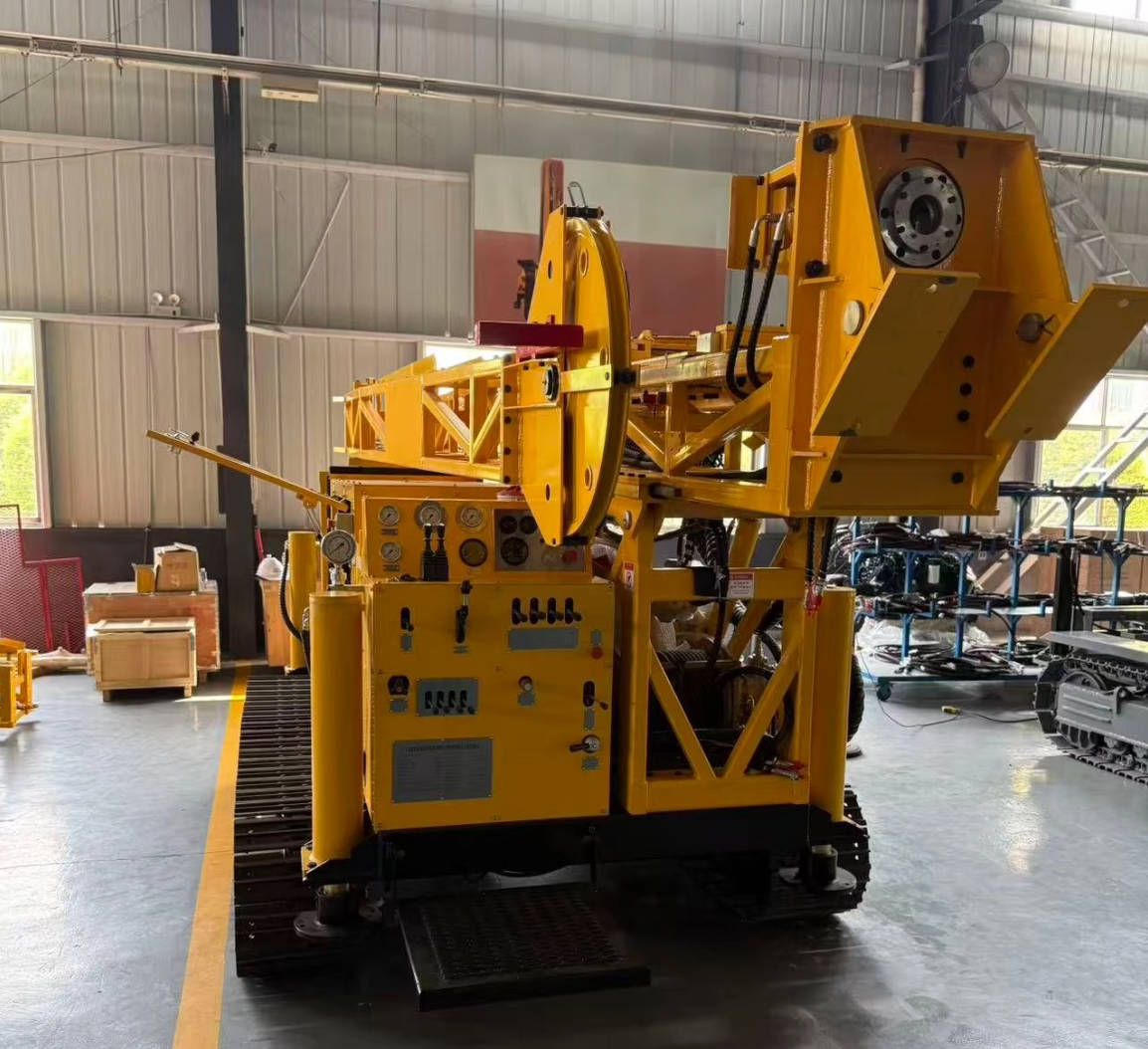
"Core drill" describes very different equipment. A concrete-coring tool for construction is not comparable with a hydraulic wireline diamond drilling rig designed to recover geological samples hundreds of meters underground.
For exploration buyers, equipment class and quotation scope matter more than a broad internet price range.
| Equipment or purchase category | Available price indication | Important limitation |
|---|---|---|
| Compact portable exploration rig | A public ROCK-300B listing advertises US$34,600 | Confirm tooling, power system, and shipping scope |
| Hydraulic wireline exploration rig | A public ROCK-800 listing advertises US$118,800 | Advertised depth varies with rod size |
| CORTECH surface diamond core drilling rig | Project-specific quotation required | Price depends on the selected model and configuration |
| Used exploration core drill | Individual inspection and quotation required | Condition, rebuild needs, and missing accessories affect value |
| Complete site-ready drilling package | Rig price plus project-specific additions | Include tooling, logistics, commissioning, and initial spares |
The two advertised prices illustrate why equipment cannot be compared by name alone. They do not establish a universal price band for all hydraulic core drilling rigs.
Before accepting any number, request a dated quotation with a detailed equipment schedule. An attractive headline price has limited value if essential components are excluded.
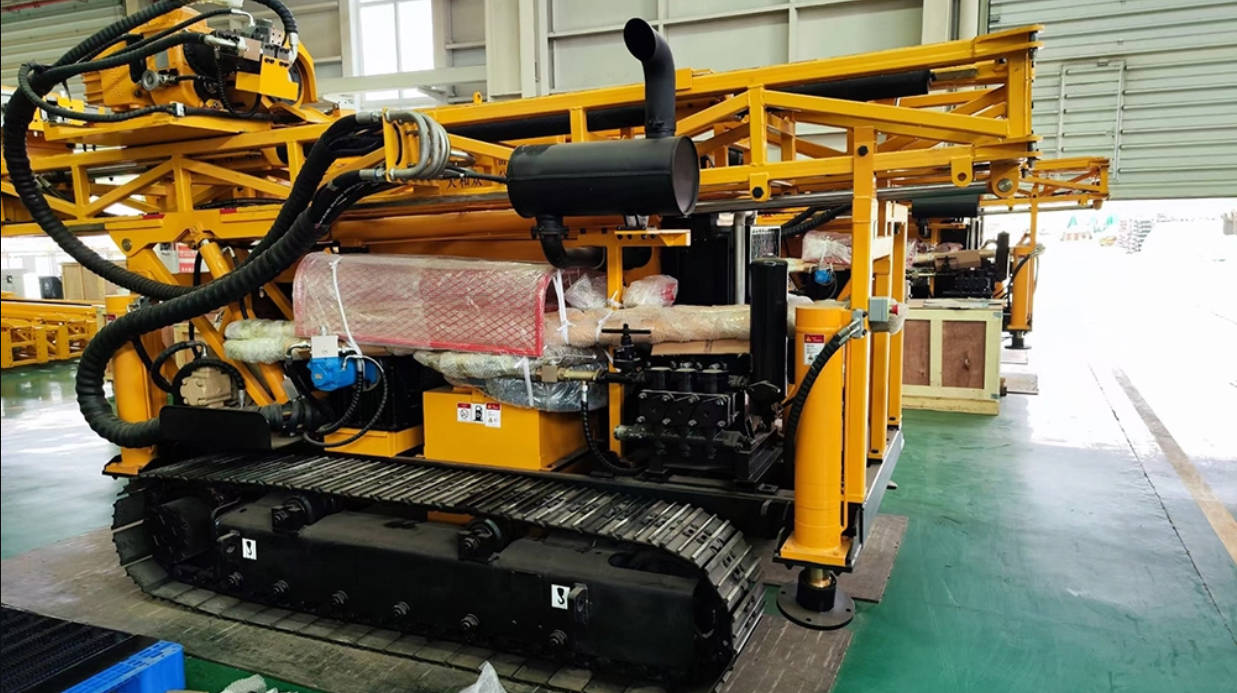
Depth capacity is meaningful only when connected to a specified drill string.
A rig may reach a greater depth using smaller rods than larger rods. Consequently, two machines advertised as "1,000-meter rigs" may offer substantially different capabilities for your required core diameter.
Ask suppliers to identify:
- Rod size, wall construction, and thread system.
- Target depth at that specific rod size.
- Hole inclination and operating assumptions.
- Pullback capacity and string-weight limitations.
- Relevant restrictions associated with ground conditions.
Do not select a rig by the largest depth figure in its brochure. Match its documented capacity to your actual drilling program.
A fully hydraulic core drill combines several interacting systems. Rotation, feed, clamping, lifting, and cooling must work together throughout the drilling cycle.
Compare torque and rotational speed across the operating range, rather than treating their separate maximum values as simultaneously available.
Also examine feed control, hydraulic filtration, cooling arrangements, maintenance access, and the availability of replacement components.
A lower purchase price becomes less attractive if unstable control or difficult maintenance repeatedly interrupts production.
Crawler-mounted surface rigs and modular portable systems solve different access problems.
A crawler configuration can support relocation between accessible drill pads. A modular arrangement may be more suitable where component transport limits determine whether equipment can reach the site.
Before choosing either, check:
- Route width and ground-bearing conditions.
- Maximum transport weight and dimensions.
- Available lifting equipment.
- Pad preparation requirements.
- Assembly and relocation procedures.
The cheapest machine at the factory may not produce the cheapest mobilization plan.
Wireline coring retrieves the inner tube through the drill string, avoiding full-string removal after every core run. However, the drilling package still needs compatible rods, barrels, overshots, bits, and supporting equipment.
Confirm the wireline winch specification, rope capacity, tooling compatibility, and included accessories.
The relevant comparison is the complete working system—not an isolated rig fitted with an impressive winch.
A quotation should distinguish the standard machine from optional equipment and consumables.
Use the following checklist to identify omissions before placing an order.
| Cost group | Items to clarify |
|---|---|
| Main equipment | Rig, power unit, mast, crawler or modular base, operating controls |
| Fluid system | Mud pump, hoses, tanks, fittings, and water-supply arrangements |
| Downhole tooling | Drill rods, casing, core barrels, overshots, bits, and reaming shells |
| Initial maintenance | Filters, seals, lubricants, service tools, and critical spares |
| Delivery | Export packing, freight, insurance, customs handling, and inland transport |
| Commissioning | Installation, operator training, technical attendance, and acceptance testing |
| Commercial terms | Payment schedule, warranty scope, exclusions, and delivery responsibilities |
My preferred approach is to request two clearly separated totals: the base rig and the recommended site-ready package.
This makes optional upgrades visible without disguising essential startup expenditure.

The site-ready cost is the amount required to put the equipment into productive service at your location.
A practical calculation is:
Site-ready investment = rig price + tooling + logistics + applicable import charges + commissioning + initial spares.
The example below is a budgeting exercise only. It is not a CORTECH quotation or a statement of typical industry charges.
| Illustrative budget item | Assumed amount |
|---|---|
| Hydraulic core drilling rig | US$120,000 |
| Initial rods, barrels, bits, and casing | US$30,000 |
| Freight, insurance, and inland transport | US$12,000 |
| Commissioning and training | US$5,000 |
| Initial spare-parts package | US$8,000 |
| Subtotal before applicable import charges | US$175,000 |
In this example, the initial equipment package costs US$55,000 more than the advertised machine price before any applicable import charges.
That difference is not necessarily excessive. It simply demonstrates why a machine-only quotation cannot serve as the entire project budget.
Obtain destination-specific logistics and customs advice instead of applying an unsupported universal percentage.
The purchase price is a one-time figure. Production performance influences every shift.
For initial comparisons, use:
Cost per recovered meter = relevant drilling cost ÷ recovered core length.
Consider two hypothetical operating scenarios:
| Measure | Scenario A | Scenario B |
|---|---|---|
| Relevant drilling cost | US$180,000 | US$195,000 |
| Total drilled length | 3,000 m | 3,000 m |
| Assumed core recovery | 85% | 95% |
| Recovered core length | 2,550 m | 2,850 m |
| Cost per recovered meter | US$70.59 | US$68.42 |
Scenario B costs more overall but produces a lower cost per recovered meter under these assumptions.
This calculation does not prove that a more expensive rig will deliver better recovery. Recovery also depends on geology, tooling, drilling fluids, operating practices, and crew competence.
Nor does recovered length alone establish geological usefulness. Core condition, depth accuracy, and the investigation's sampling requirements still matter.
The purchasing lesson is to evaluate the drilling system and its operating plan together.
Require every supplier to price the same configuration.
One quotation may include a mud pump, training, and spare filters. Another may exclude all three. Comparing their totals without normalizing scope creates a false saving.
Create a shared checklist and mark every item as included, optional, excluded, or buyer-supplied.
Also specify the named delivery place and applicable trade term. A factory collection price and a delivered-site price represent different responsibilities.
Production forecasts should include maintenance and realistic interruptions.
For example, if your combined crew and support costs are assumed to be US$2,000 per day, five additional idle days add US$10,000 before considering lost production.
This is an illustrative sensitivity test, not an industry daily-cost benchmark.
Ask each supplier how faults are diagnosed, which parts should be stocked locally, and what remote or on-site support is contractually available.
A spare-parts list is more useful when it includes part numbers, lead times, and replacement procedures.
Do not wait until delivery to decide what satisfactory equipment looks like.
Agree on a documented inspection covering:
1. Machine identity and supplied configuration.
2. Hydraulic functions and visible leakage.
3. Rotation, feed, clamps, and winch operation.
4. Guards, emergency stops, and operating instructions.
5. Included tooling, spares, and documentation.
6. Training and commissioning responsibilities.
A factory functional test confirms agreed functions under the test conditions. It does not automatically prove a geological production rate at your site.
Keep those acceptance criteria distinct.
A used rig may reduce the initial payment, but condition can outweigh the discount.
Inspect service records, hydraulic performance, structural condition, mast alignment, clamps, winches, and component availability. Confirm that replacement parts match the machine's actual serial-number configuration.
An independent inspection is especially valuable when buying remotely.
A new rig offers an opportunity to specify the configuration, documentation, training, and warranty before manufacture or delivery. Nevertheless, those benefits should appear in the contract rather than remain verbal promises.
Compare both options using a common ownership period and consistent assumptions for repairs, utilization, financing, and resale value.
For a short or uncertain program, also compare purchasing with a suitably scoped drilling-service proposal.
CORTECH develops and manufactures fully hydraulic diamond core drilling rigs, including surface drilling equipment for exploration applications.
To obtain a useful recommendation, send the technical team a concise project brief rather than asking only, "What is your cheapest core drill?"
Include:
- Project country and operating location.
- Target depth and required core size.
- Expected formations and known drilling difficulties.
- Hole inclination and planned drilling quantity.
- Access restrictions and preferred mobility.
- Available water, fuel, and site support.
- Required tooling, training, and spare parts.
- Destination, delivery schedule, and documentation requirements.
Request a model-specific capacity sheet, itemized commercial offer, exclusions list, and proposed acceptance procedure.
My recommendation is to shortlist equipment only after the supplier explains how the configuration addresses your project—not simply because its model name suggests sufficient depth.
Send CORTECH your target depth, core size, geology, site-access conditions, and delivery destination. Request an itemized CORE SURFACE DRILL proposal covering the rig, tooling, commissioning, and recommended spares.
Compare complete, technically matched packages before choosing the lowest purchase price.
Public exploration-rig listings provide examples at US$34,600 and US$118,800, but neither is a universal benchmark. Request a quotation for your required depth, core size, and configuration, then add tooling, delivery, commissioning, and initial spares to establish the actual startup budget.
Not necessarily. Suppliers may quote the rig separately from downhole tooling. Ask for quantities, sizes, thread compatibility, and itemized prices. Check whether the package provides enough rods and casing for the planned holes rather than merely including a small starter set.
No. Equipment capability matters, but recovery also depends on formation conditions, barrel selection, bit choice, drilling fluids, and operating technique. Compare evidence from relevant applications and avoid treating a general recovery claim as a guaranteed result for every formation.
It can be when the condition, configuration, and parts support suit the project. Assess likely repairs and missing equipment before comparing it with a new rig. A low asking price can lose its advantage if major hydraulic or structural work is required.
No. Depth ratings depend on rod size and operating assumptions. Also evaluate pullback, torque-speed characteristics, tooling compatibility, hole angle, and support systems. Ask the supplier to confirm capacity for your specified drilling conditions in writing.
1. Sichuan Nock Intelligent Exploration Geological Equipment Co., Ltd. — "Mining Geological Spt Diamond Exploration Wireline Core Drilling Rig Price." Public ROCK-800 asking price, configuration, depth qualifications, and related ROCK-300B advertised prices. Prices are listing observations, not verified transaction values. [nock-drilling-rig.en.made-in-china]
2. CORTECH — "Full Hydraulic Diamond Core Drilling Rigs Manufacturer." Company background, surface drilling product categories, customization, installation, and technical-support descriptions. [cortechdrilling]
3. Boart Longyear — "Quantifying Drilling Efficiencies—Why Drilling Metrics Matter," October 10, 2018. Technical context for drilling schedules, support costs, downtime, wireline operations, and core recovery. [boartlongyear]
4. Boart Longyear — "Surface Coring." Reference equipment table illustrating why depth capacity must be associated with rod specifications and machine configuration. [boartlongyear]
5. Boart Longyear — "Diamond Products Field Manual," 2023.1 edition. Technical background on core recovery measurement, formation-dependent drilling performance, and tooling selection. [boartlongyearproducts]


