
Views: 211 Author: CORTECH Publish Time: 2026-11-15 Origin: Site


Content Menu
● Deep Core Drill vs. Lightweight Core Drill: The Essential Differences
● Drilling Depth Capacity: Compare the Same Core Size
>> Why a Single Maximum-Depth Figure Is Misleading
>> Rated Capacity Is Not a Completion Guarantee
● Pullback, Torque, and Feed Control at Depth
>> Check the Entire Lifting Path
>> Compare Torque at the Required Speed
● Access and Logistics: Where Lightweight Core Drills Add Value
● Core Recovery and Geological Value
● A Practical Capacity Audit: Check the Wireline System Separately
● Compare Cost per Usable Metre, Not Purchase Price
● Two Exploration Scenarios That Change the Decision
>> Scenario 1: Multiple Remote Reconnaissance Holes
>> Scenario 2: A Deep Hole Requiring Larger Core
● Safety and Maintainability Belong in the Comparison
● A Five-Step Selection Process for CORTECH Buyers
● Select the Rig Around the Hole You Must Complete
>> 1. Can a lightweight core drill perform deep exploration drilling?
>> 2. Is a deep core drill always more productive?
>> 3. Can both rig types use wireline diamond drilling?
>> 4. Why does drilling capacity decrease with larger core sizes?
>> 5. What information should I send CORTECH for a recommendation?
Choosing a deep core drill versus a lightweight core drill starts with one question: which system can complete the required hole, recover useful geological samples, and operate within the site's access constraints? For high-depth exploration programs, the answer depends on more than advertised drilling depth.
A deep-capacity rig generally offers greater lifting capacity and operational flexibility as drill strings become longer. A lightweight rig prioritizes transportability and deployment, but its suitability depends on the actual configuration—not its category name.
My approach to this comparison is straightforward: define the geological objective first, verify the complete drilling system second, and compare costs last. For CORTECH customers evaluating fully hydraulic wireline diamond drilling rigs, this sequence helps prevent an attractive specification from becoming an expensive field limitation.

"Deep" describes drilling capability. "Lightweight" describes a transport or equipment-design priority. These categories can overlap, and neither represents a universal industry weight or depth classification.
Both types can use fully hydraulic controls and wireline core recovery. In wireline drilling, the core-bearing inner tube is retrieved through the drill rods, avoiding removal of the entire drill string for every core run.
| Selection factor | Deep-capacity core drill | Lightweight core drill |
|---|---|---|
| Primary design priority | Capacity for demanding, extended holes | Access, transport, and deployment |
| Lifting system | Typically selected for heavier drill strings | Must be checked against the proposed string |
| Site requirements | May require heavier transport and larger working areas | May suit restricted access or smaller pads |
| Mobility | Depends on crawler, truck, or skid configuration | May use compact crawlers or modular assemblies |
| Main project advantage | Greater operating envelope at depth | Lower deployment burden where access dominates |
| Main purchasing risk | Paying for unused capacity | Selecting insufficient capacity for the final hole |
These are selection tendencies, not guarantees. Compare individual machines using the same rod system, hole geometry, operating assumptions, and equipment scope.
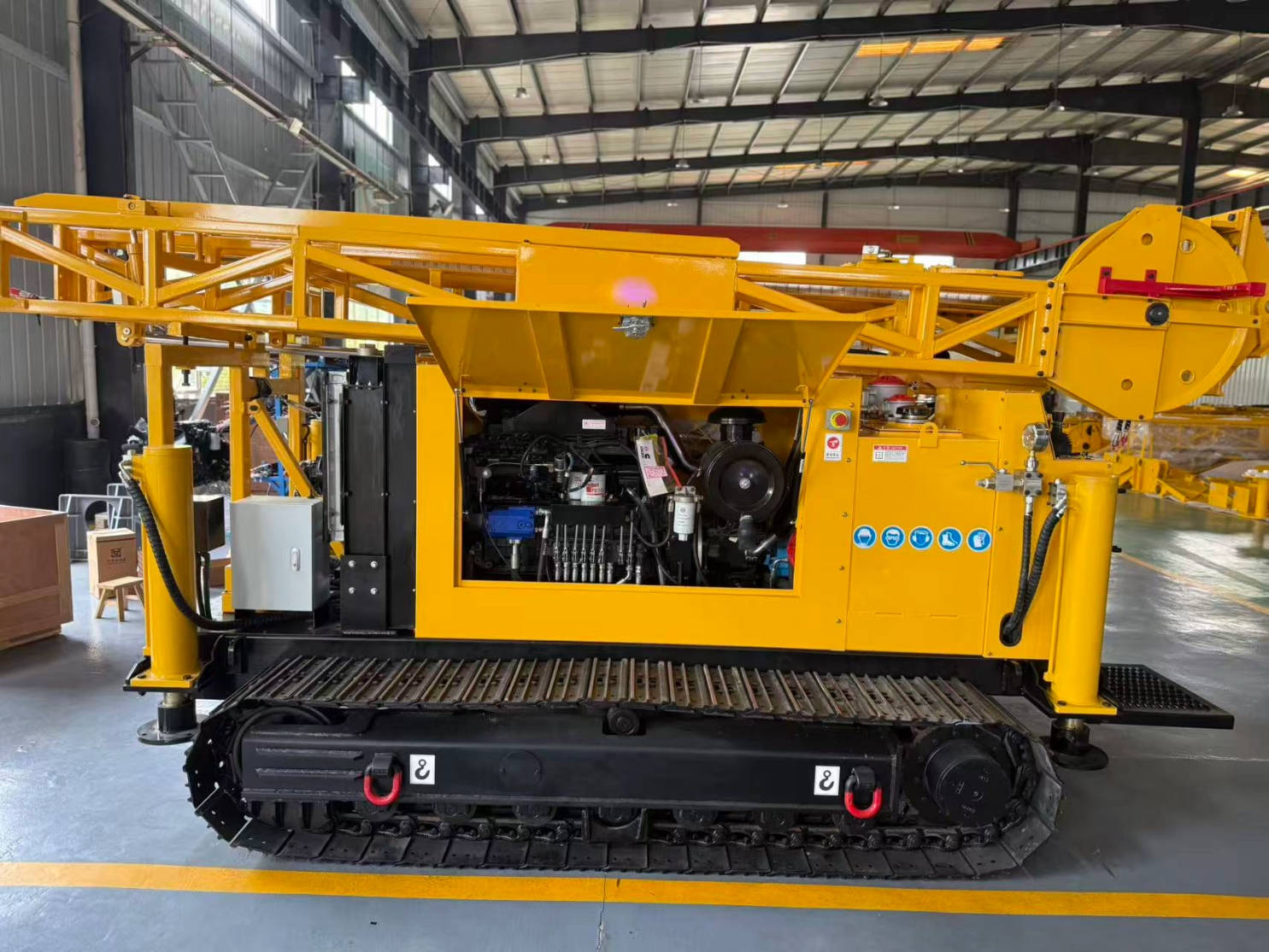
A surface core drilling rig does not have one meaningful depth rating independent of tooling.
CORTECH's published CSD1300L specification, for example, lists capacities of:
- B-size: 1,300 m
- N-size: 1,000 m
- H-size: 700 m
- P-size: 400 m
The same page lists a total weight of 8.5 tonnes. This illustrates why a relatively lighter crawler rig should not automatically be treated as a shallow-only machine—or confused with a man-portable system.
However, a 1,000 m N-size rating does not establish suitability for a 1,000 m H-size program.
Before comparing quotations, specify the required core size, rod construction, planned casing, drilling inclination, and anticipated final depth.
Manufacturer depth tables usually depend on assumptions.
Epiroc's Christensen CT20 brochure states that its depth guidelines are calculated using available main-winch pull, drill-string weight in a water-filled hole, and average weight on bit. It also warns that actual achievable depths vary with tooling, ground conditions, and operation.
That qualification matters. Friction, unstable formations, circulation problems, and borehole geometry can make a hole more demanding than its nominal depth suggests.
My recommendation is to request a written capacity assessment for the proposed drilling program—not simply confirmation that the target is below a brochure maximum.
As the drill string grows, lifting capacity becomes increasingly important. However, feed pullback and main-winch pull are different specifications.
The CORTECH CSD1300L page lists 127 kN of feed pull and 68 kN of main-winch pull. Those figures should not be substituted for one another.
Ask the supplier to identify:
- Which system handles each lifting operation.
- Applicable chuck and rod-holder capacities.
- Main-winch line pull and operating configuration.
- Mast limitations and permissible loading.
- Capacity assumptions for the selected rods and hole conditions.
Avoid applying an arbitrary safety percentage to a headline pullback figure. The manufacturer should evaluate the complete load path and specify operating limits.
Maximum torque and maximum rotation speed normally occur at different operating points.
A useful comparison therefore examines available torque across the intended speed range. Epiroc's CT20 brochure, for instance, publishes torque and speed by gear rather than presenting only two disconnected maximum values.
This distinction becomes important when the drilling program requires changes in bit size, formation, or operating speed.
Feed control also matters. Precise weight-on-bit adjustment helps operators manage the drilling process; engine power alone does not establish how accurately the rig can control bit loading.

A lightweight diamond core drilling rig becomes attractive when transport and site preparation constrain the program.
Typical considerations include narrow access routes, limited bridge capacity, restricted lifting equipment, and frequent moves between collars.
However, "lightweight" needs a numerical definition. A compact crawler rig, a helicopter-transportable package, and a manually transportable modular rig are different solutions.
Request a transport schedule covering:
1. Complete operating weight.
2. Heaviest individual component.
3. Component dimensions and lifting points.
4. Assembly equipment and personnel.
5. Separate loads for tooling, pumps, fuel, and consumables.
The whole drilling package matters more than the base-machine weight.
A lighter rig does not automatically produce a smaller environmental footprint either. Water supply, access construction, fuel movements, fluid containment, and rehabilitation must also be considered.
Neither rig category guarantees superior core recovery.
Recovery depends on interacting factors, including formation condition, bit selection, barrel configuration, drilling parameters, circulation, and operating practice.
The purchasing objective should therefore be geological information—not drilled metres alone.
Before selecting equipment, agree on:
- Required core diameter.
- Recovery measurement procedures.
- Sampling and logging requirements.
- Treatment of broken or highly fractured intervals.
- Whether an alternative barrel configuration is needed.
- Acceptable procedures for changing hole size.
A lighter rig that reaches depth but cannot maintain the required sampling configuration may not satisfy the program. Equally, a larger rig does not compensate automatically for unsuitable tooling or poorly controlled drilling.
One easily overlooked purchasing issue is the difference between drilling capacity and wireline equipment capacity.
CORTECH's CSD1300L page lists a 1,300 m B-size drilling capacity alongside a standard wireline rope length of 1,000 m.
This does not prove that the rig cannot support a deeper configuration. It does show why buyers must verify the supplied package rather than assume that every listed maximum is simultaneously available.
For a deep wireline core drilling program, confirm:
- Required cable length and operational allowance.
- Drum capacity for the specified cable diameter.
- Permissible line pull throughout the operating range.
- Compatibility of overshot, cable, and retrieval equipment.
- Approved procedures for the planned hole inclination.
Epiroc's CT20 data also distinguish bare-drum and full-drum line pull. A single wireline pulling-force number therefore does not describe the entire winch operating range.
This audit can expose a configuration mismatch before equipment reaches the field.
A lower purchase price does not necessarily produce a lower exploration cost.
Evaluate total program expenditure, including mobilization, site preparation, drilling, consumables, maintenance, standby time, and demobilization.
Then relate that expenditure to the metres that satisfy the program's geological acceptance requirements.
Consider this illustrative calculation—not a field result:
| Cost measure | Deep-capacity option | Lightweight option |
|---|---|---|
| Total program expenditure | $240,000 | $210,000 |
| Metres meeting agreed requirements | 1,200 m | 900 m |
| Cost per accepted metre | $200 | Approximately $233 |
The lightweight option costs less overall in this example, but more per accepted metre. Different access conditions or production outcomes could reverse the result.
Use realistic project assumptions and sensitivity ranges. Do not present hypothetical productivity as a manufacturer guarantee.
Consider a program involving numerous remote collars, moderate planned depths, and uncertain follow-up targets.
A lightweight core drill may be the stronger initial choice when access dominates cost and every planned hole remains comfortably within a verified operating envelope.
The evaluation should include assembly time, support loads, water logistics, and contingency arrangements—not just transport weight.
If deeper follow-up drilling is likely, establish the decision point for bringing in a higher-capacity rig.
Now consider a program requiring H-size core to 1,200 m.
The published 700 m H-size capacity of the CSD1300L would not support selecting that listed configuration for the proposed target.
The appropriate response is to evaluate a higher-capacity system against the complete program. Reducing core size merely to accommodate available equipment should require geological approval.
These scenarios show why target depth and sample requirements should lead the decision, with mobility evaluated alongside them.
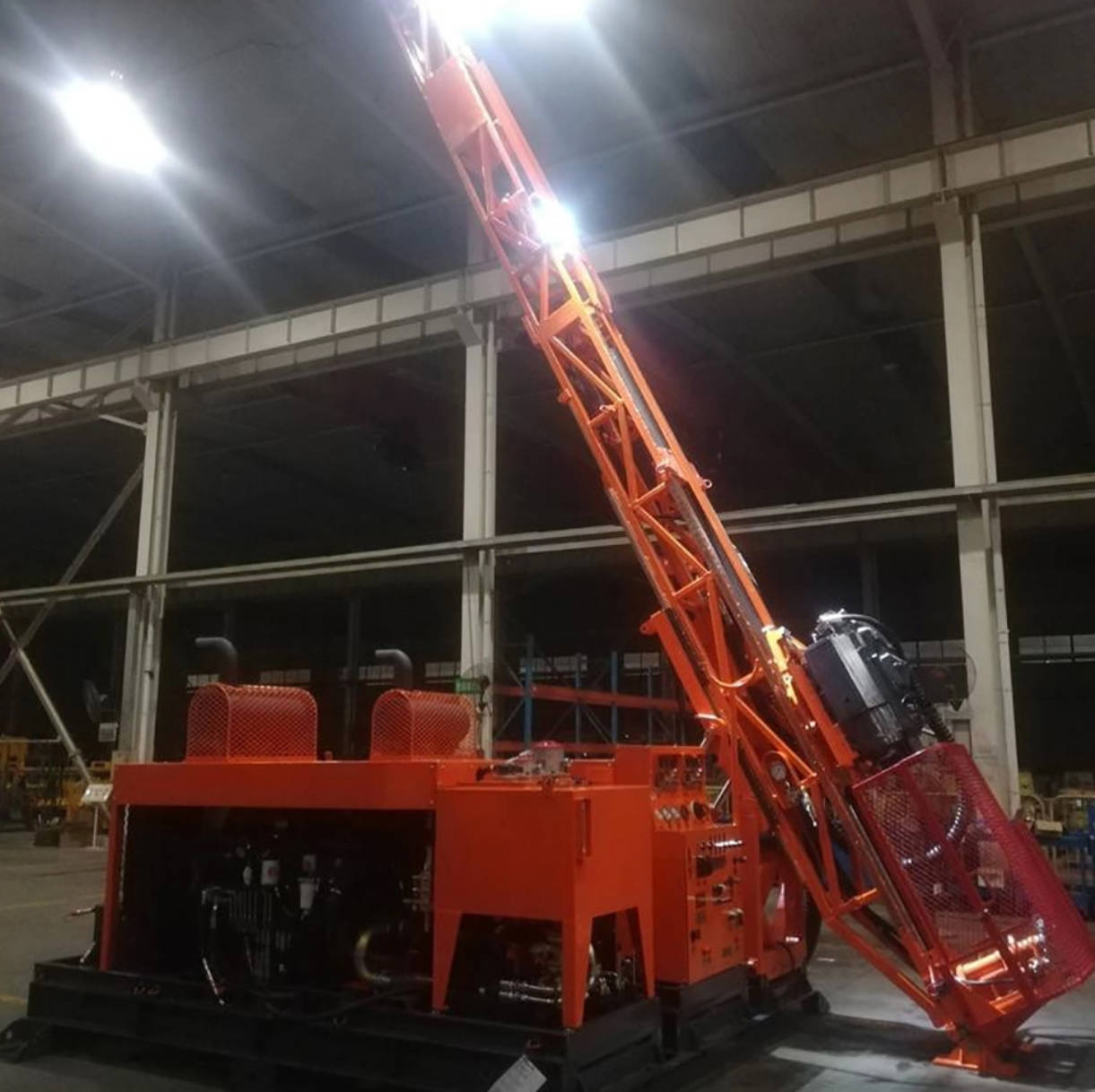
A lighter machine is not automatically safer, and a heavier machine is not automatically more difficult to operate safely.
Compare actual provisions for guarding, emergency stopping, rod handling, maintenance access, and isolation of stored energy.
Mechanized rod handling deserves particular attention. Epiroc describes its optional rod-handling system as enabling hands-free rod tripping and reducing manual handling and operator-assistant fatigue.
For remote programs, also review:
- Maintenance intervals and service access.
- Hydraulic filtration and cooling arrangements.
- Critical spare parts.
- Operator training.
- Technical support availability.
- Site-specific emergency procedures.
Confirm which features are standard, optional, or absent from the quoted configuration.
1. Define the geological deliverable. Specify depth, core size, sample requirements, and logging objectives.
2. Document site constraints. Include access dimensions, lifting limits, pad conditions, water availability, altitude, and temperature.
3. Validate the complete configuration. Review rods, casing, rotation head, feed system, winches, mast, and circulation equipment together.
4. Compare operating scenarios. Assess expected conditions and credible difficulties, including additional casing or slower drilling.
5. Obtain a documented proposal. Require an equipment schedule, stated assumptions, operating limitations, training scope, and support plan.
For a CORTECH enquiry, provide this information before requesting a model recommendation. It makes the resulting proposal more useful than a quotation based only on maximum depth.

Choose a deep-capacity system when the verified loading, tooling, and operating requirements justify it. Choose a lightweight system when it meets those requirements while improving deployment.
Send CORTECH your drilling program and site-access details, and request a configuration review covering depth capacity, core size, lifting systems, wireline equipment, and support requirements before placing an order.
Yes, when its verified configuration supports the required depth and core size. Weight classification alone does not establish capability. Check lifting capacity, tooling, circulation, and wireline equipment.
No. Greater capacity may help on demanding holes, but mobilization, collar moves, geology, and operating practice influence total program productivity.
Yes. Wireline describes the core-retrieval method, not the rig's weight category. Compatibility must still be confirmed for the proposed equipment.
Larger tooling changes drill-string loading and drilling demands. Manufacturers therefore publish size-specific capacities. Compare the required size rather than the largest depth number.
Provide target depths, core sizes, hole inclinations, expected formations, casing requirements, site access, transport limits, utilities, and operating conditions.
1. CORTECH. [CSD1300L Diamond Core Drilling Rig — Features and Technical Parameters]. Source for size-specific depth capacities, weight, feed pull, main-winch pull, and wireline rope length. Published specifications require confirmation for the quoted configuration. [coretecdrilling]
2. Epiroc. [Christensen CT20 — Technical Brochure], October 2022. Source for depth-capacity assumptions, torque-speed ranges, feed control, winch specifications, and equipment limitations. [epiroc]
3. Epiroc. [Boyles C6/C6C — Technical Brochure], 2026 edition. Supporting reference for rod-size-dependent depth ratings and the limitations of calculated drilling capacities. [epiroc]
4. Epiroc. [Rod Handling System for Christensen and Boyles], November 2025. Source for hands-free rod tripping, reduced manual handling, and fatigue-related design objectives. [epiroc]


