
Views: 211 Author: CORTECH Publish Time: 2026-11-07 Origin: Site


Content Menu
● Deep Core Drill vs. Surface Core Drill: What Is the Difference?
>> What Is a Surface Core Drill?
● How Deep Mineral Exploration Changes Equipment Requirements
>> Pullback Capacity and Drill-String Loading
>> Torque, Rotation Speed, and Feed Control
>> Fluid Circulation and Hole Conditions
● Core Recovery: Why Sample Quality Must Guide Rig Selection
>> Core Diameter Is a Geological Decision
>> Recovery and Orientation Are Different Measures
● Borehole Deviation: The Hidden Risk in Deep Core Drilling
● Three Practical Insights for Comparing Drilling Proposals
>> 1. Normalize Depth Claims Before Comparing Rigs
>> 2. Compare Cost per Usable Recovered Meter
>> 3. Treat Wireline Time as a Separate Productivity Variable
● Matching the Configuration to the Exploration Scenario
>> Scenario A: Numerous Accessible, Moderate-Depth Targets
>> Scenario B: A Deep Target Requiring Sustained Operation
>> Scenario C: Fractured Ground or a Narrow Target
● A Five-Step Checklist for Selecting a CORTECH Core Drilling Rig
● Request a Project-Specific Drilling Configuration
>> 1. Can a Surface Core Drill Be Used for Deep Mineral Exploration?
>> 2. Is There a Universal Depth Threshold for a Deep Core Drill?
>> 3. Is Higher Pullback Always Better?
>> 4. Why Is Wireline Diamond Drilling Useful for Deep Holes?
>> 5. Should I Choose NQ or HQ for a Deep Exploration Hole?
>> 6. What Information Should I Provide When Requesting a Quotation?
Choosing between a deep core drill and a surface core drill starts with an important distinction: these terms describe different aspects of drilling. "Deep" describes the intended drilling capability, while "surface" identifies where the rig operates. A properly configured surface core drill can also be a deep-hole drilling system.
For exploration managers, drilling contractors, and procurement teams, the real question is therefore not which label wins. It is which rig configuration can reach the target, recover useful core, and control operating risk.
As a manufacturer focused on fully hydraulic wireline diamond drilling rigs, CORTECH approaches this comparison through capability: the relationship between the rig, tooling, geology, and exploration objective.

In mineral exploration, "deep core drill" generally refers to a core drilling system selected for demanding, extended-depth applications. It is not a universally standardized equipment category with one fixed depth threshold.
Its suitability depends on the combined performance of:
- Pullback and hoisting systems.
- Rotary torque and speed.
- Drill rods and threaded connections.
- Drilling-fluid circulation.
- Wireline retrieval equipment.
- Borehole stability and trajectory control.
A machine's advertised depth alone does not establish whether it can complete a particular exploration hole.
A surface core drill operates from a surface drill pad and recovers cylindrical rock samples from below ground.
Surface diamond core drilling supports both shallow and deep exploration. Equipment can be configured around access conditions, required core diameter, hole orientation, and drilling depth.
Consequently, "surface" does not mean "shallow." A high-capacity surface rig may be the appropriate choice for a deep mineral target.
For purchasing purposes, the useful comparison is between a general-purpose surface core drill configuration and a surface configuration engineered for deep-hole work.
| Selection factor | General-purpose surface configuration | Deep-hole-oriented surface configuration |
|---|---|---|
| Primary priority | Mobility and routine exploration coverage | Sustained performance at target depth |
| Pullback assessment | Expected string load within the operating envelope | String load, drag, and recovery requirements |
| Rotary system | Torque and speed matched to routine tooling | Torque-speed performance assessed at depth |
| Wireline system | Reliable retrieval for planned holes | Retrieval time becomes a major productivity factor |
| Rod selection | Appropriate standard tooling | Connections and wear limits assessed for demanding loads |
| Site requirements | Access and drill-pad suitability | Potentially greater support and logistical demands |
| Commercial evaluation | Purchase price and routine productivity | Completion probability and total program cost |
These are configuration priorities, not rigid product categories.
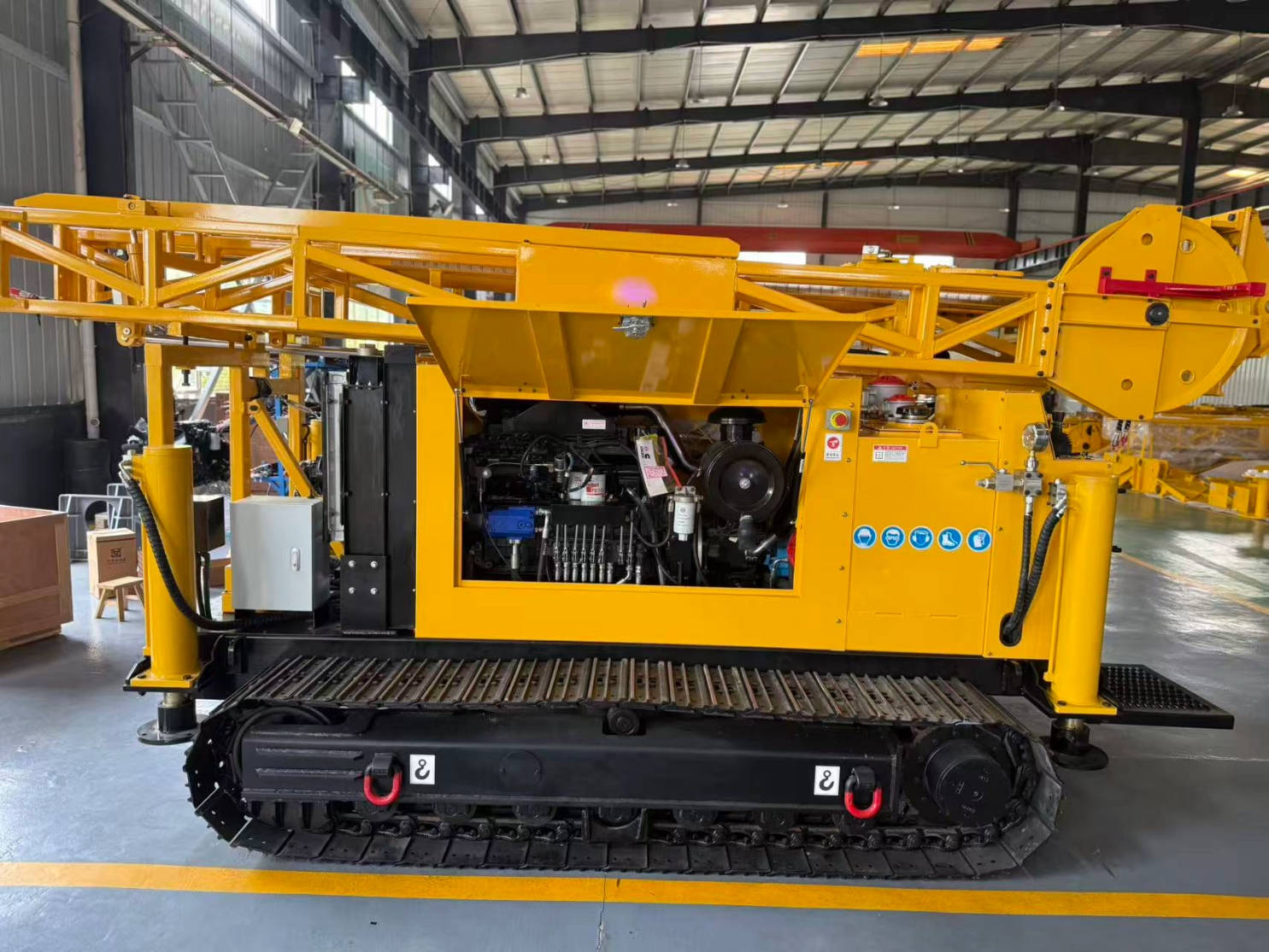
As a hole lengthens, the drilling system must manage a longer rod string. String weight matters, but it is not the only consideration.
Inclination, borehole curvature, wall contact, fluid conditions, and tooling condition influence operating loads.
When assessing a quotation, I would ask for the assumptions behind the stated depth rating before comparing prices. Which rod size was used? Does the rating assume a straight vertical hole? What operating conditions could reduce the available capacity?
Rod manufacturers explicitly qualify their ratings by conditions such as rod wear and drilling practice. Rig and tooling limits must therefore be reviewed together.
Maximum torque is useful information, but it is incomplete without the associated rotation speed.
A diamond drilling system needs an appropriate operating range for the selected bit, core size, and formation. It also needs controllable feed rather than simply high thrust.
For a fully hydraulic core drilling rig, request:
- Torque available across the operating speed range.
- Feed-force adjustment and control characteristics.
- Pullback and hoisting specifications.
- Hydraulic cooling requirements.
- Continuous-duty operating limitations.
The objective is stable drilling, not the largest number on a specification sheet.
Drilling fluid supports bit cooling and cuttings transport. Its interaction with the formation also affects hole management.
For deep mineral exploration, evaluate the circulation system as part of the complete drilling package. Pump selection should consider required flow, pressure losses, tooling restrictions, and expected formation conditions.
More pressure is not automatically better. Fluid selection and operating limits require site-specific assessment, particularly where fractured ground or lost circulation is anticipated.
NQ, HQ, and PQ systems offer different sample sizes and impose different demands on equipment.
Larger core may support particular geological, geotechnical, or testing objectives. However, larger tooling also changes string weight, hole size, circulation requirements, and attainable drilling performance.
Avoid choosing a smaller core diameter solely to match an attractive depth claim. Begin with the information the exploration team needs, then select compatible equipment.
Core recovery describes how much core is recovered from a drilled interval. Core orientation establishes the original spatial position of the recovered sample.
A program may recover substantial core yet still lack reliable structural orientation.
Where geological interpretation depends on veins, fractures, or bedding relationships, assess the complete sampling workflow:
- Core barrel suitability for the formation.
- Handling of broken or weak intervals.
- Orientation equipment and procedures.
- Depth marking and core-box identification.
- Reconciliation of core observations with downhole surveys.
A powerful rig cannot compensate for an inadequate sample-management process.

Reaching the planned drilled depth does not necessarily mean reaching the geological target.
Epiroc's drilling guidance identifies deviation as an increasing concern as drilling extends deeper. Borehole direction can be affected by geology, tooling, and drilling conditions.
For a narrow target, trajectory uncertainty can undermine the value of an otherwise successful hole.
A practical deep-hole plan should define:
1. Collar position, azimuth, and inclination.
2. Survey method and measurement intervals.
3. Acceptable trajectory tolerances.
4. Review points for unexpected deviation.
5. Corrective options and their operating constraints.
Downhole surveying and core orientation serve different purposes. Surveying establishes the hole path; orientation helps place geological structures within that spatial framework.
Both may be necessary for a useful interpretation.
Two quotations stating the same maximum depth may describe different operating assumptions.
Ask each supplier to complete the same specification table:
| Required disclosure | Why it matters |
|---|---|
| Rod system and size | Determines the basis of the depth claim |
| Core barrel configuration | Affects tooling compatibility and sampling |
| Hole inclination | Changes loading and operating conditions |
| Rod condition assumed | Wear can reduce allowable capacity |
| Torque-speed information | Shows performance beyond a peak torque figure |
| Pump operating duty | Clarifies the proposed circulation capability |
| Site derating assumptions | Identifies environmental limitations |
This converts a marketing comparison into an engineering comparison.
It also helps reveal whether the quoted package includes the equipment needed to achieve the stated performance.
Purchase price is only one component of exploration cost.
A useful project-specific measure is:
Cost per usable recovered meter=Total attributable drilling-program cost/Recovered core length meeting defined acceptance criteria
This is a proposed decision framework, not a standardized reporting measure.
For illustration, suppose two options each drill 1,000 meters:
| Illustrative measure | Option A | Option B |
|---|---|---|
| Attributable program cost | $100,000 | $110,000 |
| Usable recovered core | 800 m | 950 m |
| Cost per usable recovered meter | $125 | Approximately $116 |
These figures are hypothetical, not CORTECH results.
The example shows why the lower-cost drilling program may not deliver the lower-cost geological information. Define "usable" before applying the calculation.
Wireline systems retrieve the inner tube without removing the entire drill string for each core run.
However, retrieval still consumes operating time. As holes become longer, inner-tube travel deserves explicit attention.
Boart Longyear identifies wireline time as a significant component of deep-hole drilling and describes tooling designs intended to improve retrieval performance.
When comparing configurations, separate:
- Active drilling time.
- Inner-tube retrieval and deployment.
- Rod handling.
- Bit changes.
- Surveys and orientation.
- Maintenance and unplanned delays.
A high penetration rate does not necessarily produce the most completed core per shift.
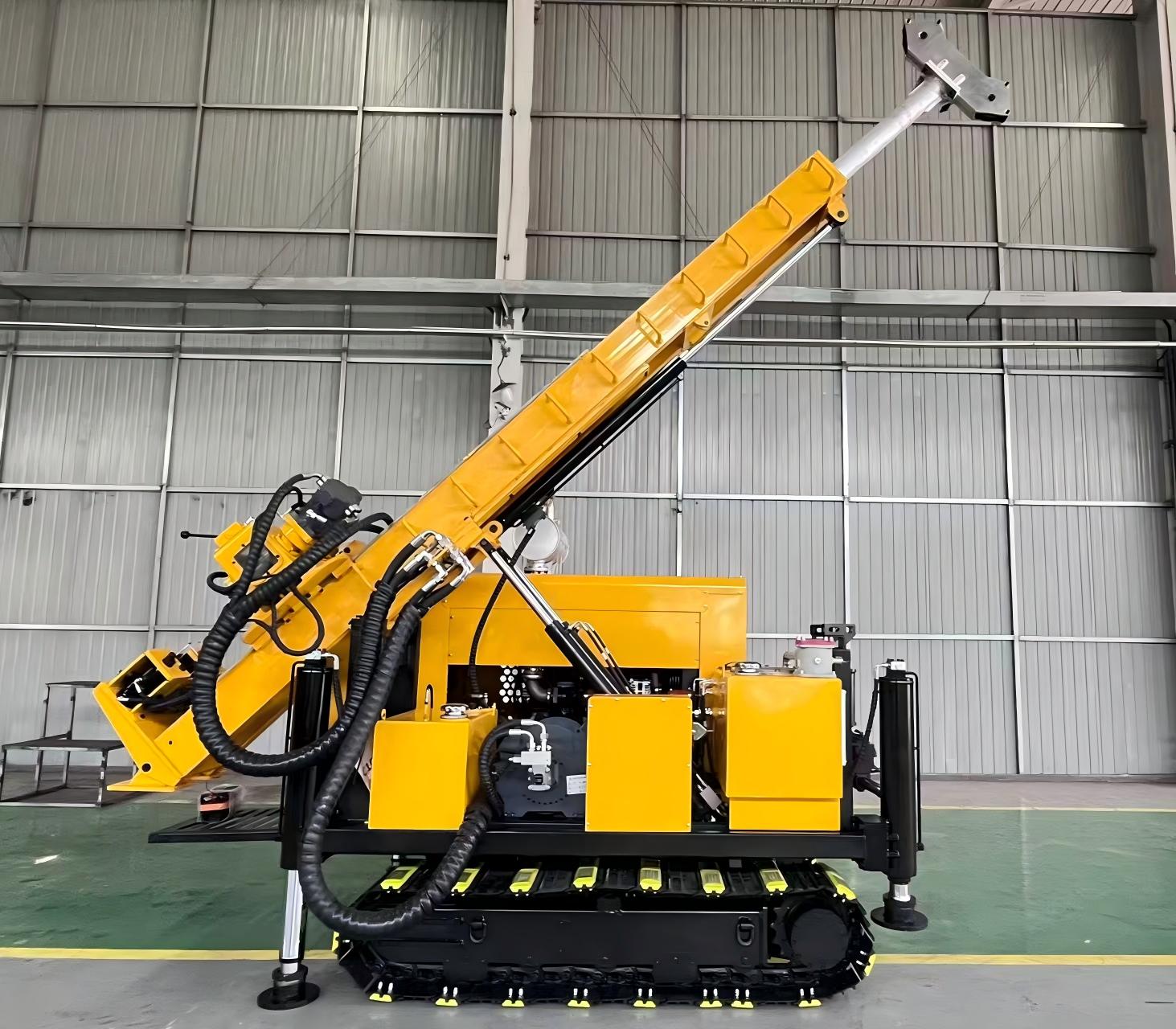
A suitably sized surface core drill may offer the better balance when a program involves frequent moves and relatively straightforward holes.
Prioritize mobilization, setup, operator access, maintainability, and compatibility with the required core system.
Oversizing the rig can add transport and site costs without improving the geological result.
A deep-hole-oriented surface drilling package deserves closer evaluation when the program involves long holes, demanding rod loads, or substantial retrieval time.
Review the rig, rods, wireline equipment, pumps, and maintenance support as one system.
The preferred configuration should address the limiting component rather than simply provide additional engine power.
Here, sampling and trajectory requirements may outweigh nominal depth.
Core barrel selection, hole stability, survey planning, and operational control should influence the specification from the beginning.
These scenarios are planning examples, not documented customer case studies.
1. Define the geological objective. Specify target depth, target geometry, core diameter, and sampling requirements.
2. Describe the site. Include access, elevation, climate, water availability, drill-pad conditions, and transport restrictions.
3. Establish the hole design. Provide inclination, casing expectations, anticipated formations, and known drilling risks.
4. Request a matched equipment package. Assess rig capacity, rods, core barrels, circulation, wireline retrieval, and safety provisions together.
5. Agree on acceptance criteria. Document performance assumptions, package inclusions, commissioning scope, training, spares, and service arrangements.
CORTECH's stated focus on fully hydraulic wireline diamond drilling provides the manufacturing context for this discussion. However, no model-specific depth, recovery rate, or productivity guarantee should be inferred without a verified technical proposal.
The right purchasing decision starts with your hole design, not a generic equipment label.
Send CORTECH your target depth, required core size, drilling inclination, geological conditions, and site-access constraints. Request a configuration proposal that identifies the recommended rig, compatible tooling, circulation package, and the assumptions behind its depth capability.
That creates a clearer basis for technical review and commercial comparison before equipment is ordered.
Yes. Surface drilling includes both shallow and deep applications. Suitability depends on the specific rig configuration, tooling, hole design, and operating conditions—not the word "surface."
No single threshold is established by the terminology used here. Request a stated operating envelope and the assumptions behind it rather than relying on the label.
Not by itself. Pullback must be assessed alongside rod limits, hoisting arrangements, torque, circulation, and the expected hole conditions. Additional pullback cannot correct every system limitation.
It allows recovery of the inner tube without pulling the entire drill string for every core run. Nevertheless, retrieval time, equipment compatibility, and maintenance remain important productivity factors.
Start with the required sample and testing objectives. Then assess the depth and operational implications of each system with the drilling supplier and geological team.
Provide target depth, core size, inclination, expected geology, access restrictions, environmental conditions, and available utilities. Also specify survey, orientation, training, spare-parts, and support requirements.
1. [Boart Longyear — Exploration: Surface]. Manufacturer overview supporting the distinction between surface location and shallow/deep drilling applications. [boartlongyear]
2. [Boart Longyear — Coring Rods and Casing Catalog, 2020]. Technical background on rod systems, loading, handling, wear, and tooling-dependent performance. Manufacturer specifications are product-specific, not CORTECH ratings. [boartlongyearproducts]
3. [Epiroc — Bore Hole Deviation: Drillers Guide]. Industry guidance on deviation causes, prevention, and correction. [epiroc]
4. [Boart Longyear — XQ™ Wireline Coring Rod]. Manufacturer discussion of rod design and the significance of wireline retrieval time in deep holes. No advertised performance percentage is applied to CORTECH equipment. [boartlongyear]
5. [Epiroc — Core Drilling]. Background on mineral-exploration core sampling and related drilling systems. [epiroc]
6. [SPT — Core Orientation in Mining Exploration: Methods and Tools]. Technical background on core orientation, structural interpretation, and trajectory-related limitations. [sptab]


