
Views: 217 Author: CORTECH Publish Time: 2026-11-11 Origin: Site


Content Menu
● How Does a Diamond Core Drill Work?
>> Why Are Diamonds Used in Core Drill Bits?
>> What Does Drilling Fluid Do?
● Construction Core Drills vs. Exploration Core Drilling Rigs
● What Is Wireline Diamond Core Drilling?
>> Why Does Wireline Retrieval Matter?
● Main Components of a Hydraulic Diamond Core Drilling Rig
● What Are Diamond Core Drills Used For?
>> Geological and Structural Assessment
● Common Diamond Core Drilling Sizes
● How to Choose a Diamond Core Drill for Your Project
>> 1. Define the Required Sample
>> 2. Describe the Ground Conditions
>> 3. Match Depth to the Actual Configuration
>> 4. Check Site Access and Support
>> 5. Request a Complete Equipment Proposal
● Expert Insight: Measure Sample Value, Not Just Drilled Meters
● A Practical First-Hole Validation Workflow
● Diamond Core Drilling Safety and Environmental Controls
● Discuss Your Surface Core Drilling Requirements with CORTECH
>> 1. Is a diamond core drill the same as a hammer drill?
>> 2. Can a diamond core drill cut hard rock?
>> 3. Does wireline drilling eliminate rod removal?
>> 4. Is a larger core diameter always better?
>> 5. What determines diamond core drilling depth?
>> 6. Can a hydraulic rig guarantee complete core recovery?
A diamond core drill is a rotary drilling tool or machine that uses a diamond-equipped, hollow cutting bit to create a circular hole while preserving a cylindrical sample from the center. That sample, called a core, allows geologists and engineers to examine material that would otherwise remain underground.
The term covers two related equipment categories: compact machines that drill concrete or masonry, and larger exploration rigs that recover rock samples from depth. For mineral exploration, the complete system typically includes a drilling rig, drill rods, a diamond bit, a core barrel, and drilling-fluid circulation equipment.
From a manufacturer's perspective, the important question is not simply whether a machine can penetrate rock. It is whether the drilling system can recover useful samples safely, consistently, and at a practical project cost.
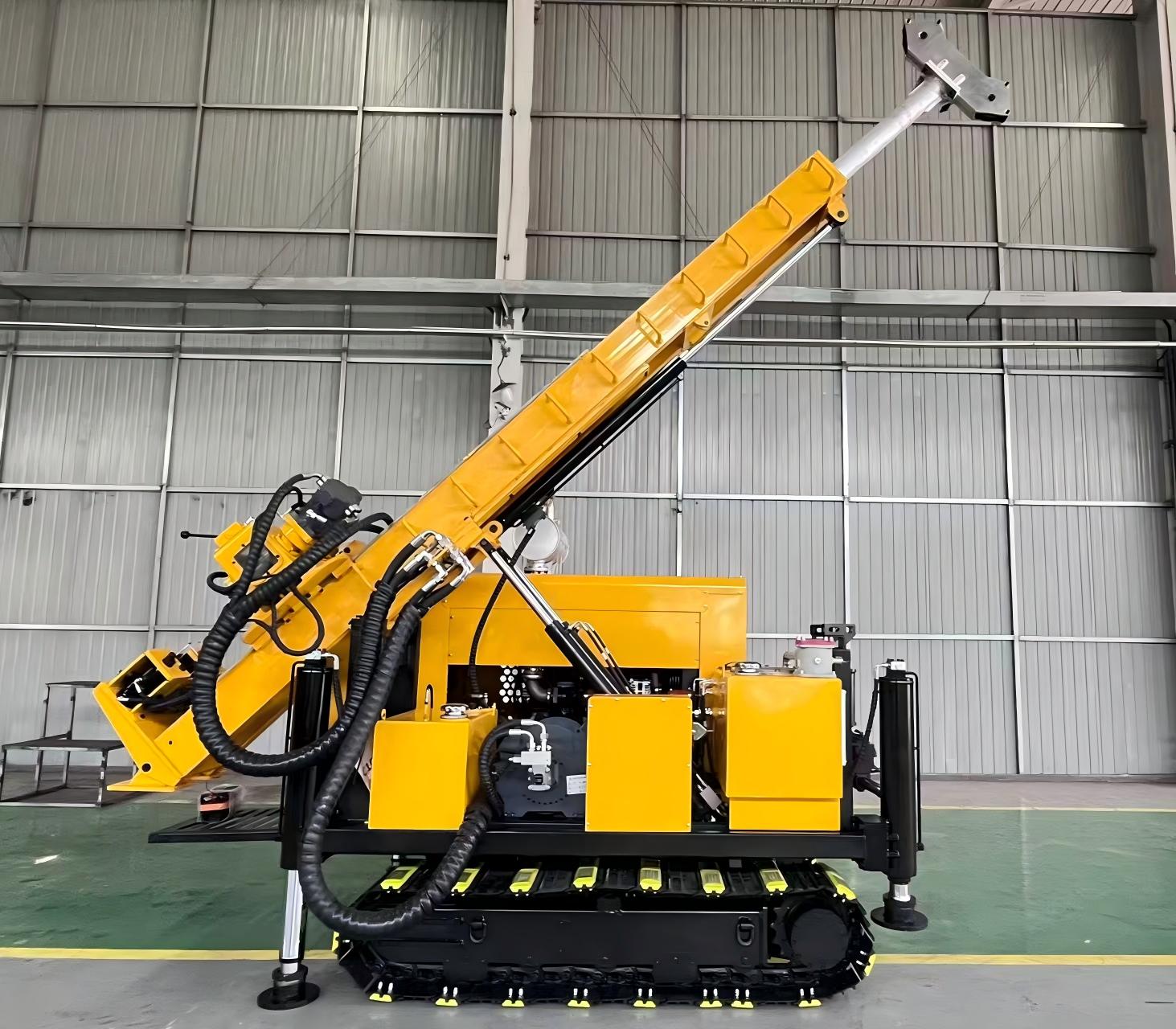
Diamond core drilling cuts an annular ring around the sample rather than breaking up the entire hole face.
Industrial diamonds at the bit's cutting surface grind the surrounding material as the drill string rotates. Controlled feed force keeps the bit engaged with the formation. Meanwhile, circulating drilling fluid cools the bit and carries cuttings away.
The central rock cylinder enters a core barrel behind the bit. After a planned drilling interval, or when conditions require retrieval, the crew recovers the core for examination.
Diamond's exceptional hardness makes it useful for cutting abrasive materials and hard rock. However, the diamonds do not work alone.
In an impregnated diamond bit, small diamonds are distributed through a metal matrix. As the matrix wears, fresh cutting points become exposed.
Bit performance therefore depends on matching the diamond-and-matrix system to the formation. Rock hardness, abrasiveness, fracturing, operating parameters, and available rig power all influence that match.
There is no universally best diamond bit for every geological condition.
Drilling fluid supports several essential functions:
- Cooling the cutting surface.
- Transporting cuttings out of the hole.
- Helping lubricate the drilling system.
- Supporting borehole stability when an appropriate fluid program is used.
More flow is not automatically better. Excessive or poorly directed circulation can disturb weak material, while insufficient circulation can cause overheating and poor cuttings removal.
Fluid selection and operating limits should follow the tooling supplier's guidance and the project's environmental requirements.
Understanding this distinction prevents a common purchasing mistake.
| Equipment category | Primary purpose | Typical arrangement | Main selection priority |
|---|---|---|---|
| Construction diamond core drill | Produce openings in concrete, masonry, or similar materials | Handheld or stand-mounted tool | Hole diameter, mounting, material, and utilities |
| Surface diamond core drilling rig | Recover geological samples from surface boreholes | Rig with mast, rotation head, rods, and circulation system | Depth, core quality, geology, and access |
| Underground diamond core drilling rig | Recover geological samples from underground workings | Equipment configured for restricted spaces and required hole orientations | Clearance, installation, hole direction, and services |
The cutting principle is related, but the machines are not interchangeable.
For CORTECH's customers, the relevant category is generally a fully hydraulic diamond core drilling rig designed around geological sampling rather than building-service penetrations.
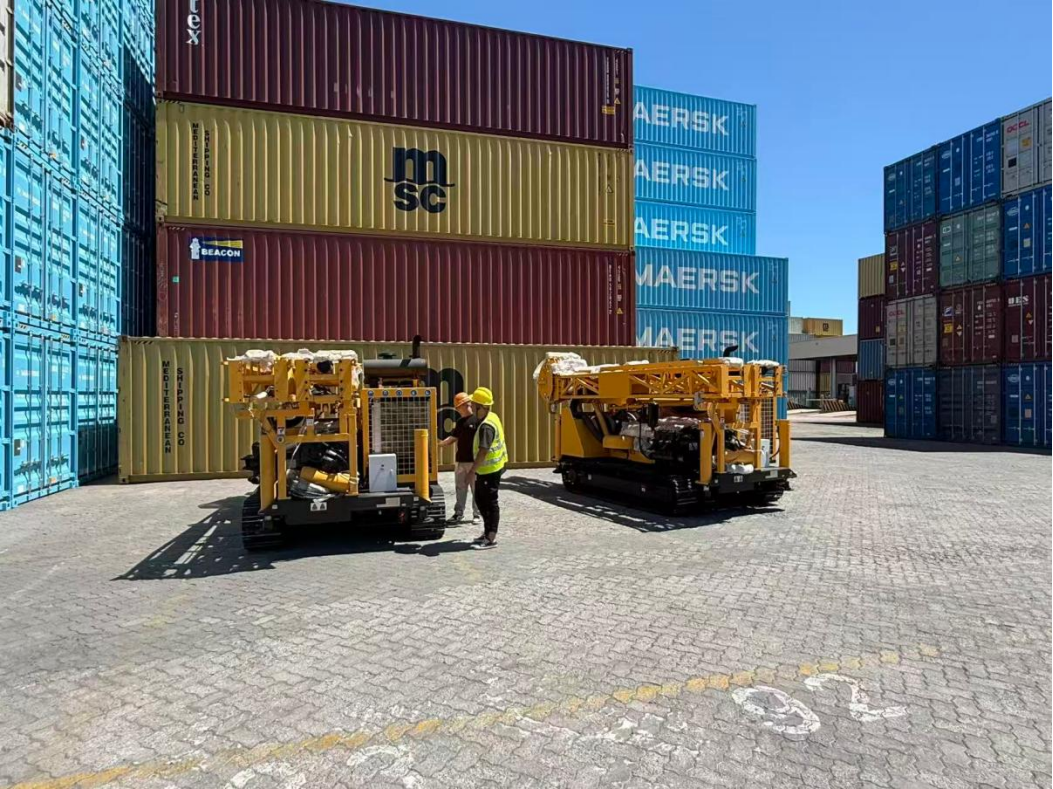
Wireline core drilling retrieves the sample-containing inner tube through the drill rods, usually without removing the entire rod string after every core run.
A wireline cable lowers or pumps an overshot assembly into the drill string. The overshot engages the inner-tube head assembly, allowing the filled tube to return to the surface.
The crew then removes the sample and prepares the inner tube for another run.
Conventional core retrieval can require pulling the drill rods to recover the barrel. Wireline retrieval reduces this repeated rod handling during routine sampling.
Its practical value generally increases as holes deepen because recovering the inner tube avoids repeatedly withdrawing an increasingly long drill string.
However, wireline does not eliminate all rod trips. Bit changes, tooling problems, and other downhole requirements still demand additional operations.
A productive system must balance cutting time, retrieval time, maintenance, and sample handling—not just maximum drilling speed.
A diamond core drill is a coordinated system. Strong performance in one component cannot compensate for an unsuitable overall configuration.
| Component | Function | What buyers should examine |
|---|---|---|
| Hydraulic power system | Supplies power to drilling functions | Cooling, filtration, service access, and operating limits |
| Rotation head | Rotates the drill string | Usable torque and speed across the working range |
| Feed and pullback system | Advances and withdraws the string | Controlled feed, extraction capability, and mast stroke |
| Drill rods | Transmit rotation and carry drilling fluid | Compatibility, condition, joint design, and load limits |
| Diamond bit and reaming shell | Cut the formation and maintain gauge | Formation suitability and tooling compatibility |
| Core barrel | Receives and retains the sample | Barrel configuration and recovery requirements |
| Wireline winch and overshot | Retrieve the inner tube | Line capacity, compatibility, and inspection requirements |
| Pump and fluid circuit | Deliver circulation | Required flow and pressure under working conditions |
For a fully hydraulic surface core drill, assess these components together. A headline engine rating alone does not establish drilling suitability.
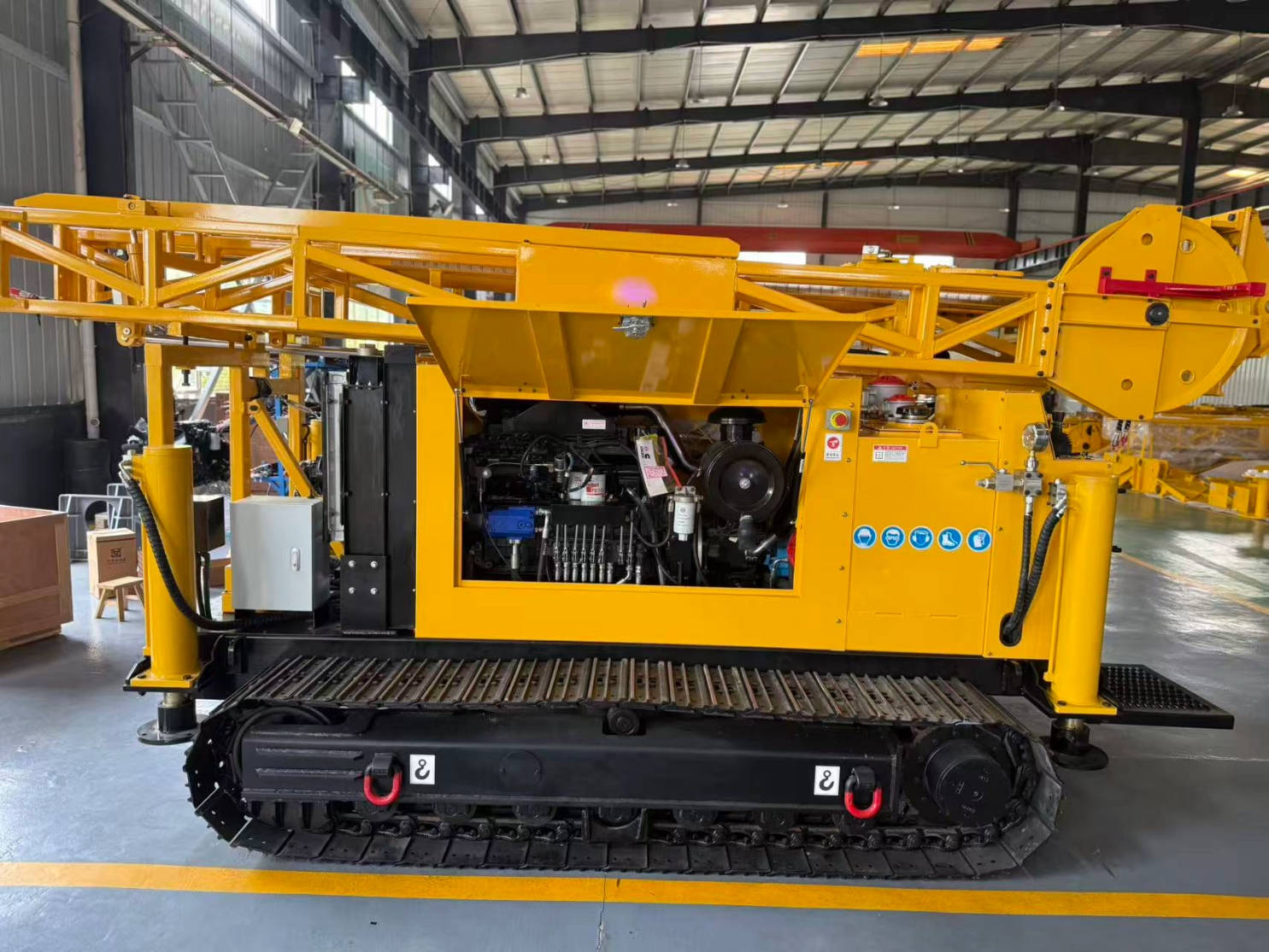
Exploration teams use rock core to examine lithology, alteration, mineralization, and geological contacts.
Core can also provide material for laboratory analysis. However, recovering visible mineralization does not establish an economically viable deposit. Geological interpretation, representative sampling, quality control, and further evaluation remain necessary.
Core drilling helps engineers investigate rock conditions for foundations, tunnels, slopes, and other infrastructure.
Sample quality matters because drilling-induced damage can complicate the interpretation of natural fractures and rock condition.
Recovered core helps reveal changes in rock type and structure with depth.
When structural orientation is required, suitable core-orientation equipment and borehole survey information must complement the drilling system. An ordinary core barrel alone does not provide fully oriented geological data.
Buyers should distinguish hole diameter from recovered core diameter. They are not the same measurement.
The following values are approximate dimensions for common standard wireline configurations.
| Size | Approximate hole diameter | Approximate core diameter |
|---|---|---|
| BQ | 60.0 mm | 36.5 mm |
| NQ | 75.7 mm | 47.6 mm |
| HQ | 96.0 mm | 63.5 mm |
| PQ | 122.6 mm | 85.0 mm |
Confirm dimensions against the selected tooling catalog. Triple-tube and other specialized configurations can produce different core diameters.
Larger core provides more sample material, but larger drilling systems also change torque, circulation, handling, and depth requirements.
The right size starts with the sampling objective—not a preference for the largest available diameter.
I would begin a technical comparison with the drilling program, rather than a catalog's maximum-depth figure.
Specify the intended laboratory work, preferred core diameter, and recovery expectations.
Where the formation is weak or fractured, discuss protective barrel configurations, shorter runs, and appropriate circulation practices with the tooling specialist.
Provide expected rock types, hardness, abrasiveness, fractured intervals, overburden, and groundwater conditions.
These factors influence bit selection, casing requirements, drilling-fluid planning, and operating adjustments.
Ask for depth capability at the required rod size and hole orientation.
A maximum-depth figure is not a universal guarantee. Drill-string weight, rod strength, hole friction, ground conditions, and rig capabilities all affect practical limits.
Compare transport dimensions, machine mass, setup requirements, water availability, and service access.
A capable surface core drilling rig still needs a realistic plan for mobilization, consumables, maintenance, and spare parts.
Ask the manufacturer to identify assumptions and exclusions.
The proposal should explain the rig configuration, compatible tooling, required site services, training arrangements, and acceptance criteria.
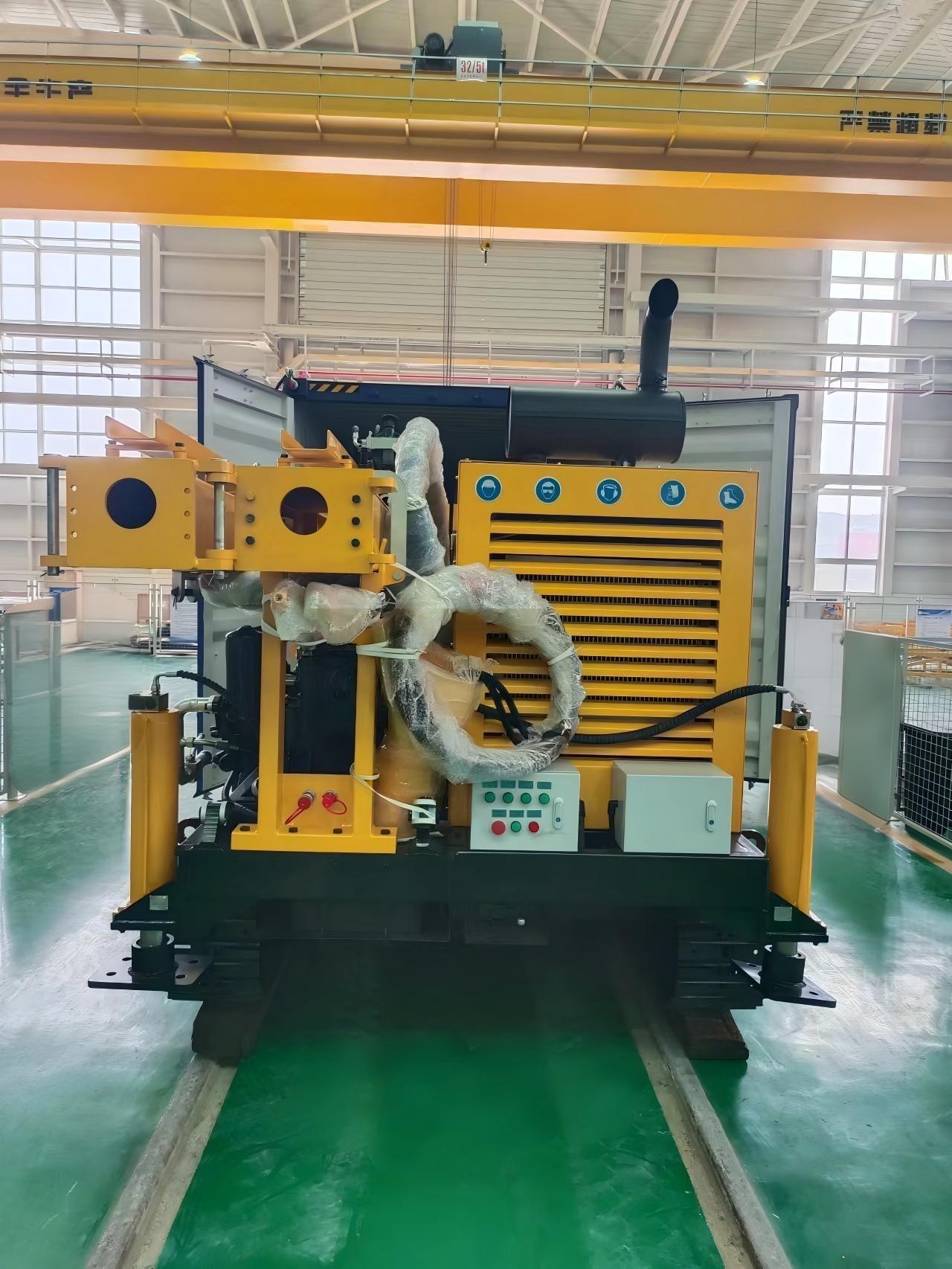
The fastest penetration rate does not necessarily produce the most useful exploration result.
A better review considers:
- Core recovery by run and geological interval.
- Sample condition and drilling-induced disturbance.
- Time spent drilling versus retrieving and servicing.
- Consumable use and unplanned downtime.
- Completeness of sample identification and records.
For example, a hypothetical 3-meter run returning 2.7 meters of core has 90% linear recovery.
That percentage is useful, but incomplete. If the missing material came from a narrow mineralized interval, the geological consequence could be significant.
Recovery should therefore be interpreted alongside the location and nature of sample loss. High average recovery does not automatically mean every important interval was sampled adequately.
Before committing to a broad drilling program, use an initial hole or agreed trial interval to validate the proposed setup.
1. Establish baseline tooling, fluid conditions, and operating parameters.
2. Record depth, run length, drilling time, and retrieval time.
3. Inspect core condition and document missing intervals.
4. Compare operational changes against geological changes.
5. Adjust one controllable variable at a time where practical.
6. Agree on the configuration before expanding production.
This is a proposed evaluation framework, not a universal operating procedure. Site-specific procedures and manufacturer limits take precedence.
Its purpose is to replace assumptions with recorded evidence.

Rotating rods, suspended loads, hydraulic pressure, unstable ground, and drilling fluids create different hazards that require coordinated controls.
Before work begins:
- Establish a stable working area and suitable exclusion zones.
- Inspect guards, emergency stops, hoses, lifting equipment, and wireline components.
- Use approved isolation procedures before maintenance or clearing obstructions.
- Keep personnel away from rotating components and uncontrolled loads.
- Plan fluid containment, spill response, and waste handling.
Silica exposure also requires attention when drilling silica-containing materials. Wet methods can reduce dust generation, but water alone is not a blanket assurance of safe exposure.
Applicable controls depend on the task, exposure assessment, jurisdiction, and working environment. Construction-specific guidance should not be treated as the complete compliance framework for a mineral-exploration site.
Prevent collected slurry from drying and becoming a secondary dust source.
CORTECH develops and manufactures fully hydraulic diamond core drilling equipment, including its CORE SURFACE DRILL range.
For a useful technical discussion, send CORTECH your target depth, preferred core size, expected geology, hole inclination, access constraints, and available water supply.
Request a project-specific configuration covering the rig, compatible wireline tooling, circulation requirements, training, and spare-parts support. This creates a stronger purchasing basis than comparing maximum-depth figures alone.
No. Diamond coring primarily uses rotary cutting to preserve a central sample or create a circular opening. Hammer drilling uses impact, often combined with rotation, and generally serves a different drilling objective.
Yes. Diamond core drilling is used in hard-rock exploration. Performance depends on the formation, bit specification, operating parameters, circulation, and available rig capability.
No. Wireline retrieves the inner tube through the rods during normal sampling cycles. Rod removal is still required for operations such as replacing the bit or addressing certain downhole problems.
No. Larger core provides more material but changes equipment and operational requirements. Choose the diameter according to geological objectives, laboratory needs, depth, and ground conditions.
Depth depends on the complete configuration, including rig capability, rod size and condition, drill-string loads, hole inclination, friction, and geology. Always review the assumptions behind a published depth rating.
No. Hydraulic control helps manage drilling functions, but recovery also depends on formation condition, tooling, circulation, run length, and operating practice. No rig specification alone guarantees complete recovery.
1. Boart Longyear. "The Ins and Outs of Wireline Core Retrieval Systems." Explains the inner tube, head assembly, overshot, and retrieval mechanism.
[https://www.boartlongyear.com/insite/the-boart-longyear-genuine-q-wireline-system/] [boartlongyear]
2. Boart Longyear. "Diamond Products Field Manual." Technical guidance on diamond bits, matrix selection, drilling parameters, circulation, and tooling dimensions.
[https://boartlongyearproducts.com/wp-content/uploads/2026/02/LONGYEAR_Bits_Guide_2023.1.pdf] [boartlongyearproducts]
3. Boart Longyear. "Coring Rods and Casing." Reference for drill-string selection, rod loading, and the conditions attached to depth ratings.
[https://www.boartlongyear.com/wp-content/uploads/Coring-Rods-and-Casing.pdf] [boartlongyear]
4. Precision Drilling Australia. "Core Drilling Sizes Guide: Diamond Core Bit Sizes Explained." Source for the approximate standard hole and core dimensions presented above.
[https://www.precisiondrillingaustralia.com.au/blog/core-drilling-sizes/] [precisiondrillingaustralia.com]
5. Occupational Safety and Health Administration. "Rig-Mounted Core Saws or Drills." Construction-specific guidance on wet drilling, equipment maintenance, ventilation, and slurry cleanup.
[https://www.osha.gov/sites/default/files/publications/OSHA3929.pdf] [osha]
6. CORTECH. "Full Hydraulic Diamond Core Drilling Rigs Manufacturer." Manufacturer background and surface core drilling product information; not independent verification of performance.
[https://www.cortechdrilling.com/] [cortechdrilling]
7. Encyclopaedia Britannica. "Diamond." Reference for diamond's hardness and industrial cutting applications.
[https://www.britannica.com/topic/diamond-gemstone] [britannica]


