
Views: 217 Author: CORTECH Publish Time: 2026-10-18 Origin: Site


Content Menu
● Hydraulic Feed vs. Mechanical Feed: Understanding the Difference
>> How Hydraulic Feed Core Drilling Works
● Hydraulic Feed Core Drilling vs. Mechanical Feed: At-a-Glance Comparison
● Performance in Variable Rock Conditions
>> Hard, Competent Rock: Balance Bit Load and Rotation
>> Fractured Rock: Preserve the Sample Before Chasing Speed
>> Alternating Soft and Hard Layers: Manage the Transition
>> Abrasive Formations: Feed Control Cannot Replace Tooling Selection
● Why Hydraulic Pressure Is Not the Same as Weight on Bit
● A Practical Procedure for Changing Ground Conditions
>> 1. Establish a Stable Baseline
>> 2. Recognize the Change Before Increasing Thrust
>> 3. Check Flushing and Tooling Conditions
>> 5. Review the Recovered Core
● A More Useful Comparison: Cost per Metre of Acceptable Core
● Designing a Fair Field Trial
● Maintenance, Operating Cost, and Operator Demands
>> Hydraulic Feed: Assess the Whole Circuit
>> Mechanical Feed: Inspect Wear and Adjustment
● Choosing a CORTECH Surface Core Drilling Configuration
>> 1. Is Hydraulic Feed Always Better Than Mechanical Feed?
>> 2. Does Hydraulic Feed Automatically Improve Core Recovery?
>> 3. Can Mechanical Feed Drill Hard Rock?
>> 4. Why Does Feed Adjustment Change as a Hole Deepens?
>> 5. What Should Buyers Request Before Ordering a Hydraulic Core Drill?
Hydraulic feed core drilling vs. mechanical feed is fundamentally a comparison of how a rig applies and adjusts axial force as ground conditions change. For surface exploration through alternating hard, soft, fractured, and weathered rock, hydraulic feed generally offers greater adjustment flexibility. Mechanical feed remains a practical option where formations are predictable and equipment simplicity matters.
However, a hydraulic system does not automatically deliver better core recovery or faster drilling. Results depend on the complete interaction between feed control, bit selection, rotation, flushing, and operator judgment.
From an equipment-selection perspective, I would prioritize controllability over maximum thrust. The important question is not how hard a rig can push, but how effectively it can maintain productive bit engagement without damaging the sample, tooling, or borehole.

A hydraulic feed system uses pressurized oil and actuators, typically cylinders, to advance or retract the drilling head. Depending on the design, chains or other transmission components may transfer actuator movement to the head.
Pressure control influences available feed force, while flow control influences movement speed. Suitable circuits can also provide holdback, helping support the drill string when its weight would otherwise overload the bit.
On a fully hydraulic wireline diamond core drilling rig, feed and rotation can be adjusted through their respective controls. Their practical independence still depends on pump capacity, circuit design, and operating limits.
Hydraulic feed should not be confused with automatic drilling. Manual hydraulic controls still require active supervision.
Mechanical feed advances the drilling spindle or head through mechanisms such as screws, gears, racks, or lever arrangements.
Some designs link feed movement to rotation through selectable gearing. Others provide different arrangements for manual adjustment, disengagement, or powered movement.
This distinction matters: "mechanical feed" does not describe one universal machine architecture. A screw-feed rig may also contain hydraulic functions.
For this comparison, mechanical feed means a primarily mechanically transmitted drilling advance, rather than a pressure-controlled hydraulic feed axis. Buyers should compare actual mechanisms, not equipment labels alone.
| Selection factor | Hydraulic feed | Mechanical feed |
|---|---|---|
| Feed adjustment | Typically offers continuously variable adjustment within circuit limits | Depends on gearing, mechanism, and available controls |
| Changing formations | Allows frequent feed and holdback corrections | May require more direct operator intervention |
| Uniform competent rock | Effective when correctly configured | Can perform well with suitable settings |
| Increasing rod weight | Holdback can help manage effective bit load | Weight management depends on the specific design |
| Maintenance priorities | Oil cleanliness, filters, seals, hoses, cooling | Lubrication, alignment, screws, gears, and wear |
| Operator requirements | Understanding of pressure, flow, and load response | Understanding of feed engagement and mechanical response |
| Purchasing decision | Evaluate control quality and support | Evaluate simplicity, condition, and formation suitability |
Neither column guarantees a particular penetration rate. A well-maintained mechanical rig with appropriate tooling may outperform a poorly configured hydraulic rig.
Hard rock requires an appropriate diamond matrix, sufficient cooling, and a productive combination of bit load and rotational speed.
Hydraulic feed offers a convenient way to make small loading adjustments while observing penetration and torque response. Yet increasing pressure indefinitely is not a solution to slow drilling.
An unsuitable bit matrix, inadequate flushing, or worn tooling can all limit progress. Additional thrust may then increase stress without producing worthwhile penetration.
Mechanical feed can be effective in consistent competent rock because the required drilling response may remain relatively stable. The challenge increases when strength and fracture conditions change within a run.
Broken formations introduce interrupted cutting, unstable fragments, and a greater risk of disturbing the core.
Hydraulic feed gives the operator flexibility to moderate advance as bit engagement changes. However, sample preservation also depends on:
- Core barrel configuration.
- Bit waterway design.
- Flushing conditions.
- Run length.
- Formation stability.
A suitable lateral-discharge configuration, for example, can help limit direct fluid action on vulnerable core.
Mechanical feed is not inherently unsuitable for fractured rock. Its effectiveness depends on how readily the operator can control loading and respond to changing resistance.
A setting that works in competent rock may become too aggressive when the bit enters a weak seam.
Conversely, a conservative setting used in broken material may become unproductive after the bit returns to stronger rock.
This is where hydraulic feed adjustment becomes particularly useful. The operator can reassess loading without treating the entire interval as one uniform formation.
The objective is controlled adaptation—not maintaining one pressure reading throughout the hole.
Abrasiveness and hardness are different properties. A formation can cause substantial tooling wear without being exceptionally hard.
Hydraulic feed cannot compensate for an unsuitable matrix or insufficient cuttings removal. Mechanical feed cannot avoid those limitations either.
In abrasive ground, evaluate feed behavior alongside bit wear, flushing performance, and total metres achieved per bit.
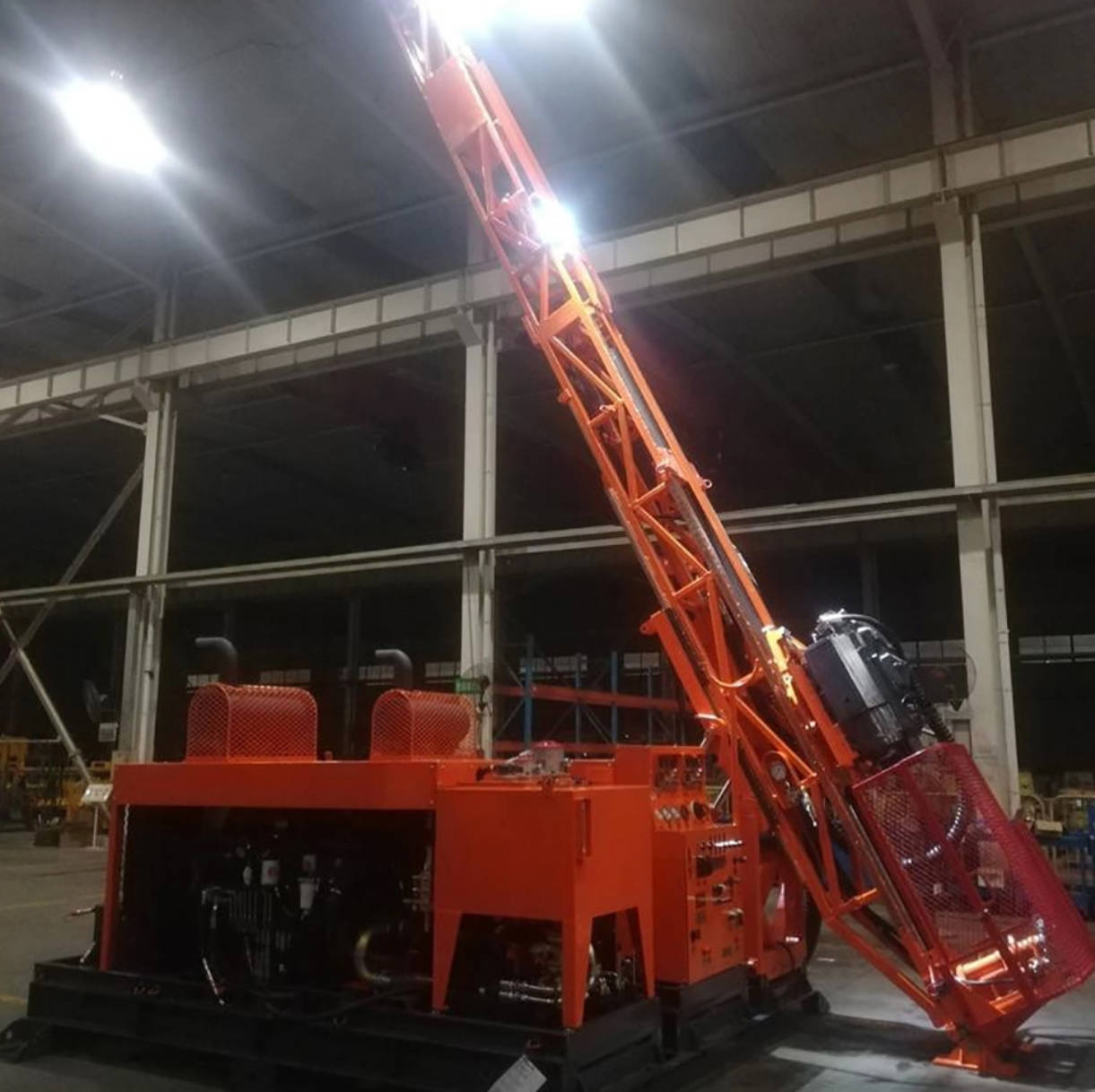
A pressure gauge describes conditions in a hydraulic circuit. It does not, by itself, provide a universally accurate measurement of downhole bit load.
Effective weight on bit also depends on:
- Drill-string weight and buoyancy.
- Hole inclination.
- Friction and contact along the borehole.
- Feed-system geometry.
- Applied holdback.
As rods are added, the loading balance changes. In a sufficiently deep downward hole, the string may require support rather than additional downward force.
The relationship between pressure and cylinder area helps explain actuator force, but it is not a complete downhole loading calculation.
Use the rig manufacturer's approved bit-load procedure. Do not transfer a pressure setting from another model simply because both machines use hydraulic feed.
The following workflow is a planning framework, not a replacement for the operating manual or site procedures.
Record formation description, bit specification, rotational speed, feed indication, penetration rate, flushing conditions, and recovered core length.
A baseline makes subsequent changes easier to interpret.
Watch for unexpected penetration changes, irregular torque, vibration, altered returns, or declining core condition.
A lower penetration rate does not automatically mean the bit needs more force.
Confirm that circulation remains suitable for the tooling and formation.
Poor cooling or inadequate cuttings removal can undermine drilling performance regardless of feed type. Unexpected loss of returns requires assessment under the site's established procedures.
Where conditions remain stable and procedures permit, change one principal parameter at a time and observe the response.
Avoid simultaneously changing feed, rotation, and circulation without recording what changed. Otherwise, identifying the cause of improvement becomes difficult.
Check recovery, fragmentation, and visible disturbance after the run.
If sample condition deteriorates, reconsider run length, barrel configuration, bit design, and drilling settings—not feed alone.
Instantaneous penetration rate measures cutting progress. It does not capture the full value of a drilling system.
For procurement, I would compare cost per metre of acceptable recovered core, with acceptance criteria agreed before the trial.
Useful indicators include:
| Indicator | What it helps evaluate |
|---|---|
| Metres drilled per shift | Overall output, including interruptions |
| Core recovery | Recovered core length relative to drilled interval |
| Sample condition | Whether the core meets project requirements |
| Bit consumption | Tooling cost and wear behavior |
| Unplanned downtime | Reliability and service burden |
| Operator interventions | Practical control demands |
Keep these categories separate. A rapid run with poor sample quality is not equivalent to a slower run that satisfies the geological objective.
There is no defensible universal percentage by which hydraulic feed improves productivity. Such a claim requires matched operating evidence.
A useful trial compares similar geological intervals, not merely two rigs operating on the same property.
Record hole inclination, depth, tooling, bit matrix, barrel configuration, operator, and flushing conditions. Where possible, use comparable bit condition and maintenance status.
Then evaluate repeated runs rather than one exceptional result.
For example, consider an illustrative sequence of competent rock, a fractured transition, and a weak seam. This is a planning scenario, not a reported CORTECH field result.
The trial should examine:
1. How smoothly each system responds at the transition.
2. Whether the operator can prevent excessive loading.
3. Whether core quality remains acceptable.
4. How much time is lost to adjustment or recovery problems.
This approach reveals whether hydraulic control creates measurable value under the buyer's actual conditions.
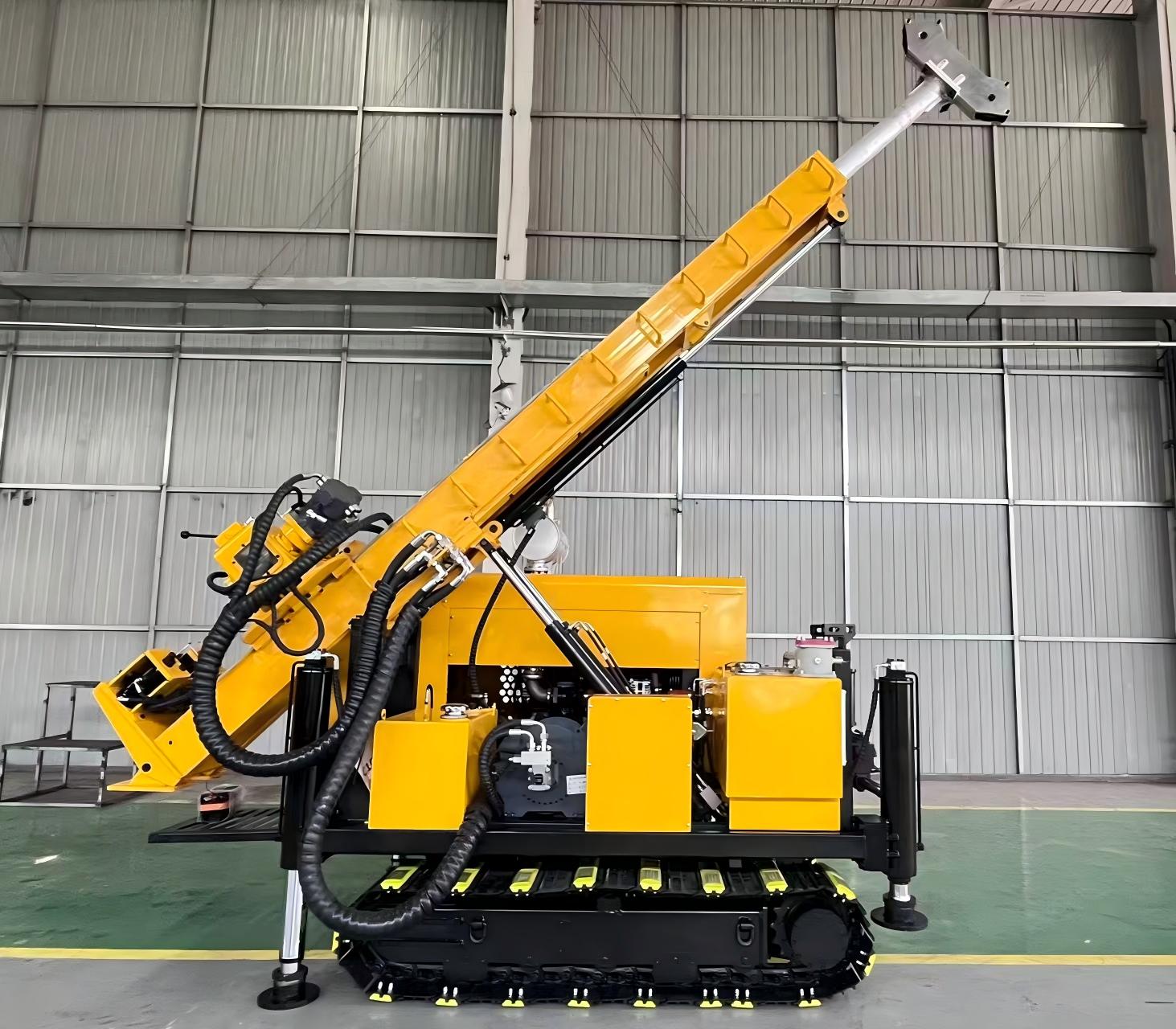
Hydraulic performance depends on component condition and maintenance discipline.
Contaminated oil, leakage, damaged hoses, or inadequate cooling can compromise reliability. Buyers should examine filtration requirements, service access, replacement-parts availability, and troubleshooting support.
Ask for operating demonstrations at realistic oil temperatures, not only brief unloaded movements.
Mechanical systems require attention to lubrication, alignment, engagement, and wear.
Backlash or worn feed components can affect response. A simpler layout may be attractive where service resources are limited, but simplicity should be demonstrated on the actual machine.
Neither system removes the need for trained operators, guarding, isolation procedures, or scheduled inspection.
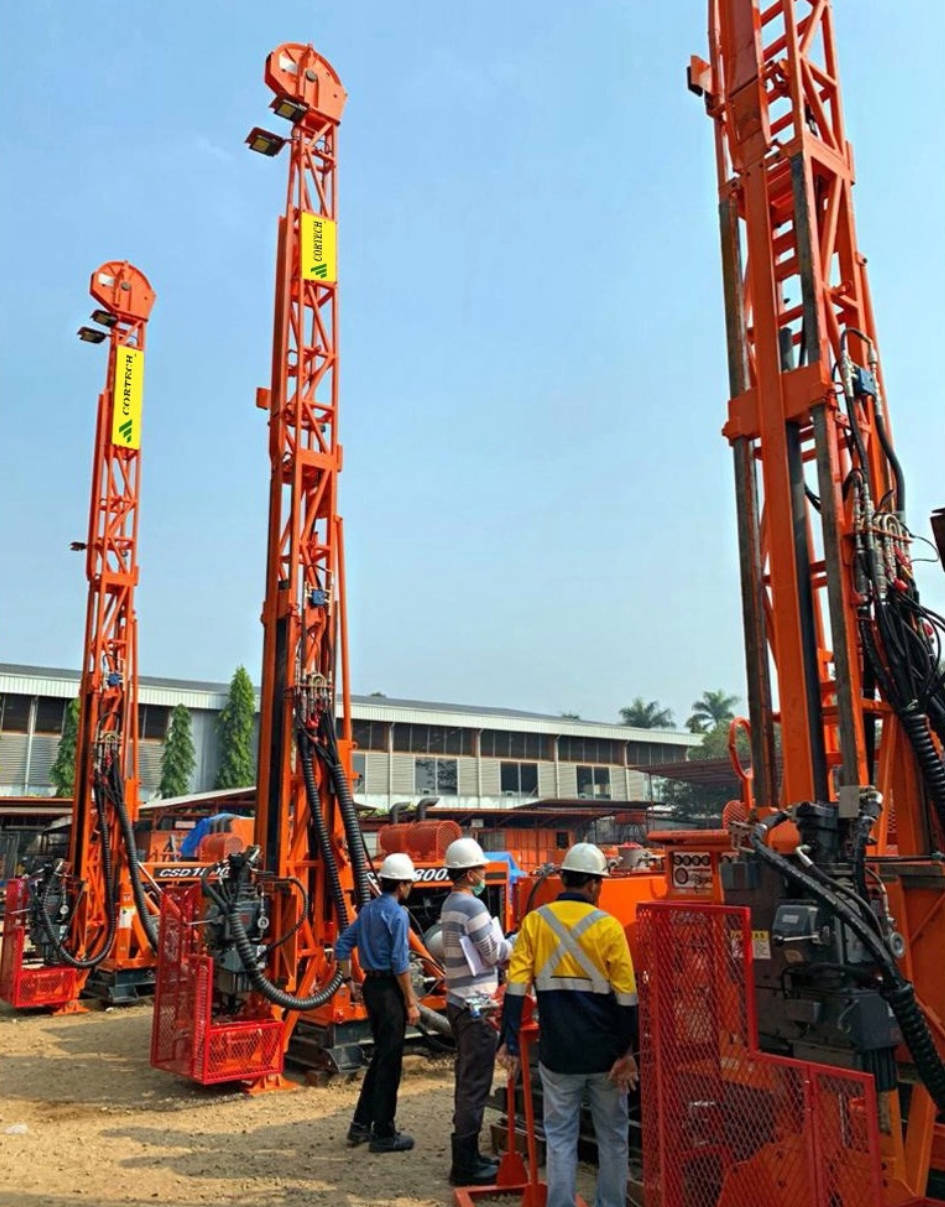
CORTECH specializes in the development, manufacture, and sale of fully hydraulic diamond core drilling equipment, including surface wireline applications.
For buyers evaluating a CORTECH CORE SURFACE DRILL, the most productive discussion starts with the drilling program rather than a headline depth figure.
Provide:
- Expected formations and fracture conditions.
- Target depth, diameter, and inclination.
- Planned rods, core barrel, and bit sizes.
- Recovery and sample-quality requirements.
- Site access, climate, water, and maintenance constraints.
Then request model-specific confirmation of feed control, holdback capability, pullback capacity, rotation characteristics, cooling, and service requirements.
Not every hydraulic rig offers the same circuit behavior or monitoring functions. Confirm the proposed configuration in writing.
For variable ground, hydraulic feed is often the stronger starting point because it supports flexible loading adjustments. Mechanical feed remains worth considering when conditions are predictable and its operating characteristics fit the project.
Contact CORTECH with your formation profile and drilling requirements to request a configuration review, technical proposal, and demonstration plan focused on controlled feed performance.
No. Hydraulic feed generally offers greater adjustment flexibility, especially in changing formations. Mechanical feed can remain effective in uniform ground. Compare specific machines, tooling, operator capability, and maintenance support.
No. It can help manage loading, but recovery also depends on geology, core barrel selection, bit configuration, flushing, and run length. Feed control is one part of the sampling system.
Yes. Suitable mechanical-feed equipment can drill competent hard rock with correctly selected diamond tooling and operating parameters. Hardness alone does not determine which feed system is preferable.
Adding rods changes drill-string weight and its contribution to bit loading. Depending on inclination, buoyancy, and friction, the operator may need less downward feed or more holdback.
Request model-specific operating limits, feed and holdback details, tooling compatibility, maintenance requirements, and a relevant demonstration. Evaluate acceptable core output and downtime alongside penetration rate.
1. Epiroc. "Improving Your Rate of Penetration: Essential Diamond Drillers' Guide." Document dated July 7, 2025. Technical basis for bit selection, waterways, flushing, rotation, loading, and holdback. [epiroc.scene7]
2. Epiroc. "Core Drilling." Overview of exploration coring and the role of continuous water circulation in bit cooling, lubrication, and cuttings removal. [epiroc]
3. Boart Longyear. "Longyear® Bits and Accessories." Technical catalog describing bit-loading principles and a hydraulic "off pressure" measurement procedure. The procedure is equipment-specific and should not be applied indiscriminately. [boartlongyear]
4. Boart Longyear. "LX™ Drills: Commissioning Checklist." June 2012. Documents screw-feed adjustments, hydraulic functions, and the need to use the operating manual's bit-weight guidance. [boartlongyear]
5. CORTECH. "Hydraulic Drilling Rig Supplier." Corporate overview of fully hydraulic exploration drilling equipment and surface-coring applications. Used for company scope, not independent proof of comparative performance. [en.cortech]
6. Boart Longyear. "LM30SS." Product information illustrating variable controls and model-specific hydraulic feed specifications. Used as an equipment-design example, not evidence that every hydraulic rig has equivalent functions. [boartlongyear]


