
Views: 221 Author: CORTECH Publish Time: 2026-10-14 Origin: Site


Content Menu
● Which Core Drilling Machines Are Best for Different Mining Projects?
● Why Hydraulic Wireline Diamond Core Drilling Matters
>> Why Drilling Control Deserves More Attention Than Headline Power
● Best Surface Core Drilling Machines for Mining Exploration
>> What to Look for in a Surface Diamond Core Drilling Rig
● Best Heli-Portable Core Drilling Machines for Remote Mining Sites
>> Evaluate the Heaviest Module, Not Just Total Rig Weight
● Best Underground Core Drilling Machines for Mine Workings
>> Check the Entire Underground Working Envelope
● Which Core Drilling Machine Manufacturers Should Buyers Compare?
● How to Compare Core Drilling Rig Specifications Correctly
>> 1. Define Depth Capacity Under Comparable Conditions
>> 2. Match Tooling to the Formation
>> 3. Review Handling and Safety Features
>> 4. Verify Support Before Purchase
● Expert Buying Framework: Compare Cost per Accepted Core Meter
● Practical Insight: Use a Weighted Rig-Selection Scorecard
● Practical Scenario: Choosing Between Surface and Modular Rigs
● Build a Better CORTECH Core Drilling Machine Inquiry
● Frequently Asked Questions About Mining Core Drilling Machines
>> 1. What Is the Best Core Drilling Machine for Mining?
>> 2. What Is the Difference Between Wireline and Conventional Core Retrieval?
>> 3. Does a Higher Depth Rating Mean a Better Core Drill?
>> 4. Are Heli-Portable Core Drills Suitable for Every Remote Project?
>> 5. Can a Core Drilling Rig Guarantee High Core Recovery?
>> 6. What Information Should I Send CORTECH for a Quotation?
The best core drilling machines for mining are hydraulic wireline diamond drilling rigs matched to the project's geology, target depth, access conditions, and sampling requirements. Surface rigs suit accessible exploration sites. Heli-portable modular rigs address remote locations. Underground rigs serve drilling programs inside mine workings.
From a procurement perspective, I would not start with the biggest engine or the deepest advertised capacity. I would start with the geological information the project needs—and the conditions under which the crew must obtain it.
CORTECH develops, manufactures, and sells fully hydraulic wireline diamond core drilling machines across its CORE SURFACE DRILL, CORE HELI DRILL, and CORE U/G DRILL categories. This guide explains how to evaluate those equipment types without confusing a manufacturer's specification with proven performance on your site.

There is no universally superior mining core drilling machine. The strongest choice is the rig that meets the drilling objective while controlling operational risk and total project cost.
| Mining application | Most suitable rig category | Main selection priority |
|---|---|---|
| Exploration with established site access | Surface core drilling rig | Capacity, mobility, and repeatable drilling control |
| Remote prospects with restricted road access | Heli-portable modular core drill | Module weights, transport planning, and assembly |
| Exploration from underground workings | Underground core drilling rig | Working envelope, hole orientation, and installation |
| Deeper exploration programs | Appropriately rated surface or underground rig | Capacity at the specified rod size and angle |
| Fractured or variable formations | Rig with controllable feed and compatible tooling | Sample recovery and borehole stability |
Use this table as a starting point, not a substitute for application engineering. A suitable rig category can still contain an unsuitable model.
A diamond core drilling system cuts an annular path through rock, leaving a cylindrical sample inside the core barrel. Wireline equipment retrieves the sample-containing inner tube through the drill rods.
The key distinction is that routine core retrieval does not require removing the entire rod string. An overshot connects to the inner tube assembly, which is then retrieved using the wireline system.
However, wireline capability alone does not guarantee excellent productivity. Tooling condition, retrieval reliability, ground conditions, and operator practices all matter.
For buyers, the useful question is not simply, "Does this machine support wireline drilling?" It is, "Is the complete rig-and-tooling package suitable for our intended hole sizes, orientations, and formations?"
Hydraulic drilling systems provide control over functions such as rotation and feed. When comparing machines, assess how those controls operate across the intended working range.
Ask suppliers to explain:
- Available torque at the required rotational speed.
- Feed and pullback ratings.
- Control behavior during changing ground conditions.
- Instrumentation available to the operator.
- Cooling requirements under expected operating conditions.
Maximum values should not be treated as values available simultaneously. Request operating curves and configuration-specific information wherever possible.
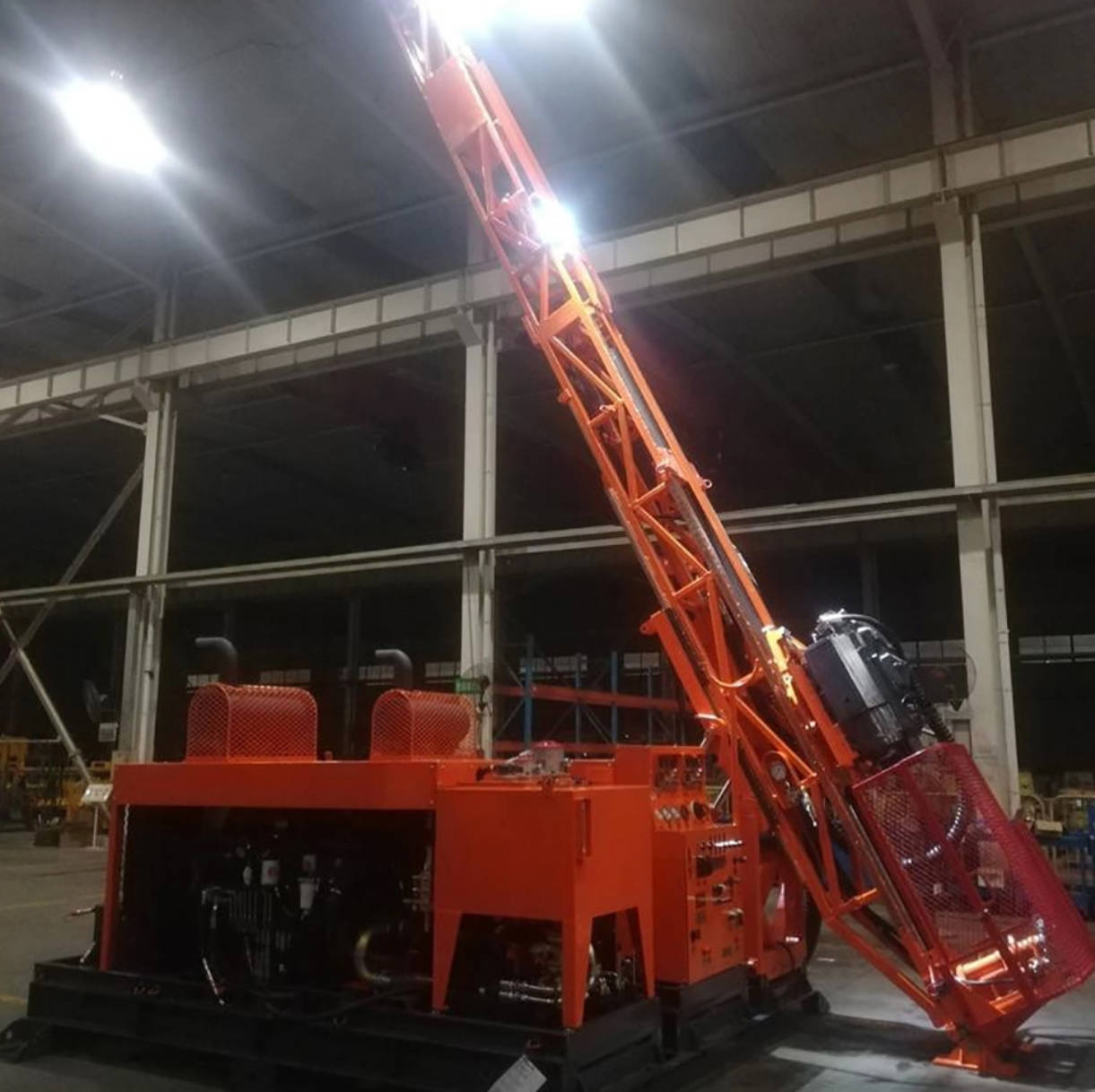
Surface core drilling rigs are a logical choice when exploration sites have suitable access and enough space for drilling operations.
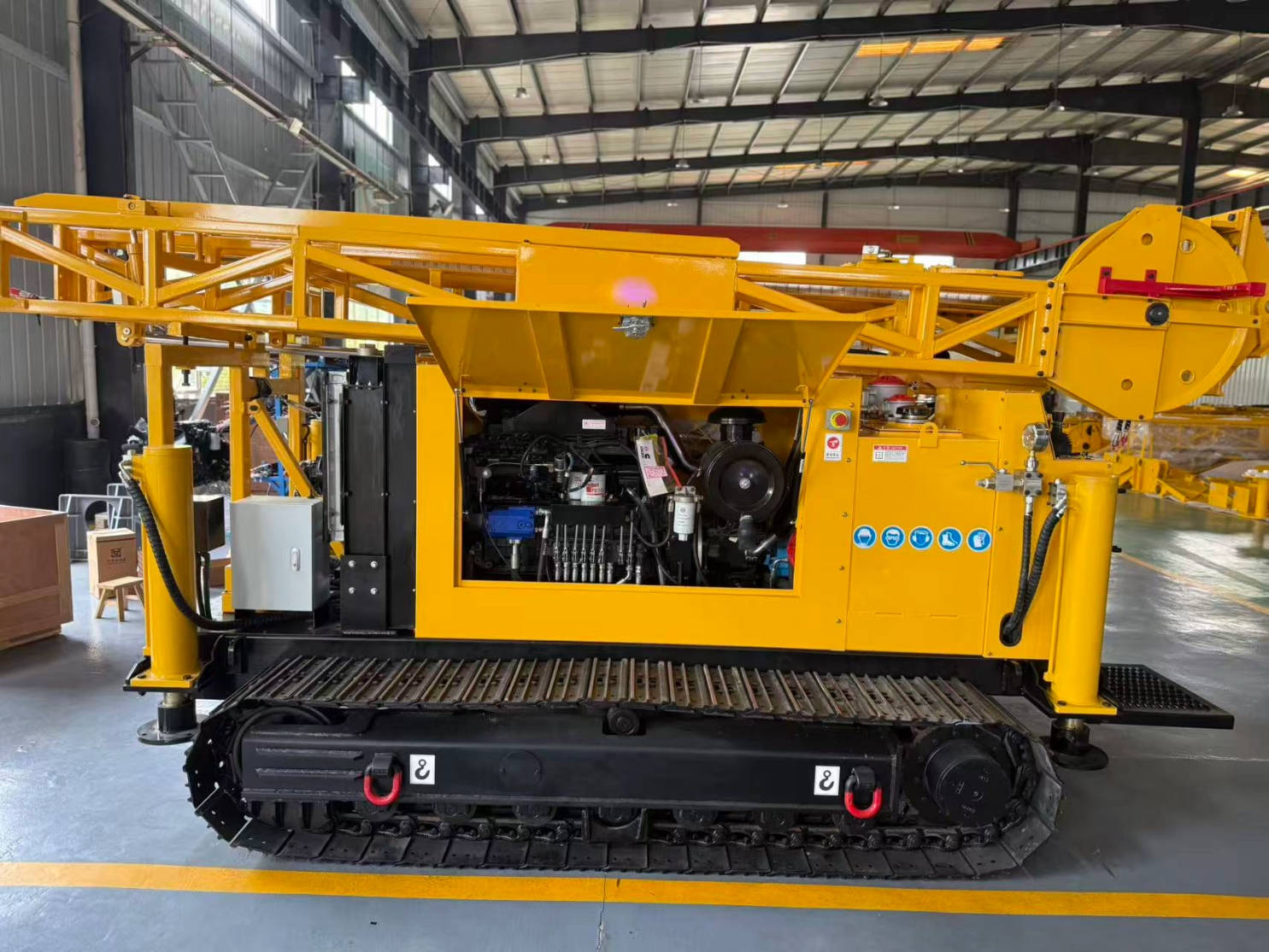
Their value lies in matching drilling capacity with practical movement between holes. Depending on the manufacturer and model, surface rigs may use crawler, skid, trailer, or truck-mounted arrangements.
Evaluate more than the nominal depth rating.
A useful comparison includes:
1. Capacity for the selected rod and core size.
2. Torque and rotational-speed range.
3. Feed stroke, pullback, and mast arrangement.
4. Supported drilling angles.
5. Transport dimensions and operating footprint.
6. Rod handling and service accessibility.
CORTECH's published product portfolio includes surface diamond core drilling models such as the CSD1800X, CSD1300L, and CSD2200L.
These names establish available product families, not independently verified performance rankings. Request current technical datasheets before matching a model to a drilling program.
Heli-portable core drilling machines address projects where conventional equipment transport is difficult or unavailable.
Their defining advantage is modular transport. Equipment can be separated into manageable assemblies and reassembled at the drilling location.
CORTECH lists the CSD1800H and CSD1300H within its heli-rig offering. Suitability still depends on the exact configuration and transport plan.
A machine's total weight does not reveal whether individual modules can be transported safely.
Before selecting a helicopter-portable diamond core drilling rig, request:
- The weight and dimensions of every transport module.
- Identification of approved lifting points.
- Assembly requirements and necessary tools.
- The complete shipment list, including auxiliary equipment.
- Packing information for fluids, consumables, and spares.
Have the helicopter operator assess the proposed loads against the actual aircraft, route, altitude, weather, and operating restrictions.
The drilling rig is only one part of the mobilization. Pumps, rods, fuel, water systems, and support equipment also need a realistic transport plan.
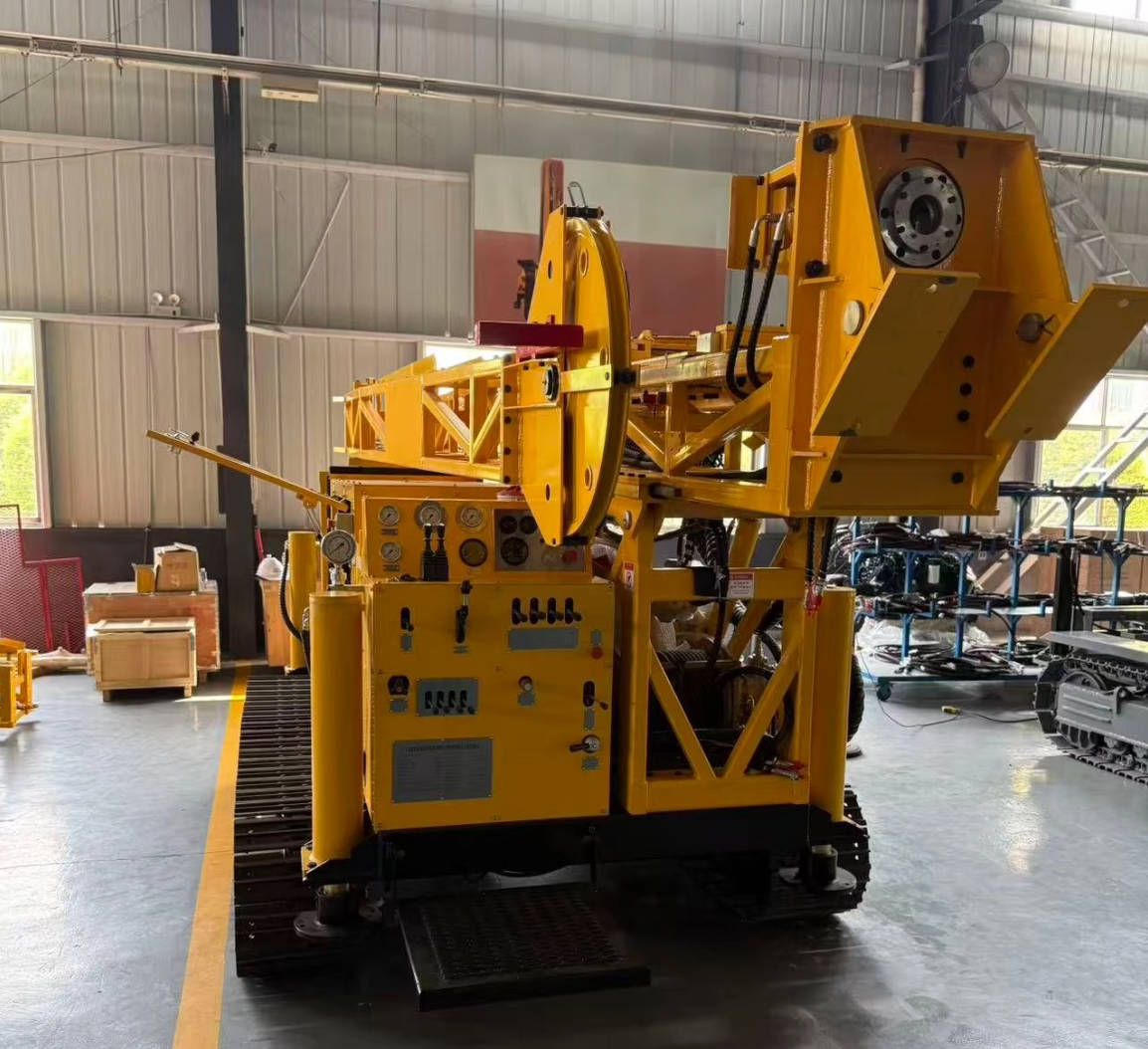
Underground core drilling rigs must fit the mine's available space while supporting the required hole directions and sampling objectives.
A compact machine is valuable, but compactness alone is insufficient. The crew also needs room for setup, rod handling, maintenance, and safe movement.
CORTECH's published portfolio includes the CUG600 underground drilling rig. Request its current installation drawings and application-specific capacity information before selection.
Review the following conditions with the supplier and mine engineering team:
- Access-route dimensions.
- Available chamber width and height.
- Feed-frame clearance.
- Required drilling directions.
- Anchoring or bracing arrangements.
- Power, ventilation, water, and drainage provisions.
- Space for tooling and core handling.
For inclined or upward holes, confirm that the retrieval system and associated procedures are appropriate. Do not assume a surface tooling arrangement is suitable for every underground orientation.
A credible comparison should include equipment categories, support arrangements, and documented capabilities—not an unsupported "best brand" ranking.
| Manufacturer | Relevant published offering | Useful comparison focus |
|---|---|---|
| CORTECH | Surface, heli-portable, and underground diamond core drilling rigs | Configuration fit and application-specific quotation |
| Epiroc | Boyles and Christensen surface rigs; Diamec underground rigs | Mobility, controls, and model-specific options |
| Boart Longyear | Exploration equipment, modular underground systems, and wireline tooling | Rig-and-tooling compatibility and modular configuration |
Epiroc's published range illustrates how different platforms address surface mobility and underground drilling. Boart Longyear's materials explain the importance of wireline retrieval design and interchangeable modular components.
These references support a broader purchasing lesson: compare complete drilling systems rather than isolated machines.
An advertised maximum depth is incomplete without the corresponding rod size, hole orientation, and configuration.
Ask every supplier to quote capacity against the same project specification. Otherwise, two impressive-looking figures may describe different operating conditions.
Core recovery depends on more than the rig.
The barrel, bit, drilling fluid, retrieval assembly, and operating approach must work together. In difficult ground, inner-tube movement, wear, or core wedging can interfere with reliable retrieval.
Ask suppliers to explain their tooling recommendation and its limitations. Avoid assuming that components from different sources are interchangeable merely because their nominal sizes match.
Request configuration-specific details for guarding, emergency stops, rod handling, lifting arrangements, and maintenance access.
Some published exploration rigs offer rod-handling systems or guard-interlock options. Availability varies by model and package.
Document exactly what the quotation includes. A feature shown in a brochure image may not be standard equipment.
Ask for written answers covering spare-parts availability, commissioning, operator training, warranty scope, and troubleshooting support.
Where possible, request customer references for comparable applications. References from a different drilling environment may provide limited evidence for your project.
My preferred evaluation approach is to compare value at the project level rather than purchase price alone.
A practical procurement metric is:
Cost per accepted core meter=Total drilling program cost/Core meters meeting agreed acceptance criteria
Define "accepted" before comparing offers. It could incorporate recovery, sample identification, and compliance with the project's handling requirements.
Include mobilization, labor, energy, consumables, maintenance, and demobilization in the cost estimate.
This is a proposed decision framework, not a published industry benchmark. Its advantage is that it makes low-cost equipment compete on useful output rather than invoice price.
A scorecard makes procurement discussions more transparent.
The example below assigns priorities for a hypothetical exploration project. Adjust the weights to suit your own risks.
| Evaluation criterion | Suggested weight |
|---|---|
| Capacity and application fit | 25% |
| Sampling and tooling compatibility | 20% |
| Safety and handling provisions | 20% |
| Transport and setup suitability | 15% |
| Maintenance and support | 15% |
| Purchase price | 5% |
Score each offer consistently and record the evidence behind each score.
Apply mandatory pass/fail requirements first. A machine that cannot meet the required access, capacity, or safety conditions should not win because it scores well elsewhere.
Consider a hypothetical prospect with several remote drilling locations.
A larger surface rig may offer attractive drilling capacity. A modular rig may be easier to mobilize between inaccessible locations.
The correct comparison includes the entire campaign:
1. Establish the required depth and core size.
2. Confirm access to every planned collar.
3. Estimate equipment and support transport requirements.
4. Compare assembly and relocation arrangements.
5. Request drilling assumptions for the expected geology.
6. Evaluate cost and risk across the complete program.
This is an illustrative scenario, not a CORTECH customer case study. No production advantage should be claimed without project-specific evidence.

To obtain a useful recommendation, provide CORTECH with a concise drilling brief rather than requesting only a price list.
Include:
- Surface, remote-access, or underground application.
- Target depth, rod size, and core diameter.
- Expected geology and sampling requirements.
- Hole angles and number of planned holes.
- Access restrictions and transport method.
- Available utilities and site conditions.
- Required handling features and delivery schedule.
Ask for a configuration-specific proposal covering the rig, tooling, auxiliary equipment, commissioning, and recommended spares.
The best core drilling machine for mining is the one that fits this brief and can demonstrate that fit through clear documentation.
The best machine depends on the application. Surface rigs suit accessible exploration locations, heli-portable rigs address remote transport requirements, and underground rigs fit drilling programs within mine workings. Select the model only after defining depth, tooling, access, and operating conditions.
Wireline systems retrieve the sample-containing inner tube through the rod string. Conventional retrieval generally requires withdrawing the drill string to recover the core. Wireline equipment changes the retrieval process, but actual productivity remains dependent on the complete drilling system.
No. A higher rating may be irrelevant if the machine cannot access the site or support the required configuration. Compare depth ratings under equivalent rod-size and hole-orientation conditions.
No. Suitability depends on module weights, available aircraft, operating conditions, assembly arrangements, and support logistics. The helicopter operator must assess the proposed transport plan.
No machine alone can guarantee recovery in every formation. Tooling, ground conditions, operating practices, and equipment condition affect the outcome. Establish project-specific acceptance criteria and discuss difficult-ground procedures before mobilization.
Provide the drilling environment, target depth, core and rod sizes, hole angles, geology, transport restrictions, utilities, and delivery requirements. This allows a more meaningful recommendation than a price request without application details.
The sources below support the product descriptions and technical explanations. The scorecard, cost framework, and hypothetical scenario are editorial analysis, not manufacturer test results or verified field-performance claims.
1. CORTECH. "Products." Published product portfolio covering surface diamond core drilling rigs, heli-portable rigs, and underground equipment. [coretecdrilling]
2. Epiroc. "Core Drilling Rigs | Underground & Surface Exploration." Product-family overview covering Boyles, Christensen, and Diamec rigs, including transport arrangements and selected handling features. [epiroc]
3. Boart Longyear. "The Ins and Outs of Wireline Core Retrieval Systems." June 5, 2017. Technical explanation of inner tubes, overshots, latch mechanisms, wear, and tooling compatibility. [boartlongyear]
4. Boart Longyear. "Exploration." Published overview of exploration drilling equipment and modular underground diamond drilling systems. [boartlongyearproducts]
5. Epiroc. "Diamec Smart 4." Model description covering compact configuration, feed-frame choices, wireline equipment, and optional features. [epiroc]


