
Views: 214 Author: CORTECH Publish Time: 2026-10-22 Origin: Site


Content Menu
● What Does "Speed" Mean in Diamond Core Drilling?
● Recommended Diamond Core Drilling RPM by Bit Size
>> Why Larger Diamond Core Bits Usually Need Lower RPM
● Five Factors That Determine the Best Diamond Core Drilling Speed
>> 1. Rock Hardness, Abrasiveness, and Fracturing
>> 2. Diamond Bit Construction and Matrix Selection
>> 4. Flushing and Cuttings Removal
>> 5. Available Torque and Drill-String Stability
● How to Find the Best Speed: A Controlled Field Procedure
● An Overlooked Diagnostic: Revolutions per Centimeter
● Troubleshooting Diamond Core Drilling Speed Problems
● A Better Performance Test: Cost per Recovered Meter
● What This Means When Choosing a CORTECH Surface Core Drill
● Plan Your Diamond Core Drilling Parameters with CORTECH
>> 1. What is the best RPM for N-size diamond core drilling?
>> 2. Does higher RPM always increase drilling speed?
>> 3. Should diamond core drilling speed be reduced in fractured rock?
>> 4. How can I recognize a polished diamond bit?
>> 5. Can one RPM setting work throughout a borehole?
>> 6. Is maximum drill-head speed the main buying criterion?
The best speed for diamond core drilling is the rotational speed that delivers steady penetration, controlled bit wear, and reliable core recovery—not simply the highest RPM available. For impregnated diamond exploration bits, published reference ranges include 900–1,200 RPM for N-size tooling, 750–950 RPM for H-size, and 600–750 RPM for P-size. These are starting ranges, not universal settings.
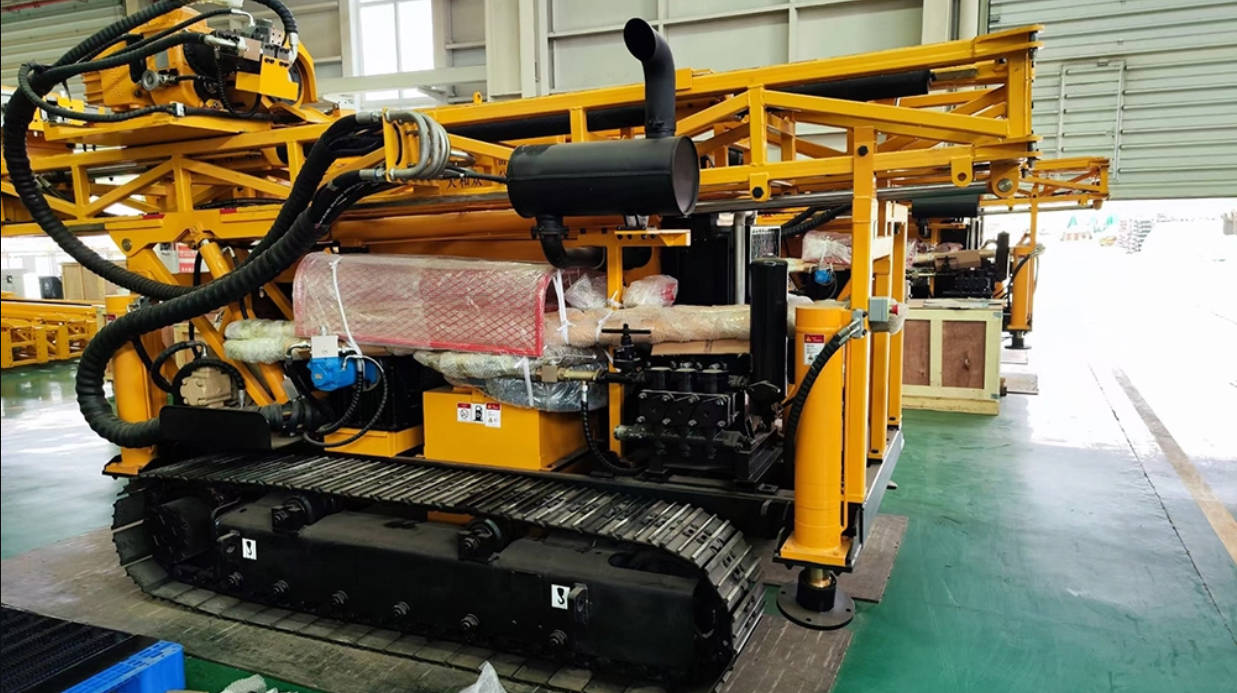
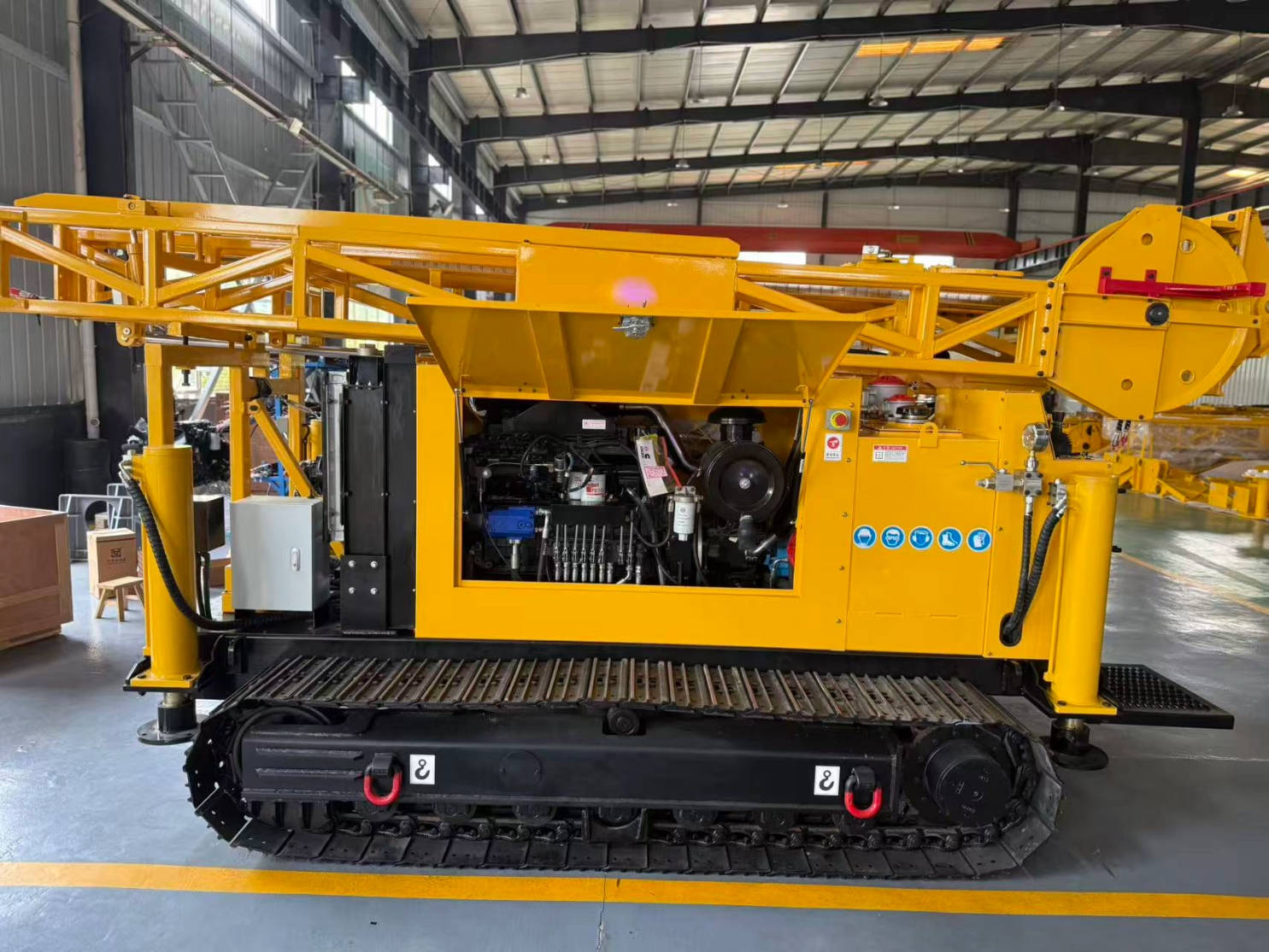
At CORTECH, our focus is fully hydraulic surface drilling rigs for wireline diamond coring. From a rig-selection perspective, the important question is whether a machine can maintain balanced rotation, feed, torque, and flushing as conditions change.
This guide explains how to select diamond core drilling speed for geological exploration. It does not apply directly to handheld concrete coring, where equipment, bit construction, and operating recommendations differ.
Before choosing a setting, distinguish between two measurements.
- Rotational speed, measured in revolutions per minute, describes how quickly the bit turns.
- Rate of penetration, or ROP, describes how quickly the bit advances, commonly measured in centimeters per minute or meters per hour.
Higher RPM can increase penetration when the diamonds maintain an effective depth of cut. However, increasing rotation without sufficient penetration can leave the diamonds rubbing rather than cutting.
My preferred way to evaluate a proposed setting is therefore straightforward: does the added RPM produce useful advance without excessive vibration, wear, or sample damage?
An impressive rotation-speed reading is not proof of productive drilling.
The following ranges provide a practical reference for impregnated diamond exploration bits.
| Exploration bit size | Published reference range | Approximate midpoint |
|---|---|---|
| A | 1,500–1,700 RPM | 1,600 RPM |
| B | 1,200–1,450 RPM | 1,325 RPM |
| N | 900–1,200 RPM | 1,050 RPM |
| H | 750–950 RPM | 850 RPM |
| P | 600–750 RPM | 675 RPM |
These figures come from a manufacturer's technical handbook. They are not CORTECH model specifications or mandatory settings for every bit within each size category.
Start with the actual bit supplier's recommendations. Then check the rig, rods, core barrel, and other components for applicable limits. Use the most restrictive relevant limit.
The midpoint can be a useful initial setting in suitable conditions, but fractured formations, unstable rotation, or inadequate torque may require substantially different speeds.
A larger bit travels farther around its circumference during each revolution. Consequently, two bits running at identical RPM do not have identical peripheral speeds.
The relationship is:
v=πDn/60
Here, v is peripheral speed in meters per second, D is bit outside diameter in meters, and n is RPM.
This explains the general downward trend in recommended RPM as bit size increases. It does not establish one ideal peripheral speed for every matrix, rock type, or drilling system.
Rock hardness alone cannot determine the correct RPM.
Hard, fine-grained formations may provide insufficient abrasion to expose fresh diamonds. Coarse or fractured formations can behave very differently, even when their mineral hardness appears similar.
In extremely broken, hard ground, published operating guidance recommends reducing rotation to approximately half the normal setting while controlling penetration carefully.
That is a condition-specific response, not a rule to halve RPM whenever any fracture appears.
An impregnated bit contains diamonds distributed through a metal matrix. Productive drilling requires the matrix to wear at a rate that exposes sharp diamonds without releasing them prematurely.
When the matrix does not wear sufficiently, the crown can polish. When it wears too quickly, useful diamonds may be lost before their cutting capacity is exhausted.
Surface-set bits have different operating requirements. Do not transfer an impregnated-bit speed chart to them without checking the supplier's instructions.
Repeated speed adjustments cannot fully compensate for an unsuitable bit.
Weight on bit, or WOB, provides the force required for the diamonds to engage the formation.
Too little WOB can produce low torque, poor penetration, and polishing. Excessive WOB can accelerate wear, increase deviation, or damage drilling components.
A useful warning sign is added feed force without a meaningful increase in penetration.
Hydraulic feed pressure is not automatically a direct WOB measurement. Its interpretation depends on the rig's hydraulic arrangement, calibration, and suspended drill-string load.
Drilling fluid cools the bit, lubricates components, and carries cuttings away from the cutting face.
Higher penetration generally creates more cuttings, so circulation must support the selected operating rate.
Pressure alone does not establish adequate flow. Restrictions can increase pressure without providing satisfactory cleaning at the bit.
Equally, excessive hydraulic lift can reduce effective bit contact. Follow the tooling recommendations rather than assuming that either maximum pressure or maximum flow guarantees better drilling.
A rig's maximum RPM says little about its ability to sustain that speed under load.
Check available torque at the intended operating speed and gear selection. If rotation repeatedly stalls, a lower speed with suitable torque may provide steadier cutting.
Drill-string condition also matters. Worn rods, poor alignment, inadequate stabilization, and unsuitable operating parameters can contribute to vibration.
Do not treat damaging vibration as an acceptable price for faster penetration.
A repeatable procedure is more useful than copying a setting from another project.
1. Confirm the tooling. Record bit size, matrix, waterways, barrel configuration, and component limits.
2. Check the drilling system. Verify alignment, stabilization, rod condition, circulation, and instrumentation.
3. Establish circulation. Follow the equipment and tooling procedures before engaging the formation.
4. Select a conservative starting point. Use the bit supplier's range and current ground conditions.
5. Establish controlled penetration. Apply feed progressively within approved limits.
6. Adjust one variable at a time. Change RPM or WOB in small increments and observe the response.
7. Record the result. Compare penetration, rotation stability, circulation, wear, and recovered core.
Repeat the assessment when the formation changes.
Stop and investigate abnormal vibration, lost circulation, sudden torque changes, or stalled penetration. Do not continue increasing speed or feed to force progress through an unexplained problem.
RPM becomes more informative when paired with penetration rate.
Revolutions per centimeter, or RPC, shows how many rotations occur for each centimeter of advance:
RPC=RPM/ROP in cm/min
Consider an illustrative calculation:
| Operating condition | RPM | Penetration | RPC |
|---|---|---|---|
| Initial setting | 1,000 | 10 cm/min | 100 |
| Higher rotation, unchanged advance | 1,200 | 10 cm/min | 120 |
| Higher rotation with proportional advance | 1,200 | 12 cm/min | 100 |
The second setting adds rotation without adding productive advance. That warrants investigation, although it does not prove polishing by itself.
Traditional guidance often uses 80–100 RPC as a starting reference. Modern bit designs and suitable formations may operate effectively below that range.
Use RPC to interpret trends, not as a rigid target that overrides the bit manufacturer's recommendations.
| Observed symptom | Possible explanation | Practical response |
|---|---|---|
| Higher RPM produces little additional advance | Insufficient engagement, polishing, or unsuitable tooling | Review WOB, bit condition, and matrix suitability |
| Torque and penetration decline together | Possible crown polishing | Follow the supplier's conditioning procedure |
| Head repeatedly stalls | Insufficient available torque at the selected setting | Review speed range, gearing, and loading |
| Vibration increases | Instability, wear, alignment issues, or unsuitable parameters | Reduce loading as required and investigate |
| Crown wears rapidly | Abrasive ground, excessive loading, or unsuitable matrix | Review wear pattern and tooling selection |
| Circulation or pressure changes abruptly | Leakage, obstruction, losses, or changing ground | Pause and diagnose the fluid system |
These are diagnostic possibilities, not definitive fault identifications.
Never shut off flushing while drilling to make a polished bit "bite." Any conditioning procedure must follow the bit supplier's instructions and preserve adequate cooling.

The fastest cutting interval does not necessarily produce the most economical shift.
A higher-speed setting may increase instantaneous penetration while shortening bit life or creating more interruptions. In exploration work, poor recovery can also reduce the usefulness of completed drilling.
A more meaningful comparison considers:
- Meters drilled per bit.
- Total time, including trips and interruptions.
- Core recovery and sample condition.
- Tooling consumption.
- Comparable formation conditions.
For internal evaluation, define a cost-per-recovered-meter calculation:
Cost per recovered meter=Defined operating costs/Recovered core length
Use the same cost categories and recovery measurement method for each comparison.
This is a proposed management metric, not a published performance guarantee. Its value lies in preventing a short-lived penetration increase from being mistaken for a genuine improvement.
CORTECH develops, manufactures, and sells fully hydraulic wireline diamond core drilling rigs. For buyers, the relevant issue is how a proposed configuration supports the required operating window.
When comparing a surface core drill, request:
- Rotation-speed ranges and torque at the intended settings.
- Feed-control characteristics and WOB interpretation.
- Pump flow and pressure capability.
- Compatibility with the planned rods and core barrels.
- Operating limits for the target hole depth and inclination.
Do not assume that maximum torque and maximum RPM occur simultaneously.
Also distinguish engine speed, drill-head RPM, and wireline retrieval speed. They describe different functions and should not be compared as interchangeable productivity figures.
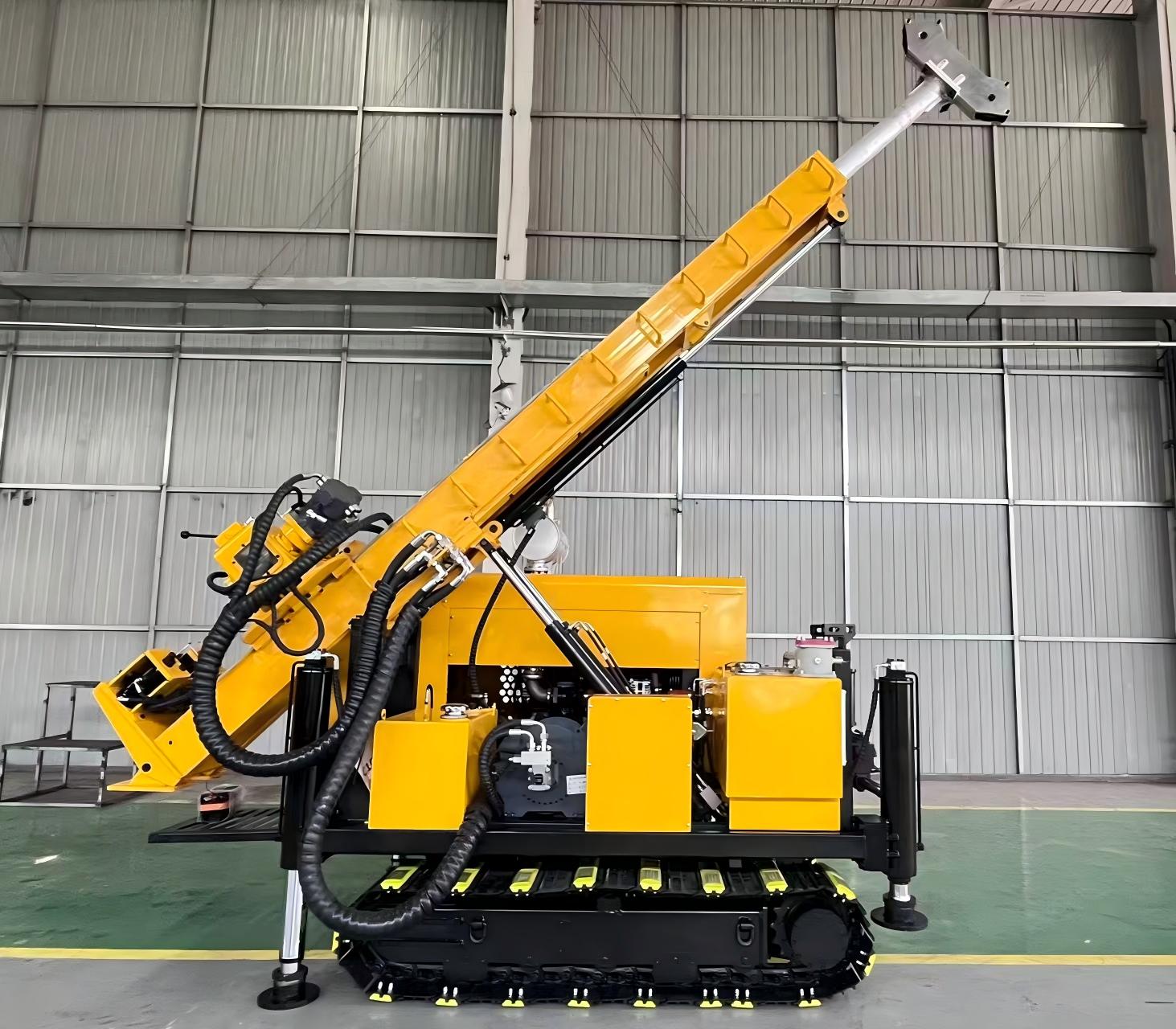
Send CORTECH your target depth, hole inclination, bit and rod sizes, formation information, and recovery requirements. Request a configuration review covering rotation, torque, feed, and flushing.
The objective is a suitable operating window for your project—not an unsupported promise that one RPM will work everywhere.
A published reference range is 900–1,200 RPM for N-size impregnated exploration bits. Use the actual bit supplier's instructions first, then adjust for formation, torque, circulation, and stability.
No. Higher RPM helps only when effective cutting continues. Without suitable engagement and flushing, extra rotation can contribute to polishing, vibration, or unnecessary wear.
Often, particularly in extremely broken, hard ground. However, the reduction depends on fragmentation, tooling, stability, and recovery requirements. Minor fracturing does not automatically justify halving the speed.
Possible signs include falling penetration and torque, together with a smooth or glazed crown when inspected. Confirm the diagnosis because circulation problems or formation changes can also reduce performance.
It may work across a consistent interval, but it should not become a fixed assumption. Reassess parameters when geology, depth-related loading, circulation, or cutting behavior changes.
No. Evaluate usable torque, controlled feed, circulation, tooling compatibility, and stability together. The best rig configuration sustains the required drilling conditions rather than merely advertising a high maximum RPM.
1. [Epiroc — Diamond Driller's Technical Book]. Primary basis for the RPM table, parameter relationships, RPC guidance, vibration discussion, and wear diagnostics; particularly printed pages 8–24. [epiroc]
2. [Boart Longyear — The Science of Drilling: Are You Getting the Most out of Your Diamond Bits?]. Published February 1, 2018. Supports the discussion of torque, WOB, polishing, flushing, and reduced speed in extremely broken, hard ground. [boartlongyear]
3. [Boart Longyear — Longyear Bits and Accessories]. Supplementary reference for revolutions-per-distance calculations and the distinction between surface-set and impregnated-bit operating guidance. [boartlongyear]


