
Views: 219 Author: CORTECH Publish Time: 2026-11-06 Origin: Site


Content Menu
● Hydraulic Underground Core Drill vs. Conventional Underground Drill: Define the Comparison
● How Hydraulic and Conventional Underground Coring Systems Work
>> Hydraulic Underground Core Drill Operation
>> Conventional Underground Drill Operation
● Hydraulic vs. Conventional Underground Drill: Comparison Table
● Precision Coring: Control Matters More Than Maximum Power
>> Feed Force, Rotation Speed, and Bit Response
>> Core Recovery Is Not Guaranteed by the Rig
>> Straightness Requires Measurement
● Wireline Retrieval: Where Productivity Differences Become Important
● Underground Installation: Space, Orientation, and Services
>> Working Envelope, Not Just Machine Dimensions
>> Uphole, Horizontal, and Downhole Capability
● Safety and Maintenance: Evaluate Installed Features
● A Better Financial Comparison: Cost per Accepted Core Metre
● Practical Validation: A Six-Step Comparative Trial
>> 1. Define the Geological Objective
>> 2. Match Comparable Conditions
>> 3. Establish a Common Logging Method
>> 4. Assess Sample Quality Independently
>> 5. Check Position and Operational Reliability
>> 6. Compare Complete Outcomes
● Which Underground Core Drill Should You Choose?
● Discuss Your Precision Coring Requirements with CORTECH
>> 1. Is a hydraulic underground core drill always more accurate?
>> 2. Can a hydraulic underground drill use conventional coring tools?
>> 3. Why is wireline retrieval useful for deeper holes?
>> 4. Does hydraulic drilling guarantee higher core recovery?
>> 5. Can a conventional underground drill be more economical?
>> 6. What should buyers verify before ordering?
A hydraulic underground core drill generally offers better control of feed force and rotation than a basic manually regulated underground drill. When paired with wireline tooling, it can also reduce routine core-retrieval time. However, a conventional underground drill can remain economical for shallow, straightforward sampling programs.
For precision coring, the best choice depends on the complete drilling system—not simply its power source. Ground conditions, core-barrel design, hole orientation, operator skill, and maintenance all influence the result.
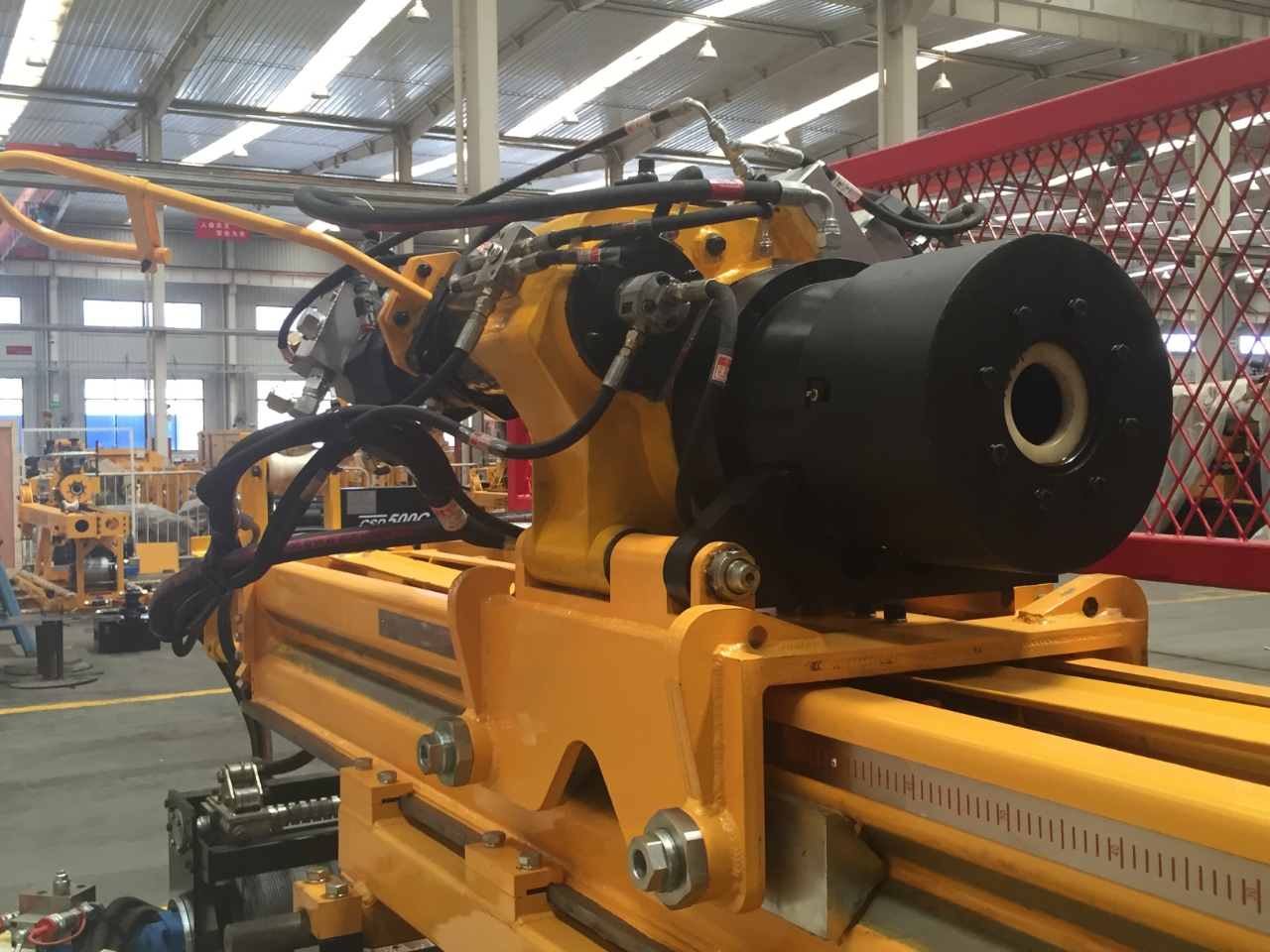
At CORTECH, our focus is developing and manufacturing fully hydraulic wireline diamond core drilling equipment, including CORE U/G DRILL solutions. Our recommendation is to compare machines against a defined sampling task rather than assume that newer equipment automatically produces better geological information.

"Hydraulic" and "conventional" are not technical opposites.
Hydraulic describes how a rig transmits and controls power. Conventional may describe an older machine architecture, manually regulated operation, or a non-wireline core-retrieval system.
Importantly, a hydraulic rig can operate conventional coring tools. Likewise, wireline retrieval is not exclusive to electronically controlled machines.
For this comparison:
- A hydraulic underground core drill means a fully hydraulic diamond coring rig with controlled rotation and feed, configured for wireline retrieval.
- A conventional underground drill means a simpler or older coring installation with less integrated control, often using conventional core-barrel retrieval.
- A percussion development drill is a separate category. Equipment intended primarily for blast holes is not an equivalent substitute for continuous diamond core sampling.
Buyers should therefore separate three decisions: power system, control capability, and retrieval method.
A hydraulic power unit supplies actuators that drive rotation, feed, clamping, and other functions, depending on the configuration.
The operator adjusts rotation speed, feed force, and flushing to suit the bit and formation. More advanced systems may include parameter monitoring, automated functions, or rod-handling equipment.
These capabilities must be verified individually. Fully hydraulic does not automatically mean automated, remotely controlled, or equipped with data logging.
In wireline coring, an overshot retrieves the inner tube through the drill rods. The rod string generally remains in the hole during routine core recovery.
A conventional coring system cuts cylindrical samples using a core bit and barrel. With conventional non-wireline retrieval, recovering the core normally requires withdrawing the drill string and barrel.
Some conventional installations provide effective hydraulic adjustment. Others rely more heavily on manual intervention or offer fewer integrated functions.
Their advantages can include simpler servicing, familiar operating procedures, and a lower initial purchase price. Actual value depends on condition, configuration, and project requirements.
| Evaluation factor | Hydraulic wireline underground core drill | Conventional underground coring installation |
|---|---|---|
| Feed and rotation | Typically offers adjustable hydraulic control | Capability varies considerably |
| Routine core retrieval | Inner tube retrieved through rods | Non-wireline systems require string withdrawal |
| Sample quality | Supports consistent drilling when correctly configured | Can produce excellent samples with suitable tooling |
| Hole accuracy | Depends on setup, tooling, geology, and operating practice | Depends on the same fundamentals |
| Deep-hole workflow | Wireline retrieval becomes increasingly valuable | Repeated string handling becomes more time-consuming |
| Operator workload | Handling aids may reduce manual tasks | Often involves more hands-on intervention |
| Maintenance | Requires hydraulic cleanliness and diagnostic capability | May be simpler, but older components can create difficulties |
| Initial investment | May be higher, depending on specification | May be lower, especially with existing equipment |
| Best-fit applications | Repeated, demanding, or deeper exploration programs | Shallow, limited, or budget-constrained programs |
This comparison describes typical configurations, not guaranteed performance differences between individual models.
Diamond drilling requires a workable balance between weight on bit, rotation speed, penetration rate, and flushing.
Excessive rotation without sufficient penetration can polish a bit. Excessive loading can create vibration, overload tooling, or worsen sample disturbance.
A suitably configured hydraulic underground core drill gives operators a practical way to adjust these variables as formations change. The benefit is controllability—not simply higher available pressure.
Hydraulic pressure readings also require interpretation. A displayed pressure is not automatically the actual force acting at the bit; machine geometry, friction, orientation, and drill-string conditions affect that relationship.
Recovery depends on more than steady feed.
Fractures, weak seams, barrel configuration, core lifters, run length, and flushing conditions all influence whether material reaches the core box intact.
A conventional underground drill with appropriate tooling and an experienced crew can outperform a poorly configured hydraulic machine.
From a sampling perspective, the priority is representative core: material that preserves the geological information needed for the investigation.
Hydraulic control does not guarantee a straight borehole.
Collaring alignment, string condition, geological structure, and drilling practice influence the trajectory. Where target position matters, include suitable downhole surveys in the drilling plan.
Separate three acceptance criteria:
- Collar position and initial alignment.
- Borehole trajectory at depth.
- Recovery and condition of the sample.
These are related, but none proves the others.
The main advantage of wireline retrieval is reducing routine withdrawal of the rod string.
This matters increasingly as holes become longer. Pulling, stacking, reconnecting, and lowering rods consumes time that does not directly advance the hole.
However, wireline drilling does not eliminate rod trips. Bit replacement, tooling problems, and other interventions can still require withdrawing the string.
For underground upholes, confirm the retrieval arrangement specifically. Pump-in equipment and appropriate operating procedures may be necessary; gravity-assisted downhole retrieval should not be assumed to work in every orientation.
Evaluate complete cycle time:
1. Drill the core run.
2. Retrieve the inner tube or conventional barrel.
3. Recover and identify the sample.
4. Reset the system.
5. Resume drilling.
A high penetration rate delivers limited value if retrieval and handling dominate the shift.
A compact underground diamond core drilling rig must fit the entire operating process.
Allow space for rods, core tubes, guards, hoses, personnel access, maintenance, and emergency escape. A machine that fits through the access opening may still be unsuitable for the chamber.
Review transport dimensions and working dimensions separately.
Rated depth is incomplete without rod size and hole orientation.
Available pull force, string weight, chuck capacity, rod holding, and wireline capacity affect practical drilling capability. Published manufacturer capacities commonly include assumptions and limitations.
For horizontal or upward drilling, request a configuration-specific review rather than applying a vertical-downhole depth rating.
Hydraulic rigs can use different prime movers. Hydraulic does not mean electric.
An electrically driven power pack avoids diesel exhaust at the machine, but it does not remove ventilation or heat-management requirements.
Compare electrical supply, cooling capacity, water availability, drainage, and hose routing before selecting equipment.

Hydraulic equipment can support safer handling, but only when appropriate features are installed and used correctly.
Depending on the machine, these may include:
- Fail-safe rod-holding arrangements.
- Guarding and interlocks.
- Accessible emergency stops.
- Mechanical or semi-automated rod handling.
- Controlled joint breakout.
- Operating positions separated from moving components.
Do not assume these features are standard across all hydraulic underground core drills.
Conventional equipment deserves the same task-based risk assessment. A familiar machine can still expose workers to rotating parts, suspended components, and repetitive handling.
Maintenance planning should cover hydraulic fluid cleanliness, filtration, hose inspection, cooling, chuck condition, and rod-holder performance. Use manufacturer-approved isolation procedures before servicing stored-energy systems.
For older rigs, assess component availability and repair lead times—not merely mechanical simplicity.
Purchase price and drilling speed are incomplete decision metrics.
A more useful measure is:
Cost per accepted core metre=Total project drilling cost/Core metres meeting agreed acceptance criteria
Total cost should include mobilization, labor, energy, consumables, maintenance, downtime, and any required redrilling.
Acceptance criteria should be agreed before work starts. They may cover recovery, sample identification, required diameter, trajectory, or other project-specific requirements.
Consider an illustrative comparison:
| Measure | Installation A | Installation B |
|---|---|---|
| Total project drilling cost | $120,000 | $100,000 |
| Accepted core | 1,000 m | 700 m |
| Cost per accepted core metre | $120.00 | $142.86 |
These are hypothetical figures, not CORTECH field results or industry averages. They demonstrate why the cheaper project total may not deliver the lower sampling cost.
A controlled trial provides stronger purchasing evidence than an unsupported productivity claim.
Specify target depth, diameter, orientation, required sample condition, and intended use of the core.
Use comparable formations, tooling, flushing arrangements, and crew competence. Record unavoidable differences rather than treating dissimilar holes as a controlled comparison.
Track drilling, retrieval, rod handling, setup, maintenance, and unplanned interruptions separately.
Have the responsible geological team assess recovery, fragmentation, identification, and other agreed criteria.
Review survey results where required. Record recurring faults, service interventions, and difficult handling tasks.
Calculate accepted metres per shift and cost per accepted metre. Explain whether differences arise from drilling, retrieval, reliability, or geology.
This approach reveals where a hydraulic wireline system adds value—and where a conventional installation remains competitive.

A hydraulic wireline underground core drill is a strong candidate when the program involves:
- Repeated or longer holes.
- Frequent changes in drilling conditions.
- Tight requirements for parameter adjustment.
- Significant retrieval and handling time.
- A need for compatible handling or monitoring options.
A conventional underground coring installation may remain appropriate when holes are shallow, utilization is limited, existing equipment is serviceable, and the crew can consistently meet the sampling specification.
Avoid selecting either system from an advertised maximum depth alone. Ask for the assumptions behind capacity ratings and the exact equipment included in the quotation.
Send CORTECH your planned hole depths, core diameters, drilling angles, geological conditions, chamber dimensions, and available power and water services.
Ask for a CORE U/G DRILL configuration review covering rotation, feed and pull capacity, wireline arrangements, working envelope, safety equipment, and maintenance requirements.
Request a clearly itemized specification and, where practical, an agreed acceptance test. The objective is equipment matched to your sampling program—not a larger machine than the work requires.
No. Hydraulic control can support consistent operation, but borehole accuracy also depends on alignment, tooling, geology, and operating practice. Confirm trajectory through appropriate surveys when location matters.
Yes, where the rig and tooling are compatible. Hydraulic power and conventional retrieval describe different aspects of the drilling system. Confirm dimensions, operating limits, and connections before use.
It allows routine recovery of the inner tube without withdrawing the entire rod string. This reduces repeated rod-handling work, although bit changes and other interventions still require trips.
No. Recovery also depends on formation conditions, barrel selection, flushing, run length, and operator decisions. Evaluate sample quality during a representative trial.
Yes. For shallow or occasional work, an existing conventional installation may meet requirements at a lower total cost. Compare accepted core output rather than purchase price alone.
Verify capacity by rod size and orientation, operating dimensions, power demand, cooling, retrieval equipment, guarding, handling options, spare parts, and service support. Obtain written confirmation of the supplied configuration.
1. Epiroc. "Diamec PHC Range." Manufacturer brochure covering hydraulic controls, conventional and wireline compatibility, positioning, rod holding, and capacity-rating limitations. [epiroc]
2. Epiroc. "Exploration and Geoscience." Explanation of diamond core drilling, inner-tube recovery, overshots, and wireline operation. [epiroc]
3. Epiroc. "Diamond Driller's Technical Book." Technical guidance on rotation, penetration, weight on bit, flushing, and bit polishing. [epiroc]
4. Epiroc. "Conventional Core Drilling." Application guidance for shallow investigation and shallow-to-medium underground uphole drilling. [epiroc]
5. Boart Longyear. "The Ins and Outs of Wireline Core Retrieval Systems." Description of wireline components and overshot retrieval, including lowering or pumping into the hole. [boartlongyear]
6. Boart Longyear. "LM™90 Underground Coring Drill Rig." Manufacturer example of load-sensing hydraulics, proportional control, fail-safe rod holding, and optional rod handling. These specifications are not attributed to CORTECH. [boartlongyear]
7. Epiroc. "Diamec Smart 4." Manufacturer example illustrating orientation-dependent capacity, positioning arrangements, and configuration-specific options. These specifications are not attributed to CORTECH. [epiroc]


