
Views: 218 Author: CORTECH Publish Time: 2026-11-02 Origin: Site


Content Menu
● What This Guide Means by "Deep Core Drill"
● Why Source Core Drilling Equipment From China?
>> A supplier base with several manufacturing models
>> Useful regional concentrations
>> The latest exploration data favors disciplined purchasing
● Selection Criteria: How We Evaluate Suppliers
● Top 10 Deep Core Drill Manufacturers in China
>> 1. CORTECH Drilling Equipment Co., Ltd.
>>> Suitable for focused hydraulic core drilling and engineering-led OEM discussions
>> 2. H.H. Drill-Tech Drilling Machinery Co., Ltd.
>>> Suitable for buyers prioritizing integrated manufacturing and drilling heritage
>> 3. Jiangsu Sinocoredrill Exploration Equipment Co., Ltd.
>>> Suitable for coordinated rig-and-tooling procurement
>>> Suitable for buyers sourcing across multiple drilling categories
>> 5. JCDRILL
>>> Suitable for contractors seeking drilling packages and overseas service coordination
>> 6. Wuxi Jinfan Drilling Equipment Co., Ltd.
>>> Suitable for projects combining coring with specialist geotechnical work
>> 7. China Geological Equipment Group Co., Ltd. — CGEG
>>> Suitable for group-level geological equipment sourcing
>> 8. Jiangsu Xi Tec Environmental & Drilling Equipment Co., Ltd. — XITEC / XITAN
>>> Suitable for mixed geotechnical, environmental, and exploration requirements
>> 9. Shandong Hengwang Group Co., Ltd.
>>> Suitable for broader machinery sourcing with model-specific core rig qualification
>> 10. Henan Rancheng Machinery Co., Ltd.
>>> Suitable for evaluating hydraulic core drilling packages within a broader drilling portfolio
● Comparison Table: Capacity, MOQ, and Certification
● Technical Buying Guide: What to Verify Before Ordering
>> 1. Compare performance under the same conditions
>> 2. Turn material claims into traceable specifications
>> 3. Separate ISO, CE, and environmental requirements
● The Overlooked Procurement Trap: An Uncontrolled As-Built Configuration
● How to Verify the Factory and Manage the First Order
>> Step 1: Establish the legal supply chain
>> Step 2: Audit the actual production process
>> Step 3: Use the right "sample" process
>> Step 4: Contract for measurable delivery milestones
>> Step 5: Complete logistics engineering before shipment
● Conclusion: Choose the Supplier That Can Document the Operating Outcome
● FAQ
>> 1. How can I verify whether a manufacturer's ISO certificate is expired or outside scope?
>> 2. How do I compare two rigs advertised with the same maximum drilling depth?
>> 3. Is a CE certificate sufficient for importing a core drilling rig into the EU?
>> 4. How can I prevent component substitution after approving the quotation?
>> 5. For OEM/ODM purchases, who should own drawings, software settings, and future spare-parts rights?
Choosing a Deep Core Drill manufacturer is not simply a matter of comparing drilling depths and equipment prices. For exploration contractors, equipment distributors, and mining procurement teams, the more important question is whether a supplier can deliver a correctly engineered rig, maintain configuration consistency, and support it throughout a demanding drilling program.
China offers a varied sourcing landscape: specialist hydraulic diamond drilling rig manufacturers, established geological equipment groups, and broader machinery suppliers with core drilling product lines. CORTECH, for example, reports supplying more than 1,200 diamond core drilling rigs to over 55 countries, while H.H. Drill-Tech describes integrated manufacturing capabilities covering welding, machining, heat treatment, painting, and assembly. These are useful starting points for supplier qualification—not substitutes for an audit.
This guide examines ten China-based manufacturers and manufacturing groups worth evaluating. It focuses on product suitability, engineering support, manufacturing transparency, customization, and procurement risk rather than promotional rankings.
Disclosure: This article is prepared for CORTECH. CORTECH appears first by editorial arrangement. The sequence does not represent independently audited market share, production volume, or a claim that every supplier offers equivalent deep-hole, fully hydraulic wireline drilling equipment.

Here, "deep core drill" refers to geological exploration equipment used to recover rock core, particularly diamond core drilling rigs with wireline systems. It does not refer to handheld concrete coring machines.
The distinction matters because suppliers may list spindle-type rigs, fully hydraulic surface rigs, underground rigs, and reverse circulation equipment under overlapping "core drilling" categories. JCDRILL, for example, separates surface and underground wireline diamond drilling from its reverse circulation range, while CGEG lists conventional diamond exploration equipment such as the XY-6 series. Buyers should qualify the actual drilling method and configuration, not just the product category.
For procurement purposes, define your requirement before requesting quotations:
- Target hole depth and inclination.
- Required rod and core barrel system.
- Geological conditions and anticipated fractured intervals.
- Surface or underground operation.
- Available water, power, transport, and site access.
- Destination-country safety and emissions requirements.
- Whether the purchase is for direct operation, distribution, or an OEM-branded equipment program.
A comparison becomes meaningful only when suppliers quote against the same operating brief.
China's geological drilling equipment sector includes focused engineering companies, integrated industrial manufacturers, and diversified equipment exporters.
CORTECH positions itself around all-hydraulic diamond drilling rigs. Sinocoredrill offers rigs together with rods, core barrels, bits, recovery tools, and mud pumps. H.H. Drill-Tech describes a broader manufacturing base for medium- and deep-hole wireline drilling equipment and associated machinery. These different business models give buyers alternatives for specialist rigs, complete drilling packages, and multi-category sourcing.
The suppliers reviewed illustrate several practical sourcing concentrations:
- Jiangsu: Wuxi-based Sinocoredrill, Jinfan, and XITEC, together with Lianyungang-based H.H. Drill-Tech.
- Henan: Zhengzhou-based Hanfa and Rancheng.
- Shandong: Jining-based Hengwang.
- Beijing–Hebei: JCDRILL's Beijing commercial presence and reported factory in Xuanhua, Hebei.
For buyers, these concentrations are useful when planning multi-factory visits and comparing engineering resources. Location alone, however, does not establish product quality or delivery reliability.
S&P Global's April 2026 copper exploration report states that global nonferrous exploration budgets declined 0.6% to $12.4 billion in 2025, while copper exploration budgets rose 2% to $3.30 billion. These figures describe exploration spending—not Chinese drilling rig revenue or exports.
The purchasing implication is straightforward: equipment proposals should demonstrate how the configuration supports the intended exploration program. A lower acquisition price has limited value if unsuitable tooling, overheating, slow parts delivery, or poor commissioning interrupts drilling.
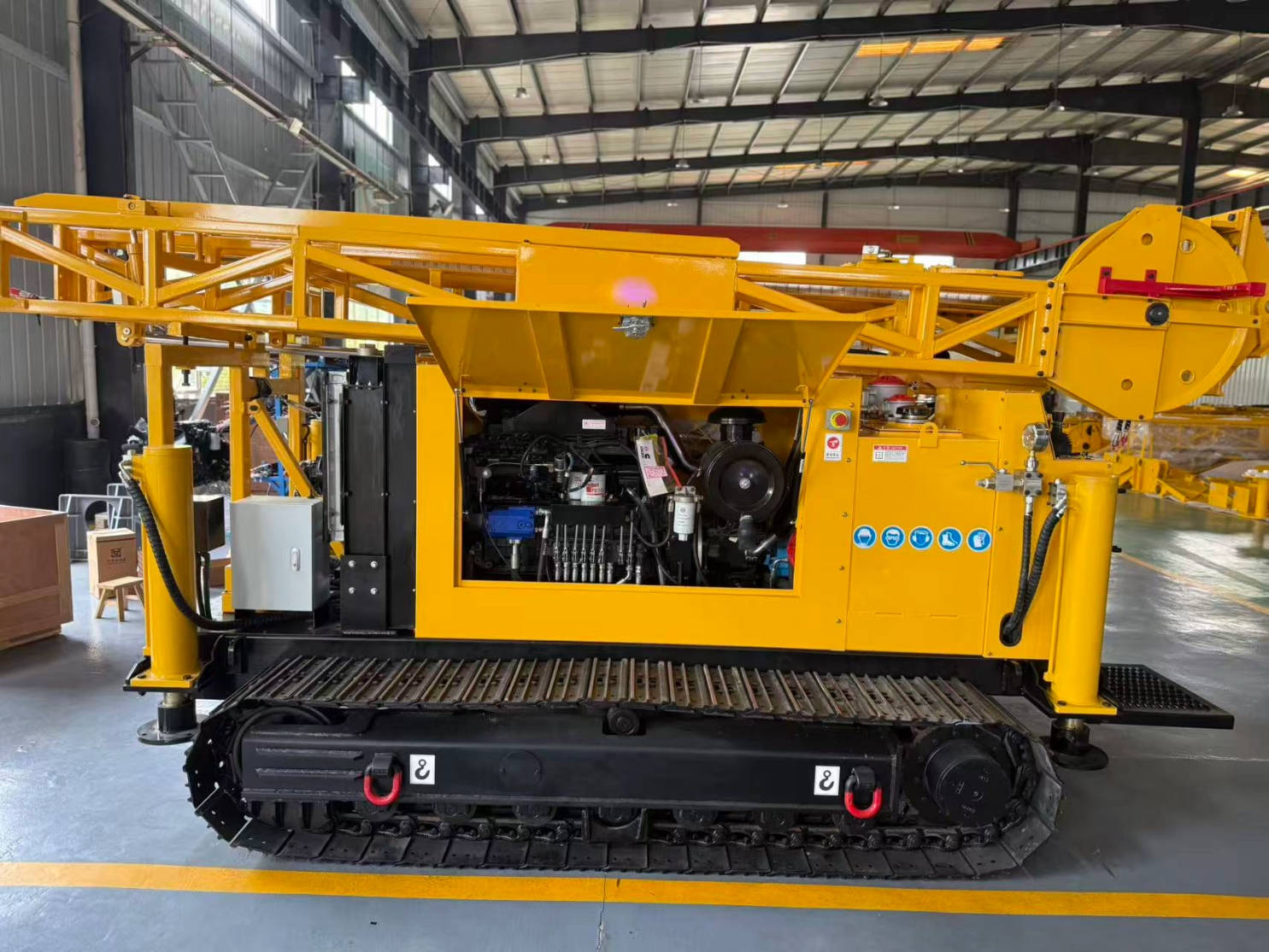
This is a desk-researched supplier shortlist, not a record of ten physical factory inspections. Company websites support product descriptions and self-reported operating information; they do not independently establish current production capacity, certificate validity, or service performance.
Use the following framework to turn an initial shortlist into a defensible purchasing decision.
| Evaluation area | Evidence buyers should request | Procurement purpose |
|---|---|---|
| Legal and factory identity | Business license, factory address, contracting entity, bank beneficiary | Establish who manufactures, sells, and receives payment |
| Engineering capability | Hydraulic schematics, model-specific drawings, configuration records | Check whether customization is engineered and documented |
| Manufacturing and QC | Incoming inspection records, welding controls, machining inspection, assembly checklists | Evaluate repeatability rather than showroom appearance |
| Performance verification | Rod-size-specific depth assumptions, pullback data, torque–speed information, test procedures | Compare like-for-like capability |
| Certification and compliance | Current management-system certificates and model-specific conformity documents | Separate factory systems from product obligations |
| Production scheduling | Build slot, critical-component availability, inspection milestones | Assess delivery feasibility |
| After-sales support | Parts lists, warranty terms, service escalation, commissioning plan | Establish operational support before shipment |
| OEM/ODM governance | Approved drawings, branding scope, change control, design ownership | Prevent disputes over customization and future supply |
For hydraulic safety, ISO 4413:2010 provides general rules and safety requirements for hydraulic fluid power systems and components used on machinery. It is a useful technical reference when reviewing hydraulic design and maintenance provisions, but mentioning the standard does not prove that a particular rig complies.
CORTECH describes itself as a private high-tech enterprise specializing in the research, development, and manufacture of all-hydraulic diamond drilling rigs. Its company profile states that it has supplied more than 1,200 rigs to over 55 countries. Its listed surface core drilling products include the COREMASTER1800X, COREMASTER1300L, and COREMASTER500L.
- Establishment year: Not stated on the reviewed company profile; confirm against the business license.
- Reported market reach: More than 55 countries; the reviewed page does not identify the largest regional markets.
- Core strength: A focused all-hydraulic diamond drilling portfolio and stated integrated OEM capabilities.
- OEM/ODM scope: OEM capability is explicitly stated. Private labeling, exclusive configurations, original design ownership, and territory arrangements require project-specific agreement.
CORTECH is a relevant candidate for distributors and smaller equipment brands seeking a focused manufacturing partner rather than a broad machinery catalog. Its published OEM positioning provides a basis for discussing configuration flexibility, engineering access, and a tailored supply relationship. However, small-order acceptance and response-time commitments should be verified rather than assumed.
The company also reports a transition to second-generation products, with improvements in efficiency, reliability, user-oriented design, and maintenance access. Buyers should translate these claims into practical questions: Which components changed? Are parts interchangeable with earlier models? What maintenance tasks became easier? Can the supplier provide supporting operating data?
Procurement takeaway: Consider CORTECH when the priority is a specialized hydraulic core drilling platform with direct OEM engagement. Assess value for money through equivalent-configuration quotations, service commitments, and documented acceptance tests—not an unsupported "lowest cost" claim.

H.H. Drill-Tech states that its current company was established in 2015 through the transfer of assets, personnel, liabilities, and business from the former Lianyungang Huanghai Machinery company. Its website traces the predecessor factory to 1970. These dates should not be treated as interchangeable legal establishment dates.
- Establishment year: 2015 for the current company; predecessor heritage dates to 1970.
- Reported market reach: Exports to more than 40 countries and regions.
- Core strength: Medium- and deep-hole wireline equipment supported by welding, machining, heat treatment, painting, and assembly capabilities.
- OEM/ODM scope: Its design and manufacturing base supports a technical customization discussion; private-label and ODM terms are not established by the reviewed page.
The company reports a 191,400-square-meter site and more than 450 sets of production and testing equipment. These figures indicate manufacturing infrastructure, not annual rig output or an available delivery slot.
Procurement takeaway: A relevant candidate for buyers who want to examine substantial in-house manufacturing operations. Specify whether your requirement is a fully hydraulic surface rig or a spindle-type machine.
Sinocoredrill's product offering includes exploration rigs, drill rods, core barrels, recovery tools, diamond bits, reaming shells, and mud pumps. Its company page also describes rig customization based on customer requirements.
- Establishment year: The same page gives both 2006 and 2008; verify the applicable legal entity and date.
- Reported markets: South America, Europe, Asia, the Middle East, and Africa.
- Core strength: A broad drilling equipment and consumables package.
- OEM/ODM scope: Customer-specific rig customization is stated; branding, design rights, and exclusivity need separate confirmation.
The company states that it has ISO 9001:2015 quality-system certification and CE certification. Buyers should request current documents, confirm the covered entity and scope, and check which models the conformity documentation actually covers.
Procurement takeaway: Useful for buyers seeking a coordinated drilling package, provided component compatibility and certificate scope are checked carefully.
Hanfa states that it was established in 1998 and supplies more than 20 types of drilling equipment, including core, water well, engineering, DTH, and horizontal directional drilling rigs. Its website lists hydraulic core drilling products, including the HF-1000D.
- Establishment year: 1998, according to the company.
- Reported markets: More than 60 countries and regions, including Southeast Asia, South America, Africa, Eastern Europe, and Russia.
- Core strength: A broad drilling portfolio and stated research, manufacturing, sales, and service capabilities.
- OEM/ODM scope: Its website advertises OEM/ODM services; the technical and commercial boundaries require written definition.
A diversified portfolio can simplify purchasing for contractors operating several drilling methods. However, experience in water well drilling should not be treated as proof of deep wireline coring performance.
Procurement takeaway: Ask for references tied to the exact core drilling model, rod system, depth range, and geology you intend to use.
JCDRILL describes a portfolio covering wireline diamond core rigs, water well rigs, blasting rigs, engineering rigs, compressors, and drilling tools. It reports a factory in Xuanhua, Hebei, and agents in countries including South Africa, Zambia, Colombia, Chile, the Philippines, Malaysia, Spain, Russia, and France.
- Establishment year: Not established in the reviewed company profile.
- Reported markets: Overseas activity supported by its stated agent network; regional sales rankings are not disclosed.
- Core strength: Multiple drilling categories and customer-specific drilling solutions.
- OEM/ODM scope: Project-specific solutions are stated; private-label manufacturing and design ownership should be confirmed separately.
Its website describes wireline core drilling equipment with advertised depth capacities from 50 to 2,500 meters across the range. That is a portfolio-level statement, not a promise that any individual rig reaches 2,500 meters with every rod size.
Procurement takeaway: Verify the local agent's actual parts stock, technical competence, and warranty authority before assigning value to regional coverage.
Jinfan's supplier profile states that it was founded in 2003 and operates across anchoring, offshore engineering geological exploration, core drilling, reverse circulation, and associated tools. It identifies business in more than 30 countries and regions, including the United States, Germany, and Canada.
- Establishment year: 2003, according to the supplier profile.
- Reported markets: More than 30 countries and regions.
- Core strength: A portfolio spanning core drilling and specialist engineering applications.
- OEM/ODM scope: The profile states that drilling machines and tools can be designed and produced for special customer applications; private-label rights require confirmation.
Its catalog includes the YGL-C180 deep-hole mining hydraulic core drilling rig. Buyers should request the current technical sheet and validate that the selected model is configured for the intended mineral exploration duty rather than a different geotechnical application.
Procurement takeaway: Particularly relevant when the project requires technical adaptation beyond a conventional exploration rig package.
CGEG states that it was established in 1987 and became part of SINOMACH in 1999. Its catalog includes geological core drilling equipment such as the XY-6 series, which it describes as suitable for diamond drilling in geological exploration and related applications.
- Establishment year: 1987 for the group.
- Main market information: Geological exploration and related sectors; a regional sales breakdown was not established in the reviewed sources.
- Core strength: A geological equipment group with a relevant exploration drilling catalog.
- OEM/ODM scope: Must be confirmed with the specific manufacturing subsidiary and product team.
For a group-level supplier, identifying the responsible factory is especially important. The group name, quotation issuer, manufacturing entity, and warranty provider may not be identical.
Procurement takeaway: Qualify the exact subsidiary and model. A group's industrial scale does not automatically establish the suitability of a particular fully hydraulic surface core rig.
XITEC describes itself as an engineering machinery manufacturer integrating research, design, production, sales, and service. Its website lists exploration rigs, core drilling tools, environmental sampling equipment, and anchoring-related machinery.
- Establishment year: The reviewed official page claims more than 60 years of manufacturing history but does not clearly establish the current entity's incorporation year.
- Market information: Domestic and overseas activity is described, including a shipment to Nepal; principal regional markets are not quantified.
- Core strength: A mixed portfolio linking drilling, sampling, and geotechnical applications.
- OEM/ODM scope: Engineering capability is described, but deep-core OEM/ODM arrangements require direct qualification.
This is a conditional shortlist entry for deep mineral exploration. Some advertised equipment is spindle-type or intended for environmental and engineering work rather than a directly comparable deep, fully hydraulic wireline platform.
Procurement takeaway: Include XITEC where application fit is demonstrated; do not assume every exploration model belongs in the same depth and performance category.
Hengwang states that the group was founded in 2011 in Jining, Shandong. Its portfolio spans drilling machinery, construction equipment, and components. Its drilling catalog includes core drilling products and the XY-44A exploration rig.
- Establishment year: 2011 for Shandong Hengwang Group.
- Reported market reach: The company reports sales across more than 180 countries and regions for its overall machinery business, not specifically deep core rigs.
- Core strength: Broad equipment sourcing and multiple machinery categories.
- OEM/ODM scope: Customizable machinery solutions are advertised; core-rig-specific engineering changes and private-label terms require confirmation.
Procurement takeaway: Compare the actual rig architecture, controls, pullback system, and tooling against your specification. A diversified catalog and broad export footprint do not replace model-specific technical evidence.
Rancheng states that it was founded in 2010 in Zhengzhou and designs and manufactures drilling rigs, mud pumps, air compressors, and drilling tools. Its catalog includes hydraulic core drilling equipment.
- Establishment year: 2010, according to the company.
- Reported markets: Public shipment updates demonstrate export activity, but principal regional markets are not established.
- Core strength: Drilling rigs and associated support equipment.
- OEM/ODM scope: Confirm available engineering modifications, branding options, and design responsibilities directly.
Its RCDX-8 page advertises a drilling depth range of 1,700–3,000 meters and suitability for BQ, NQ, HQ, and PQ drilling. Buyers must request a rod-size-specific capacity table; the headline depth range should not be interpreted as applying equally to all four systems.
Procurement takeaway: Use the published range to begin technical qualification, then obtain a configuration-specific performance commitment.
The reviewed sources do not provide a consistent, independently verified basis for comparing annual output, minimum order quantity, or current certification across all ten suppliers.
"Not disclosed" means that the information was not established from the reviewed material. It does not mean the supplier lacks capacity or certification.
| Supplier | Manufacturing scale or capacity evidence | MOQ | Certification evidence reviewed |
|---|---|---|---|
| CORTECH | Reports 1,200+ rigs supplied cumulatively; not annual capacity | Not disclosed | Current certificate numbers and scope not established |
| H.H. Drill-Tech | Reports 191,400 m² site and 450+ production/testing equipment sets; not annual output | Not disclosed | Current model-specific documentation requires review |
| Sinocoredrill | Describes rig and tooling manufacturing; annual output not established | Not disclosed | States ISO 9001:2015 and CE; validity and scope require verification |
| Hanfa | Describes integrated R&D and manufacturing; annual core rig output not established | Not disclosed | Request current factory and model-specific documents |
| JCDRILL | Reports its own Xuanhua factory; annual output not established | Not disclosed | Request current factory and model-specific documents |
| Jinfan | Describes drilling machinery and special-application manufacturing | Not disclosed | Current certificate scope not established |
| CGEG | Group-level geological equipment portfolio; identify responsible factory | Factory-specific | Subsidiary- and model-specific verification required |
| XITEC | Describes integrated research, production, and service; annual output not established | Not disclosed | Current certificate scope not established |
| Hengwang | Broad machinery manufacturing portfolio; core-rig output not isolated | Not disclosed | Model-specific verification required |
| Rancheng | Describes drilling rig and support-equipment manufacturing | Not disclosed | Current certificate scope not established |
Company scale statements and certification claims above come from the reviewed company profiles and catalogs; none should be read as an independent factory audit.
For an actionable comparison, ask every shortlisted manufacturer to provide the same three items:
1. A confirmed production slot for your exact configuration.
2. A written statement of single-unit availability and any OEM batch requirements.
3. Current certification and conformity documents linked to the contracting factory and selected model.
Create a shared technical schedule and require suppliers to identify assumptions behind every capacity claim.
| Technical item | Required clarification |
|---|---|
| Drilling depth | Rod size, rod mass, hole inclination, and operating assumptions |
| Rotation | Continuous operating range, torque–speed relationship, and control method |
| Pullback | Rated force, operating conditions, and supporting calculations |
| Feed system | Stroke, control arrangement, and suitability for intended drilling practice |
| Rod handling | Chuck and clamp compatibility, guarding, and operating sequence |
| Wireline system | Rope specification, winch arrangement, and inspection requirements |
| Cooling | Design ambient conditions and agreed thermal test procedure |
| Tooling | Exact rod, casing, core barrel, overshot, and thread compatibility |
These are proposed RFQ requirements, not claims that every shortlisted manufacturer publishes or guarantees the same data.
Do not rely on phrases such as "high-strength steel" or "premium hydraulic components."
Instead, ask the supplier to document:
- Material grades and traceability for agreed critical structural parts.
- Applicable welding procedures and inspection acceptance criteria.
- Heat-treatment requirements where relevant.
- Purchased component manufacturers and exact model numbers.
- Approved substitute components and the change-approval process.
- Inspection and test records supplied with the finished machine.
Hydraulic design reviews should also address safe operation, installation, maintenance, and foreseeable hazards. These topics fall within the scope described by ISO 4413:2010.
ISO management-system certification and machinery conformity documentation answer different purchasing questions. Verify the factory's management-system certificate separately from the selected rig's product compliance.
For EU-bound machinery, timing is important. The European Commission states that machinery placed on the EU market before 20 January 2027 must comply with Machinery Directive 2006/42/EC; Machinery Regulation (EU) 2023/1230 becomes mandatory from that date. A late-2026 order therefore needs a compliance review based on expected market-placement timing, not merely the purchase-order date.
RoHS is not a universal environmental quality label for drilling rigs. The European Commission identifies exclusions that include certain non-road mobile machinery made available exclusively for professional use. Applicability must be assessed against the actual product and configuration.
Ask the supplier and your local compliance adviser to define applicable machinery, electrical, engine-emissions, and environmental requirements before finalizing the order.
A useful procurement safeguard is to focus on configuration control rather than treating a brand-name component list as a guarantee.
A quotation may identify a preferred pump or engine, but the buyer still needs to know exactly what will be installed, whether substitutions are permitted, and how the final arrangement will be tested.
This is an engineering risk-control recommendation, not a claim about the prevalence of misconduct among the suppliers listed.
Add an as-built configuration schedule to the contract covering:
- Engine, hydraulic pump, motor, and valve model numbers.
- Cooling arrangement.
- Electrical and control-system versions.
- Sensors and diagnostic provisions.
- Hose and filtration specifications.
- Approved alternatives.
- Final schematics and illustrated parts documentation.
Require written buyer approval for changes that affect performance, serviceability, compliance, or spare-parts interchangeability.
Then connect the configuration schedule to a factory acceptance test. Agree the operating conditions, measurements, pass/fail criteria, and corrective-action process before production starts. A short unloaded demonstration should not be accepted as evidence of sustained performance under your intended duty.
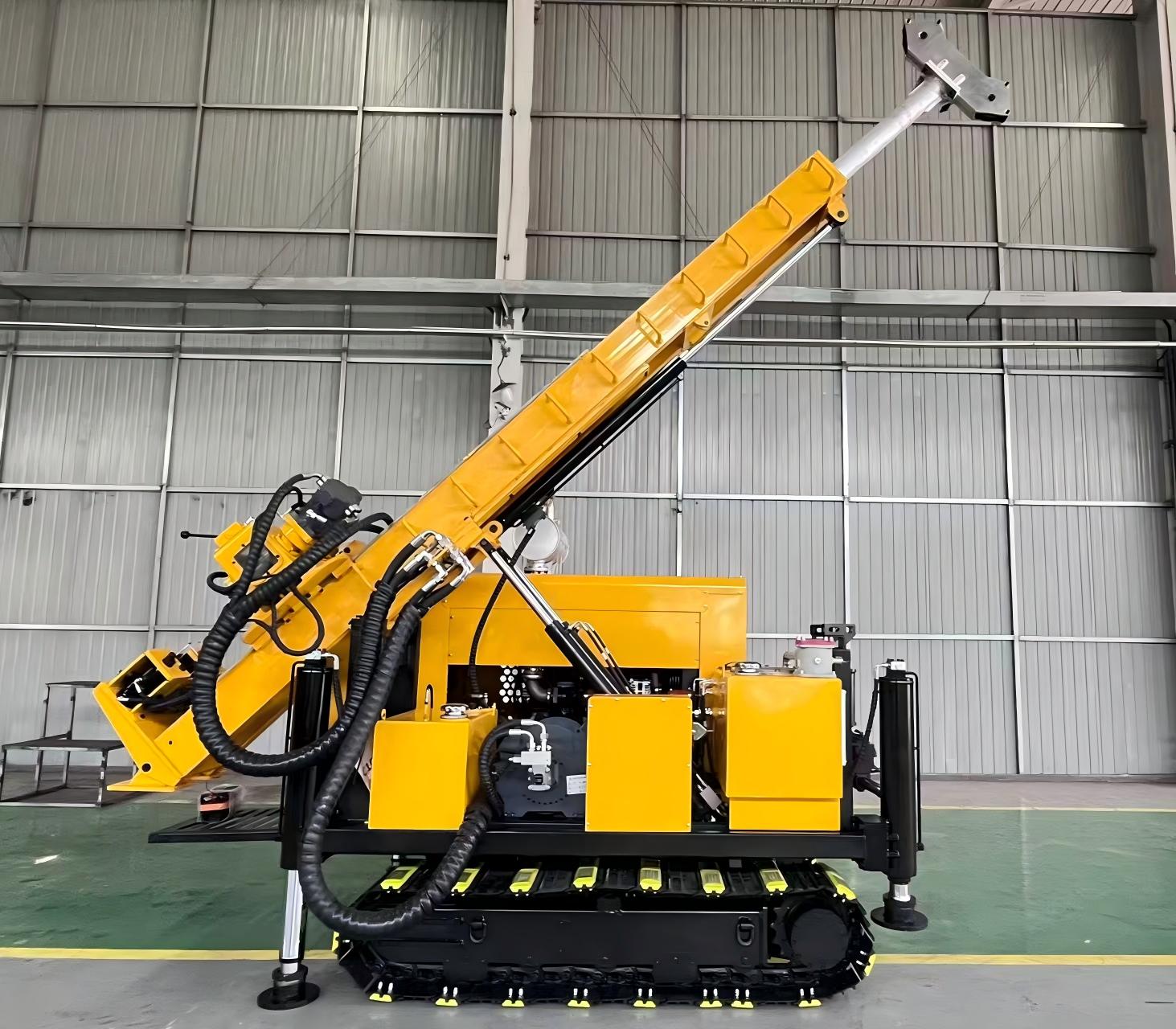
Reconcile the business license, quotation, contract, invoice, bank beneficiary, factory location, and warranty provider.
Where a trading company or group company contracts on behalf of a factory, obtain a written explanation of manufacturing responsibility and after-sales obligations.
Use an on-site audit or live walkthrough to examine:
- Incoming component inspection.
- Machining and fabrication.
- Assembly.
- Hydraulic and electrical installation.
- Testing.
- Nonconformance handling.
- Spare-parts storage.
- Serial-number traceability.
Ask to see records associated with an actual machine rather than only generic procedure documents.
For a capital-equipment purchase, propose a staged qualification process rather than assuming a free sample is appropriate:
1. Review a comparable operating machine.
2. Speak with an authorized customer reference.
3. Inspect tooling samples or critical purchased components where useful.
4. Agree a first-unit acceptance plan.
5. Expand to a fleet or OEM program after the first machine meets the agreed criteria.
Define the engineering freeze, critical-component confirmation, assembly completion, inspection date, dispatch release, and shipping readiness.
Distinguish the factory's production completion date from the vessel departure date and destination delivery date.
Have the supplier and freight provider agree the packing list, dimensions, weights, lifting provisions, transport restraints, preservation requirements, and any dismantling and reassembly work.
For a rig-and-tooling package, reconcile the shipment against the operating requirement—not just the machine invoice. Include the agreed core barrels, rods, casing, recovery tools, commissioning items, manuals, and initial spares.

The ten suppliers above represent different purchasing options rather than interchangeable machines. Some focus closely on hydraulic diamond drilling; others offer broader geological, geotechnical, or construction equipment portfolios. Their published product ranges should be used to build a shortlist, followed by model-specific qualification.
For CORTECH, the strongest evidence-based positioning is its specialization in all-hydraulic diamond rigs, stated integrated OEM capabilities, and reported international installed base. Those attributes make it a relevant starting point for contractors, distributors, and smaller equipment brands seeking an engineering-led supply relationship.
Contact CORTECH with your target depth, rod system, geology, operating environment, destination market, and OEM requirements. Request a configuration-specific proposal, compliance-document list, production schedule, and acceptance-test plan so that price, performance, and support can be evaluated together.
Search the company name or certificate details through IAF CertSearch, which supports checking certification status and associated accreditation information. Match the legal entity, site, standard, and certification scope to the factory supplying your equipment. If the record is missing or inconsistent, seek clarification from the issuing certification body rather than relying on the supplier's PDF alone.
A valid certificate for a different site or activity does not resolve your factory qualification question. Keep a dated verification record in the purchasing file.
Start by requiring both suppliers to complete the same capacity schedule. Identify rod size, hole inclination, rod mass assumptions, and the exact supplied configuration.
This is necessary because published depth figures often describe a model range or several tooling systems. JCDRILL's 50–2,500-meter statement covers its core drilling portfolio, while Rancheng's RCDX-8 page lists several rod sizes alongside a headline depth range. Neither statement alone proves equivalent performance for a particular hole design.
Make the agreed configuration and acceptance conditions part of the contract.
Do not make the decision from a certificate image alone. Request the applicable declaration of conformity, machine identification, instructions, and supporting compliance information, and have the complete package reviewed for the intended product.
Also verify the applicable legal framework against the date the machinery will be placed on the EU market. The Commission identifies 20 January 2027 as the mandatory application date for Machinery Regulation (EU) 2023/1230.
The procurement contract should assign responsibility for addressing document gaps before shipment.
Attach a configuration schedule to the contract and define which changes require written approval.
Include exact model numbers for agreed critical components, an approved-alternatives process, final inspection access, and an as-built documentation requirement. Link payment milestones to the documentation and acceptance steps you have negotiated.
This approach makes the delivered machine auditable without assuming that every alternative component is unacceptable.
Do not assume that branding rights include design ownership.
Define the commercial arrangement explicitly:
- Which existing designs remain the manufacturer's property.
- Which project-specific drawings the buyer receives.
- Whether exclusivity applies to a territory, configuration, or customer group.
- Which service software, settings, and diagnostic information are supplied.
- How engineering changes are approved.
- How long parts and technical support will remain available.
- What happens if a component is discontinued.
CORTECH states integrated OEM capability, Sinocoredrill describes rig customization, and Hanfa advertises OEM/ODM services. Those statements justify discussions, but they do not establish the same intellectual-property or support rights.
1. - CORTECH — [Company Profile]. Source for specialization, OEM positioning, reported installed base, and listed products. [cortechdrilling]
2. - H.H. Drill-Tech — [Official Company Website]. Source for current entity history, manufacturing infrastructure, product range, and export reach. [hhdrillrig]
3. - Sinocoredrill — [Company Profile]. Source for product scope, customization, market coverage, certification claims, and conflicting establishment dates. [sinocoredrill]
4. - Hanfa — [About Us]. Source for establishment year and business scope. [hanfamachine]
5. - JCDRILL — [Company Profile]. Source for factory description, product coverage, and overseas agents. [jcdrill]
6. - Jinfan — [Supplier Profile]. Supplier-published marketplace source; corporate and technical claims require direct verification. [jinfandrilling.en.made-in-china]
7. - CGEG — [Official Product and Company Information]. Source for group establishment and ownership history. [cgeg.com]
8. - XITEC — [Official Website]. Source for stated engineering capabilities, product range, and manufacturing heritage. [xitecdrilling]
9. - Hengwang — [Company Profile]. Source for group establishment and business scope. [hengwangrigs]
10. - Rancheng — [Official Website]. Source for establishment year and manufacturing scope. [ranchengmachine]
11. - S&P Global — [Copper Exploration Trends 2026]. Source for 2025 nonferrous and copper exploration budgets; not a Chinese rig-market or export dataset. [spglobal]
12. - ISO — [ISO 4413:2010]. Hydraulic fluid power system safety requirements. [iso]
13. - European Commission — [Machinery Legislation]. Official guidance on the machinery directive and regulation transition. [single-market-economy.ec.europa]


