
Views: 217 Author: CORTECH Publish Time: 2026-11-05 Origin: Site


Content Menu
● Underground Diamond Core Drilling vs. Surface Drilling: Key Differences
● What Orebody Delineation Drilling Must Establish
● Surface Diamond Core Drilling for Orebody Delineation
>> Where Surface Drilling Performs Best
>> The Main Surface Drilling Limitations
● Underground Diamond Core Drilling for Orebody Delineation
>> Where Underground Drilling Adds Value
>> The Main Underground Drilling Limitations
● Drilling Geometry: Why Intersection Angle Matters
>> Apparent Width Is Not True Thickness
>> Fan Drilling Does Not Guarantee Balanced Coverage
● Cost Comparison: Measure Information, Not Just Metres
>> Compare the Complete Campaign Cost
>> An Illustrative Cost-per-Intersection Test
● Core Recovery, Structural Data, and Resource Confidence
>> Core Quality Depends on the Drilling System
>> Surveying and Sample Control Remain Essential
● Safety and Environmental Trade-offs
>> Surface Drilling: Manage the Operating Footprint
>> Underground Drilling: Manage Restricted-Space Risks
● A Practical Five-Step Selection Workflow
>> 1. Define the Decision the Drilling Must Support
>> 2. Compare Three-Dimensional Hole Layouts
>> 3. Confirm Access and Rig Compatibility
>> 4. Build Cost and Schedule Scenarios
>> 5. Review Results Before Expanding
● Choosing CORTECH Surface and Underground Core Drilling Equipment
>> 1. Is underground diamond core drilling more accurate than surface drilling?
>> 2. Which method is better for deep orebodies?
>> 3. Can surface and underground drilling data be combined?
>> 4. Does underground drilling always cost less?
>> 5. What drill spacing is appropriate for orebody delineation?
>> 6. What information should a rig supplier receive first?
Underground diamond core drilling vs. surface drilling for orebody delineation is fundamentally a choice about access, drilling geometry, and the information needed for the next mining decision. Both methods can recover valuable geological core. However, they differ in how efficiently they reach mineralization, resolve geological uncertainty, and fit into mine operations.
At CORTECH, our manufacturing focus covers fully hydraulic wireline diamond core drilling rigs for both surface and underground applications. Our equipment-selection perspective starts with one principle: geometry should lead the decision—not simply rig capacity or the lowest quoted drilling rate.
This comparison focuses on diamond core drilling from surface and underground, rather than comparing diamond drilling with reverse circulation or production blast-hole drilling.
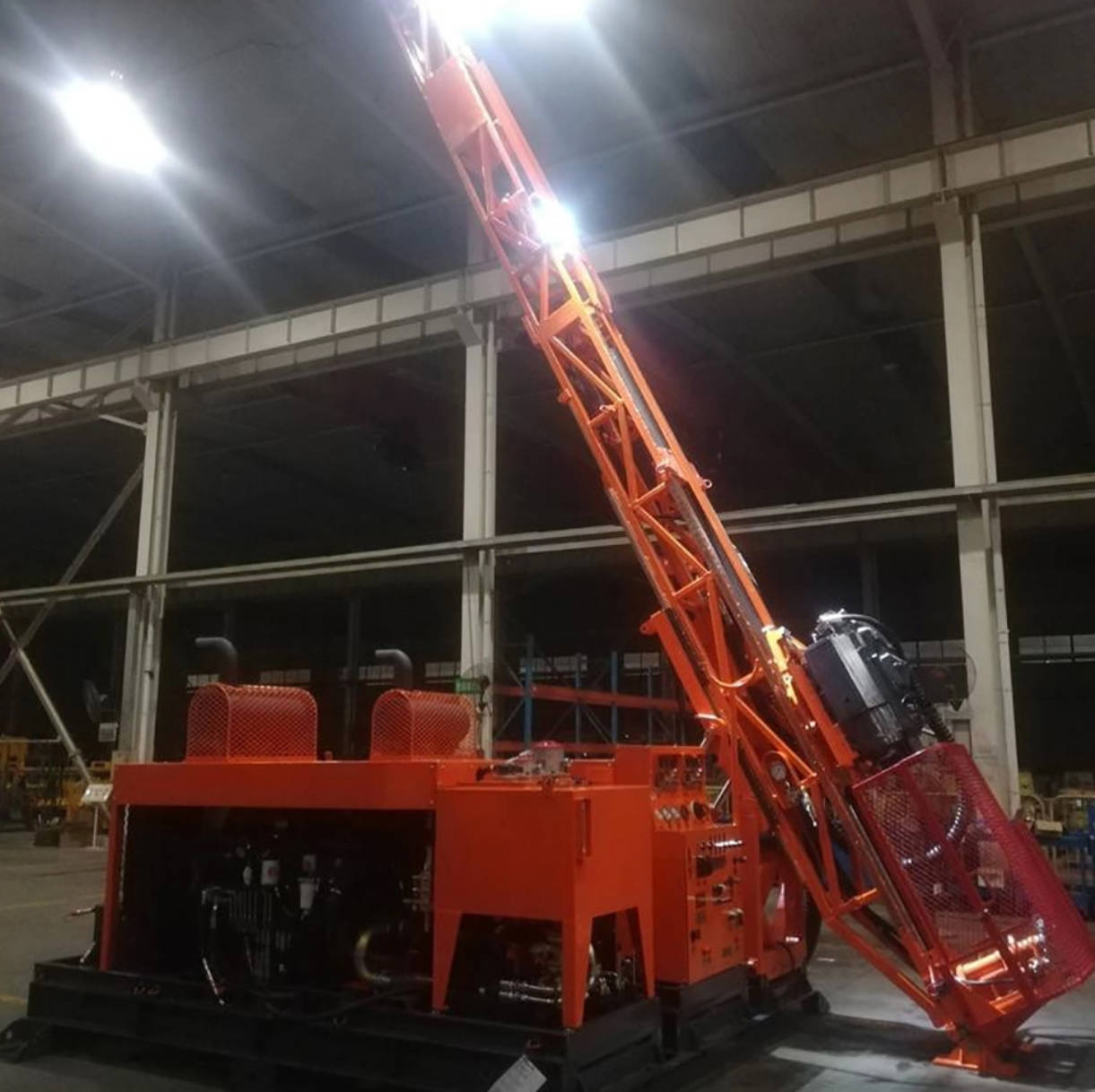
Surface drilling typically supports discovery, deposit-scale exploration, and resource delineation before underground access exists. Underground drilling becomes particularly useful when established workings provide suitable positions for closer-spaced investigation.
Neither method automatically produces better geological information. Results depend on hole placement, core recovery, surveying, sampling, and interpretation.
| Comparison factor | Surface diamond core drilling | Underground diamond core drilling |
|---|---|---|
| Starting position | Surface drill pad | Underground drill bay or working |
| Typical application | Discovery, step-out exploration, resource delineation | Infill drilling, local extensions, mine-planning support |
| Access requirement | Surface access and approved work areas | Safe, supported underground access |
| Target distance | May require substantial drilling through non-target rock | Can shorten the route to nearby mineralization |
| Drilling geometry | Constrained by surface topography and access | Constrained by workings and available drill bays |
| Workspace | Usually more room for equipment | Restricted clearance and handling space |
| Operational exposure | Weather, terrain, access conditions | Ventilation, groundwater, ground conditions, mine traffic |
| Cost sensitivity | Hole depth, pads, mobilization, consumables | Drill-bay availability, services, moves, operational delays |
The most effective program may combine both approaches as the deposit and mine develop.
Orebody delineation determines the location, shape, continuity, and geological characteristics of mineralization. It should help answer questions such as:
- Where do mineralized boundaries occur?
- How do grade and thickness vary?
- Which faults or folds interrupt continuity?
- What additional information is needed for resource estimation or mine design?
Diamond drilling provides physical core for geological logging, structural interpretation, assays, and selected geotechnical or metallurgical investigations.
However, recovering mineralized core is not enough. Drill results must be positioned accurately in three dimensions and collected through procedures that support representative interpretation.
From an equipment-selection standpoint, the objective is therefore not maximum drilled metres alone. It is usable geological information delivered safely and within the project schedule.
Surface diamond core drilling is particularly valuable when underground development does not exist or when exploration must investigate a broad footprint.
Typical applications include:
- Testing geological or geophysical targets.
- Investigating down-dip and along-strike extensions.
- Establishing initial mineralized domains.
- Collecting material for preliminary technical studies.
Surface collars can sometimes be distributed across multiple sections to improve deposit-scale coverage. Nevertheless, land access, terrain, environmental restrictions, and infrastructure may limit the ideal arrangement.
Deep targets can require long holes through barren or already-understood rock before reaching the interval of interest.
Longer holes also increase exposure to trajectory deviation, rod-handling time, borehole instability, and consumable wear. Their significance depends on geology, hole design, equipment, and operating practice.
Surface drilling should not automatically be described as slower. A well-supported surface program may outperform an underground campaign delayed by unavailable drill bays or restricted access.
The relevant comparison is the complete drilling cycle, not penetration rate alone.
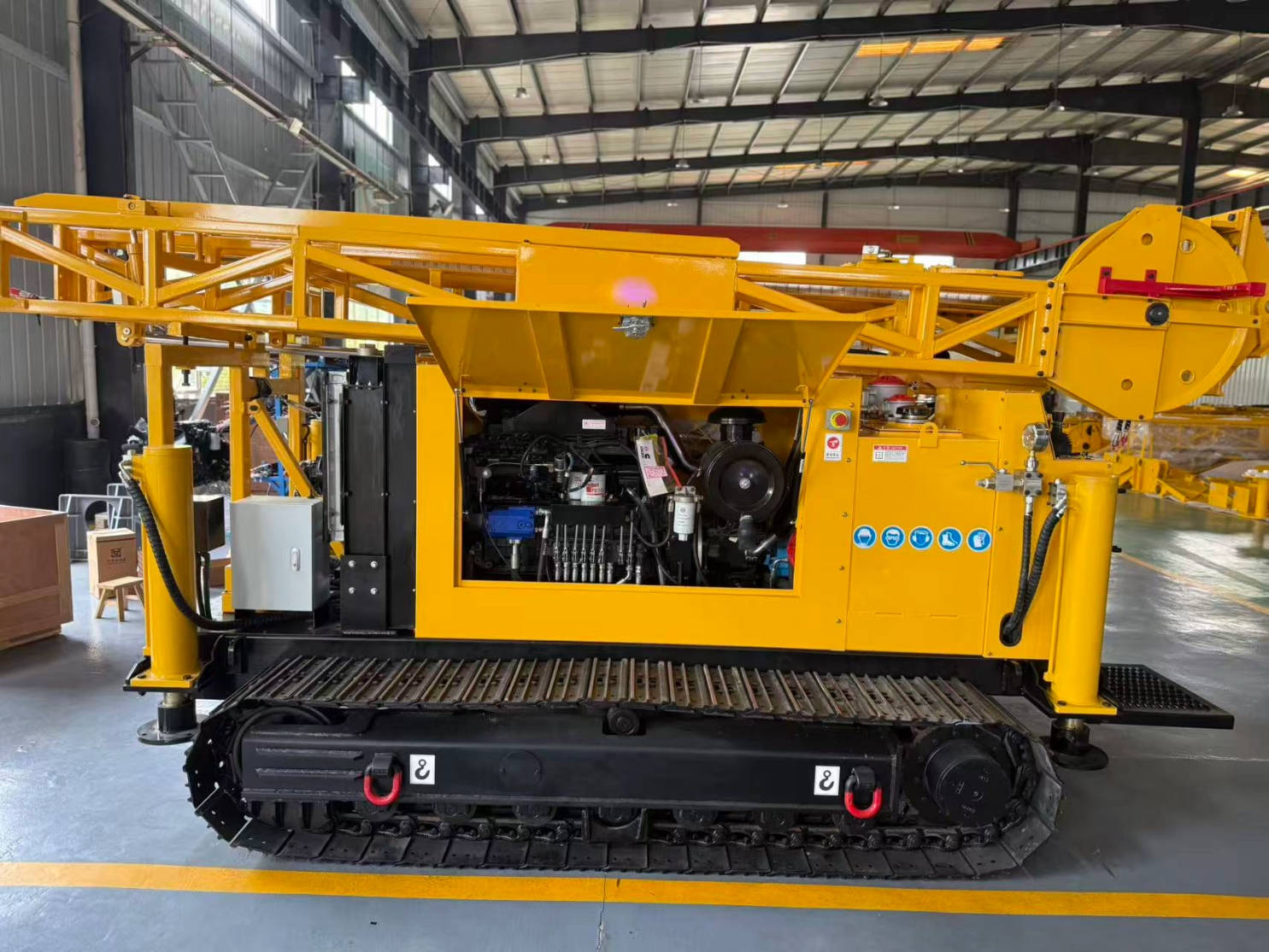
Underground diamond core drilling can place the collar closer to the target when suitable workings already exist.
Potential applications include:
- Investigating mineralization around planned stopes.
- Resolving local orebody boundaries.
- Testing extensions beyond existing development.
- Collecting structural information near proposed mining areas.
Underground positions can also provide alternative intersection directions where surface access produces unfavorable angles.
However, proximity does not guarantee representative coverage. Multiple holes from one convenient location may still leave important areas poorly constrained.
Underground drilling depends on more than a compact rig.
The site must accommodate the machine, feed system, rods, inner tubes, operators, maintenance tasks, and emergency access. Ground support, drainage, lighting, communications, and suitable services also require consideration.
Drilling may compete with production traffic, blasting schedules, and development activities.
A short underground hole can therefore become expensive if the rig spends substantial time waiting for access. Conversely, an available drill bay with reliable services may support an efficient delineation campaign.
A long mineralized intercept does not necessarily represent a thick orebody.
For an idealized planar zone:
t=Lsin(θ)
Here, t is true thickness, L is the intercept length, and θ is the angle between the borehole and the mineralized plane.
For example, a 20-metre intercept at 30 degrees corresponds to approximately 10 metres of true thickness under those simplified conditions.
Folded, faulted, or irregular mineralization requires more detailed interpretation. The example illustrates why favorable drilling angles can matter more than impressive intercept lengths.
An underground drilling fan allows several holes to originate from one location. That can simplify access and rig positioning.
However, holes spread apart with distance from the collar. Their distribution may provide dense coverage near the drill bay but weaker coverage elsewhere.
Before approving a fan, review:
1. Predicted target intersections.
2. Intersection angles.
3. Spacing across the mineralized domain.
4. Areas requiring another drilling position.
The same principle applies to surface programs: convenient collars should not dictate the geological model.

There is no universally reliable cost-per-metre ranking between underground and surface diamond drilling.
A useful budget includes:
- Mobilization and rig setup.
- Surface pads or underground drill-bay preparation.
- Drilling and consumables.
- Water, power, and fluid management.
- Surveying, logging, sampling, and assays.
- Standby, maintenance, and access delays.
For underground options, distinguish existing infrastructure from development required specifically for drilling. New access can materially change the economic comparison.
Consider two hypothetical programs, each intended to obtain ten useful target intersections.
| Planning assumption | Surface option | Underground option |
|---|---|---|
| Total drilling | 8,000 m | 3,000 m |
| Assumed drilling rate | $150/m | $200/m |
| Drilling subtotal | $1,200,000 | $600,000 |
| Assumed access and setup | $100,000 | $250,000 |
| Simplified campaign total | $1,300,000 | $850,000 |
| Cost per planned useful intersection | $130,000 | $85,000 |
These are illustrative assumptions—not market quotations or CORTECH performance claims. They exclude several project-specific costs.
The underground option has the higher metre rate but the lower campaign total because it drills fewer metres.
That advantage can disappear if new development, delays, or unsuitable geometry reduce the number of useful intersections. Compare scenarios and uncertainty ranges before committing.
Neither collar location guarantees better recovery.
Relevant factors include rock competency, fractures, bit selection, core-barrel configuration, flushing conditions, drilling parameters, and operator practice.
Where difficult ground warrants consideration of triple-tube equipment or other recovery measures, assess their suitability against the required sample quality and operating conditions.
Record recovery by run and investigate losses around important contacts. Preferential loss of mineralized or barren material can introduce bias.
Both drilling methods require controls appropriate to the project, including:
- Accurate collar coordinates and orientation.
- Suitable downhole surveying.
- Consistent geological logging and core photography.
- Documented sampling and chain of custody.
- Analytical quality assurance using appropriate reference materials, blanks, and duplicates.
Oriented core can support structural interpretation when orientation quality is reliable and properly checked.
Closer drilling does not automatically establish a particular resource classification. Geological continuity, data reliability, estimation methods, and professional judgment remain essential.
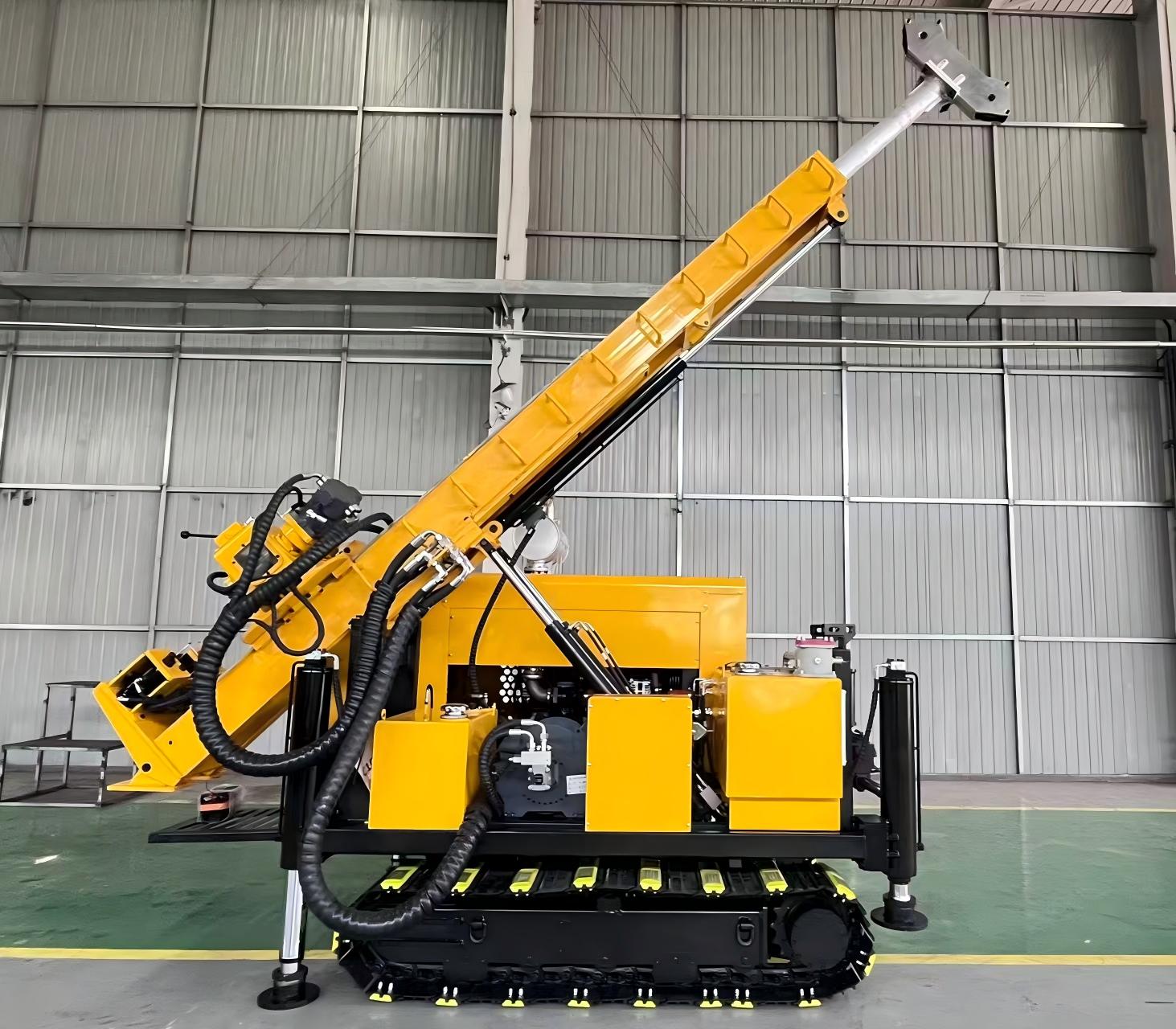
Surface planning should address access roads, drill pads, vehicle movements, weather exposure, water supply, and drilling-fluid containment.
Rehabilitation requirements and sensitive land uses can influence collar placement and campaign timing.
A small rig footprint does not necessarily mean a small overall disturbance if extensive new access is required.
Underground planning must address ground conditions, ventilation, emergency access, water inflows, services, and interaction with other mine activities.
Upward holes may require particular attention to pressure, water control, and secure handling arrangements.
Mechanized rod handling can reduce manual exposure, but availability and suitability must be confirmed for the selected rig. It does not replace guarding, isolation procedures, training, or site-specific risk assessment.
Neither approach is inherently safer or environmentally preferable in every setting.
Specify whether the program must resolve an ore boundary, test continuity, investigate a fault, or support a mine-design decision.
Translate that objective into required intersections and data—not just a metre target.
Develop surface and underground alternatives using the same geological objective.
Compare target distance, intersection angle, expected deviation, and remaining coverage gaps.
Check mobilization dimensions, setup space, drilling angles, services, tooling, and handling arrangements.
For underground equipment, evaluate the working envelope—not merely transport dimensions.
Include realistic utilization, moves, maintenance, access restrictions, and laboratory turnaround.
Test what happens if holes take longer or require redrilling.
After the initial holes, compare actual recovery, trajectory, cycle time, and geological usefulness against the plan.
Revise subsequent collars when evidence changes the interpretation.

For fully hydraulic wireline diamond core drilling rigs, selection should begin with the hole plan and site constraints.
Provide CORTECH with:
- Required depth, core size, and drilling angles.
- Expected geology and groundwater conditions.
- Surface terrain or underground clearance drawings.
- Available power and water.
- Handling requirements and production schedule.
Request confirmation of configuration-specific drilling capacity, feed and pullback capability, rotation characteristics, dimensions, and tooling compatibility.
Wireline systems retrieve the inner tube without removing the full drill string for every core run. Their productivity advantage still depends on depth, ground conditions, handling arrangements, and reliable operation.
Contact CORTECH with your planned hole sections and access constraints to discuss a surface or underground rig configuration matched to the actual delineation task.
Not inherently. Accuracy depends on collar surveying, borehole trajectory measurement, drilling control, and interpretation. Underground access may improve target geometry, but both methods require suitable verification.
Surface drilling can investigate deep targets without underground development. Underground drilling may reduce hole length when suitable workings already exist. Compare access cost and geological coverage before choosing.
Yes. Compatible coordinates, logging conventions, sampling procedures, and validated databases allow both datasets to contribute to geological interpretation. Differences in data quality must still be assessed.
No. Shorter holes may reduce drilling expenditure, but development, drill-bay preparation, restricted access, and operational delays can outweigh those savings.
There is no universal spacing. Deposit geometry, grade variability, structural complexity, estimation objectives, and observed continuity determine an appropriate program.
Start with target depth, core size, hole angles, expected ground conditions, and access dimensions. Include available services and handling requirements so equipment selection reflects the complete operating environment.
1. Canadian Institute of Mining, Metallurgy and Petroleum. CIM Mineral Exploration Best Practice Guidelines, adopted November 23, 2018. Basis for drilling objectives, representative samples, collar positioning, logging, and sample management. [Read the guidelines]. [mrmr.cim]
2. Joint Ore Reserves Committee. Australasian Code for Reporting of Exploration Results, Mineral Resources and Ore Reserves, 2012 Edition, particularly Table 1. Basis for recovery assessment, sampling controls, drilling orientation, and reporting considerations; not a substitute for checking applicable reporting requirements. [Read the code]. [jorc]
3. Epiroc. Core Drilling Rigs: Underground and Surface Exploration. Industry reference for the distinction between surface and underground core drilling equipment. [View the equipment overview]. [epiroc]
4. Epiroc. Surface Core Drilling Rod Handling System. Technical reference for hands-free rod handling and reducing manual handling exposure. [Read the technical overview]. [epiroc]
5. CORTECH. Full Hydraulic Core Drill vs. Mechanical Rig for Precision Mineral Exploration. Company reference for its fully hydraulic wireline diamond core drilling focus. [Read the company article]. [cortechdrilling]


