
Views: 219 Author: CORTECH Publish Time: 2026-11-03 Origin: Site


Content Menu
● Underground Core Drill vs. Surface Diamond Drill: Key Differences
● How Hydraulic Wireline Diamond Core Drilling Works
● Geological Objectives: Which Platform Answers the Right Questions?
>> Surface Diamond Drilling for Discovery and Resource Delineation
>> Underground Core Drilling for Local Definition and Extensions
● Rig Configuration: Compare the Working Envelope, Not Just Dimensions
>> Underground Core Drill Requirements
>> Surface Diamond Drill Requirements
● Drilling Capacity and Core Quality: What Actually Determines Performance?
>> Read Depth Ratings as Conditional Specifications
>> Core Recovery Is a System Outcome
● Safety and Environmental Constraints Change the Decision
>> Underground Drilling: Ventilation, Ground Conditions, and Water
>> Surface Drilling: Access, Weather, and Water Management
● A Better Cost Comparison: Measure Useful Geological Information
>> Illustrative Scenario: Shorter Holes Do Not Guarantee Lower Cost
● A Practical Six-Step Rig Selection Workflow
>> 1. Define the Geological Decision
>> 2. Design the Hole Geometry
>> 4. Match the Complete Drilling System
>> 5. Build Comparable Campaign Estimates
>> 6. Establish Acceptance Criteria
● When Combining Surface and Underground Drilling Makes Sense
● Selecting a CORTECH Configuration for Your Exploration Program
>> 1. Is an underground core drill also a diamond drill?
>> 2. Is underground core drilling always cheaper?
>> 3. Can one rig perform both surface and underground drilling?
>> 4. Which option provides better core recovery?
>> 5. Why is wireline retrieval useful for exploration drilling?
>> 6. What information should accompany a drilling-rig inquiry?
Choosing an underground core drill vs. surface diamond drill for mine development exploration starts with one question: where can you obtain the most useful geological information safely and economically? Both can use diamond bits and hydraulic wireline systems to recover rock core. Their main difference is the drilling location—and the access, hole geometry, infrastructure, and operating constraints that follow.
My starting point for this comparison is access, not advertised drilling depth. An underground rig may offer a shorter route to a target, but only when suitable workings exist. A surface rig can investigate mineralization before underground development begins.
For CORTECH, a manufacturer of fully hydraulic surface and underground wireline diamond core drilling rigs, this distinction provides a practical foundation for equipment selection.

"Underground" identifies the operating environment; "diamond" identifies the cutting method. An underground core drill can therefore also be a diamond drilling rig.
The useful comparison is between underground diamond core drilling and surface diamond core drilling—not between two fundamentally different sampling technologies.
| Selection factor | Underground core drill | Surface diamond drill |
|---|---|---|
| Starting location | Underground drill station or development opening | Prepared surface drill pad |
| Typical exploration role | Resource infill, extensions, and local geological definition | Initial discovery, resource delineation, and deeper exploration |
| Access requirement | Suitable workings and mine services | Surface access and permission |
| Hole geometry | Often fan-shaped programs from constrained stations | Holes positioned across accessible surface collars |
| Equipment constraints | Opening dimensions, transport route, anchoring, and services | Terrain, pad size, transport, mast clearance, and weather |
| Main cost considerations | Station preparation, mine access, drilling, and operating interference | Roads, pads, mobilization, drilling, and rehabilitation |
| Main advantage | Potentially closer access to targets | Exploration without developing underground access |
Neither platform guarantees better recovery, straighter holes, or lower costs. These outcomes depend on geology, tooling, operating practices, and the complete drilling system.
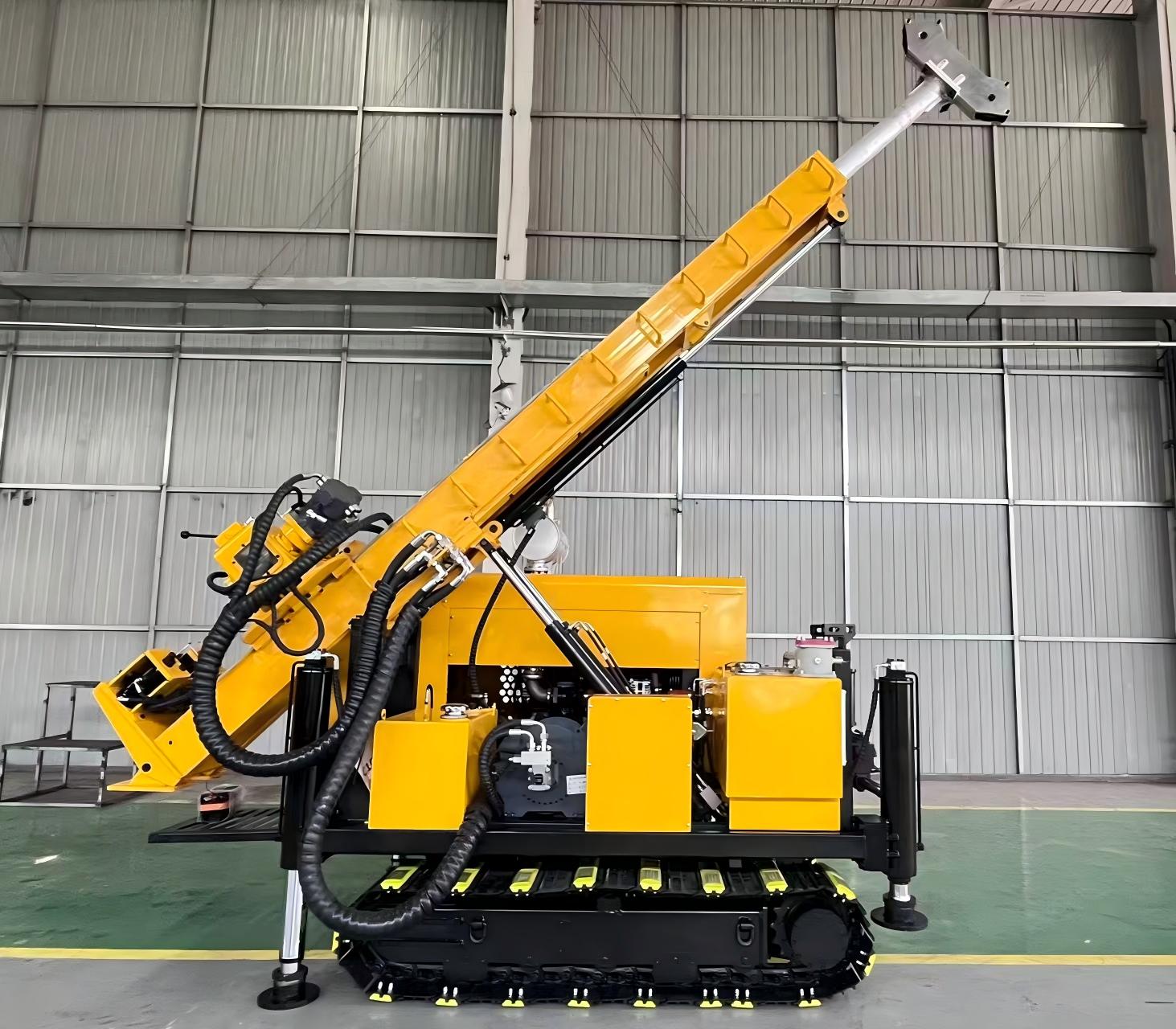
A diamond core bit cuts an annular path through rock, leaving a cylindrical sample inside the core barrel. Drilling fluid cools the bit and carries cuttings away from the cutting face.
In a wireline system, the inner tube containing the core can be recovered through the drill string without removing the entire string after every core run.
This principle applies to both surface and underground exploration. Underground holes, particularly upward holes, require retrieval arrangements compatible with their orientation.
Hydraulic systems power and control functions such as rotation, feed, clamping, and rod handling. However, "fully hydraulic" does not specify the prime mover. Buyers should separately confirm whether the power pack is electric, diesel-powered, or otherwise configured.
Surface drilling is usually the practical starting point when no underground access exists.
Collars can be distributed across an exploration area to investigate:
- Mineralized structures and geological contacts.
- Lateral and depth continuity.
- Faults, alteration, and potential orebody boundaries.
- Geotechnical conditions relevant to future development.
Its flexibility depends on actual access. Steep terrain, infrastructure, environmental restrictions, and land permissions can limit collar placement.
A surface drill may need to pass through substantial barren rock before reaching the target. That does not make the program inefficient automatically: creating underground access solely to shorten those holes may cost far more.
Underground drilling becomes attractive when mine workings provide useful positions near the geological target.
Applications include resource infill drilling, investigation beyond known mineralization, and structural information supporting mine planning. Underground diamond drilling can also support grade-control objectives where the sampling strategy justifies it.
A station may support several holes at different orientations. However, the opening's position can constrain intersection angles.
Shorter holes are valuable only when they intersect the target usefully. Poor geometry can leave important geological uncertainty unresolved.
A compact machine must still leave enough room for safe operation and maintenance.
Evaluate:
- Transport dimensions and the narrowest access restriction.
- Rotation-unit movement throughout the proposed drilling angles.
- Rod and core-barrel handling space.
- Operator position, guarding, and emergency access.
- Anchoring arrangements and supporting ground conditions.
- Power, flushing water, drainage, and hydraulic cooling.
Ask for a layout showing the rig in working position. A machine that fits through the access route may not fit the completed drill station operationally.
Surface configurations may include crawler-mounted, skid-mounted, and modular portable rigs.
CORTECH's published surface range includes different mounting arrangements, illustrating why mobility should be matched to the site rather than treated as a minor accessory choice.
Compare transport weight, ground-bearing conditions, mast clearance, setup requirements, and service access. Remote projects must also account for fuel, water storage, spare parts, and crew logistics.
Portability alone does not establish suitability. The selected configuration must still provide adequate drilling capacity and stability.

Nominal capacity is a screening figure, not a guaranteed project outcome.
Actual performance depends on rod size and weight, hole inclination, friction, groundwater, rock conditions, tooling, and the operating limits of individual components.
Request confirmation of:
1. Rod series and intended core size.
2. Planned hole depth and orientation.
3. Pullback and feed capacity.
4. Torque and rotation-speed requirements.
5. Pump flow and pressure.
6. Rod-handling and retrieval arrangements.
A rig suitable for a downward hole may need a different configuration for a horizontal or upward program. Compare capacity under your proposed conditions, not just the largest number on a brochure.
Neither surface nor underground drilling inherently produces superior samples.
Recovery depends on matching the bit, barrel, drilling parameters, and fluid program to the formation. Fractured or weak material may require different equipment and techniques from competent rock.
Discuss double- or triple-tube barrels, run length, fluid compatibility, and sample-handling procedures with the drilling and geological teams.
Also distinguish recovery from geological usefulness. A recovered sample still needs reliable depth records, identification, and appropriate handling. Where structural orientation matters, compatible orientation tools and a disciplined workflow are essential.
Underground planning must address the drill station as part of the mine, not as an isolated workplace.
The assessment should cover ventilation, ground support, rotating machinery, hydraulic energy, rod handling, communications, and emergency access.
An electrically powered hydraulic system avoids local diesel exhaust from that power source. It does not eliminate heat, dust, other airborne contaminants, or ventilation requirements.
Water-bearing structures and historical workings require particular attention. Hole planning should include an inrush risk assessment and suitable controls where pressurized water or hazardous connections are credible.
These requirements must follow applicable local rules and the mine's approved procedures.
Surface operations face different constraints: unstable pads, vehicle interactions, weather exposure, overhead hazards, and remote emergency response.
Environmental planning should include drilling-fluid containment, cuttings management, spill prevention, water sourcing, and rehabilitation.
Underground drilling does not eliminate environmental responsibilities; it relocates many of them into mine drainage and operating systems. Similarly, a small surface footprint does not by itself demonstrate low overall impact.
Comparing price per drilled meter alone can favor the wrong option.
My preferred decision framework separates three measures:
- Total campaign expenditure.
- Time until usable geological results are available.
- Cost per usable target intersection.
"Usable" should mean that an intersection meets the project's requirements for location, recovery, survey confidence, and sample integrity.
An underground quotation may appear cheaper because it assumes an existing drill station. If that station must be excavated, supported, serviced, and scheduled, those costs belong in the comparison.
Likewise, surface drilling must include access construction, pad preparation, mobilization, and closure obligations where applicable.
Consider a hypothetical target requiring either a 900-meter surface hole or a 250-meter hole from an existing underground station.
The underground option requires 650 fewer drilled meters per hole. However, the decision still depends on:
- Whether the station already exists and is available.
- The cost of preparing and servicing it.
- Interference with production or development activities.
- Intersection angles and geological coverage.
- The number of holes sharing the setup cost.
This is a planning example, not a CORTECH performance claim or an industry cost benchmark. Its purpose is to show why drilling distance and total project value are different measures.
Specify whether the program supports discovery, resource confidence, extension testing, or development planning.
Set requirements for core size, recovery, structural information, and reporting time before comparing machines.
Prepare alternative collar positions, target intersections, depths, and orientations.
Check whether the layouts adequately test the geological interpretation.
For underground work, verify transport restrictions and station dimensions.
For surface work, verify routes, pad conditions, permissions, and seasonal limitations.
Evaluate the rig together with rods, core barrels, bits, pumps, retrieval equipment, and handling arrangements.
Do not assume compatibility from nominal core size alone.
Include enabling works, services, labor, consumables, maintenance, surveys, sample handling, and closure.
Use the same scope and assumptions for both alternatives.
Agree on measurable requirements such as dimensional compliance, operating-angle range, specified component capacities, guarding, and documentation.
Where practical, validate critical requirements through an inspection, demonstration, or agreed commissioning procedure.
The strongest exploration strategy may use both platforms.
Surface holes can establish the broader geological framework before development. Once underground access becomes available, shorter underground holes may improve local definition or investigate extensions.
Using both also allows planners to select more useful intersection directions rather than forcing every target into one collar network.
Coordinate geological logging, surveys, sample identification, and quality-control procedures across both programs. Otherwise, differences in data handling can weaken the value of the combined dataset.
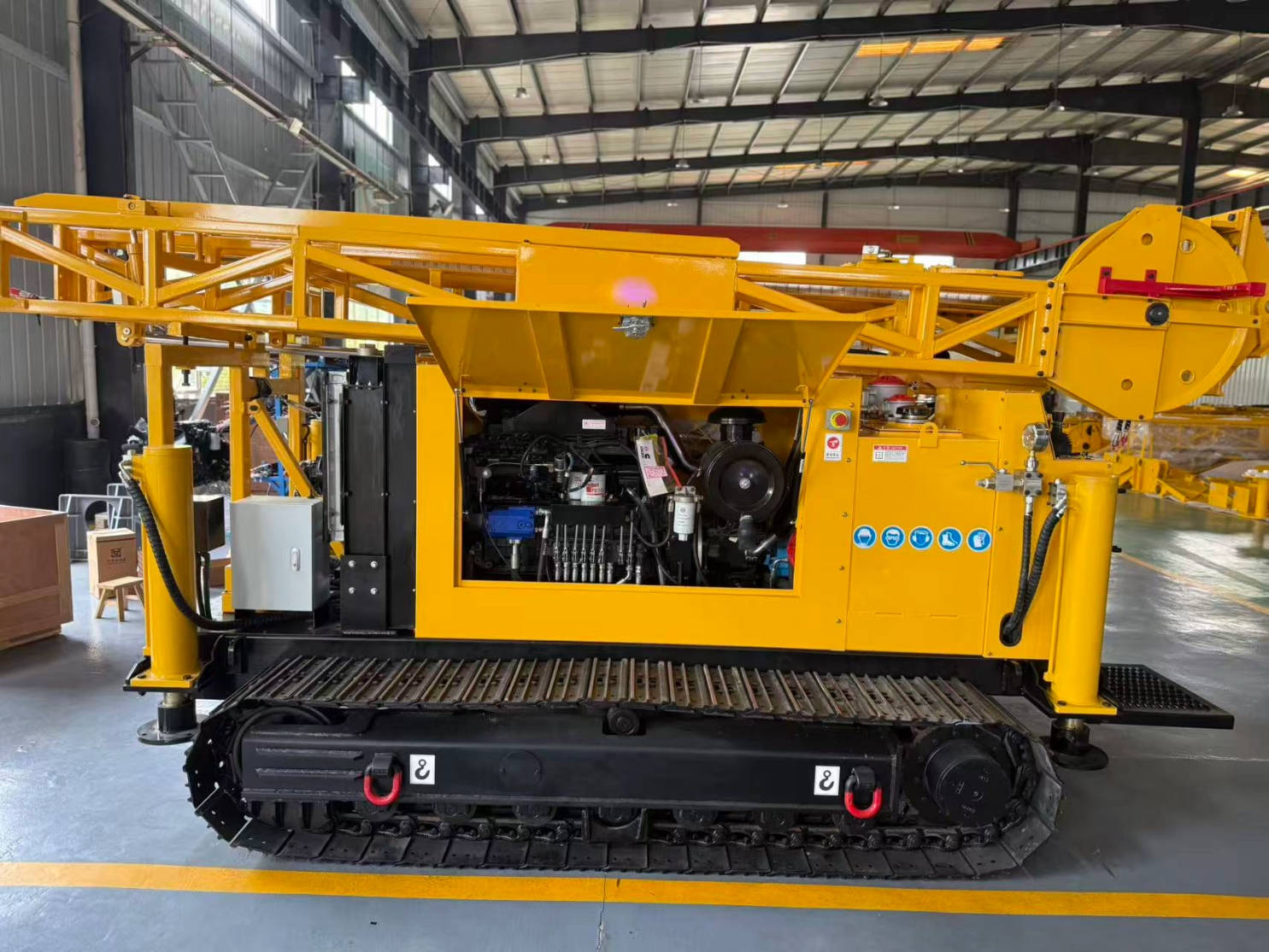
CORTECH's stated focus on fully hydraulic wireline diamond core drilling provides a relevant starting point for both surface and underground applications.
The next step is an application review, not a blanket recommendation.
Send CORTECH your target depths, rod and core sizes, hole orientations, geological conditions, access dimensions, available utilities, and expected schedule. Request a configuration proposal identifying operating limits, required accessories, handling provisions, and service requirements.
For mine development exploration, the right underground core drill or surface diamond drill is the one that delivers usable geological information within your site's safety, access, and budget constraints.
Yes. Underground core drills commonly use diamond bits. "Underground" describes the operating location; "diamond" describes the cutting technology.
No. Shorter holes can reduce drilling requirements, but station development, services, access restrictions, and production interference may offset that advantage.
Some designs may suit multiple environments, but suitability requires manufacturer confirmation. Dimensions, anchoring, power arrangements, operating angles, and safety requirements must all be checked.
Neither inherently does. Geology, barrel selection, bit choice, fluid management, drilling parameters, and operator practices determine recovery.
It allows recovery of the core-containing inner tube without removing the whole drill string after each run, reducing repetitive string handling.
Provide planned depths, hole angles, rod series, core sizes, ground conditions, access dimensions, available utilities, and sample-quality requirements.
1. CORTECH. "Surface Diamond Drilling Rig." Manufacturer information on surface configurations and nominal drilling capacities. Published figures are application-dependent; this article does not treat them as guaranteed performance. [cortechdrill]
2. Epiroc. "Core Drilling." Technical overview supporting the explanation of mineral-exploration core sampling, diamond drilling tools, and flushing-water functions. [epiroc]
3. Boart Longyear. "The Ins and Outs of Wireline Core Retrieval Systems." Technical explanation supporting the discussion of wireline retrieval and reduced drill-string removal. Published June 5, 2017. [boartlongyear]
4. Boart Longyear. "Exploration: Underground." Manufacturer information supporting underground diamond coring applications, modular configurations, and conventional and wireline options. [boartlongyear]
5. Epiroc. "Bore Hole Deviation Drillers Guide." Technical guidance informing the discussion of hole trajectories and directional considerations. [epiroc]
6. UK Health and Safety Executive. "Preventing Inrushes at Underground Mines." Safety bulletin supporting the discussion of water, historical workings, and inrush assessment. Published September 23, 2011; jurisdiction-specific requirements should not be applied universally. [hse.gov]
7. UK Health and Safety Executive. "Publications and Guidance—Mining Safety Alerts." Source identifying underground mining safety topics, including ventilation, ground control, and boreholes. [hse.gov]
8. Editorial analysis. The six-step selection workflow, cost-per-usable-intersection framework, and hypothetical 900-meter versus 250-meter comparison are analytical guidance developed for this article, not reported field results. CORTECH's business description was supplied in the project brief.


