
Views: 278 Author: CORTECH Publish Time: 2026-08-08 Origin: Site


Content Menu
● Top Drilling Rig Suppliers Serving Mauritius
>> 1. CORTECH Drilling Equipment Co., Ltd.
>> 2. Epiroc via Leal Equipements Cie (LEC)
>> 4. T3 Drilling (Mauritius) Limited
>> Material and Process Checks
>> The Often-Missed Trap: Hydraulic Compatibility
● Factory Verification Process
● FAQ
>> 1. How can I verify whether a supplier's ISO 9001 certificate has expired?
>> 2. Does a CE mark prove that a drilling rig has been independently tested?
>> 3. What is the most important specification when buying a diamond core drilling rig?
>> 4. Should I buy from a Mauritius-registered contractor or directly from an OEM?
>> 5. What spare parts should be included with a new hydraulic core drill rig?
Mauritius is better positioned as an Indian Ocean business, logistics, and regional-service hub than as a large-scale manufacturing base for mining exploration drilling rigs. Its manufacturing sector contributes 12.8% of GDP and exports around 1,500 product lines, but government-identified strengths are textiles, seafood processing, jewellery, and light engineering—not the serial production of hydraulic diamond core drilling rigs.
For procurement teams, this means a "Mauritius supplier" may be a local distributor, a Mauritius-registered drilling contractor, or an international OEM serving African and Indian Ocean projects. Buyers should therefore evaluate the actual manufacturing location, engineering ownership, after-sales coverage, and documentary compliance—not only the supplier's Mauritius address.
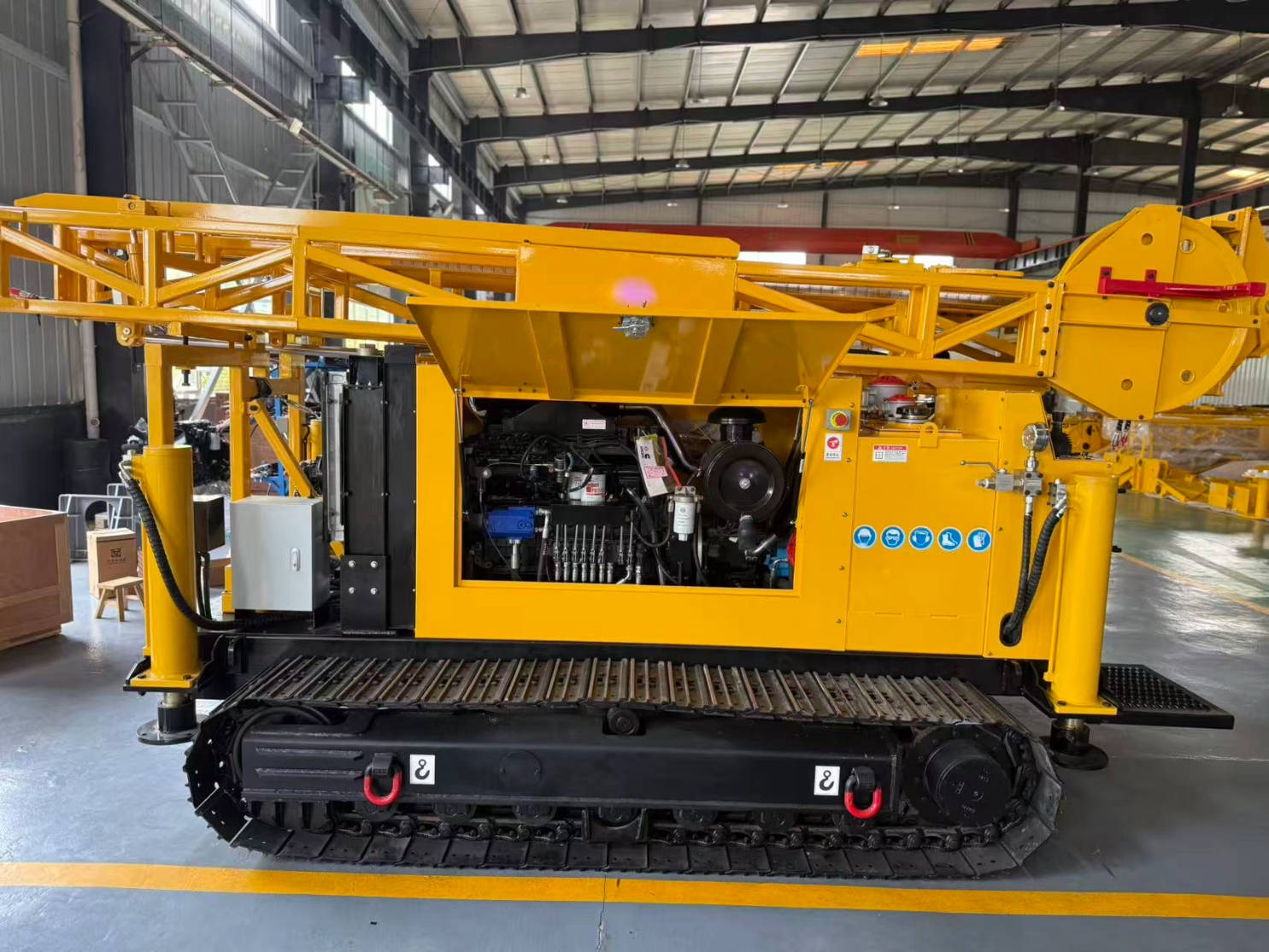
This list is designed for mining exploration companies, geological contractors, EPC firms, and procurement managers seeking long-term drilling-rig partners. We assessed companies using the following practical criteria:
- Equipment relevance: Surface diamond core rigs, heli-portable rigs, underground core drills, drill tooling, or directly related rock-excavation equipment.
- Engineering and application fit: Capability for deep-hole coring, wireline operations, modular transport, underground deployment, and African project conditions.
- Supply-chain clarity: Whether the business is an OEM, authorized equipment channel, drilling contractor, or regional service provider.
- Quality controls: Availability of factory QA documentation, material traceability, hydraulic-component specifications, FAT records, and third-party inspection access.
- Compliance readiness: Ability to provide valid ISO management-system certificates, CE Declaration of Conformity where applicable, manuals, risk assessments, and serial-number traceability.
- Commercial fit: Capacity to support spare parts, commissioning, operator training, remote troubleshooting, and customized OEM/ODM configurations.
A key point: CE is not a generic "government-approved certificate." For machinery placed on the EU/EEA market, buyers should request a model-specific EU Declaration of Conformity and supporting technical documentation. ISO certificates should be verified against the issuing certification body or through IAF CertSearch, which provides certificate-status, scope, and location checks.
| Company | Business role | Main focus | Capacity / MOQ | Compliance and buyer checks |
|---|---|---|---|---|
| CORTECH Drilling Equipment Co., Ltd. | Hydraulic diamond core drilling rig OEM | Surface, heli-portable, underground core rigs; tools and upgrades | Project-based; request production-slot and MOQ confirmation | Request model-specific technical file, QA plan, FAT protocol, and certification copies |
| Epiroc via Leal Equipements Cie (LEC) | Authorized local/regional equipment channel | Rock excavation and mining equipment | Quote-based through dealer network | Confirm exact model availability, warranty territory, and service response scope |
| Capital Limited | Mauritius-linked international drilling contractor | Exploration, development, production, and core drilling services | Service-contract basis, not standard equipment MOQ | Review fleet allocation, site safety records, and contract KPIs |
| T3 Drilling (Mauritius) Ltd. | Mauritius-headquartered drilling contractor | Surface core, underground core, and large-diameter drilling services | Project-based | Confirm rig allocation, mobilization schedule, and consumables responsibility |
| Orezone Drilling | Mauritius-registered drilling services group | Surface and underground exploration drilling | Project-based | Confirm operating-country entity, fleet type, maintenance process, and HSE documentation |
CORTECH Drilling Equipment Co., Ltd. is a hydraulic diamond core drilling rig manufacturer suitable for buyers who need more direct OEM collaboration rather than a standard catalogue-only transaction. Its portfolio includes CORE SURFACE DRILL, CORE HELI DRILL, CORE U/G DRILL, drill tooling, and rig-upgrade solutions.
According to the company's published profile, CORTECH specializes in R&D and manufacturing of all-hydraulic diamond drilling rigs and states that it has supplied more than 1,200 diamond core rigs to customers in over 55 countries. The company also describes integrated OEM capability and a second-generation product upgrade focused on efficiency, reliability, user-centric design, and maintenance convenience.
Why it may fit Mauritius and African-project buyers
- Flexible configuration for crawler-track, skid-mounted, heli-portable, and underground applications.
- Better fit for small and mid-sized drilling contractors that require custom feed-frame length, hydraulic layout, rod-handling approach, guarding, winch configuration, or branding support.
- Direct engineering communication can reduce the risk of specification loss that sometimes occurs when purchasing through multiple trading layers.
- OEM/ODM cooperation is relevant for regional distributors that need customized decals, manuals, spare-parts kits, packaging, and locally appropriate accessories.
What to verify before ordering
- The recommended rig model should be tied to target depth, hole size, geological conditions, altitude, access constraints, and expected rod size—not only an advertised drilling-depth figure.
- Request a factory acceptance test with hydraulic pressure, rotation, feed, hoist/winch, safety interlock, emergency-stop, and wireline-function records.
- Confirm the origin and model numbers of major hydraulic pumps, motors, valves, diesel engines, and winches.
- Establish a 12–24 month critical-spares package before shipment, especially for seals, hoses, filters, sensors, valves, wireline consumables, and wear parts.
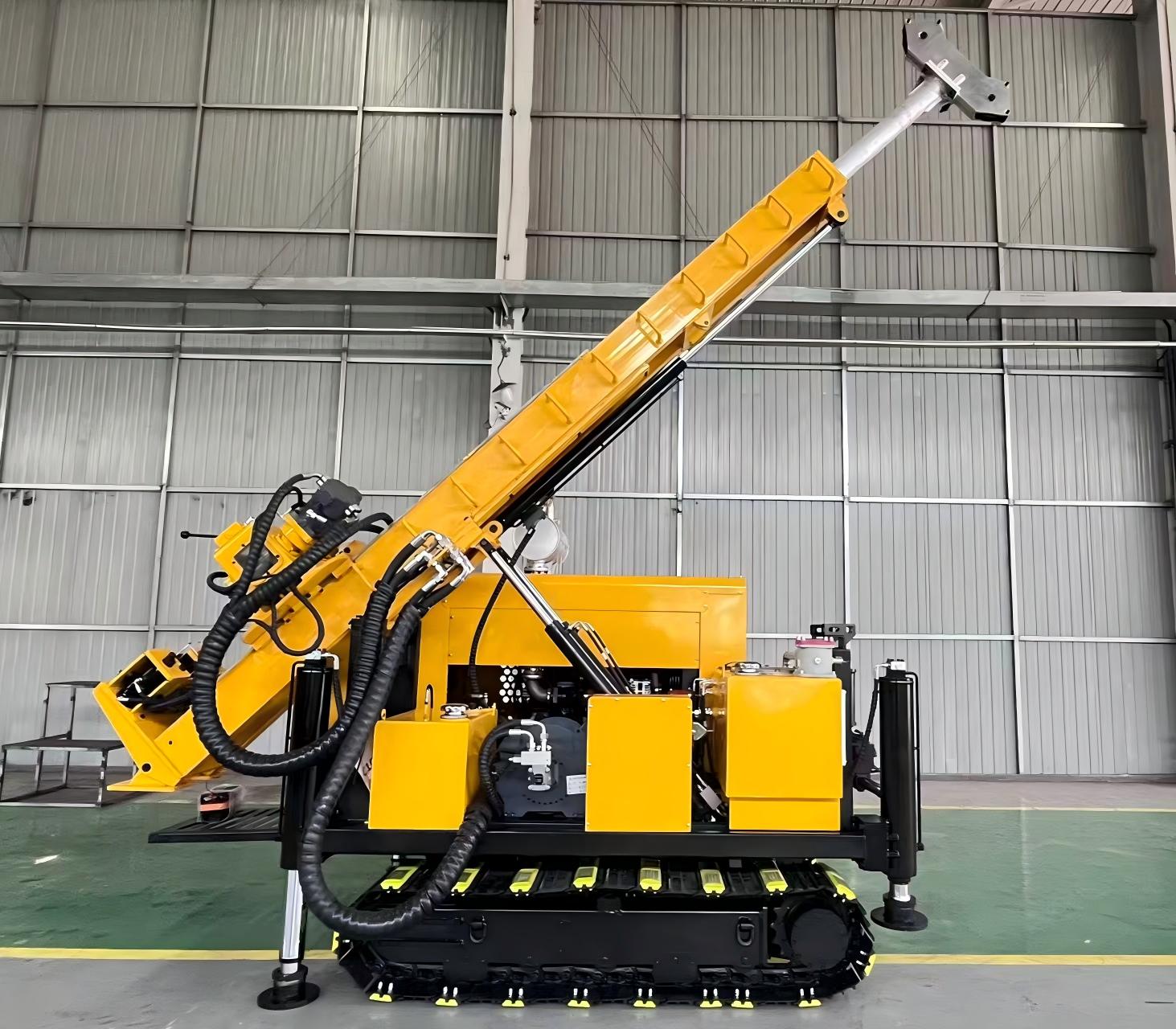
Leal Equipements Cie (LEC) is a Mauritius-based heavy-equipment solutions provider with distribution coverage across Mauritius, Madagascar, Réunion, and Seychelles. Its local Epiroc offering provides a practical route for buyers prioritizing established rock-excavation equipment channels and regional access to support.
Epiroc's wider product range includes surface and underground exploration core drilling equipment, including the Diamec line for underground core-drilling work.
Best suited for: Buyers requiring recognized branded equipment, dealer-led support, and a structured regional equipment channel.
Important procurement question: Ask LEC to specify whether the quotation includes only equipment supply or also commissioning, technician travel, operator training, local spare-parts stocking, warranty labor, and emergency breakdown response.
Capital Limited is an international drilling-services provider founded in 2004. It has historical Mauritius links and focuses on exploration, development, grade-control, blast-hole, and underground drilling work across developing and emerging markets.
Its 2025 annual report states that the business closed the year with 137 rigs and reported 74% utilization; its drilling segment generated US$245.9 million in 2025 revenue. This makes Capital more relevant as a potential drilling-services partner or benchmark for contractor capability than as a conventional rig OEM.
Best suited for: Mining companies seeking managed drilling campaigns, fleet-backed service capacity, and operational drilling expertise.
Buyer note: A contractor's total fleet is not the same as immediately available fleet. Require a project-specific mobilization plan showing assigned rigs, maintenance history, crew plan, spare-parts coverage, water/fuel logistics, and replacement-rig commitments.
T3 Drilling maintains a Mauritius head-office presence and provides specialized drilling services. Its disclosed rig mix includes Boart Longyear LF90D surface core rigs, Sandvik DE140 underground core rigs, and Schramm T685 large-diameter configurations.
This is relevant for buyers who need drilling execution rather than purchasing a new drill rig. A contractor with experience across core, underground, and large-diameter work can help reduce mobilization and field-management complexity in multi-country African projects.
Best suited for: Exploration programs that need a drilling contractor with established operational methods and project experience rather than an equipment-only supplier.
Buyer note: Confirm whether sample handling, core orientation, core photography, downhole surveys, water management, and drill-pad construction are included in the scope or priced separately.
Orezone Drilling is registered in Mauritius and operates with an exploration-drilling focus across Africa and South America. Its published information covers surface and underground drilling services for commodities including gold, copper, cobalt, nickel, uranium, platinum, coal, and other mineral targets.
The company describes capability across diamond core, reverse circulation, grade control, heli-portable diamond core, man-portable diamond core, dewatering, and large-diameter work.
Best suited for: Buyers looking for a drilling-services partner with experience in difficult exploration environments and multiple drilling methods.
Buyer note: Before award, request the actual fleet list committed to the project, including rig model, year, engine hours, wireline system, safety systems, maintenance interval, and local spares inventory.
Mauritius has a credible manufacturing and export ecosystem, including 300 large manufacturing establishments and approximately 54,900 manufacturing jobs. However, its identified industrial strengths center on sectors such as textile and apparel, seafood processing, jewellery, and light engineering.
Meanwhile, Mauritius mining and quarrying activity is relatively limited. Official Statistics Mauritius data indicates that mining and quarrying—largely decorative stone quarrying, sand and salt extraction, and stone crushing—represented only 2% of industrial-sector output in the third quarter of 2025.
Therefore, buyers should not assume that a company registered in Mauritius is a local drilling-rig manufacturer. In many cases, Mauritius functions as a corporate, contracting, logistics, financing, or regional management location, while the rig itself is manufactured elsewhere or deployed to African operating sites.

Do not buy a drilling rig based only on "maximum drilling depth." That number can vary substantially with hole diameter, rod size, rock formation, altitude, operator practice, core-barrel condition, and water availability.
Your RFQ should define:
- Target depth by drilling standard and rod size, such as BQ, NQ, HQ, or PQ.
- Hole angle, terrain, site elevation, and access limitations.
- Surface, heli-portable, skid-mounted, crawler-mounted, or underground configuration.
- Wireline coring requirements and desired hoist/winch parameters.
- Diesel engine brand, emission requirement, fuel quality assumptions, and cold/hot climate operating range.
- Hydraulic pump, motor, valve, hose, and filtration specifications.
- Safety guards, emergency stops, rod-handling method, operator platform, and noise-control requirements.
- Required documents: GA drawing, hydraulic schematic, electrical schematic, spare-parts list, operating manual, maintenance manual, FAT report, and packing list.
For a hydraulic diamond core drilling rig, material quality cannot be judged from paint quality or machine photographs. Ask the supplier to identify the steel grade used in key structural parts, including mast/feed frame, base frame, drill head housing, rod-handler components, and high-load brackets.
The supplier should also explain:
- Welding procedure controls and welder qualification records where relevant.
- Non-destructive testing scope for critical welds.
- Heat-treatment requirements for high-wear shafts, gears, and pins.
- Hydraulic-hose pressure rating, fitting standard, and hose-routing protection.
- Traceability of major purchased components.
- Corrosion-protection system, including surface preparation and coating thickness.
A common but under-discussed sourcing risk is component substitution after the approved quotation. A supplier may initially quote branded hydraulic components, then install lower-cost alternatives during assembly because the buyer's purchase order lists only a general phrase such as "hydraulic system included."
Avoid this by attaching a frozen Bill of Materials for critical components to the contract. The list should state approved brand, model, country of origin where relevant, permitted equivalents, and a written approval process for substitutions.
This is especially important for:
- Main hydraulic pumps and motors.
- Rotary-head gearboxes.
- Control valves and pressure-relief valves.
- Wireline winches.
- Diesel engines and emissions configuration.
- High-pressure hoses and fittings.
- Safety sensors and emergency-stop assemblies.
| Risk | Why it happens | How to reduce it |
|---|---|---|
| Inflated drilling-depth claim | Depth is quoted without stating rod size or rock conditions | Require depth tables for BQ, NQ, HQ, and PQ, plus stated assumptions |
| Unapproved component substitution | General specifications leave room for cheaper parts | Freeze critical-component BOM in the purchase contract |
| Invalid ISO certificate | Certificate is expired, out of scope, or tied to another facility | Verify certificate number, scope, site address, and current status through IAF CertSearch |
| "CE certified" wording without evidence | CE is incorrectly presented as a generic certificate | Request the signed EU Declaration of Conformity for the exact model |
| No practical spare-parts plan | Buyers focus on rig price instead of uptime | Include recommended commissioning, 12-month, and 24-month spare kits |
| Incomplete container planning | Rig weight and dimensions are confirmed too late | Request final packing drawing, gross weight, center of gravity, and loading photos before shipment |
| Weak after-sales ownership | Dealer, factory, and contractor each assume another party will support | Define a named technical contact, response time, escalation process, and spare-parts lead time |
For a new-rig purchase, use a staged verification process:
1. Document review: Request business registration, ISO certificates, CE-related documentation where applicable, factory address, organization chart, and product catalogue.
2. Engineering review: Compare the quoted rig specification with your drilling program, rod size, depth target, terrain, and safety requirements.
3. Factory audit: Inspect assembly capability, machining access, welding controls, hydraulic assembly, test area, raw-material storage, and quality records.
4. Pre-production approval: Freeze drawings, technical specifications, key-component BOM, color/branding requirements, and spare-parts package.
5. Factory acceptance test: Witness or record a full FAT before final payment; include operating functions, pressure settings, winch operation, emergency stops, leakage inspection, and serial-number verification.
6. Pre-shipment inspection: Check packing, rust protection, manuals, spare-parts labeling, loose-item inventory, and container loading.
7. Commissioning plan: Agree on remote or on-site installation support, operator training, initial maintenance schedule, and fault-response procedure.
For Mauritius-bound drilling equipment, buyers should calculate logistics based on packed dimensions and actual gross weight rather than estimated machine weight. Hydraulic rigs may require flat-rack, open-top, or breakbulk planning if mast length, crawler dimensions, or accessory crates exceed standard container limits.
Before booking, request:
- Commercial invoice and detailed packing list.
- HS-code confirmation from the importer or customs broker.
- Final packing dimensions, weight, lifting points, and center-of-gravity information.
- Photos showing secured loading, bracing, moisture protection, and corrosion prevention.
- Separate packing records for drill rods, core barrels, diamond tools, spare parts, and hydraulic oils.
- Clear Incoterm allocation for inland transport, export clearance, marine insurance, destination charges, and unloading.
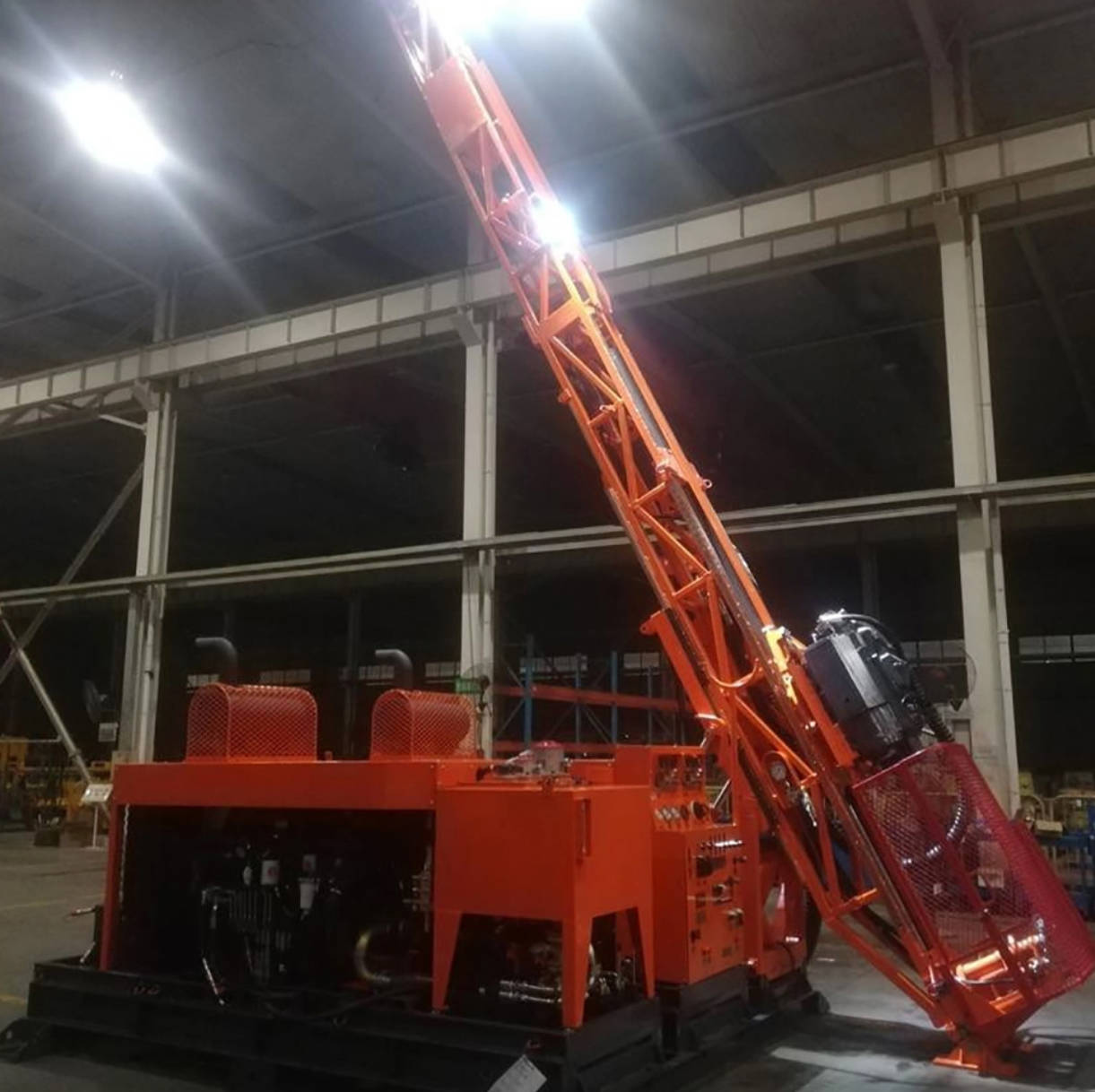
Mauritius is a useful regional base for drilling services, equipment distribution, and Indian Ocean/African project coordination, but buyers should distinguish carefully between local service providers and the OEM that actually designs and manufactures the drilling rig.
For companies sourcing surface, heli-portable, or underground diamond core drilling rigs, the strongest procurement approach is to combine technical specification control, factory verification, component traceability, witnessed FAT testing, and a defined spare-parts and commissioning plan. CORTECH Drilling Equipment Co., Ltd. is a practical option for buyers seeking a hydraulic core-drilling OEM with flexible configuration, direct engineering communication, and OEM/ODM support for specialized or growing drilling fleets.
Need a customized drilling-rig quotation? Share your target depth, rod size, terrain, transport limits, drilling method, and destination port with CORTECH to receive a configuration recommendation and preliminary technical proposal.
Request the complete certificate, including certificate number, certification body, site address, scope, issue date, and expiry date. Then search the company name or certificate details through IAF CertSearch and confirm that the certified site and scope cover the actual drilling-rig manufacturing facility. IAF CertSearch is a global platform for verifying accredited certificates and can indicate whether a certificate is valid, suspended, withdrawn, or expired.
Not necessarily. CE marking is generally based on the manufacturer's conformity assessment and Declaration of Conformity; it should not be treated as a blanket third-party product certificate. Ask for the signed Declaration of Conformity for the exact rig model, applicable directives or regulations, referenced standards, technical-file summary, and safety-risk assessment.
The most important specification is the full operating envelope: drilling depth by rod size, torque, rotation speed, feed force, pullback force, hoist/winch capacity, and operating conditions. A single maximum-depth figure is insufficient because BQ, NQ, HQ, and PQ drilling capability differs significantly.
Choose a contractor when you need drilling execution, crews, project mobilization, safety management, and operational accountability. Choose an OEM when you want to own the rig, control maintenance and fleet utilization, or require deeper customization; in many projects, the most effective model is direct OEM equipment procurement combined with a local or regional service partner.
At minimum, include hydraulic filters, hose assemblies, seals, fittings, pressure gauges or sensors, electrical relays/fuses, emergency-stop parts, wireline consumables, drive belts where applicable, lubrication items, and high-wear drill-head or feed-system components. The final list should be based on the rig model, operating hours, site remoteness, and the supplier's documented maintenance intervals.
1. - Mauritius Economic Development Board, [Manufacturing Industry]. [edbmauritius]
2. - Statistics Mauritius, [Quarterly Index of Industrial Production, Q3 2025]. [statsmauritius.govmu]
3. - CORTECH Drilling Equipment Co., Ltd., [About Us]. [cortechdrilling]
4. - IAF CertSearch, [Search and Verify ISO Certification]. [iafcertsearch]
5. - Capital Limited, [Annual Report 2025]. [capdrill]
6. - Leal Equipements Cie, [Epiroc Equipment Solutions]. [lec]
7. - T3 Drilling, [Company and Rig Fleet Information]. [t3drilling]
8. - Orezone Drilling, [Mauritius Office and Operations]. [orezonedrilling]


