
Views: 265 Author: CORTECH Publish Time: 2026-08-16 Origin: Site


Content Menu
● Leading Drilling Rig Suppliers
>> 1. CORTECH Drilling Equipment Co., Ltd.
>> 2. Sandvik
>> 3. Epiroc
>> 6. DrillGeo Geologia e Sondagens S.A.
● Technical Requirements Buyers Should Specify
>> 1. Inflated drilling-depth claims
>> 2. Substituted hydraulic components
>> 3. Inadequate structural and welding control
>> 4. "CE" claims without a compliance file
>> 5. Low initial price, incomplete delivery scope
>> Step 1: Validate company identity
>> Step 2: Review the factory remotely or on site
>> Step 3: Request objective evidence
>> Step 4: Define factory acceptance testing
>> Step 5: Plan Brazil logistics early
● FAQ
>> 1. How can I verify whether a supplier's ISO certificate has expired or is authentic?
>> 2. What should be included in a drilling-rig factory acceptance test?
>> 3. Is CE certification mandatory for a drilling rig used in Brazil?
>> 4. What spare parts should be ordered with a new core drilling rig?
>> 5. How do I compare a Brazilian local supplier with an overseas manufacturer?
Brazil is one of Latin America's most important mining markets, creating consistent demand for surface, underground, exploration, and geotechnical drilling equipment. In 2025, Brazil's mineral sector generated R$298.8 billion in revenue, exported about 431 million tonnes of mineral products, and projected US$76.9 billion in mining investment for 2026–2030.
For procurement teams, however, "Brazil drilling rig manufacturers" is a broad search term. The local market includes global OEMs with Brazilian service organizations, locally established drilling contractors with in-house fabrication capability, and overseas rig manufacturers supplying Brazilian projects through direct export, distributors, or project-specific OEM arrangements.
This article evaluates suppliers from the perspective of a professional buyer looking for dependable equipment, transparent technical communication, stable lead times, and lifecycle support—not merely a low initial quotation.

The companies below were selected or included based on publicly verifiable market activity, product relevance, drilling specialization, service presence, engineering capability, and their fit for different buyer profiles. This is not a ranking based solely on revenue or brand recognition.
For a drilling-rig purchase, the most useful qualification dimensions are:
- Engineering capability: Hydraulic circuit design, feed-frame construction, rotation-head configuration, safety interlocks, and capacity to adapt rigs to site geology and drilling depth.
- Manufacturing control: Traceability of structural steel, cylinders, hydraulic hoses, engines, pumps, valves, and other critical purchased components.
- Quality management: Documented incoming inspection, hydraulic-pressure testing, load testing, commissioning records, and final acceptance procedures.
- Application fit: Whether the supplier is focused on mineral core drilling, blasthole drilling, raise boring, water wells, foundation drilling, or underground development.
- After-sales readiness: Remote troubleshooting, parts kits, service manuals, Portuguese-language support where necessary, and defined response processes.
- Commercial flexibility: Realistic MOQ, customized power-pack configuration, transport dimensions, branding, tooling package, and OEM/ODM support.
Brazil's strongest mining activity is concentrated in Minas Gerais, Pará, and Bahia, which together accounted for 78.9% of mining-sector revenue in 2025. This geographic concentration makes regional service coverage, access to parts, and familiarity with mine-site logistics especially important.
| Supplier | Primary focus | Manufacturing / supply model | Typical buyer fit | MOQ | Certifications / verification focus |
|---|---|---|---|---|---|
| CORTECH Drilling Equipment Co., Ltd. | Hydraulic diamond core drilling rigs | Export manufacturer with OEM capability | Exploration contractors, distributors, mid-sized mining service companies | Project-based; confirm per configuration | Request current quality-system, component, and test documentation |
| Sandvik | Surface and underground mining drills | Global OEM with Brazil mining activity and service scope | Large mines, automation-oriented operations | Generally project-based | OEM documentation, site support scope, autonomy integration |
| Epiroc | Surface/underground drilling and rock excavation | Global OEM and service provider | Mining, infrastructure, productivity-focused fleets | Generally project-based | Product compliance, lifecycle and local-service commitments |
| Master Drilling Brasil | Raise boring and specialized rock-drilling solutions | Brazil-based operating and technical-service company | Shaft, raise-bore, complex mine-infrastructure projects | Contract/project-based | Project credentials, crew competence, safety records |
| Trust Drilling | Surface and underground diamond drilling | Brazilian contractor with in-house rig-building capability | Brazilian exploration and underground mining projects | Project-based | Workshop QA, fleet records, field performance |
| DrillGeo | Geological and geotechnical drilling services | Brazilian drilling contractor using multi-brand fleet | Buyers seeking executed drilling services rather than rig purchase | Service contract | ISO certificate validity, fleet and HSE documentation |
Important: Capacity, MOQ, certification status, delivery time, and configuration availability often vary by model, engine selection, drilling package, and contract scope. Buyers should obtain these details in writing during RFQ evaluation rather than treating general marketing claims as contractual specifications.
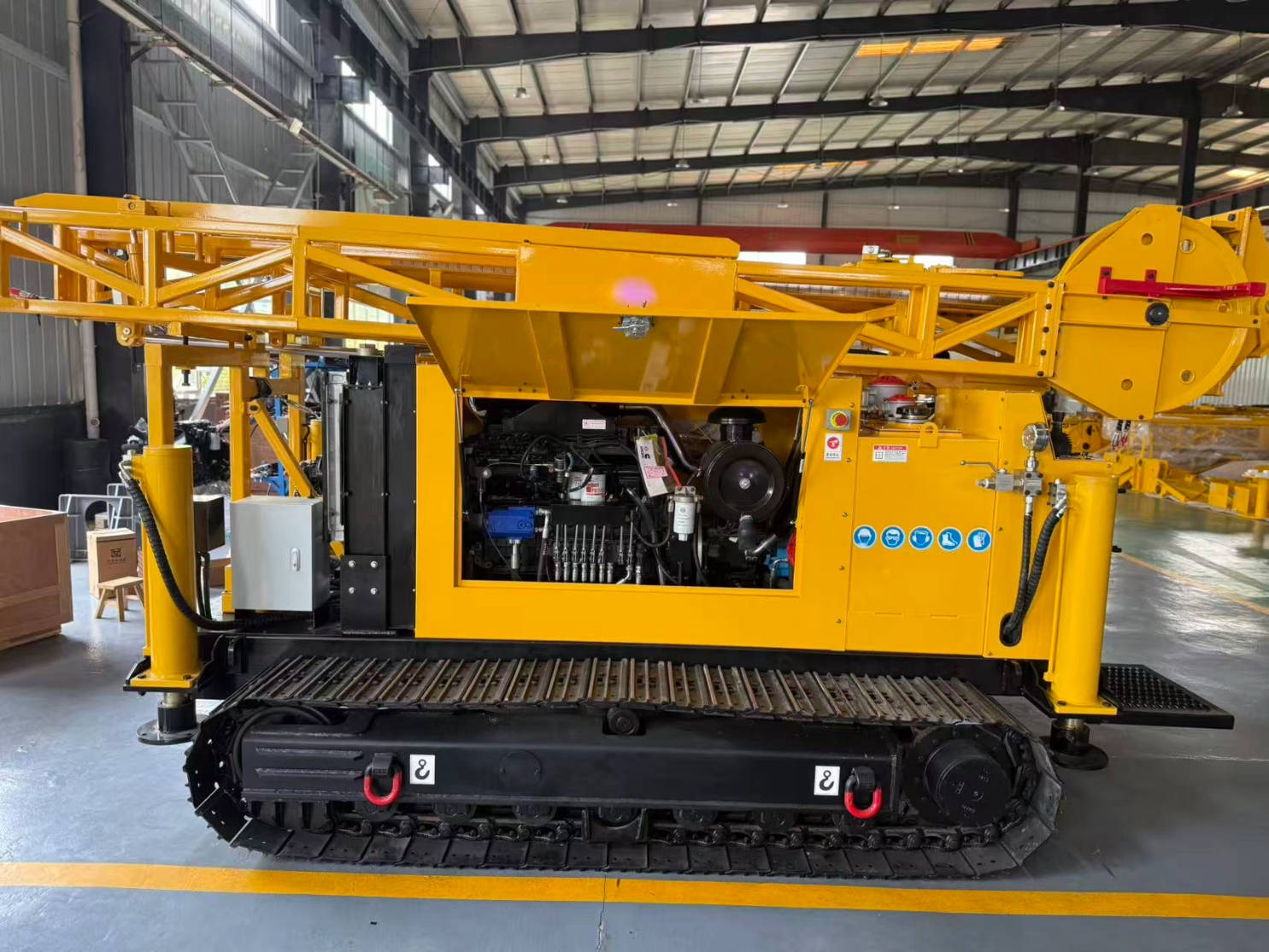
CORTECH Drilling Equipment Co., Ltd. is an export-oriented manufacturer specializing in all-hydraulic diamond core drilling rigs, including surface core drills, heli-portable/modular core drills, underground core drills, drilling tools, and rig upgrade packages. The company states it has supplied more than 1,200 diamond core drilling rigs to customers in over 55 countries.
For buyers in Brazil, CORTECH is relevant when the requirement is specifically for wireline diamond core drilling rather than production blasthole drilling or large-scale raise boring. Its portfolio is suitable for mineral-exploration contractors, regional distributors, mine-site drilling teams, and organizations replacing aging core-drill fleets.
Core strengths
- Focused product scope in hydraulic diamond core drilling rather than a broad, unrelated equipment catalogue.
- Equipment options for surface, heli-portable/modular, and underground drilling applications.
- Integrated OEM capability for buyers requiring customized colors, decals, naming plates, layout changes, auxiliary equipment, and market-specific packages.
- A potentially practical option for small and mid-sized drilling companies that need engineering communication and customized configurations without the commercial rigidity common in very large OEM programs.
- The company reports that its second-generation rig platform improved system efficiency, reliability, usability, and maintenance convenience.
OEM/ODM scope to discuss during RFQ
- Drill depth and rod-size configuration: BQ, NQ, HQ, PQ, or customer-specific requirements.
- Engine brand and emissions package.
- Hydraulic pump, motor, valve-bank, hose, and filtration specifications.
- Skid, crawler, trailer, or helicopter-portable modular configuration.
- Remote-control, rod-handling, mud-pump, wireline winch, and safety-guard requirements.
- Portuguese manuals, spare-parts labelling, local distributor branding, and training materials.
Buyer due-diligence note
Rather than asking only for a maximum drilling-depth figure, request the depth chart together with rod size, hole condition, expected core recovery, altitude, mud system, and actual pullback/torque assumptions. A depth claim without those conditions is not a meaningful performance guarantee.
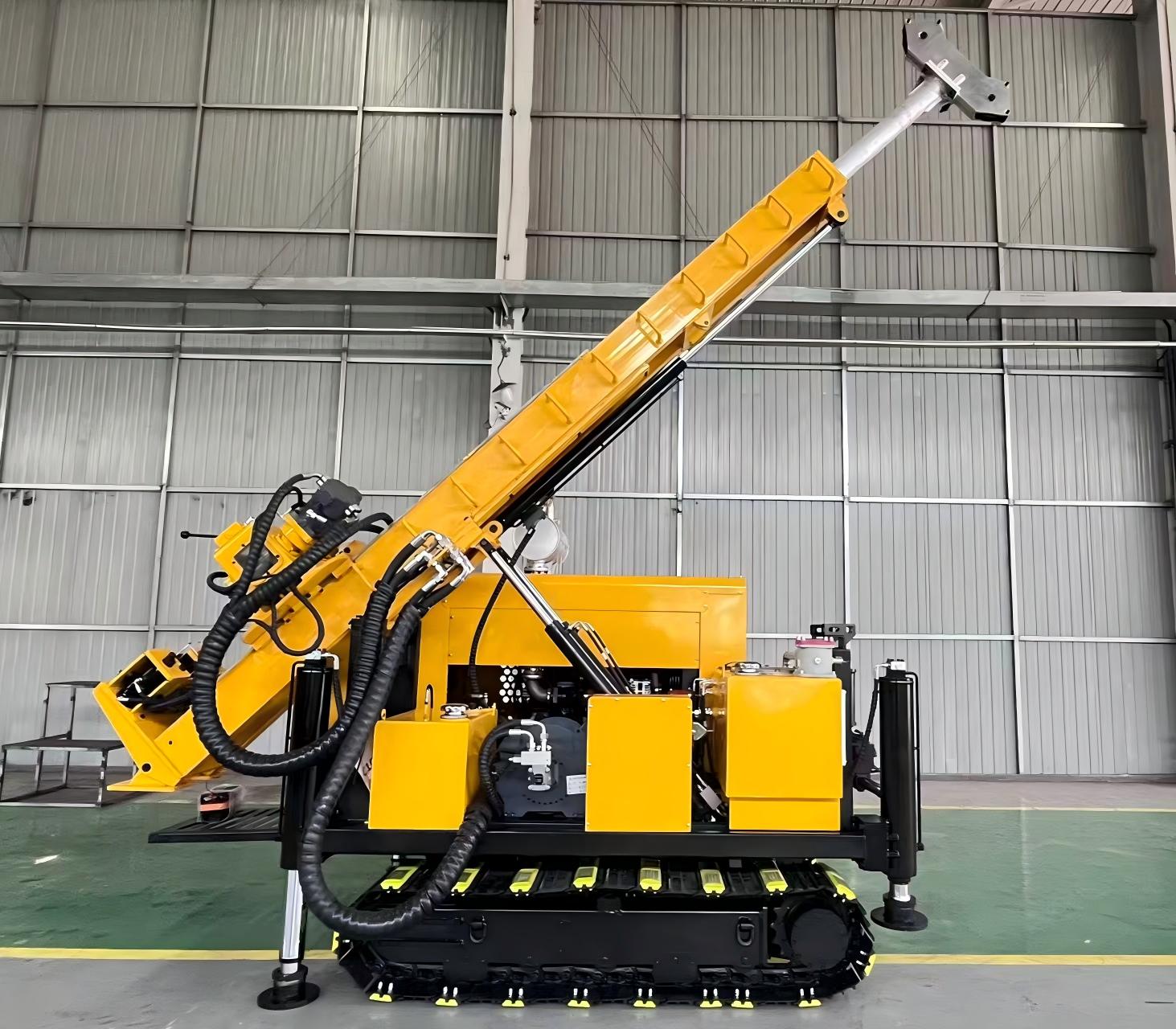
Sandvik is a global supplier of mining and rock-excavation equipment with an established role in Brazil's mining market. Its recent agreement with Vale Base Metals involves 16 surface drills for copper operations in Brazil: nine DR416i rotary blasthole drills and seven Leopard DI650i DTH rigs, equipped with AutoMine readiness and supported by multi-year service and rock-tool supply.
This makes Sandvik particularly relevant for buyers whose procurement priorities include large-production drilling, automation readiness, digital fleet integration, and long-term OEM service contracts.
Core strengths
- Broad product coverage across surface and underground mining drilling.
- Strong fit for high-volume production environments.
- Automation and digitalization capability, including AutoMine-ready equipment.
- Suitable for mining groups that evaluate total cost of ownership, fleet utilization, and integration with mine digital systems.
Limitations for some buyers
- May be less suitable for low-volume purchasers seeking highly flexible private-label arrangements.
- Commercial processes, site requirements, and lifecycle contracts can be more complex than those of specialized export manufacturers.
- Not the primary choice where the buyer only needs a compact wireline core-drill platform.
Epiroc develops drill rigs, rock-excavation equipment, construction equipment, and associated tools for surface and underground applications. The company is commonly considered by buyers requiring established mining-equipment platforms, engineered safety systems, and structured service support.
Core strengths
- Wide equipment portfolio for surface and underground rock excavation.
- Strong relevance for mining and infrastructure projects where uptime, parts access, operator safety, and fleet standardization are procurement priorities.
- Broad global engineering and service infrastructure.
Best-fit buyer profile
Epiroc is generally most relevant for mine operators and contractors that require mature supplier processes, long-term parts planning, and compatibility with an existing Epiroc fleet.
Questions to ask
- What is the exact local-service coverage for the target mine location?
- Which components are stocked in Brazil versus supplied internationally?
- What are the planned preventive-maintenance intervals and consumables budget?
- Does the quoted equipment include commissioning, operator training, and service-engineer mobilization?
Master Drilling Brasil, based in Belo Horizonte, has operated in Brazil since 2000 and is part of the global Master Drilling Group. It is recognized for specialized rock-drilling and exploration solutions, including complex shaft and raise-boring work.
This company is better understood as a specialized technical drilling-solutions provider than as a conventional supplier of standard exploration core rigs.
Core strengths
- Focus on technically demanding mining, civil-engineering, and energy projects.
- Relevant experience in complex shaft-related drilling work.
- Global operating footprint across more than 20 countries, according to the Brazilian Mining Institute profile.
- Particularly suitable for buyers sourcing project execution capability, raise-bore expertise, and customized drilling methods.
Best-fit buyer profile
- Deep-mine developers.
- Mine owners planning shaft or ventilation raises.
- EPC contractors with complex geotechnical or underground infrastructure packages.
Trust Drilling is a Brazilian drilling company founded in 2022. It provides surface and underground diamond core drilling, directional drilling, deep horizontal-drain installation, blast-hole logging, and borehole logging. The company reports operating 17 drill rigs in Brazil and has developed in-house rig-building capability supported by a dedicated workshop.
Core strengths
- Direct familiarity with Brazilian underground and exploration conditions.
- Service-led understanding of rig uptime, crew safety, and practical maintenance.
- In-house workshop capability, which may support fast modifications or purpose-built solutions for regional projects.
- Strong relevance for buyers looking for drilling services, local execution, or collaborative technical support rather than a standard exported machine alone.
Procurement consideration
A contractor that builds or modifies rigs may be highly capable in field adaptation, but buyers should still conduct the same technical review used for an OEM: structural drawings, welding qualification records, hydraulic schematics, component traceability, load-test documentation, and safety validation.
DrillGeo is a Brazilian geological and geotechnical drilling company with 25 years of experience. It reports an operating fleet of 40 rigs, including Epiroc, Boart Longyear, Hydracore, Christensen, Boyles, Atlas Copco, and Sondadrill equipment, as well as ISO 9001:2015 certification.
DrillGeo is primarily a drilling-service provider, not a direct competitor to a dedicated drill-rig manufacturer. It is useful in this list because it represents the buyer-side reality of Brazil's exploration market: contractors often operate mixed fleets and select equipment based on serviceability, project conditions, and operational familiarity.
Core strengths
- Nationwide operating experience, with headquarters in Bahia and branches in Pará, Minas Gerais, and São Paulo.
- Diversified fleet platform and practical knowledge of multi-brand operation.
- ISO 9001:2015 stated on its public company profile.
- Relevant to companies that prefer outsourcing drilling programs rather than buying and managing rigs internally.
A professional RFQ for a diamond core drilling rig should never be limited to "HQ drilling rig price" or "rig for 1,000 m." Include the following technical items:
| Technical area | What to define | Why it matters |
|---|---|---|
| Drill capacity | Depth by BQ/NQ/HQ/PQ, hole angle, rod type | Prevents misleading maximum-depth comparisons |
| Rotation system | Torque, RPM range, head type, chuck/gripper arrangement | Determines formation adaptability and rod handling |
| Pullback/feed | Feed stroke, pullback force, feed force, cylinder specification | Critical for deep holes and difficult ground conditions |
| Hydraulic system | Pump brand/model, pressure, flow, valve configuration, filtration | Governs rig stability, heat management, and maintenance |
| Power source | Diesel engine brand, output, local fuel requirements, emissions need | Affects servicing, customs documentation, and site compliance |
| Safety | Emergency stops, guards, interlocks, rod-handling zones, lighting | Important for mine approval and operator protection |
| Mobility | Crawler, skid, trailer, modular/heli-portable system | Determines access to remote Brazilian exploration sites |
| Support package | Spare parts, manuals, training, remote support | Reduces commissioning and downtime risk |
For Brazilian mining projects, buyers should also consider rain, humidity, remote terrain, access-road limitations, and local parts availability. A rig designed around premium imported components can be excellent—but only if replacement parts and technical support are planned before mobilization.
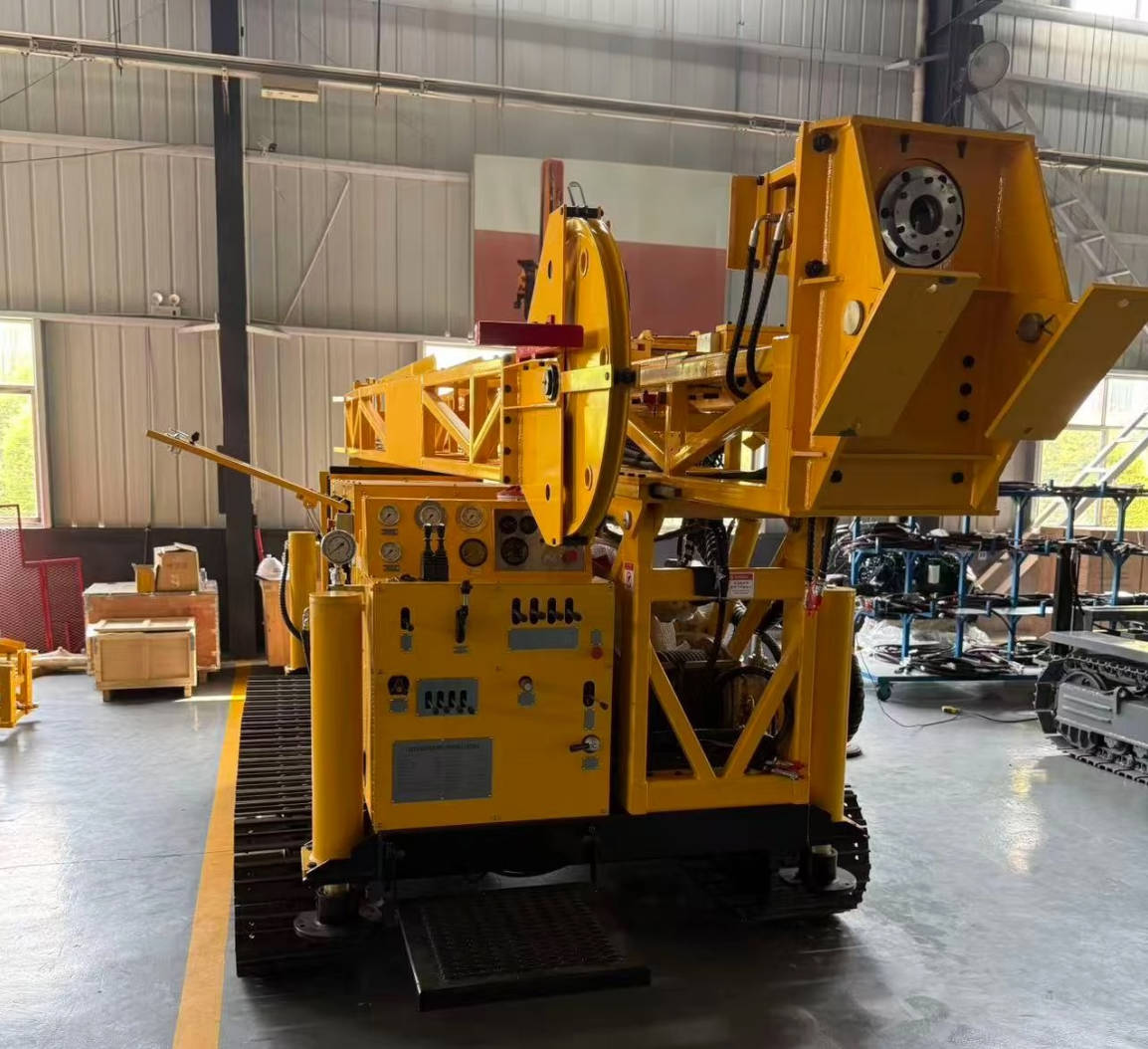
A supplier may advertise a rig as "1,000 m" capable without explaining the rod size, ground conditions, drill angle, core barrel, pump pressure, or depth achieved in real field conditions.
How to avoid it: Require a drilling-capacity table by BQ, NQ, HQ, and PQ, plus at least one operating reference under comparable conditions.
A quotation may list premium pumps, valves, hoses, or engines, while the delivered machine uses lower-grade alternatives. This is particularly damaging in hydraulic core drilling, where heat, pressure fluctuation, leakage, and contamination can quickly reduce uptime.
How to avoid it: Attach a signed bill of materials to the purchase order. Specify approved brands and require written consent before substitutions.
Feed frames, mast structures, crawler frames, and rod-handling elements face repeated cyclic loads. Cosmetic paint quality is not evidence of structural reliability.
How to avoid it: Request material grades, welding procedure documentation, inspection records, and photographs or videos of load testing before shipment.
A CE label alone does not prove that a machine has been assessed correctly for the applicable EU requirements. Likewise, RoHS is usually not the main equipment-compliance issue for a heavy drilling rig; buyers should focus on the actual legal and site-specific safety obligations relevant to their destination market.
How to avoid it: Request the Declaration of Conformity, risk assessment, technical-file index, manuals, electrical diagrams, emergency-stop layout, and machine serial-number linkage.
A low quote may omit the mud pump, wireline winch, rods, drill tools, spare-parts kit, commissioning support, export packing, or inland logistics.
How to avoid it: Compare suppliers using a delivered-scope matrix, not only equipment headline price.
One of the least-discussed but most costly issues in core-drill procurement is the mismatch between rig performance and the complete drilling system.
A high-torque rig will not automatically deliver high productivity if the buyer uses undersized mud pumps, unsuitable wireline equipment, poorly matched rod threads, weak drill rods, or an insufficient spare-parts plan. In deep-hole projects, lost time often comes from the interaction between components—not from a single catastrophic rig failure.
Before issuing a purchase order, ask the supplier to provide a complete system map covering:
- Rig model and hydraulic power unit.
- Rotation head and torque/RPM range.
- Feed frame, clamps, foot clamp, and rod handling.
- Mud-pump capacity and pressure.
- Wireline winch and cable specification.
- Rod, casing, core barrel, overshot, and drill-tool compatibility.
- Commissioning tools and recommended initial spare-parts package.
- Required preventive-maintenance schedule for the first 1,000 operating hours.
This step helps procurement managers identify whether two quotations are genuinely comparable.
Request the supplier's legal company name, registration details, factory address, export history, bank-account name, and main contact details. The beneficiary name on the proforma invoice should align with the contracted legal entity.
For international purchases, request a live video audit rather than relying on edited factory videos. During the call, ask to see:
- Production floor and machining or assembly areas.
- Incoming inspection location.
- Hydraulic test equipment.
- Active work-in-progress rigs.
- Finished-rig testing area.
- Spare-parts warehouse.
- Quality records connected to a visible machine serial number.
Useful documents include:
- ISO certificate and issuing body.
- Current certificate validity check from the issuing certification body.
- Factory acceptance test template.
- Hydraulic circuit and electrical schematic.
- Bill of materials for critical components.
- Packing list and export documentation example.
- Warranty terms and exclusions.
- Customer references in comparable applications.
The FAT should include actual operational checks, not only an idle engine start. Depending on the rig specification, testing should cover rotation, feed, pullback, clamps, winch, hydraulic temperature, pressure stability, emergency stop, alarms, lighting, controls, and visible leakage inspection.
For imported drilling rigs, confirm:
- Incoterms: EXW, FOB, CFR, CIF, DAP, or another mutually agreed term.
- Port selection and inland haulage to the mine or contractor yard.
- Container versus breakbulk suitability.
- Export packing, corrosion protection, and spare-parts packing.
- Customs classification and import-tax assessment through a qualified Brazilian customs broker.
- Local commissioning plan, including technician visa/travel needs if applicable.
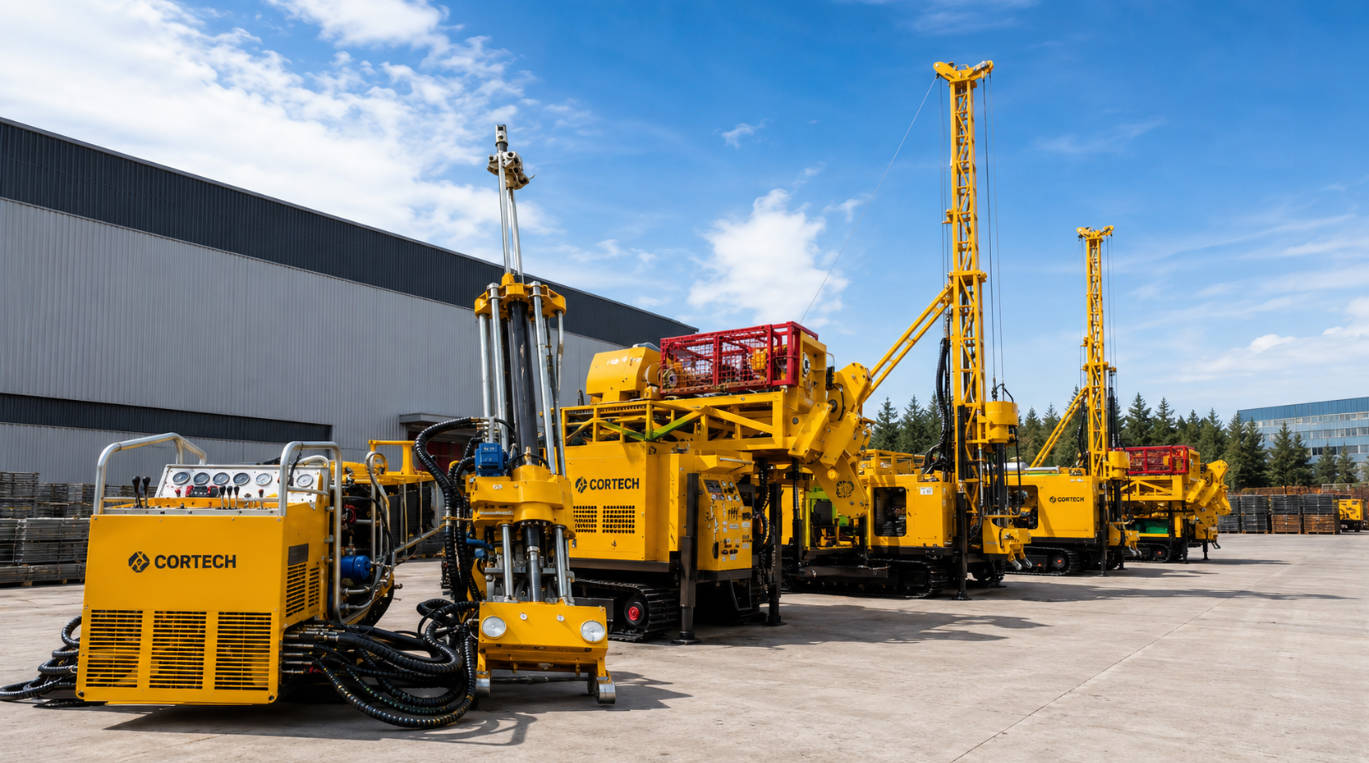
Brazil offers a significant and growing mining environment, particularly across Minas Gerais, Pará, and Bahia, while major investment is expected to continue through 2030. The right drilling-rig supplier depends on the job: global OEMs such as Sandvik and Epiroc are relevant for large, automation-oriented mining fleets; specialized Brazilian firms such as Master Drilling Brasil, Trust Drilling, and DrillGeo bring regional operating expertise; and dedicated export manufacturers such as CORTECH can be a practical option for buyers seeking all-hydraulic diamond core drilling rigs, flexible configuration, direct engineering communication, and OEM support.
Ask for the full certificate, including certificate number, scope, issue date, expiry date, accreditation mark, and certification-body name. Then verify the certificate directly through the certification body's public directory or by emailing the certification body using independently sourced contact information. Confirm that the certificate scope covers the relevant manufacturing activity, not merely trading or unrelated services.
At minimum, include functional testing of rotation, feed, pullback, clamps, winches, safety interlocks, emergency stop, hydraulic pressure, leakage, noise/vibration observations, and component identification. Record the test under the exact machine serial number, with photos, videos, and a signed FAT report.
Brazilian requirements depend on the application, customer, mine-site rules, and contract terms. CE is principally associated with European-market compliance and may still be requested by multinational buyers as an internal benchmark. Do not treat a CE sticker as proof of universal compliance; discuss applicable Brazilian safety obligations, site standards, electrical requirements, and risk documentation with the end user and a qualified compliance adviser.
For the first operating period, buyers commonly consider hydraulic filters, seals, hose assemblies, pressure gauges, service kits, wear pads, clamps, chuck parts, sensors, electrical relays/fuses, key hydraulic-valve components, and critical engine maintenance parts. The final list should be based on the machine's bill of materials, local parts access, and expected operating hours.
Compare the delivered operating package, not only the ex-works price. Score both options on technical fit, component specification, proven performance, lead time, local service, remote support, warranty, spare-parts availability, operator training, logistics, tax exposure, and total lifecycle cost. An overseas OEM can be attractive when it offers deeper customization and a competitive equipment package; a local supplier may reduce response time and logistics complexity.
1. - [Brazilian Mining Institute (IBRAM): Brazil mining-sector revenue, exports, employment, and 2026–2030 investment projections] [ibram.org]
2. - [IBRAM: Mining-sector data and quarterly indicators] [ibram.org]
3. - [Sandvik: 16 surface-drill supply agreement for Vale Base Metals operations in Brazil] [mining]
4. - [Master Drilling Brasil profile from IBRAM] [ibram.org]
5. - [CORTECH company profile] [cortechdrilling]


