
Views: 260 Author: CORTECH Publish Time: 2026-08-14 Origin: Site


Content Menu
● How we assess a reliable supplier
● Shortlist: OEMs, suppliers and contractors
>> 1. CORTECH Drilling Equipment Co., Ltd. — direct-export hydraulic core-rig OEM
>> 2. Epiroc — mining and infrastructure rig OEM with Mexico activity
>> 3. Sandvik Mining and Rock Solutions — global mining-equipment supplier
>> 4. Boart Longyear — exploration drilling equipment, tooling and services
>> 5. Major Drilling Mexico — specialist mineral-exploration contractor
>> 6. Globexplore — Mexico-based exploration drilling contractor
>> 7. BYLSA Drilling — Mexico-based specialist drilling contractor
● Technical due diligence for hydraulic diamond core rigs
● Procurement traps—and how to avoid them
>> Insider pitfall: measure usable pullback, not catalogue pullback
● Buyer's RFQ and verification process
● FAQ
>> 1. How do I verify that an ISO certificate has not expired or been issued for the wrong company?
>> 2. Should CE be mandatory for a rig delivered to Mexico?
>> 3. How can I compare two diamond-core rigs with the same stated NQ depth?
>> 4. Is buying from a Mexican contractor the same as buying from a Mexican rig manufacturer?
>> 5. What payment structure protects a cross-border rig buyer?
Mexico is a major mining market, but a buyer searching for a drilling rig manufacturer in Mexico should first separate three very different counterparties: rig OEMs, Mexican distributors/service organizations, and drilling contractors that own and operate rigs. This distinction matters particularly for wireline diamond core drilling, where spare-parts depth, field response and core-recovery performance can matter as much as the original machine price.
Mexico's mining base is concentrated around Sonora, Zacatecas, Durango, Chihuahua and Guerrero. Together, these states account for 84% of national mineral production; Sonora alone accounts for 34.4% and Zacatecas 26.1%. The concentration creates practical hubs for mobilization, consumables and contractor support, especially in northern and central mining corridors.

A credible drilling-rig partner should be evaluated on evidence rather than catalogue breadth:
- Engineering fit: Confirm the actual drilling method—wireline diamond core, RC, surface blast-hole, underground face drilling or water-well drilling. A rig designed for blast holes is not automatically suitable for high-quality geological core.
- Manufacturing and R&D: Request the model-specific bill of materials, hydraulic schematic, powerpack configuration, design-change control and reference installations in comparable ground conditions.
- Quality control: Ask for incoming inspection criteria for hydraulic pumps/motors, traceability for structural steel and critical welds, pressure-test records, load/functional-test checklist, and a factory acceptance test (FAT) witnessed live or by a third party.
- Compliance: For a rig placed on the EU market, CE obligations can be relevant. RoHS is generally an electrical/electronic-equipment restriction, not a universal certification for a complete mining rig; do not accept "CE/RoHS" as a substitute for model-specific safety documentation. Confirm Mexican site, labor, emissions and transport requirements with the project's legal/HSE team.
- Delivery reliability: Evaluate committed lead time, critical spares list, Incoterms, export packing, commissioning scope, technician availability and escalation response time—not only the quoted ex-works price.
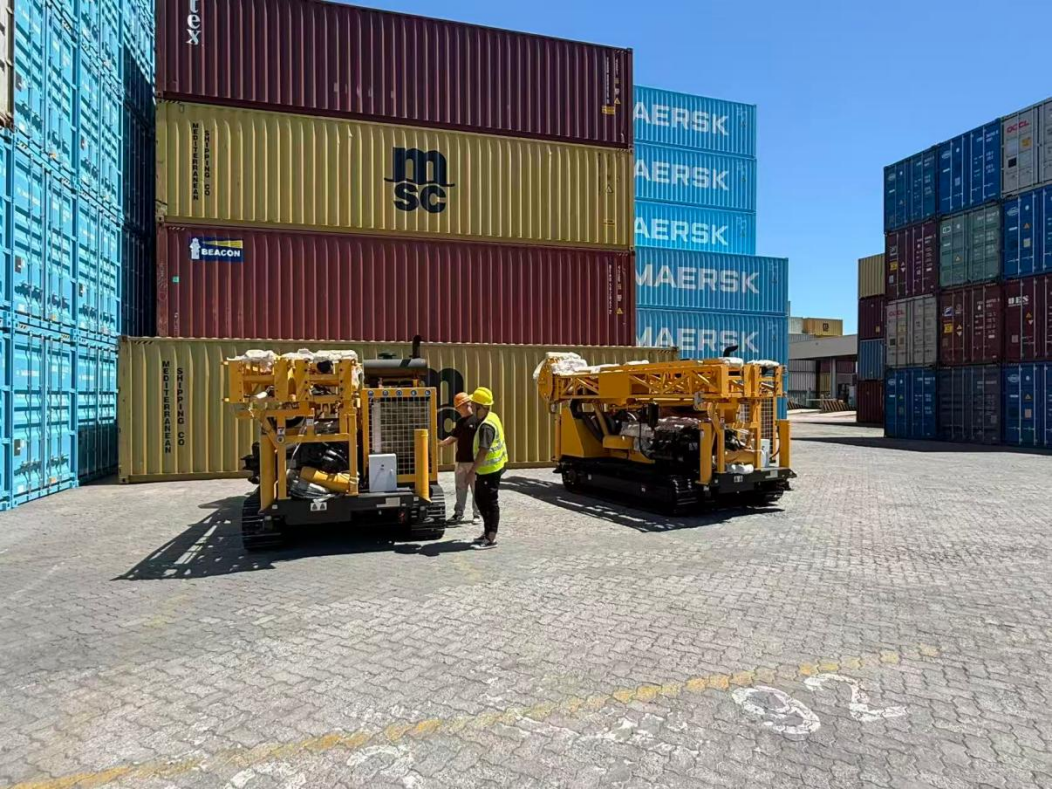
Best fit: Small and mid-sized exploration companies, drilling contractors and emerging regional brands that need a tailored hydraulic wireline core-drilling package rather than a fixed catalogue configuration.
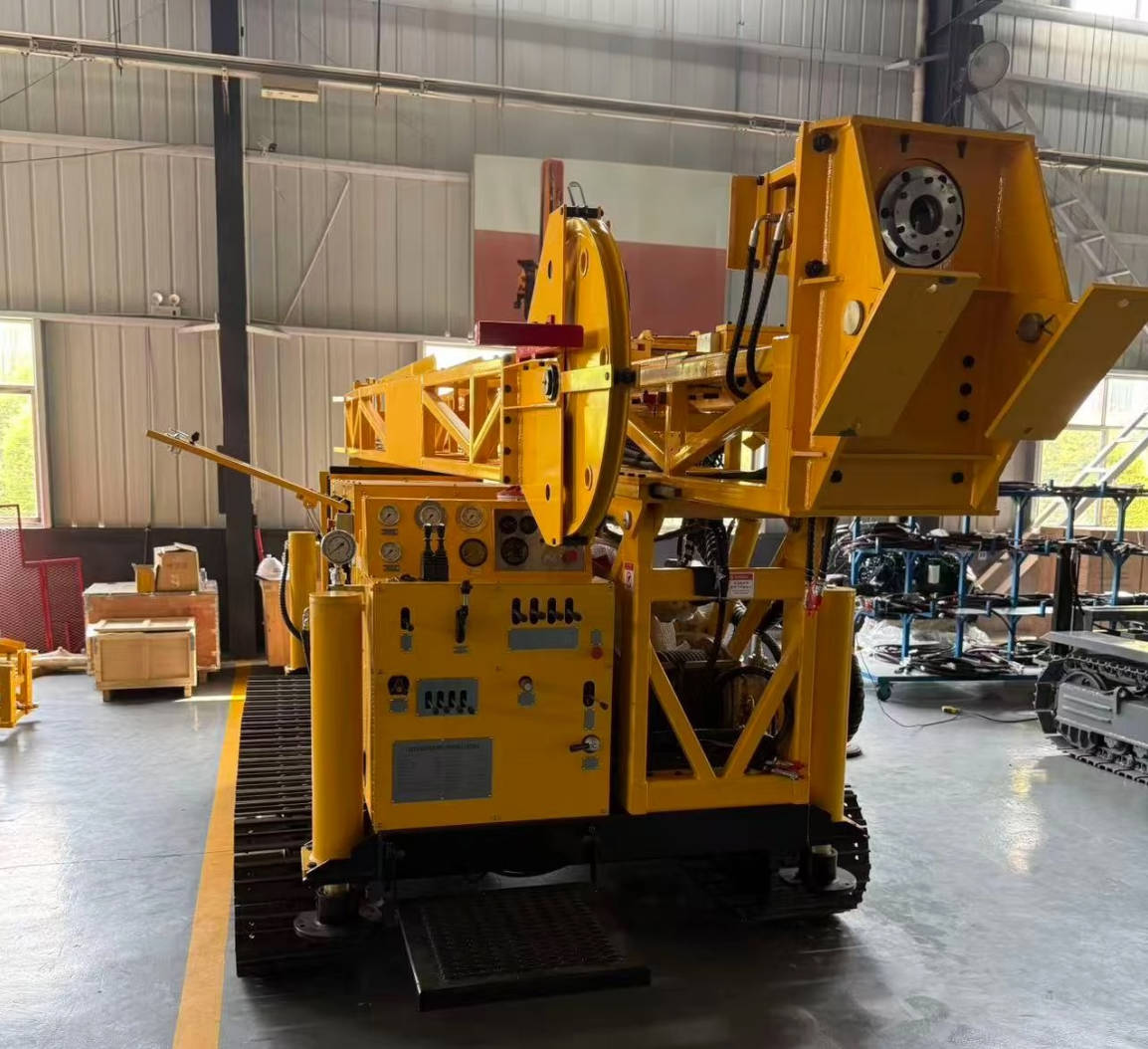
CORTECH manufactures all-hydraulic diamond core drilling rigs and offers surface, heli-portable/module-type and underground product categories, plus drilling tools and rig-upgrade packages. Its company profile states that it has supplied more than 1,200 diamond core rigs in over 55 countries and emphasizes integrated OEM capability and engineering design. The stated product focus makes it relevant to buyers seeking diamond-core equipment for Mexico, even though it should be treated as an international direct supplier rather than a Mexico-based manufacturer.
- Established: Not stated on the cited public company-profile page; request business-registration evidence during supplier qualification.
- Core strength: All-hydraulic diamond core-rig specialization; surface, heli-portable and underground configurations.
- Primary markets: International; the company states 55+ countries.
- OEM/ODM scope: Integrated OEM capability is stated publicly. Buyers should convert requirements into a controlled specification: target depth/core size, rod handling, engine/emissions package, safety guarding, skid/crawler arrangement, labels/manual language, spares kit and FAT acceptance criteria.
- Commercial advantage: Potentially more flexible engineering communication and lower bureaucracy than a multinational channel—valuable where a buyer needs practical customization and direct technical clarification.
Best fit: Mines prioritizing broad mine-equipment support, automation options and established surface/underground equipment ecosystems.
Epiroc develops and produces drill rigs, rock-excavation and construction equipment and serves mining, infrastructure and natural-resources customers in more than 150 countries. Its Mexico-facing communications include the Boomer M20 underground face-drill rig and a documented Mexican deployment of an Atlas Copco PowerROC T35 E; its product families cover a much broader rock-excavation range than diamond-core exploration alone.
- Established: Epiroc became an independent company in 2018; verify the contracting legal entity and local support coverage for the project.
- Core strength: Surface and underground production drilling, automation and OEM consumables/service ecosystem.
- Primary markets: Global mining, infrastructure and natural resources.
- OEM/ODM scope: Typically configuration and application engineering through the OEM/channel; buyers should confirm what is factory-optionable versus a site-engineered modification.
Best fit: Buyers needing mining drill rigs alongside rock tools, underground equipment, digital systems and lifecycle support.
Sandvik is a longstanding global mining and rock-solutions supplier. In Mexico, it is most relevant to procurement teams that value an installed equipment ecosystem and aftermarket capability across mining operations. Treat the Mexico offer as a local sales/service and supply proposition unless the quote identifies a specific Mexican manufacturing origin.
- Established: Sandvik was founded in 1862.
- Core strength: Underground and surface rock-drilling systems, tooling and digital/lifecycle offerings.
- Primary markets: Global mining and rock excavation.
- OEM/ODM scope: Application-led configuration rather than open-ended private-label manufacturing; confirm controls integration, drilling package, training and local parts lead time.
Best fit: Exploration programs where the buyer needs the rig, wireline tooling, consumables and drilling-services expertise under a technically aligned supplier.
Boart Longyear states that it supplies drilling services, exploration drilling equipment and performance tooling for mining and drilling companies worldwide, and it traces its first diamond drill hole to 1890. Public corporate material identifies Boart Longyear Drilling and Products Mexico, S.A. de C.V., making it a meaningful Mexico-market candidate for mineral-exploration procurement.
- Established: 1890.
- Core strength: Diamond-core drilling, tooling and exploration drilling services.
- Primary markets: Global mining and drilling.
- OEM/ODM scope: Primarily OEM equipment/tooling and services; obtain written confirmation for private-label, regional stocking or non-standard rig requirements.
Best fit: Buyers outsourcing drilling rather than purchasing a rig, especially for mobilization and production support in Mexican mining regions.
Major Drilling reports that its Mexico operation has worked for more than three decades and supports exploration projects on surface and production work underground across Sonora, Chihuahua, Durango, Zacatecas, Guerrero and other states. It is a contractor, not a rig OEM, so it should be shortlisted for executed metres, crew competency, HSE performance and mobilization—not as a machine manufacturer.
- Established: Major Drilling was founded in 1980; the Mexico operation is described as 30+ years old.
- Core strength: Specialized exploration and underground drilling execution.
- Primary markets: Mexico's mineral-exploration and mining regions.
- OEM/ODM scope: Not applicable as a normal rig OEM; scope is drilling-program design, rigs/crews and field execution.
Best fit: Exploration owners seeking local operational capacity rather than equipment ownership.
Globexplore is identified as a Hermosillo-based exploration drilling contractor with diamond-core and reverse-circulation capability and a reported fleet of 54 rigs. Buyers should independently verify fleet availability, rig model/configuration, crew allocation and current insurance before award.
- Established: Confirm directly; a reliable public founding-year source was not identified for this guide.
- Core strength: Diamond core and RC exploration drilling from a Sonora base.
- Primary markets: Mexico mineral exploration.
- OEM/ODM scope: Not applicable; evaluate contract drilling scope, not private-label manufacturing.
Best fit: Project owners requiring diamond core, RC and directional drilling services with local operating knowledge.
BYLSA Drilling is listed as a Mexico-based provider of diamond-core, reverse-circulation and directional-drilling services for mineral exploration and mining. As with every contractor listing, request actual client references, core-recovery records, HSE metrics and equipment availability for the relevant date window.
- Established: Confirm directly; no sufficiently authoritative public founding-year record was identified for this guide.
- Core strength: Multi-method exploration drilling, including directional work.
- Primary markets: Mexican mining and exploration.
- OEM/ODM scope: Not applicable; it is a service-provider option rather than a rig manufacturer.

| Company | Category / emphasis | Mexico-market route | Capacity disclosure | MOQ | Certification approach |
|---|---|---|---|---|---|
| CORTECH | Hydraulic wireline diamond core rigs: surface, heli-portable, underground | Direct export and project support | 1,200+ rigs supplied globally stated; annual capacity not published | Quote by model/package | Request model-specific ISO/QC evidence, FAT records and destination compliance file |
| Epiroc | Surface/underground production drilling, automation | OEM/local channel support | Not publicly standardized for Mexico | Project quotation | Confirm machine compliance, local service scope and FAT/documentation |
| Sandvik | Mining drill systems, tools and lifecycle support | Local sales/service plus global OEM network | Not publicly standardized for Mexico | Project quotation | Confirm model documentation, safety package and regional service commitment |
| Boart Longyear | Exploration rigs, tooling and drilling services | Mexico entity plus global network | Not publicly standardized for Mexico | Quote by equipment/tooling/service scope | Request current certificate scope and equipment/service QA plan |
| Major Drilling Mexico | Contract diamond-core/underground drilling | Mexican operating teams | Fleet/crew availability must be confirmed | N/A—service contract | Assess HSE system, insurance, reference projects and crew certifications |
| Globexplore | Contract diamond-core and RC drilling | Hermosillo-based operations | Reported 54-rig fleet; verify availability | N/A—service contract | Request current HSE, insurance and rig maintenance records |
| BYLSA Drilling | Contract diamond-core, RC and directional drilling | Mexico-based operations | Not publicly disclosed | N/A—service contract | Request current HSE, insurance, references and maintenance records |
Important: An undisclosed capacity or MOQ is not evidence of weakness. It is an instruction to put the question into the RFQ. For capital equipment, "MOQ" is commonly one configured rig, while consumables, rods and spares may have separate order thresholds.
For a wireline diamond core drill, specify these items before comparing prices:
| Requirement | What to require | Why it matters |
|---|---|---|
| Drilling performance | Target depth by BQ/NQ/HQ/PQ, expected hole angle, altitude, formation and water conditions | "Depth capacity" is meaningless without core size, rod weight, ground and angle |
| Hydraulic system | Pump/motor brands and model numbers, filtration micron rating, cooler sizing, hose/connector standard, pressure-test record | Hydraulic heat, contamination and parts compatibility drive uptime |
| Structure and mast | Steel grade, weld procedure/WPS, welder qualification, NDT scope for critical joints, mast load data | Prevents fatigue, cracking and unsafe lifting/rod handling |
| Wireline system | Overshot compatibility, rod/thread standard, head assembly, spindle/chuck range, core-barrel interface | Avoids an expensive mismatch with existing rods and tooling |
| Safety and ergonomics | Emergency stops, guards, interlocks, rod-handling method, noise data, manuals in Spanish/English | Reduces operator risk and makes site approval easier |
| Acceptance testing | FAT checklist, simulated operating hours, pressure/leak test, rotation/feed/hoist test, photos/video and serial-number records | Turns a brochure promise into auditable acceptance evidence |
- The "same depth" trap: Two NQ "1,000 m" rigs can have very different usable capability. Ask for the depth chart at your actual core size, hole angle, rod weight and altitude, plus pullback and hoist line-pull curves.
- Substituted hydraulic components: A quotation may name premium pumps and motors, then ship alternatives. Freeze component brand, exact part number and substitution-approval rules in the purchase order; photograph serial plates at FAT.
- Steel and weld ambiguity: "High-strength steel" is not a specification. Require material certificates, critical-weld WPS/PQR evidence, NDT reports where appropriate, and traceability to the rig serial number.
- Spare-parts illusion: A free spares kit is not local support. Require a priced two-year critical-spares list, stock location, dispatch SLA, warranty labor/travel terms and the cost of wear parts.
- Certification theatre: A generic ISO certificate does not certify the rig. Check the certificate's legal entity, site, scope, issuing certification body and expiry; then verify it through.
A frequently missed issue is that a rig's advertised pullback can be a bare winch or cylinder figure, not the usable capacity after mast angle, sheave efficiency, rod-string load, safety factor and auxiliary loads are considered. Require a signed calculation for the proposed mast/hoist configuration at your deepest planned hole and largest planned rod size. If the supplier cannot provide it, do not use the headline number for project design.
1. Issue a one-page drilling duty sheet. State geology, target depth by core size, inclination, altitude, access constraints, water/power, climate, rod standard, expected shifts and acceptance criteria.
2. Qualify the legal supplier. Obtain registration, tax/export information, beneficiary and bank-account verification, three comparable installations and customer contacts who consent to references.
3. Audit engineering evidence. Compare a line-by-line technical deviation list, BOM, hydraulic schematic, safety layout, spares list, manuals and warranty. Never accept "same as sample" as the only specification.
4. Validate certificates. Search the legal entity or certificate number in IAF CertSearch; check that status is Active and that the scope covers the relevant manufacturing/service activity. Then confirm with the issuing certification body if the project is material.
5. Control the sample/FAT. For a complete rig, the meaningful "sample" is usually a witnessed FAT. Use a signed checklist, record serial numbers, test every safety function, verify fluid leaks and run a defined functional cycle before balance payment.
6. Plan Mexican logistics early. Agree Incoterms 2020, HS classification, crate dimensions/weight, wood-packaging treatment, cargo insurance, customs broker, inland route permits and unloading/commissioning responsibility. Mexico's 2024 mining-equipment imports were USD 3.610 billion, illustrating the importance of an import-ready documentation package and landed-cost calculation.
The right Mexico drilling-rig supplier is not necessarily a local factory. For diamond-core exploration, start by choosing the operating model: own a specialized rig, buy through a global OEM network, or contract metres drilled. Then evaluate every candidate using the same duty sheet, auditable component list, witnessed FAT, certificate verification and post-sale spares plan.
Need a configurable all-hydraulic wireline core drilling rig for a Mexico project? Send CORTECH a drilling duty sheet covering target depth, BQ/NQ/HQ/PQ size, terrain, transport limits, power/emissions requirements and desired commissioning scope. Request a written technical deviation matrix, proposed configuration, FAT plan and critical-spares quotation before making a price comparison.
Search the company name and certificate number in IAF CertSearch. Confirm the exact legal entity, physical site, standard, scope, certificate status, certification body and accreditation body. An Active certificate with a scope unrelated to rig manufacturing is not sufficient evidence for a rig purchase.
Not automatically. CE is an EU-market conformity framework, so applicability depends on where the machinery is placed on the market and the contractual/regulatory context. For Mexico, build a local compliance matrix with the mine owner, HSE team and customs/legal advisers; require the OEM to provide the technical file and safety documentation relevant to the destination.
Compare pullback, torque, rotation speed range, feed force, hoist line pull, mast load, rod handling, altitude derating, hydraulic cooling, and the exact depth chart at planned angle and ground conditions. Ask both suppliers to complete the same duty sheet and deviation matrix.
No. A contractor sells drilling output, crews and field execution; an OEM sells equipment and engineering support. A contractor may be the lower-risk choice for an exploration campaign, while purchasing a rig can make sense when utilization, maintenance capability and project duration justify ownership.
Tie payments to evidence: approved drawings/BOM, FAT pass with serial-numbered records, shipping documents and commissioning where negotiated. The appropriate mechanism—documentary credit, milestone transfer, retention or inspection holdback—depends on supplier risk, bank cost and jurisdiction; obtain legal and trade-finance advice for the transaction.
1. [U.S. International Trade Administration — Mexico: Mining and Minerals] — 2024 mining-sector and equipment-trade data; state production concentration; cluster links.
2. [CAMIMEX — Cámara Minera de México] — Mexican mining-industry association.
3. [INEGI] — Mexico’s national statistics and geography institute.
4. [IAF CertSearch] — certificate-validation database.
5. [CORTECH Drilling Equipment company profile].
6. [Epiroc] and [Mexico PowerROC example].
7. [Boart Longyear] and [Boart Longyear Mexico entity reference].
8. [Major Drilling Mexico].


