
Views: 278 Author: CORTECH Publish Time: 2026-08-10 Origin: Site


Content Menu
● What Is Deep Aquifer Drilling?
● Artesian Well vs. Deep Aquifer Drilling
● Why Pressure Management Is Different
● The Role of Full-Hydraulic Core Drilling Rigs
● Pre-Drilling Pressure Assessment Checklist
● Casing Design: The First Pressure Barrier
● Drilling Fluids and Hydrostatic Balance
>> Practical Fluid-Control Principles
● Field Scenario: Unexpected Flow at 180 Meters
● Monitoring Parameters That Matter
● Choosing the Right Rig Configuration
● Best Practices for Safe Completion
● Conclusion: Manage the Pressure, Not Just the Depth
● FAQ
>> 1. Is every artesian well a flowing well?
>> 2. Can a deep aquifer have low pressure?
>> 3. Why is annular sealing important in artesian drilling?
>> 4. Can a diamond core drilling rig be used for groundwater projects?
>> 5. What should a crew do if artesian flow is encountered unexpectedly?
>> 6. Does heavier drilling fluid always solve artesian pressure problems?
Drilling into groundwater-bearing formations is never only a matter of reaching target depth. For contractors, geologists, and exploration teams, the real challenge is controlling the pressure behavior encountered below ground. This is especially important when comparing an artesian well with deep aquifer drilling.
Although these terms are often used together, they describe different aspects of groundwater work. An artesian well refers to a well completed in a confined aquifer where groundwater is under pressure. Deep aquifer drilling describes the process of reaching a deeper water-bearing formation, whether that formation is confined, unconfined, artesian, productive, low-yield, or even dry.
From my experience evaluating hydraulic drilling workflows, the most expensive problems usually do not come from insufficient drilling depth. They come from poor pressure prediction, inadequate casing design, uncontrolled annular flow, or an inability to react quickly when formation conditions change.
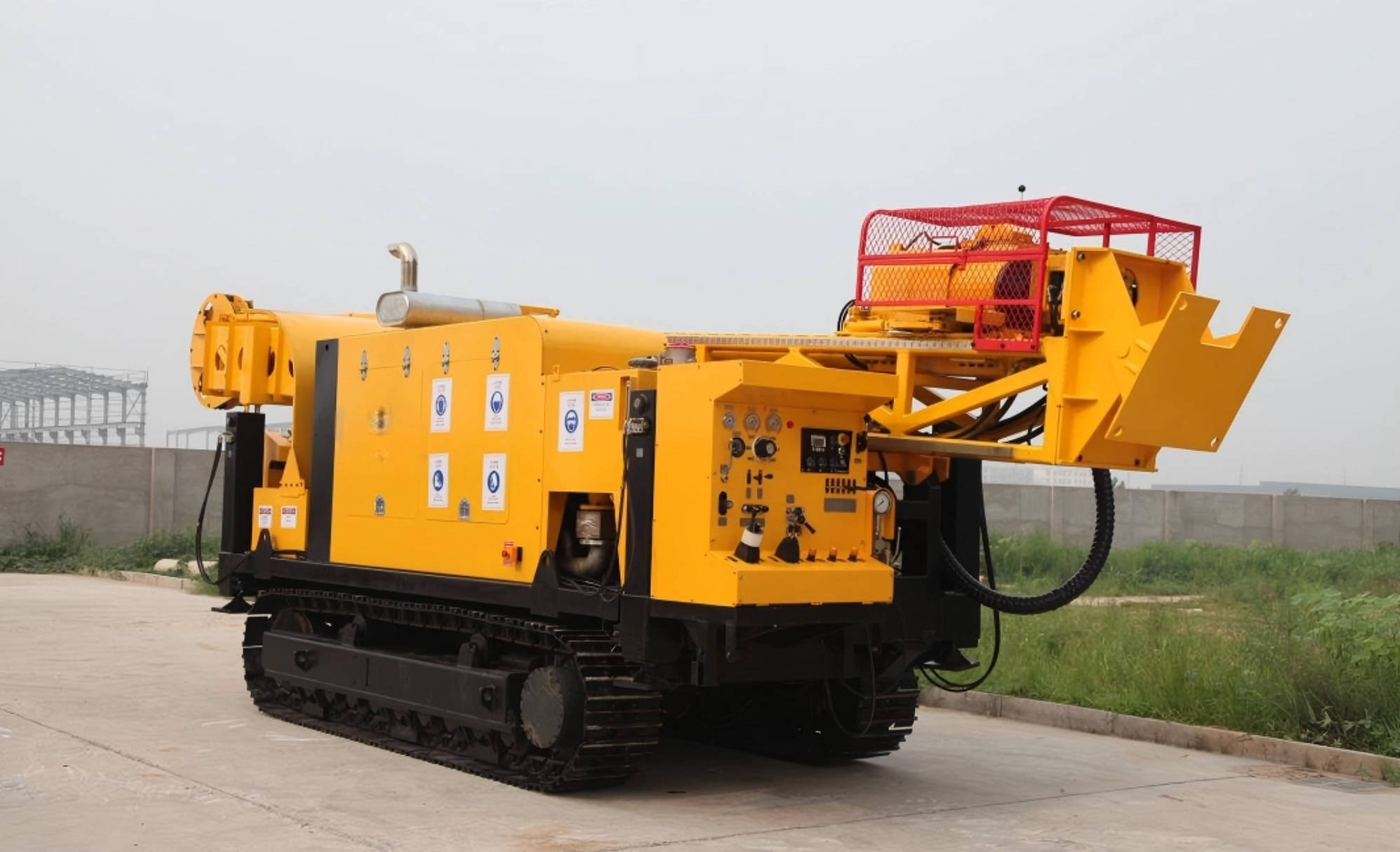
For contractors using full-hydraulic drilling equipment, including wireline diamond core rigs such as CORTECH's CORE SURFACE DRILL series, the objective is clear: obtain reliable geological information while maintaining stable control of feed force, rotation, fluid circulation, rod handling, and borehole pressure.

An artesian well is drilled into a confined aquifer. This aquifer is enclosed above, and often below, by relatively low-permeability geological layers such as clay, shale, or dense rock.
Because recharge may occur at a higher elevation, the groundwater within the confined formation develops hydraulic head. Once the formation is penetrated, water rises inside the borehole toward its potentiometric level.
An artesian well does not always flow at the ground surface. It becomes a flowing artesian well only when the potentiometric surface is above the local land elevation.
This distinction matters because a flowing well can create immediate operational risks:
- Uncontrolled water discharge at the collar
- Erosion around the casing or drill site
- Borehole instability
- Loss of drilling fluid
- Cross-contamination between aquifers
- Damage to nearby land, roads, or structures
- Increased risk during casing installation and abandonment
In other words, artesian drilling is fundamentally a pressure-management project.
Deep aquifer drilling is a broader drilling activity. The purpose is to penetrate and evaluate deeper groundwater formations for water supply, hydrogeological monitoring, geothermal assessment, mineral exploration support, or scientific investigation.
A deep target aquifer may be:
- Confined and pressurized
- Unconfined with a lower static water level
- Fractured bedrock with variable inflow
- Multi-layered, with several water-bearing zones
- Saline, mineralized, or unsuitable for potable use
- Structurally complex, with faults and leakage pathways
Therefore, depth alone does not determine pressure risk. A 100-meter borehole can encounter substantial artesian pressure, while a 600-meter borehole may show limited natural flow. The key variable is the relationship between formation pressure, hydrostatic pressure in the borehole, and the geological confinement of the aquifer.

| Factor | Artesian Well Drilling | Deep Aquifer Drilling |
|---|---|---|
| Primary definition | A well entering a confined, pressurized aquifer | A drilling activity targeting a deeper aquifer |
| Main operational concern | Controlling upward groundwater pressure | Reaching, evaluating, and completing a deep target zone |
| Pressure behavior | Often elevated; may cause water to rise or flow | Can be high, low, variable, or unknown |
| Geological setting | Requires a confined aquifer and hydraulic head | Can involve confined or unconfined aquifers |
| Key drilling risk | Uncontrolled flow through the borehole or annulus | Borehole instability, fluid loss, depth-related torque, pressure uncertainty |
| Casing priority | Prevent upward migration and annular leakage | Isolate formations and maintain long-term borehole integrity |
| Fluid strategy | Balance or safely manage formation pressure | Support hole cleaning, cooling, cuttings transport, and formation control |
| Rig-control requirement | Responsive feed, rotation, circulation, and shutdown control | High torque, stable feed, reliable hoisting, and data-driven drilling control |
The practical takeaway is simple: not every deep aquifer is artesian, but every artesian drilling project requires a deep understanding of pressure.
In a conventional low-pressure groundwater formation, the borehole may remain stable with standard circulation and casing practices. In an artesian formation, groundwater can exert upward pressure against the drilling fluid column and against the wellhead.
The drilling team must prevent this pressure from finding an uncontrolled path to the surface.
A useful field principle is:
Borehole pressure control=formation pressure−hydrostatic support−controlled surface restraint
If the borehole fluid pressure is too low, formation water can enter the hole rapidly. If fluid density or pumping pressure is too high, operators may fracture weak formations, lose circulation, or drive drilling fluid into sensitive groundwater zones.
This is why pressure management is not simply "add heavier mud." It requires an integrated plan involving:
1. Geological prediction
2. Casing placement
3. Drilling-fluid selection
4. Surface flow control
5. Real-time monitoring
6. Emergency response procedures
A full-hydraulic diamond core drilling rig is not a substitute for hydrogeological design. However, it gives the drilling team more precise control over the mechanical variables that influence borehole stability.
For deep aquifer investigation, hydraulic rigs can support:
- Stepless adjustment of rotation speed
- Controlled feed pressure and penetration rate
- Stable torque delivery in variable formations
- Safer rod handling at depth
- Efficient wireline core recovery
- Faster response when formation conditions change
- Better integration with drilling-fluid and monitoring systems
For a CORE SURFACE DRILL application, the value is particularly strong during exploratory and verification drilling. High-quality core recovery helps geologists identify confining layers, fractures, lithological transitions, water-bearing intervals, and potential leakage pathways before final well-completion decisions are made.
This is a major advantage over treating a deep groundwater project as a purely production-drilling task. Core data reduces uncertainty.
The most effective pressure-control decision is often made before the rig arrives on site. A pre-drilling assessment should combine regional hydrogeology, nearby well records, geological logs, topography, and local regulations.
Before mobilization, the project team should confirm:
- Expected depth of each aquifer
- Presence and thickness of confining layers
- Historical reports of flowing wells nearby
- Estimated static water level or potentiometric surface
- Expected flow rate and shut-in pressure
- Ground elevation relative to the regional hydraulic head
- Potential for saline-water intrusion or cross-flow
- Casing and grout requirements under local regulations
- Water-disposal and erosion-control arrangements
- Emergency shut-in equipment availability
A site with no known flowing wells should not automatically be treated as low risk. Fault zones, fractures, old abandoned wells, and local changes in recharge conditions can create unexpected pressure pathways.
Casing is one of the most important control elements in artesian well drilling. Its job is not only to keep the borehole open. It also isolates groundwater zones and prevents pressurized water from migrating outside the casing.
For suspected artesian conditions, a robust completion concept often includes:
- A properly seated surface casing
- Grout placed to isolate the annulus
- Casing advanced through unstable or pressured intervals
- A wellhead designed for expected shut-in pressure
- Valves or caps that can safely control discharge
- Verification that water is not bypassing the casing externally
An uncontrolled artesian well is not considered controlled simply because water is flowing from the top of the casing. If water is escaping around the annulus, surfacing nearby, carrying sediment, or causing erosion, the well integrity problem remains unresolved.
For deep aquifer drilling, casing also prevents inter-aquifer mixing. This is essential where shallow freshwater zones overlie deeper mineralized, saline, or high-pressure formations.
Drilling fluid is both a circulation medium and a pressure-control tool. It removes cuttings, cools the diamond bit, supports unstable formations, and contributes hydrostatic pressure inside the borehole.
In artesian drilling, fluid selection must be based on the actual geological and environmental context. Operators may use water, polymer systems, bentonite-based fluids, weighted systems, or other approved drilling media depending on formation conditions and local rules.
The objective is to maintain a manageable pressure balance without causing formation damage.
- Measure return flow rather than relying on visual observation alone.
- Monitor pit volume for unexpected gains or losses.
- Record fluid density, viscosity, and circulation pressure.
- Reduce penetration rate when entering suspected confined zones.
- Avoid abrupt operational changes that can destabilize the hole.
- Keep contingency materials available for loss circulation or pressure control.
- Use only environmentally suitable fluids for groundwater-sensitive projects.
In a wireline diamond drilling operation, stable circulation also protects core quality. Excessive inflow, poor hole cleaning, or unstable pressure can reduce recovery and make geological interpretation less reliable.

Consider a hypothetical hydrogeological investigation targeting a deep fractured sandstone aquifer at 250 meters. The drilling plan anticipates a moderate water-bearing interval, but at 180 meters the team intersects a confined fracture zone.
Water begins rising quickly through the borehole. Returns become cloudy, circulation behavior changes, and seepage appears near the casing collar.
A poor response would be to continue drilling at the same rate while assuming the condition will stabilize.
A better response follows a controlled sequence:
1. Stop advancing and stabilize the drill string.
2. Assess flow behavior through return volume, water clarity, and pressure indicators.
3. Check the annulus for external leakage or ground heave.
4. Install or prepare surface control equipment suitable for the observed condition.
5. Review drilling-fluid properties and adjust only under technical supervision.
6. Advance casing or isolate the interval when the geological plan supports it.
7. Document depth, lithology, flow condition, and corrective actions.
8. Notify the project hydrogeologist and relevant authority when required.
The operational lesson is that a hydraulic rig's control precision is most valuable when supported by trained decision-making. Machinery provides responsiveness; the team provides judgment.
For pressure-sensitive drilling, recordkeeping should be treated as a safety system rather than paperwork.
The following indicators deserve continuous attention:
| Parameter | Why It Matters |
|---|---|
| Penetration rate | Sudden changes can indicate fractures, voids, or lithology shifts |
| Feed pressure | Helps prevent excessive bit load and borehole disturbance |
| Rotation torque | May reveal tight formations, swelling zones, or unstable hole conditions |
| Pump pressure | Identifies restrictions, losses, or changing circulation conditions |
| Return flow volume | Can signal formation inflow or lost circulation |
| Fluid density | Directly affects hydrostatic support |
| Static water level | Indicates hydraulic head after stabilization |
| Casing depth | Confirms isolation progress |
| Water quality observations | Turbidity, salinity, temperature, and odor may indicate zone changes |
Digital drilling records are especially useful for projects with multiple holes. They allow teams to compare pressure-related events across a site, refine casing depths, improve future drilling programs, and provide clearer evidence to clients and regulators.
The "best" drilling rig is not simply the machine with the highest torque or deepest rated capacity. It is the rig configuration that matches geology, hole diameter, expected depth, core-size requirement, access constraints, water-management plan, and pressure risk.
For deep aquifer exploration and diamond core drilling, decision-makers should assess:
- Maximum drilling depth by core size
- Available torque across the required speed range
- Feed and pullback capacity
- Wireline winch performance
- Mast stability and angle-drilling capability
- Hydraulic-system reliability
- Pump compatibility and fluid-circulation capacity
- Safety guarding and operator-control layout
- Transport dimensions and site-access requirements
- Availability of technical support and spare parts
CORTECH's full-hydraulic CORE SURFACE DRILL solutions are particularly relevant where the project requires geological core, controlled penetration, and dependable wireline drilling performance. For contractors, the goal should be to select a rig that delivers both mechanical capability and operational control under changing subsurface conditions.
Once target depth is reached, pressure management continues. A poorly completed borehole can create a long-term pathway for leakage, erosion, or aquifer cross-contamination.
For artesian and deep confined aquifer projects, final completion should include:
- Confirming casing and screen placement against the geological log
- Grouting annular spaces according to the approved well design
- Installing a pressure-rated wellhead where required
- Testing valves, caps, and shut-in capability
- Measuring stabilized water level and flow behavior
- Developing the well without damaging surrounding formations
- Documenting final construction details
- Planning compliant decommissioning if the hole is temporary
The quality of the final seal is as important as drilling performance. A borehole that produces excellent core but fails to isolate aquifers is not a successful groundwater project.
The comparison between an artesian well and deep aquifer drilling comes down to perspective. Artesian well drilling focuses on the behavior of a pressurized confined aquifer. Deep aquifer drilling focuses on reaching and understanding a deeper groundwater target.
The two overlap when the deep target is confined and pressurized. At that point, drilling success depends on accurate geological interpretation, reliable casing and sealing, balanced fluid management, responsive hydraulic controls, and disciplined monitoring.
Planning a deep groundwater exploration, mineral investigation, or pressure-sensitive core drilling project? Contact CORTECH to discuss a full-hydraulic wireline diamond core drilling solution configured for your target depth, geological conditions, and operational-control requirements.
No. An artesian well enters a confined aquifer where water rises above the top of the aquifer. It flows at ground surface only when the potentiometric surface is higher than the land elevation.
Yes. Depth does not automatically mean high pressure. Pressure depends on recharge conditions, aquifer confinement, elevation, formation permeability, and regional hydrogeology.
Annular sealing prevents pressurized water from traveling outside the casing. This reduces erosion, uncontrolled discharge, inter-aquifer mixing, and groundwater contamination risk.
Yes. A full-hydraulic diamond core drilling rig is valuable for groundwater exploration because it provides geological core, supports controlled drilling, and helps identify aquifers, confining beds, fractures, and water-bearing zones.
Stop advancing, stabilize the borehole, assess flow and annular leakage, prepare suitable surface-control equipment, review fluid conditions, consult the hydrogeological plan, and follow applicable regulatory procedures.
No. Increasing fluid density may help balance formation pressure, but excessive density can fracture weak formations, cause fluid loss, damage groundwater zones, or complicate well completion. Changes should be technically justified and monitored.
1. U.S. Geological Survey. "Hydraulic Head and Factors Causing Changes in Ground-Water Levels." Explains hydraulic head, confined aquifers, and potentiometric surfaces. [USGS source]
2. U.S. Geological Survey. "Aquifers and Wells." Illustrates artesian wells, flowing artesian wells, confined aquifers, and water-table wells. [USGS source]
3. British Columbia Government. "Well Drilling Advisory: Flowing Artesian Wells." Provides practical guidance on controlling artesian flow, casing, and annular sealing. [Government advisory]
4. Federal Energy Regulatory Commission. "Guidelines for Drilling In and Near Dams and Their Appurtenant Structures." Covers surface casing, positive hydrostatic pressure, pressure-controlled release valves, and artesian-pressure risks. [FERC guideline]
5. U.S. Environmental Protection Agency. "National UIC Technical Workgroup: Annulus Additives." Discusses mechanical integrity, leakage prevention, casing, tubing, packers, and vertical fluid migration risks. [EPA technical document]
6. CORTECH Drilling. "Full Hydraulic vs. Semi-Hydraulic Core Drilling Rigs." Discusses the role of full-hydraulic control in core drilling precision and operational optimization. [cortechdrilling]


