
Views: 249 Author: CORTECH Publish Time: 2026-08-09 Origin: Site


Content Menu
● Why These Two Civil Engineering Drilling Applications Differ
● Dam Foundation Reinforcement Drilling: A High-Consequence Investigation
>> Core Quality Is a Safety-Control Issue
>> Rig Features That Matter for Dam Work
● Road Core Sampling: Faster Coverage, Broader Ground Decisions
>> What Road Engineers Need From Core Samples
>> Rig Features That Matter for Road Projects
● Dam Reinforcement vs. Road Sampling: Rig Selection Guide
● Practical Workflow for Better Core Data
>> 1. Define the Engineering Decision First
>> 2. Match the Barrel and Bit to Ground Conditions
>> 3. Establish a Core-Handling Chain of Custody
>> 4. Communicate Field Changes Immediately
● Expert Insight: The Best Rig Is the One That Reduces Uncertainty
● Choose a Civil Engineering Rig With Confidence
● FAQ
>> 1. What is the main difference between dam foundation reinforcement drilling and road core sampling?
>> 2. Why is wireline diamond coring useful for civil engineering projects?
>> 3. When should a project use double- or triple-tube core barrels?
>> 4. Can one CORE SURFACE DRILL support both dam and road projects?
>> 5. What information should be provided when requesting a drilling-rig recommendation?
>> 6. How can contractors improve the value of core samples?
Selecting a civil engineering drilling rig is not simply a question of drilling depth or engine power. Dam foundation reinforcement and road core sampling demand different investigation logic, sample-quality controls, site logistics, and risk-management practices—yet both depend on reliable rock-core data.
For contractors, consultants, and project owners, the key decision is to match the rig, coring system, crew workflow, and documentation standard to the engineering decision that will follow. A full-hydraulic wireline diamond CORE SURFACE DRILL can serve both applications, but only when it is configured around the project's true objectives: dam safety and ground treatment verification on one side; pavement, alignment, bridge, slope, and earthwork characterization on the other.
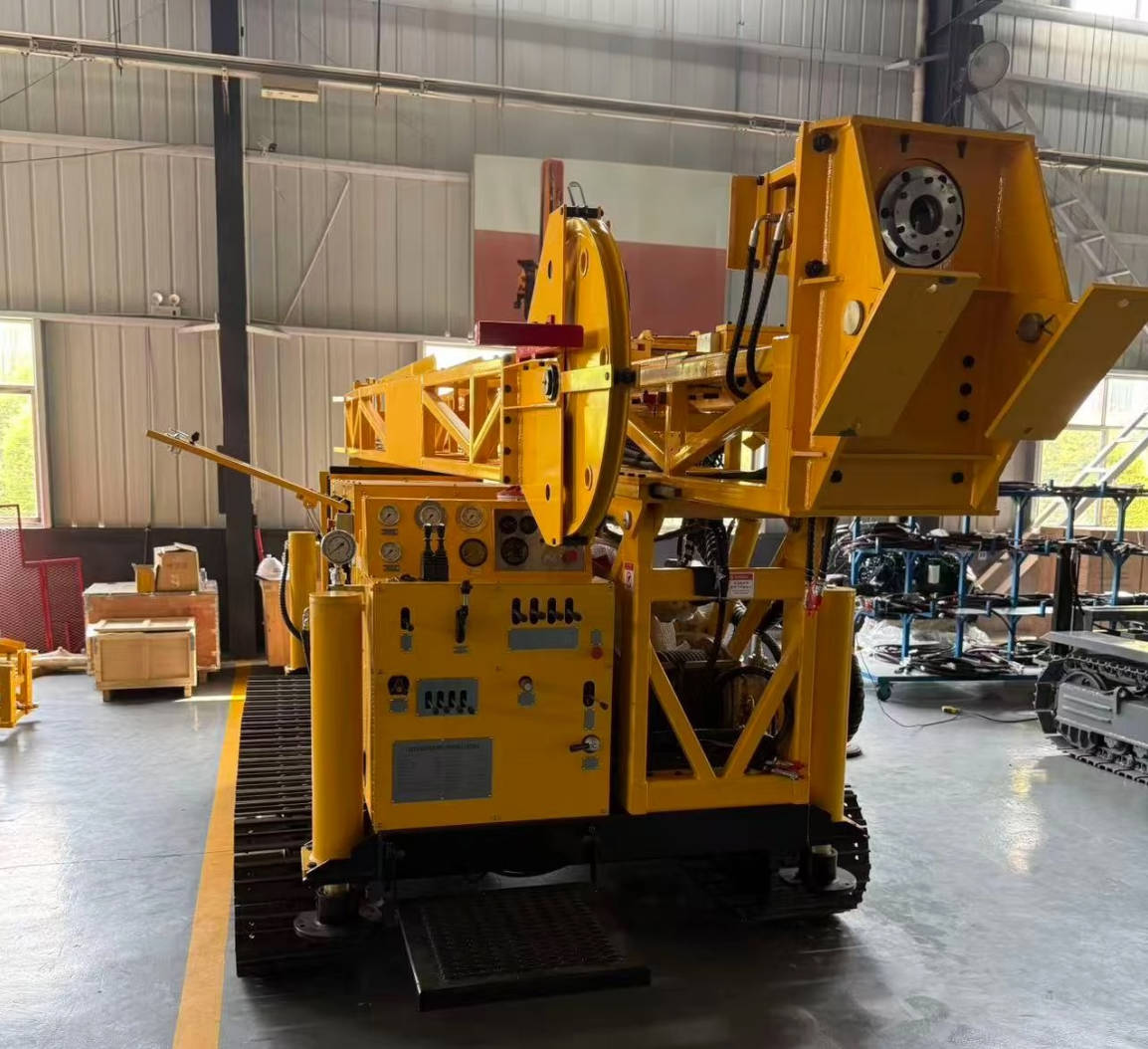
Dam foundation reinforcement drilling is usually performed in a high-consequence environment. The drilling program may investigate weak seams, faults, fractured bedrock, seepage pathways, weathered zones, or grout-treatment effectiveness beneath a dam foundation, abutment, spillway, or related structure.
Road core sampling is usually broader and more distributed. The engineering team needs reliable ground information across a route, at bridge foundations, retaining walls, cut slopes, tunnel approaches, culverts, embankments, and pavement rehabilitation locations.
The common output is a core sample. The engineering value of that core, however, is different.
| Decision factor | Dam foundation reinforcement | Road core sampling |
|---|---|---|
| Primary objective | Reduce uncertainty affecting dam safety, seepage control, bearing, deformation, and grouting decisions | Characterize subsurface conditions for route design, structures, slopes, pavement, and construction planning |
| Typical risk level | Very high because local defects can influence a critical water-retaining structure | Variable, from routine pavement verification to high-risk bridge, slope, or tunnel investigations |
| Investigation pattern | Targeted and dense near abutments, suspected defects, grout curtains, drainage zones, and structural interfaces | Distributed along the alignment, at structures, and in geologically variable locations |
| Core-quality priority | Extremely high; fractured zones, discontinuities, recovery, orientation, and water losses can be decisive | High; sufficient recovery and classification are needed to develop design parameters and identify hazards |
| Rig configuration focus | Stable setup, controlled feed, high-quality coring, deep-hole capability, water-management discipline, reliable records | Mobility, fast relocation, access to multiple locations, adaptable drilling methods, efficient sampling workflow |
| Typical follow-up work | Permeability testing, borehole imaging, grouting, instrumentation, verification drilling, laboratory rock testing | Laboratory testing, groundwater observation, in-situ testing, slope assessment, foundation design, pavement evaluation |
A project team should therefore avoid choosing a rig only by maximum drilling depth. Data quality, access, drilling control, and traceability are normally more important than headline capacity.
Dam foundation reinforcement commonly begins with a question that cannot be answered from surface mapping alone: "What is happening inside the foundation rock mass?"
For an experienced drilling team, the warning signs are familiar:
- Low core recovery in a zone expected to be competent.
- Sudden loss of flushing return.
- Clay-filled joints or sheared seams.
- Highly weathered rock beneath apparently sound material.
- Open fractures or altered contacts.
- Water-bearing discontinuities.
- Core that breaks mechanically before the engineering geologist can log it.
These conditions can affect how engineers assess seepage, rock mass quality, groutability, bearing response, and deformation potential. The drilling contractor's role is not to interpret the final design; it is to produce a dependable, representative record that allows the designer to make that interpretation.
For dam-related drilling, core recovery alone is not enough. A high recovery percentage can still conceal disturbed, rotated, washed, or poorly documented material. The team should preserve depth control, maintain correct core orientation where specified, and record drilling observations alongside the physical core.
A useful field principle: treat every unusual drilling response as engineering data, not merely a production delay.
The log should capture:
- Borehole location, inclination, azimuth, and collar elevation.
- Core run depth and run length.
- Recovered length and recovery percentage.
- Rock Quality Designation (RQD), where required.
- Lithology, weathering grade, discontinuities, fractures, infill, and zones of loss.
- Water level, flushing-fluid behavior, and return losses.
- Bit changes, casing depth, drilling parameters, and unusual events.
- Photographs of properly arranged, labeled core trays.
The U.S. Federal Highway Administration advises using double- or triple-tube core barrels to reduce disturbance in rock coring and recording both recovery and RQD promptly after core retrieval. For fractured or weak ground, this practical discipline helps preserve the evidence that determines whether a zone is competent rock, a design concern, or a grout-treatment target.
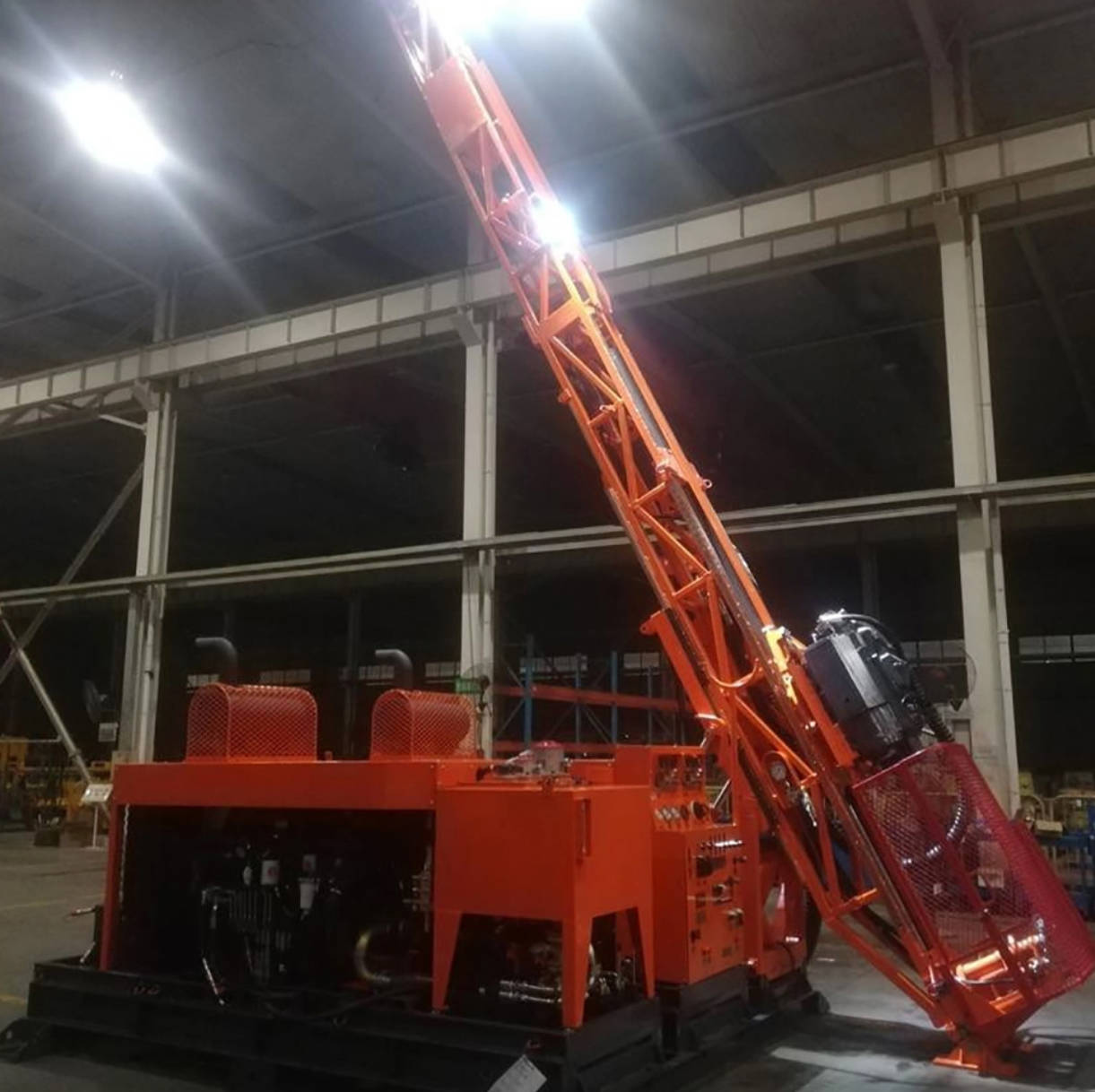
A dam foundation project often benefits from a full-hydraulic diamond core rig with wireline capability because the system supports controlled drilling and efficient core retrieval without repeatedly pulling the entire drill-string assembly.
For this type of work, evaluate the rig against the following criteria:
1. Controlled hydraulic feed and rotation to avoid excessive disturbance in broken, weak, or weathered rock.
2. Wireline coring capability to improve productivity in deeper holes and reduce repetitive rod handling.
3. Stable chassis or modular setup suited to narrow benches, dam galleries, abutments, or restricted work pads.
4. Casing and rod-handling compatibility for overburden, unstable collars, and difficult transitions into bedrock.
5. Mud-pump and flushing control appropriate for ground conditions and environmental requirements.
6. Safety systems that reduce manual handling exposure and support consistent operation across shifts.
7. Serviceability because downtime during a critical investigation can disrupt engineering decisions and construction sequencing.
A full-hydraulic CORE SURFACE DRILL is particularly relevant when the drilling scope includes continuous diamond coring in variable rock conditions and the site requires dependable control over feed force, rotation, and wireline retrieval.
Road core sampling is often misunderstood as a simple pavement-drilling activity. In reality, a transport corridor may pass through fill, soft ground, weathered rock, hard bedrock, old landslides, faulted terrain, river crossings, and urban utility zones.
The road investigation program should therefore be driven by design risk rather than uniform spacing alone. A straight section across consistent geology may need fewer boreholes than a short bridge approach crossing variable fill, soft alluvium, and shallow rock.
Road and highway projects frequently require the drilling program to support several teams at once:
- Pavement engineers assessing existing layers and subgrade condition.
- Geotechnical engineers developing foundation and earthwork parameters.
- Structural engineers designing bridge foundations or retaining structures.
- Slope engineers evaluating cuts, rockfall, and landslide risk.
- Construction managers estimating excavation methods, groundwater control, and material handling.
- Environmental teams assessing ground conditions around drainage, borrow areas, or sensitive zones.
The result is a practical requirement: the rig must move efficiently, but the investigation cannot sacrifice representativeness.
For rock sections, core drilling helps confirm bedrock depth, identify weathering profiles, assess discontinuities, and obtain samples for strength testing. FHWA guidance identifies rock coring as a method for exploring and sampling bedrock beneath structures, while recommending double- or triple-tube barrels where lower disturbance is needed.
Road work often places greater value on relocation speed and flexibility. A crawler-mounted hydraulic core drill can be advantageous when access changes repeatedly between road shoulders, medians, slopes, bridge sites, and temporary work platforms.
Prioritize:
- Compact transport dimensions for restricted access and frequent mobilization.
- Crawler mobility for uneven ground, rough access tracks, and remote corridor locations.
- Fast setup and demobilization to reduce traffic-management and standby costs.
- Adaptable coring configurations for overburden, weathered rock, and competent rock.
- Low site impact where drilling occurs near live traffic, communities, or environmentally sensitive land.
- Reliable sample handling so cores can be logged, photographed, secured, and transferred without losing depth sequence.
For routine road investigations, production rate matters. But for bridge piers, retaining walls, deep cuts, and major embankments, a "routine" borehole can quickly become a high-value structural investigation. The drilling plan should allow the engineer to extend, deepen, case, test, or reconfigure a hole when conditions differ from expectations.
The right choice is not "one rig for dams and another for roads." The better question is whether a specific rig package can deliver the required sample quality and operational flexibility.
| Rig-selection question | Dam foundation reinforcement | Road core sampling |
|---|---|---|
| Is deep wireline coring needed? | Often important, particularly for deep foundations, abutments, and seepage investigations | Required at selected structures and difficult geology; not necessary at every location |
| Is core disturbance a major concern? | Yes; weak zones and fractures may control design decisions | Yes in rock investigations, especially at structures and slopes |
| Is rapid movement the dominant factor? | Important, but normally secondary to drilling quality and stability | Often a primary consideration across long alignments |
| Are tight work platforms likely? | Common at abutments, galleries, benches, and existing structures | Common beside roads, on slopes, and at bridge approaches |
| Is water-loss monitoring critical? | Frequently critical because it may indicate open fractures or permeable zones | Important where groundwater, karst, or slope stability is a concern |
| Is post-drilling treatment likely? | Often; grouting, permeability testing, instrumentation, or verification may follow | Less common, although monitoring wells, testing, or foundation treatment may be required |
CORTECH's full-hydraulic wireline diamond drilling focus aligns well with projects that need continuous rock-core recovery, hydraulic control, and adaptable surface drilling configurations. The manufacturer states that its CORE SURFACE DRILL range is designed for surface coring applications and that its equipment is used in geotechnical and exploration contexts.

The strongest drilling equipment cannot compensate for weak planning or poor sample custody. From a field-execution perspective, I recommend using the following workflow for both dam and road investigations.
Before selecting bit size, barrel type, or rig model, identify what the engineering team must decide:
- Is the goal to define bedrock depth?
- Locate weak seams or faults?
- Measure rock strength?
- Assess groutability or seepage pathways?
- Verify pavement and subgrade conditions?
- Design foundations, cuts, tunnels, or retaining structures?
This turns the drilling program into a decision-support process rather than a meterage target.
Use the expected geology, desired core diameter, sample-quality requirements, and laboratory-testing needs to select the core barrel and bit. Larger cores can improve recovery and reduce mechanical breakage, but they may increase drilling cost and logistical requirements.
Where weak or fractured rock is expected, double- or triple-tube systems can better protect sample integrity. In highly variable conditions, plan for contingency tools instead of assuming one setup will be suitable for the whole project.
Every tray should be labeled before core placement. Maintain "top" and "bottom" orientation, insert depth blocks at each run, photograph cores before disturbance, and protect samples during transport.
This process is especially valuable when laboratory testing, claims review, independent design checks, or long-term dam records are involved. A core box with unclear depth sequence has limited engineering value, regardless of drilling cost.
If the drilling crew encounters an unexpected void, severe water loss, core loss, altered seam, or abrupt lithological change, notify the engineer while the rig remains on site. The engineer may need an additional hole, a different angle, a shorter core run, a permeability test, or an extended depth.
Real-time field communication is often cheaper than remobilization.
In both applications, drilling performance should not be measured only in meters per shift. The stronger metric is how effectively the program reduces uncertainty in the final engineering decision.
For a dam, one accurately documented fractured zone can change a grout curtain design, drainage plan, or monitoring strategy. For a road project, one well-planned borehole may prevent a costly foundation redesign, unexpected rock excavation, or slope failure during construction.
That is why experienced project teams assess drilling equipment through four linked outcomes:
- Representative core that reflects in-situ conditions as closely as possible.
- Reliable operational control in changing geology.
- Efficient logistics matched to site access and program scale.
- Traceable records that engineers can trust months or years later.
A CORE SURFACE DRILL should therefore be viewed as part of a complete investigation system: rig, crew, coring tools, drilling fluids, sample handling, geological logging, maintenance support, and communication protocol.
Dam foundation reinforcement and road core sampling share the need for dependable rock-core information, but they differ in their risk profile, drilling density, site logistics, and definition of success. Dam projects prioritize diagnostic quality and safety-critical geological interpretation; road projects balance broad coverage, mobility, and location-specific design needs.
If your next project requires full-hydraulic wireline diamond coring for dam foundations, bridge sites, road corridors, slopes, or other civil engineering investigations, contact CORTECH with your required depth, hole diameter, geology, access constraints, and sampling standard. A properly matched CORE SURFACE DRILL configuration can help your team obtain the field data needed to make faster, more defensible engineering decisions.
Dam foundation reinforcement drilling focuses on high-consequence geological risks below water-retaining structures, including fractures, seepage paths, weak zones, and grout-treatment needs. Road core sampling typically covers a wider area and supports route, pavement, slope, bridge, retaining-wall, and earthwork design.
Wireline coring allows the inner tube containing the core to be retrieved without pulling the complete drill string each time. This can improve efficiency in deeper holes while supporting continuous core recovery for geological logging and engineering testing.
Double- or triple-tube barrels are particularly useful where rock is weak, fractured, weathered, or easily disturbed. They help protect core quality so engineers can better assess recovery, RQD, discontinuities, and material condition.
Yes, a full-hydraulic surface diamond core drill may support both applications when its depth capability, coring system, mobility, pump configuration, rod handling, and safety features match the specific project. The drilling plan and core-handling process remain just as important as the rig itself.
Provide expected drilling depth, hole diameter, core size, ground conditions, access limitations, terrain, power requirements, drilling angle, water availability, required standards, and whether the work involves wireline coring, casing, testing, or post-drilling grouting.
Use trained operators and geologists, label trays before coring begins, maintain depth blocks and orientation, reduce core-run length in fractured zones, photograph cores promptly, record drilling behavior, and communicate unexpected conditions to the engineer before leaving the location.
1. CORTECH Drilling Equipment Co., Ltd. "CORE SURFACE DRILL." Product information on full-hydraulic surface diamond core drilling rigs, applications, and company delivery claims. [CORTECH product page]. [cortechdrilling]
2. CORTECH Drilling Equipment Co., Ltd. "Full Hydraulic Diamond Core Drilling Rig / Core Drilling Rig / Diamond Core Drilling Rig Manufacturer." Company overview and stated applications for full-hydraulic diamond core drilling solutions. [CORTECH official website]. [cortechdrilling]
3. ASTM International. "ASTM D2113: Standard Practice for Rock Core Drilling and Sampling of Rock for Site Investigation." Scope covering rock-core drilling and sampling for site-investigation purposes. [ASTM D2113 page]. [store.astm]
4. Federal Highway Administration. "PDDM Chapter 6: Geotechnical." Guidance on rock coring, double- and triple-tube core barrels, recovery, RQD, and logging. [FHWA Chapter 6 PDF]. [highways.dot]
5. Federal Highway Administration. "Geotechnical Site Characterization: Geotechnical Engineering Circular No. 5." Guidance for planning, conducting, interpreting, and documenting transportation geotechnical investigations. [FHWA publication record]. [rosap.ntl.bts]
6. Federal Highway Administration. "Checklist and Guidelines for Review of Geotechnical Reports and Preliminary Plans and Specifications." Guidance addressing continuous rock cores, structural-foundation investigations, core recovery, RQD, and groundwater logging. [FHWA guideline]. [highways.dot]
7. Federal Highway Administration. "Subsurface Investigations—Geotechnical Site Characterization." Reference material on rotary drilling, rock coring, sample handling, laboratory testing, and transportation-infrastructure investigations. [FHWA reference manual record]. [rosap.ntl.bts]


