
Views: 296 Author: CORTECH Publish Time: 2026-07-14 Origin: Site


Content Menu
● Author Perspective and Context
● Understanding Wireline Coring in Deep Rock Exploration
● Understanding Conventional Coring in Deep Rock Exploration
● How Wireline Coring Works: A Practical Walkthrough
● How Conventional Coring Works: Operational Realities
● Time‑Saving Benefits: Wireline vs. Conventional in Deep Holes
>> Illustrative Time Comparison Table
● Performance Comparison: Wireline Coring vs. Conventional Coring
● CORTECH's Wireline Systems and Hydraulic Rigs
● When Conventional Coring Still Makes Sense
● Practical Transition Steps from Conventional to Wireline
● Risks and Limitations of Wireline Coring
● Deep Rock Exploration Strategy: When to Default to Wireline
● FAQs
>> FAQ 1: Is wireline coring always the right choice for deep exploration?
>> FAQ 2: How does wireline coring improve crew safety compared to conventional coring?
>> FAQ 3: What kind of projects benefit most from wireline coring?
>> FAQ 4: When should a contractor keep using conventional coring tools?
>> FAQ 5: What data should be tracked in a wireline pilot project?
Wireline coring delivers significant time‑saving and safety advantages over conventional coring in deep rock exploration, especially when combined with modern hydraulic rigs and optimized tooling from manufacturers like CORTECH. At shallow depths and in legacy fleets, however, conventional coring still has a rational role when capital budgets are constrained and sampling requirements are limited. [dev.cloudfile.egi.utah]
As a content strategist working closely with CORTECH's engineering team, I have spent years translating field feedback and technical research on core drilling systems into practical guidance for mining and geotechnical decision‑makers. This analysis blends project‑level experience with published studies on wireline coring performance in deep drilling, giving both a practitioner's view and an industry expert lens on wireline coring vs. conventional coring in deep rock exploration. [osti]
From CORTECH's deployments across mineral exploration, energy and geotechnical projects, one pattern is consistent: as depth and core density requirements increase, wireline systems integrated into full hydraulic diamond rigs deliver more predictable schedules and higher core quality than conventional approaches. [cortechdrilling]
Wireline coring is a core drilling method where the inner core barrel and core sample are retrieved via a wireline and overshot, without pulling the entire drill string. The outer barrel and drill rods stay downhole while a latch head and inner tube assembly allow repeated lowering and retrieval of cores through the rods. [en.wikipedia]
In deep rock exploration, this architecture is crucial because it decouples core recovery from full‑string tripping, which otherwise dominates rig time once holes exceed tens or hundreds of meters. Modern wireline systems used by CORTECH typically include a diamond or impregnated core bit, reaming shell, outer tube, inner tube, latch head, core lifter, and overshot tool tailored to mineral exploration or geotechnical applications. [link.springer]
Conventional coring uses a fixed core barrel rigidly connected to the drill string, so the entire string must be tripped out of the hole each time a core run is completed. The core barrel remains attached to the rods, and every retrieval cycle involves making up and breaking out each joint—an inherently slow, labor‑intensive process at depth. [drilcorp]
This method remains common for shallow holes, small projects, and older rigs that have not been configured for wireline operations. In those contexts, the tripping burden is manageable, and the lower upfront equipment cost can outweigh the operational inefficiencies seen in deep drilling. [dev.cloudfile.egi.utah]
Wireline systems use a specialized core barrel with two concentric components: an outer tube that stays in the hole, and a removable inner tube that collects the core. When drilling, a hollow core bit cuts an annulus in the rock, allowing a cylindrical core to pass into the inner tube. [osti]
A typical wireline coring cycle follows these steps: [youtube]
1. Drilling – The core bit advances, and the core accumulates inside the inner tube at the bottom of the hole.
2. Stopping and deployment – When the inner tube is full, rotation stops and an overshot tool is lowered on the wireline through the hollow drill rods.
3. Latching and recovery – The overshot latches onto the inner tube's head assembly, and the winch hoists the inner tube and core up through the rods to surface. [youtube]
4. Core handling and reset – The crew removes the core for logging, then returns the empty inner tube down through the rods to re‑engage the latch head and resume drilling within minutes. [osti]
Because only the inner tube travels, retrieval time is largely independent of total hole depth, making wireline particularly efficient beyond roughly 100–150 m. [link.springer]
In conventional coring, the core barrel is a fixed part of the drill string; there is no wireline retrieval path through the rods. When a core run is complete, the entire string—often hundreds of meters of drill rods—must be pulled joint by joint to recover the barrel and core at surface. [drilcorp]
The typical conventional cycle looks like this: [scribd]
1. Drilling – The core bit and barrel cut and collect the core as the string advances.
2. Full tripping out – Once full, the driller begins pulling the entire drill string, breaking out each rod at surface until the core barrel is retrieved.
3. Core handling – The core is removed, logged, and stored.
4. Running back in – The string and barrel are re‑assembled and run back in to bottom to resume drilling.
At shallow depths this process is tolerable, but at 500–1500 m, full tripping can consume most of a shift, severely limiting effective drilling time. [link.springer]
In deep rock exploration, tripping time quickly becomes one of the dominant cost and schedule drivers. By design, wireline coring minimizes this unproductive time, while conventional methods amplify it as depth increases. [dev.cloudfile.egi.utah]
Published analyses of large‑diameter deep drilling in salt basins show that risk, cost and construction time grow sharply with depth, and wireline coring is a practical way to control those increases. Another commercial wireline case reported more than 4,900 m of core with a 94% recovery rate, demonstrating both speed and sample quality in multi‑zone projects. [dev.cloudfile.egi.utah]
| Metric (Deep Hole) | Wireline Coring | Conventional Coring |
|---|---|---|
| Sample retrieval time per run | Typically under 1 hour even at >800 m. osti | 4–8 hours once depth reaches several hundred meters. osti |
| Effective drilling time per shift | High – more core runs and meters drilled per day. osti | Low – large share of shift spent tripping rods. drilcorp |
| Crew exposure to heavy rod handling | Reduced; fewer lifting and breakout cycles. dev.cloudfile.egi.utah | High; repetitive rod handling dominates workflows. drilcorp |
| Schedule predictability | Improved; retrieval time less sensitive to depth. link.springer | Degrades with depth; delays accumulate in long strings. link.springer |
For deep exploration programs where each rig hour carries a high cost, these time savings compound into significant economic and safety benefits over the life of the project. [osti]
Beyond time, wireline and conventional coring differ across core quality, rig wear, safety, and project suitability.
Wireline systems generally achieve higher recovery and better core integrity in deep holes because the outer barrel stabilizes the borehole and the inner tube experiences fewer disruptive cycles. Case studies of wireline retrievable systems in complex formations document high recovery percentages with less damage from handling or exposure. [dev.cloudfile.egi.utah]
Conventional coring introduces more opportunities for core loss or breakage during long trips, especially in fractured or unstable formations, as the entire string is repeatedly moved through the borehole. [scribd]
Wireline reduces total tripping cycles, lowering fatigue and thread wear on drill rods, hoist systems, and surface handling equipment. Conventional systems impose more frequent and longer tripping operations, accelerating mechanical wear and maintenance requirements, particularly on older rigs. [scribd]
With wireline, crews handle fewer heavy rods per core, reducing musculoskeletal risk and floor‑level exposure to repetitive lifting and manual joint breakout. Conventional coring keeps crews engaged in intensive rod handling, raising the likelihood of strains and handling incidents over long programs. [drilcorp]
Industry guidance and field experience align on a practical rule‑of‑thumb: wireline is optimal for medium to ultra‑deep holes where frequent, high‑quality cores are required, while conventional barrels can remain viable for shallow, low‑sampling‑density projects. [drilcorp]
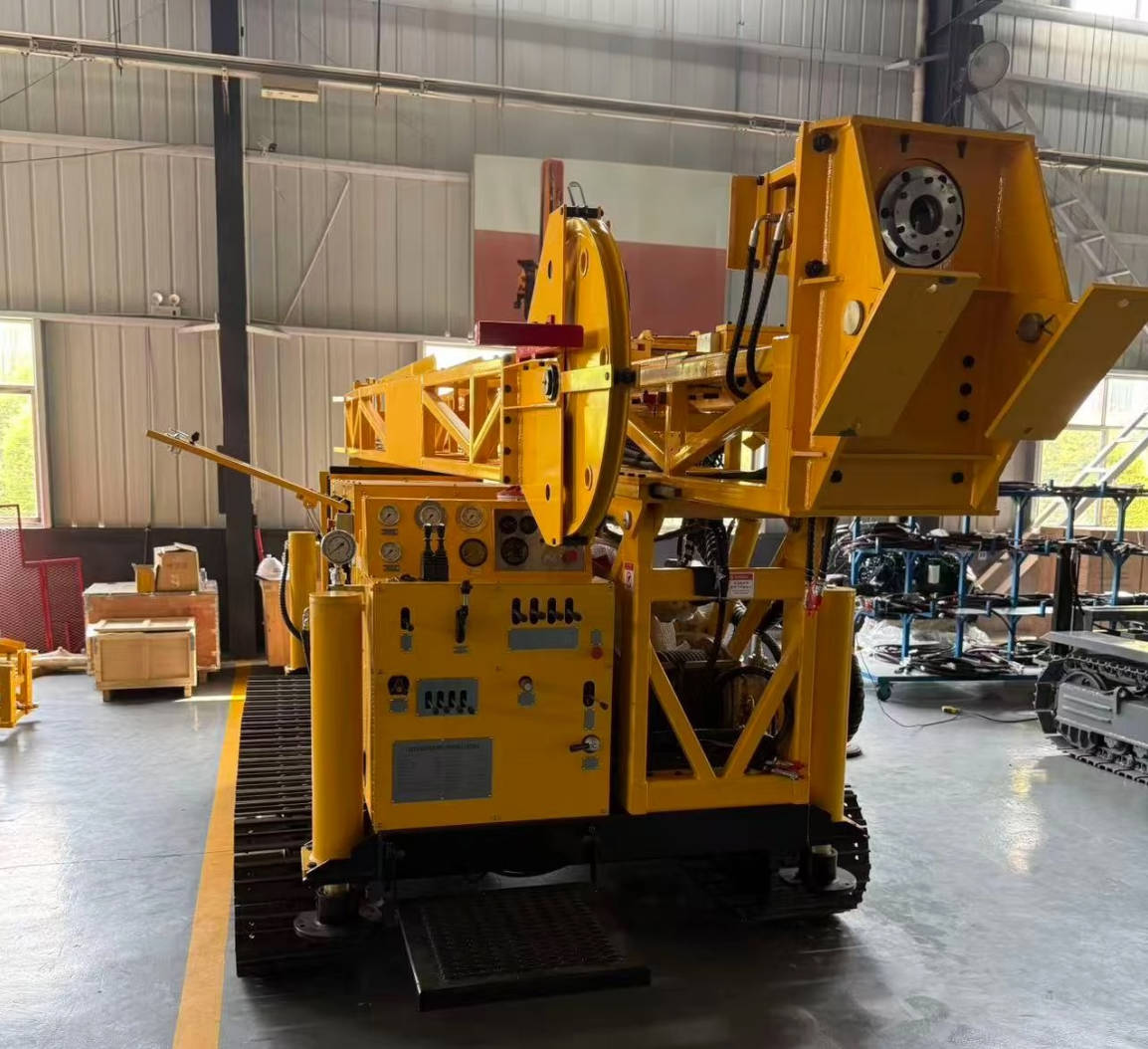
CORTECH has focused since the mid‑2000s on developing full‑hydraulic diamond core drilling rigs paired with wireline coring tools for mineral exploration, energy, and geotechnical projects worldwide. Product lines such as CSD surface rigs and CKD underground rigs are designed around continuous wireline coring to maximize productivity, safety, and sample quality. [cortechdrilling]
These rigs integrate:
- Hydraulic feed and rotation optimized for diamond coring.
- Wireline‑ready drill strings and core barrels sized for common NQ/HQ/PQ series.
- Overshot and hoisting systems for rapid inner tube retrieval.
Combined with CORTECH's core bits, drill rods, and recovery tools, these systems give operators a single, coherent wireline package instead of mismatched components, reducing operational risk in deep exploration programs.
Despite wireline's strong advantages, conventional coring retains a valid role in several scenarios: [drilcorp]
- Shallow exploration programs – For holes under roughly 100 m with limited core runs, full wireline systems may be over‑specified. [osti]
- Legacy rigs without wireline capability – Smaller contractors using older rigs may rely on conventional barrels where upgrading the fleet is not yet feasible. [drilcorp]
- Occasional or isolated cores – Projects requiring only a few discrete core samples at specific depths can sometimes justify conventional retrieval if schedules are flexible. [drilcorp]
For CORTECH's customers, these contexts often serve as starting points for strategic migration: conventional coring on smaller jobs, wireline pilot projects on deeper or higher‑value campaigns, followed by broader adoption as data demonstrate lifecycle benefits. [dev.cloudfile.egi.utah]
For organizations planning to move from conventional to wireline coring, a structured transition reduces risk and clarifies the business case. [osti]
1. Audit current projects and rig fleet – Document typical hole depths, formations, and required core quality to identify priority projects where tripping time and schedule risk are highest. [dev.cloudfile.egi.utah]
2. Run a wireline pilot on a flagship deep project – Deploy a complete wireline package (rig, rods, core barrels, overshot, winch) and track key metrics such as tripping time per run, recovery percentage, and safety incidents. [osti]
3. Standardize operating procedures and training – Develop SOPs for wireline handling, inner tube change‑out, and preventive maintenance, using manufacturer documentation and training resources. [youtube]
4. Scale across the fleet – Use pilot data to justify upgrading additional rigs and harmonize consumables (core bits, rods, barrels) for streamlined procurement and logistics. [dev.cloudfile.egi.utah]
CORTECH's engineering and support teams typically guide customers through these steps, matching wireline tool selection and hydraulic rig configuration to geology, depth, and productivity targets. [cortechdrilling]
Wireline coring carries its own set of technical considerations that need proactive management. [osti]
- Mechanical complexity – Latching mechanisms, bearings, and overshot tools introduce more moving parts that require disciplined inspection and maintenance schedules. [dev.cloudfile.egi.utah]
- Formation‑related constraints – Extremely broken, abrasive, or unstable formations can limit achievable core lengths and demand careful bit and barrel selection. [scribd]
- Capital investment – Upgrading to full wireline capability and modern hydraulic rigs requires upfront spending, although lifecycle savings in time, safety and recovery often offset these costs over deep programs. [osti]
Mitigation typically combines preventive maintenance plans, robust crew training, and close collaboration with OEM engineering teams during the initial deployment stages. [cortechdrilling]
From a project risk and cost perspective, deep exploration projects in minerals, geothermal energy and geotechnical works increasingly treat wireline as the default choice rather than a premium option. Technical and economic studies confirm that as depth grows, time savings from reduced tripping, improved recovery and safer operations generally outweigh added system complexity and capital expenditure. [link.springer]
In CORTECH's global projects, deep holes that use integrated wireline systems more consistently achieve predictable schedules, cleaner core logs, and fewer unplanned rig interventions than comparable jobs relying on conventional coring. For most modern deep rock exploration campaigns, conventional coring becomes the exception reserved for specific shallow or legacy scenarios rather than the operational norm. [cortechdrilling]
No. Wireline is generally preferred for deep, intensive coring programs, but project‑specific factors such as rig configuration, available capital, formation behavior, and sampling density still need evaluation before deciding on the method. [osti]
Wireline reduces frequent rod handling by retrieving only the inner tube and core through the drill string, which lowers exposure to heavy lifting, repetitive joint breakout, and associated musculoskeletal risks on the rig floor. [youtube]
Projects that drill to medium or ultra‑deep depths and require continuous, high‑quality core samples—such as mineral exploration, geotechnical investigation for major infrastructure, and deep geological research—benefit most from wireline systems. [en.wikipedia]
Contractors may reasonably continue using conventional barrels for shallow holes, occasional or isolated core runs, and on legacy rigs where wireline upgrades are not yet feasible due to budget or equipment constraints. [drilcorp]
Key metrics include tripping time per core run, total meters drilled per shift, core recovery percentage and integrity, crew safety incidents, and comparative rig wear, all benchmarked against conventional operations on similar holes. [dev.cloudfile.egi.utah]
1. Advantages of wire‑line coring. Part 1 – Journal Article (performance and time‑saving analysis). [osti]
2. Wireline Continuous Coring – Technical discussion of tripping time impacts and deep drilling applications. [link.springer]
3. Core drill – Overview of core drilling and wireline core retrieval method. [en.wikipedia]
4. Mineral Exploration Drilling using Conventional Coring Techniques – Practical description of conventional vs wireline coring. [drilcorp]
5. Wireline Core Drilling Tools vs. Conventional Tools: Reducing Tripping Time in Deep Hole Projects – CORTECH industry article and corporate perspective. [dev.cloudfile.egi.utah]
6. What Is Wireline Coring? – Detailed explanation of wireline systems, benefits and application scenarios. [osti]


