
Views: 289 Author: CORTECH Publish Time: 2026-07-11 Origin: Site


Content Menu
● Why Pump Choice Matters in Hydraulic Core Drilling
● What Is a Gear Pump in Hydraulic Drilling Machines?
● What Is a Variable Displacement Pump in Drilling Machines?
● Core Technical Differences: Variable Displacement vs. Gear Pumps
● Energy Efficiency and Fuel Consumption in Core Drilling Rigs
● Control, Precision, and Core Quality
● Reliability, Maintenance, and Lifecycle Cost
● Application Scenarios: When to Choose Gear Pumps
● Application Scenarios: When to Choose Variable Displacement Pumps
● Design Considerations for CORTECH Hydraulic Systems
● Practical Selection Steps for Drilling Engineers
● CTA: Optimize Your CORTECH Hydraulic System
● Frequently Asked Questions (FAQ)
>> 1. How do I decide between a gear pump and a variable displacement pump for my drilling rig?
>> 2. Are variable displacement pumps always more efficient than gear pumps?
>> 3. Do gear pumps have any advantages in core drilling machines?
>> 4. What impact does pump choice have on core recovery and drilling quality?
>> 5. How should CORTECH position its hydraulic systems in marketing content?
Variable displacement pumps deliver higher efficiency and control in modern hydraulic drilling machines, while gear pumps remain a cost‑effective, robust choice for simpler, constant‑load operations. For CORTECH's full‑hydraulic rope‑core diamond core surface drills, the right choice depends on pressure requirements, duty cycles, energy costs, and the level of precision your drilling programs demand. [peerlessengineering]
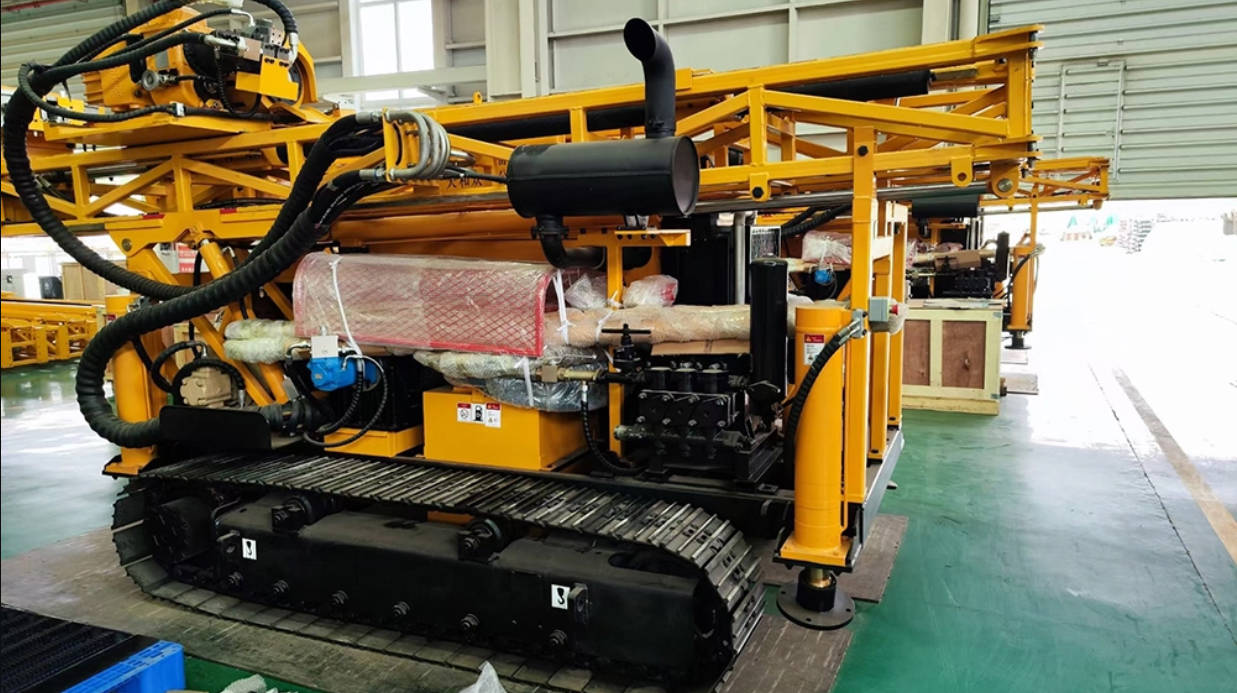
In a CORE SURFACE DRILL used for diamond rope core drilling, the hydraulic pump is the "heart" that determines feed speed, rotation torque, and overall energy consumption. As a manufacturer like CORTECH, selecting between variable displacement pumps (typically axial piston) and gear pumps (fixed displacement) directly affects core recovery, rig uptime, and lifecycle cost per meter drilled. [panagonsystems]
From both a field engineer and OEM perspective, understanding this trade‑off is critical when specifying hydraulic systems for mineral exploration rigs that may operate 3,000–5,000 hours per year in demanding drilling cycles. [infinity-machinery]
A gear pump is a positive displacement pump with fixed displacement, meaning it moves the same volume of hydraulic oil per revolution. It typically uses either external or internal meshing gears to push fluid through the system, delivering steady flow at the pump's rated speed. [lunchboxsessions]
In hydraulic drilling machines, gear pumps are widely used for:
- Simple, sequential motions, such as single‑cylinder operations or basic feed circuits. [wintonmachine]
- Systems that prioritize low initial cost and straightforward maintenance over ultimate efficiency. [peerlessengineering]
- Applications with relatively stable load profiles and moderate operating pressures (often roughly 16–25 MPa depending on design). [hydrarite]
Because flow is fixed, pressure in a gear‑pump system is mainly a function of demand: when the rig is idle, pressure is low; when valves shift to move cylinders, pressure rises while flow stays approximately constant. [wintonmachine]
A variable displacement pump can change its displacement while rotating at the same speed, allowing the flow rate to adapt to the actual load. In core drilling rigs, this is usually a variable piston pump (axial piston), designed for high pressure and fine control of hydraulic circuits. [infinity-machinery]
Key characteristics for drilling machine use include:
- Adjustable flow and pressure, so the system can deliver only the required energy at any moment. [peerlessengineering]
- Ability to sustain higher working pressures, commonly in the 25–35 MPa range for heavy‑duty operations. [hydrarite]
- Integration with pressure‑compensated controls, improving precision in rotation, feed, and auxiliary circuits. [infinity-machinery]
This makes variable displacement pumps especially suitable for multi‑function rigs where rotation, feed, pullback, and auxiliary functions operate simultaneously under varying loads. [scribd]

The table below summarizes key technical differences that matter in hydraulic core drilling machines.
| Aspect | Gear Pump (Fixed) | Variable Displacement Pump |
|---|---|---|
| Displacement | Fixed per revolution; constant flow at given RPM. peerlessengineering | Adjustable; flow changes with control settings while RPM stays constant. peerlessengineering |
| Typical Type | External/internal gear pump. panagonsystems | Axial piston or some variable vane pumps. infinity-machinery |
| Pressure Range | Moderate; often around 16–25 MPa depending on design. infinity-machinery | High; often 25–35 MPa for heavy‑duty use. infinity-machinery |
| Efficiency | Lower, especially at partial load; more energy lost as heat. infinity-machinery | Higher; displacement adjusts to workload, minimizing energy loss. infinity-machinery |
| Control | Limited; precision requires flow‑throttling valves and more plumbing. peerlessengineering | Fine control of movement and speed; better for multi‑axis operations. infinity-machinery |
| Noise & Vibration | Generally noisier with more pulsation. infinity-machinery | Smoother, quieter fluid delivery, less operator fatigue. infinity-machinery |
| Complexity | Simple design, easy to maintain. peerlessengineering | More complex, needs skilled setup and service. peerlessengineering |
| Cost Profile | Lower upfront cost. peerlessengineering | Higher initial cost but lower lifecycle energy and maintenance cost. infinity-machinery |
For CORTECH rigs, where drilling cycles are long and multi‑rig fleets operate continuously, the efficiency, pressure capability, and control advantages of variable displacement pumps often become more economically attractive over the rig's life. [cortechdrilling]
From an operator's viewpoint in the field, fuel burn per meter drilled is one of the most tangible metrics. Variable displacement pumps adjust output to actual load, meaning the system does not constantly circulate full flow when the rig is idling or performing light operations. [cortechdrilling]
This leads to several efficiency benefits:
- Reduced energy loss: Only the required hydraulic fluid is delivered, minimizing throttling losses and heat generation. [hydrarite]
- Lower fuel consumption: Engines driving variable piston pumps typically run at more stable loads, cutting fuel costs over long drilling campaigns. [scribd]
- Extended component life: Less excess flow and lower oil temperatures reduce wear on hoses, seals, valves, and motors. [scribd]
By contrast, gear pumps constantly generate flow, and any unused energy must be dissipated, often as heat in relief valves or bypass circuits, which can increase oil temperature and accelerate wear. [wintonmachine]
In mineral exploration drilling, core quality is directly influenced by how smoothly and precisely the rig controls rotation speed and feed pressure. Variable displacement pumps offer superior control because displacement can be modulated in real time to match changing rock conditions or hole deviation requirements. [cortechdrilling]
Typical advantages for CORTECH‑type hydraulic core drills include:
- Smoother feed and pullback: Variable piston pumps enable fine adjustment of cylinder velocity, reducing core breakage and jamming. [infinity-machinery]
- Consistent rotation torque: Stable pressure controls help maintain bit load in fractured formations. [scribd]
- Multi‑function operation: Simultaneous control of rotation, mast functions, and auxiliary winches is easier at constant system pressure. [wintonmachine]
Gear pumps can achieve acceptable performance in simpler rigs, but precision often relies on throttling valves and restrictive orifices, which waste energy and can make control "rough" at low speeds. [peerlessengineering]
From an OEM/OEM‑plus operator perspective, reliability and serviceability are just as important as efficiency. Gear pumps are mechanically simple, robust, and tolerant of contamination, which makes them attractive for harsh remote environments with limited maintenance infrastructure. [panagonsystems]
However, variable displacement piston pumps, when properly filtered and maintained, can deliver longer hydraulic component life and quieter operation, particularly in high‑duty drilling applications. An offshore and drilling support study, for example, reports that variable displacement hydraulic systems can provide 50%+ faster operational speeds and over 400% longer component life compared with fixed gear systems in high‑cycle cranes. [hydrarite]
For CORTECH and similar manufacturers, this translates to:
- Higher availability of rigs in intensive exploration campaigns.
- Lower total cost of ownership over the rig's life, even with higher initial pump pricing. [cortechdrilling]
- Opportunity to position rigs as premium, high‑efficiency solutions in global markets. [cortechdrilling]
Despite efficiency limitations, gear pumps still make strategic sense in some drilling machine configurations. As a CORTECH content strategist, you can frame gear pumps as the right fit in specific use cases: [panagonsystems]
- Entry‑level or compact rigs where simplicity and low purchase price are key. [panagonsystems]
- Single‑function hydraulic systems with relatively constant loads, such as basic mast raising or auxiliary functions. [wintonmachine]
- Projects with short operating hours per year, where the potential energy savings of variable pumps do not justify higher upfront cost. [scribd]
In marketing content, this helps you show that CORTECH understands practical budget constraints and offers gear‑pump configurations where they genuinely deliver adequate performance at competitive prices. [cortechdrilling]
For modern full‑hydraulic diamond core drilling rigs, variable displacement pumps increasingly represent the default premium choice. The following scenarios strongly favor variable piston pumps: [infinity-machinery]
- High‑duty exploration programs with long drilling cycles and continuous operation. [infinity-machinery]
- Projects demanding high pressure and deep holes, where 25–35 MPa capability improves penetration and performance. [hydrarite]
- Multi‑function rigs that require smooth, coordinated control of rotation, feed, and winch operations under variable loads. [scribd]
- Mining companies focused on ESG and energy efficiency, where fuel savings and lower noise are part of sustainability KPIs. [hydrarite]
Positioning CORTECH rigs with optimized variable displacement hydraulic systems allows you to connect pump technology directly to better core recovery, lower cost per meter, and improved operator comfort. [infinity-machinery]

From an industry‑expert design perspective, choosing between gear and variable displacement pumps in CORTECH's rigs should follow a structured, engineering‑driven decision process. Key considerations include: [peerlessengineering]
1. Duty cycle and utilization
- Long, continuous drilling cycles benefit more from variable displacement efficiency. [scribd]
- Occasional or short campaigns may justify simpler gear pump systems. [scribd]
2. Required pressure and flow envelope
- High‑pressure, multi‑function systems favor variable piston pumps. [hydrarite]
- Low‑pressure, single‑function circuits can be adequately served by gear pumps. [panagonsystems]
3. Cost‑of‑ownership modeling
- Include fuel, maintenance, downtime, and component replacement rather than only pump purchase cost. [cortechdrilling]
4. Market positioning and customer profile
- Premium, global mining clients often value long‑term efficiency and productivity. [infinity-machinery]
- Cost‑sensitive domestic markets may prefer simple gear‑pump rigs for specific applications. [peerlessengineering]
To help your readers convert theory into decisions, you can present a simple 4‑step selection checklist grounded in field practice. [cortechdrilling]
1. Define drilling program parameters
- Total meters, expected yearly operating hours, hole depth, geology, and mobility requirements.
2. Quantify hydraulic demand
- Calculate required pressure and flow for rotation, feed, pullback, and auxiliary functions, including peak and average loads. [lunchboxsessions]
3. Compare pump options using lifecycle cost
- Model gear vs. variable displacement options over 3–5 years, including fuel use, oil cooling needs, and component replacements. [infinity-machinery]
4. Align with fleet strategy
- Decide whether the rig should be a high‑efficiency flagship, a rugged low‑cost workhorse, or a balanced solution within the fleet. [hydrarite]
Embedding this checklist in your article reinforces practical value and positions CORTECH as a solution‑oriented partner rather than a generic equipment vendor. [cortechdrilling]

If you are specifying or upgrading hydraulic systems for CORE SURFACE DRILL rigs, consider conducting a pump selection review that compares gear and variable displacement options using real project data. Work with CORTECH's engineering team to redesign circuits, optimize pump sizing, and quantify fuel savings and lifecycle benefits before your next drilling campaign. [scribd]
You should evaluate duty cycle, pressure and flow requirements, budget, and long‑term fuel and maintenance costs; high‑duty, high‑pressure, multi‑function rigs typically benefit more from variable displacement pumps. Short‑duration or single‑function applications with strict upfront‑cost limits may still favor gear pumps. [panagonsystems]
Variable displacement pumps are generally more efficient because they adjust displacement to match workload, reducing energy loss and heat generation. However, overall system efficiency also depends on circuit design, filtration, cooling, and operating practices, so poor implementation can erode theoretical advantages. [lunchboxsessions]
Yes, gear pumps are simple, robust, relatively inexpensive, and easy to maintain, which makes them attractive in basic rigs and markets where low purchase cost and straightforward service are top priorities. They can be a practical choice for moderate‑pressure, low‑duty drilling applications and secondary circuits. [wintonmachine]
Variable displacement piston pumps improve control of feed and rotation, enabling smoother, more consistent loading that enhances core recovery and reduces breakage in complex formations. Gear pump systems can deliver acceptable performance but may require more throttling and produce rougher movements at low speeds. [peerlessengineering]
CORTECH can position variable displacement hydraulic systems as high‑efficiency, high‑precision solutions for intensive exploration programs, while offering gear‑pump configurations as rugged, cost‑effective options for specific use cases. Emphasizing lifecycle cost, core quality, and operator comfort rather than just hardware specs supports strong E‑E‑A‑T signals in SEO content. [hydrarite]
1. Peerless Engineering – Hydraulic Pumps: Fixed vs. Variable Displacement
https://peerlessengineering.com/article/hydraulic-pumps-fixed-vs-variable-displacement/ [peerlessengineering]
2. Panagon Systems – Fixed Versus Variable Displacement Hydraulic Pumps
https://panagonsystems.com/fixed-versus-variable-displacement-hydraulic-pumps/ [panagonsystems]
3. Winton Machine – Making Use Of The Right Hydraulic Power
https://www.wintonmachine.com/making-use-of-the-right-hydraulic-power [wintonmachine]
4. Infinity Machinery – Why Variable Piston Pumps Are Better Than Gear Pumps for Mini Excavators
https://www.infinity-machinery.com/news/advantages-of-using-a-variable-piston-pump-over-a-gear-pump-in-mini-excavators.html [infinity-machinery]
5. MechLink – Piston pump vs gear pump: what are the differences?
https://www.mechandlink.com/en/news-article/Piston-pump-vs-gear-pump-what-are-the-differences [mechandlink]
6. Hydrarite – Hydraulic Pump Types Compared: Gear, Vane & Piston
https://www.hydrarite.com/blog/what-are-the-differences-between-various-hydraulic-pumps [hydrarite]
7. LunchBox Sessions – Introduction to Hydraulic Pumps
https://www.lunchboxsessions.com/materials/fixed-displacement-pumps/introduction-to-hydraulic-pumps-lesson [lunchboxsessions]
8. Seatrax / Iran Fluid Power – Fixed vs Variable Displacement Hydraulic System (PDF excerpt)
http://www.iranfluidpower.com/pdf/All%20hydraulics/Pumps%20and%20motors.pdf [scribd]
9. CORTECH Drilling – China CORE SURFACE DRILL Manufacturer
https://www.cortechdrilling.com/core-surface-drill.html [cortechdrilling]


