
Views: 289 Author: CORTECH Publish Time: 2026-07-17 Origin: Site


Content Menu
● Understanding Mud and Air Drilling in Water Well Projects
● Fundamentals of Mud Drilling for Water Wells
>> Typical Use Cases and Strengths
● Fundamentals of Air Drilling for Water Wells
>> Typical Use Cases and Strengths
● Direct Comparison – Environmental and Efficiency Dimensions
>> Environmental Considerations
>> Efficiency Across the Well Lifecycle
● Role of High‑Precision Core Surface Drills
>> Why Modern Hydraulic Rigs Matter
>> Integrating Coring and Rotary Drilling
● Decision Framework – When to Prefer Mud or Air
>> Formation‑Centered Method Selection
>> Project Constraints and Equipment Capability
● Drilling a Bedrock Water Well
● Practical Takeaways for Water Well Stakeholders
>> Q1. Is mud drilling always more suitable for deep water wells?
>> Q2. Does air drilling reduce the risk of formation damage?
>> Q3. How does the choice of method affect well development time?
>> Q4. Can one rig be used for both mud and air drilling on the same project?
>> Q5. What information from coring is most valuable for water well design?
As water demand grows and drilling sites become more geologically complex, the choice between mud drilling and air drilling has a direct impact on well performance, environmental footprint, and project risk. For water wells in particular, this decision affects everything from borehole stability to long‑term pumping efficiency. Drawing on field practice and equipment experience with modern hydraulic core surface drills, this article compares mud drilling and air drilling in depth to help project owners, engineers, and contractors choose the most suitable approach.
Water wells are rarely simple vertical holes in uniform ground. They pass through a sequence of soils and rocks, each with different strength, permeability, and behavior under stress. The choice of drilling method must align with these conditions. Mud drilling relies on a fluid system to support the borehole, while air drilling uses compressed air to clear cuttings and keep the hole advancing. Both can deliver excellent results when correctly applied, but each carries distinct environmental and efficiency trade‑offs.
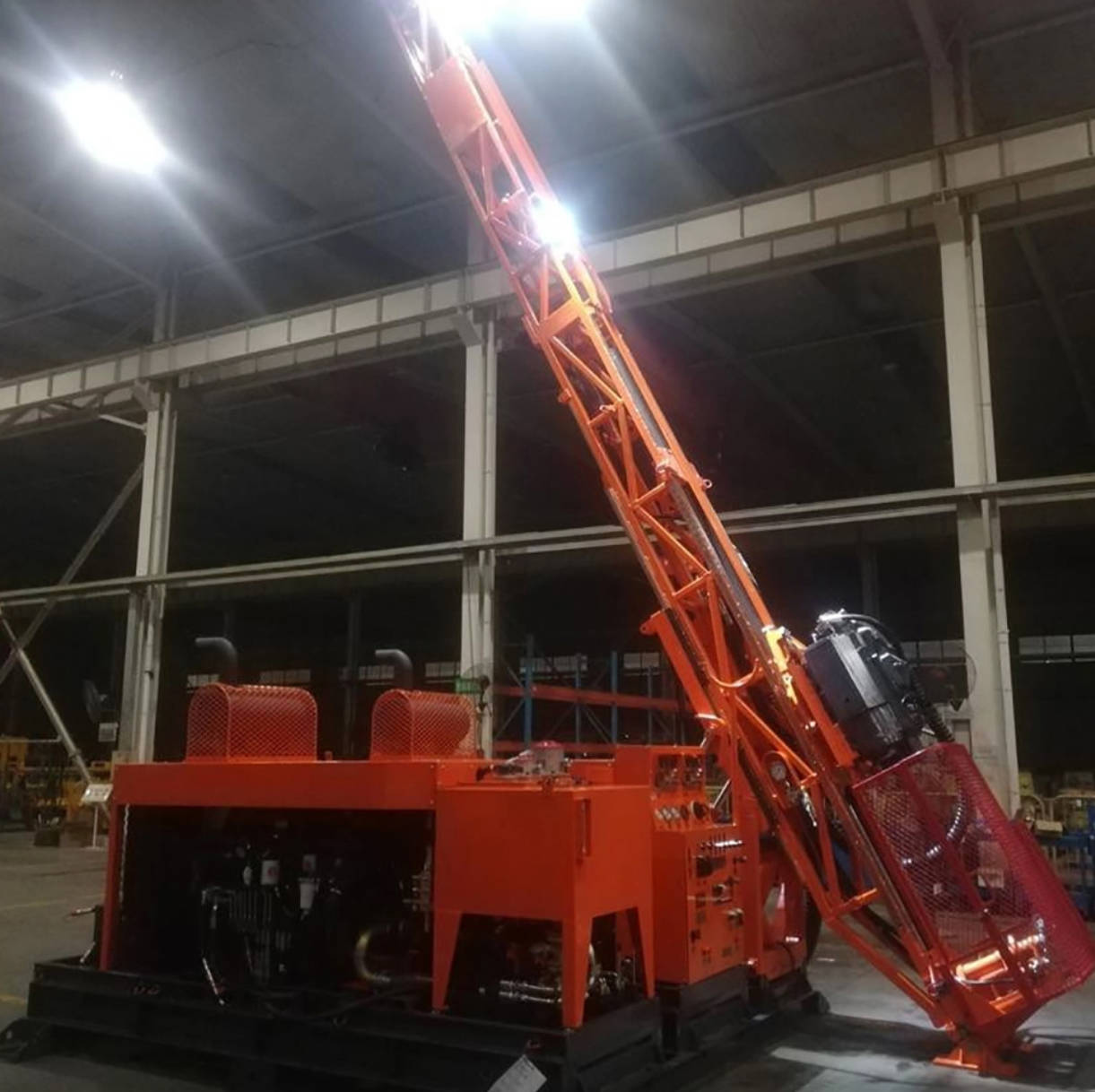
A second layer of complexity comes from equipment capability. Modern full‑hydraulic core surface drills provide far more precise control over rotation, feed force, and circulation than older mechanical rigs. That control allows drilling teams to fine‑tune parameters for either fluid or air systems, protecting sensitive aquifers while still meeting cost and schedule targets.
Mud drilling uses a circulating fluid, usually a water‑based mud with clays and polymers, to cool the bit, suspend cuttings, and transport them to the surface. The fluid is pumped down through the drill string, exits at the bit, then returns up the annulus carrying rock fragments. As it moves, a thin layer of "filter cake" forms on the borehole wall, helping to hold the formation in place.
This filter cake and the hydrostatic pressure of the mud column provide support to the borehole, which is especially important in loose, unconsolidated, or collapsing formations. By varying mud density, viscosity, and additives, drilling engineers can tailor the system to match local geology. Proper design and maintenance of this fluid system are crucial: poorly managed mud can damage the formation, reduce well yield, or create clean‑up challenges.
Mud drilling shows its greatest strengths in the following situations:
- Unconsolidated formations such as sands, gravels, and silts where the borehole would otherwise cave in.
- Mixed or unknown geology where conditions change rapidly and additional support is needed to keep the hole open.
- Deeper wells where hydrostatic pressure from the mud column helps balance formation pressures.
- Areas with strict borehole stability requirements, such as wells near infrastructure or in sensitive ground.
In these contexts, mud drilling provides a controlled environment inside the borehole, reducing the risk of collapse and stuck tools. The trade‑off is the need for careful fluid management, circulation monitoring, and eventual removal or breakdown of the filter cake during well development.
Air drilling replaces liquid mud with high‑pressure air as the circulation medium. Compressors force air down the drill string, where it exits at the bit and carries cuttings up the annulus to the surface. Depending on formation and dust conditions, small amounts of foam or mist may be added to improve lifting capacity or suppress dust.
Because air has much lower density and viscosity than drilling mud, friction losses are reduced and cuttings can move quickly if volume and velocity are maintained. This often allows higher penetration rates in competent rock, where hole stability is provided by the formation itself rather than by a supporting fluid. However, once the hole intersects water‑bearing zones or weak intervals, performance can drop unless the system is adapted.

Air drilling is especially effective when:
- Formations are hard, dry, and consolidated, such as many crystalline or volcanic rocks.
- Rapid penetration is a key priority and ground conditions can support an open hole.
- Water supply is limited, making it difficult or costly to mix and maintain drilling mud.
- Site logistics favor dry cuttings, with simpler handling and smaller surface footprint.
In these settings, air drilling can reduce drilling days, simplify waste handling, and minimize the introduction of foreign fluids into the formation. Its limitations appear most clearly in loose or water‑saturated materials that do not naturally hold a stable open hole.
Environmental performance of mud drilling and air drilling depends on several interacting factors:
- Water use
- Mud drilling typically requires significant water volumes for fluid mixing and maintenance. This can be challenging in arid regions or where water access is closely regulated.
- Air drilling uses far less water, occasionally only for dust control or foam components, resulting in lower direct water consumption.
- Waste generation
- Mud drilling produces a mixture of cuttings and spent mud that must be contained, monitored, and ultimately disposed of or treated. Surface pits or tanks occupy space and demand careful management.
- Air drilling mostly yields dry or slightly damp cuttings, which are often easier to spread or collect. The volume of liquid waste is usually much smaller.
- Aquifer impact
- Poorly managed mud can invade water‑bearing zones, clog pore spaces, and complicate future well development. When designed and monitored correctly, however, it can protect fragile formations and stabilize the borehole during casing and screen installation.
- Air drilling introduces little liquid into the aquifer, but it can mobilize fines and may allow parts of the borehole wall to ravel or collapse if formations are weak. In such cases, annular seals and grout jobs must be planned conservatively.
Instead of assuming that one method is always more sustainable, project teams need to balance water availability, regulatory expectations, local disposal options, and formation behavior.
Efficiency should be evaluated not only in terms of drilling speed but across the entire life of the well:
- Drilling rate
- Mud drilling can be slower in hard rock but competitive in softer formations where hole cleaning is easy and bit contact is steady.
- Air drilling often achieves penetration rates several times higher in strong, dry rock, reducing total rig time on site.
- Non‑productive time
- With mud drilling, issues such as lost circulation, poor solids control, or unstable rheology can cause delays if not managed.
- With air drilling, hole collapse, water inflows, or under‑powered compressors can create downtime and reaming operations.
- Well development and long‑term yield
- Wells drilled with mud must be properly developed to remove residual fluid and filter cake from the near‑wellbore zone. If development is inadequate, yield and pump efficiency may suffer for years.
- Wells drilled primarily with air typically need less time to clean up, because there is little or no filter cake to remove. This can enhance specific capacity and reduce drawdown.
When viewed from planning through long‑term operation, the "fastest drilling" method is not always the most economical overall. The best choice depends on how drilling practice interacts with well development, pump selection, and expected production.
Full‑hydraulic core surface drill rigs, initially developed for high‑precision mineral exploration, are increasingly used in groundwater and geotechnical work. These rigs provide:
- Fine control over drilling parameters, allowing operators to adjust rotation speed, bit load, and circulation to match formation behavior.
- High‑quality core recovery, supplying continuous geological and structural information that guides screen placement, casing design, and pump sizing.
- Improved safety and ergonomics, thanks to integrated rod handlers, automated breakout, and centralized controls.
In water well contexts, such rigs can be paired with rotary systems and configured for fluid or air circulation. This flexibility makes it possible to shift between mud and air as conditions change, without compromising data quality or borehole integrity.
An effective strategy for complex water wells is to combine core drilling and rotary drilling in a single program. A high‑precision core surface drill can be used to:
- Obtain continuous core through critical aquifer or confining units.
- Identify fracture zones, lithological transitions, and zones of higher permeability.
- Support detailed hydrogeological modeling and more accurate well design.
Once the subsurface picture is clear, production intervals can be drilled using the most suitable rotary method—mud, air, or a hybrid—while casing and screen configurations are optimized to protect the aquifer and deliver the required yield. This integration of core data and rotary performance provides a path to better long‑term outcomes with fewer surprises.
A practical way to choose between mud drilling and air drilling is to start with geology and then layer on logistical and regulatory factors. The following guidelines capture patterns observed across many water well projects:
- Consider mud drilling first when:
- Overburden is thick, unconsolidated, or known to be unstable.
- There is a high risk of borehole collapse without fluid support.
- The target aquifer lies beneath multiple problematic layers that must be cased off safely.
- Consider air drilling first when:
- The majority of the depth interval is hard, dry, competent rock.
- Project timelines are tight and penetration rate is critical.
- Site water supply is scarce or expensive to transport.
In practice, many drilling programs combine both. One common pattern is to drill the upper section with mud to ensure stability and proper casing, then switch to air in consolidated rock below the casing shoe to take advantage of higher penetration rates and simpler cuttings management.
Beyond geology, several project constraints influence the final decision:
- Water sourcing and disposal rules: If bringing in and disposing of large water volumes is difficult or heavily regulated, reducing mud use can be a strong driver.
- Energy availability and fuel costs: Powerful compressors for air drilling can increase fuel consumption; efficient hydraulic systems and well‑matched engines help mitigate this.
- Fleet composition: Where contractors have access to modern hydraulic rigs that support both fluid and air circulation, hybrid strategies are easier to deploy. With older single‑mode rigs, options may be more limited.
By explicitly weighing these factors, project teams can move beyond habit or preference and instead choose a method that fits the specific site.
Imagine a planned 300‑meter water well targeting fractured bedrock beneath a relatively thin layer of unconsolidated soil and weathered rock. Nearby wells indicate that stable rock begins at around 30 meters, with the main water‑bearing zones deeper in the formation.
A staged approach could look like this:
1. Upper section with mud drilling
- Use mud rotary through soils and weathered rock, taking advantage of fluid support to keep the borehole open.
- Install surface casing once competent rock is reached, ensuring the upper formation is isolated.
2. Deeper section with air drilling
- Switch to air drilling below the casing shoe where the rock is strong and self‑supporting.
- Maintain appropriate air volume to transport cuttings efficiently without excessive dust.
3. Targeted core drilling
- Deploy a core surface drill to retrieve core in selected intervals, confirming fracture patterns and lithology.
- Refine screen placement and pumping strategy based on this detailed subsurface information.
This combined method supports a stable wellbore, reduces waste volumes, controls environmental risk, and still benefits from the speed advantages of air drilling where conditions allow.

For water well projects, the choice between mud drilling and air drilling is rarely absolute. A few high‑level takeaways can guide planning and discussion among owners, engineers, and contractors:
- Mud drilling excels where formations are weak, variable, or deep, providing borehole support at the cost of higher fluid management and clean‑up requirements.
- Air drilling excels in competent rock with limited water, offering faster progress and simpler waste handling but less support in unstable intervals.
- Modern hydraulic core surface drill rigs make it easier to combine methods, integrate high‑quality subsurface data, and maintain precise control over drilling parameters.
- The most resilient projects often use a hybrid strategy, adapting method and circulation as geology, depth, and regulatory context change.
Mud drilling and air drilling are not competing technologies so much as complementary tools in the same toolbox. Each has situations where it clearly outperforms the other, and each can introduce avoidable problems if applied without careful attention to geology and project constraints.
By grounding method selection in formation behavior, water and waste considerations, and equipment capabilities, teams can design water wells that are more reliable, easier to develop, and more efficient to operate over their full life. As hydraulic rig technology and subsurface characterization continue to improve, the line between core drilling and production drilling will keep blurring, opening even more options to balance environmental performance with operational efficiency.
Not always. Mud drilling often performs well in deep wells because the fluid column can support the borehole and help manage formation pressures. However, if most of the depth interval is hard, competent rock with minimal instability risk, air drilling or a combined approach can also be effective. The final choice should factor in formation behavior, water availability, and long‑term development requirements.
Air drilling can reduce certain types of formation damage because it introduces little or no liquid into the rock matrix. This is particularly beneficial where fine pores might otherwise be invaded by drilling fluid. At the same time, if the formation is weak or easily eroded, the absence of supporting fluid may allow portions of the borehole wall to deteriorate, which can affect the quality of annular seals and long‑term integrity.
Wells drilled with mud normally require more intensive development, since residual fluid and filter cake must be removed or broken down around the wellbore. If development is insufficient, yield and energy efficiency may be compromised. Wells drilled primarily with air usually start with cleaner bore walls, so development can be shorter, though care is still needed to remove fines and ensure stable production.
Yes, many modern rigs are designed to operate with both fluid and air circulation, provided that the appropriate pumps, compressors, and control systems are available. Full‑hydraulic core surface drills are particularly well suited to this flexibility, as they can adjust quickly to different operating modes while maintaining precise control over drilling parameters. This makes hybrid drilling programs more practical and efficient.
Core samples provide direct insight into lithology, fracture density and orientation, alteration zones, and changes in grain size or cementation. This information helps hydrogeologists and engineers decide where to set screens, how to design gravel packs, and how to size pumps. Better understanding of the subsurface reduces uncertainty and supports more reliable long‑term performance from the completed well.
1. Aquifer Drillers. "Pros and cons of mud rotary vs air rotary drilling." [Link]
2. Talon LPE. "When Should I Switch From Air Rotary To Mud Rotary Drilling." [Link]
3. CORTECH Drilling. "China CORE SURFACE DRILL Manufacturer." [Link]
4. CORTECH Drilling. "Core Surface Drill Rigs For High Precision Diamond Core Drilling Projects." [Link]
5. "Application of Drilling, Coring and Sampling Techniques for Test Holes and Wells." [Link]
6. Marcellus Shale Coalition. "Recommended Practices: Drilling and Completions." [Link]
7. Oil & Gas Journal. "Underbalanced drilling with air offers many pluses." [Link


