
Views: 218 Author: CORTECH Publish Time: 2026-10-27 Origin: Site


Content Menu
● Diamond Core Drills vs. Standard Drills: What Is the Difference?
>> How Diamond Core Drilling Works
>> How Standard Drilling Works
● Diamond Core Drills vs. Standard Drills at a Glance
● When Are Diamond Core Drills Better?
>> When Geological Information Matters
>> When Hard-Material Coring Is the Objective
● When Is a Standard Drill the Better Choice?
● Why Wireline Diamond Core Drilling Matters for Surface Exploration
>> What a Fully Hydraulic Rig Adds
● A Better Performance Measure: Cost per Usable Meter of Core
● How to Evaluate a Diamond Core Drilling System in Six Steps
>> 1. Define the Required Output
>> 3. Match the Complete Tooling System
>> 4. Verify Operating Guidance
● Expert Insight: Core Recovery Is Not the Same as Sample Quality
● Safety and Environmental Limits to Consider
● Choosing the Right CORTECH Surface Core Drilling Solution
>> 1. Are Diamond Core Drills Better Than Hammer Drills?
>> 2. Can a Diamond Core Drill Cut Reinforced Concrete?
>> 3. Does Diamond Core Drilling Always Require Water?
>> 4. Why Is Wireline Retrieval Useful in Deep Holes?
>> 5. Are Diamond Core Drills Always Faster?
>> 6. What Should Buyers Ask Before Ordering a Surface Core Drill?
Diamond core drills are better than standard drills when the job requires intact rock samples, controlled cutting in hard materials, or larger circular openings. They are not automatically better for every hole. For small fixing holes, routine metalworking, or timber drilling, a conventional drill is usually simpler and more economical.
For mineral exploration, the comparison is more decisive. A hole alone cannot reveal everything a geologist needs. A recoverable rock core can provide evidence of lithology, mineralization, and geological structures.
At CORTECH, our focus is fully hydraulic wireline diamond core drilling rigs, including CORE SURFACE DRILL equipment. From that equipment-selection perspective, the central question is purpose: do you need an opening, or do you need geological information?

"Standard drill" is a broad term. It may describe a rotary drill using twist bits, a hammer drill for masonry, or a rotary-percussive rock drill. These tools use different mechanisms and should not be treated as interchangeable.
A diamond core drill uses a hollow, diamond-bearing bit to cut an annular path. The material inside that path forms a cylindrical core.
In exploration drilling, the system includes the rig, drill rods, core barrel, diamond bit, fluid circuit, and retrieval equipment. It is much more than a diamond attachment fitted to an ordinary drill.
Industrial diamonds at the cutting face grind or abrade the formation as the bit rotates. Drilling fluid helps cool the bit and transport cuttings.
Many exploration applications use impregnated diamond bits. Their metal matrix wears progressively to expose additional diamonds. Matching that matrix to formation hardness and abrasiveness is important: a poorly matched bit can polish, wear prematurely, or drill inefficiently.
A twist drill cuts material across the hole face and carries chips out through its flutes. Hammer and rotary-percussive drills combine rotation with impact to break suitable materials.
These methods can be effective when the objective is simply to create a hole. However, conventional solid-bit drilling does not recover the continuous cylindrical sample sought in diamond core exploration.
| Decision factor | Diamond core drilling | Conventional solid-bit drilling |
|---|---|---|
| Primary objective | Recover core or create circular openings | Produce holes for fastening, fabrication, or other operations |
| Cutting action | Diamond-assisted abrasive cutting | Cutting, impact, or combined action |
| Sample output | Cylindrical core, subject to ground conditions | Chips, dust, or cuttings |
| Typical strength | Geological sampling and suitable hard-material coring | Routine holes matched to the material and tool |
| Setup | May require a stand, fluid supply, or dedicated rig | Often simpler for small, shallow holes |
| Main limitation | Higher system complexity and application-specific tooling | Does not provide equivalent intact core information |
Neither method wins every category. Comparing a handheld masonry drill with a surface exploration rig only makes sense after defining the job.

For exploration teams, the recovered sample is often the most valuable output.
A core allows specialists to examine rock sequences, mineralized intervals, fractures, and contacts between formations. That information supports geological interpretation and sampling decisions.
However, recovered core is not automatically undisturbed or complete. Fractured ground, fluid erosion, unsuitable tooling, and rough handling can damage samples. High-quality drilling therefore requires attention to both recovery and preservation.
Diamond coring equipment is used in rock, concrete, masonry, and reinforced concrete, provided the selected system suits the material.
In construction, it can produce openings for pipes, ventilation, and services. In exploration, it creates a borehole while retaining the central rock sample.
These applications share a cutting principle, but their equipment differs substantially. A concrete coring machine is not a substitute for a deep wireline exploration rig.
Diamond coring generally avoids the repeated hammering action of percussive drilling. This can help where impact-induced damage or vibration is a concern.
Nevertheless, "non-percussive" does not mean vibration-free. Rig alignment, drill-string condition, formation changes, and operating parameters still affect stability and hole quality.
A standard drill often makes more sense when the job involves:
- Small screw or anchor holes.
- Routine timber or metal drilling.
- Occasional, shallow masonry holes.
- Minimal setup time and portable equipment.
- No requirement to recover intact core.
Diamond equipment is not universally faster, either. Performance depends on material, diameter, depth, bit condition, and the complete drilling system.
For exploration projects that do not require intact core, other drilling methods may also deserve consideration. The correct comparison should include the sampling objective, not simply diamond tooling versus a general-purpose drill.
Wireline retrieval is a major distinction between exploration core drilling and ordinary holemaking.
In a wireline system, an inner tube receives the core inside the outer barrel. An overshot attached to a cable retrieves the inner-tube assembly through the drill string. Routine core recovery therefore does not require pulling the entire rod string.
As holes deepen, avoiding repeated rod removal can reduce retrieval work and improve operational efficiency.
However, wireline does not eliminate every trip. Bit changes, stuck assemblies, and maintenance may still require rod withdrawal.
Hydraulic systems power functions such as rotation, feed, and hoisting. Their practical value depends on the rig's controllability, operating ranges, maintenance condition, and compatibility with the drilling program.
For a CORE SURFACE DRILL purchase, I would assess the complete working envelope rather than maximum depth alone:
- Rotation speed and torque across usable operating ranges.
- Feed control and pullback capacity.
- Rod and core-barrel compatibility.
- Fluid-system requirements.
- Site access, platform preparation, and maintenance access.
Published depth capacity is a starting point—not a guarantee under every geological condition.
The lowest equipment price does not necessarily produce the lowest project cost. Equally, the highest purchase price does not guarantee better results.
A useful project metric is:
Cost per usable meter of core=Total drilling-program cost/Meters of core meeting project requirements
This is a proposed evaluation framework, not a universal industry reporting standard. Define "usable" with the project geologist before comparing results.
Relevant costs may include labor, fuel, consumables, mobilization, maintenance, fluid management, and repeat drilling.
Consider two hypothetical operations:
| Measure | Operation A | Operation B |
|---|---|---|
| Daily operating cost | $6,000 | $6,600 |
| Accepted usable core | 60 m | 75 m |
| Cost per usable meter | $100 | $88 |
Operation B costs more per day but less per usable meter. These figures are illustrative, not CORTECH performance claims.
The lesson is practical: compare the value of accepted output, not purchase price or penetration rate in isolation.

Specify whether the project needs continuous core, selected samples, or only an opening. Establish target depth, hole angle, core diameter, and sample-quality requirements.
Document expected hardness, abrasiveness, fractures, weathering, and water conditions. Hardness alone does not describe drillability or sample-recovery difficulty.
Check compatibility between the rig, rods, barrel, bit, reaming shell, and fluid system. A capable rig cannot compensate for an unsuitable bit or poorly matched barrel.
Obtain recommended ranges for rotation, bit loading, and fluid delivery from the relevant equipment and tooling suppliers. Avoid copying settings from a different bit size or formation.
Record penetration rate, recovery, bit wear, fluid behavior, and retrieval time. Change one operating variable at a time where practical, so the team can identify what actually improves performance.
Assess accepted core per shift, downtime, consumable use, and safety observations. Fast cutting during one interval can hide delays elsewhere in the drilling cycle.
Core recovery compares recovered core length with the drilled interval. It is useful, but it does not describe every aspect of sample condition.
A high recovery figure can still accompany washed, disturbed, or mechanically broken material.
In difficult formations, possible responses include shorter runs, suitable inner-tube arrangements, and careful fluid management. The appropriate response depends on the ground and project requirements.
Sample handling also matters. Extraction from the tube, placement in boxes, depth identification, and transport can affect the usefulness of the final record.
My recommendation is to discuss preservation requirements before drilling begins, rather than treating them as a problem to solve after damaged core reaches the logging area.
Wet diamond drilling still requires active risk control.
For silica-containing materials, water applied at the cutting surface can reduce airborne dust. It does not automatically establish compliance for every drilling activity or jurisdiction.
Construction coring guidance should not be applied indiscriminately to mineral-exploration operations. Use a task-specific exposure assessment and applicable local requirements.
Other priorities include:
- Secure setup and appropriate exclusion zones.
- Guarding and procedures for rotating components.
- Isolation before servicing equipment.
- Safe management of pressurized lines.
- Slurry collection and controlled disposal.
- Training for rod handling and core retrieval.
Allowing slurry to dry can create a secondary dust source. Wet operation therefore requires housekeeping as well as water delivery.
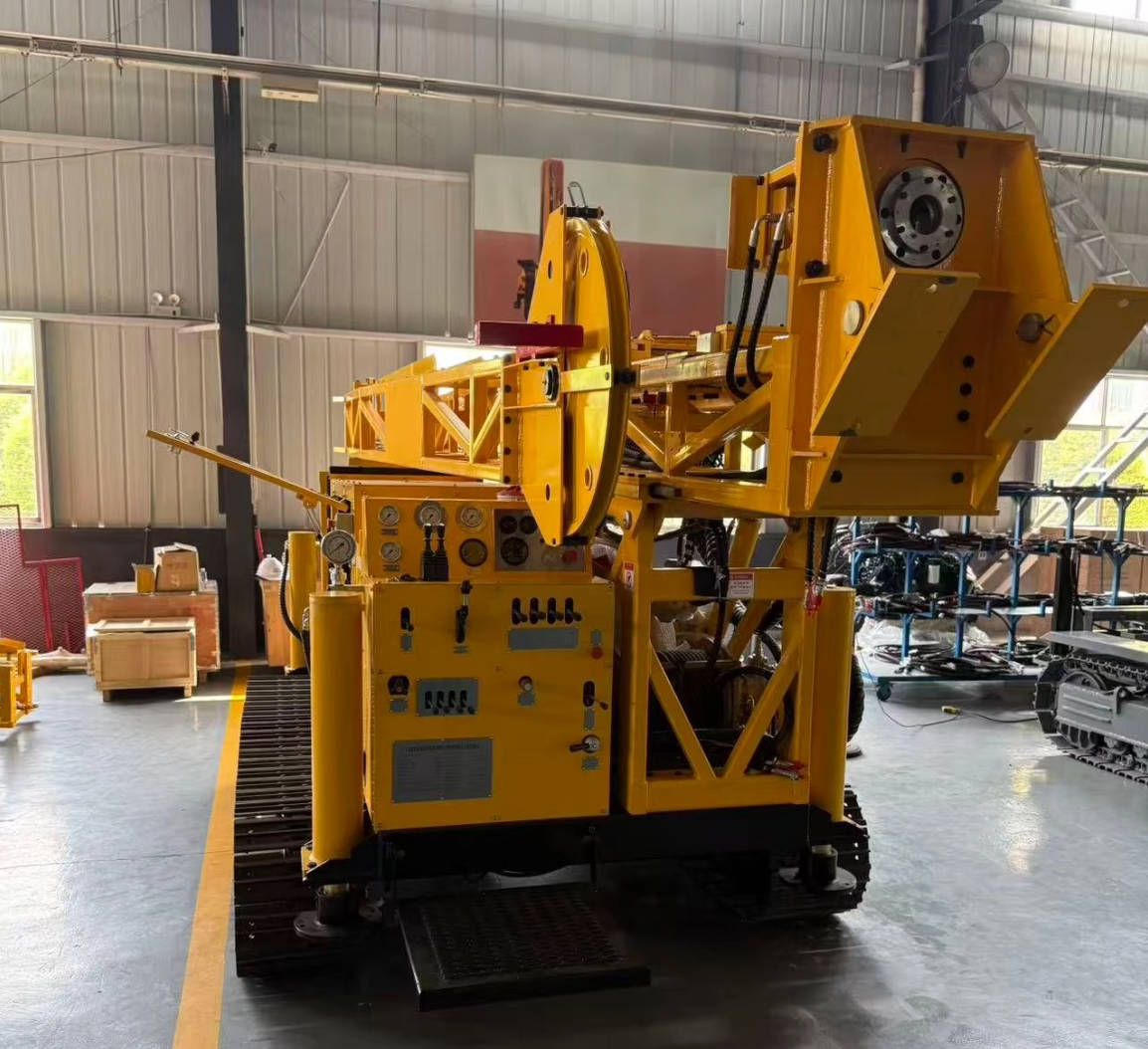
For hard-rock exploration requiring recoverable geological samples, diamond core drilling is generally a more appropriate tool than conventional solid-bit drilling. For everyday fastening and fabrication, standard drills often remain the sensible choice.
CORTECH's focus is the former: fully hydraulic wireline diamond core drilling equipment for professional sampling programs.
Send CORTECH your target depth, core size, hole inclination, expected geology, site-access conditions, and available utilities. Request a configuration review covering the rig, tooling, fluid system, operating assumptions, and service requirements—not simply a maximum-depth quotation.
They are better when suitable hard-material coring or recoverable samples are required. Hammer drills are often more practical for small masonry fixing holes. The application determines the better tool.
Yes, compatible construction coring systems can drill reinforced concrete. Confirm bit suitability and investigate embedded services and reinforcement before drilling. Structural approval may be necessary.
No. Some construction systems support approved dry coring applications. Exploration diamond drilling commonly uses circulating fluid for cooling and cuttings transport. Follow the specific system's instructions.
It retrieves the core-filled inner tube through the rods without removing the entire drill string for each routine core run. This reduces repeated rod-handling work.
No. Formation, diameter, depth, tooling, operating parameters, and retrieval delays all influence productivity. Compare complete-cycle output rather than assuming a universal speed advantage.
Ask about operating capacity for the intended rod size and conditions, torque-speed characteristics, pullback, fluid requirements, tooling compatibility, maintenance support, and the assumptions behind quoted performance.
1. Boart Longyear. "Longyear Bits—Selecting the Right Bit in 5 Easy Steps." Guidance on formation hardness, bit selection, penetration rate, and bit-life monitoring. [View source]. [boartlongyear]
2. Boart Longyear. "The Ins and Outs of Wireline Core Retrieval Systems." Explanation of inner tubes, head assemblies, overshots, and wireline retrieval. [View source]. [boartlongyear]
3. Boart Longyear. "Australasian Drilling: Creating Value Through Superior Core." Technical discussion of run length, fluid effects, inner-tube arrangements, and sample handling. [View source]. [boartlongyear]
4. Occupational Safety and Health Administration. "Rig-Mounted Core Saws or Drills," OSHA 3929. Guidance on wet methods, silica-dust reduction, equipment maintenance, and slurry cleanup. [View source]. [osha]
5. Hilti. "Diamond Coring." Manufacturer overview of construction coring systems and applications in concrete, reinforced concrete, masonry, and asphalt. [View source]. [hilti]
6. CORTECH. "Surface Diamond Drilling Rig." Manufacturer description of surface exploration equipment. Company positioning also follows the background supplied for this article; the illustrative cost comparison is original explanatory analysis, not measured field data. [View source]. [cortechdrill]


