
Views: 231 Author: CORTECH Publish Time: 2026-10-23 Origin: Site


Content Menu
● Lightweight vs. Full-Size Core Drilling Rigs: The Essential Differences
● Access and Mobilization: Compare the Complete Drilling Package
>> Lightweight Modular Rigs for Helicopter-Supported Exploration
>> Full-Size Rigs Where Ground Access Already Exists
● Depth, Torque, and Pullback: Match Capability to the Hole
>> Lightweight Does Not Automatically Mean Shallow
>> Full-Size Capacity Must Be Compared on Equal Terms
● Core Quality and Productivity: Look Beyond Penetration Rate
● Total Campaign Cost: A More Useful Comparison Than Rig Price
>> Build a Complete Cost Model
>> Illustrative Scenario: The Cheaper Drilling Rate Can Lose
● Three Planning Checks That Reveal Hidden Constraints
>> 1. Audit the Entire Transport Manifest
>> 2. Model the Field Season, Not Just Drilling Hours
>> 3. Apply Technical Gates Before Commercial Scoring
● Safety, Water, and Environmental Planning
>> Different Transport Formats Create Different Risks
>> Plan Water and Fluids Independently of Rig Size
● How to Specify a CORTECH CORE HELI DRILL Package
● Discuss Your Remote Drilling Requirements With CORTECH
>> 1. Are lightweight core drilling rigs suitable for deep mineral exploration?
>> 2. When is a full-size drilling rig the better choice?
>> 3. Does helicopter-portable mean manually portable?
>> 4. Which rig type produces better core recovery?
>> 5. What information is needed for an accurate remote drilling quotation?
Core drilling in remote mineral projects starts with a practical question: should you move a lightweight modular drill rig to the deposit, or build the access needed for a full-size machine? The answer affects mobilization costs, drilling capacity, safety, and the number of useful holes completed before the field season ends.
For exploration teams evaluating lightweight vs. full-size rigs, my starting point is deliverability: can the complete drilling system reach the site, operate reliably, and produce the required geological information?
CORTECH develops and manufactures fully hydraulic wireline diamond core drilling equipment, including CORE HELI DRILL modular configurations. This comparison takes a project-planning perspective, distinguishing published equipment specifications from conditional recommendations—not presenting assumed field results as proven performance.
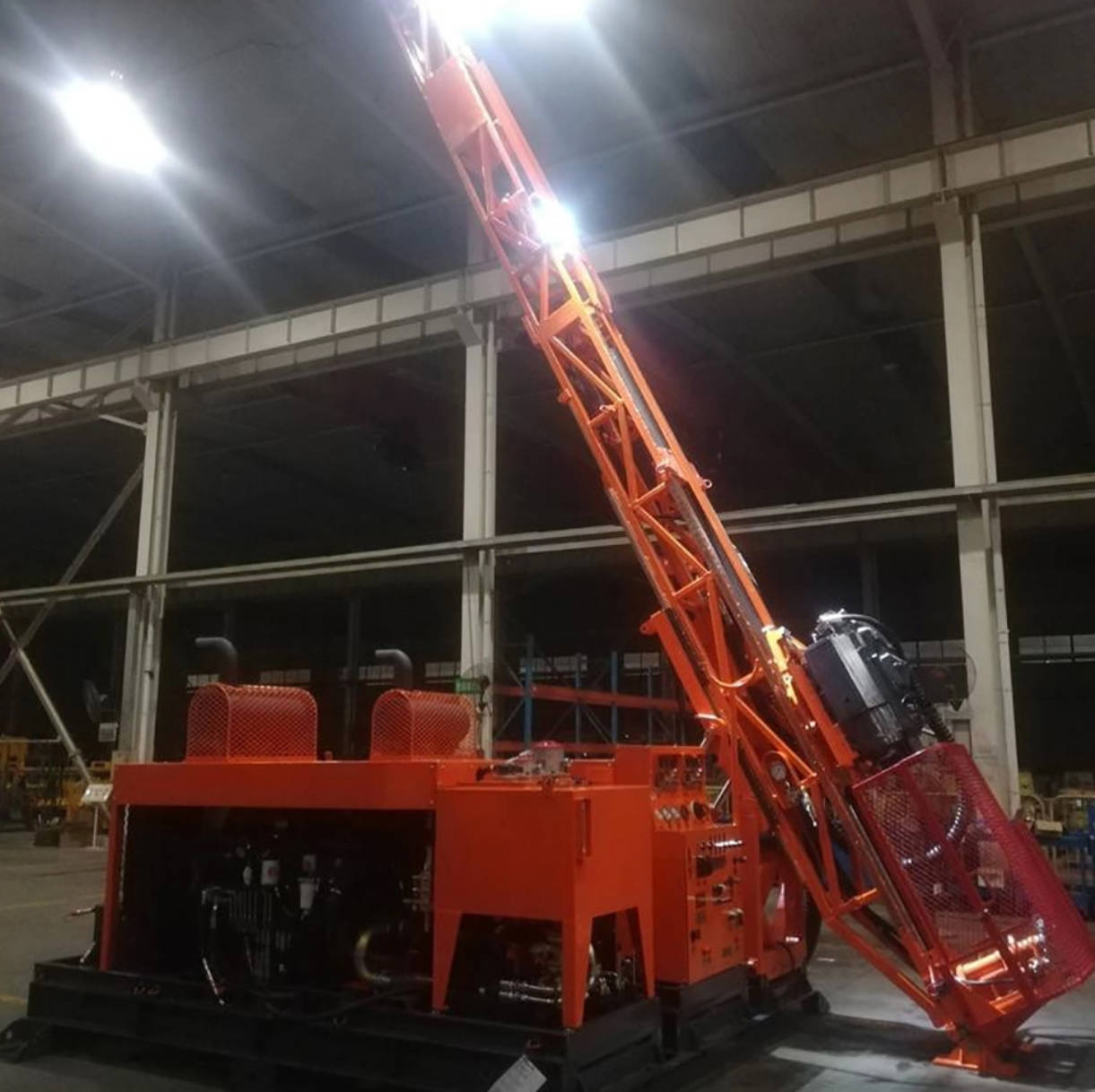
"Lightweight" describes transport characteristics, not necessarily shallow drilling capability. A helicopter-portable rig separates into modules, while a conventional full-size surface rig typically travels on tracks, a truck, or a skid-mounted transport arrangement.
These categories overlap. Large-capacity rigs can also be modular. Buyers should compare actual configurations rather than assume every helicopter-portable drill is small or every full-size drill is non-modular.
| Selection factor | Lightweight modular rigs | Full-size surface rigs |
|---|---|---|
| Access strategy | Transportable modules for constrained locations | Ground access suitable for the selected carrier |
| Mobilization | More individual lifts and assembly interfaces | Heavier transport and potentially more access preparation |
| Drilling capacity | Model-specific; substantial depth is possible | Model-specific; higher-capacity configurations are available |
| Pad requirements | Potentially compact, subject to support equipment | Must accommodate the carrier and operating layout |
| Relocation | Attractive for dispersed, inaccessible targets | Attractive where usable roads connect drill pads |
| Main planning risk | Underestimating the complete transport package | Underestimating access construction and ground conditions |
Neither category wins automatically. The better choice depends on the interaction between access, hole design, relocation frequency, and support infrastructure.

The strongest case for a lightweight core drilling rig is often the difficulty of reaching the target—not the purchase price.
Mountainous terrain, isolated forest locations, and sites without approved road access can make modular transport attractive. However, the heaviest module matters more than the total rig weight when planning individual lifts.
For example, Boart Longyear describes its LF70 as separating into seven flyable modules, with a maximum module weight of 585 kg. This illustrates a transport specification buyers should request; it is not a specification for CORTECH equipment.
Before selecting a helicopter-portable drilling rig, obtain:
- Verified module weights and dimensions.
- Approved lifting points and lifting instructions.
- A complete manifest covering ancillary equipment.
- Assembly procedures and required lifting aids.
- Aviation-operator confirmation that the proposed loads suit the actual operating conditions.
A rig described as "heliportable" is not, by itself, an approved transport plan.
Full-size core drilling rigs deserve serious consideration when existing roads connect the camp, maintenance area, and drilling pads.
Ground transport may avoid repeated aircraft movements and simplify fuel, rod, and spare-parts deliveries. However, assess the route for the actual loaded configuration—not merely whether a pickup truck can reach the site.
Review bridge restrictions, gradients, turning space, soft ground, seasonal deterioration, and recovery arrangements.
My practical recommendation is to cost the entire route. A low drilling quotation can become expensive if the project first needs substantial access construction.
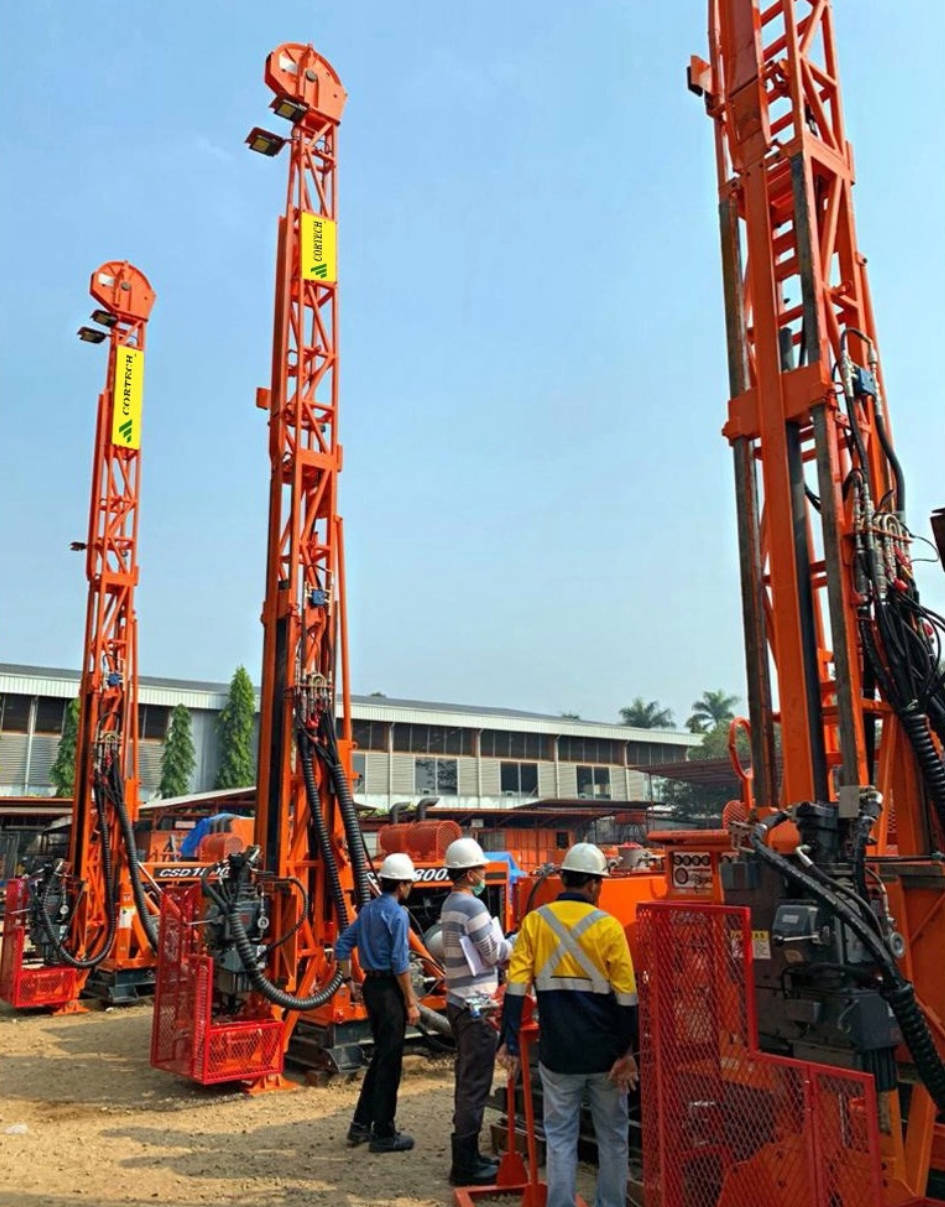
Transport format alone does not define drilling depth.
CORTECH's published product information lists the helicopter-portable CSD1300H with an NQ depth capacity of 1,000 m and the CSD1800H with an NQ depth capacity of 1,700 m. These are manufacturer-listed capacities, not guarantees for every formation, hole angle, or operating condition.
Buyers should confirm current specifications and the assumptions behind each rating before using these figures in a drilling program.
The important distinction is between reaching a nominal depth and maintaining an appropriate operating margin throughout the planned hole.
Published specifications demonstrate why model-level comparisons matter. Boart Longyear lists:
| Published specification | LF70 modular rig | LF90D surface rig |
|---|---|---|
| Depth capacity, NRQ W-Wall | 895 m | 1,193 m |
| Pull force | 62.9 kN | 111.8 kN |
| Engine power, metric listing | 110 kW | 153 kW |
| Drill rod size range | BQ–PQ | BQ–PQ |
These figures illustrate one manufacturer's two configurations, not universal differences between lightweight and full-size rigs.
For procurement, compare torque at the required rotational speed, pullback, feed control, rod-handling arrangement, and circulation requirements. Do not rank machines by engine power alone.
Also avoid directly equating depth ratings based on different rod systems or unspecified test assumptions.
A productive remote drilling campaign delivers usable geological information, not simply drilled meters.
Neither lightweight nor full-size rigs inherently guarantee superior core recovery. Formation conditions, tooling, drilling parameters, circulation, and operator decisions all affect the outcome.
When assessing fully hydraulic wireline diamond core drilling equipment, discuss:
- Feed control appropriate to changing formations.
- Rotation and torque requirements.
- Core-barrel and bit compatibility.
- Circulation capacity and pressure requirements.
- Safe rod handling and wireline retrieval.
- Procedures for broken ground and difficult intervals.
For performance reviews, track recovered core length, recovery percentage, re-drilling, and delays alongside drilled meters.
A fast hole that misses the sampling objective may contribute less value than a slower hole that preserves the required geological evidence.

For remote mineral projects, I recommend comparing total campaign cost per accepted meter:
Cost per accepted meter=Total campaign cost/Meters meeting the agreed technical acceptance criteria
Define those acceptance criteria before tendering. Otherwise, bidders may appear comparable while assuming different sampling standards or responsibilities.
Include the following costs:
1. Mobilization and demobilization.
2. Roads, pads, and site preparation.
3. Aircraft or ground transport.
4. Assembly, commissioning, and relocation.
5. Drilling labor and consumables.
6. Fuel, water supply, and fluid management.
7. Maintenance, spares, and standby.
8. Rehabilitation and project closeout.
Separate shared costs from costs that change between rig options. This prevents the comparison from unfairly assigning an entire camp or transport system to only one alternative.
Consider a hypothetical 3,000 m campaign. These assumptions are for planning illustration, not market quotations.
| Cost item | Lightweight modular option | Full-size option |
|---|---|---|
| Mobilization and access | $150,000 | $270,000 |
| Operating cost per drilled meter | $125 | $110 |
| Drilling cost | $375,000 | $330,000 |
| Simplified campaign total | $525,000 | $600,000 |
The full-size option saves $45,000 in drilling expenditure but incurs $120,000 more in mobilization and access costs. Under these assumptions, the modular option costs $75,000 less overall.
The result can reverse as campaign length increases or existing access reduces the difference. Recalculate with actual quotations, weather allowances, and equivalent technical scope.
A modular drill is only one part of the field system. Rods, casing, pumps, hoses, fuel, water infrastructure, tools, and emergency supplies also need transport.
Create a manifest showing each item's weight, dimensions, destination, handling method, and deployment sequence.
Ask a revealing question: can the team safely commission the rig if the final planned delivery is delayed?
This exercise identifies dependencies that a simple rig-weight comparison misses.
Compare the calendar time required to reach the first completed hole.
Include access approvals, site preparation, transport availability, assembly, commissioning, relocations, maintenance, and expected interruptions. Distinguish tasks that can run in parallel from those that must occur sequentially.
A machine with a higher drilling rate may still finish fewer holes if access preparation consumes the available season.
Conversely, repeated modular assembly and transport delays may reduce the advantage of a lightweight system.
First establish non-negotiable requirements:
- Required hole depth and diameter.
- Suitable operating capability and margins.
- Feasible transport and pad arrangements.
- Acceptable safety provisions.
- Adequate water, fuel, and maintenance support.
Only score price and convenience after each candidate passes these gates.
A low-cost rig that cannot safely meet the drilling objective is not a competitive alternative.
Lightweight modular rigs introduce repeated lifting, connection, and assembly tasks. Full-size rigs introduce substantial vehicle movement, positioning, and ground-stability considerations.
Both require controls for rotating equipment, hydraulic pressure, stored energy, manual handling, and maintenance isolation.
Queensland's mineral exploration safety guidance addresses these hazards alongside remote work, communications, training, and emergency response. Western Australia also provides mineral exploration drilling audit resources.
Use such guidance to structure project reviews while confirming the laws and permit conditions applicable to the actual jurisdiction.
Do not treat lower equipment weight as proof of lower overall risk.
A compact drilling unit does not eliminate the need for an effective circulation and fluid-management system.
Before mobilization, define the water source, pumping arrangement, storage, containment, treatment or reuse strategy, and permitted disposal or rehabilitation requirements.
Assess the entire site footprint, including fuel storage, rod racks, access, work areas, and support equipment.
A modular approach may reduce some access requirements, but claims about lower disturbance or emissions need project-specific evidence.

When evaluating a CORTECH CORE HELI DRILL configuration, begin with a technical brief rather than a model name.
Provide CORTECH with:
- Target depth, rod system, and core diameter.
- Hole inclination and expected geology.
- Site elevation, temperature range, and access constraints.
- Available transport and module-weight limits.
- Water supply and circulation requirements.
- Planned hole count and relocation frequency.
- Local safety, documentation, and emissions requirements.
Request a configuration-specific response covering drilling capacity assumptions, torque and speed, feed and pullback, module weights, lifting arrangements, commissioning, recommended spares, and operator training.
Current, approved documentation should govern the purchase—not assumptions drawn from another model or an older brochure.
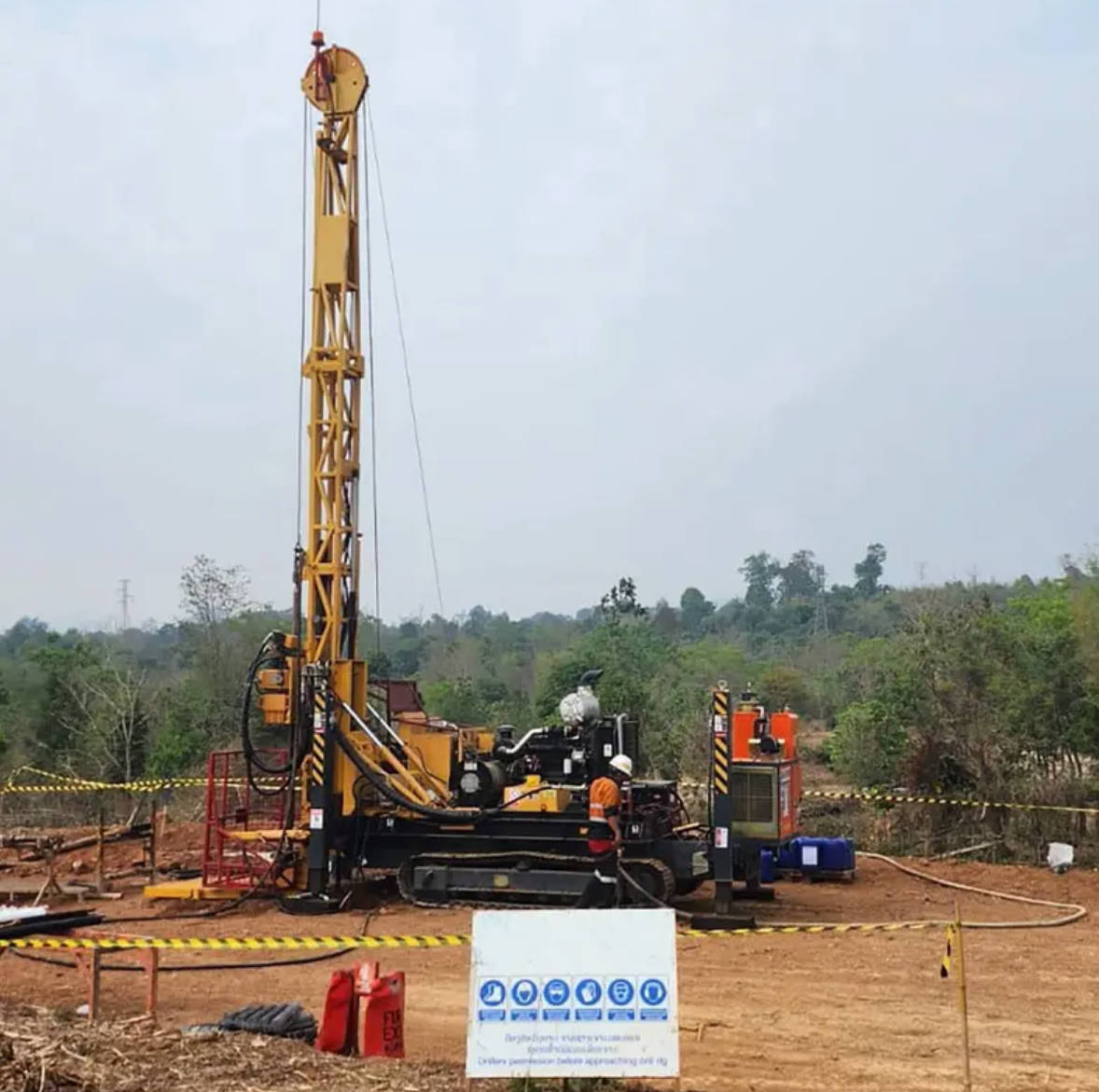
Send CORTECH your hole plan, access constraints, transport limits, and expected operating conditions. Request a configuration-specific comparison between CORE HELI DRILL and an appropriate full-size alternative, supported by verified specifications and a complete equipment manifest.
The objective is a drilling package that reaches the target safely and delivers the required core within the project's budget and field season.
Yes, some modular rigs have substantial published depth capacities. Suitability depends on the exact configuration, rod system, hole angle, geology, and required operating margin. Confirm the rating assumptions with the manufacturer.
A full-size rig can be attractive when reliable ground access exists, the campaign is extensive, and the selected machine offers capabilities that match demanding holes. Compare complete campaign costs rather than assuming larger equipment is always more productive.
No. Helicopter-portable modules may weigh hundreds of kilograms. Manual transport requires separate assessment of individual component weights, handling methods, terrain, and safe working procedures.
Neither category guarantees better recovery. Compare formation suitability, tooling, parameter control, circulation, and crew capability. Set measurable recovery and sampling requirements before selecting equipment.
Provide hole specifications, geology, access conditions, transport limits, water availability, campaign size, relocation requirements, and the required support scope. Clear inputs reduce exclusions and make competing proposals easier to evaluate.
1. [CORTECH — Product Overview]. Published descriptions of surface and helicopter-portable drilling rigs, including the CSD1300H and CSD1800H NQ depth capacities. Manufacturer information; confirm current configurations before procurement. [cortechdrill]
2. [Boart Longyear — LF70 Surface Coring Drill Rig]. Primary source for the seven-module transport arrangement, maximum module weight, and listed drilling specifications. [boartlongyear]
3. [Boart Longyear — LF90D Surface Coring Drill Rig]. Primary source for the LF90D capacity, pull force, rod range, and metric engine-power specifications used in the comparison. [boartlongyear]
4. [Resources Safety and Health Queensland — Guidance Note QGN 37: Mineral Exploration Safety]. Revision 2, March 2026. Supports discussion of remote-site planning, competency, isolation, equipment hazards, communications, and emergency arrangements. [rshq.qld.gov]
5. [WorkSafe Western Australia — Mineral Exploration Drilling: Audit Guides and Templates]. Published February 25, 2025. Provides occupational safety audit resources for remote exploration and existing mine-site drilling; explicitly excludes environmental standards. [worksafe.wa.gov]


