
Views: 232 Author: CORTECH Publish Time: 2026-10-13 Origin: Site


Content Menu
● Hydraulic Core Drilling vs. Mechanical Feed: What Are We Comparing?
>> How Hydraulic Feed Controls Diamond Core Drilling
>> How Mechanical Feed Advances the Drill String
● What Stable Borehole Control Actually Means
● Hydraulic Feed vs. Mechanical Feed: Practical Comparison
● Why Hydraulic Feed Can Improve Borehole Control
>> Adjusting Loading as Drill-String Weight Changes
>> Responding to Fractured or Alternating Ground
>> Coordinating Feed, Rotation, and Flushing
● When Mechanical Feed Remains a Reasonable Choice
● Practical Operating Workflow for Stable Borehole Control
>> Step 1: Establish the Drilling Envelope
>> Step 2: Verify Alignment and Mechanical Condition
>> Step 3: Establish a Valid Loading Reference
>> Step 4: Start Within Tooling Recommendations
>> Step 5: Reassess at Meaningful Transitions
● Field-Test Framework: Proving the Control Advantage
● Troubleshooting: Separate Feed Problems from Other Causes
>> More Feed Produces Little Additional Penetration
>> Core Recovery Declines Despite Smooth Feeding
● Matching CORTECH Rigs to the Drilling Environment
>> CORE SURFACE DRILL: Depth and Sustained Operation
>> CORE HELI DRILL: Modular Deployment
>> CORE U/G DRILL: Confined-Space Requirements
● Request a Project-Specific CORTECH Configuration
>> 1. Is Hydraulic Core Drilling Always Better Than Mechanical Feed?
>> 2. Does Hydraulic Feed Guarantee a Straight Borehole?
>> 3. Is Feed Pressure the Same as Weight on Bit?
>> 4. Can a Mechanically Driven Rig Have Hydraulic Feed?
>> 5. Which Feed System Is Better for Fractured Ground?
>> 6. What Should Buyers Prioritize Beyond Purchase Price?
Hydraulic core drilling vs. mechanical feed is fundamentally a comparison of how a drilling rig applies and adjusts axial force. For mineral exploration teams, that difference matters because stable borehole control depends on matching weight on bit, rotation, and flushing to changing rock conditions—not simply increasing drilling power.
My assessment is straightforward: a well-designed hydraulic feed system generally provides greater flexibility for controlling bit loading, especially as drilling depth and formation variability increase. However, mechanical feed can remain effective when its operating range matches the project and experienced drillers manage it carefully.
For CORTECH, a manufacturer of fully hydraulic wireline diamond core drilling rigs, the practical question is not whether hydraulics sound more advanced. It is whether the selected CORE SURFACE DRILL, CORE HELI DRILL, or CORE U/G DRILL provides the controllability, capacity, and serviceability your drilling program requires.

Hydraulic feed uses pressurized fluid to drive a cylinder or another hydraulic actuator that advances and retracts the drilling head. Valves regulate movement and loading. Depending on the design, the feed mechanism may also incorporate chains or other mechanical transmission components.
A fully hydraulic core drilling rig typically extends hydraulic power beyond feeding to functions such as rotation, lifting, and clamping.
Its main control advantage is the ability to adjust feed force and movement progressively. This allows the operator to respond when the bit encounters a harder layer, fractured interval, or changing cutting resistance.
However, hydraulic operation does not automatically mean computerized control. Automatic feed regulation, data logging, and anti-stall functions must be verified for the specific model.
Mechanical feed advances the drilling assembly through mechanisms such as a screw and gear arrangement. Depending on the rig, adjustment may be manual or powered.
Its behavior depends on gearing, mechanical condition, adjustment resolution, and operator response. A well-maintained mechanism can deliver useful, repeatable movement; wear or backlash can make small adjustments less predictable.
One distinction deserves particular attention: mechanical rotation is not the same as mechanical feed. Some conventional spindle rigs combine mechanically driven rotation with hydraulic feeding. Buyers should compare actual feed mechanisms rather than classify every older rig as mechanically fed.

Stable borehole control has three related objectives:
- Maintaining productive cutting without repeatedly overloading the bit.
- Limiting unwanted trajectory change and drill-string stress.
- Preserving the borehole and recovering representative core.
These objectives are connected, but they are not identical. A straight hole can still yield poor core recovery. Smooth feeding cannot prevent every collapse in weak ground. High penetration does not necessarily indicate efficient drilling.
The central variable is weight-on-bit, commonly abbreviated WOB. Too little loading may cause an impregnated diamond bit to polish rather than cut effectively. Excessive loading can accelerate wear and contribute to deviation or downhole failures.
The useful operating window also depends on bit selection, rotational speed, flushing, drill-string condition, and geology. Feed control is therefore one part of a coordinated drilling system—not a substitute for sound drilling practice.
| Evaluation factor | Hydraulic feed | Mechanical feed |
|---|---|---|
| Adjustment method | Changes hydraulic pressure and flow through controls | Changes mechanical advance through the feed mechanism |
| Fine loading control | Potentially progressive, subject to valve quality and calibration | Depends on gearing, adjustment resolution, wear, and operator technique |
| Changing formations | Supports timely load adjustments within system limits | Can perform well where changes remain manageable |
| Increasing depth | Can support controlled loading and holdback when designed for the duty | Suitability depends on available capacity and control arrangement |
| Maintenance focus | Fluid cleanliness, seals, hoses, valves, and cooling | Lubrication, gears, screws, bearings, and mechanical alignment |
| Automation potential | Can integrate sensing and feedback when equipped | Depends on the specific design and added controls |
| Main limitation | Hydraulic power alone does not guarantee accurate bit loading | Mechanical movement alone does not ensure consistent cutting force |
| Purchasing priority | Verify usable control range, not just maximum thrust | Verify feed condition, adjustment sensitivity, and project suitability |
This is an engineering comparison, not a universal performance ranking. No defensible percentage improvement applies to every hydraulic-versus-mechanical drilling project.
As rods are added, the forces acting on the bit change. Keeping the same feed setting throughout a hole does not necessarily maintain the same WOB.
Boart Longyear's diamond drilling guidance specifically emphasizes monitoring bit loading as depth increases. It also explains that feed-cylinder pressure is not itself a direct reading of bit weight.
A hydraulic system designed with suitable holdback and loading control can help the operator manage these changing forces. However, actual downhole loading still depends on inclination, friction, rod weight, and the hydraulic circuit.
My preferred purchasing question is therefore: "How does this rig help the driller establish and maintain the intended bit load at working depth?"
That question is more useful than asking only for maximum feed force.
A setting that cuts competent rock efficiently may become unsuitable when the bit enters a fractured interval.
Hydraulic feed offers a practical way to adjust loading without relying solely on mechanically fixed advance. Nevertheless, the correct response is not always "reduce everything."
Broken ground requires a coordinated assessment of:
- Bit type and matrix.
- Rotation speed and available torque.
- Feed loading and penetration behavior.
- Flushing flow and returns.
- Core-barrel condition.
The advantage lies in controllability. The operator still needs to interpret the drilling response correctly.
Stable diamond core drilling requires these variables to work together.
Increasing feed without sufficient cutting capacity may add stress rather than productive penetration. Increasing rotation without adequate flushing can compromise cooling and cuttings removal.
Equally important, flushing pressure does not directly establish flushing flow. A pressure gauge cannot replace a suitable flow measurement or verified pump-output assessment.
An effective operating station should make these relationships understandable, allowing the driller to identify whether a problem originates in feeding, rotation, circulation, or the tooling.
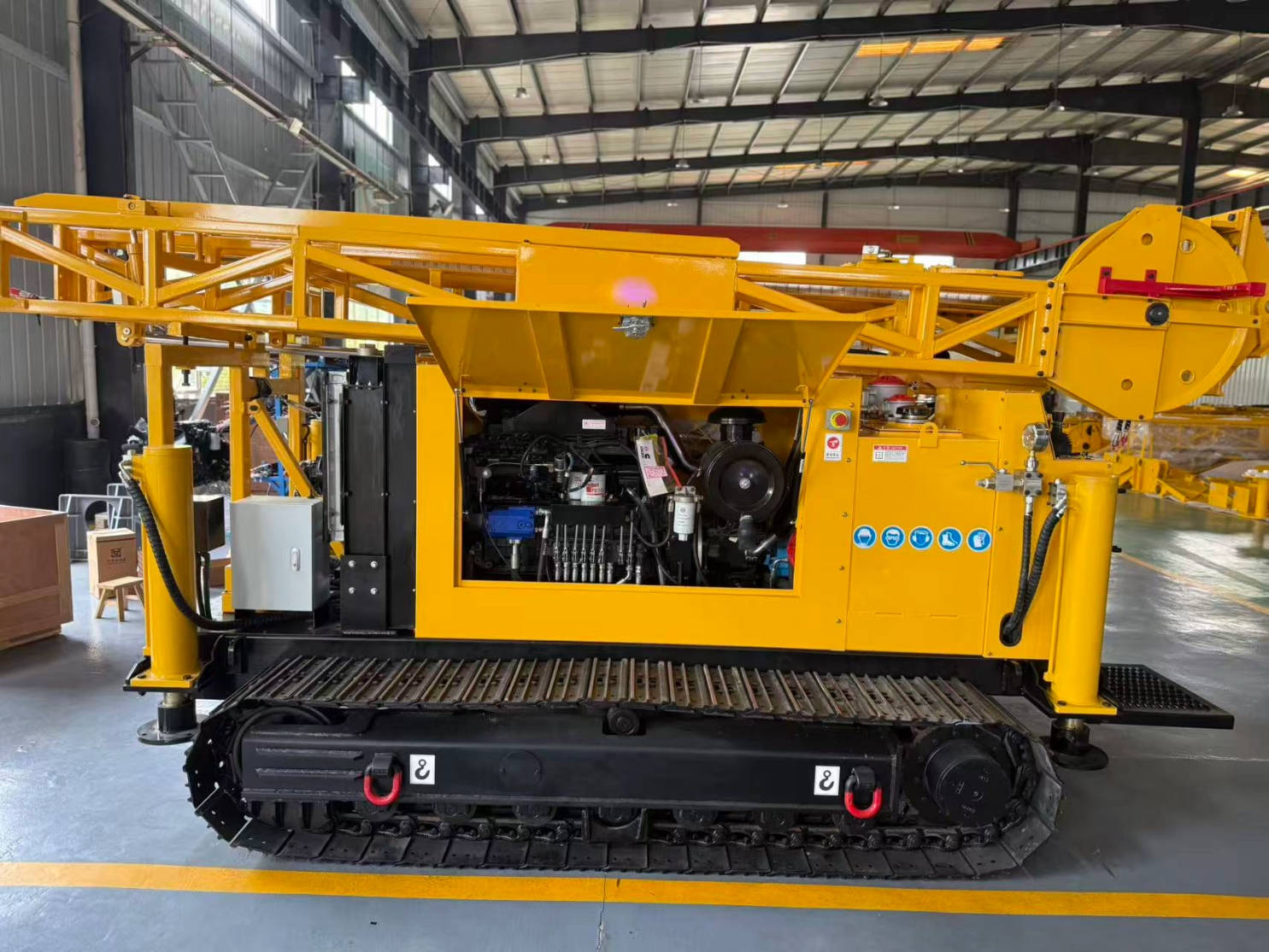
Mechanical feed should not be dismissed merely because hydraulic systems offer greater adjustment flexibility.
It may remain appropriate when:
- Ground conditions are reasonably predictable.
- Required depths and loads fall within the rig's demonstrated capability.
- The feed mechanism is maintained and responsive.
- Local maintenance support favors familiar mechanical components.
- Operators can manage formation changes without unacceptable quality losses.
Initial purchase price, however, is an incomplete comparison.
Evaluate cost per accepted meter, including consumables, downtime, maintenance, core quality, and any rejected or repeated drilling. A cheaper rig can become expensive if inconsistent control consumes bits or compromises usable geological information.
Conversely, a sophisticated hydraulic rig may be a poor investment if local servicing cannot support its hydraulic components.
The following framework supports planning and supervision. It does not replace the rig manual, bit manufacturer's recommendations, or site safety procedures.
Confirm hole diameter, planned depth, inclination, expected formations, and core-quality requirements.
Match the rig, rods, core barrel, bit, and flushing equipment to that envelope. Check usable torque and feed capability at intended operating speeds—not only headline maximum values.
Inspect mast setup, head guidance, rod straightness, connections, and core-barrel condition.
A controllable feed system cannot compensate for misalignment or damaged tooling. Follow the approved collaring procedure and avoid treating the first meters as a race for production.
Use the manufacturer-approved method to interpret feed pressure and bit loading.
Some hydraulic rigs permit an off-bottom pressure comparison. The relationship between pressure difference and force depends on cylinder area and circuit arrangement.
Do not copy a pressure setting from another rig and assume it represents the same WOB.
Begin within the bit supplier's recommended operating range.
Assess penetration, torque response, circulation, and recovered core before making larger changes. Change one principal variable at a time where conditions permit, so the result remains interpretable.
Review settings after rod additions, formation changes, unusual torque behavior, or reduced recovery.
Record why settings changed. A drilling log is more useful when it connects operating adjustments to geology and outcomes rather than listing isolated gauge readings.
A useful equipment comparison should test operating outcomes rather than rely on claims about "smoother drilling."
My recommended approach is a matched trial using comparable hole geometry, geological intervals, tooling, crew competence, and acceptance criteria.
| Measurement | What it reveals |
|---|---|
| Penetration rate by geological interval | Whether performance differences reflect the rig or formation |
| Feed-pressure variation | How stable the indicated control behavior is |
| Estimated WOB, where valid | Whether pressure behavior corresponds to useful loading |
| Torque fluctuations and stalls | How consistently the bit remains cutting |
| Core recovery and condition | Whether production preserves geological value |
| Surveyed trajectory change | Whether holes satisfy directional requirements |
| Bit consumption and downtime | Whether gains survive a cost-per-meter assessment |
Feed-pressure variation alone cannot establish stable downhole WOB. Likewise, faster penetration does not prove better borehole control.
A convincing trial shows a combination of acceptable trajectory, core quality, productive cutting, and manageable operating cost. There is no universal target percentage: acceptance limits should follow the project specification and tooling requirements.
Do not assume the solution is still more force.
Check bit suitability, bit condition, available torque, and circulation. Industry guidance identifies little additional penetration under increased loading as a warning that bit wear may rise without a useful production gain.
Investigate formation changes, unstable cutting, core blockage, and tooling condition.
Use the approved diagnostic procedure rather than repeatedly forcing the bit forward. Hydraulic feed provides adjustment capability, but it does not identify the cause automatically.
Examine the core barrel, run length, formation fragility, and flushing arrangement.
Epiroc's guidance connects waterway design and fluid behavior with performance in friable formations. Recovery therefore cannot be attributed to feed type alone.
Review surveyed changes alongside loading, geology, hole setup, and tooling.
Boart Longyear's diamond-bit guidance warns that excessive bit loads can increase deviation. Hydraulic control helps only when it is used to maintain appropriate loading; unused control capability provides no protection.

CORTECH's product portfolio includes surface, heli-portable, and underground hydraulic diamond core drilling configurations. These address different deployment needs, but the selection process should remain application-led.
For surface programs, compare depth capacity by rod size, pullback, operating torque, feed sensitivity, and maintenance access.
Also verify how the selected model manages loading as the drill string grows. Maximum depth alone does not describe control quality.
For heli-portable projects, assess individual module weights, lifting arrangements, assembly procedures, and hydraulic connection protection.
Transport modularity solves an access problem. It does not, by itself, prove equivalent drilling performance across every configuration.
Underground selection should consider clearance, anchoring, drilling angles, hose routing, power supply, and operator access.
Verify loading control for the planned hole orientation. An operating approach suitable for a downward surface hole may not transfer directly to a horizontal or upward underground hole.
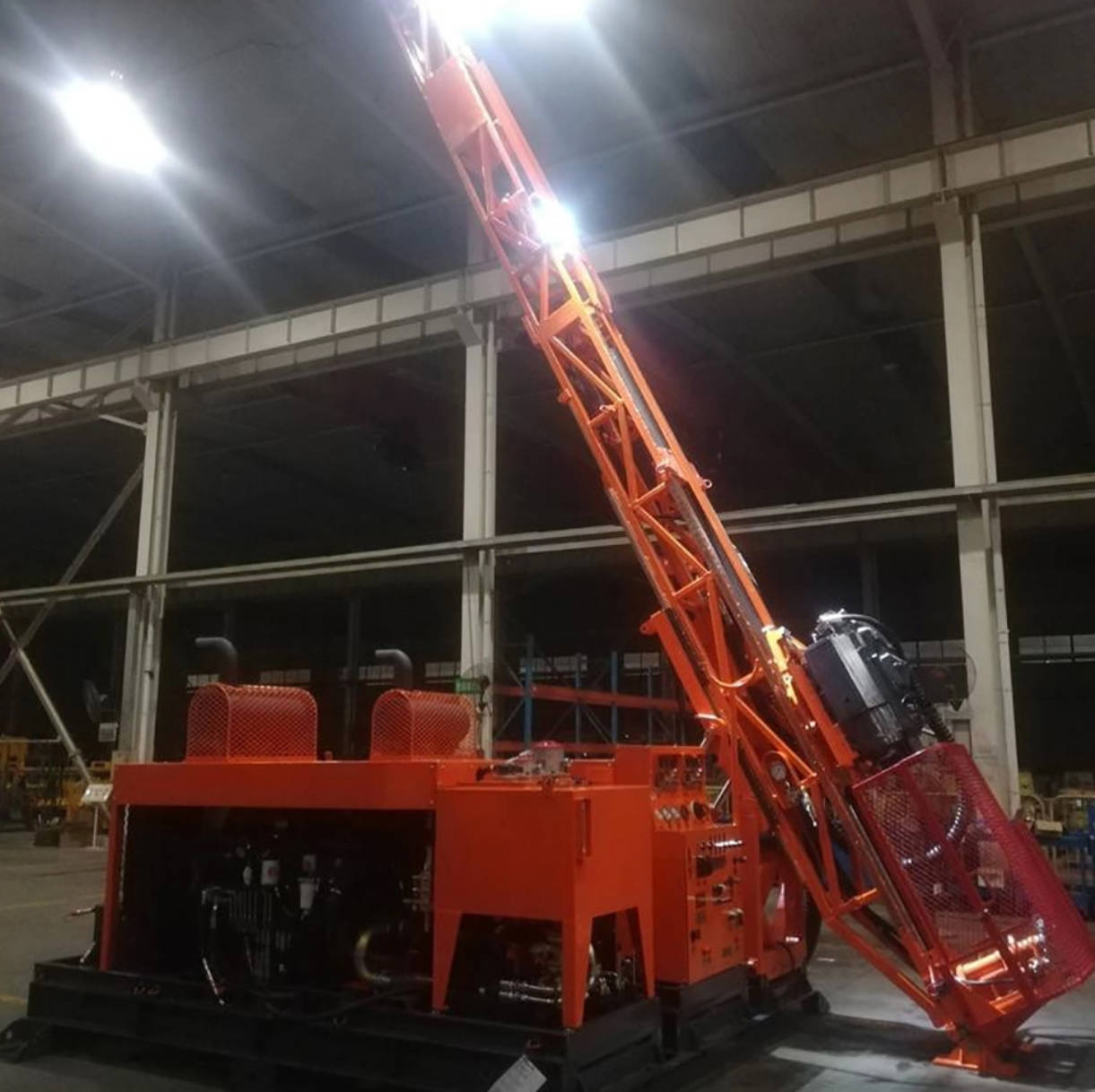
Send CORTECH your planned depth, rod size, drilling angles, expected geology, access restrictions, and core-quality requirements.
Request a configuration proposal that explains:
- Feed and holdback control.
- Torque at working speeds.
- Flushing-system compatibility.
- Deployment and servicing requirements.
- Available monitoring or automation functions.
Ask for model-specific specifications and an agreed performance-verification plan. The strongest equipment decision connects the rig's demonstrated capabilities to your actual drilling program.
No. Hydraulic feed generally offers more adjustment flexibility, but its value depends on system design, maintenance, operator competence, and project requirements. Mechanical feed can remain suitable within a demonstrated operating envelope.
No. Hole trajectory also depends on geology, setup, tooling, loading, and drilling practice. Directional surveys—not the feed-system label—establish whether the borehole meets requirements.
No. Feed pressure is a hydraulic measurement. Estimating WOB requires the correct circuit-specific interpretation, including relevant loading references and cylinder geometry.
Yes. Rotation and feeding are separate functions. A rig may use mechanical transmission for rotation while applying hydraulic control to feed movement and loading.
A responsive hydraulic system offers useful adjustment flexibility. However, successful drilling still requires suitable bits, coordinated rotation and flushing, appropriate core-barrel selection, and careful operating decisions.
Prioritize cost per accepted meter, core quality, trajectory compliance, consumable use, servicing capability, and downtime. Require evidence relevant to your geology rather than general claims of superior productivity.
1. Boart Longyear. ["The Science of Drilling: Are You Getting the Most Out of Your Diamond Bits?"] February 1, 2018. Technical basis for bit loading, pressure interpretation, rotation, flushing, wear, and excessive-load risks. [boartlongyear]
2. Epiroc. ["Diamond Driller's Technical Book."] Technical guidance on relationships among WOB, rotation, penetration, and fluid flushing. [epiroc]
3. Epiroc. ["Extending Core Bit Life."] Guidance on bit loading, waterways, friable ground, and cooling and cuttings removal. [epiroc]
4. Boart Longyear. ["Longyear Bits and Accessories."] Manufacturer guidance on bit-weight ranges, off-pressure measurement, and risks associated with excessive loading. [boartlongyear]
5. Mohanlal Sukhadia University. [Drilling instructional presentation.] Educational description of diamond-core drilling and screw/gear versus hydraulic feed mechanisms. [mlsu.ac]
6. CORTECH Drilling Equipment Co., Ltd. [Company profile and product portfolio.] Manufacturer source for hydraulic diamond core drilling equipment and surface, heli-portable, and underground product categories. [coretecdrilling]


