
Views: 274 Author: CORTECH Publish Time: 2026-09-26 Origin: Site


Content Menu
● Selection criteria and comparison
>> 1. CORTECH Drilling Equipment Co., Ltd.
>> 2. Jinshi Drilltech Co., Ltd.
>> 3. Jiangsu Sinocoredrill Exploration Equipment Co., Ltd.
>> 4. H.H. Drill-Tech Drilling Machinery Co., Ltd.
>> 5. Hanfa Group / Zhengzhou Hanfa Prospecting Machinery Co., Ltd.
>> 6. Henan Rancheng Machinery Co., Ltd.
>> 7. Beijing Jincheng Mining Technology Co., Ltd. (JCDRILL)
>> 8. SINOVO Group / SINOVO Heavy Industry
>> 9. Wuxi Geotec Geological Equipment Co., Ltd.
>> 10. Beijing SINOVO International Trade Co., Ltd.
● Buyer's guide: specifications, audits and pitfalls
>> Write an RFQ that reveals engineering differences
>> The overlooked trap: the "compatible" spare
>> Verify the factory, sample and shipment
>> Treat compliance as model-specific
● FAQ
>> 1. How can I tell whether a supplier's ISO 9001 certificate has expired or been suspended?
>> 2. Does a CE certificate supplied by a factory make my rig EU-compliant?
>> 3. Why do two suppliers quote different drilling depths for apparently similar hydraulic rigs?
>> 4. What is the practical MOQ for an OEM core rig?
>> 5. How do I protect myself if the approved prototype differs from the delivered batch?
A hydraulic core drilling machine is not a commodity purchase. Two rigs with similar advertised depth ratings can differ substantially in hydraulic control, rod handling, wireline compatibility, maintenance access and the quality of the documentation delivered with the machine. For a procurement manager, the useful question is not "Who ranks first?" but "Which supplier can repeatedly build, document and support the configuration our crews need?"
How we assessed suppliers: We looked for a relevant core-drilling product range, evidence of design or manufacturing capability, quality-control information, export experience and a plausible route to OEM/ODM work. Public claims are treated as starting points for due diligence—not as independently audited findings. CORTECH appears first because this article is prepared for CORTECH and its all-hydraulic diamond-rig portfolio closely matches the intended purchase. The remaining order is editorial, not a verified market-share ranking.
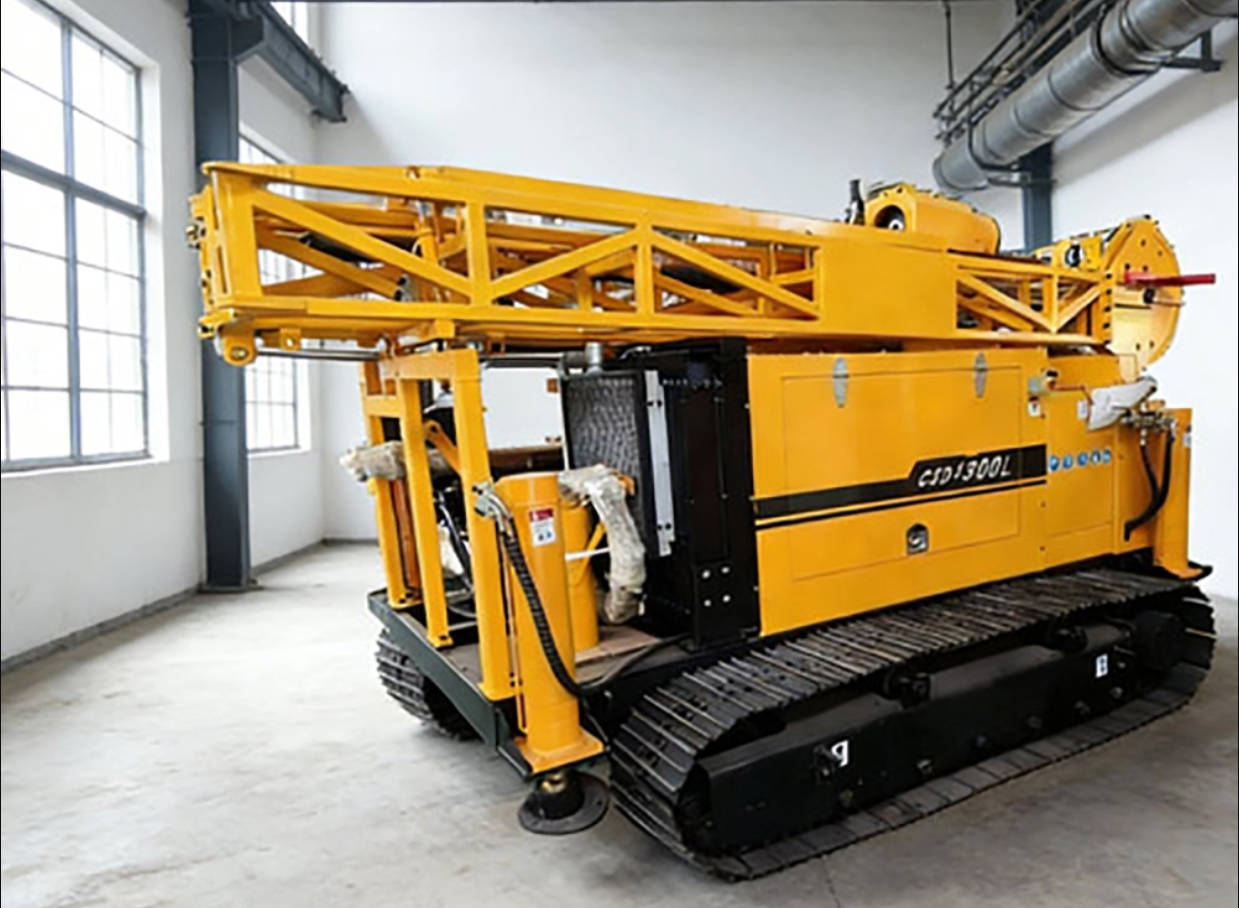
China offers buyers a choice between specialist exploration-equipment suppliers and broader drilling-machinery manufacturers. Its wider machinery supply chain also supports sourcing of fabricated structures, hydraulic systems and drilling consumables, although the origin and specification of critical components must be checked rig by rig. The geographic picture is not one single "drilling-rig capital": suppliers in this selection have operations or manufacturing bases associated with Jiangsu, Hebei, Henan and Beijing, among other locations.
There is evidence of a substantial export ecosystem, but broad machinery figures must not be presented as hydraulic-core-rig sales. Citing China Construction Machinery Industry Association data, a Hunan provincial government article reported $48.526 billion in Chinese construction-machinery exports for January–October 2025, up 12% year on year. That category is much wider than diamond exploration rigs. Separately, The Business Research Company's January 2026 report estimated the global diamond core drilling market at $2.34 billion in 2025 and $2.39 billion in 2026; its definition includes machines, bits, rods and other products, so it is not a measure of Chinese rig manufacturing alone.
For buyers, the advantage is supplier variety. The corresponding risk is comparing unlike products: a portable spindle-type investigation rig, a fully hydraulic surface wireline rig and a water-well machine advertised as a "core drill" may all appear in the same search results. This guide prioritizes suppliers with identifiable core-drilling offerings and flags where the fit is broader or requires further verification.

We used six procurement tests to build this shortlist:
1. Product relevance: Is there evidence of a hydraulic core rig, rather than only a handheld drill, consumables catalogue or general-purpose borehole machine?
2. Engineering capability: Can the supplier explain power-head performance, feed and pullback, hydraulic architecture, mast arrangement and wireline system integration for the proposed model?
3. Factory and QC evidence: Can it provide the manufacturing address, process records, inspection plan and a witnessed factory acceptance test?
4. Delivery reliability: Can it separate component procurement time, assembly time, testing and export preparation in a realistic schedule?
5. Compliance evidence: Can it supply current, correctly scoped management-system certificates and product-specific documents for the destination market?
6. Lifecycle support: Are manuals, drawings, training, commissioning assistance and critical spare parts included or clearly priced?
The table deliberately does not invent plant-wide monthly output or fixed MOQ values. Except where a supplier publishes a relevant figure, those details should be established in a written RFQ. "Not publicly disclosed" does not mean a supplier has no capacity or certification; it means a buyer should not assume either.
| Supplier | Best shortlist fit | Public capacity evidence | Rig MOQ | Public certification/compliance signal |
|---|---|---|---|---|
| CORTECH Drilling Equipment Co., Ltd. | Engineering-led all-hydraulic diamond rigs; OEM discussions | Says it has supplied more than 1,200 rigs to over 55 countries; not an annual capacity figure | Not publicly disclosed; request by configuration | Request current model-specific and factory documents; do not infer certification from a product page |
| Jinshi Drilltech Co., Ltd. | Integrated rigs, rods, bits and coring systems | A June 2026 factory-tour article describes a planned workshop capable of more than 100 rigs annually; not verified current output | Not publicly disclosed | Request current certificates and scope for the supplying entity |
| Jiangsu Sinocoredrill Exploration Equipment Co., Ltd. | Rigs plus wireline tools | Not publicly disclosed | Not publicly disclosed | Company states ISO 9001/GB/T 19001 and CE; verify status and applicable models |
| H.H. Drill-Tech Drilling Machinery Co., Ltd. | Surface core rigs and geotechnical drilling | Not publicly disclosed | Not publicly disclosed | Request current, product-specific evidence |
| Hanfa Group / Zhengzhou Hanfa Prospecting Machinery Co., Ltd. | Configurable rigs across drilling applications | Not publicly disclosed | Not publicly disclosed | Request applicable evidence for the quoted model and legal manufacturer |
| Henan Rancheng Machinery Co., Ltd. | Hydraulic wireline models within a broader rig range | States a 20,000 m² facility; this is floor area, not output | Not publicly disclosed | States ISO 9001 and CE; verify issuer, scope and model |
| Beijing Jincheng Mining Technology Co., Ltd. (JCDRILL) | Multi-category rigs and export support | States a 9,625 m² manufacturing facility; output not disclosed | Not publicly disclosed | Mentions an ISO 9001:2000 award in 2002; not proof of current certification |
| SINOVO Group / SINOVO Heavy Industry | Higher-volume geological and construction-machinery sourcing | Claims annual production of 1,000 core rigs; establish which models and factory this covers | Not publicly disclosed | States ISO 9001:2015 and CE; confirm the certificate holder and exact rig |
| Wuxi Geotec Geological Equipment Co., Ltd. | Coring tools with a rig-sourcing discussion | Not publicly disclosed | Not publicly disclosed | Request current factory and model documents |
| Beijing SINOVO International Trade Co., Ltd. | Export coordination and multi-product procurement | Use SINOVO's group claim only after confirming the producing entity | Not publicly disclosed | Confirm whether the trading entity, factory or both hold the documents required |
Entity note: The two SINOVO entries represent different procurement roles within the same group, not ten unrelated manufacturing groups. A buyer requiring ten independent factories should replace the trading-company entry during the next audit round. Published capacity and certificates in the table are supplier claims unless otherwise stated; none should be treated as an independently completed factory audit.
Established: CORTECH's other published material states 2005; its supplied company-profile page does not itself give a founding year. Market reach: CORTECH says it has supplied more than 1,200 diamond core rigs to more than 55 countries. OEM/ODM fit: Its profile explicitly describes integrated OEM capability and engineering design, with surface, heli-portable and underground product categories shown on the site. These are company-reported facts, not a verified shipment or production audit.
For a small or mid-sized drilling brand, CORTECH is worth approaching when the purchase needs more than a logo change: for example, a surface wireline rig adapted to local engine-service availability, transport limits, preferred controls and a specified coring-tool string. Its stated R&D focus and second-generation product update make an engineering conversation appropriate. The claimed flexibility, communication speed and value for money should nevertheless be tested through a timed technical RFQ, revision-controlled drawings, an itemized quotation and a factory acceptance test—not assumed from positioning.
Buyer's question: Which hydraulic, power-head, winch and control components are standard on the exact proposed rig, which may be substituted, and how will every approved substitution be recorded?
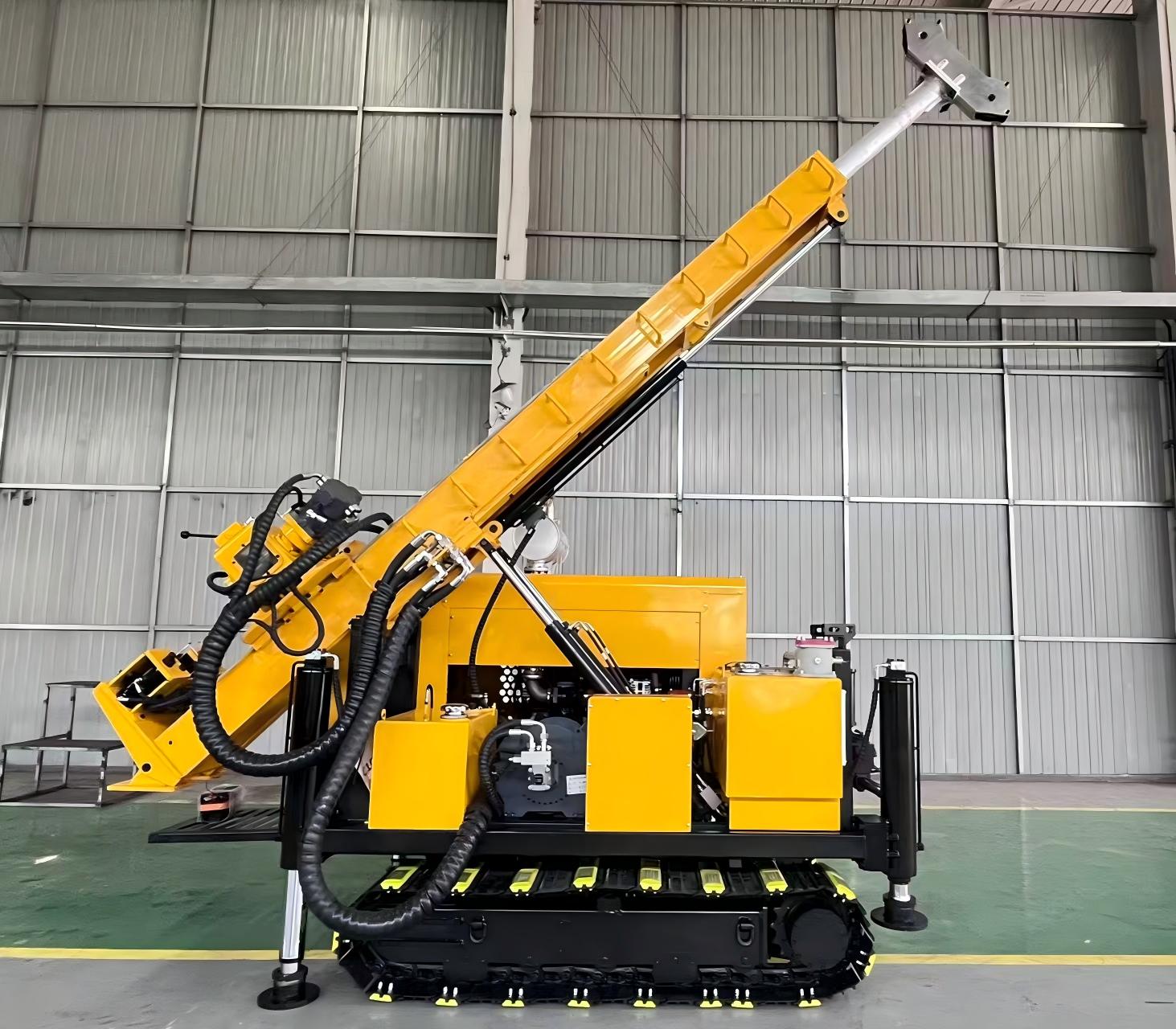
Established: 1996. Markets: The company lists Europe, Asia, Africa and Latin America among the regions reached by its products. OEM/ODM scope to discuss: Rig configuration alongside customized drilling tools, rods and coring-system components. Jinshi presents a broad portfolio spanning fully hydraulic rigs and consumables, making it a strong candidate when a purchaser wants one supplier conversation covering the complete coring system.
Jinshi has unusually useful third-party process evidence for an initial shortlist: Coring Magazine reported visiting its facilities in June 2026 and described rod inspection, heat treatment, thread machining and rig assembly. The article says a new rig workshop was expected to exceed 100 rigs a year; buyers should not quote that planned figure as current proven output. Ask for capacity and lead time for the particular Y-series configuration being tendered.
Established: The company states 2006. Markets: Its public materials address mining and exploration buyers, but a precise regional sales breakdown was not established from the reviewed sources. OEM/ODM scope to discuss: Rig-and-tool packages, tooling specifications and export documentation; confirm the extent of machine redesign before describing it as an ODM commitment. The company presents itself as a Wuxi-based supplier of drilling equipment and wireline tools and states that it holds ISO 9001/GB/T 19001 and CE-related credentials.
Its principal advantage for procurement is the potential to coordinate the rig with bits, barrels and other exploration tools. Request one compatibility schedule covering the rig, head, rods, overshot, inner-tube assembly and consumables. A general website statement about CE does not establish that a specific model has the conformity documentation needed in a particular destination market.
Established: 2015 as the present company, according to its site, after taking over an older drilling-machinery business with roots in a factory founded in 1970. Those are different dates and should not be collapsed into a "founded in 1970" claim for the present legal entity. Markets: A supplier profile lists Southeast Asia, the Middle East, CIS countries, Africa and the Americas. OEM/ODM scope to discuss: Surface-rig configuration, related drilling equipment and application-specific engineering; private-label terms require confirmation.
H.H. shows surface core drills and an HYDX-6 full-hydraulic machine in its published application material. That makes it a relevant technical comparator for buyers assessing surface exploration rigs. During diligence, ask for a build record and component list for the model actually offered, rather than accepting specifications copied from a different HYDX variant.
Established: Hanfa states 1998 for the group. Markets: It says its exports reach more than 60 countries and regions, including Southeast Asia, South America, Africa and Eastern Europe. OEM/ODM scope: Its published customization list includes machine dimensions, drilling parameters, power and hydraulic systems, chassis, controls, pipe accessories, exterior branding and export-standard requirements.
Hanfa's portfolio includes hydraulic core models as well as water-well, reverse-circulation and other rigs. That breadth is useful if a buyer manages several drilling methods, but it increases the need for a narrowly written RFQ. Specify diamond wireline coring where required; do not accept "core drilling" as sufficient evidence that a proposed RC or multi-purpose configuration will produce the required geological core.
Established: 2010. Markets: The company lists Africa, South America, Southeast Asia and Eastern Europe among export destinations. OEM/ODM scope to discuss: Chassis, power-package and tooling configuration; obtain written confirmation of which changes are engineered in-house. Rancheng reports a 20,000 m² facility and advertises ISO 9001 and CE credentials, all of which merit document-level verification.
The RCJ1000C page identifies a fully hydraulic wireline core rig, so Rancheng belongs on a model-specific shortlist rather than merely a general drilling-machinery list. Its own page, however, gives differing engine-power statements in the description and technical table. Treat that discrepancy as a useful RFQ test: require a signed, revision-numbered data sheet tied to the engine nameplate and machine serial number before comparing performance or price.
Established: Its company profile states 1999. Markets: It lists North and South America, Western Europe, East and Southeast Asia, the Middle East and Africa. OEM/ODM scope to discuss: Quoted rig configuration, accessories and after-sales package; confirm any private-label or redesign commitment in the contract. JCDRILL describes diamond core rigs within a wider range of rock, water-well and engineering drilling equipment.
The distinction between historical and current documentation matters here. JCDRILL's page says it received ISO 9001:2000 certification in November 2002. That statement cannot establish whether a current manufacturing entity holds a valid ISO 9001 certificate today. Its published delivery language is also expressly dependent on specifications, so obtain a project schedule for the actual build.
Established: SINOVO says it invested in its Hebei Xianghe manufacturing base in 2010; its account of earlier industry experience is not a single verified incorporation date for every group entity. Markets: The group reports trade relationships spanning more than 120 countries and regions. OEM/ODM scope to discuss: Geological rig specification, inspection arrangements and engineering changes, with the producing factory identified in the purchase order.
SINOVO publishes an annual core-rig production claim of 1,000 units and says its Beijing international-trade and heavy-industry entities are ISO 9001:2015 certified. These are stronger capacity signals than a vague "large factory" description, but a buyer of a full-hydraulic wireline rig still needs the model mix, current available slots and evidence that the offered machine is produced at the audited facility. Its portfolio extends well beyond specialist diamond exploration rigs.
Established: The company states 1989. Markets: Its public material positions the business for drilling-tool buyers; the reviewed sources do not provide a dependable regional breakdown. OEM/ODM scope to discuss: Tooling and compatible rig packages, subject to confirmation of which rig operations the company performs itself. Geotec identifies diamond core drilling equipment, rods, casings and related tools, and lists hydraulic rigs.
Geotec is particularly relevant when tooling interchangeability and a consistent consumables supply matter as much as the carrier rig. Before treating it as a direct rig-manufacturing alternative, establish the legal manufacturer of the quoted hydraulic machine, assembly location, warranty responsibility and who controls engineering changes. That question is a diligence requirement, not an allegation about its business.
Established: A separate incorporation year was not established in the reviewed source; SINOVO says the group established a Singapore-market entity in 2008 and invested in its Hebei manufacturing base in 2010. Markets: The group reports relationships across more than 120 countries and regions. OEM/ODM scope to discuss: Multi-product sourcing, specification coordination, export documentation and factory-managed changes.
This is an export-channel entry, not an additional independent factory beside SINOVO Heavy Industry. It may suit a buyer purchasing a package of rigs and related equipment or needing centralized export coordination. It should not be counted as a tenth distinct manufacturer in a tender that requires ten separate production owners. Confirm both the contracting seller and the manufacturing entity before approving its quotation.
Start with the hole programme, not a headline depth rating. State the expected geology, target core diameter and depth, drilling angle, site altitude and temperature, transport envelope, available service support, and whether the method must be wireline diamond coring. Ask every supplier to quote the same operating assumptions. A "1,000 m rig" is not a comparable specification if one supplier assumes a smaller rod size, different formation or different drilling angle.
For each proposed model, request:
- A signed technical sheet identifying engine, pumps, motors, power head, feed and pullback, mast, clamp, main hoist, wireline winch and mud system.
- A hydraulic schematic, electrical/control drawings, lubrication schedule, maintenance-access drawing and recommended two-year spare-parts list.
- Material grades and mill certificates for specified critical structural parts; weld procedure and inspection records where appropriate; and heat-treatment, straightness and thread-gauge records for rods.
- A component-origin list with exact make and model, plus an approved-substitution procedure.
- Factory acceptance criteria, including functional tests and serial-number-linked records.
For wireline consumables, ask which dimensional system applies and require a physical compatibility check, not just a matching letter designation. ISO 10097-1 addresses nomenclature and leading dimensions for interchangeability in System A metric wireline diamond core drilling equipment; a reference to the standard is useful, but it does not replace checking the precise parts delivered.
An expensive sourcing error can begin after a successful factory test. The demonstration rig may use an agreed hydraulic pump, seal kit, clamp insert or overshot assembly, while a later production batch or spare-parts shipment uses a nominally "equivalent" part. The replacement may fit at installation yet change service intervals, hose routing, repairability or wireline retrieval behaviour. This is a procurement risk to test—not a claim that any listed company makes such substitutions.
The safeguard is a serial-number-controlled baseline: attach an approved bill of materials and drawings to the purchase order; record the make, model and revision of critical components at factory acceptance; photograph their nameplates; and require written approval before substitution. Run a second acceptance check on the packed spare-parts kit. For rods, compare sample-thread gauging and hardness records from the production batch, not only from a sales sample. A June 2026 third-party factory account of Jinshi's rod line illustrates why heat treatment, thread inspection and straightness checks deserve attention alongside the rig itself.
1. Match identities. Compare the business licence, quotation issuer, receiving bank account, manufacturing address, certificate holder and name on the machine plate. Explain any differences between a group, factory and export company before payment.
2. Test a real configuration. With heavy rigs, a "sample" usually means a witnessed demonstration, a comparable reference unit, tooling samples or a pilot machine—not a casually shipped free sample. Agree the acceptance protocol and who pays for travel or third-party inspection.
3. Audit the production path. Ask which structural work, machining, hydraulic integration, assembly and final testing occur at the stated facility, and which are subcontracted. Outsourcing is not inherently a problem; undisclosed responsibility is.
4. Witness the FAT. Test controls, guarding, emergency stops, leaks, hoists, clamp operation, wireline retrieval and alarm behaviour against agreed criteria. Record defects and retest before the balance payment.
5. Plan logistics around the actual machine. Obtain packed dimensions and weights for every module, lifting points, lashing and preservation instructions, a detailed packing list, spare-parts customs descriptions and the agreed Incoterm. Confirm engine, battery, fuel and fluid-handling instructions with the forwarder before dispatch.
In the EU, the European Commission says machinery placed on the market before 20 January 2027 must comply with the current Machinery Directive 2006/42/EC; Machinery Regulation (EU) 2023/1230 becomes mandatory on that date. Ask the supplier for the declaration of conformity, instructions, risk-assessment approach and evidence applicable to the quoted configuration. The Commission explicitly warns that voluntary "CE certificates" are not, by themselves, a recognized substitute for the required conformity process.
Do not demand "CE, RoHS and ISO" as though they are interchangeable rig certifications. ISO 9001 concerns a quality-management system. CE marking concerns applicable EU product rules. RoHS concerns electrical and electronic equipment within its scope; EU guidance describes exclusions, including certain large-scale stationary industrial tools. Determine applicability to the actual rig and its electrical equipment rather than asserting that every diesel-hydraulic rig requires a blanket RoHS certificate.
For a long-term OEM relationship, score shortlisted suppliers on evidence delivered, not only promises made: a complete technical response, a current certificate that matches the production entity, a feasible delivery schedule, a traceable FAT record and a priced spare-parts commitment are more useful than an unsupported "lowest cost" claim.

A credible shortlist should lead to two or three model-level audits, not an immediate award. CORTECH is a relevant first conversation for buyers seeking an all-hydraulic diamond core rig and an engineering-led OEM discussion; Jinshi, Sinocoredrill and the other suppliers offer different advantages in integrated tooling, product breadth or export coordination. The right partner is the one that can prove the specified machine, manufacturing responsibility and support plan at an acceptable total cost—not simply advertise the greatest depth or the quickest lead time.
Next step: Send CORTECH—or any shortlisted supplier—the same hole programme, target wireline system, destination country and acceptance checklist. Ask for a revision-controlled proposal, current compliance documents, a component schedule and a proposed FAT date before comparing final bids.
Request the full certificate, including number, legal entity, manufacturing site, scope, issuing body and dates. Search the issuer's register and IAF CertSearch, then resolve any mismatch directly with the certification body. A historical ISO award or a logo on a website is not current proof; the IAF verification service distinguishes statuses including active, suspended, withdrawn and expired.
Not by itself. Request the product-specific declaration of conformity and supporting technical and safety documentation for the rig you will place on the market. Confirm the applicable rules and the responsibilities of the manufacturer, importer and any private-label party; do not substitute an unrelated voluntary certificate for the required conformity assessment.
Ask each to restate its rating against your specified rod and core diameter, drilling angle and conditions, then compare hoist, pullback, power-head and hydraulic limits. An advertised maximum without those assumptions is a screening claim, not a defensible performance comparison.
There is no responsibly verifiable universal MOQ for the ten entries above. Ask separately for one machine with standard branding, a one-off engineered pilot and a repeat production batch. Tooling, new drawings, certification work and component minimums may drive different prices and lead times; put each scenario in the RFQ.
Tie the purchase order to revision-controlled drawings, an approved component list, production-batch inspection records and serial-number-linked FAT results. Require written authorization for substitutions and inspect both the rig and its spare-parts kit before shipment. This makes "equivalent" a documented engineering decision rather than a sales description.
1. - [CORTECH — Company profile]: portfolio, OEM positioning and company-reported deliveries. [cortechdrilling]
2. - [Jinshi Drilltech — Company profile] and [Coring Magazine — June 2026 factory tour]: products, manufacturing observations and planned capacity. [jsexplo]
3. - [Jiangsu Sinocoredrill], [H.H. Drill-Tech] and [Hanfa Group]: company-published product and background information. [hh-jx]
4. - [Henan Rancheng — About us] and [RCJ1000C product page]: facility claims and model specifications requiring RFQ confirmation. [ranchengmachine]
5. - [JCDRILL — Company profile] and [SINOVO — About us]: company-published markets, facilities and capacity claims. [sinovogroup]
6. - [The Business Research Company — Diamond Core Drilling Market Report 2026]: global market estimate; broader than rig-only sales. [thebusinessresearchcompany]
7. - [Hunan Provincial Department of Industry and Information Technology]: China Construction Machinery Industry Association export figures; broader than hydraulic core rigs. [gxt.hunan.gov]
8. - [European Commission — Machinery], [European Commission — RoHS guidance], [IAF CertSearch] and [ISO 10097-1]: primary compliance and verification resources. [iso]


