
Views: 238 Author: CORTECH Publish Time: 2026-09-23 Origin: Site


Content Menu
● Why Core Drilling Rig Selection Has Become More Technical
● Top Core Drilling Rig Manufacturers to Know
>> 1. Epiroc: Advanced Surface and Underground Core Drilling Solutions
>> 2. Boart Longyear: Exploration Drilling Equipment and Tooling Expertise
>> 3. CORTECH: Hydraulic Wireline Core Drilling Rigs for Surface, Heli, and Underground Work
>> CORE SURFACE DRILL for Ground-Based Exploration Programs
>> CORE HELI DRILL for Remote and Mountainous Areas
>> CORE U/G DRILL for Underground Exploration and Mine Development
>> 4. XCMG: Broad Construction Machinery Capability
>> 5. SANY Heavy Industry: Large-Scale Equipment Manufacturing Strength
● Core Drilling Rig Comparison Table
● How to Choose a Hydraulic Diamond Core Drilling Rig
>> 1. Define the Geological and Sampling Objective
>> 2. Verify Depth Capacity by Rod Size
>> 3. Assess Mobility Before Ordering
>> 4. Evaluate Safety as a System
>> 5. Compare Total Cost of Ownership
● A Practical Pre-Purchase Inspection Checklist
● Common Buyer Mistakes to Avoid
● Why CORTECH Can Be a Practical Choice for Core Drilling Projects
● FAQ
>> 1. What is a diamond core drilling rig used for?
>> 2. What is the difference between a surface core drill and an underground core drill?
>> 3. When should I choose a heli-portable core drilling rig?
>> 4. How do I compare core drilling rig depth ratings?
>> 5. Why is wireline drilling important in deep core drilling?
>> 6. What information should I send to a core drilling rig manufacturer before requesting a quote?
>> 7. Which core drilling rig is best for mineral exploration?
Choosing among the top core drilling rig manufacturers is not simply a question of drilling depth or machine price. For mineral exploration contractors, mining companies, and geological investigation teams, the right hydraulic diamond core drilling rig must match the project's geology, mobility constraints, target depth, core size, safety requirements, and long-term service strategy.
This guide compares leading global suppliers and explains how buyers can evaluate a surface core drilling rig, modular heli-portable drilling rig, or underground core drilling rig with greater technical confidence. It is written from the perspective of equipment selection—not brand promotion alone—so buyers can turn published specifications into a practical purchasing decision.

Diamond core drilling remains one of the most important methods for obtaining continuous geological samples. Unlike destructive drilling methods, it retrieves cylindrical rock core that geologists can log, assay, photograph, orient, and analyze for mineral exploration, geotechnical investigation, resource definition, and underground mine development.
However, a drilling rig should not be selected only by its advertised maximum depth. Actual drilling performance can vary significantly according to rock strength, fracture frequency, hole angle, rod size, borehole condition, water availability, crew capability, wireline condition, and drilling-tool configuration.
A rig that performs well in competent granite at HQ size may not achieve the same productivity in fractured formations, fault zones, clay-bearing ground, or deep inclined holes. This is why experienced buyers increasingly evaluate the complete drilling system rather than treating the rig as an isolated machine.
A practical system evaluation includes:
- Rig torque, feed force, pullback force, and rotation speed
- Maximum usable drilling depth by rod size
- Wireline hoist capacity and rope safety margin
- Hydraulic system stability and cooling performance
- Mast design, angle range, and setup speed
- Modular transportability for remote exploration sites
- Rod-handling safety and operator exposure
- Spare-parts availability and technical support
- Compatibility with rods, overshots, core barrels, bits, pumps, and mud systems
- Long-term operating cost rather than purchase price alone
For buyers working in difficult terrain or high-value exploration programs, the most expensive drilling delay is often not machine acquisition—it is unplanned downtime, poor core recovery, repeated hole reaming, unsafe manual handling, or an unsupported hydraulic failure far from the nearest service center.
The following manufacturers are widely recognized in drilling equipment, mining equipment, exploration drilling, or hydraulic core drilling applications. Each serves different customer profiles, project scales, regional markets, and technical requirements.
Epiroc is one of the best-known global manufacturers of mining and exploration drilling equipment. Its core drilling portfolio includes equipment designed for both surface exploration and underground drilling operations.
For surface diamond drilling, Epiroc's exploration equipment is commonly associated with the Christensen and Boyles product families. For underground exploration, the Diamec range is widely recognized among mining companies and drilling contractors seeking compact, powerful, and safety-oriented core drilling systems.
Epiroc is often considered by buyers who prioritize:
- Deep-hole drilling capability
- Established global brand recognition
- Mining-industry experience
- Strong engineering standards
- Equipment availability across international markets
- Advanced safety-focused machine design
- Integration with broader mining equipment fleets
A key strength of large global suppliers is the ability to provide standardized equipment solutions across multiple mine sites and countries. This can simplify fleet management for multinational contractors. However, buyers should still verify regional parts inventory, lead time, field-service coverage, and the exact configuration included in the quotation.
For example, a contractor may require a rig that can drill NQ at a specified depth in steep terrain. The relevant questions are not only "Can the rig drill NQ to this depth?" but also:
1. Can it do so with the selected wireline hoist, rope specification, and safety factor?
2. Can the rig be transported to the site?
3. Can the local dealer support hydraulic, electrical, and mechanical maintenance?
4. Does the configuration include the required mud pump, clamp, breakout system, rod handler, and safety guarding?
5. Is the depth rating based on ideal ground conditions or realistic project conditions?
Boart Longyear is a long-established name in mineral exploration drilling. The company is known not only for drilling rigs but also for drilling services, rods, casing, tooling, core barrels, bits, and related exploration drilling solutions.
This system-level experience matters. Core drilling productivity depends on the interaction between the rig, drill rods, wireline tools, core barrel, bit, fluid system, and operator practices. A mismatch between these components can lead to premature wear, difficult retrieval, lost production time, and reduced core recovery.
Boart Longyear is often evaluated by customers who need:
- Surface exploration drilling systems
- Tilting top-drive coring rigs
- Reliable drill rod and casing options
- A combination of equipment and tooling support
- Solutions for established exploration programs
- Global drilling-industry experience
A major buyer advantage is the ability to discuss the drilling package as a complete operating system. Instead of purchasing a rig first and resolving compatibility issues later, project teams can assess the full workflow from collaring to core recovery.
That said, exploration buyers should conduct a detailed total-cost-of-ownership comparison. Premium equipment may offer value through reliability, tooling compatibility, resale potential, and service support, but the optimal choice will depend on utilization rate, drilling campaign duration, access conditions, and local support availability.
CORTECH focuses on the design, manufacture, and sale of fully hydraulic wireline diamond core drilling rigs. Its core equipment range includes:
- CORE SURFACE DRILL for surface geological exploration
- CORE HELI DRILL for modular, heli-portable, and remote-area drilling
- CORE U/G DRILL for underground core drilling and mine-site investigation
For buyers seeking a specialized hydraulic diamond core drilling rig supplier, CORTECH's key value lies in offering machine categories aligned with distinct exploration and mining operating environments.
A surface core drilling rig is generally suitable for projects with road access, drill-pad access, or transport by truck, crawler carrier, or trailer. These rigs can support mineral exploration, engineering geology, geotechnical investigation, and resource-definition drilling.
The preferred surface rig configuration depends on:
- Required drilling depth
- Core diameter and rod system
- Terrain and pad size
- Hole angle requirements
- Power source availability
- Water and mud-management conditions
- Need for mechanized rod handling
- Transport limitations between drill sites
CORTECH surface rigs are designed for operators that need fully hydraulic, wireline-oriented drilling solutions for demanding core sampling work. Buyers should request performance data by drilling diameter—such as BQ, NQ, HQ, and PQ—rather than accepting one generalized depth claim.
A modular heli-portable drilling rig is especially valuable where roads are unavailable, environmentally restricted, too expensive to build, or unsuitable for heavy transport. In mountainous mineral districts, forest exploration areas, island projects, and remote greenfield programs, modular transport can be a decisive factor.
The critical question is not merely whether a rig is "portable." Buyers should ask:
- What is the maximum transport-module weight?
- How many modules are required?
- How quickly can the rig be dismantled and reassembled?
- What lifting equipment is needed on site?
- Does the modular design compromise stability or drilling power?
- How are pumps, power packs, rods, and mud systems transported?
- Is the rig suitable for helicopter sling-load planning?
A well-designed heli-portable drill can reduce site-access barriers and help exploration teams position rigs closer to priority targets. But logistics planning remains essential. The total deployment plan must include crew movement, fuel, water, drill rods, casing, core boxes, spare parts, mud products, waste handling, and emergency response.
Underground core drilling rigs are used for definition drilling, resource conversion, grade-control support, geotechnical investigation, stope planning, and mine-extension drilling.
Underground operations create a different set of constraints:
- Limited drift width and height
- Restricted equipment maneuverability
- Ventilation requirements
- Noise and heat management
- Ground support conditions
- Power and water availability
- Operator safety around rotating equipment
- Drilling from uneven or confined work areas
For these applications, a compact rig footprint, reliable hydraulic control, practical mast positioning, and easy maintenance access can be as important as raw drilling capacity. The right underground rig should fit the mine's physical layout while enabling safe and efficient drilling at the required angle and depth.

XCMG is a major Chinese equipment manufacturer with an extensive construction machinery portfolio. The company is active across categories such as cranes, excavators, foundation equipment, road machinery, and drilling-related products.
For buyers, XCMG may be relevant when a project requires a broader equipment relationship beyond core drilling alone. Its large-scale manufacturing capability and international equipment presence can make it a candidate for customers sourcing multiple categories of heavy machinery.
However, procurement teams should distinguish between general drilling equipment capability and specialist wireline diamond core drilling expertise. A machine suitable for piling, rotary drilling, foundation work, or water-well drilling is not automatically optimized for deep mineral exploration coring.
Before selecting any supplier, buyers should verify:
- Whether the model is designed specifically for wireline diamond core drilling
- Core drilling depth by rod size
- Compatibility with standard wireline systems
- Experience in mineral exploration applications
- Availability of application-specific technical support
- Field references in similar geology and terrain
SANY Heavy Industry is a globally recognized manufacturer of construction and heavy equipment. Its product range spans excavators, concrete machinery, cranes, port machinery, road equipment, and foundation machinery.
SANY can be relevant for buyers whose procurement needs include large-scale construction, infrastructure, mining support, or foundation engineering equipment. The company's scale, manufacturing capacity, and international distribution reach are often major considerations.
For dedicated geological exploration programs, however, buyers should evaluate whether the proposed model is purpose-built for diamond core drilling. The needs of a deep core drilling contractor differ from those of a foundation contractor. Core drilling requires stable and controllable rotation, reliable feed characteristics, wireline retrieval support, precise hole control, and compatibility with exploration drilling tools.
In other words, a large manufacturer can provide strong industrial capacity, but the buyer must confirm the rig's exact intended application before comparing it with specialist core drill manufacturers.
| Manufacturer | Primary Market Position | Relevant Core Drilling Strength | Best-Fit Buyer Profile | Evaluation Priority |
|---|---|---|---|---|
| Epiroc | Global mining and exploration equipment supplier | Surface and underground core drilling solutions | Large exploration, mining, and multi-site contractors | Global support, safety systems, deep-hole capability |
| Boart Longyear | Exploration drilling equipment, tooling, and services provider | Integrated rigs, rods, casing, tooling, and drilling expertise | Exploration contractors and mining companies | System compatibility, tooling support, fleet standardization |
| CORTECH | Specialized hydraulic wireline diamond core drilling rig manufacturer | Surface, heli-portable, and underground core drilling systems | Buyers needing dedicated core drilling solutions and flexible configurations | Application match, modularity, hydraulic design, after-sales support |
| XCMG | Major construction machinery manufacturer | Broad drilling and heavy-equipment manufacturing capability | Buyers combining drilling needs with wider construction equipment procurement | Confirm core-drilling specialization and tool compatibility |
| SANY Heavy Industry | Global heavy-equipment manufacturer | Large-scale manufacturing and industrial equipment range | Infrastructure, foundation, and diversified equipment buyers | Verify purpose-built core drilling suitability |
A structured buying process reduces the risk of purchasing a rig that looks capable on paper but performs poorly in the field.
Start with the project, not the machine.
Ask:
- Is the goal mineral exploration, geotechnical investigation, or underground resource definition?
- What core diameter is required for logging and assay?
- What depth must be reached at BQ, NQ, HQ, or PQ?
- Will holes be vertical, angled, or directional?
- Is the geology competent, fractured, abrasive, clay-rich, or water-sensitive?
- What core recovery percentage is operationally acceptable?
A rig should be selected for the real drilling objective, including expected conditions—not only the best-case specification.
Depth claims can be misleading if they do not specify rod size and operating conditions. A rig may have one maximum depth rating at BQ but a much lower capacity at HQ or PQ.
Request a clear specification table covering:
- BQ maximum depth
- NQ maximum depth
- HQ maximum depth
- PQ maximum depth
- Recommended depth versus maximum theoretical depth
- Pullback force
- Feed force
- Rotation torque
- Rotation speed range
- Wireline hoist pull and rope diameter
- Mast stroke and drill angle range
The supplier should explain the assumptions behind the figures. Depth capacity may depend on hole angle, drill-string weight, friction, fluid conditions, wireline load, and rope safety factor.
The best rig is useless if it cannot reach the drill pad economically and safely.
For each project, identify whether the rig must be:
- Truck-mounted
- Crawler-mounted
- Trailer-mounted
- Skid-mounted
- Modularized for remote transport
- Heli-portable
- Suitable for underground drift access
A CORTECH CORE HELI DRILL configuration may be appropriate where transport-module weight and site access determine whether drilling can begin at all. In contrast, a larger surface rig may be more productive where roads, pads, and support vehicles are available.
Core drilling involves rotating rods, suspended loads, pressurized fluids, moving machinery, noise, manual handling, and potential entanglement hazards. Safety should be built into procurement specifications rather than treated as an afterthought.
Look for:
- Emergency-stop systems
- Guards around rotating and moving components
- Safe rod-handling design
- Stable mast and leveling arrangement
- Clear hydraulic control layout
- Hoist safety features
- Reliable clamp and breakout systems
- Maintenance access that minimizes exposure
- Operator training and documentation
- Local compliance with applicable workplace regulations
Do not assume that a large winch rating alone means safe lifting capacity. Wire rope selection, rope condition, local legal requirements, safety factors, and the real load path must all be considered.
The lowest purchase price rarely guarantees the lowest project cost. Evaluate the total cost over the expected life of the rig.
A useful comparison framework includes:
| Cost Area | Questions to Ask |
|---|---|
| Initial purchase | What is included in the base price, and what is optional? |
| Transport | What trucks, trailers, helicopters, or support equipment are required? |
| Fuel and power | How efficient is the power system during drilling and standby operation? |
| Consumables | What are the expected costs for bits, rods, casing, wireline tools, and drilling fluids? |
| Downtime | How quickly can common parts be supplied to the project site? |
| Maintenance | Are hydraulic filters, hoses, seals, and wear parts readily available? |
| Labor | Does the design reduce manual rod handling and setup time? |
| Resale value | Is there an established aftermarket for the rig and its components? |
Before signing a purchase order, arrange a technical review with the manufacturer or dealer. If possible, inspect a running machine or request a live video demonstration under realistic drilling conditions.
Use this checklist:
1. Confirm drilling depth by each required rod size.
2. Review torque, rotation-speed range, feed force, and pullback force.
3. Verify wireline hoist capacity, rope specification, and safety factors.
4. Confirm compatibility with your preferred rods, core barrels, overshots, and bits.
5. Inspect hydraulic hoses, fittings, filters, cooling, and maintenance access.
6. Check mast angle range, feed stroke, clamp arrangement, and breakout system.
7. Review module weights if heli-portable or remote transport is required.
8. Confirm the complete delivery scope, including mud pump, water pump, control panel, tools, and spares.
9. Request recommended spare-parts packages for commissioning and field maintenance.
10. Ask for operator manuals, maintenance schedules, training plans, and warranty terms.
11. Confirm after-sales contacts, response times, and service coverage in your region.
12. Obtain references from customers operating in similar geology or comparable environments.

The most frequent purchasing mistake is comparing machines only by maximum drilling depth and quoted price. That approach can overlook the factors that determine daily meterage, core recovery, labor requirements, and downtime.
Avoid these errors:
- Selecting a rig without defining the required core diameter.
- Assuming maximum rated depth equals reliable operating depth.
- Ignoring wireline safety margins and rope specifications.
- Choosing a "portable" rig without reviewing module weights.
- Buying a rig without confirming parts and service support.
- Treating a general drilling rig as a dedicated mineral core drilling rig.
- Underestimating the importance of drilling fluids and mud management.
- Failing to include crew training in the procurement plan.
- Ordering equipment without a complete delivery-scope checklist.
- Neglecting underground space, ventilation, and maneuverability constraints.
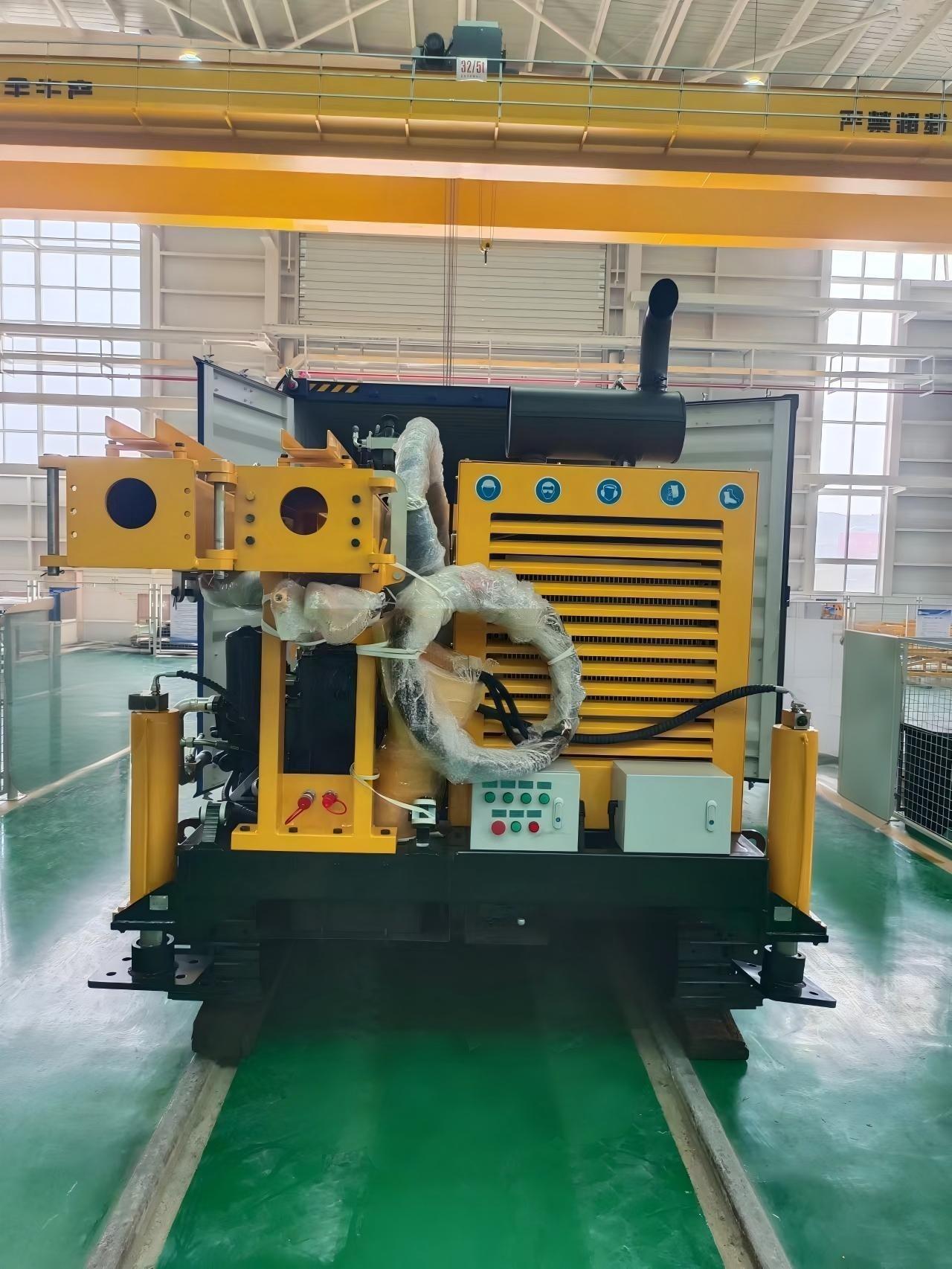
CORTECH is positioned for customers seeking dedicated hydraulic wireline diamond core drilling solutions across surface, remote-area, and underground applications.
Rather than trying to fit one machine into every operating environment, buyers can consider the specific CORTECH category that best matches their work:
- Choose CORE SURFACE DRILL for conventional surface exploration and ground-access drilling projects.
- Choose CORE HELI DRILL when modular transportation and remote deployment are central project requirements.
- Choose CORE U/G DRILL when mine development, underground resource definition, or confined-site drilling requires a compact and application-focused solution.
The right next step is a technical discussion based on your actual drilling parameters: target depth, core size, geology, hole angle, transport route, site elevation, available power, water conditions, and service location.
Contact CORTECH with your drilling requirements to receive a configuration recommendation, technical specification review, and quotation for a hydraulic diamond core drilling rig matched to your project.
A diamond core drilling rig is used to recover cylindrical rock samples from below the ground surface. These samples help geologists evaluate rock structure, mineralization, geotechnical properties, orebody continuity, and underground ground conditions.
A surface core drill is designed to operate from ground-level drill pads and is commonly used for exploration and geotechnical work. An underground core drill is designed for mine drifts, tunnels, and confined working areas where space, ventilation, maneuverability, and operator safety are more restricted.
Choose a heli-portable core drilling rig when roads are unavailable or impractical, terrain is mountainous or environmentally sensitive, drill sites are remote, or the project requires equipment to be transported in smaller modular sections.
Always compare depth capacity by rod size, such as BQ, NQ, HQ, and PQ. Also ask whether the stated depth is theoretical or recommended, and confirm the wireline hoist capacity, rope specification, drilling angle, geology assumptions, and drilling-fluid conditions.
Wireline drilling allows the inner tube containing the core sample to be retrieved without pulling the full drill string from the borehole. This can reduce trip time, improve drilling efficiency, and support deeper drilling operations.
Provide your required drilling depth, core size, drilling angle, geological conditions, application type, site location, transport limitations, power requirements, water availability, desired rig configuration, and expected project schedule.
The best mineral exploration core drilling rig depends on drilling depth, core diameter, terrain, access conditions, geology, budget, required mobility, and available service support. A surface rig may be ideal for road-accessible sites, while a modular heli rig may be better for remote terrain and an underground rig for mine-based drilling.
1. Epiroc. "Core Drilling Rigs: Underground and Surface Exploration." Available at: [Epiroc Core Drilling Rigs]
2. Epiroc. "Core Drilling Methods." Available at: [Epiroc Core Drilling Methods]
3. Boart Longyear. "Surface Exploration Drilling Products." Available at: [Boart Longyear Surface Exploration Products]
4. Boart Longyear. "Drilling Services, Equipment and Performance Tooling." Available at: [Boart Longyear Official Website]
5. Coring Magazine. "Recommended and Legal Depth Capacity of Drill Rigs." Available at: [Coring Magazine Depth Capacity Guide]
6. Henan Rancheng Machinery. "Top 5 Global Core Drilling Rig Manufacturers." Available at: [Original Article]
7. Henan Rancheng Machinery. "Core Drilling Machines: A Complete Guide to Safe and Efficient Operation." Available at: [Core Drilling Machine Guide]


