
Views: 289 Author: CORTECH Publish Time: 2026-09-12 Origin: Site


Content Menu
● Why Selecting the Right Construction Drill Machine Matters
● Main Types of Construction Drill Machines
● Handheld Drill Machines for Everyday Construction Tasks
● Cordless Drill Machines for Flexible Site Access
● Hammer Drill Machines for Concrete and Masonry
● Diamond Core Drill Machines for Clean, Accurate Holes
● Full-Hydraulic Core Drilling Rigs for Geological Exploration
● Magnetic Drill Machines for Steel Fabrication
● Demolition Drills and Breakers for Removal Work
● Drill Presses for Precision Workshop Work
● How to Choose the Right Construction Drill Machine
>> 1. Identify the Material and Hole Requirement
>> 2. Evaluate Access and Mobility
>> 3. Consider Safety and Ergonomics
>> 4. Calculate Total Cost of Ownership
● Practical Maintenance Checklist for Drilling Equipment
>> Daily Checks
● Why Expert Support Matters When Buying a Drill Rig
● Choose a Drill Machine That Fits the Entire Project
● FAQ
>> 1. What is the best drill machine for concrete?
>> 2. What is the difference between a hammer drill and a core drill?
>> 3. What is a CORE SURFACE DRILL used for?
>> 4. When should I choose a helicopter-portable core drilling rig?
>> 5. What is an underground core drilling rig?
>> 6. Why is wireline coring important?
>> 7. How can I reduce drilling equipment downtime?
Choosing the right construction drill machine is not simply a matter of selecting the highest-powered unit on a catalog page. From an engineer's and drilling contractor's perspective, the best machine is the one that matches the material, hole specification, access conditions, safety requirements, and total cost per completed meter of the job.
Construction teams may need a compact handheld drill for anchors, a magnetic drill for structural steel, a demolition hammer for concrete removal, or a full-hydraulic diamond core drilling rig for deep geological investigation. These machines share the word "drill," but their operating principles, outputs, and purchasing criteria are fundamentally different.
For contractors, mine developers, geotechnical teams, and exploration managers, the key question is not "Which drill machine is best?" It is: Which drilling system will produce the required result safely, consistently, and economically in my actual site conditions?

A drill machine affects more than drilling speed. It influences hole quality, operator fatigue, site safety, consumable use, equipment downtime, and project profitability.
A small construction crew installing anchors into a concrete slab has very different requirements from a mining exploration contractor recovering deep rock core samples. Using the wrong machine can cause:
- Slow penetration rates
- Poor hole accuracy
- Excessive bit wear
- Damage to concrete, rock, steel, or surrounding structures
- Higher vibration exposure for operators
- Unplanned maintenance costs
- Incomplete or low-quality geological samples
- Delays caused by frequent machine repositioning
In practical terms, a drill is productive only when its torque, rotation speed, feed force, flushing system, mast design, tooling, and operator controls work together.
For routine construction work, portability and versatility may be the priority. For mineral exploration or tunnel investigation, core recovery, borehole stability, hydraulic reliability, and wireline efficiency are usually more important than the machine's initial purchase price.
The construction drilling equipment market includes portable tools, stationary machines, specialized metalworking drills, demolition equipment, and industrial drilling rigs. Understanding their differences helps buyers avoid comparing equipment that serves completely different applications.
| Drill Machine Type | Main Application | Best Materials | Key Benefit | Typical Limitation |
|---|---|---|---|---|
| Handheld drill | General fastening and light drilling | Wood, plastic, light metal | Portable and affordable | Limited power and hole size |
| Cordless drill | Mobile work without power access | Wood, drywall, light metal | Flexible and convenient | Battery runtime limits |
| Hammer drill | Anchors and masonry drilling | Concrete, brick, stone | Rotary and impact action | Not designed for deep core recovery |
| Core drill machine | Clean circular holes and sample recovery | Concrete, masonry, rock | Accurate holes with reduced damage | Requires suitable bits and water management |
| Magnetic drill | Drilling structural steel | Steel plate, beams, fabrication components | Stable drilling on ferrous surfaces | Works only on magnetic materials |
| Demolition drill | Breaking and removal work | Concrete, asphalt, masonry | High-impact removal capability | Not intended for precision drilling |
| Drill press | Repeatable workshop drilling | Wood, plastic, metal | Precision and consistent depth | Low mobility |
| Full-hydraulic core drill rig | Deep geological and geotechnical coring | Rock formations | Continuous core recovery and deep-hole capability | Higher investment and specialist operation |
A handheld drill machine is one of the most common tools on a building site. It is generally used for drilling pilot holes, fastening screws, assembling frames, installing fixtures, and working with timber, plastic, or thin metal.
The main advantage is mobility. Operators can move quickly between tasks without preparing a large drilling platform.
However, handheld drills are not suitable for every hole. They become inefficient when the work requires:
- Large-diameter holes
- Deep drilling
- High precision
- Long-duration drilling
- Hard concrete or reinforced structures
- Continuous geological core samples
A good handheld drill should offer adjustable speed, reliable chuck retention, comfortable grip geometry, and overload protection. For contractors, choosing a durable unit with a common battery platform can also simplify charging and spare-battery management.
Cordless drills are valuable when workers must operate away from mains electricity, work at height, move between rooms, or complete installation tasks in unfinished buildings.
They are widely used for:
- Interior fit-outs
- Wood framing
- Drywall installation
- Light-duty steel fixing
- Furniture assembly
- Maintenance work
- Temporary site installations
The most important performance considerations are battery capacity, charging speed, brushless motor efficiency, torque settings, and weight. A powerful cordless drill may improve productivity, but excessive weight can create fatigue during repeated overhead drilling.
For long shifts, site managers should calculate the total number of batteries required per team rather than evaluating the drill alone. A machine with excellent specifications but insufficient battery support can become a bottleneck.
Hammer drill machines combine rotary motion with a forward hammering action. This mechanism helps the drill bit break and remove material when drilling into concrete, brick, block, stone, and masonry.
They are commonly used for:
- Anchor bolt installation
- Wall fixings
- Cable and conduit holes
- Mechanical and electrical installations
- Light structural fastening
- Renovation and refurbishment work
For occasional masonry drilling, a hammer drill may be sufficient. For repeated heavy-duty concrete drilling, an SDS rotary hammer or dedicated core drilling system may be a better choice.
The key distinction is that a hammer drill creates a hole by impact and rotation, while a diamond core drill cuts a circular path through the material. Therefore, core drills are usually preferred when a clean, larger-diameter opening is required for plumbing, HVAC, electrical sleeves, or precision sampling.
A core drill machine uses a hollow cylindrical bit, often diamond impregnated or diamond segmented, to remove a circular section of material. Rather than pulverizing the entire hole area, it cuts around the perimeter and leaves a core inside the bit or core barrel.
This method is especially valuable when drilling through:
- Reinforced concrete
- Masonry
- Asphalt
- Natural stone
- Dense rock
- Geological formations
Diamond core drilling is widely used in construction, infrastructure inspection, mineral exploration, geotechnical investigation, and tunnel development.
In construction applications, core drilling can create clean openings for pipes, cables, ventilation systems, and structural testing. In exploration drilling, it provides continuous rock core that geologists can log, photograph, test, and use to understand mineralization, rock structure, and ground conditions.
The right core drill configuration depends on several variables:
1. Target diameter
Larger diameters require more torque, stronger mounting, and appropriate water or fluid management.
2. Drilling depth
Shallow concrete coring and deep mineral exploration require very different equipment platforms.
3. Material hardness and abrasiveness
Bit matrix, diamond concentration, rotation speed, feed pressure, and flushing must match the formation.
4. Core quality requirements
Geological work may require high core recovery, oriented core, and wireline retrieval systems.
5. Site access
Urban construction may require compact, low-noise equipment, while remote exploration may require crawler-mounted or modular drilling rigs.
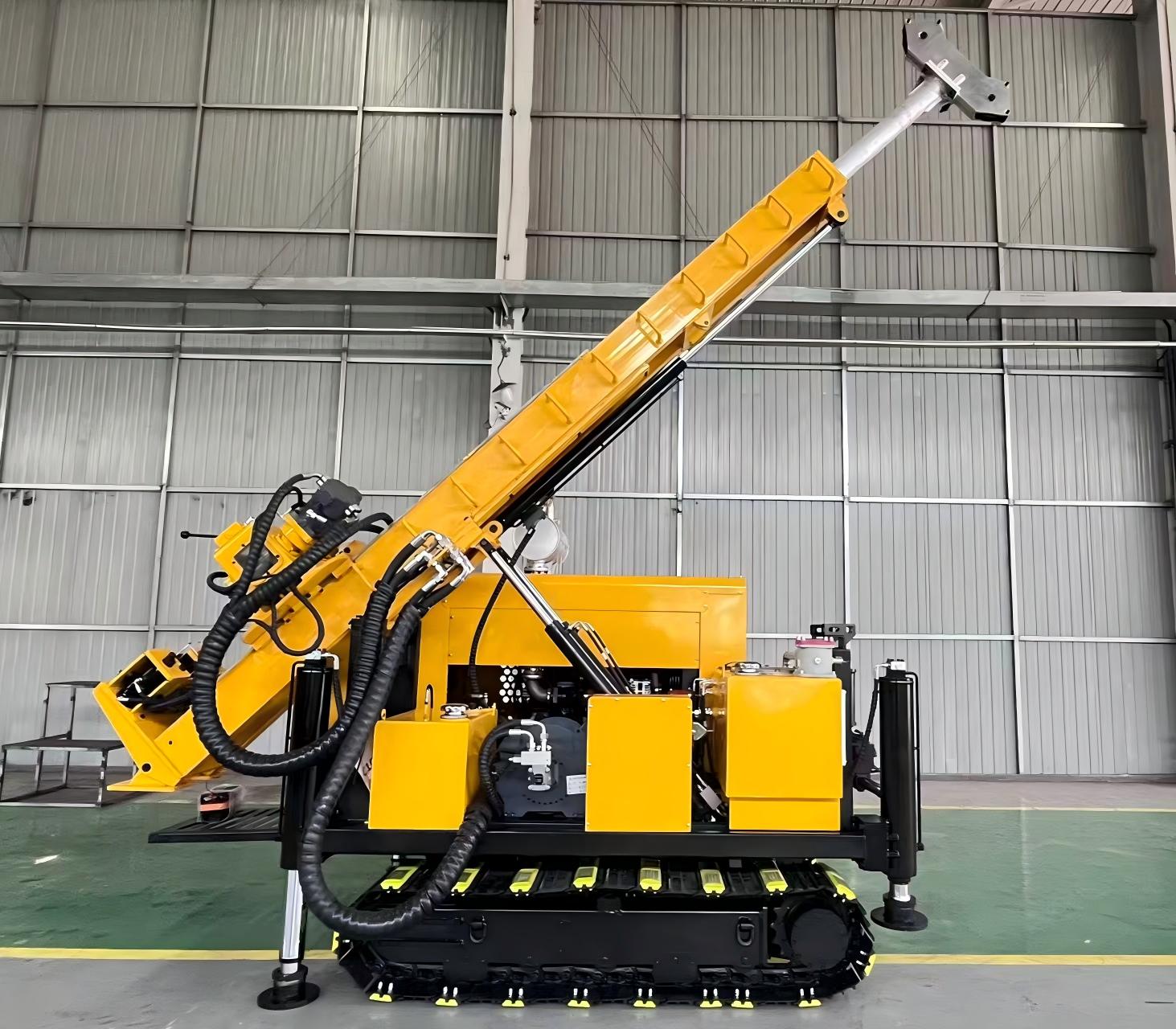
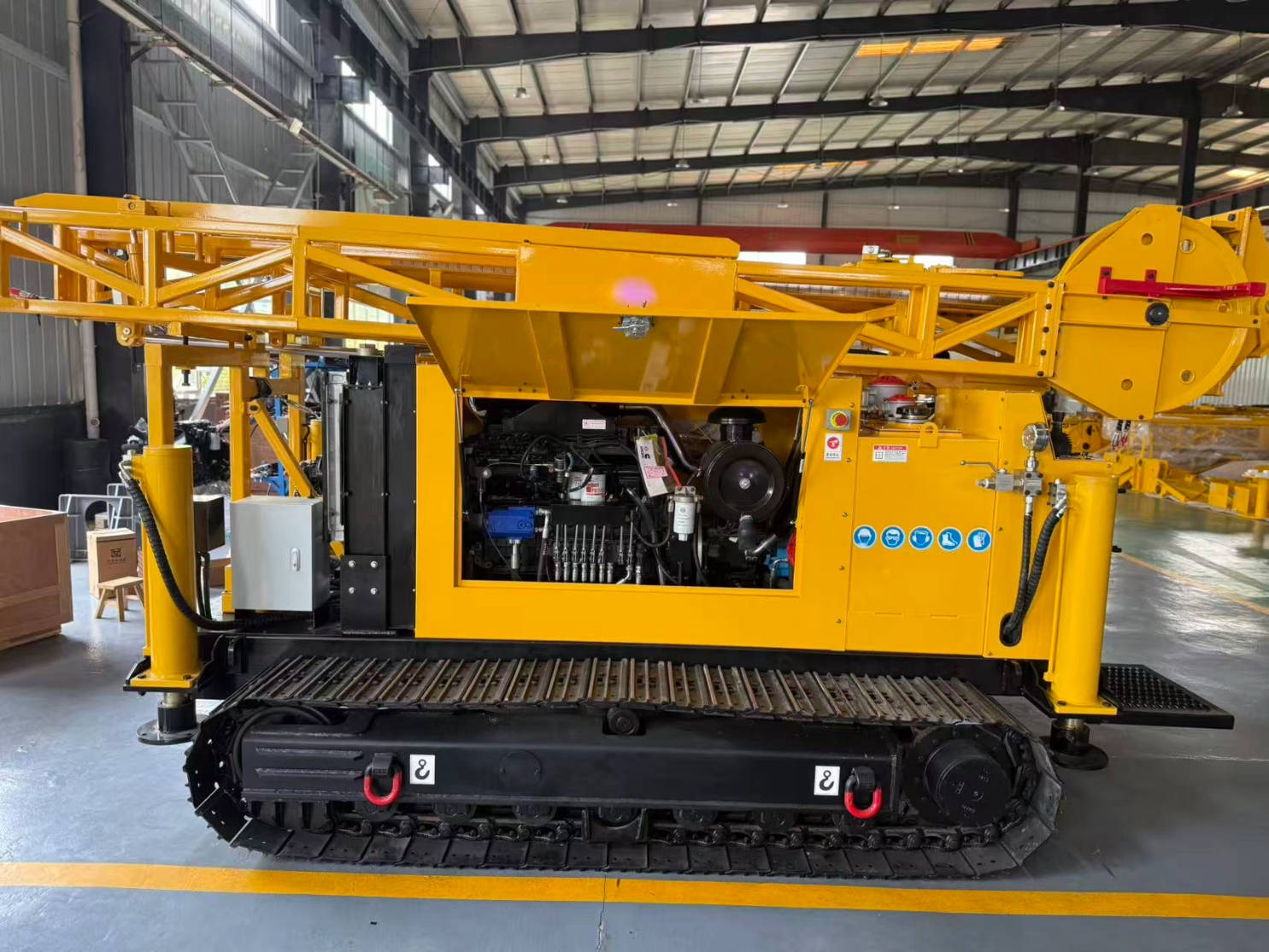
When projects move beyond shallow construction holes and into deep mineral exploration, geotechnical investigation, or tunnel coring, a full-hydraulic diamond core drilling rig becomes the more appropriate solution.
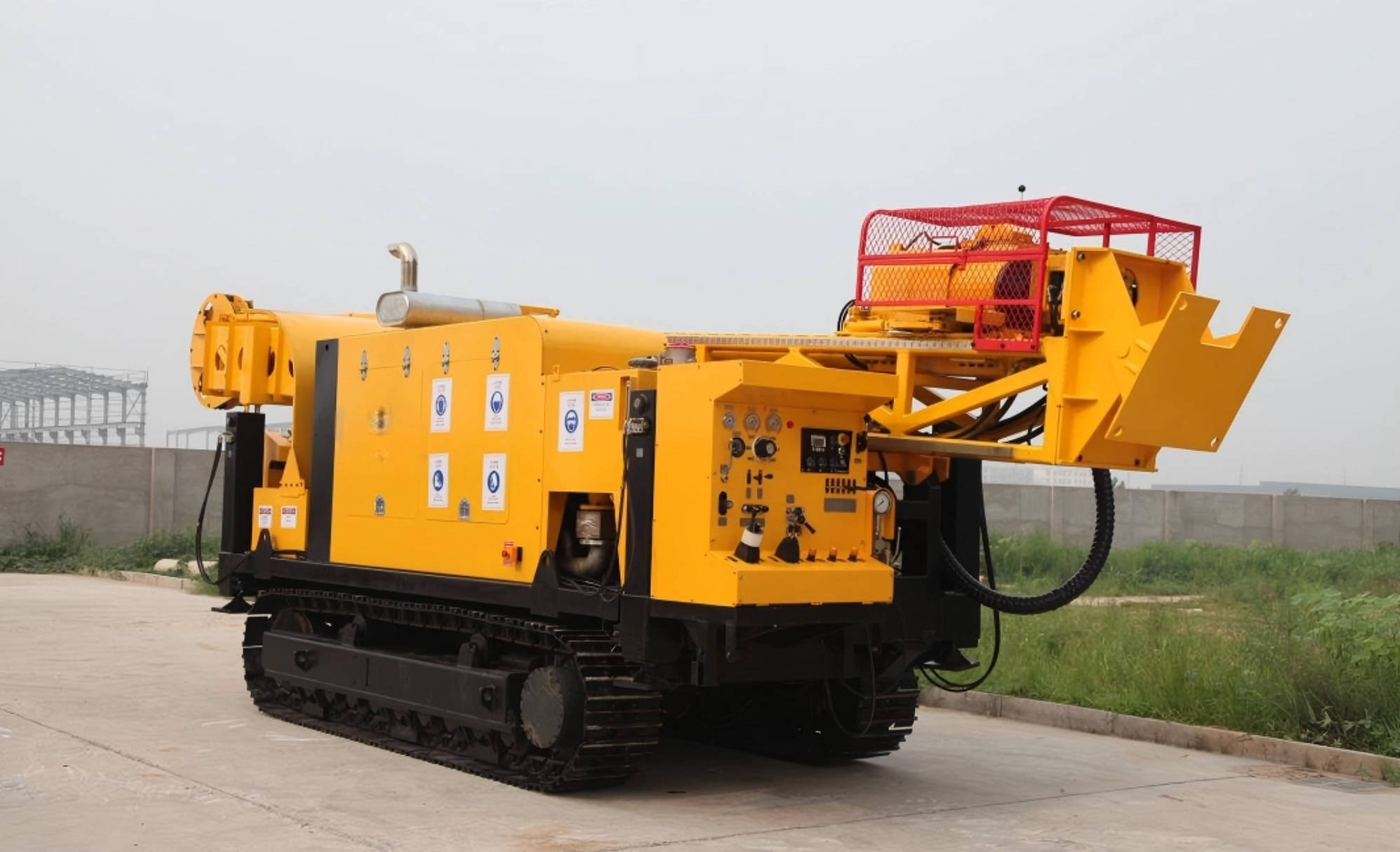
A CORE SURFACE DRILL is designed to recover rock core from surface drilling locations. A CORE HELI DRILL, also called a modular or helicopter-portable rig, is intended for remote sites where road access is limited. A CORE U/G DRILL is built for underground drilling in mines, tunnels, and confined headings.
These industrial drilling rigs differ from ordinary construction drills in several important ways:
- They use high-capacity hydraulic systems
- They support wireline core retrieval
- They can drill much deeper boreholes
- They use specialized drill rods, core barrels, and diamond bits
- They are designed for continuous operation in demanding environments
- They help reduce manual rod handling and improve safety
- They can be configured for different geological conditions
CORTECH develops and manufactures full-hydraulic wireline diamond core drilling rigs for surface exploration, helicopter-portable drilling programs, and underground coring applications. Its exploration drilling product range includes surface coring models designed for solid mineral deposits and diamond wireline coring operations.
For example, a surface exploration project may prioritize pullback force, rotation-head stability, cooling capacity, rod handling, and reliable wireline winch performance. An underground project may place greater emphasis on compact dimensions, modular installation, 360-degree drilling capability, and compatibility with mine ventilation and access restrictions.
Magnetic drill machines are specialized units used on ferrous metal surfaces. Their powerful electromagnetic base holds the machine firmly to steel plates, beams, pipes, and structural components.
They are common in:
- Steel construction
- Shipbuilding
- Bridge maintenance
- Heavy equipment repair
- Workshop fabrication
- Rail infrastructure work
Unlike a handheld drill, a magnetic drill offers a more stable drilling position. This improves hole accuracy and can reduce the physical effort required from the operator.
Before using a magnetic drill, workers should verify that the steel surface is clean, sufficiently thick, and capable of supporting the drill's magnetic base. They should also use a safety chain or strap, especially when drilling vertically or overhead.
Demolition drill machines are built for breaking rather than precise hole formation. They use high-impact energy to remove concrete, asphalt, masonry, tile, or damaged structural material.
Common applications include:
- Concrete slab removal
- Pavement repair
- Wall demolition
- Tile removal
- Foundation breaking
- Trenching and excavation preparation
A demolition drill is not a substitute for a core drill or precision drilling rig. It is a removal tool. The wrong selection can create uncontrolled cracking, excessive vibration, dust issues, and damage to nearby structures.
For renovation projects near occupied buildings, contractors should consider vibration limits, dust suppression, noise control, and structural monitoring before starting demolition drilling.
A drill press is a stationary drilling machine used for controlled, repeatable holes in workshop environments. It is widely used in metalworking, woodworking, component fabrication, and maintenance facilities.
Its major advantages include:
- Accurate hole positioning
- Consistent drilling depth
- Better alignment
- Stable workpiece support
- Repeatable production quality
A drill press is not portable, but it remains one of the most effective tools for precision drilling in controlled environments. It is especially useful when a workshop must produce multiple parts with consistent hole spacing and depth.
Before purchasing or renting equipment, project managers should define the job requirements in detail. A structured selection process prevents costly mismatches.
Start with the material: wood, steel, concrete, masonry, asphalt, or rock. Then define the hole diameter, depth, angle, tolerance, and required finish.
For example, a 12 mm anchor hole in concrete requires a different solution from a 150 mm HVAC opening or a 1,000-meter mineral exploration borehole.
Ask practical questions:
- Can the machine reach the work area?
- Is the site indoors, underground, remote, or at height?
- Does the machine need to be helicopter-portable?
- Is there enough space for a mast, drill stand, or rod handling system?
- Are there road, weight, or transport limitations?
Remote exploration programs often require modular equipment that can be broken down into manageable loads. Urban projects may require compact systems with low noise and controlled water use.
The safest drilling equipment is not necessarily the machine with the most safety labels. It is the one whose design and operating procedure reduce risk in real conditions.
Important features include:
- Emergency stop systems
- Guarding around moving parts
- Stable machine mounting
- Clear operator controls
- Anti-slip platforms
- Safe rod handling systems
- Vibration reduction
- Reliable hydraulic hose routing
- Easy access for maintenance inspections
For core drilling rigs, automated or assisted rod handling can reduce the exposure of drill crews to repetitive heavy lifting and pinch points.
A low purchase price does not always mean a low operating cost. Buyers should consider:
- Fuel or electricity consumption
- Bit and consumable usage
- Spare parts availability
- Hydraulic maintenance requirements
- Training needs
- Equipment transport costs
- Downtime risk
- Service response speed
- Expected drilled meters per shift
For exploration drilling, the most useful metric is often cost per meter, not machine price. A more capable rig may cost more initially but reduce total project cost through better penetration, fewer breakdowns, improved core recovery, and faster wireline cycles.
Reliable drilling performance begins before the shift starts. Whether the machine is a portable hammer drill or a full-hydraulic core rig, routine inspection prevents many avoidable failures.
- Inspect power cables, hydraulic hoses, fittings, and connectors
- Check oil levels and look for leaks
- Confirm guards and emergency stops are functional
- Inspect drill bits, rods, core barrels, and fasteners
- Clean dust, mud, and debris from critical areas
- Verify cooling and flushing systems
- Check that operator controls respond correctly
- Inspect filters and hydraulic fluid condition
- Check mast bolts, structural connections, and feed systems
- Lubricate required components
- Review wireline cables for wear or damage
- Examine drill rod threads and tool joints
- Record downtime causes and recurring maintenance issues
A well-maintained drilling rig is safer, more predictable, and more profitable. Maintenance records also help managers identify patterns, such as repeated bit wear, overheating, hose failures, or declining penetration rates.
For light construction tools, product specifications may be enough to make a purchase decision. For industrial core drilling equipment, buyer support should go much further.
A qualified drilling rig manufacturer should be able to discuss:
- Expected geology and formation hardness
- Target depth and hole diameter
- Core size requirements
- Drill string and bit compatibility
- Water, mud, or flushing requirements
- Transport and site constraints
- Operator training
- Spare parts planning
- Preventive maintenance schedules
- Long-term technical support
The strongest equipment suppliers do not only sell a rig. They help the customer build a workable drilling system around the rig.
For projects involving surface exploration, remote mountain access, underground mine definition drilling, or tunnel coring, early technical consultation can prevent major equipment selection errors.
The right construction drill machine should fit the complete operating environment, not just the hole diameter. Handheld drills, hammer drills, magnetic drills, demolition equipment, drill presses, and diamond core rigs all have valuable roles, but they should not be treated as interchangeable.
For deep, high-value drilling programs, the decision should be based on core recovery, safety, reliability, serviceability, transportability, and cost per meter. A properly configured full-hydraulic diamond core drilling rig can support more consistent drilling performance and better geological decision-making across the life of a project.
If you are planning a mineral exploration, geotechnical, tunneling, or underground coring program, contact CORTECH to discuss your target depth, formation type, access limitations, and drilling objectives. Our team can help recommend a suitable CORE SURFACE DRILL, CORE HELI DRILL, or CORE U/G DRILL configuration, together with compatible drilling tools and technical support.
For small anchor holes, a hammer drill or rotary hammer is often suitable. For larger, cleaner, and more accurate openings, a diamond core drill machine is usually the better choice.
A hammer drill uses rotation and impact to break material. A core drill uses a hollow circular bit to cut a clean hole and remove a cylindrical core. Core drills are generally better for large-diameter holes and precision work.
A CORE SURFACE DRILL is used for surface-based diamond core drilling in mineral exploration, geotechnical investigation, and rock testing. It recovers continuous rock core samples from below the ground surface.
Choose a CORE HELI DRILL when the drilling location is remote or difficult to reach by road. Modular helicopter-portable rigs can be transported in smaller loads to mountain, forest, island, or environmentally sensitive sites.
An underground core drilling rig is a compact drilling system designed for mines, tunnels, and underground headings. It is used for definition drilling, resource expansion, geological investigation, and tunnel support assessment.
Wireline coring allows the inner tube containing the core sample to be retrieved without removing the full drill string. This can reduce cycle time, limit manual handling, and improve productivity in deep holes.
Use a preventive maintenance schedule, inspect hydraulic hoses and filters regularly, maintain clean fluids, replace worn parts before failure, train operators properly, and keep critical spare parts available at the site.
1. Prime Rigs. "Exploring the Different Types of Construction Drill Machines."
2. CORTECH. "Exploration Drilling Rig."
[https://en.cortech.cn/product_list/Exploration-Drilling-Rig.html]
3. CORTECH Drilling. "How to Choose an Innovative CORE SURFACE DRILL Manufacturer: An Engineer's Field Perspective."
4. Central Mine Equipment Company. "Geotechnical Drill Rigs and Drilling Equipment."
[https://cmeco.com/drill-rigs.html]
5. Priority Drilling. "Surface Drilling."
[https://prioritydrilling.ie/surface-drilling/]
6. Google Search Central. "Creating Helpful, Reliable, People-First Content."
[https://developers.google.com/search/docs/fundamentals/creating-helpful-content]


