
Views: 246 Author: CORTECH Publish Time: 2026-10-01 Origin: Site


Content Menu
● Which Companies Should Buyers Shortlist?
>> PRD Rigs: Surface Diamond-Core Options
>> Kores Engineering: Hydrostatic Exploration Rigs
>> KLR: Core-Drill Models for Exploration
>> Epiroc: An International Benchmark
>> CORTECH: A Specialist Import Option
● What Does India's Exploration Context Tell Us?
● How Should You Compare Rig Specifications?
>> Check the Whole Drilling System
>> Calculate Cost per Recovered Meter
● A Practical Supplier-Verification Process
>> 1. Who manufactures core drilling rigs in India?
>> 2. Is Epiroc an Indian core-rig manufacturer?
>> 3. Is CORTECH based in India?
>> 4. What is the difference between a core rig and an RC rig?
>> 5. Can a rig rated to 750 m drill 750 m in every core size?
>> 6. Which supplier should a buyer contact first?
The major manufacturers of core drilling rigs in India include PRD Rigs, Kores Engineering, and KLR. Each offers equipment relevant to mineral exploration, but their published specifications differ in useful ways. Buyers in India should also consider Epiroc's locally marketed core-drilling range and specialist overseas manufacturers such as CORTECH. The right shortlist depends less on a brand's visibility than on whether a particular rig can recover the required core, at the required depth, on the actual drill site.
This guide focuses on surface diamond core drilling rigs used to collect cylindrical rock samples. It does not treat concrete-hole drills, water-well rigs, reverse-circulation rigs, or companies that only provide drilling services as interchangeable with manufacturers of mineral-exploration core rigs. "Major" here means manufacturers with identifiable product ranges or published model information—not a verified ranking by Indian market share.

| Company | Position in an India-focused shortlist | Published example | Most useful first question |
|---|---|---|---|
| PRD Rigs | India-based drilling-rig manufacturer with dedicated surface diamond-core models | PRD CORE 300 and CORE 750 | Which model fits the planned NQ, HQ, or PQ depth? |
| Kores Engineering | India-based supplier with a hydrostatic core-drilling range | KDR-1000 | What configuration and field support are available for the project? |
| KLR | India-based drilling-equipment manufacturer with core-drill models | CDR 750 | Which depth and hydraulic specifications apply to the quoted configuration? |
| Epiroc | International manufacturer whose core-rig range is presented to Indian buyers | Christensen surface rigs; Diamec underground rigs | Which model and local service arrangement suit the site? |
| CORTECH | Overseas specialist to assess when imported, fully hydraulic wireline rigs are acceptable | CORE SURFACE DRILL range | Which model can be configured and supported for the specified holes in India? |
These are different kinds of options. PRD, Kores, and KLR answer the question of who manufactures relevant rigs in India. Epiroc and CORTECH broaden the procurement comparison; they should not be described as Indian manufacturers merely because an Indian buyer can consider their equipment. The table is a sourcing shortlist, not a league table or an independent performance test.
PRD Rigs identifies itself as an Indian drilling-rig manufacturer and publishes specifications for its PRD CORE surface-exploration range. Its CORE 300 is listed for diamond coring to 300 m in NQ, 200 m in HQ, and 100 m in PQ. The CORE 750 is listed to 750 m in NQ, 450 m in HQ, and 250 m in PQ. Both product pages describe angled drilling from 45° to 90° and crawler, truck, or skid mounting options.
That makes PRD a practical starting point for buyers who want to compare two explicitly documented depth classes from one manufacturer. Notice, however, that the model numbers do not tell the whole story: a 750 m NQ rating does not mean 750 m in HQ or PQ. Ask PRD to confirm the complete delivered configuration, including the wireline winch, rod clamp, pump, guarding, and mounting system, against your drilling program. Its CORE 750 product page lists these components and options, but a purchase specification must identify exactly what the quotation includes.
Kores Engineering's published KDR-1000 page describes a hydrostatic drilling rig with a 3 m stroke and 6 m pull, suited to coal and mineral exploration. The company's site also lists other KDR core-drilling models. For a buyer moving from older mechanical equipment, this range merits examination alongside the proposed method of coring, crew training, spares, and service coverage.
There is useful customer feedback on Kores' own website. A testimonial attributed to a Head Drilling, MECL says a team replaced older mechanical machines with KDR-1000 hydrostatic drills in 2014 and achieved up to 1,600 m in a month against a 1,000 m target. Another, attributed to a Chief Manager, CMPDIL, reports a fleet of 22 hydrostatic drills after adopting Kores equipment. These are manufacturer-published testimonials, not independently audited comparative results. Treat them as reasons to request a reference call and project context, not as production rates to insert into a business case.
KLR's CDR 750 page specifies a maximum of 750 m in NQ and 500 m in HQ. It also publishes mast pull-up and pull-down figures and a rotary-head speed range. Importantly, its depth table cautions that capability varies with factors such as formation and drill string. KLR therefore belongs on the Indian-manufacturer shortlist when those hole sizes and depth targets match the project.
A careful buyer should request a signed, model-specific specification before comparing offers. A headline "750 m" rating, a proposed mast, and a delivered rod-and-winch package are three different pieces of information. Confirm them together, along with the service arrangement for the state in which the machine will work.
Epiroc's India-facing range distinguishes Christensen surface rigs from Diamec underground rigs. That distinction matters: an underground machine should not appear in a surface-rig price comparison simply because both recover core. Epiroc describes crawler, trailer, truck, and other arrangements across its surface range, with rod handling available on certain models.
For a deeper-capacity reference point, Epiroc publishes a maximum depth capacity of 1,824 m for its Christensen 140 and explicitly warns that the number is a guideline, not a guarantee under every ground and operating condition. An international brand may be a suitable bidder, but buyers should still verify the precise model, delivered options, commissioning plan, and support available to their Indian project.
CORTECH is not an Indian manufacturer. It is relevant here as a specialist alternative for Indian buyers evaluating imported, fully hydraulic wireline diamond-core equipment. Its published CORE SURFACE DRILL family includes COREMASTER 500L, 1000L, 1300L, 1800X, and 2200L listings; its site describes the 1800X as crawler-mounted. CORTECH also markets core-drilling tools and tailored drilling solutions.
From a manufacturer's perspective, the first conversation should start with the hole plan, not a model name. Send the target depth by required core size, expected formations, hole inclination, site-access limits, and proposed rod and barrel system. CORTECH can then propose a configuration for comparison with Indian-made rigs. Any claims about achievable recovery, operating cost, or local response times should be tested against a written proposal and relevant references rather than assumed from a product-family description.
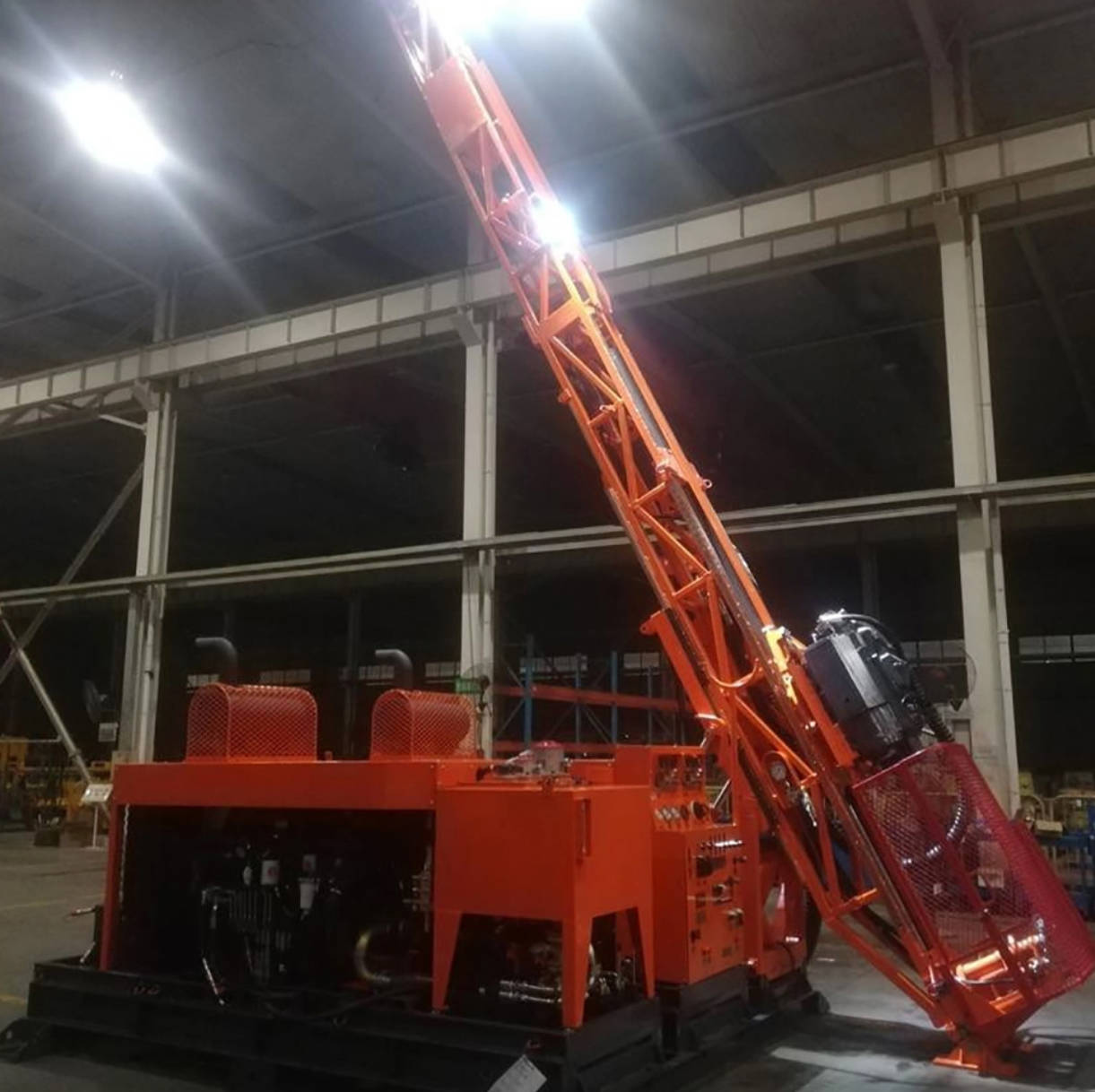
A drilling-rig shortlist should reflect the work buyers actually need to perform. India's Ministry of Mines 2024–25 annual report describes initiatives involving critical and strategic minerals, including the launch of auction tranches for mineral blocks. That is relevant context for exploration-equipment procurement. It is not, by itself, a forecast of core-rig sales or proof that every auctioned block will need a particular drilling method.
For equipment selection, the more useful takeaway is operational. A program may move between reconnaissance, detailed exploration, and deeper holes. Procurement teams should therefore separate today's confirmed hole schedule from possible future work. Paying for substantial unused capacity can be wasteful; buying a rig that only meets the shallowest holes can force a costly change of equipment later.
The ministry report is a government source for sector context. Product ratings in this article come from the manufacturers' own pages. That separation matters: public exploration activity explains why buyers are looking, while model specifications help establish what a machine is claimed to do. Neither replaces a project-specific technical assessment.
Start with the final depth required in NQ, HQ, or PQ, not the largest number on a brochure. PRD's CORE 750, for example, is published at 750 m in NQ but 450 m in HQ and 250 m in PQ. KLR's CDR 750 lists 750 m in NQ and 500 m in HQ. These figures help form a shortlist; they do not predict identical results in different formations or hole conditions.
Ask every bidder to state the assumptions behind its rating. Include hole angle, ground conditions, drill string, fluid plan, and the depth at which the core size may change. Epiroc's express qualification on its Christensen 140 capacity is a useful reminder that a published maximum is a planning input, not a contractual outcome.
A surface core rig is not just a rotary head. Before comparing quotations, ask for the proposed feed and pull capacity, torque and speed ranges, mast travel, rod-handling arrangement, clamps, wireline winch, mud pump, carrier, and safety equipment. PRD's published CORE 750 specification, for instance, identifies a wireline winch, hydraulic rod clamp, pump, and operator-safety features; those details are more informative than its depth label alone.
Then establish who supplies consumables and replacement components. A competitive purchase price loses value if a simple repair stops the rig during a remote campaign. For imported equipment, include shipping, customs responsibilities, installation, training, and the location of critical spares in the comparison.
A procurement decision should test useful output, not only meters drilled. A practical internal measure is:
Cost per recovered meter = total drilling-program cost ÷ meters of usable core recovered.
Build the numerator from the costs your team actually controls or pays: rig purchase or hire, transport, fuel, crew, tooling, maintenance, consumables, and downtime. Define "usable core" consistently with the geologist before requesting field figures. This is a buyer's evaluation framework, not a published claim that any named rig will achieve a particular recovery rate.
For example, two quotations may promise similar drilling depths. If one requires a larger pad and expensive site moves while the other needs more maintenance support, their acquisition prices alone will conceal the difference. Ask bidders for comparable assumptions and request references from projects with similar rock, hole sizes, and access.
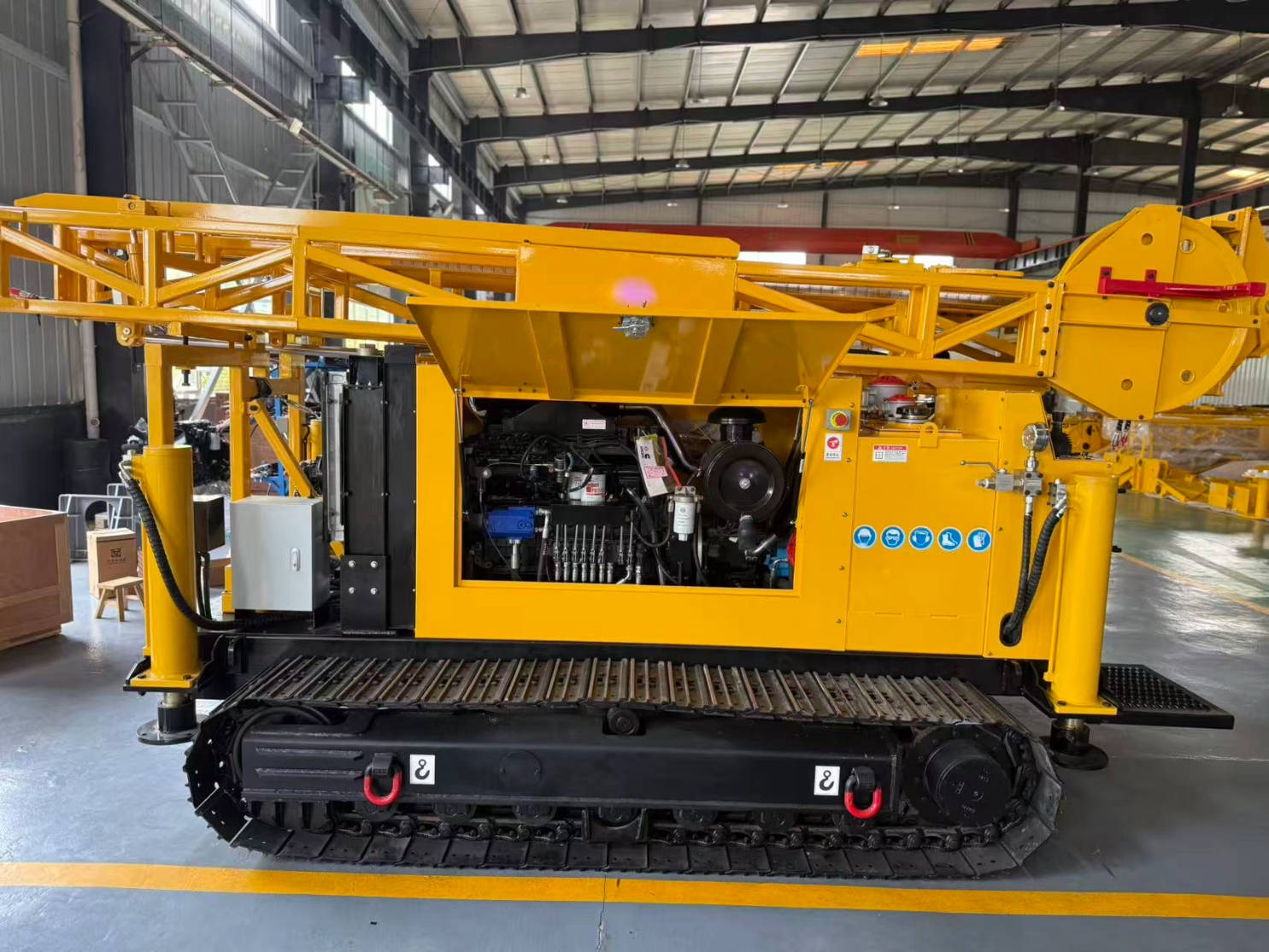
The most valuable document in a rig tender is often the same technical brief sent to every bidder. It prevents one supplier from quoting a bare machine while another includes tooling, commissioning, and spares. Use this sequence:
1. Define the holes. Give planned and maximum depths by core size, hole angles, formation information, expected overburden, and any casing requirements.
2. Describe the site. State access-road limits, pad size, terrain, water availability, transport restrictions, and expected weather interruptions.
3. Request a configuration sheet. Require each bidder to identify the rig, carrier, power unit, pump, wireline package, clamps, guarding, tools, and optional equipment included.
4. Request capacity assumptions. Ask for the conditions behind quoted depths and the recommended rod, bit, and core-barrel combination.
5. Verify support. Obtain written warranty terms, commissioning responsibilities, training scope, spare-parts lists, and escalation contacts.
6. Speak to comparable users. Request references for the same model in comparable ground, then ask about downtime, service response, and changes made after delivery.
7. Compare complete offers. Evaluate technical fit and operating exposure alongside landed and supported cost—not purchase price alone.
Ready to evaluate a CORE SURFACE DRILL for an Indian exploration project? Send CORTECH your target depths by NQ/HQ/PQ size, hole angles, ground conditions, and site-access limits. Request a configuration sheet that states the included wireline system, support scope, and capacity assumptions—then compare it line by line with your other shortlisted offers.
PRD Rigs, Kores Engineering, and KLR are three identifiable India-based manufacturers or suppliers with published core-drilling models. The best choice depends on the required coring method, depth by core size, site conditions, and support terms; this article does not rank them by market share.
No—not in the sense used for the India-based shortlist here. Epiroc is an international manufacturer whose India-facing site presents surface and underground core-rig ranges. Evaluate it as a competing supplier option, while confirming the specific model and support proposal for your site.
No. CORTECH is included as an overseas specialist option for buyers considering imported, fully hydraulic wireline diamond-core rigs. Its CORE SURFACE DRILL range should be assessed through a project-specific quotation, not presented as locally manufactured Indian equipment.
A core rig retrieves a solid, cylindrical sample of rock. Reverse-circulation drilling returns crushed material or cuttings. Both have exploration applications, but a request for intact core should not be answered with an RC-only machine.
No. Published PRD CORE 750 capacities are 750 m in NQ, 450 m in HQ, and 250 m in PQ; KLR's CDR 750 lists separate NQ and HQ ratings. Ground and drilling-system conditions also affect attainable depth. Specify the required size at the target depth when requesting a quote.
Contact the suppliers whose published products plausibly fit your holes, then send each the same drilling brief. If local manufacture is a firm procurement condition, start with the relevant India-based bidders. If imported rigs are permitted, include Epiroc and CORTECH where their proposed configurations fit; compare written specifications and support before choosing.
1. [PRD Rigs — company and manufacturing overview]. Used to establish PRD’s positioning and Indian manufacturing context. [prdrigs]
2. [PRD Rigs — PRD CORE 300]. Source for CORE 300 drilling method, depth-by-core-size ratings, angles, and mounting descriptions. [prdrigs]
3. [PRD Rigs — PRD CORE 750]. Source for CORE 750 ratings, drilling components, mounting options, and safety features. [prdrigs]
4. [Kores Engineering — KDR-1000]. Source for the KDR-1000 description, stroke, pull, and stated applications. [engineering.kores]
5. [Kores Engineering — company website]. Source for the published MECL- and CMPDIL-attributed testimonials; these are presented as customer statements hosted by Kores, not independently verified outcomes. [engineering.kores]
6. [KLR Universal — CDR 750 core drill rig]. Source for NQ/HQ ratings and selected technical specifications. [klruniversal]
7. [Epiroc India — core drilling rig range]. Source for the Christensen surface and Diamec underground distinctions. [epiroc]
8. [Epiroc India — Christensen 140]. Source for published capacity and its stated operating-condition qualification. [epiroc]
9. [Epiroc India — mineral exploration drilling rigs]. Source for the distinction between core and reverse-circulation samples. [epiroc]
10. [CORTECH — company and CORE SURFACE DRILL range]. Source for CORTECH’s stated specialization and product-family listings. [cortechdrilling]
11. [Government of India, Ministry of Mines — Annual Report 2024–25]. Source for India’s mineral-exploration and critical-mineral policy context; not a source for market-share or rig-sales estimates. [mines.gov]


