
Views: 236 Author: CORTECH Publish Time: 2026-10-03 Origin: Site


Content Menu
● What Is the Main Difference?
>> Typical Deep Core Drill Characteristics
● Lightweight Core Drill Overview
>> Typical Lightweight Core Drill Characteristics
● Deep Core Drill vs. Lightweight Core Drill Comparison
● Why Depth Changes Everything
● Pullback Force: The First Deep-Hole Check
● Torque, Feed Force, and Rotation Stability
● Mobility and Access: Where Lightweight Core Drills Win
● Core Recovery and Geological Confidence
>> Factors That Influence Core Recovery
● Safety and Crew Productivity
>> Deep Core Drill Safety Advantages
>> Lightweight Core Drill Safety Priorities
● How to Select the Right Core Drill
>> 1. Define the Real Target Depth
>> 2. Confirm Core Size Requirements
>> 3. Review Ground Conditions
>> 5. Calculate Operational Margin
>> 6. Consider the Total Drilling System
>> Choose a Deep Core Drill When:
>> Choose a Lightweight Core Drill When:
● The Best Fleet Strategy for Exploration Programs
● FAQ
>> 1. What depth is considered deep core drilling?
>> 2. Can a lightweight core drill drill deep holes?
>> 3. Why is pullback force important in diamond core drilling?
>> 4. Should I choose NQ, HQ, or PQ core size for deep exploration?
>> 5. Are heli-portable core drills only for shallow drilling?
>> 6. How can drilling crews improve core recovery in fractured ground?
>> 7. Is a larger core drill always more productive?
Choosing between a deep core drill and a lightweight core drill is one of the most consequential equipment decisions in geological exploration. The right choice affects not only achievable depth, core recovery, and drilling speed, but also crew safety, mobilization cost, site access, and the reliability of the geological model built from recovered core.
For high-depth geological investigation, the decision should not be based on rig weight alone. It should be based on the complete drilling system: pullback capacity, torque, feed force, mast and rod-handling design, wireline capability, fluid circulation, site logistics, and the anticipated ground conditions. In most programs targeting deep mineralization, a purpose-designed deep core drill offers the capacity margin needed to maintain safe, stable drilling. A lightweight core drill remains highly valuable where access is restricted, holes are moderate in depth, or a modular deployment is more practical.
For CORTECH, the comparison is especially relevant because modern exploration teams may need a combination of surface core drills, modular heli-portable core drills, and underground core drills across one exploration campaign.

A deep core drill is engineered for sustained diamond drilling at greater depths. It normally has higher pullback force, greater torque, stronger feed systems, more robust mast construction, larger fluid capacity, and more advanced rod-handling options.
A lightweight core drill prioritizes transportability, compact dimensions, fast setup, and access to difficult locations. It may be skid-mounted, modular, trailer-mounted, or designed for helicopter transport. Its smaller footprint can dramatically reduce mobilization complexity in mountainous, forested, remote, or underground areas.
The practical difference is simple:
- A deep core drill is designed to keep drilling safely when the rod string becomes long, heavy, and mechanically demanding.
- A lightweight core drill is designed to reach places where a larger rig cannot be transported or installed efficiently.
- The best choice depends on whether depth capacity or accessibility is the project's primary constraint.
A deep-hole rig must manage much more than penetration. It must also safely retrieve the drill string and tooling. Pullback capacity is a major depth-limiting factor because the machine must be able to trip rods out of the hole without exceeding safe load limits.
A deep core drill is a heavy-duty hydraulic diamond drilling system developed for deep mineral exploration, geotechnical investigation, and large-scale geological campaigns. Depending on the rod size, hole angle, rock conditions, and drilling method, modern deep-hole rigs can be configured for depths well beyond 1,000 meters.
For perspective, the Boart Longyear LF160 is specified for up to 1,800 m in NQ-size diamond coring, with a maximum pullback force of 170 kN. Larger deep-hole systems can be rated for even greater NQ, HQ, or PQ depth capacities when paired with appropriate rods, tooling, and operating practices.
- High pullback force for safe rod retrieval at depth
- High torque for larger-diameter rods and difficult formations
- Longer mast and rod handling capacity
- Heavy-duty hydraulic systems
- Wireline coring compatibility
- Higher-capacity mud pumps and fluid-management options
- Stronger clamps, chucks, and breakout systems
- Potential for automated or semi-automated rod handling
- Better operating stability during high-load drilling
A deep core drill is not merely a larger machine. It is a drilling platform designed to manage the accumulation of mechanical load that occurs as hole depth increases.
A lightweight core drill is generally optimized for mobility and restricted-access deployment. It may be used for early-stage mineral exploration, shallow-to-medium-depth drilling, slope investigation, environmental sampling, infrastructure investigation, remote geotechnical programs, and underground drilling applications.
Many lightweight drilling systems are modular. This means the drill can be separated into manageable components for manual handling, helicopter lifting, narrow-track transportation, or movement through mine tunnels.
- Compact footprint
- Lower transport and setup requirements
- Modular or heli-portable configuration
- Reduced ground preparation needs
- Suitable for narrow benches and remote pads
- Lower fuel demand in some operating conditions
- Simpler rig relocation between short holes
- Practical integration with underground drilling sites
- Good productivity at moderate depths when correctly matched
The main limitation is that light weight often comes with reduced force, torque, mast capacity, fluid-storage volume, and safety margin for long rod strings. That does not make lightweight drills inferior. It means they must be selected according to realistic depth targets and operating conditions.

| Selection Factor | Deep Core Drill | Lightweight Core Drill | Practical Impact |
|---|---|---|---|
| Primary purpose | Deep, demanding exploration holes | Restricted-access, moderate-depth drilling | Match the machine to the project's main risk |
| Typical deployment | Prepared surface pads, major exploration sites, long-term programs | Remote terrain, tight sites, helicopter-supported pads, tunnels | Lightweight rigs reduce access barriers |
| Pullback capacity | High | Moderate to lower | Critical for safe rod retrieval at depth |
| Torque output | High | Lower to moderate | Influences drilling through hard or difficult ground |
| Rod handling | Often mechanized or automation-ready | Usually more manual or semi-manual | Affects safety, fatigue, and shift productivity |
| Depth capability | Greater potential, especially in NQ, HQ, and PQ programs | Best for shallow-to-medium or carefully planned deeper holes | Capacity must include operational margin |
| Mobility | Lower | High | Lightweight systems move faster between pads |
| Site preparation | More substantial | Often reduced | Important in remote exploration budgets |
| Fluid management | Higher-capacity pumps and systems | Smaller or more limited systems | Deep holes require stable circulation |
| Crew exposure | Can reduce manual rod handling with automation | May involve more direct handling | Consider fatigue and pinch-point exposure |
| Best fit | Deep mineral targets, long high-value holes | Early-stage exploration, hard-to-access locations | A mixed fleet may provide the best coverage |
The deeper the hole becomes, the more demanding every part of the drilling process becomes. A shallow hole may tolerate limited pulling force, smaller fluid systems, and manual rod handling. A deep hole usually cannot.
As depth increases, the drill team must manage:
- Greater rod-string weight
- Higher friction between the drill string and borehole wall
- More demanding hole-cleaning requirements
- Longer wireline cycle times
- Higher risk of deviation
- Greater risk of stuck rods and lost tooling
- Longer response times when problems occur
- Increased consequences of unplanned downtime
A rig's published depth rating should be treated as a technical reference point, not an unconditional guarantee. For example, Epiroc notes that drill depth capacity figures are calculated from available pull/feed force, drill-string weight in a water-filled hole, average weight-on-bit requirements, and a reserve for breaking core in rock; actual results can differ because of ground conditions, tooling, and operating factors.
That distinction is important. A hole planned for 1,200 m should not automatically use a drill rated at exactly 1,200 m. The project needs adequate reserve capacity for the expected rod size, angle, rock type, water conditions, deviation risk, casing requirements, and possible recovery work.
When comparing a deep core drill vs. a lightweight core drill, pullback force should be one of the first specifications reviewed.
Pullback force determines whether the rig can safely retrieve rods, tooling, and the inner tube assembly as the hole deepens. If the drill string approaches the machine's maximum pullback capacity, the operating margin becomes too small.
This can create several problems:
- Slow and cautious tripping operations
- Increased risk of equipment overload
- Higher chance of rod damage
- Reduced ability to recover from difficult hole conditions
- More downtime during fishing or reaming operations
- Higher stress on personnel and equipment
A high-depth geological investigation should include a pullback calculation before rig selection. The calculation should consider dry versus water-filled conditions, rod weight, depth, angle, casing string, expected friction, and a reasonable contingency allowance.
Do not choose a drill simply because its brochure depth equals the planned hole depth.
Choose a machine that retains usable pulling, torque, and hydraulic capacity after realistic site conditions are considered.
Torque is another major separator between deep and lightweight drilling systems. At shallow depth, moderate torque may be sufficient. At greater depth, torque requirements can increase due to rod friction, difficult formations, reaming needs, directional tendencies, and larger core sizes.
A deep core drill generally provides:
- Higher torque reserve
- More stable rotation under load
- Stronger spindle and chuck systems
- Better support for larger-diameter coring
- Greater capability for reaming and casing work
- More consistent performance in fractured or abrasive rock
For example, one deep-hole configuration of the Epiroc Diamec Smart 6 is listed with up to 1,530 m depth capability for BO/BT drilling in vertical-down conditions, 89 kN pull force, 90 kW power, and 1,115 Nm maximum torque.
These figures do not mean every project needs that exact machine. They show why deep drilling requires a system with meaningful force and power reserves rather than just nominal depth capacity.
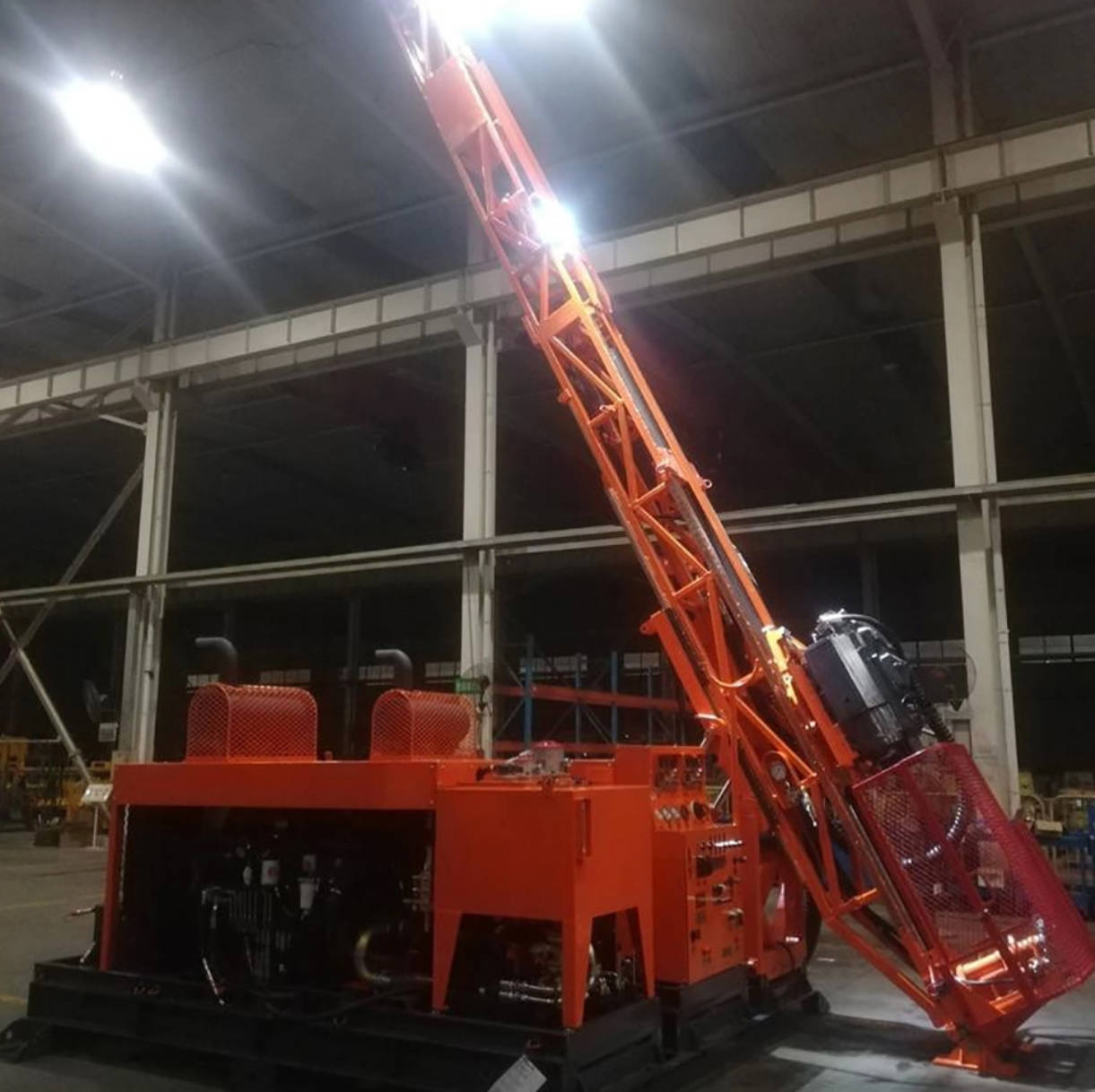
A lightweight core drill can be the more profitable choice when transportation and pad construction dominate the project budget.
In remote exploration, the cost of getting a large rig to the drill site may exceed the initial cost difference between rig types. Road building, bridge strengthening, pad expansion, fuel logistics, and environmental disturbance can all become major project issues.
A lightweight or modular core drill can offer clear benefits:
- Helicopter-supported deployment to remote ridges
- Reduced road construction
- Faster movement between short exploration holes
- Smaller environmental footprint
- Better access through forest, steep terrain, or narrow tracks
- Simpler installation inside underground mine workings
- Lower site-preparation requirements
For geological teams working across multiple dispersed targets, a CORE HELI DRILL configuration can be especially useful. Its purpose is not to replace a high-capacity deep-hole rig in every application. Its purpose is to make drilling possible where conventional surface equipment would be uneconomical or impractical to mobilize.
A drilling program is not successful simply because it reaches target depth. It must also recover representative core of sufficient quality for geological logging, structural interpretation, geotechnical assessment, mineralization analysis, and laboratory testing.
Poor recovery can weaken the entire value of a borehole.
- Correct bit selection
- Appropriate rotational speed
- Controlled weight on bit
- Reliable fluid circulation
- Inner-tube and overshot condition
- Use of suitable wireline systems
- Formation characteristics
- Hole deviation and borehole stability
- Crew skill and drilling discipline
A deep core drill supports recovery by providing stable feed control, adequate torque, dependable circulation, and the power needed to respond when ground conditions become difficult. A lightweight drill can also provide excellent recovery when the hole design remains within its operating envelope.
The key is not the physical size of the rig. The key is whether the drilling system can control the borehole and maintain stable operating parameters throughout the planned depth interval.
Modern diamond drilling should reduce unnecessary crew exposure, especially during rod handling. Deep drilling programs involve repeated rod additions and removals. Manual handling becomes more physically demanding as rods become longer, heavier, or more frequent.
Mechanized rod handling can improve both safety and operational consistency. Boart Longyear describes its FREEDOM Loader system as enabling fully hands-free rod tripping in compatible top-drive coring rigs.
- Potential for automated rod handling
- More controlled clamping and breakout operations
- Stronger mast and guard structures
- Better capacity for long rod pulls
- Reduced need for manual lifting
- More stable rig positioning
- Improved control-panel visibility in advanced designs
Lightweight equipment can be safe and productive, but site teams should pay close attention to:
- Manual-handling limits
- Rig anchoring and leveling
- Hydraulic hose inspection
- Adequate guard systems
- Clear communication during rod handling
- Ground stability on compact drill pads
- Transport and lifting plans for modular components
The best safety result comes from selecting a rig that reduces exposure while remaining appropriate for the terrain and hole design.
Use the following six-step method before choosing between a deep core drill and a lightweight core drill.
Identify the planned final depth, but also allow for:
- Reaming
- Casing
- Redrilling
- Deviation correction
- Groundwater complications
- Contingency depth
A 1,000 m target may require a rig with much more than 1,000 m of published capacity.
Decide whether the project needs BQ, NQ, HQ, PQ, or another system. Larger-diameter core improves sample volume and structural information but increases load, torque, and hydraulic requirements.
Ask whether the formations are likely to include:
- Broken ground
- Fault zones
- Swelling clay
- Abrasive rock
- Competent hard rock
- Water-bearing intervals
- Unstable overburden
Difficult ground can turn a nominal medium-depth hole into a deep-hole equipment challenge.
Assess roads, slope, vegetation, altitude, pad size, helicopter access, underground dimensions, and local lifting capability.
If access is the dominant challenge, a modular lightweight drill may create a better overall project result.
Review pullback, torque, feed force, pump capacity, mast capacity, rod handling, and wireline winch capacity. Do not treat the maximum depth rating as the routine operating depth.
The rig is only one part of the operation. Also evaluate:
- Drill rods
- Core barrels
- Diamond bits
- Wireline tools
- Mud pumps
- Water supply
- Solids control
- Generator or power pack
- Spare parts
- Field-service support
- Crew experience
- The hole will be deep or high-risk
- The program requires strong pullback capacity
- Larger-diameter core is required at depth
- The ground is fractured, abrasive, or technically difficult
- Long-term production drilling is planned
- Rig automation or advanced rod handling is important
- Downtime has a high cost
- The site can support a larger drilling platform
- The target depth is moderate
- Site access is severely restricted
- Helicopter or manual modular transport is necessary
- Multiple small drill pads are planned
- Road construction must be minimized
- The drilling area is mountainous, forested, or environmentally sensitive
- Underground access limits equipment size
- Fast relocation is more valuable than maximum depth capacity

For many exploration companies, the best answer is not choosing one drill type for every situation. It is using the right machine at the right stage of the program.
A practical exploration sequence may look like this:
1. Early-stage remote targeting: Use a lightweight or heli-portable core drill to test widely dispersed targets.
2. Target confirmation: Increase hole depth and core size as geological confidence improves.
3. Resource delineation: Deploy a high-capacity deep core drill for longer, technically demanding holes.
4. Underground definition drilling: Use a compact underground core drill that can operate safely within mine development areas.
This staged strategy can improve capital efficiency. It prevents over-specifying equipment for early reconnaissance holes while ensuring that deep, high-value holes receive the capacity and safety margin they require.
For CORTECH, a combined product portfolio of CORE SURFACE DRILL, CORE HELI DRILL, and CORE U/G DRILL solutions allows customers to match drilling equipment to changing terrain, access, depth, and investigation requirements.
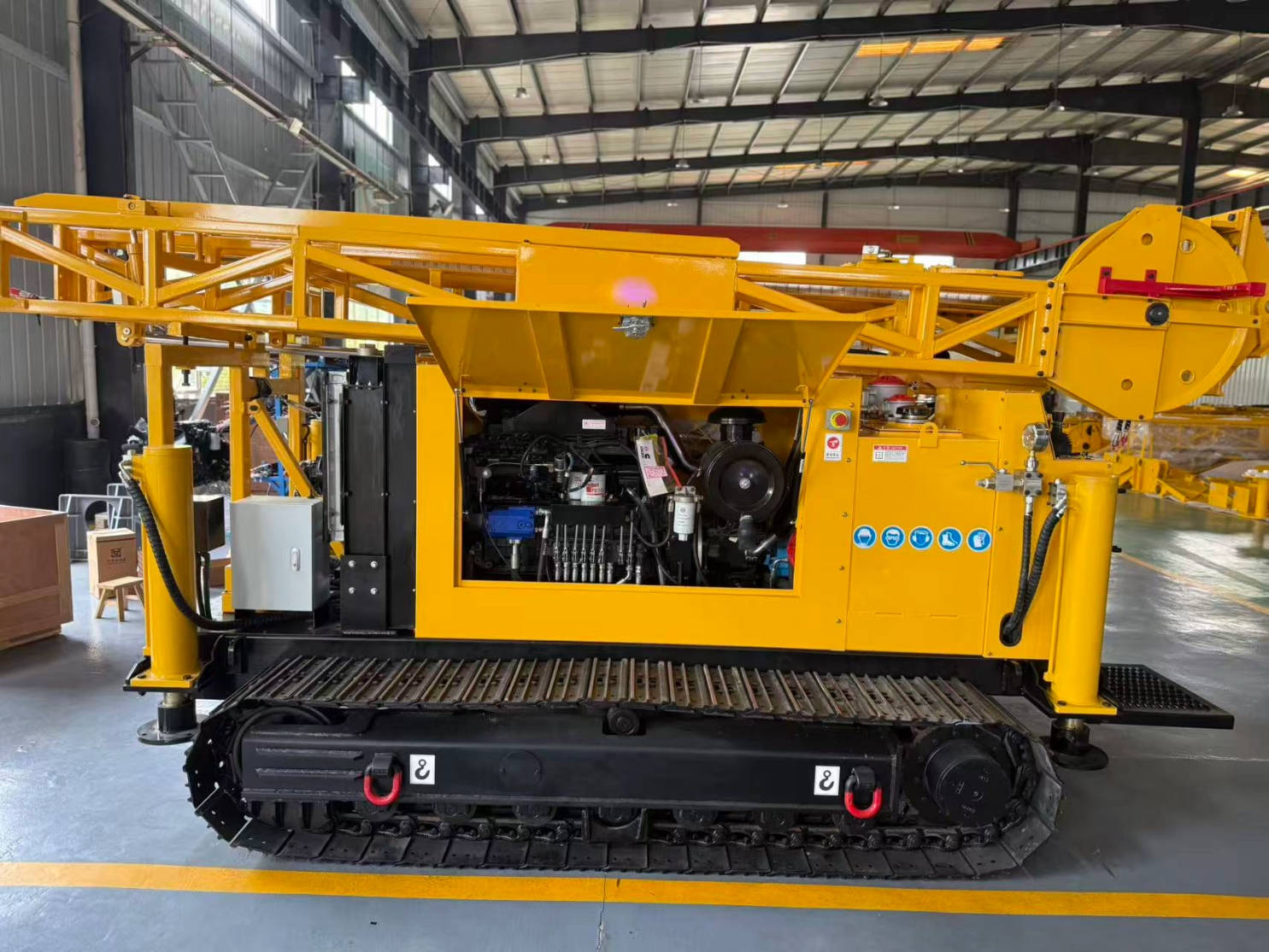
For high-depth geological investigation, a deep core drill is usually the preferred choice because it provides the pullback force, torque, feed stability, hydraulic capacity, and operating margin needed for long diamond core holes.
A lightweight core drill remains the better option when access, transportation, footprint, and setup speed are the dominant project constraints. It can be highly productive in remote or underground conditions, provided the planned hole design stays within realistic equipment limits.
The most effective selection process starts with the hole design, not the machine category. Define your target depth, core size, ground conditions, access restrictions, and safety requirements. Then select a drilling system with enough reserve capacity to complete the program reliably.
Contact CORTECH to discuss your target depth, preferred core size, site conditions, and access limitations. Our drilling specialists can help identify a suitable hydraulic wireline diamond core drilling solution for surface, heli-portable, or underground geological investigation.
There is no single universal definition. In many exploration programs, drilling beyond several hundred meters begins to require more careful review of pullback capacity, torque, rod weight, fluid circulation, and wireline performance. Holes beyond 1,000 m are commonly treated as deep-hole projects because equipment margin becomes increasingly important.
Yes, some lightweight or modular rigs can drill relatively deep holes under favorable conditions. However, actual performance depends on rod size, hole angle, rock conditions, water supply, casing, deviation, and available pullback force. A lightweight rig should not be selected solely on its maximum published depth rating.
Pullback force determines whether the rig can safely retrieve the drill string and tooling from the borehole. As depth increases, the rod string becomes heavier and friction increases. Insufficient pullback capacity can slow operations, raise mechanical risk, and complicate recovery work.
The best size depends on geological objectives, expected ground conditions, laboratory sample requirements, and the drill's capacity. NQ is widely used for deep exploration because it balances core size and depth capability. HQ or PQ may provide more sample material and better structural information, but they require greater torque, pulling capacity, and fluid-management capability.
No. Heli-portable core drills are designed primarily for access and transport flexibility, not only shallow drilling. Their practical depth depends on the specific configuration, rod system, hole angle, ground conditions, and support infrastructure. They are often ideal for remote early-stage programs and constrained exploration sites.
Improve recovery by using appropriate bit and reaming-shell selection, managing weight on bit and rotation speed, maintaining clean fluid circulation, selecting suitable core barrels, monitoring drilling parameters, and reacting early to poor recovery indicators. Borehole stability and experienced drilling practices are also essential.
Not always. A larger drill can provide greater depth and force capacity, but it may require more transport, site preparation, fuel, water, and crew support. In restricted terrain or short-hole programs, a lightweight drill may deliver lower total project cost and faster mobilization.
1. [Epiroc — Diamec Smart 6 Core Drilling Rig]
2. [Boart Longyear — LF160 Surface Coring Drill Rig]
3. [Boart Longyear — Exploration Drilling Equipment and FREEDOM Loader]
4. [Epiroc — Deep Hole Drilling Overview]


