
Views: 222 Author: CORTECH Publish Time: 2026-06-05 Origin: Site


Content Menu
● Understanding Diamond Drilling Rigs in Mineral Exploration
● What Are Tungsten Carbide Rigs?
● Cost-per-Meter: How to Compare Diamond vs. Tungsten Carbide
● Numerical Cost-per-Meter Example (Conceptual)
>> Typical Cost and Performance Ranges in Hard Rock
● Industry Trends: Why Diamond Core Drilling Is Gaining Share
● Expert View: When Diamond Rigs Win on Cost-per-Meter
● Where Tungsten Carbide Rigs Still Have the Edge
● Practical Framework: How to Calculate Your Own Cost-per-Meter
● CORTECH's Positioning: Fully Hydraulic Wireline Diamond Rigs for Cost-Optimized Exploration
● Call to Action: Optimize Your Next Drilling Campaign
● FAQ
>> 1. How do diamond drilling rigs reduce cost per meter in deep exploration?
>> 2. When are tungsten carbide rigs more cost-effective than diamond rigs?
>> 3. How should I calculate total cost per meter for my project?
>> 4. Does market data support investing more in diamond drilling capacity?
>> 5. What type of rig should I choose for a 1,000 m deep hard-rock exploration hole?
As someone who has spent years planning and auditing exploration campaigns, I've learned that the real question is not "Which bit is cheaper?" but "Which rig cuts your cost per meter over the entire program?" When you compare diamond drilling rigs to tungsten carbide rigs in hard‑rock mineral exploration, the answer is often counter‑intuitive: the higher upfront cost of diamond rigs can deliver a lower total cost per meter, especially in deep, high‑value core programs. [novoresources]

Diamond drilling rigs use diamond-impregnated bits to cut a cylindrical core through hard rock, producing continuous, oriented samples. In surface mineral exploration, modern fully hydraulic diamond core rigs are optimized for long, angled, and deep holes where geological certainty and high recovery are critical. [gminsights]
Key characteristics of diamond drilling rigs include: [novoresources]
- High core recovery and excellent sample quality in hard, abrasive formations
- Lower penetration rates (m/h) but much better geological information
- Higher initial rig and bit costs, offset by longer bit life and better decision quality
For companies like CORTECH, fully hydraulic wireline diamond rigs are designed specifically to maximize penetration rate and core recovery while minimizing unplanned downtime and non‑productive tripping. This makes them a natural fit for deep mineral exploration, resource definition, and geotechnical studies around pits and underground mines. [pdf.dfcfw]
"Tungsten carbide rigs" typically refers to rigs that run tungsten carbide button bits for rotary or rotary-percussive drilling (e.g., RC, DTH, or conventional rotary). These systems prioritize penetration speed and lower tooling cost, often at the expense of core quality. [chinamine-safety.gov]
Typical characteristics include: [chinamine-safety.gov]
- High penetration rate, especially in fractured or moderately hard rock
- Lower bit prices per unit, but shorter life in very hard, abrasive formations
- Production-focused drilling (blasthole, RC, shallow exploration) rather than HQ/NQ core
- Sample returns as cuttings or chips instead of intact core
In shallow or medium-depth programs with many holes and moderate geological complexity, tungsten carbide rigs can achieve very competitive cost per drilled meter when geological risk is already well understood. [businessresearchinsights]
For exploration managers, the key KPI is total cost per meter of usable geological information, not just mechanical drilling cost. To evaluate this, you need to consider four main cost blocks: [hnsdrillbit]
1. Rig operating cost per day (crew, fuel, maintenance, mobilization allocation)
2. Penetration rate (m/h) and productive hours per day
3. Tooling cost (bits, rods, core barrels, consumables) per meter
4. Non-productive time (bit changes, stuck pipe, deviation, hole collapse)
Published field data show that diamond drilling typically has a higher daily operating cost and a lower raw penetration rate than high-speed tungsten carbide systems, but compensates through higher bit life, reduced re‑drilling, and superior sample value. [firgelliauto]
For example, industry sources indicate that diamond bits can cost 40–50% more than carbide bits but often last twice as long, especially in very hard rock. At the same time, diamond rigs tend to have higher core recovery and less deviation, reducing the need to redrill or twin holes for confidence, which materially lowers the effective cost per "useful" meter of information. [hnsdrillbit]
To illustrate the trade‑off, consider a simplified example based on typical industry ranges: [firgelliauto]
- Diamond core drilling in hard rock:
- Penetration rate: 2–5 m/h [firgelliauto]
- Higher day rate and tooling cost, but better bit life and core quality [novoresources]
- Tungsten carbide rotary/RC in hard rock:
- Penetration rate: 30–60 m/h, depending on formation and system [firgelliauto]
- Lower bit cost and rig rate, but higher wear and poorer sample integrity in very hard, heterogeneous ground [chinamine-safety.gov]
A simplified cost-per-meter structure can look like this in practice: [hnsdrillbit]

| Parameter | Diamond drilling rig | Tungsten carbide rig |
|---|---|---|
| Typical penetration rate (hard rock) | 2–5 m/h firgelliauto | 30–60 m/h firgelliauto |
| Bit cost (relative) | 140–150% of carbide hnsdrillbit | 100% baseline hnsdrillbit |
| Bit life (relative) | Up to 2× carbide hnsdrillbit | 1× baseline |
| Core/sample quality | Continuous, high novoresources | Chips/cuttings, lower novoresources |
| Redrill / twin-hole likelihood | Lower novoresources | Higher in complex geology novoresources |
| Best suited for | Deep, high-value core, resource definition novoresources | Shallow to medium holes, production or reconnaissance novoresources |
In many resource-definition programs, when you factor in the cost of redrilling, lost time, and geological uncertainty, diamond drilling often delivers a lower effective cost per decision-ready meter despite slower penetration and higher day rates. [gminsights]
Global market data indicate that the diamond core drilling market exceeded USD 912 million in 2023 and is projected to grow at around 4.7% CAGR to 2032, driven by increasing demand for metals and minerals. At the same time, the broader geotechnical and exploration drilling rig market is forecast to reach about USD 5.59 billion by 2035, with a CAGR of roughly 5.2% from 2026 to 2035. [businessresearchinsights]
These trends show two things: [gminsights]
- Exploration drilling activity is expanding in both mining and infrastructure
- Within that growth, diamond core drilling is gaining importance in high-value, deep, and geologically complex projects
For CORTECH and similar manufacturers focusing on fully hydraulic diamond core rigs, this means the market is increasingly favoring rigs that can combine high core quality, automation, and improved penetration rates to push down total cost per meter while maintaining safety and data quality. [pdf.dfcfw]
From an exploration manager's perspective, diamond drilling rigs tend to win on cost-per-meter when any of the following apply: [novoresources]
- You need high core recovery in fractured, veined, or structurally complex ore bodies
- You are drilling deep holes where deviation and redrilling are expensive
- Resource or reserve classification depends on continuous, oriented core
- The commodity is high-value, and grade/geometry uncertainty is costly
In these scenarios, the premium for a fully hydraulic diamond rig and diamond bits is offset by: [hnsdrillbit]
- Fewer abandoned holes and sidetracks
- Lower re‑drill and twin-hole rates
- Reduced uncertainty in resource models and mine design
- Better targeting for follow-up drilling, reducing total meters for the same confidence
This is exactly where CORTECH's fully hydraulic, wireline core rigs can be positioned: as platforms engineered to reduce non‑productive time, stabilize penetration rates, and improve core quality, thereby pulling total cost per "decision-ready" meter down over the life of the project. [pdf.dfcfw]
Tungsten carbide rigs remain the cost-per-meter champion in specific use cases: [businessresearchinsights]
- Shallow reconnaissance drilling where chip samples are sufficient
- Production blasthole drilling in open pits
- Projects with low geological complexity and low need for structural data
In these contexts, their strengths are: [chinamine-safety.gov]
- Very high penetration rates, reducing rig days per program
- Lower upfront bit and rig costs
- Simple operating procedures and high mobility across multiple sites
However, when these rigs are pushed into deep, abrasive, or highly variable formations, bit wear, deviation, and hole stability issues can quickly erode the initial cost-per-meter advantage, especially if you must redrill to meet QA/QC requirements. [novoresources]
To make an informed decision for your project, you can use a simple framework to compare diamond vs. tungsten carbide rigs: [hnsdrillbit]
1. Define your objectives
- Core vs. chips
- Target depth
- Required recovery (%) and orientation
2. Gather cost inputs
- Rig day rate (including crew, fuel, support) for each rig type
- Typical penetration rates (m/h) in your rock types
- Bit prices and expected bit life in meters
3. Estimate mechanical cost per meter
- Rig cost per meter = (day rate / productive meters per day)
- Bit cost per meter = (bit price / expected bit life)
4. Add non-productive time and risk
- Estimate re‑drill percentage for each method
- Include extra meters for deviation correction, twin holes, and QA/QC failures
5. Calculate effective cost per "decision-ready" meter
- Effective cost per meter = (Total program cost) / (Meters that meet your QA/QC and geological objectives)
In many cases, this final step reveals that a diamond drilling rig offers a lower effective cost per meter of reliable geological information, especially as depth and complexity increase. [gminsights]
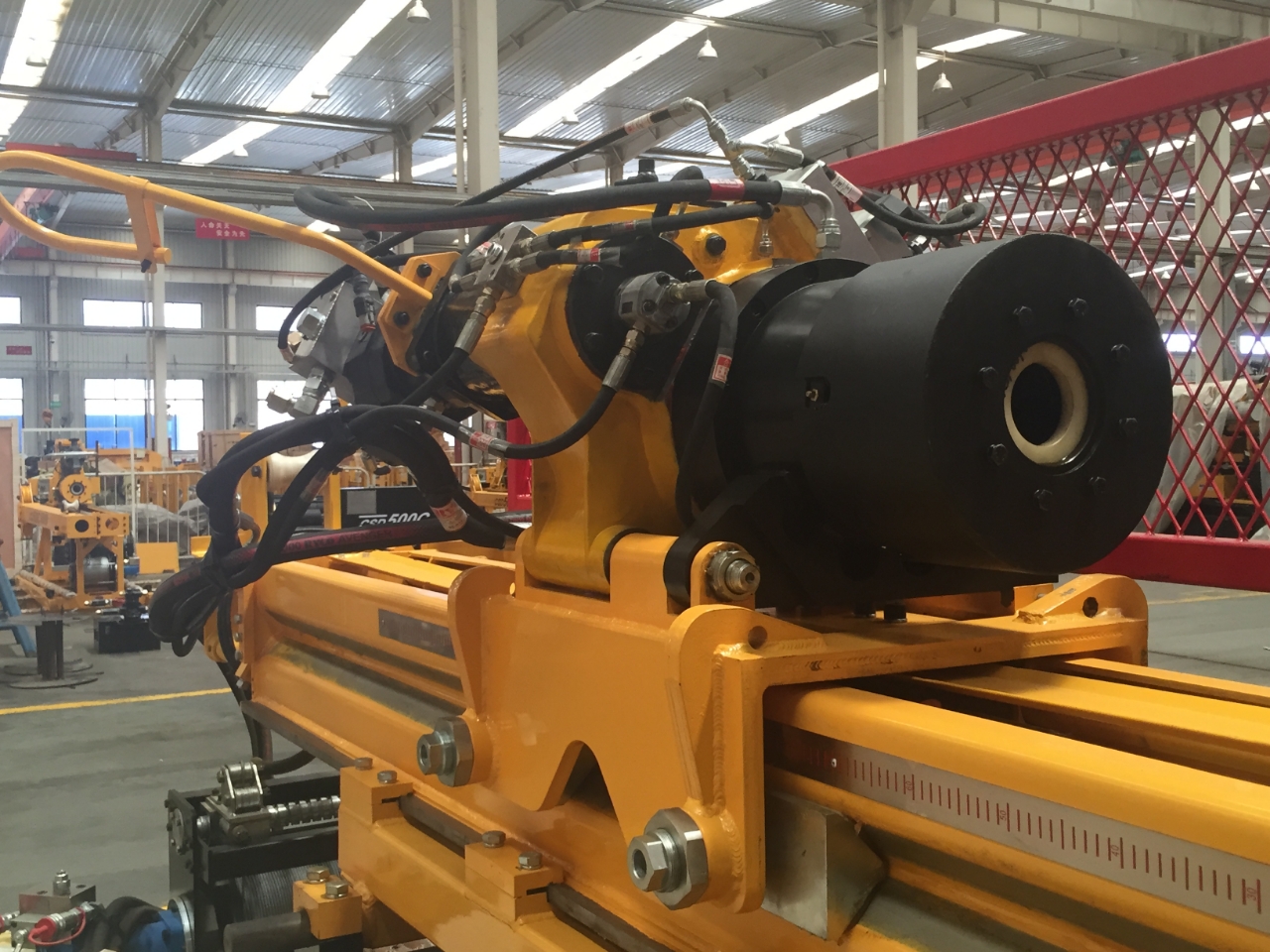
As a manufacturer specializing in fully hydraulic wireline diamond core rigs, CORTECH is positioned to support explorers who want to push cost per meter down without sacrificing data quality. While specific models and specs will differ, the design philosophy typically focuses on:
- High system efficiency: optimized hydraulics for stable torque and thrust
- Wireline retrieval: minimizing tripping time and manual handling
- Automation and monitoring: better control over penetration parameters and real-time performance data
- Mobility and modularity: faster setup, reduced mobilization cost, safer operations
For exploration managers and drilling contractors, this translates into rigs that are built not just to drill, but to consistently deliver high-quality core at a predictable and competitive cost per meter across a full campaign.

If your next mineral exploration program involves deep holes, complex structures, or high-value ore bodies, relying solely on tungsten carbide rigs may increase your cost per decision-ready meter without you noticing it in the daily rate. By modeling cost per meter with rig, tooling, and risk fully accounted for, you can identify where a fully hydraulic diamond drilling rig delivers better long-term value.
To move from theory to practice, consider auditing your last campaign's drilling data and modeling a side-by-side scenario with a CORTECH-style diamond rig. From there, you can design your next program around the most cost-effective rig mix for your geology and your resource strategy.
Diamond rigs reduce cost per meter by providing continuous, high-quality core that minimizes redrilling, deviation correction, and geological uncertainty. Even with higher day rates and bit prices, they often deliver more decision-ready meters per campaign, especially in hard and complex formations. [gminsights]
Tungsten carbide rigs are more cost-effective in shallow, low-complexity projects where chip samples are acceptable and penetration speed is the top priority. In these cases, their lower bit cost and high drilling speed produce very competitive mechanical cost per meter, particularly in production or reconnaissance drilling. [businessresearchinsights]
You should combine rig day rates, average penetration rates, bit costs and bit life, non‑productive time, and expected re‑drill percentage into a single cost-per-meter model. The key is to calculate effective cost per meter of usable data, not just the mechanical drilling cost. [firgelliauto]
Yes. Market reports show the diamond core drilling segment growing at around 4.7% CAGR to 2032, supported by rising demand for metals and minerals and more complex ore bodies. The overall exploration and geotechnical rig market is also expanding, suggesting sustained demand for high-performance diamond rigs. [businessresearchinsights]
For a 1,000 m hard-rock hole where high-quality core and structural data are critical, a fully hydraulic diamond drilling rig with wireline core retrieval is generally the better choice. Tungsten carbide rigs may drill faster in the shallow section, but diamond rigs typically deliver more reliable core and lower long-term cost per decision-ready meter at depth. [novoresources]
1. Novo Resources – "Drilling Techniques & Costs – RC and diamond drilling costs per metre commonly increase with depth."
[https://novoresources.com/exploration/glossary/drilling-techniques-costs/] [novoresources]
2. HNS – "Diamond Drill Bits For Oil Rigs Performance Review – Diamond bits cost 40–50% more than carbides but last twice as long."
[https://www.hnsdrillbit.com/knowledge/diamond-drill-bits-for-oil-rigs-performance-review] [hnsdrillbit]
3. FIRGELLI – "Diamond Well-Boring Machine: How It Works & Examples – Penetration rate and cost per metre data for diamond vs alternatives."
[https://www.firgelliauto.com/blogs/mechanisms/diamond-well-boring-machine] [firgelliauto]
4. Guojia Meikuang Anquan Ju – MT/T 1076-2008 "Meitan Dizhi Zuantan Guicheng" – Coal Geology Drilling Specification (application of hard alloy bits and drilling method selection).
[https://www.chinamine-safety.gov.cn/zfxxgk/fdzdgknr/zcfg/hybz_01/mkanj/201910/P020210202593686867595.pdf] [chinamine-safety.gov]
5. GMI Insights – "Diamond Core Drilling Market Size, Share & Trends Report 2032 – Market size exceeded USD 912 million in 2023, CAGR ~4.7% 2024–2032."
[https://www.gminsights.com/zh/industry-analysis/diamond-core-drilling-market] [gminsights]
6. Business Research Insights – "Geotechnical or Exploration Drilling Rig Market – Market value and 5.2% CAGR from 2026 to 2035."
[https://www.businessresearchinsights.com/zh/market-reports/geotechnical-or-exploration-drilling-rig-market-124995] [businessresearchinsights]
7. 东方财富网 – "综合实力强劲的岩土钻孔装备专家" – Historical overview of fully hydraulic core drilling rigs including early Diamec series and industry adoption.
[http://pdf.dfcfw.com/pdf/H3_AP201205220005253715_1.pdf] [pdf.dfcfw]


