
Views: 286 Author: CORTECH Publish Time: 2026-07-21 Origin: Site


Content Menu
● Two Drilling Missions, Two Machine Types
● What Geotechnical Boring Really Aims to Achieve
>> Near‑Surface Risk and Foundation Behavior
>> Operational Focus of Geotechnical Rigs
● What Mineral Exploration Drilling Must Deliver
>> Deep Core for Resource and Structural Decisions
>> Role of Full‑Hydraulic Wireline Diamond Rigs
● Machine Capability Comparison: Geotechnical vs. Mineral Exploration
>> Depth, Core Type, and Drilling Method
● Hydraulic Systems and Structural Design
>> Geotechnical Rig Hydraulics and Structure
>> Full‑Hydraulic Exploration Rig Capabilities
● Wireline Technology and Core Handling
>> Limitations in Standard Geotechnical Rigs
>> Advantages of Wireline Systems in Exploration Rigs
● Where Geotechnical Boring Rigs Excel
>> Ideal Projects for Geotechnical Machines
>> Strengths in Mobility and Versatility
● Where CORE SURFACE DRILL‑Type Rigs Provide Superior Value
>> Deep Exploration and Complex Environmental Programs
>> Reliability and Life‑Cycle Performance
● Practical Selection Guide: Choosing Between Geotechnical and Exploration Machines
>> Summary Table of Practical Differences
● CORTECH's Role in Modern Surface Core Drilling
● FAQ
>> 1. Can a geotechnical boring rig handle deep hard‑rock core drilling?
>> 2. When is it practical to use a surface diamond core rig on environmental projects?
>> 3. Are surface exploration rigs suitable for both vertical and angled holes?
>> 4. Why is wireline technology important for mineral exploration drilling?
>> 5. Do geotechnical and exploration rigs require different operator skill sets?
On the surface, geotechnical boring and mineral exploration drilling can look similar: a rig on a pad, rods going into the ground, and engineers waiting for data. In reality, their machine capability requirements diverge sharply once depth, core quality, and structural information come into play.
Geotechnical boring rigs are designed to characterize soil and shallow rock for infrastructure safety, while mineral exploration rigs focus on high‑quality core at significantly greater depths to evaluate ore bodies, structures, and long‑term resource potential. Understanding these differences is essential for project managers, equipment buyers, and engineers who need the right machine for the right mission.

In geotechnical work, the primary concern is how soil and shallow rock will behave under loads, water, and time. Teams are interested in:
- Bearing capacity and settlement of foundations and embankments
- Shear strength and stability of slopes and retaining structures
- Groundwater conditions and contamination pathways near critical infrastructure
Because the investigation zone is usually limited to tens of meters, the rigs are optimized for shallow, flexible operations. They often use auger, rotary, and percussion techniques to gather samples, perform in‑situ tests, and install small monitoring wells.
From a machine design perspective, typical geotechnical rigs emphasize:
- Mobility and compact size for tight urban or roadside sites
- Versatile tooling to switch quickly between sampling and testing methods
- Moderate mast strength and pullback appropriate for short holes
These rigs are practical and economical for routine investigations, but their structure and hydraulic systems limit their performance in deep, hard rock drilling where core integrity becomes critical.
Mineral exploration drilling has a different mission: it must recover continuous, high‑integrity core from much greater depths, often several hundred to thousands of meters. Exploration teams rely on this core to understand:
- Lithology, alteration, and veining across thick rock sequences
- Structural features such as faults, fractures, and folds
- Ore distribution and grade trends that underpin resource models
To meet these demands, mineral exploration rigs are engineered around diamond core drilling and wireline technology. High‑quality core and accurate depth control are non‑negotiable, because sampling errors translate directly into financial risk.
Modern surface exploration rigs, including CORE SURFACE DRILL equipment, use full‑hydraulic systems combined with wireline diamond coring. Their design aims to:
- Maintain stable rotation and feed force at depth in variable rock
- Maximize core recovery and orientation accuracy
- Reduce trip time through wireline retrieval instead of pulling full strings
This combination allows operators to drill deep, maintain productivity, and collect core suitable for modeling and long‑term planning.

At the heart of the comparison are three practical questions: How deep can each machine type drill? What kind of data do they provide? Which methods do they use?
| Aspect | Geotechnical Boring Rigs | Mineral Exploration Diamond Core Rigs |
|---|---|---|
| Primary depth range | Typically 5–100 m, sometimes deeper for major infrastructure | Commonly hundreds to >1,000 m, depending on rig and rod size |
| Data type | Soil samples, short rock cores, in‑situ test results | Continuous diamond core, often oriented, through hard and fractured rock |
| Drilling method | Auger, rotary, percussion, limited coring | Full‑hydraulic wireline diamond coring with dedicated bits and barrels |
| Precision need | Adequate for foundation and slope design | High precision required for structural and resource modeling |
Geotechnical rigs meet the needs of near‑surface projects very efficiently, but they are not engineered for deep, continuous core in challenging rock. Mineral exploration rigs, by contrast, are purpose‑built to deliver consistent performance and core quality across long, demanding holes.
Geotechnical rigs commonly use simpler or semi‑hydraulic systems. While these systems provide sufficient control for shallow operations, they tend to have:
- Limited independent hydraulic circuits
- Lower torque and pullback capacity
- Shorter feed strokes in the mast
Structurally, their masts and frames are designed for moderate loading conditions, which match typical foundation and slope investigations but restrict their performance when deeper drilling is attempted.
In contrast, full‑hydraulic surface core rigs such as CORE SURFACE DRILL are built with:
- Independent hydraulic circuits for rotation, feed, and auxiliary functions
- High‑torque drill heads capable of slow, controlled coring and faster reaming
- Long feed strokes to improve penetration efficiency and reduce rod handling
The mast, base frame, and undercarriage are significantly heavier and stronger, often using crawler tracks for stability and mobility over uneven terrain. This design allows the rig to handle large pullback forces, steep angles, and deep boreholes without compromising safety or performance.
Many geotechnical rigs either lack wireline systems or use basic implementations that are not optimized for deep core retrieval. As a result:
- Core handling often requires more manual work
- Trip times increase with depth
- The practical economic limit for continuous core is relatively low
This is acceptable when holes are short and core is only one of several data inputs, but it becomes inefficient in deeper programs.
In full‑hydraulic diamond rigs, wireline systems are integral to the design. They provide:
- A dedicated winch and rope capacity for deep core barrel retrieval
- Significant reduction in non‑productive time when changing barrels
- Safer, more controlled handling of equipment at depth
The result is a machine that can sustain high productivity even in long holes, making deep exploration feasible and economically viable.
Geotechnical rigs remain the best option for many everyday engineering tasks. They excel in:
- Foundation studies for buildings, bridges, and industrial facilities
- Slope stability and earthworks assessments
- Contamination screening and shallow monitoring installations
Their compact structure, flexible tooling, and lower operating cost per shift make them well suited to project environments where depth is limited and where soil behavior is more important than deep rock core.
These rigs are often truck‑mounted or trailer‑mounted and can be mobilized quickly across urban or semi‑urban sites. Operators can move from hole to hole in a single day, switch between auger and sampling tools, and meet the needs of multiple small projects without complex logistics.
Full‑hydraulic surface diamond rigs bring clear advantages when projects demand:
- Deep, continuous core for exploration targets and structural mapping
- High‑quality data needed for long‑term resource decisions
- Complex environmental investigations with deep monitoring wells or injections
Their ability to drill long holes, maintain consistent core quality, and operate reliably over extended campaigns helps reduce technical and financial risk.
Beyond raw capability, modern hydraulic rigs are engineered for:
- Robust uptime when maintained correctly
- Predictable performance across changing formations
- Lower life‑cycle cost per meter in sustained deep drilling programs
For project owners and managers, these factors often justify investing in a specialized rig rather than relying on general‑purpose equipment beyond its ideal operating envelope.
A simple, structured approach can help teams decide which type of rig to deploy:
1. Clarify investigation depth and data needs
- Shallow soil and basic rock parameters → favor near‑surface geotechnical rigs.
- Deep continuous core for resource or structural models → require surface diamond exploration rigs.
2. Assess formation conditions
- Mostly soft, uniform soils → conventional boring methods are efficient.
- Hard, fractured, or highly variable rock → full‑hydraulic diamond rigs deliver better control and core quality.
3. Consider project duration
- Short campaigns with limited depth → general‑purpose rigs may be more economical.
- Long exploration or remediation programs → specialist rigs improve reliability and life‑cycle cost.
4. Evaluate site access and terrain
- Tight urban access or roadside locations → compact geotechnical rigs or truck‑mounted units.
- Remote, uneven terrain → crawler‑mounted exploration rigs with stronger masts and integrated support systems.

| Decision Factor | Geotechnical Boring Rig | Surface Diamond Exploration Rig |
|---|---|---|
| Typical depth | Shallow to moderate | Deep, often >500 m |
| Core quality | Sufficient for geotechnical parameters | High integrity for structural and resource modeling |
| Hydraulic sophistication | Simpler systems | Full-hydraulic with multiple circuits |
| Wireline integration | Limited or absent | Standard, optimized for deep operations |
| Ideal projects | Foundations, slopes, shallow contamination | Mineral exploration, deep environmental studies, geothermal |
This perspective helps stakeholders align machine choice with actual project risk and information needs, rather than defaulting to familiar equipment.
As a manufacturer specializing in CORE SURFACE DRILL rigs and related all‑hydraulic diamond drilling equipment, CORTECH focuses on surface core drills that combine strong masts, advanced hydraulic systems, and integrated wireline technology. These rigs are designed for:
- High‑precision core drilling at significant depth
- Stable performance in hard rock and complex geological settings
- Efficient operation in long campaigns with demanding productivity goals
By concentrating on this segment, CORTECH supports exploration and environmental teams that need reliable, repeatable performance and rigorous core data from surface drilling operations.
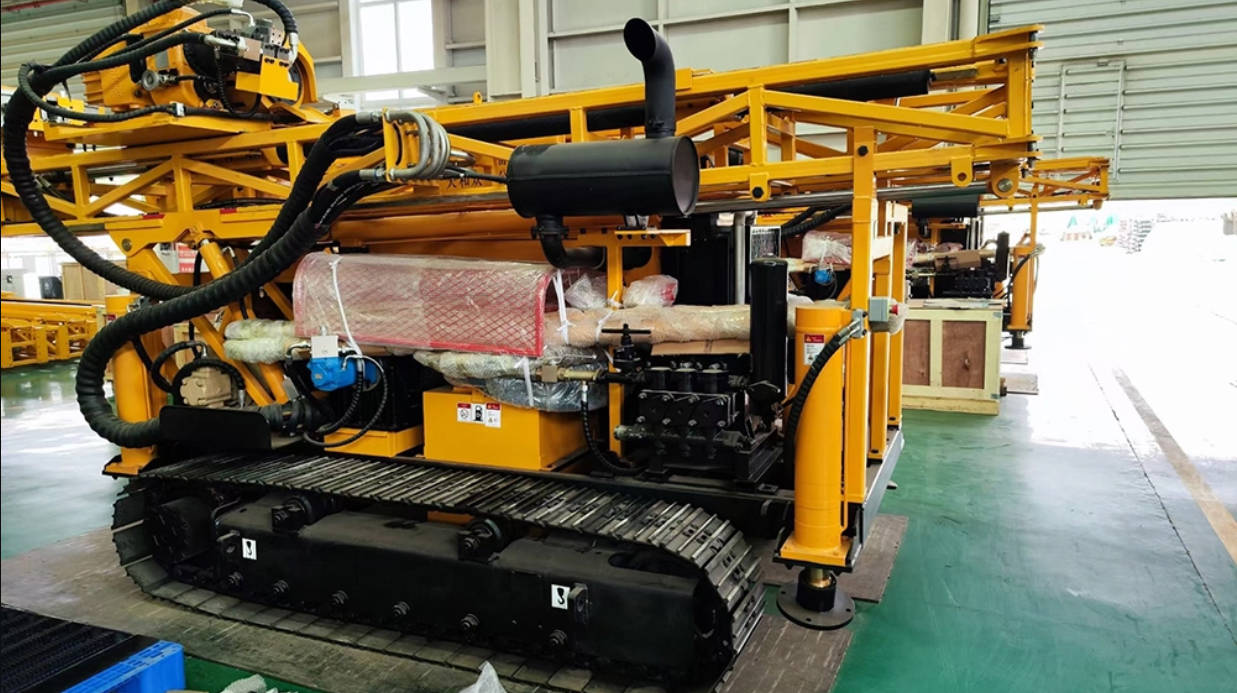
Choosing between geotechnical boring rigs and mineral exploration drilling rigs is ultimately about aligning machine capability with investigation goals. Near‑surface engineering questions are best answered with flexible, mobile geotechnical rigs, while deep resource and structural questions demand full‑hydraulic diamond core equipment such as CORE SURFACE DRILL rigs.
By understanding the differences in depth limits, hydraulic systems, wireline integration, and core quality, project teams can design drilling programs that deliver the right data, at the right depth, with the right level of reliability for long‑term decisions.
In most situations it cannot do so efficiently. Geotechnical rigs are optimized for shallow investigations and do not usually provide the torque, pullback, and wireline systems needed for deep, continuous core in hard rock.
It becomes practical when projects require deep monitoring wells, detailed rock characterization, or precise placement of injections and sampling points that extend well beyond typical foundation depths.
Yes, most modern surface diamond core rigs can be configured for vertical and angled holes, provided the mast, base, and feed systems are designed to handle the required angles safely.
Wireline technology allows crews to retrieve core barrels without pulling complete strings of rods. This reduces time spent on trips and supports higher productivity in long holes.
They share a common foundation in drilling practice, but exploration rigs demand additional experience in wireline operations, deep hole management, and core handling protocols for structural and resource analysis.
1. CORTECH Drilling Equipment Co., Ltd. "Core Surface Drill Rigs For High Precision Diamond Core Drilling Projects."
2. CORTECH Drilling Equipment Co., Ltd. "China CORE SURFACE DRILL Manufacturer."
[https://www.cortechdrilling.com/core-surface-drill.html]
3. ISO. "ISO 10097‑2: Wireline diamond core drilling equipment."
[https://www.iso.org/obp/ui/en/]
4. Precision Drilling Australia. "Geotechnical vs Environmental Drilling."
[https://www.precisiondrillingaustralia.com.au/blog/geotechnical-vs-environmental/]
5. Drill Techniques. "Comparing piling rigs vs drilling rigs."
[https://drilltechniques.com.au/comparing-piling-rigs-vs-micropiling-and-geotechnical-drilling-rigs/]


