
Views: 267 Author: CORTECH Publish Time: 2026-08-06 Origin: Site


Content Menu
● Understanding Explosive Blastholes and Core Sampling Holes
● Speed: Why Blastholes Win on Penetration Rate
● Data Quality: Why Core Sampling Holes Are Irreplaceable
● Cost vs. Value: Blastholes for Production, Cores for Decisions
● Risk Management: Operational Risk vs. Strategic Risk
● How Modern Core Surface Rigs Improve Both Speed and Quality
● Practical Field Workflow: Integrating Blastholes and Core Holes
● When to Prioritize Speed vs. Data Quality
● Practical Thumb Rules for Core Drilling
● Align Your Drilling Strategy with Your Data Needs
● FAQs
>> 1. Why can't blasthole drilling replace core sampling for resource modeling?
>> 2. How much more expensive is core drilling compared with blasthole drilling?
>> 3. Can advanced core surface rigs achieve competitive drilling speeds?
>> 4. How do core sampling holes improve blast performance indirectly?
>> 5. When should a project shift from blasthole‑dominant to core‑dominant drilling?
Explosive blastholes prioritize fast rock breakage and production, while core sampling holes focus on high‑quality geological data for long‑term resource and risk decisions. Understanding how these two drilling approaches differ in speed, data quality, cost, and risk is critical for any operation that needs to balance short‑term productivity with long‑term asset intelligence.
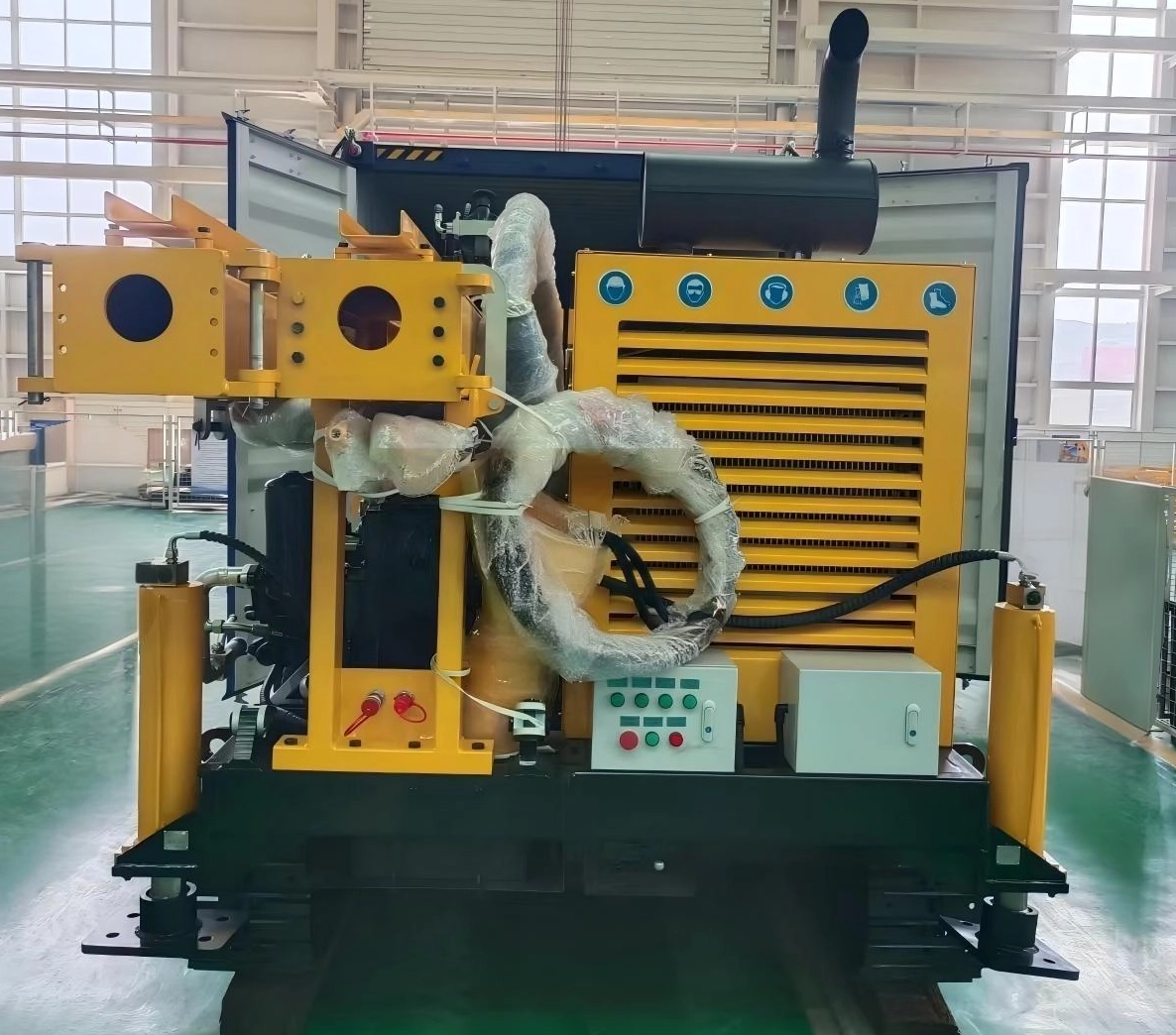
Explosive blastholes and core sampling holes are both surface drilling methods, but they serve fundamentally different purposes.
- Explosive blastholes are drilled to place explosives for rock fragmentation in mining, quarrying, and construction.
- Core sampling holes are drilled to recover continuous rock cores for geological, geotechnical, and resource evaluation.
From a practitioner's perspective:
- As a mine engineer or drilling supervisor, blasthole drilling is about meters per shift, blast schedules, and cost per broken ton.
- As a geologist or exploration manager, core drilling is about core recovery, RQD, lithological detail, and confidence in the resource model.
In this article, we will compare Explosive Blastholes vs. Core Sampling Holes: Speed vs. Data Quality across all key dimensions and explain why modern operations increasingly integrate high‑quality core drilling technologies such as full hydraulic diamond core surface rigs (CORE SURFACE DRILL) into their workflow.
| Dimension | Explosive blastholes | Core sampling holes |
|---|---|---|
| Primary purpose | Rock fragmentation for production blasts | Geological & geotechnical data acquisition |
| Output | Broken rock, blast performance metrics | Continuous core, logs, lab test results |
| Typical drilling speed | High penetration rate (fast meters/day) | Moderate, optimized for core recovery and integrity |
| Data quality | Limited geology information, indirect data | High‑resolution geology, structure, and rock quality |
| Cost per meter | Generally lower | Higher (equipment, handling, logging, QA/QC) |
| Impact on design | Short‑term blast and production planning | Long‑term mine design, slope stability, resource models |
| Risk profile | Operational blast risk | Data‑driven risk reduction for the entire project |
From an operations standpoint, blasthole drilling is built for speed. Rotary and DTH (down‑the‑hole) blast rigs are designed to:
- Drill large‑diameter holes quickly.
- Cover extensive patterns for each blast.
- Minimize cost per broken ton and per drilled meter.
Typical speed advantages of blastholes:
- Higher penetration rate thanks to robust rotary or DTH systems that transmit significant energy into the rock for fast drilling.
- Simplified process: no need to recover, handle, or log cores.
- Direct integration with blasting schedules — every meter drilled is a meter closer to the next production blast.
In benchmark studies, drill‑and‑blast development often achieves very competitive advance rates compared with mechanical excavation, especially in hard rock environments where blasting is more effective and flexible.
From a blast engineer's perspective:
- You care about meters per hour, hole straightness, and pattern completion.
- Geological detail is secondary; you rely on patterns and previous blast performance rather than detailed rock cores.
Core sampling holes, drilled with full hydraulic diamond core rigs and wireline systems, are fundamentally different. They prioritize data quality over sheer speed.
Key reasons why core sampling holes win on data quality:
- Continuous core recovery: cylindrical cores of rock are recovered, preserved, and logged.
- Detailed rock description: lithology, structure, alteration, fractures, bedding, and mineralization can all be precisely logged.
- Rock quality metrics: parameters such as Core Recovery (%) and RQD (Rock Quality Designation) directly influence geotechnical models and slope stability analysis.
- Laboratory testing: cores are sent to labs for strength, porosity, density, and metallurgical tests, providing quantitative inputs for engineering design.
From a geologist's view on the drill pad:
- A well‑run core program with ≥ 90% core recovery in ore zones and consistent RQD above 75% is considered a strong indicator of reliable geological and rock‑mass data.
- Poor recovery or damaged cores immediately raise questions about interpretation reliability, prompting adjustments in bit type, RPM, weight on bit, and barrel configuration.
This makes core sampling non‑negotiable for:
- Resource estimation and classification.
- Slope stability and underground support design.
- Strategic mine planning and reserve reporting.

On a pure cost‑per‑meter basis, core sampling holes are more expensive than blastholes. Practical field rules often estimate core drilling costs at 3–5 times that of DTH drilling, reflecting the specialized equipment, crew skill, and intensive handling and logging.
Yet, from a long‑term project economics perspective:
- Blastholes mainly influence short‑term production cost and blast efficiency.
- Core holes influence billions of dollars of long‑term decisions: whether a deposit is economic, how steep a pit wall can safely be, or how support systems are designed.
Industry practitioners increasingly recognize that high‑quality core data reduces overall project risk:
- Fewer unexpected ground conditions.
- More accurate resource models.
- Better alignment between blast design and actual rock mass behavior.
Risk in drilling is not just about accidents; it's about uncertainty.
Explosive blastholes:
- Carry operational risk: mis‑collared holes, deviation, or incorrect depth can lead to uneven blasts, poor fragmentation, flyrock, or vibration issues.
- Have limited geological visibility; you infer rock conditions from drilling response, penetration rate, and blast performance rather than direct core evidence.
Core sampling holes:
- Target strategic risk reduction: high‑quality core data minimizes surprises in ore continuity, rock quality, and structural issues.
- Enable more robust geotechnical models and slope designs, reducing long‑term safety and economic risk.
From an expert UX and decision‑making perspective:
- Blastholes are your "fast feedback" tools embedded in daily production.
- Core holes are your "deep insight" tools that shape the entire project architecture.
Modern full hydraulic CORE SURFACE DRILL rigs for wireline diamond coring significantly change the trade‑off between speed and data quality.
Industry best practices and field "thumb rules" highlight how advanced core rigs can optimize both:
- Optimized bit selection: impregnated diamond bits matched to rock hardness and abrasivity increase penetration rates while preserving core integrity.
- Adaptive RPM and weight on bit: higher RPM for soft rocks, controlled RPM and minimal WOB for hard or fractured formations prevent core grinding and breakage.
- Triple‑tube barrels: used in friable or clay‑rich zones to improve core recovery and preserve delicate structures.
- Continuous, clean fluid circulation: stable water or drilling fluid flow reduces core wash‑out and contamination, improving recovery and sample quality.
These practices, combined with hydraulic feed systems, precise pressure control, and modern wireline retrieval, allow surface core rigs to:
- Achieve competitive penetration rates while maintaining high recovery.
- Minimize non‑productive time during core retrieval and barrel changes.
- Deliver more consistent, high‑quality core for logging and testing.
For operators using advanced rigs like CORTECH's CORE SURFACE DRILL, the decision is no longer "speed vs. data quality" but rather "how much data quality can we achieve without sacrificing operational efficiency."
Modern mining and infrastructure projects rarely choose between blastholes and core holes; they combine both strategically.
A typical integrated workflow:
1. Early exploration and geotechnical investigation
- Deploy core surface drills to collect continuous core in key areas.
- Log lithology, structure, RQD, and core recovery; run lab tests for strength and metallurgical properties.
2. Resource modeling and design optimization
- Use core data to build 3D geological and geotechnical models.
- Define pit slope angles, underground support requirements, and production strategy.
3. Production drilling for blasting
- Apply models derived from core data to design blast patterns, spacing, and burden.
- Use blasthole performance (fragmentation, vibration, dilution) as feedback to refine models further.
4. Ongoing risk management and refinement
- Drill infill and step‑out core holes where models show uncertainty.
- Update designs and blast plans based on integrated core and blasthole information.
This combination gives you:
- Fast progress from blastholes.
- High‑confidence decisions from core holes.
As an industry strategist or technical manager, you should deliberately choose which type of hole dominates your program depending on project stage and risk appetite.
Situations where explosive blastholes should lead:
- Mature pits with extensive historical data and stable geology.
- Short‑term production campaigns where ore bodies are well understood.
- Operational environments where blast patterns are frequently repeated and optimized.
Situations where core sampling holes must be prioritized:
- New deposits, extensions, or deep targets with limited data.
- Projects with complex geology, faulting, or variable rock quality.
- High‑risk environments such as steep slopes, underground pillars, or infrastructure near sensitive receptors.
In practice, many experts use minimum core density thresholds (e.g., spacing and depth rules) for different stages of exploration and mine planning, and supplement this with blasthole data during production.

To maximize the value of core sampling holes, experienced core drillers and geologists follow practical rules:
1. Plan hole layout and spacing
- Use wider spacing for early reconnaissance and tighter spacing for detailed reserves and mine planning.
2. Optimize hole orientation
- Drill perpendicular to ore body dip and strike to capture true thickness and proper structural information.
3. Control deviation and recovery
- Check deviation regularly; adjust rods and reaming practices to keep holes accurate.
- If recovery drops below critical thresholds (e.g., < 70% in ore zones), stop and revise bit, barrel, or technique.
4. Log and manage core data rigorously
- Maintain standardized logging protocols, depth markers, orientation marks, and QA/QC sampling.
- Implement data management and quality control systems to ensure reliable, sharable core data.
By embedding these practices into modern CORE SURFACE DRILL operations, you transform core sampling holes from a cost center into a strategic data asset.
If your operation is still treating blasthole drilling and core sampling as isolated activities, it's time to connect your speed and your data.
By deploying modern CORE SURFACE DRILL rigs alongside production blast drilling, you can:
- Maintain high drilling and blasting productivity.
- Build a robust geological and geotechnical knowledge base.
- Significantly reduce long‑term operational and financial risk.
Work with your technical teams to audit where data gaps exist in your current drilling program, then design a core‑focused drilling plan that fills those gaps, supports better blast design, and elevates decision quality from exploration through to production.
Blasthole drilling provides limited geological detail and is optimized for production, not continuous rock recovery. While blasthole data can support short‑term grade control, core sampling holes deliver continuous cores and detailed logs that are essential for accurate resources, geotechnical models, and long‑term design decisions.
Field experience and best‑practice guidelines often estimate core drilling costs at 3–5 times those of DTH blast drilling on a per‑meter basis, reflecting specialized tooling, handling, logging, and QA/QC requirements. However, this cost is typically justified by the reduction in geological and geotechnical uncertainty.
Yes. With optimized diamond bit selection, controlled RPM and weight on bit, efficient fluid circulation, and modern wireline systems, full hydraulic core surface rigs can achieve respectable penetration rates while maintaining high core recovery, reducing the traditional trade‑off between speed and data quality.
Core data reveals detailed structures, discontinuities, and rock quality variations that influence how blasts behave. By integrating core information into 3D models and blast designs, teams can optimize burden, spacing, charge distribution, and timing, improving fragmentation and reducing blast‑related risks.
Projects should prioritize core drilling when entering new geological domains, high‑risk areas, or stages where slope stability, underground support, or long‑term resource classification become critical. As geological knowledge matures, blasthole drilling can handle more of the routine production work, with targeted core holes used to refine models where uncertainty remains.
1. U.S. Geological Survey – Guidelines for Logging, Describing and Sampling Cores and Cuttings (Open‑File Report 79‑1522). [https://pubs.usgs.gov/of/1979/1522/report.pdf] [pubs.usgs]
2. ASTM International – ASTM D2113‑08: Standard Practice for Rock Core Drilling and Sampling of Rock for Site Investigation. [https://cdn.standards.iteh.ai/samples/63990/714b0c888a2940edafbc5126e845e3c9/ASTM-D2113-08.pdf] [cdn.standards.iteh]
3. Geologists' Association – Rock Coring Guide: A Code of Conduct for Rock Coring. [https://geologistsassociation.org.uk/newgawpsite/wp-content/uploads/2017/07/GARockCoringGuide.pdf] [geologistsassociation.org]
4. Number Analytics – Core Logging Essentials in Rock Mechanics. [https://www.numberanalytics.com/blog/core-logging-essentials-rock-mechanics] [numberanalytics]
5. Sudam Behera – Core Drilling Best Practices for Mines: Top 30 Practical Thumb Rules (LinkedIn article). [https://www.linkedin.com/posts/sudam-behera-14759727_coredrilling-activity-7426652590094012417-k0qD] [linkedin]
6. Mining development benchmarking – Benchmark Drill and Blast and Mechanical Excavation Advance Rates for Underground Hard Rock Mine Development (technical paper). [https://www.academia.edu/68471702/Benchmark_drill_and_blast_and_mechanical_excavation_advance_rates_for_underground_hard_rock_mine_development] [academia]
7. Blast optimization – Reducing Drill and Blast Cost through Blast Optimisation (technical paper). [https://scispace.com/pdf/reducing-drill-and-blast-cost-through-blast-optimisation-a-1ik0ihc69z.pdf] [scispace]
8. Mining drilling rigs overview – Mining Drilling Rigs: Types, Working & Applications. [https://klruniversal.com/blog/mining-drilling-rigs-guide] [klruniversal]


