
Views: 226 Author: CORTECH Publish Time: 2026-10-09 Origin: Site


Content Menu
● What Is the Difference Between a Hard Rock Core Drill and a Standard Core Drill?
● Understanding Competent Rock Formations Before Selecting a Drill
>> Competent Rock Does Not Automatically Mean Hard Rock
>> Evaluate Hardness, Abrasivity, and Fracturing Separately
● Hard Rock Core Drill vs. Standard Core Drill: Performance Comparison
>> Penetration Rate: Stable Cutting Matters More Than Peak Power
>> Torque and RPM: Compare the Operating Envelope
>> Feed Control: More Force Is Not Always Better
>> Core Recovery: Evaluate the Whole Sampling System
● Diamond Bit Selection for Competent Hard Rock
>> Match the Matrix to the Actual Formation
>> Watch for Diagnostic Changes, Not Isolated Readings
● A Practical Commissioning Procedure for Hard-Rock Core Drilling
>> Measure Flow Rather Than Assuming Pressure Proves Cooling
● Compare Cost per Accepted Meter, Not Purchase Price Alone
>> An Illustrative Decision Scenario
● When Should You Choose Each Core Drilling System?
>> Choose a Hard-Rock-Optimized System When
>> Choose a Standard Core Drill When
● What Buyers Should Ask CORTECH Before Ordering
● Discuss Your Competent-Rock Drilling Program with CORTECH
>> 1. Can a Standard Core Drill Drill Hard Rock?
>> 2. Is Competent Rock Always Easier to Drill?
>> 3. Does More Torque Always Increase Penetration?
>> 4. Which Diamond Bit Is Best for Competent Hard Rock?
>> 5. Does Wireline Drilling Improve Core Recovery?
>> 6. What Information Is Needed for a Rig Recommendation?
Choosing a hard rock core drill vs. standard core drill for competent rock formations is not simply a question of buying a more powerful machine. The right choice depends on rock hardness, abrasivity, hole depth, core diameter, and the drilling system's ability to maintain stable cutting conditions.
A hard-rock-optimized system is generally the stronger candidate for demanding formations and deep exploration holes. However, a properly configured standard diamond core drill can perform effectively in competent rock when its operating capacity matches the application.
From a drilling-system selection perspective, the decisive factor is compatibility: the rig, diamond bit, drill string, core barrel, and flushing system must work together.
For CORTECH, a manufacturer focused on developing, manufacturing, and selling fully hydraulic wireline diamond core drilling rigs, this comparison should help buyers evaluate an entire drilling system—not just an equipment label.

Neither "hard rock core drill" nor "standard core drill" represents a universally standardized equipment category.
In this article, a hard rock core drill means a diamond core drilling system configured for demanding hard-rock applications. A standard core drill means a general-purpose geological diamond coring system—not a handheld concrete coring machine.
Both systems may use fully hydraulic operation, wireline core retrieval, and impregnated diamond bits. Their practical differences emerge from available operating capacity, tooling selection, and control under load.
| Selection factor | Hard-rock-optimized core drill | Standard geological core drill |
|---|---|---|
| Application focus | Demanding hard-rock intervals and challenging hole programs | General exploration and less demanding drilling programs |
| Rotation capability | Selected to sustain the required speed and torque under load | Suitable when its operating envelope meets the application |
| Feed control | Emphasis on stable, adjustable bit loading | May be equally effective if sufficiently controllable |
| Diamond tooling | Matrix and crown design matched to difficult formations | General-purpose or formation-specific tooling |
| Flushing capacity | Evaluated against depth, diameter, and cutting demand | Adequate where circulation requirements remain within capacity |
| Purchase decision | Justified by operating requirements and lifecycle cost | Attractive when additional capacity offers little practical benefit |
The important distinction is configuration rather than terminology. A standard rig with suitable tooling can outperform a larger machine running an unsuitable bit.
Competent rock generally maintains its integrity rather than readily breaking apart or collapsing during drilling. Hardness describes resistance to scratching or cutting; competence concerns the rock's condition and structural integrity.
A formation can therefore be competent without being exceptionally hard. Conversely, hard minerals can occur in fractured ground that creates difficult drilling conditions.
This distinction matters because solid rock and broken rock interact differently with a diamond bit. Competent ground can support consistent cutting, while loose fragments may increase wear and disrupt drilling stability.
A reliable formation assessment should consider:
- Hardness and resistance to cutting.
- Abrasivity and expected matrix wear.
- Fracture frequency and weathering.
- Changes between geological layers.
- Groundwater conditions and potential circulation losses.
Granite, for example, is not a single drilling condition. Its mineral composition, weathering, and fracture patterns can change the required bit selection.
Scratch testing provides useful preliminary information, but it does not replace geological logging or laboratory testing when engineering decisions require measured rock properties.
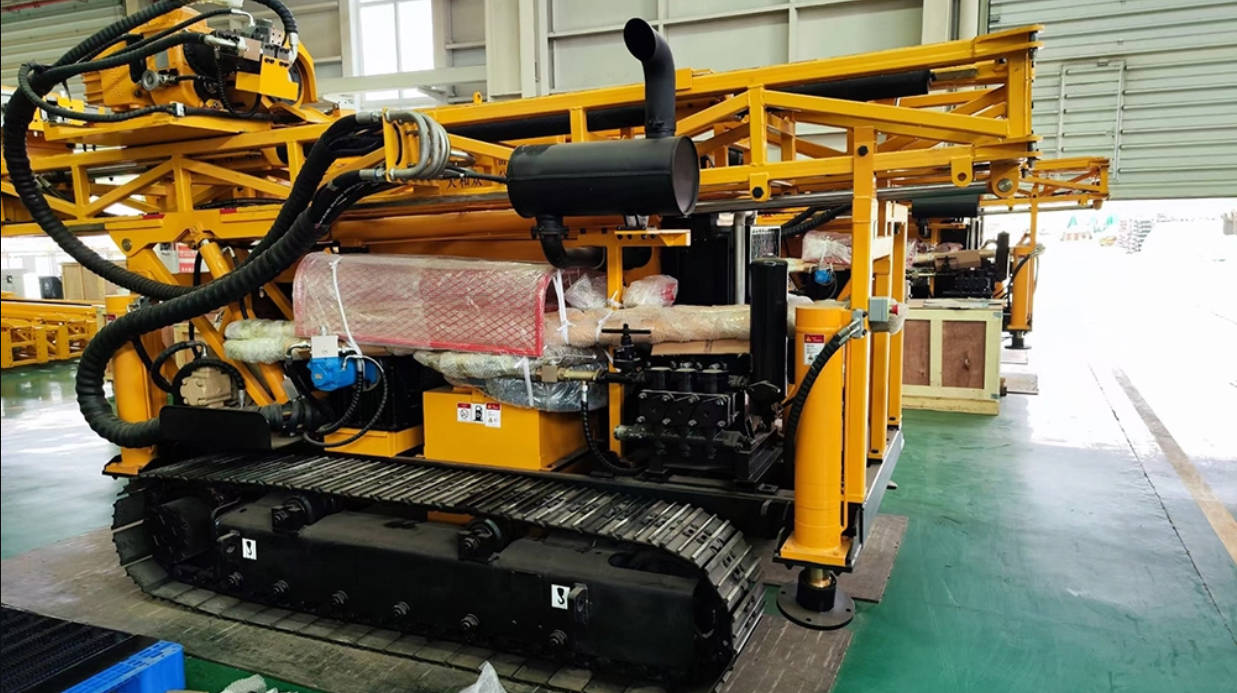
A hard-rock-optimized drill does not automatically deliver a higher rate of penetration.
Performance depends on whether the rig can maintain suitable rotational speed, weight on bit, and circulation for the selected tooling.
A machine with insufficient operating reserve may lose speed or stall under demanding conditions. However, unused power adds little value when a standard machine already maintains effective cutting.
Compare sustained production across representative intervals—not a short demonstration in unusually favorable ground.
Maximum torque and maximum RPM rarely describe the same operating point.
Ask suppliers how much torque is available at the speed required for your intended bit diameter. Also examine transmission ranges, hydraulic performance, and continuous operating limitations.
A headline torque figure cannot show whether the rig will maintain effective rotation throughout a deep drilling program.
The useful question is: "Can this machine sustain the required combination of speed and torque at the planned depth?"
Weight on bit influences penetration, diamond exposure, and bit life.
Too little loading can allow diamonds to rub rather than cut, contributing to polishing. Excessive loading can accelerate matrix wear without producing a worthwhile increase in penetration.
Fully hydraulic feed control can support adjustment, but hydraulic pressure should not automatically be interpreted as actual bit load. Rod weight, hole inclination, and the machine's hydraulic arrangement affect that relationship.
Use the equipment manufacturer's approved method for estimating or measuring weight on bit.
A hard-rock designation does not guarantee better core recovery.
Core quality also depends on:
- Core barrel configuration.
- Core lifter condition.
- Run length.
- Formation fractures.
- Fluid delivery.
- Drilling vibration and handling practices.
Wireline systems retrieve the inner tube without pulling the entire drill string for each core run. This can reduce retrieval-related downtime, particularly as holes deepen, but it does not eliminate trips for bit replacement or other maintenance.

Impregnated diamond bits contain diamonds distributed within a metal matrix. As the matrix wears, fresh diamonds become exposed.
The matrix must wear at an appropriate rate. If it wears too slowly, cutting performance may deteriorate through polishing. If it wears too quickly, bit consumption can become excessive.
Avoid a simplistic rule such as "harder rock always requires the toughest matrix." Hardness, abrasivity, and fracturing interact, and bit-series numbering differs between manufacturers.
Use the relevant supplier's selection chart and confirm the choice through drilling results.
A simultaneous decline in torque and penetration can indicate polishing. Rising load without a meaningful penetration improvement can suggest inefficient operating conditions.
Neither pattern should be diagnosed in isolation. Check circulation, tooling condition, formation changes, and machine behavior before adjusting settings.
Do not transfer an RPM, feed-pressure, or flow recommendation from another project without checking bit size, equipment limitations, and geological conditions.
A controlled trial often provides more useful evidence than a brochure comparison.
1. Define the sampling requirement. Establish hole diameter, target depth, inclination, and acceptable core quality.
2. Document the formation. Record lithology, fractures, weathering, and available hardness or strength information.
3. Confirm equipment limits. Check rotation, feed, pullback, rod handling, and pump capacity for the planned configuration.
4. Select compatible tooling. Verify the bit, reaming shell, core barrel, rods, and retrieval equipment.
5. Establish a conservative baseline. Use manufacturer-approved starting settings.
6. Record each run. Track drilled length, drilling time, recovery, bit condition, pressure, flow, and abnormal behavior.
7. Adjust one variable at a time. Compare results before making further changes.
All commissioning and troubleshooting should follow site procedures and equipment manuals. Stop and investigate abnormal vibration, overheating, or circulation loss rather than forcing continued penetration.
Drilling fluid cools the bit and transports cuttings. Pressure alone does not establish how much fluid reaches the cutting face.
Evaluate measured delivery, return conditions, restrictions, and losses. Changing flow can also affect sampling conditions, so "more water" is not a universal solution.
Never shut off circulation while drilling as an improvised bit-sharpening technique.
A useful commercial comparison includes both production costs and sample acceptance.
Cost per accepted meter=Allocated operating costs/Meters meeting project requirements
Include:
- Labor and supervision.
- Fuel or electricity.
- Bits and other consumables.
- Maintenance and repair.
- Retrieval and tooling-change time.
- Downtime attributable to the system.
- Equipment ownership or rental costs.
Define "accepted" before comparing machines. It may include recovery requirements, sample integrity, or hole-position criteria.
Consider two systems drilling comparable competent-rock intervals.
The first has a lower ownership cost but requires more interruption for tooling changes. The second costs more but maintains stable cutting for longer.
Neither is automatically more economical. The second only earns its premium if production gains or reduced interruptions outweigh its additional cost.
This is an illustrative scenario, not a CORTECH field result. A credible comparison requires matched geology, hole size, depth, staffing, and reporting methods.
- The planned depth and diameter approach the standard rig's limits.
- Difficult formations require a wider usable rotation range.
- Stable feed control is a recurring constraint.
- Tooling trials reveal insufficient operating capacity.
- Downtime makes additional capacity economically valuable.
- It meets the required depth and diameter.
- It maintains suitable rotation and circulation.
- Core quality satisfies the sampling specification.
- Formation conditions are reasonably predictable.
- Additional capacity would not improve measurable project outcomes.
A standard core drill is not necessarily an inferior choice. The best equipment is the system that meets the project requirements reliably and economically.
For a CORTECH core surface drill inquiry, provide the formation description, target depth, core size, hole inclination, and site conditions.
Request configuration-specific information covering:
- Torque available at relevant operating speeds.
- Feed and pullback capacity.
- Depth assumptions for the proposed rod size.
- Pump performance and circulation requirements.
- Wireline tooling compatibility.
- Rod-handling arrangements.
- Maintenance access, training, and spare-parts support.
Ask for evidence relevant to your application. A general claim about "hard-rock performance" is less useful than a clearly documented operating envelope.
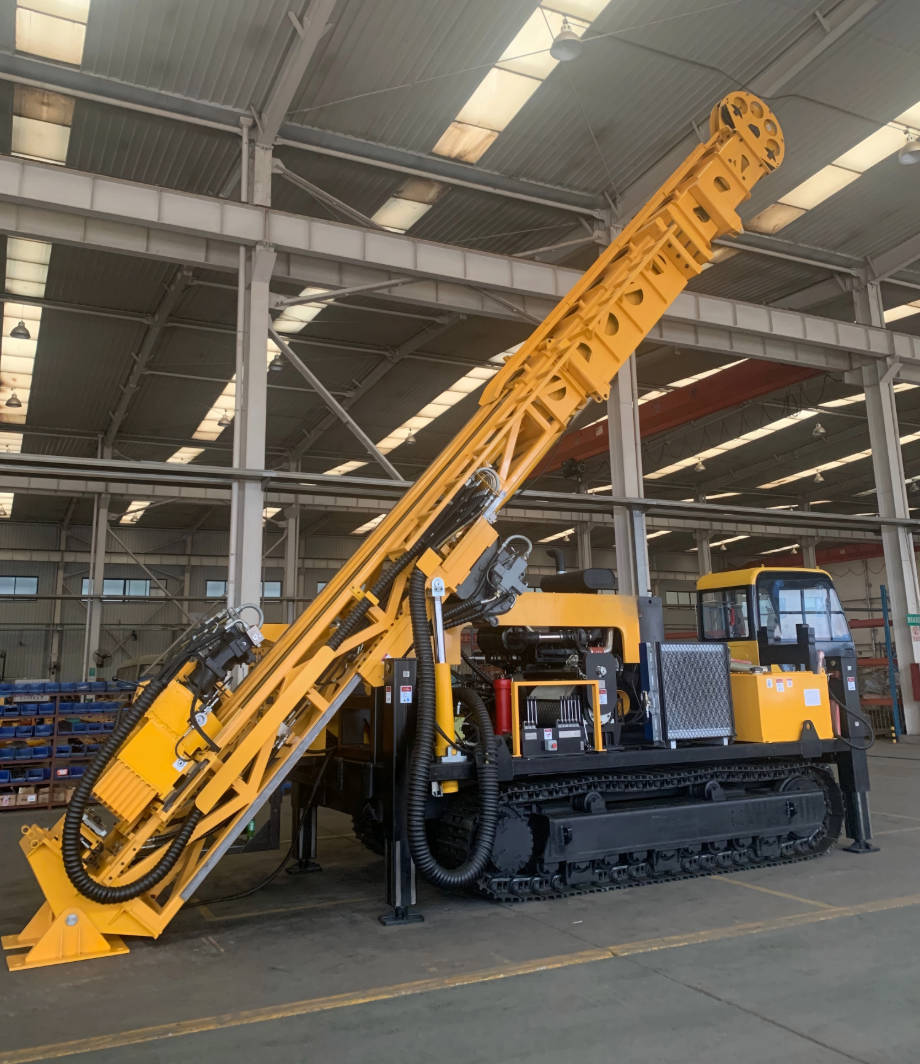
Send CORTECH your target depth, core diameter, geological information, and current drilling challenges. Request a configuration review covering the hydraulic rig, diamond tooling, wireline system, and flushing requirements.
The objective is a defensible equipment selection: sufficient capacity, suitable sampling performance, and a realistic cost per accepted meter.
Yes. A standard geological diamond core drill can drill hard rock when its rotation, feed, circulation, and tooling meet the application requirements. The equipment label alone does not determine suitability.
No. Competent rock may support stable cutting, but very hard competent formations can still resist penetration. Hardness, abrasivity, and structural condition must be evaluated separately.
No. Additional torque helps when rotation is constrained, but penetration also depends on bit selection, speed, loading, and circulation. Excess capacity cannot compensate for an unsuitable cutting system.
There is no universal choice. Select an impregnated bit using the supplier's guidance for hardness, abrasivity, and formation condition, then validate performance through documented trials.
Wireline drilling primarily improves retrieval efficiency. Core recovery depends on the barrel, tooling, geology, operating technique, and fluid conditions—not the retrieval method alone.
Provide depth, diameter, inclination, geology, sampling requirements, site access, water availability, and any existing drilling data. These inputs support a configuration-specific recommendation rather than a generic equipment suggestion.
The technical discussion synthesizes published drilling guidance. The comparison framework, commissioning checklist, and commercial scenario are editorial analysis—not claimed firsthand field experience or verified CORTECH performance results. CORTECH's manufacturing focus follows the company background provided for this article.
1. Epiroc Exploration and Geoscience Team. "How abrasive or fractured is your rock." Supports the distinction between hardness, abrasivity, competence, weathering, and formation variability. [epiroc]
2. Boart Longyear. "The science of drilling: Are you getting the most out of your diamond bits?" February 1, 2018. Supports the discussion of rotation, weight on bit, polishing, torque, circulation, and bit conditioning. [boartlongyear]
3. Boart Longyear. "Longyear Bits – Selecting the Right Bit in 5 Easy Steps." January 9, 2019. Supports application-specific bit selection and run-by-run performance logging. [boartlongyear]
4. Boart Longyear. "Longyear Bits and Accessories." Technical catalog. Supports the relationship between tooling, available rig capacity, bit loading, and operating conditions. [boartlongyear]
5. Epiroc. "Wireline core drilling." Supports the explanation of wireline sampling systems and formation-specific diamond tooling. [epiroc]
6. CORTECH. "Time-Saving Benefits in Deep Rock Exploration." Supports the description of the principal components of a wireline diamond core drilling system. [en.cortech]


