
Views: 256 Author: CORTECH Publish Time: 2026-09-27 Origin: Site


Content Menu
● Lightweight vs. Conventional Rig: Key Differences
>> Access Can Determine the Rig
>> Depth Capacity Is Conditional
● Which Rig Protects Core Quality?
>> Wireline Is Valuable on Both
● The Hidden Cost: Moving the Whole System
>> A Transport Manifest Changes the Decision
● Environmental Footprint and Safety
● A Practical Rig Selection Workflow
● When Should You Choose Each Rig?
>> 1. Is a lightweight core drilling rig always cheaper?
>> 2. Can a lightweight rig perform wireline diamond drilling?
>> 3. Does a conventional rig always drill deeper?
>> 4. Which rig produces better geological core?
>> 5. Is a smaller rig always better for sensitive sites?
>> 6. What information should I send a rig manufacturer?
A lightweight core drilling rig can make a remote geological survey feasible where a larger conventional rig would require extensive access work. But portability alone does not make it the better choice. Hole depth, core diameter, ground conditions, daily production, crew safety, and the cost of moving every component must all shape the decision.
For exploration teams, the useful question is not "Which rig weighs less?" It is: Which complete drilling system can deliver the required geological information safely and economically at this location?

In this article, a lightweight rig means a compact or modular diamond core drilling system selected primarily for difficult access. A conventional rig means a larger surface core rig, commonly mounted on a trailer, crawler, or truck and selected for greater capacity or sustained production. Neither term defines a drilling method.
That distinction matters. A lightweight rig and a conventional rig can both use full-hydraulic controls and wireline core barrels. Wireline describes how the inner tube containing the core is retrieved through the drill rods. It does not describe the size of the machine.
Likewise, "lightweight" does not automatically mean "man-portable." A compact crawler may be easy to reposition but too heavy to move by hand or lift in the planned aircraft. Buyers should request shipping weight, operating weight, component weights, dimensions, and lifting arrangements separately.
For CORTECH customers evaluating a CORE SURFACE DRILL, the starting point should be the planned hole and the access route—not a machine category on its own.
| Decision factor | Lightweight core drilling rig | Conventional surface core rig |
|---|---|---|
| Site access | Better suited to restricted routes when components can be transported safely | Better suited to established roads and prepared access |
| Mobilization | May use smaller loads, but requires assembly and repeated handling | May arrive more integrated, but requires suitable vehicles and ground conditions |
| Hole depth and diameter | Must be checked against the exact rod size, geology, and rig configuration | Often offers greater capacity for demanding holes and larger tooling |
| Pad and support area | May permit a smaller drill setup; support equipment still needs space | Usually needs more room for the rig and support activities |
| Production | Can be effective across dispersed, access-limited targets | Often attractive for long campaigns on accessible pads |
| Safety exposure | More component moves and assembly tasks may be required | More vehicle movement and larger-equipment hazards may be involved |
| Best fit | Access-constrained programs where the specified core remains achievable | Accessible programs that benefit from capacity and sustained output |
These are selection tendencies, not performance guarantees. A well-designed modular rig may outperform a poorly matched larger machine on a specific project. Conversely, a light rig that cannot maintain the required hole size or depth is not a practical solution.
Remote surveys may cross steep slopes, forest, wetlands, or ground unsuitable for heavy vehicles. In those conditions, the route to the collar can cost more time and effort than the move between nearby holes.
A modular rig gives planners more transport options. Epiroc describes a compact surface rig that can be divided into six main modules for helicopter transport. Multi Power also offers portable and modular diamond core rigs for remote sites. These examples demonstrate that transport configuration is an engineering feature, not merely a marketing label.
Before selecting an aircraft-transportable rig, obtain a complete load manifest. Include the mast, power unit, water pump, rods, core barrels, fuel, tools, spares, and containment equipment. The heaviest single lift—not just the combined machine weight—may determine whether the transport plan works.
Published drilling capacities are useful for screening rigs, but they should not be read as a promise that every hole will reach the stated depth. Capacity changes with core diameter, rod string, hole angle, ground conditions, fluid circulation, and available pull force.
For perspective, Epiroc lists a maximum guideline capacity of 1,824 m for its Christensen 140 surface rig and explicitly notes that actual results depend on working conditions. At the portable end, a published account of Energold's modular operations describes different achievable depths for different core sizes, subject to ground conditions. The figures illustrate why comparing two rigs by a single "maximum depth" number is misleading.
Ask suppliers to state capacity for the specific N-, H-, or P-size system proposed for your survey. Also verify rotation range, torque, feed and pullback, main winch, wireline winch, mast travel, and water-system requirements.
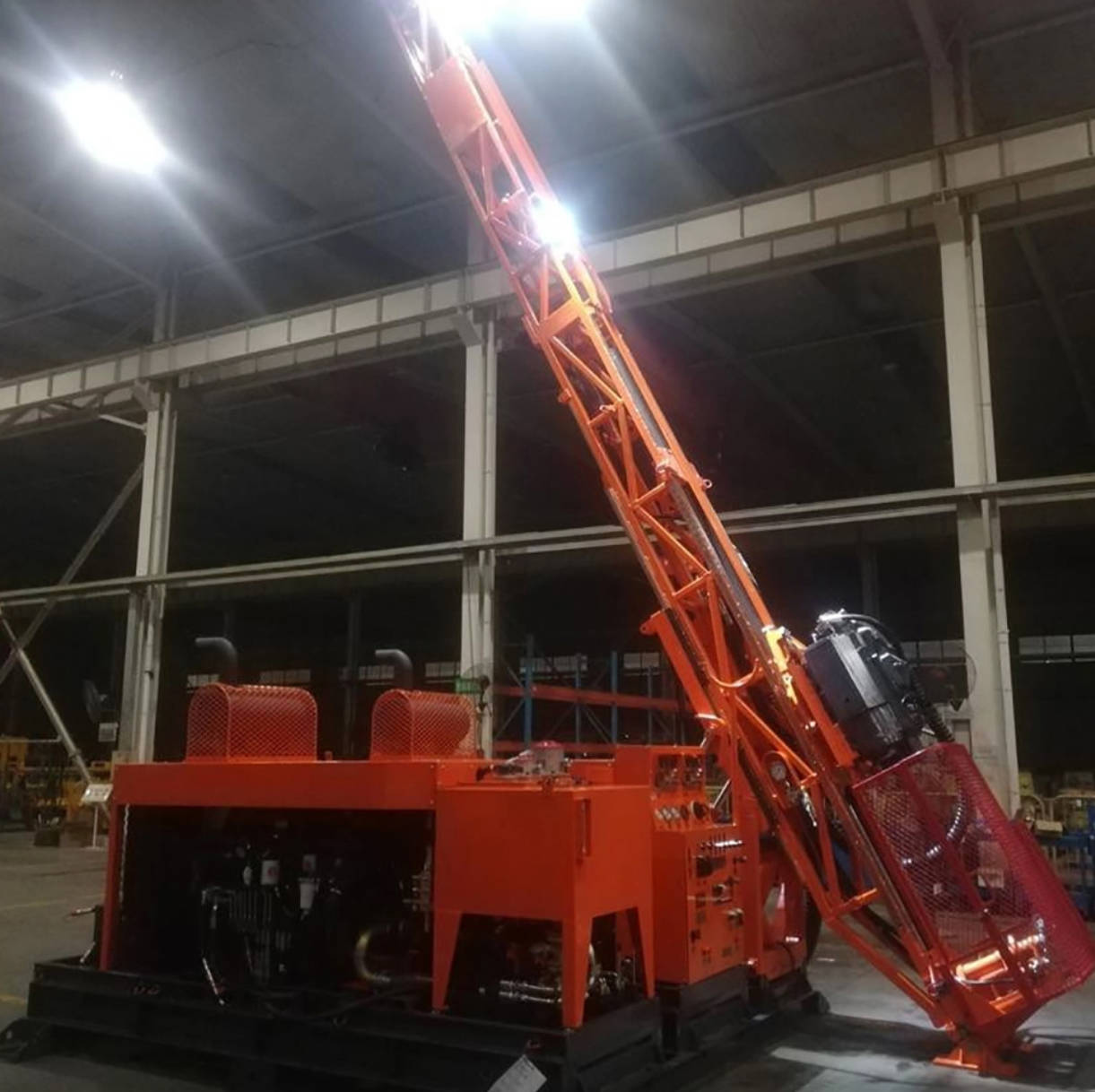
Geologists need interpretable core, not simply drilled metres. Fractures, alteration boundaries, mineralized intervals, and missing sections can change how a target is understood. Rig size alone does not determine whether those details survive recovery.
Core quality is a system outcome. The bit, rod string, core barrel, fluid program, operating settings, and handling practices must suit the formation. In broken ground, a suitable barrel arrangement and carefully controlled drilling may matter more than a higher advertised depth rating.
A lightweight rig can recover valuable core when it has adequate control and compatible tooling. A conventional rig may provide more operating margin for larger diameters or difficult deep holes. Neither should be assumed to produce better core without considering the geology.
The same discipline applies after retrieval. A recent U.S. Geological Survey core-logging method emphasizes consistent depth marking, identification of missing intervals, photography, and standardized descriptions. If a remote crew mislabels boxes or overlooks core loss, additional rig power cannot repair the resulting data gap.
For procurement, specify the required core diameter and recovery objective, then ask how the proposed rig and tooling configuration will meet them in expected fractured, weathered, or hard-rock intervals.
With wireline coring, crews retrieve the inner tube through the rods rather than pulling the entire string for every core run. This can reduce retrieval work, particularly as holes deepen. Both lightweight and conventional full-hydraulic rigs may be configured for this method.
Do not confuse this comparison with wireline versus non-wireline drilling. If one quotation proposes a lightweight wireline rig and the other proposes a larger non-wireline rig, the bids differ in two important ways. Request an equivalent tooling specification before drawing conclusions about rig size.
Compatibility deserves close attention. Confirm that the proposed rods, barrel, overshot, latch, bit, and water supply form a workable package. A promising rig specification can lose its value if a critical consumable or replacement part is unavailable at a remote camp.
Purchase price and quoted drilling rate are incomplete measures for a remote survey. The total cost per accepted metre of core should include the work needed to reach, operate, move, and restore each site.
A practical comparison is:
Program cost per accepted metre = total program cost ÷ metres of core accepted under the project's quality criteria.
The numerator should include access preparation, rig transport, aircraft or vehicle moves, pad construction, crew time, assembly, fuel, water supply, consumables, maintenance, standby, demobilization, and rehabilitation. The denominator should reflect the project's agreed reporting rules rather than an assumed recovery percentage.
Consider two scenarios. In the first, targets are widely spaced and no suitable road reaches them. A modular rig may reduce access construction, but repeated flights, assembly, and supply moves could erode that advantage. In the second, several deep holes share an existing pad and service road. A larger rig may be easier to support and better suited to sustained drilling. Neither outcome should be asserted without project-specific estimates.
A useful bid comparison therefore requests the same hole schedule and geology assumptions from every supplier. Compare delivered configurations, not the rig's base price or headline drilling capacity.
For each proposed machine, make one worksheet with these fields:
- Largest component: Weight, dimensions, lifting points, and approved handling method.
- Total move: Number of loads, support equipment, rods, water-system components, and spares.
- Time per collar: Transport, assembly, testing, dismantling, and rehabilitation.
- Contingency: Weather delays, failed lifts, replacement hoses, pump repairs, and lost circulation.
- Production assumption: Planned hole depth, diameter, shifts, and expected moves.
This exercise exposes a frequent mismatch: a rig may be portable, while the complete operating system is not. The water pump, rod inventory, or fuel supply can become the real access constraint.

Smaller equipment may reduce the need for heavy access construction, but a smaller rig does not automatically create a low-impact project. Drill pads, trails, water intakes, sumps, fuel storage, and helicopter landing areas can all disturb the site.
Exploration guidance from Victoria identifies pad construction, site access, sumps, noise, and groundwater intersections as potential drilling impacts. Manitoba's land-based drilling guidance likewise addresses site clearing, water protection, fluid containment, and aircraft operations. Requirements vary by jurisdiction; the project permit and local rules must govern the final plan.
Assess the complete footprint for each option:
- Can the crew use an existing road, trail, or clearing?
- How large must the safe working area be once rods and support equipment are included?
- Where will drilling fluids and cuttings be contained?
- What ground protection, spill response, and rehabilitation are required?
- Will helicopter access introduce a separate landing-site requirement?
Safety also resists simple "small versus large" claims. A modular rig can increase manual handling and assembly frequency. A larger rig can increase vehicle, lifting, and rod-handling exposure. Controls should address the actual work sequence: approved lifting plans, guarding, stable setup, crew communication, emergency response, and training. WorkSafe Western Australia's exploration-drilling audit materials explicitly cover remote drilling and field activities.
The environmentally preferable machine may not be the one with the smallest drill unit. A lightweight setup that needs many flights and a new landing area could have a different overall footprint from a larger machine using an established road. Equally, building a new heavy-vehicle track solely to bring in a conventional rig may create avoidable disturbance.
Compare access works and support logistics alongside the drill pad. This is especially important where survey targets are dispersed or where the site has sensitive soils, vegetation, or water features.
Use the following sequence before requesting a final quotation.
1. Define the geological deliverable. Record target intervals, hole depths and angles, required core diameter, logging needs, and acceptable core-quality criteria.
2. Map every collar and route. Identify existing access, slopes, ground bearing conditions, water sources, and possible aircraft constraints.
3. Describe the expected ground. Note hard and abrasive rock, fractured zones, weathering, groundwater, and likely changes with depth.
4. Specify the complete drilling system. Check hydraulic performance, wireline tooling, rods, bits, pumps, fluid handling, and spares—not the rig alone.
5. Test the mobilization plan. Verify the weight and dimensions of every module and the proposed loading, lifting, assembly, and move sequence.
6. Compare full-program costs. Use consistent assumptions for drilling, standby, access, support equipment, and site restoration.
7. Review the risks with the field team. Ask drillers, geologists, logistics staff, and safety personnel to challenge the plan before mobilization.
This process often reveals a third option: a compact crawler or modular rig that is neither hand-portable nor a large conventional unit. The right shortlist should reflect the terrain and drilling requirement, not force every project into two categories.
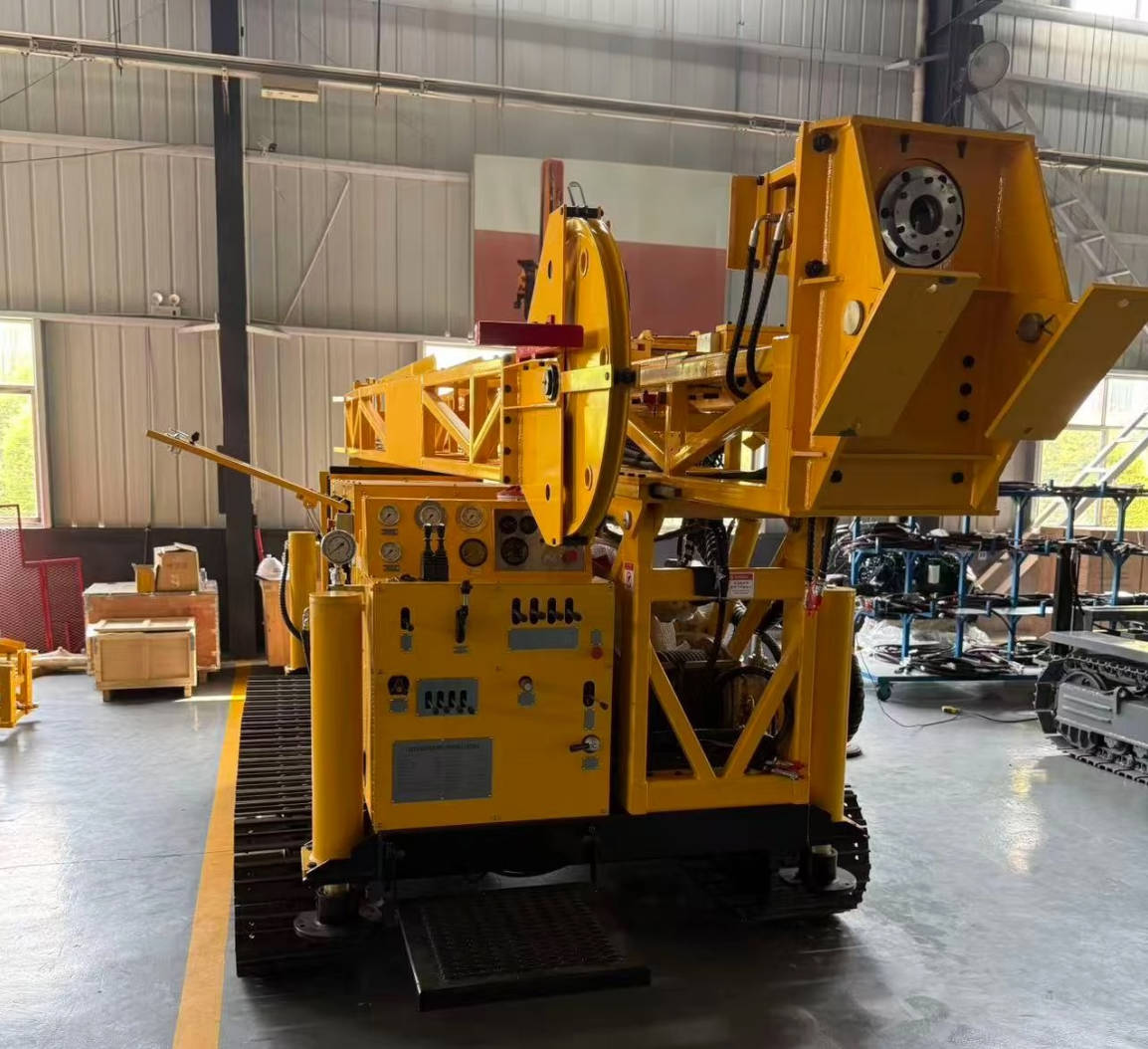
Choose a lightweight or modular core drilling rig when access is the dominant constraint, holes fit its verified diameter and depth range, and the complete system can move safely between collars. It is particularly worth evaluating for dispersed targets where building heavy-vehicle access would be costly or disruptive.
Choose a larger conventional rig when suitable access already exists and the program calls for deeper holes, larger core, demanding pullback requirements, or sustained work from prepared pads. Its size is justified only if its additional capability improves the overall program.
For mixed terrain, different rigs may serve different phases. A portable setup can test difficult-to-reach targets; a larger surface rig can then support later drilling where access and hole requirements justify it. A published account of Energold's remote operations describes a program that used a mix of portable and adapted rigs rather than treating one design as universally suitable.
Planning a remote geological survey? Send CORTECH your target depths, core sizes, expected rock conditions, collar locations, access limits, and preferred wireline tooling. Ask for a project-specific CORE SURFACE DRILL configuration and a component-level transport plan so your team can compare feasibility before committing to a rig.
No. It may reduce some access costs, but aircraft moves, repeated assembly, additional handling, and support logistics can increase the total. Compare costs across the entire drilling program, including accepted core, rather than comparing rig prices alone.
Yes, if the model is designed and equipped for compatible wireline rods, barrels, retrieval equipment, and hydraulic operation. Wireline is a retrieval method, not a weight class. Verify the proposed configuration rather than assuming every compact rig includes it.
Not necessarily. Larger rigs often offer more capacity, but depth depends on the specific machine, rod size, hole conditions, and tooling. Compare published capacities for the same core diameter and ask the supplier to explain the assumptions behind them.
Neither wins automatically. Core quality depends on matching the bit, barrel, drilling fluid, settings, and handling practices to the formation. Specify your geological data needs and evaluate the whole recovery and logging process.
No. A smaller drill setup can help, but trails, flights, landing areas, water systems, and waste handling also affect disturbance. Assess the complete project footprint and follow applicable permit conditions.
Provide planned hole depths and angles, core sizes, expected formations, target locations, access constraints, water availability, move frequency, and core-quality requirements. Request a component-level weight list and a configuration proposal based on those details.
1. Epiroc, ["Core Drilling Rigs | Underground & Surface Exploration"]. Manufacturer descriptions of modular helicopter-transportable rigs and conventional surface-rig configurations. [epiroc]
2. Multi Power Products, ["Diamond Core Drills"]. Manufacturer examples of modular, man-portable, tracked, and larger diamond core rigs. [multipowerproducts]
3. Epiroc, ["Christensen 140"]. Published surface-rig specifications and qualification of drilling-depth capacity. [epiroc]
4. Holroyde, Nick, and Richard Thomas, ["Energold Drilling Corp.: Experts in Man-Portable Drilling Operations," Coring Magazine]. Industry account of remote modular drilling, diameter-dependent capacities, and mixed-rig deployment. [coringmagazine]
5. Dietz, Haley M., ["Standardized Method for Logging Drill Core at the Idaho National Laboratory, Idaho," U.S. Geological Survey]. Procedures for core orientation, depth records, missing intervals, photography, and lithologic logging. [pubs.usgs]
6. Victoria Department of Energy, Environment and Climate Action, ["Exploration and Rehabilitation of Mineral Exploration Sites"]. Guidance on access tracks, drilling impacts, fluid containment, and rehabilitation. [resources.vic.gov]
7. Manitoba Early Exploration, ["BMP 11 – Land-Based Drilling"]. Guidance on drilling access, pads, water protection, support equipment, and aircraft operations. [earlyexploration.miningmanitoba]
8. WorkSafe Western Australia, ["Mineral Exploration Drilling: Audit Guides and Templates"]. Safety-audit resources covering remote exploration drilling and field activities. [worksafe.wa.gov]


