
Views: 254 Author: CORTECH Publish Time: 2026-10-06 Origin: Site


Content Menu
● Mining vs. Geological Core Drills
>> What the Equipment Names Mean
>> Orebody Exploration Comparison
>> How Wireline Diamond Coring Works
● Performance That Protects Geological Value
>> Depth, Torque, and Pullback
>> Core Diameter and Sample Requirements
>> Core Recovery and Sample Bias
>> Triple Tubes and Difficult Ground
>> Orientation and Borehole Surveys
● Selecting a CORTECH Surface Rig
>> Match the Rig to the Campaign
>> Six-Step Procurement Workflow
>> Worked Example: Cost per Usable Meter
>> Pilot-Hole Acceptance and Data Handover
>> Safety and Environmental Controls
>> Discuss Your Exploration Requirements
>> 1. Are These Different Machines?
>> 2. Which Is Better for Exploration?
>> 3. Does Wireline Eliminate Rod Removal?
>> 4. Can Hydraulic Rigs Guarantee Recovery?
>> 5. When Is Triple-Tube Coring Useful?
>> 6. What Should Buyers Send CORTECH?
A mining core drilling rig and a geological core drill are not necessarily different machines. For orebody exploration, the best choice depends on drilling depth, sample requirements, formation conditions, and site access—not the equipment label alone.
When I evaluate a mining core drilling rig against a geological core drill, I start with one question: What geological evidence must this program deliver? A rig that advances quickly but loses critical mineralized material can undermine the value of an entire exploration campaign.
For CORTECH, a manufacturer specializing in fully hydraulic diamond core drilling equipment, this comparison is best approached as a configuration decision. The objective is to match a surface core drilling system to the orebody, drilling plan, and practical realities of the site.

A mining core drilling rig typically describes equipment selected for mineral exploration, resource-definition drilling, or mine-related investigations. Buyers often emphasize sustained productivity, deeper holes, rod handling, and reliable operation across extended campaigns.
A geological core drill is a broader description. It can refer to equipment used for mineral exploration, geological mapping, stratigraphic investigation, or geotechnical sampling.
The important distinction is application, not an exclusive mechanical category. A fully hydraulic wireline diamond core drilling rig can serve both purposes when correctly configured.
Neither term establishes a standardized depth range, core diameter, or power rating. Those characteristics must be checked against the actual model and drilling system.
The following table describes common procurement priorities, not fixed differences between every machine carrying these names.
| Selection factor | Mining core drilling rig | Geological core drill |
|---|---|---|
| Typical emphasis | Orebody delineation and campaign productivity | Geological understanding and representative sampling |
| Project scope | Exploration, infill drilling, and resource definition | Mineral, geological, and geotechnical investigations |
| Depth requirement | Often selected for sustained deeper drilling | Can support shallow or deep work, depending on configuration |
| Sample objectives | Assays, mineralized contacts, structures, and test material | Lithology, stratigraphy, structures, and physical properties |
| Mobility priority | Efficient movement between production-oriented drill pads | Access to varied investigation locations |
| Purchasing focus | Utilization, handling efficiency, and operating support | Sampling versatility, access, and formation suitability |
| Technology overlap | Hydraulic diamond coring and wireline retrieval | The same technologies may be used |
| Decisive evidence | Model specifications and comparable operating results | Model specifications and comparable operating results |
A capable geological core drill should not be rejected because its name sounds less mining-specific. Likewise, a mining-branded rig should not be accepted without verifying its suitability for the proposed program.

A diamond core bit cuts an annular path through rock, leaving a cylindrical sample inside the core barrel. Rotation, controlled feed, and flushing work together to advance the hole.
With wireline coring, an overshot retrieves the inner tube through the drill rods. The drill string does not need to be removed for every normal core-retrieval cycle.
This can reduce repetitive rod handling, particularly as holes become deeper. However, rods still require removal for activities such as bit changes and certain downhole interventions.
Wireline retrieval and diamond coring are therefore complementary technologies—not competing drilling methods.
For a deep mineral exploration drilling rig, headline depth capacity is only a starting point.
Ask the supplier which rod size, hole inclination, and operating assumptions support the published rating. A capacity quoted for one drilling configuration should not be transferred automatically to another.
Review these specifications together:
- Rotational speed and torque across the operating range.
- Feed control and available feed force.
- Pullback capacity for the planned drill string.
- Chuck and rod-clamping compatibility.
- Wireline winch capacity and cable requirements.
- Hydraulic cooling and maintenance access.
The practical objective is balance. High torque alone does not prove that a rig will drill efficiently, retrieve the string reliably, or preserve core in difficult ground.
Core size should follow the sampling plan rather than habit.
A larger sample may help meet material requirements for testing or preserve more geological detail. It can also increase tooling, handling, and transport demands.
Before choosing a core drilling rig for orebody exploration, confirm:
- Laboratory sample-mass requirements.
- Whether metallurgical or physical testing is planned.
- How much material must remain for reference.
- Expected mineralization variability.
- Core barrel and rod compatibility.
- The implications for the planned drilling depth.
Discuss these requirements with the project geologist and laboratory before finalizing equipment. Changing sample strategy after mobilization can create avoidable complications.
Recovery matters most where missing material could change geological interpretation.
Overall recovery can look satisfactory while a short, economically important mineralized interval performs poorly. Report recovery by run and examine results within mineralized zones, contacts, and difficult formations.
A useful distinction is:
- Core recovery measures the amount of core retrieved relative to the drilled interval.
- Rock quality designation evaluates qualifying intact core lengths for a rock-mass assessment.
- Representative sampling concerns whether collected material adequately reflects the interval being investigated.
These measures answer different questions. High recovery does not automatically establish unbiased assays, and broken core is not necessarily unsuitable for chemical analysis.
In fractured, weathered, or friable formations, the barrel system can be as important as the rig.
A triple-tube arrangement can help protect delicate samples during recovery and handling. Shorter runs and formation-appropriate drilling practices may also improve results.
However, no barrel configuration guarantees complete recovery. Bit selection, flushing, operating control, and ground conditions remain influential.
My recommendation is to treat adaptability as a purchasing requirement. Ask how the proposed system accommodates changing formations rather than requesting one universal operating setting.
Oriented core can help geologists interpret veins, fractures, and other structures in their original spatial context. Borehole surveys establish where the hole actually travels.
These are related but separate tasks.
A well-preserved sample without reliable location information may provide an incomplete picture of the orebody. Conversely, an accurately surveyed hole does not recover structural information lost through poor core handling.
Plan orientation, survey methods, and data recording before drilling begins. Equipment compatibility should support that plan, rather than dictate it afterward.

CORTECH's fully hydraulic diamond drilling equipment is relevant to both mining and geological investigation programs. The suitable configuration depends on the work scope.
For sustained deeper drilling, prioritize verified capacity at the required rod size, thermal management, handling efficiency, and serviceability.
For widely separated targets, consider mobilization, transport dimensions, pad requirements, and relocation time.
For fragile mineralized zones, emphasize controlled drilling, compatible protective barrel systems, and a recovery-focused operating plan.
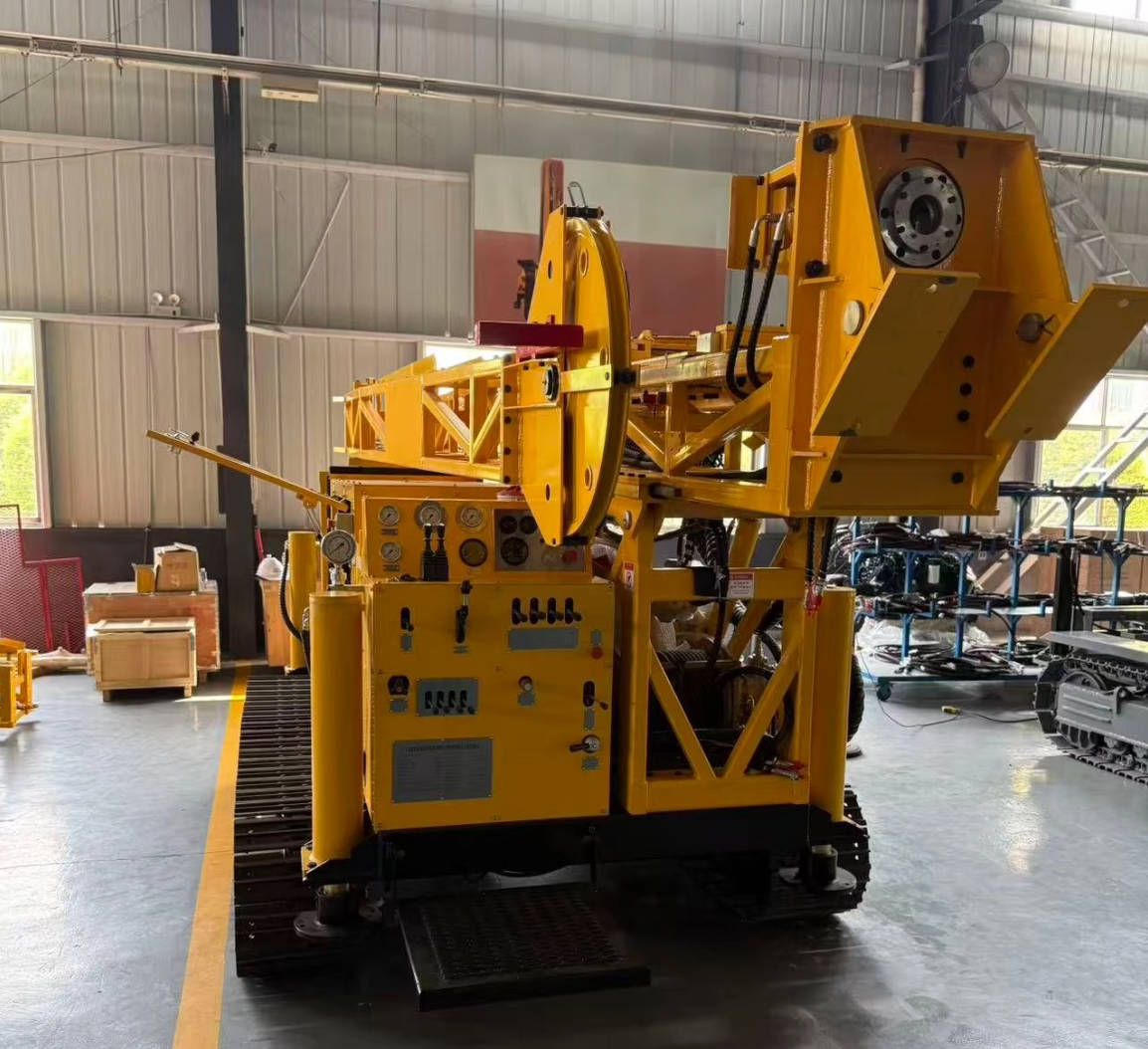
A crawler-mounted surface core drilling rig may support movement around accessible sites. A skid-mounted arrangement may suit other transport and installation strategies. Neither is universally superior.
Evaluate the complete deployment plan, including support vehicles, water supply, tooling, and maintenance facilities.
1. Define the geological objective: target depth, expected mineralization, sampling needs, and structural questions.
2. Describe the site: access routes, terrain, pad dimensions, climate, water availability, and power constraints.
3. Specify the drilling system: rod sizes, barrel arrangements, hole angles, orientation tools, and survey requirements.
4. Verify operating capacity: request configuration-specific depth ratings, torque information, pullback capacity, and winch details.
5. Agree on acceptance criteria: include safety functions, documentation, training, spare parts, and any proposed field trial.
6. Compare lifecycle costs: consider mobilization, consumables, maintenance, downtime, support, and potential repeat drilling.
This workflow turns a broad equipment inquiry into a technical brief that suppliers can answer meaningfully.
Purchase price and cost per drilled meter do not capture every exploration risk.
Consider this hypothetical comparison. It is a planning illustration, not a CORTECH performance claim.
| Campaign measure | Configuration A | Configuration B |
|---|---|---|
| Total campaign cost | $120,000 | $132,000 |
| Total meters drilled | 1,000 m | 1,000 m |
| Meters meeting agreed data-quality criteria | 800 m | 950 m |
| Cost per drilled meter | $120 | $132 |
| Cost per usable meter | $150 | About $139 |
Configuration B costs more overall but delivers usable information at a lower cost per accepted meter.
Define "usable" before the campaign. Criteria might include adequate recovery in critical intervals, valid surveys, complete records, and acceptable sample handling.
This metric supplements—not replaces—geological judgment. Unacceptable core loss cannot simply be solved by averaging performance across the hole.
A representative pilot hole can expose problems that a specification sheet cannot reveal.
Agree beforehand on what will be measured:
- Recovery by run and within mineralized intervals.
- Complete-cycle productivity, including retrieval and handling.
- Reasons for downtime and corrective actions.
- Survey completeness and orientation success.
- Water consumption and fluid-management requirements.
- Sample identification and documentation quality.
Record the drilling configuration and encountered geology alongside the results. Without that context, comparisons can be misleading.
The final deliverable should include traceable collar, survey, lithology, recovery, and assay information, plus organized core photographs and preserved samples.
A drilling rig produces physical material. The exploration team turns that material into defensible evidence.
Include safety and site management in equipment selection, not merely in the mobilization checklist.
Review guarding, emergency stops, rod-handling arrangements, hydraulic isolation procedures, and safe maintenance access. Confirm training and inspection responsibilities.
Also plan water sourcing, fluid containment, spill response, borehole closure, and site rehabilitation according to local requirements.
Mechanization can reduce some manual tasks, but it does not eliminate hazards. Suitability depends on the equipment, operating procedures, crew competence, and site conditions together.
Send CORTECH your target depth, preferred core sizes, expected formations, hole inclinations, access conditions, and sampling requirements.
Request a configuration-specific recommendation covering the hydraulic rig, wireline system, tooling, handling arrangements, and service support.
The right choice is not the machine with the strongest label. It is the drilling system that can safely deliver the samples and records your orebody interpretation requires.
Not necessarily. "Mining core drilling rig" emphasizes a mining application, while "geological core drill" covers broader investigation work. The same hydraulic diamond coring platform may perform both roles.
Choose according to the program's depth, sample objectives, formations, and access constraints. Compare verified configurations rather than assuming that either equipment name guarantees better exploration performance.
No. Wireline systems retrieve the inner tube without removing the drill string during normal core-recovery cycles. Bit replacement and some downhole problems still require rod removal.
No. Hydraulic control can support appropriate drilling practices, but recovery also depends on geology, barrel design, bits, flushing, operating decisions, and sample handling. Evaluate results interval by interval.
Consider it where fractured, weathered, or friable material is difficult to preserve. Confirm suitability with the drilling team and assess whether the arrangement improves sample quality under actual site conditions.
Provide target depth, core sizes, hole angles, formation descriptions, transport restrictions, water and power availability, planned testing, and orientation requirements. This helps CORTECH assess the complete drilling configuration.
1. - JORC — Australasian Code for Reporting of Exploration Results, Mineral Resources and Ore Reserves, 2012 Edition. Table 1, particularly Sections 1–2, supports discussion of drilling techniques, core recovery, sample bias, orientation, surveys, and reporting context. This is a public-reporting framework, not an equipment certification. [Read the code]. [jorc]
2. - GSI — Geological Survey of India, Ministry of Mines, Exploratory Drilling Guidelines for NMET Funded Projects, August 2018. Supports the discussion of orebody investigation, triple-tube use in difficult formations, borehole deviation, core preservation, photography, and structured drilling records. Its requirements are specific to the stated program context. [Read the guidelines]. [nmet.gov]
3. - Cascade — Cascade Environmental, Diamond Core: Drilling Technologies. Supports the overlap between mineral and geotechnical core-drilling applications and the use of wireline systems for rock-core retrieval. [Read the technical overview]. [cascade-env]
4. - CORTECH — CORTECH Drilling Equipment Co., Ltd., company profile and equipment overview. Supports the company's stated specialization in all-hydraulic diamond drilling rigs and its crawler-track and skid-mounted product categories. Manufacturer statements are not independent performance verification. [View the company overview]. [coretecdrilling]
5. - SPT — Core Orientation in Mining Exploration: Methods and Benefits, June 15, 2026. Supports the explanation of oriented core, structural measurements, and integration with drillhole survey data. [Read the orientation overview]. [sptab]


