
Views: 276 Author: CORTECH Publish Time: 2026-09-15 Origin: Site


Content Menu
● What Is the Difference Between a Portable Drilling Rig and a Drilling Rig Truck?
● Portable Drilling Rig vs Drilling Rig Truck: Side-by-Side Comparison
● Why Access Usually Decides the Rig Selection
● When a Portable Drilling Rig Is the Better Choice
>> 1. The Site Has No Reliable Road Access
>> 2. Core Samples Are Needed Before Well Design
>> 3. A Small Drill Pad Is Essential
>> 4. The Program Is an Exploration Campaign, Not Yet a Production-Well Program
● When a Drilling Rig Truck Is the Better Choice
>> 1. The Project Requires Larger-Diameter Water Wells
>> 2. The Drilling Program Includes Many Road-Accessible Locations
>> 3. Logistics Are More Important Than Minimal Footprint
● The Hidden Cost: Access Infrastructure vs Rig Mobilization
● Expert Field Method: Use a Two-Stage Drilling Strategy
>> Stage One: Confirm the Groundwater Model
>> Stage Two: Build the Water Source
● Safety and Operating Readiness in Remote Areas
● How to Choose the Right Rig for Your Water Exploration Project
>> 1. Define the Actual Drilling Objective
>> 2. Measure Access Before Comparing Specifications
>> 3. Match Rig Capacity to the Ground Conditions
>> 4. Evaluate After-Sales Support Before Making a Decision
● Final Recommendation: Choose Access First, Then Production Capacity
● FAQs
>> 1. What is the main advantage of a portable drilling rig for remote water exploration?
>> 2. Can a portable drilling rig drill deep enough for groundwater exploration?
>> 3. Is a drilling rig truck better for water-well construction?
>> 4. Why is core recovery important in groundwater drilling?
>> 5. Which rig creates less environmental disturbance?
>> 6. What should be checked before taking a drilling rig into an off-grid area?
>> 7. Should a remote project use one rig or two different rigs?
For ultra-remote, off-grid water exploration, the choice between a portable drilling rig and a drilling rig truck should begin with site access—not drilling power alone. A portable hydraulic rig is often the more practical option where roads, power, water supply, lifting equipment, and maintenance support are limited; a truck-mounted rig becomes stronger when dependable road access, deeper production drilling, and faster hole-to-hole mobilization are available.
For field teams evaluating water-bearing formations, fractured bedrock, aquifer boundaries, or potential water-well locations, the best rig is the one that can reach the target safely, collect the required geological information, and remain serviceable throughout the program. As a manufacturer of fully hydraulic wireline diamond core drilling systems, CORTECH sees this decision as a balance among terrain, drilling objective, logistics, safety, depth, and total operating cost.
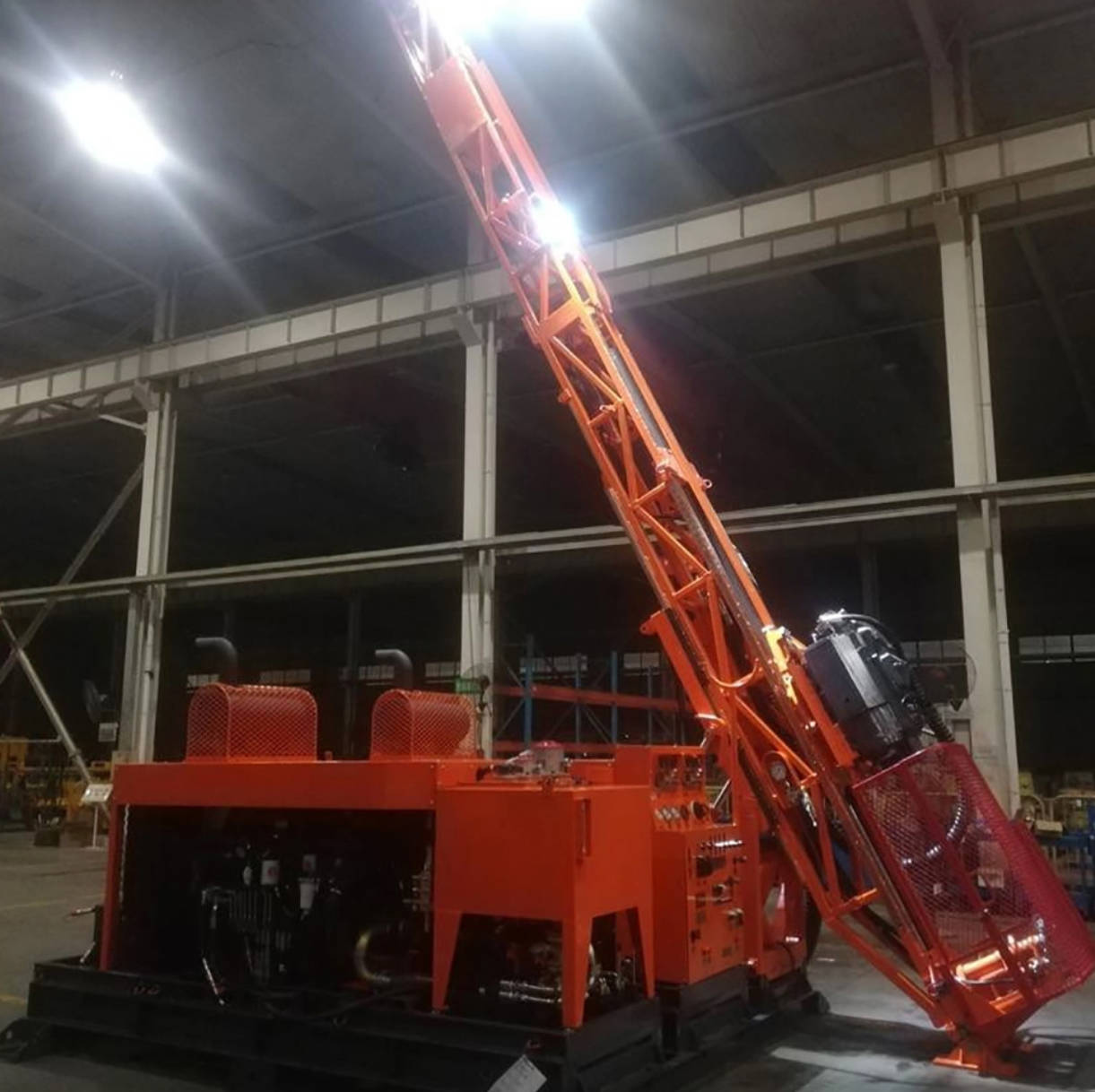
A portable drilling rig is designed to be moved in sections or compact modules. Depending on the model and site conditions, crews may transport it by pickup truck, trailer, tracked carrier, helicopter, cableway, ATV, boat, or manual handling. It is particularly relevant for remote geological drilling, groundwater investigation, mineral exploration, geotechnical work, and difficult mountain access.
A drilling rig truck, often called a truck-mounted drilling rig, is integrated with a road-going truck chassis. It combines transport and drilling functions in one mobile package. This configuration can be highly productive on projects with prepared roads, sufficient turning space, firm pads, and predictable logistics.
For ultra-remote off-grid water exploration, the distinction is critical:
- A portable rig is built to reach restricted locations.
- A truck rig is built to move efficiently between accessible locations.
- A portable diamond core rig is commonly selected when the project needs continuous core samples to interpret groundwater-bearing structures.
- A truck-mounted drilling rig is often selected when the goal is to construct production wells at locations already supported by roads and site infrastructure.
The right choice depends on the entire drilling program—not simply the machine's maximum depth rating.
| Evaluation Factor | Portable Drilling Rig | Drilling Rig Truck |
|---|---|---|
| Best access environment | Mountains, forests, islands, steep slopes, narrow tracks, roadless areas | Established roads, flat open ground, prepared pads |
| Transportation method | Modular transport by trailer, helicopter, tracked carrier, boat, or manual crews | Self-propelled on public or private roads |
| Drill-pad requirement | Small and adaptable footprint | Larger, level, compacted platform generally required |
| Initial site preparation | Often lower where road construction is avoided | Often higher due to access-road and pad requirements |
| Off-grid suitability | High, especially with diesel hydraulic systems and modular support equipment | Moderate; depends heavily on road access and fuel resupply |
| Core recovery capability | Excellent with wireline diamond coring | Depends on drilling method and truck-rig configuration |
| Deep water-well production capacity | Varies by rig model and rod size | Often strong for larger-diameter production wells |
| Relocation between accessible sites | Slower if disassembly is required | Fast when roads are usable |
| Terrain adaptability | High | Limited by road width, slope, soil bearing capacity, and turning radius |
| Environmental disturbance | Potentially lower due to smaller pads and reduced road building | Potentially higher because of access roads, pad construction, and vehicle weight |
| Maintenance logistics | Requires disciplined spare-parts planning and trained operators | Easier when near workshops, supply routes, and service vehicles |
| Typical strategic role | Remote investigation, core drilling, hydrogeological characterization, scout drilling | Production-well construction, regional water programs, accessible drilling campaigns |
The comparison shows why a truck-mounted rig is not automatically the "bigger and better" answer. In a roadless water exploration program, the truck may never reach the best hydrogeological target. In contrast, a properly selected portable drilling rig can allow a small crew to investigate a high-potential location without first building expensive access infrastructure.
In ultra-remote water exploration, water potential may be concentrated in areas that are difficult to access. These include fractured granite ridges, fault zones, volcanic terrain, seasonal river valleys, remote villages, island interiors, and mountain catchments.
A promising groundwater target is not always beside a road.
Hydrogeologists often evaluate several factors before selecting a drill location:
- Surface geology and lithology
- Faults, fractures, and weathered zones
- Topographic position and drainage patterns
- Nearby springs, wells, and groundwater observations
- Terrain slope and site stability
- Expected drilling depth
- Required water quality and quantity
- Access for drilling, casing, testing, and eventual well maintenance
Geological mapping, hydrogeological surveys, remote sensing, and GIS-based site screening can help narrow the search area before equipment arrives. The drilling rig should then match the access reality of the final target.
A portable drilling rig has an advantage when a site can be reached only through narrow trails, rough terrain, dense forest, steep inclines, or air transport. A truck rig has an advantage when the drilling plan includes numerous locations connected by stable roads and when the final objective is high-volume well construction rather than detailed core investigation.
A portable drilling rig is usually the stronger solution when access is the main project constraint. This is common in early-stage groundwater exploration, difficult geological investigation, and small-footprint drilling programs.
Truck-mounted rigs require roads that can safely support the gross weight of the vehicle, drilling equipment, water tanks, rods, casing, support vehicles, and sometimes cranes or auxiliary trucks.
In contrast, a portable rig can be broken into manageable modules. This reduces the need to construct wide access roads or large turning areas.
Portable equipment can be a practical choice for:
- Mountain villages without all-weather roads
- Forested watersheds
- Islands and coastal sites
- Protected or environmentally sensitive terrain
- Locations beyond bridges with low load limits
- Areas with seasonal mud, snow, flooding, or landslide risks
- Narrow agricultural access routes
- Exploration targets reached by helicopter or tracked transport
For off-grid water exploration, drilling is not only about reaching water. The project team may need to understand:
- The depth of weathered rock
- Fracture frequency and orientation
- Aquifer thickness
- Clay content and permeability indicators
- Bedrock contact zones
- Casing depth requirements
- Groundwater inflow intervals
- Potential contamination pathways
A fully hydraulic wireline diamond core drilling rig can recover continuous rock core, allowing geologists and hydrogeologists to interpret the subsurface more confidently. This is valuable before committing to a high-cost production well.
Wireline coring can also reduce the time spent pulling the full drill string during deeper core recovery. Rather than removing every rod to retrieve the sample, operators can recover the inner tube using a wireline overshot system. In deep or fractured formations, this can improve operational efficiency and reduce handling demands.
Remote sites often cannot support large earthworks. Building a truck pad may require cutting slopes, widening roads, importing fill, installing drainage, or disturbing vegetation.
A compact portable drilling rig can reduce site disturbance because it requires less working area. However, "small footprint" does not mean "no preparation." Every drill site still needs a stable, level, and properly managed work area.
Before drilling begins, the field team should verify:
1. Ground bearing capacity and slope stability
2. Safe rig anchoring or leveling arrangement
3. Water-management and cuttings-containment plan
4. Fuel storage and spill-prevention measures
5. Safe rod-handling and exclusion zones
6. Emergency communication and evacuation procedures
A smaller site footprint can lower construction needs, but safe platform preparation remains non-negotiable.
A portable rig is often an excellent first-phase tool. It can verify geological assumptions, collect core, investigate fracture zones, and identify the most promising water-bearing intervals.
After this phase, the operator may decide to:
- Develop a production well at the same location if logistics allow
- Build limited access only to the proven target
- Use a larger truck rig at a nearby accessible site
- Design a pumping, casing, and water-distribution solution based on actual geological results
This staged approach can reduce the risk of spending heavily on access roads or large drilling equipment before confirming the groundwater potential.
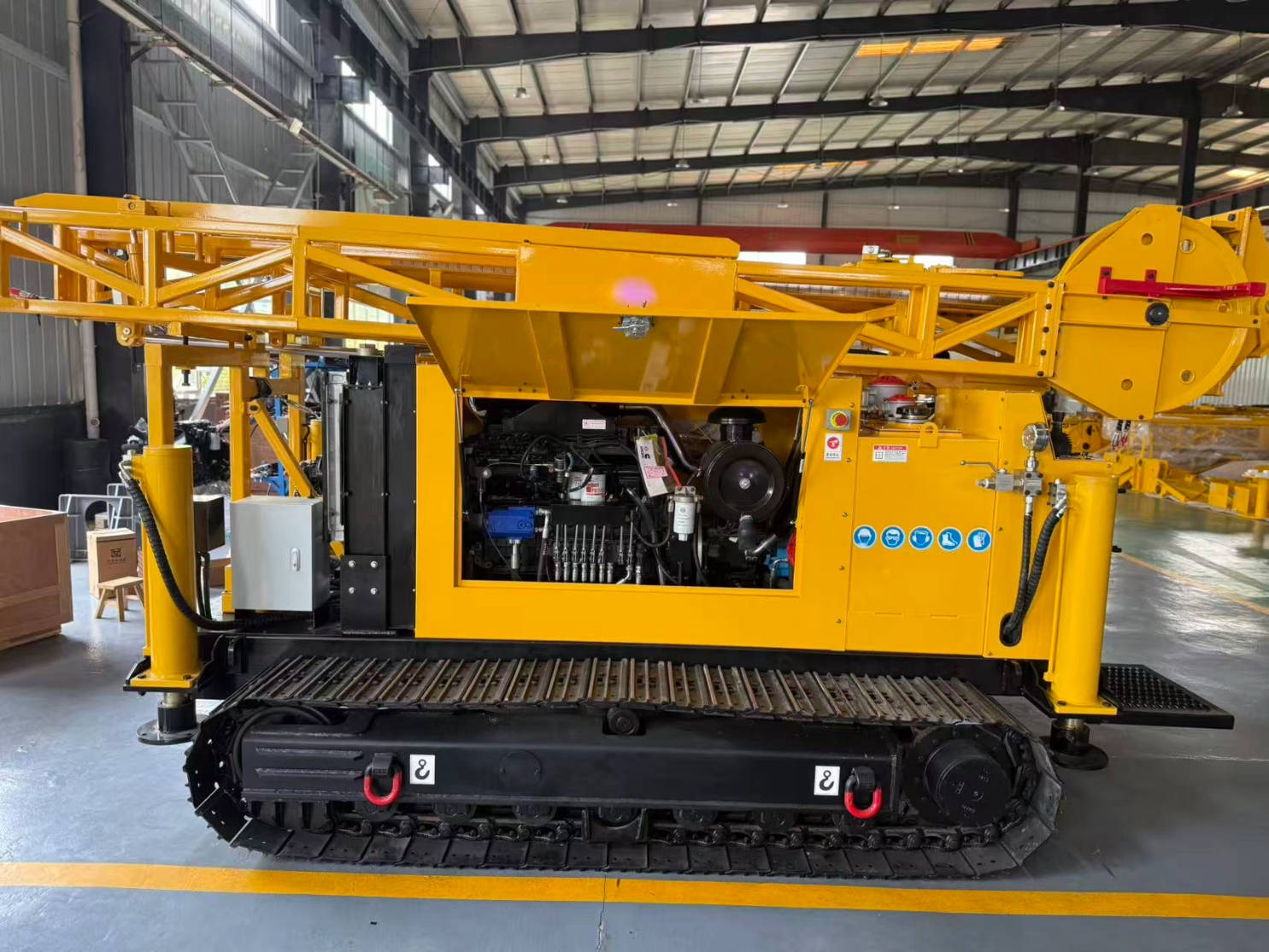
A drilling rig truck is often the best choice when the exploration program transitions from reconnaissance to reliable, repeatable, high-output drilling in accessible terrain.
Production water wells may require larger hole diameters, casing installation, gravel packing, well development, pumping tests, and potentially long-term pump installation. A truck-mounted rig may offer the lifting capacity, mast configuration, onboard equipment, and work area needed for these tasks.
This can be especially relevant for:
- Community water-supply wells
- Agricultural irrigation wells
- Commercial or industrial water wells
- Municipal groundwater projects
- Large-diameter casing programs
- Repeated drilling across a road-connected region
The key issue is not whether a portable rig can drill deep. Many hydraulic core rigs can achieve substantial depths under appropriate conditions. The real question is whether the drilling method, hole diameter, casing plan, and water-yield objective match the rig configuration.
If a contractor must drill multiple water targets across a large but road-connected area, truck mobility may create significant operational savings.
A truck rig can often:
- Travel between prepared pads with fewer disassembly steps
- Carry portions of its drilling equipment onboard
- Reduce separate transport requirements
- Improve daily relocation efficiency
- Support standardized operations across multiple locations
However, these advantages depend on the road network being genuinely suitable. A narrow, steep, muddy, washed-out, or unstable road can quickly eliminate the truck rig's mobility advantage.
For a large water-well campaign, the project may prioritize drilling speed, casing capacity, high-volume flushing, and repeated mobilization. In those conditions, a drilling rig truck can be more cost-effective than modular equipment.
A truck rig is generally a better fit where the project has:
- Engineered roads
- Stable drill pads
- Fuel and water resupply routes
- Nearby workshops or mechanics
- Reliable communication
- Enough room for support vehicles
- A predictable drilling schedule
The truck is most productive when it can operate as designed: on stable ground, with reliable access, and without extraordinary recovery or towing requirements.
Many equipment comparisons focus only on purchase price, drilling depth, horsepower, or daily drilling cost. For remote water exploration, that approach can miss the largest expense: getting the rig to the target.
A lower-cost truck-mounted drilling rig can become expensive if the project requires road widening, bridge reinforcement, slope cutting, drainage works, pad construction, recovery equipment, and continuous road maintenance.
Likewise, a portable drilling rig may have a higher daily logistical workload if components must be carried, flown, or moved through difficult terrain. Its value comes from avoiding major access construction and reaching targets that otherwise remain untested.
A practical total-cost-of-ownership review should include:
| Cost Category | Portable Drilling Rig Consideration | Drilling Rig Truck Consideration |
|---|---|---|
| Site access | May avoid major road construction | May require substantial road and pad preparation |
| Transport | Modular transport, helicopter, trailer, tracked carrier, or labor | Road transport is efficient only where roads are suitable |
| Drill-pad construction | Smaller footprint may reduce earthworks | Larger, level, compacted pad often required |
| Fuel and consumables | Requires remote stock planning | Easier resupply when road network is dependable |
| Downtime exposure | Sensitive to remote parts availability and weather logistics | Sensitive to road closures, bogging, tire damage, and vehicle recovery |
| Environmental controls | Smaller disturbance but still requires containment planning | Greater vehicle footprint and potential access-road impacts |
| Future operation | May support investigation more than permanent well construction | May better support long-term production-well development |
The most economical decision is usually the one that minimizes the whole-project cost, not simply the rig's invoice price.
For complex off-grid water exploration, a two-stage strategy often provides the strongest balance of geological confidence and capital discipline.
Use a portable drilling rig or compact hydraulic core drilling system to investigate the highest-priority targets. The objective is to understand the geology before making permanent infrastructure decisions.
At this stage, focus on:
- Core recovery and geological logging
- Fracture-zone identification
- Water inflow observations
- Hydrogeological testing where applicable
- Groundwater sample collection
- Casing and drilling-condition assessment
- Access feasibility for future development
Once a viable target is confirmed, determine whether the final water well should be completed using the same rig or a larger truck-mounted water-well rig.
The final decision should consider:
- Required borehole diameter
- Expected well depth
- Pump size and installation plan
- Casing material and diameter
- Anticipated water demand
- Long-term maintenance access
- Power source for pumping
- Seasonal road reliability
- Community, agricultural, or industrial use requirements
This approach turns drilling from a single equipment decision into a controlled engineering process.
Remote drilling multiplies the consequences of ordinary operational problems. A minor hydraulic leak, stuck drill string, unstable pad, vehicle failure, or operator injury can become a major emergency when the nearest workshop or clinic is many hours away.
Both portable drilling rigs and drilling rig trucks require formal risk controls. The truck configuration does not eliminate safety risk, and portable equipment does not eliminate the need for engineered site preparation.
Key remote-drilling controls include:
- Conduct a geotechnical and visual assessment of the drill pad.
- Confirm ground conditions before positioning heavy equipment.
- Establish exclusion zones around rotating rods, winches, and moving equipment.
- Inspect hoses, fittings, wireline systems, mast components, and guards before every shift.
- Prepare a fuel, oil, and hydraulic-fluid spill-response plan.
- Carry essential wear parts, filters, seals, hose-repair supplies, and emergency tools.
- Define radio, satellite, or emergency communication procedures.
- Prepare medical evacuation and severe-weather contingency plans.
- Train operators in machine controls, rod handling, lifting practices, and shutdown procedures.
- Document daily inspections, drilling parameters, and incidents.
For truck rigs, special attention should be given to road travel, platform leveling, outrigger support, slope limitations, and vehicle recovery planning. For portable rigs, special attention should be given to module lifting, manual handling, transport sequencing, and safe assembly on restricted pads.

Use the following practical decision sequence before purchasing, renting, or mobilizing a rig.
Ask whether the project needs:
- Geological core for aquifer interpretation
- A test hole
- A monitoring well
- A production water well
- A deep fractured-rock water target
- A shallow alluvial aquifer
- A large-diameter irrigation or community water well
A rig that is perfect for production drilling may be inefficient for high-quality core recovery. A rig that excels at wireline diamond coring may require a different final-well strategy.
Assess the full route, not just the drill location:
- Road width
- Bridge load limits
- Turning radius
- Maximum slope
- Seasonal ground conditions
- River crossings
- Overhead clearances
- Landing-zone availability
- Distance from fuel and water supply
- Emergency access
If the truck cannot safely reach the site year-round, its theoretical drilling capacity has limited value.
Review expected geology, drilling depth, hole diameter, coring requirements, water circulation needs, and casing requirements. For hard rock and fractured formations, a fully hydraulic wireline diamond core drilling system can provide valuable geological control.
For high-volume water production wells, ensure the selected rig can support the planned casing diameter, development method, test pumping requirements, and completion design.
For remote drilling, equipment support is part of rig performance. Buyers should ask manufacturers about:
- Availability of critical spare parts
- Remote technical support
- Hydraulic-system documentation
- Operator training
- Service response times
- Tooling compatibility
- Wireline system support
- Maintenance intervals
- Recommended remote-site spares package
A reliable hydraulic drilling rig should be supported by a practical maintenance plan, not just a specification sheet.
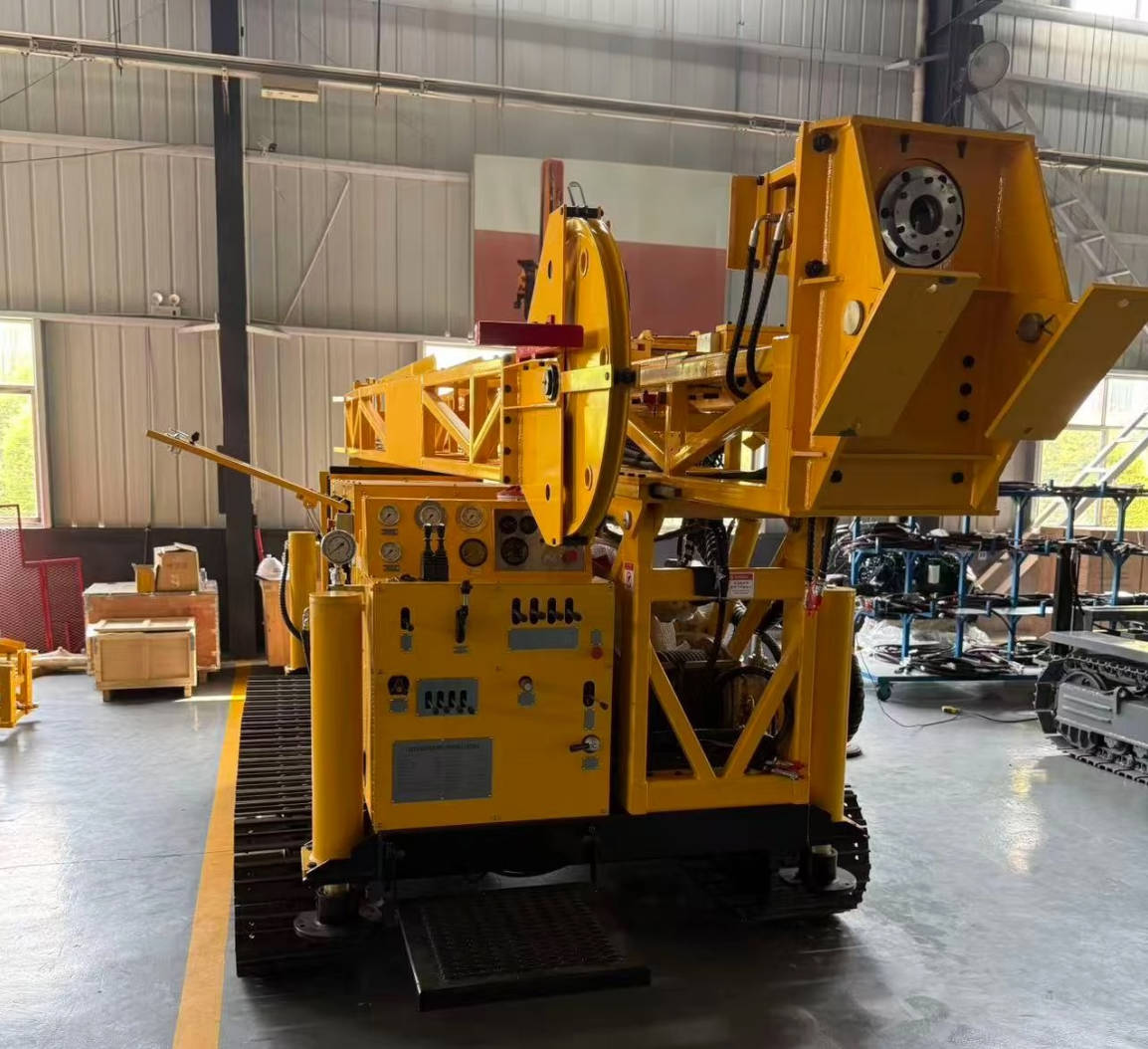
For ultra-remote off-grid water exploration, a portable drilling rig is usually the better first choice when the target lies beyond reliable roads, when site disturbance must be minimized, or when geological core is needed to understand groundwater potential.
A drilling rig truck is typically the stronger option when the project has road access, stable pads, repeated production-well locations, larger-diameter drilling requirements, and dependable supply logistics.
The most effective approach is often not portable rig versus truck rig as an absolute choice. It is a staged decision:
1. Use a portable hydraulic core drilling rig to reach and evaluate difficult targets.
2. Confirm groundwater-bearing structures with reliable geological information.
3. Upgrade to truck-mounted production drilling only where access and final-well requirements justify it.
Planning a remote water exploration campaign? Contact CORTECH to discuss terrain, target depth, core size, drilling method, transport constraints, and the most suitable fully hydraulic drilling-rig configuration for your project.
The main advantage is site access. A portable drilling rig can reach areas where a truck-mounted drilling rig cannot travel safely, including mountains, forests, islands, narrow tracks, and roadless terrain. Its modular design can also reduce the need for expensive road construction and large drill pads.
Yes, depending on the rig model, rod size, ground conditions, drilling method, and site logistics. Portable hydraulic diamond core rigs can be suitable for deep geological and hydrogeological investigation, particularly when wireline coring is used. The required depth should always be reviewed together with hole diameter and expected formation conditions.
Often, yes. A drilling rig truck can be more suitable for large-diameter production wells, casing installation, high-volume water-well drilling, and projects with reliable roads and prepared drill pads. However, it is only productive if it can safely access the final drilling location.
Core recovery helps geologists identify rock type, fractures, weathering zones, aquifer boundaries, and potential water-bearing intervals. This information can improve well-location decisions, casing design, drilling strategy, and long-term water-source planning.
A portable drilling rig may create less disturbance because it often needs a smaller drill pad and may avoid road construction. However, both rig types require responsible environmental management, including fluid containment, fuel storage, cuttings control, erosion prevention, and site rehabilitation.
Check access-road conditions, bridge limits, slope, ground bearing capacity, weather exposure, fuel supply, water supply, communications, emergency response, spare parts, operator capability, and the availability of transport or recovery equipment. These factors can be as important as drilling depth or engine power.
Many projects benefit from two stages. A portable core drilling rig can investigate difficult targets and collect geological information first. A larger truck-mounted rig can then be mobilized for final production-well construction only after a viable target and access route have been confirmed.
1. CORTECH Drilling Equipment Co., Ltd. “CORE SURFACE DRILL.” Product and company information on fully hydraulic diamond core drilling systems, global delivery experience, and core drilling applications. [CORTECH Drilling]
2. CORTECH Drilling Equipment Co., Ltd. “How to Choose an Innovative CORE SURFACE DRILL Manufacturer: An Engineer’s Field Perspective.” Guidance on evaluating hydraulic layout, tooling compatibility, operator training, remote support, and total cost of ownership. [CORTECH technical guide]
3. U.S. Geological Survey. “How Do I Find the Best Place to Drill for Water on My Property?” Guidance on consulting local geological and hydrological information when selecting water-well sites. [USGS water-well site guidance]
4. U.S. Geological Survey. “Aquifers and Groundwater.” Overview of aquifers, groundwater systems, and access to groundwater data resources. [USGS aquifers and groundwater]
5. U.S. Geological Survey. “Remote Sensing and GIS Approach for Water-Well Site Selection.” Research on integrating lithology, structural geology, slope, elevation, drainage density, spring locations, and groundwater quality in water-well site identification. [USGS publication]
6. National Institute for Occupational Safety and Health. “Prevention of Injuries and Fatalities Involving Overturn Incidents and Unstable Ground Conditions.” Safety considerations for drill-rig operations, working platforms, pre-inspection, soil conditions, communication, and operator competency. [NIOSH drill-rig safety guidance]
7. Multi Power Products. “Discovery MP500 Man Portable Diamond Core Drill.” Example of a modular man-portable diamond core drilling system intended for remote exploration conditions. [MP500 specifications]


