
Views: 222 Author: CORTECH Publish Time: 2026-05-17 Origin: Site


As a drilling engineer who has spent years chasing greater rock coring depths in hard formations, I have learned that real success depends on the right combination of rig design, tooling, and field discipline—not just more power on paper. In this article, I will walk through how modern full‑hydraulic wireline diamond core drilling rigs such as CORE SURFACE DRILL, CORE HELI DRILL, and CORE U/G DRILL from CORTECH help drilling teams safely reach deeper, deliver higher core recovery, and reduce cost per meter in real exploration and geotechnical projects. [psu.pb.unizin]

Reaching greater rock coring depths is not only about maximum theoretical depth; it is about achieving consistent, high‑quality core recovery across changing formations, weather, and logistics constraints. In practice, most projects are limited by rig power, torque, pullback capacity, drill string design, fluid management, and the skills of the crew—often more than by geology alone. [docs.tuyap]
From an operational standpoint, I define deeper rock coring success using three practical criteria:
- Stable penetration rate without frequent stuck‑pipe incidents. [docs.tuyap]
- High core recovery percentage with minimal core loss or fractures. [lyellcollection]
- Predictable cost per meter that fits the client's budget and schedule. [epiroc]
When your equipment is not optimized, depth amplifies every small problem: vibration, rod wear, fluid loss, and safety risks all increase once you push beyond the rig's comfort zone. [rockdrillingrig]
Modern full‑hydraulic wireline diamond core drilling rigs have fundamentally changed how we approach deep rock coring in mineral exploration and advanced geotechnical campaigns. Compared to older mechanical or semi‑hydraulic designs, today's rigs deliver precise control over rotation, feed, and pullback, which is critical when navigating mixed formations and long, deviated boreholes. [psu.pb.unizin]
Key advantages I see in the field include:
- Higher torque and rotation speed at depth for hard rock penetration without stalling. [geoprobe]
- Smooth hydraulic feed and pullback that protects rods, bits, and core at greater depths. [mitchelldrillinginternational]
- Integrated safety functions that reduce manual handling in dangerous zones around the mast. [rockdrillingrig]
- Wireline systems that minimize tripping time and keep core barrels cycling efficiently. [epiroc]
For manufacturers like CORTECH, this is where CORE SURFACE DRILL, CORE HELI DRILL, and CORE U/G DRILL rigs show their strength: they are built from the ground up for wireline diamond core drilling with all‑hydraulic control, not adapted from other drilling methods. [cortechdrilling]
Different projects demand different rig configurations, especially once you aim for deeper rock coring in remote or confined environments. In my own projects, I have seen the best results when the rig type is matched precisely to the logistics and geology instead of forcing a single "universal" machine to do everything. [lyellcollection]

| Rig type | Typical application | Depth focus | Key advantages |
|---|---|---|---|
| CORE SURFACE DRILL | Surface mineral exploration, geotechnical, infrastructure | Medium–deep holes from surface | High power, stable platform, larger rod sizes for deeper, HQ/NQ coring. epiroc |
| CORE HELI DRILL | Remote exploration, mountains, jungle | Medium–deep but highly mobile holes | Modular, heliportable design, optimized power‑to‑weight ratio. dasmithdrilling |
| CORE U/G DRILL | Tunnels, drifts, underground mines | Directional and deep underground holes | Compact, low‑profile, high torque in confined drifts. rockdrillingrig |
Surface rigs can carry more power, higher pullback, and more rods, which naturally supports deeper rock coring campaigns. Heliportable rigs sacrifice some capacity to achieve modularity, but the ability to reach otherwise inaccessible sites often delivers greater overall exploration depth in real projects. Underground rigs, like tunnel core drilling rigs, focus on compactness and stability in low headings, and they rely on high torque and wireline systems to maintain core quality at depth. [scribd]
Even with advanced technology, every rig has a real‑world depth envelope defined by its mechanical and hydraulic design. In my experience, the following parameters are the most critical when predicting achievable rock coring depth: [scribd]
- Pullback and pull‑down capacity: Determines how many rods you can run and how you manage friction and overburden. [scribd]
- Rotation torque and speed: High torque with enough rpm is essential for hard rock at depth. [geoprobe]
- Rod size and weight: Larger rods carry better cores but add more weight and friction, especially beyond several hundred meters. [docs.tuyap]
- Mast geometry and feed stroke: Influences the length of rod stands and tripping efficiency. [mitchelldrillinginternational]
For example, compact core rigs such as the DE100‑series show that even relatively small units can reach hundreds of meters when torque, rod management, and hydraulics are properly matched. Similarly, economic underground and surface core drills like the DE130 demonstrate how depth capacity varies dramatically by rod size: BQ, NQ, HQ each come with different practical limits in the same rig structure. [mitchelldrillinginternational]
When deploying CORTECH rigs, we follow the same engineering logic: the deeper the planned hole, the more carefully we specify pullback, rotary torque, and rod string design for the target formation. [cortechdrilling]
Wireline diamond core drilling is the backbone of modern deep rock coring because it eliminates repeated full‑string trips to retrieve core barrels. Instead, the outer drill string stays in the hole while the inner core barrel is latched, pulled, and returned to depth via wireline, dramatically reducing non‑productive time. [psu.pb.unizin]
From a field engineer's viewpoint, the advantages become more pronounced with depth:
- Shorter cycle times for core recovery, which protects the borehole and reduces the risk of stuck rods. [epiroc]
- Less mechanical wear on the rig and rods due to fewer complete trips. [docs.tuyap]
- Better crew productivity and lower fatigue since heavy manual handling is minimized. [rockdrillingrig]
On vessels like the JOIDES Resolution, engineers have used wireline systems to repeatedly move core barrels in and out of the borehole while the drill string remains in place, allowing them to reach great depths in scientific ocean drilling. The same principle applies on land rigs from CORTECH: the combination of full‑hydraulic control and wireline equipment makes deeper rock coring operationally realistic, not just theoretically possible. [psu.pb.unizin]

Depth by itself is meaningless if your core is poorly oriented or your geological data is inconsistent. Over the last few years, we have seen significant improvements in core orientation technologies and data workflows that are particularly valuable in deeper coring campaigns. [journals.plos]
A recent resistivity‑based core orientation protocol demonstrates how operators can divide the borehole circumference into equal segments and use resistivity images to orient conventional cores with better than ±15° accuracy in anisotropic reservoirs. This method has increased per‑operator annual throughput to around 150 samples with much shorter measurement time, offering 3–3.75‑fold efficiency gains compared with some traditional approaches. [journals.plos]
For deeper rock coring, this means:
- More reliable structural and geomechanical interpretations from each meter of core. [journals.plos]
- Better integration between drilling teams and subsurface modelers when planning step‑out holes. [lyellcollection]
- A stronger business case for investing in high‑quality wireline rigs and core tools that preserve intact, well‑oriented samples. [lyellcollection]

In 2026, demand for deep exploration coring remains strong across mining, energy, and infrastructure projects as operators pursue more complex reservoirs and ore bodies. Diamond‑bit coring contractors report rising exploration coring volumes, driven by the economic and technical efficiency of modern rigs and tooling. [epiroc]
This trend supports a few practical conclusions for drilling teams and equipment buyers:
- Investment in modern hydraulic wireline rigs and high‑quality core tools pays off over the life of a program. [lyellcollection]
- Vendors with strong engineering support and OEM‑level manufacturing capabilities, such as dedicated core drilling manufacturers, are better positioned to help clients manage drilling risk. [cortechdrilling]
- Deeper coring is now routine rather than exceptional in many mature districts, requiring continuous improvements in safety, automation, and data quality. [epiroc]
From my own experience, projects that combine advanced rigs like CORE SURFACE DRILL with well‑planned geology, fluids, and HSE programs consistently deliver deeper, cleaner, and more valuable core than campaigns relying on outdated equipment. [cortechdrilling]
To move from theory to field reality, project managers and drilling engineers should follow a structured planning process before committing to ambitious target depths. Below is a simple step‑by‑step framework I use when planning deep diamond core holes with modern rigs: [docs.tuyap]
1. Define geological objectives
Clarify what structures, ore bodies, or reservoir features you must intersect and what data quality is required. [lyellcollection]
2. Select the appropriate rig type
Match CORE SURFACE DRILL, CORE HELI DRILL, or CORE U/G DRILL to access constraints and expected hole depth. [cortechdrilling]
3. Design the drill string and tools
Choose rod sizes, core barrels, bits, and wireline components based on formation hardness and planned maximum depth. [scribd]
4. Model hydraulic parameters and torque requirements
Estimate fluid volumes, pressures, rotation speed, and torque margins for the longest, hardest intervals. [geoprobe]
5. Plan core orientation and data workflows
Decide which orientation technology and logging methods will be used to maximize the value of each core run. [journals.plos]
6. Prepare HSE and logistics for deeper operations
Verify training, spares, access for a heliportable or underground environment, and contingencies for stuck rods or equipment failures. [rockdrillingrig]
Based on field campaigns with hydraulic wireline rigs, I see a few practical habits that consistently improve core recovery and quality at greater depths: [rockdrillingrig]
- Maintain stable, moderate penetration rates instead of chasing short‑term speed. [docs.tuyap]
- Regularly monitor bit wear and change bits before performance collapses. [psu.pb.unizin]
- Keep drilling fluid properties within tight ranges to manage cuttings, cooling, and wall stability. [epiroc]
- Use high‑quality drill rods with proper heat treatment and thread QC to reduce washouts and failures. [psu.pb.unizin]
- Train crews to handle wireline operations and underground/remote logistics safely and efficiently. [rockdrillingrig]
When combined with rigs purpose‑built for wireline coring, these practices help crews run longer, deeper, and safer campaigns in both surface and underground environments. [rockdrillingrig]
CORTECH focuses on advanced all‑hydraulic rope‑core diamond drilling rigs and core drilling tools that align with current best practices in deep mineral exploration, geotechnical, and underground drilling projects. Their product lines, including CORE SURFACE DRILL, CORE HELI DRILL, and CORE U/G DRILL, are engineered to combine robust torque, optimized pullback, and efficient wireline systems tailored to modern exploration workloads. [cortechdrilling]
From a B2B buyer's perspective, the key benefits are:
- OEM‑level engineering and manufacturing for both rigs and core drilling tools, ensuring compatibility and reliable performance. [psu.pb.unizin]
- Support for deep, high‑precision diamond core drilling projects with a focus on safety and productivity. [cortechdrilling]
- Flexible solutions for surface, heliportable, and underground environments, enabling consistent coring depth across diverse projects. [rockdrillingrig]
For drilling contractors and exploration companies, partnering with a specialized core drilling OEM reduces technical risk and improves the probability of meeting depth and core quality targets in challenging programs.
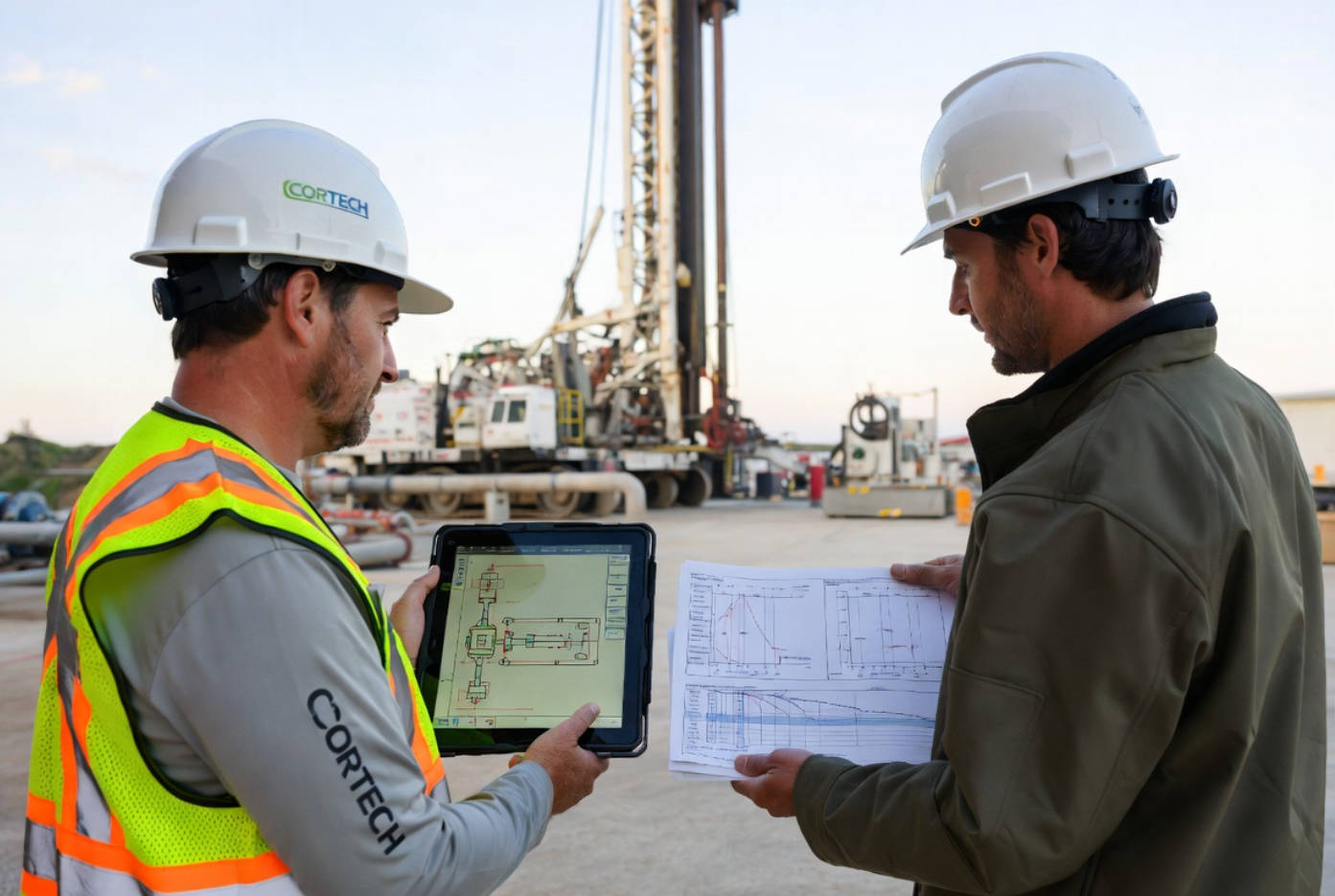
If your team is planning deeper exploration or geotechnical holes in hard rock, now is the right time to evaluate whether your current rigs, tooling, and workflows truly support greater rock coring depths. Review your past campaigns, identify where equipment limited your depth or core quality, and consider upgrading to modern full‑hydraulic wireline rigs designed specifically for diamond core drilling. [lyellcollection]
To discuss how CORE SURFACE DRILL, CORE HELI DRILL, and CORE U/G DRILL solutions from CORTECH can support your next project, reach out to a technical specialist and request a depth and tooling assessment based on your geology, target depths, and logistics constraints. A short engineering review now can prevent expensive surprises once you are hundreds of meters into rock. [psu.pb.unizin]
In practice, achievable depth depends on rig capacity, rod size, formation hardness, and fluid management, not just catalog numbers. Compact rigs in the DE100 and DE130 class can reach several hundred meters with appropriate rod sizes, while larger surface rigs go significantly deeper under favorable conditions. [mitchelldrillinginternational]
Wireline systems allow the drill string to remain in place while the inner core barrel is retrieved and re‑run, greatly reducing tripping time and wear. This efficiency gain becomes critical at depth, where full‑string trips are slow, risky, and costly. [epiroc]
Heliportable rigs offer modular, lightweight designs that can be flown into remote or mountainous areas where road access is impossible. Although they may have lower absolute capacity than large surface rigs, they enable deep coring in locations that would otherwise be unreachable. [dasmithdrilling]
Recent resistivity‑based core orientation techniques combine borehole images and data processing to orient conventionally acquired cores more efficiently and accurately. These methods reduce measurement time and improve structural interpretation, which is particularly valuable for deeper, high‑cost holes. [journals.plos]
Project managers should prioritize rig type (surface, heliportable, underground), pullback and torque capacity, compatibility with wireline systems, and vendor support for tooling and training. Working with specialized core drilling manufacturers helps ensure that the entire system is optimized for deeper rock coring, not just individual components. [docs.tuyap]
1. Geoprobe Systems®. "Reaching Greater Rock Coring Depths." [Link]. [psu.pb.unizin]
2. CORTECH. "China CORE SURFACE DRILL Manufacturer and Expert Guides (2026)." [Link]. [cortechdrilling]
3. Epiroc. "Core Drilling Rigs | Underground & Surface Exploration." [Link]. [epiroc]
4. PLOS ONE. "Resistivity method-based rock core orientation experimental protocol." 2026.[Link]. [journals.plos]
5. Lyell Collection. "The role of core in twenty-first century reservoir characterization." 2023.[Link]. [lyellcollection]
6. Sandvik. "DE130 Compact Underground and Surface Core Drill – Technical Specification."[Link]. [scribd]
7. Sandvik. "DE100 Series – Compact Core Drills."[Link]. [mitchelldrillinginternational]
8. Pile Buck. "Mastering the Hard Rock: Effective Drilling Techniques and Technologies."[Link]. [pilebuck]
9. Geotech Drilling. "Heli-portable Rigs."[Link]. [geotechdrilling]
10. Rock Drilling Rig News. "Tunnel Core Drilling Rigs Introduction Guide." 2026.[Link]. [rockdrillingrig]


