
Views: 222 Author: CORTECH Publish Time: 2026-05-24 Origin: Site


Small drilling rigs are usually the smarter, more flexible choice for rural water well projects, while industrial scale rigs are justified only for very deep, complex, or multi‑well programs with strict timelines. For a manufacturer like CORTECH, specializing in full‑hydraulic diamond core drilling rigs and CORE SURFACE DRILL systems, the winning strategy is often to adapt compact, high‑performance rigs to rural water well conditions rather than deploying oversized industrial units. [geoprobe]

For rural communities, farms, or village water supply projects, choosing between a small drilling rig and an industrial scale rig directly impacts cost, risk, and long‑term reliability. As a drilling equipment manufacturer and field practitioner, I have seen projects succeed or fail based on this single decision more than on any other technical factor. [cortechdrilling]
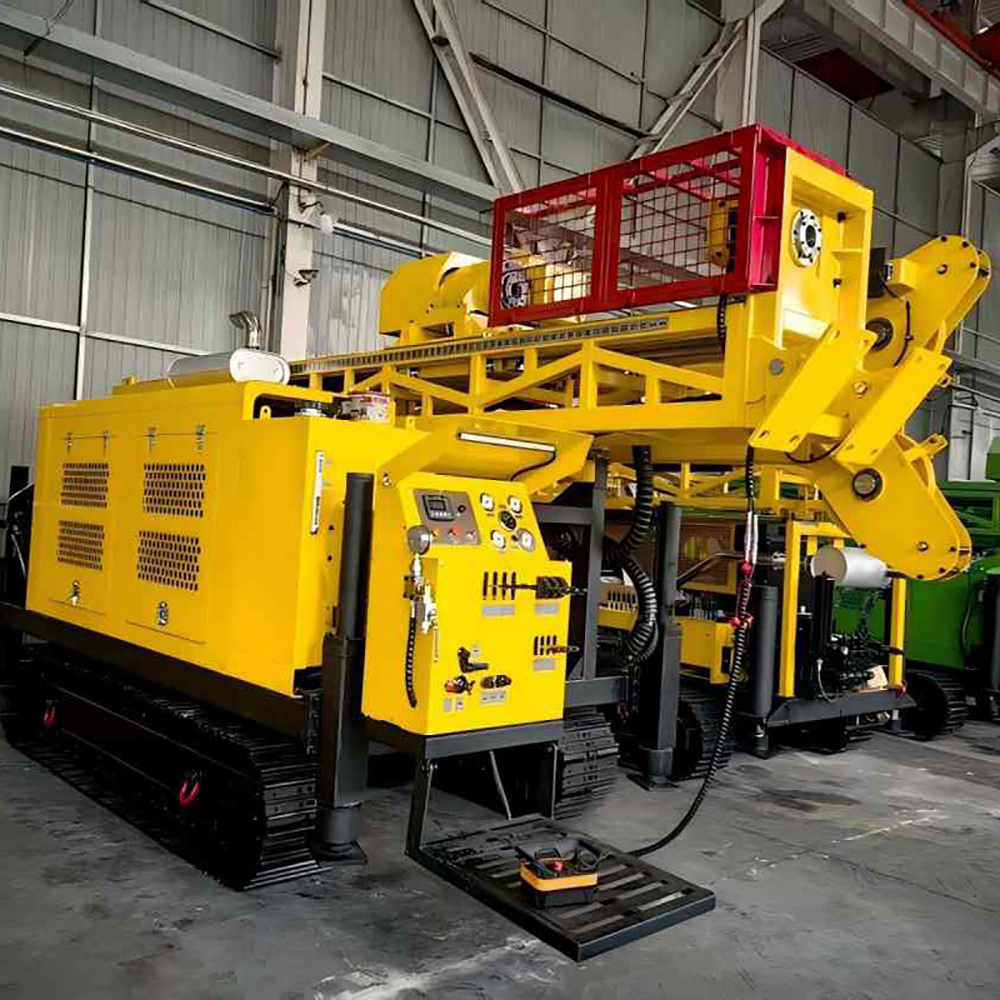
Small water well and core drilling rigs are typically compact, track‑mounted or trailer‑mounted machines designed for off‑road access and lower logistical overhead. Industrial scale rigs are high‑capacity units used for deep water wells, large municipal or industrial schemes, or multipurpose drilling programs where speed and depth capability dominate the business case. [geoprobe]
From an industry expert perspective, the best rig is not the largest one, but the one that matches your geology, budget, and long‑term service plan. [dminingwell]
Rural water well projects have distinct constraints that differ from urban or large industrial schemes. Before comparing rig types, it helps to define typical rural scenarios: [insights.made-in-china]
- Use cases: Household wells, small village water supply, irrigation wells for small to mid‑size farms, livestock watering. [dminingwell]
- Typical depths: From 50–300 meters in many regions, with occasional deeper wells in fractured rock or hard‑rock aquifers. [insights.made-in-china]
- Access conditions: Dirt roads, farm tracks, forest paths, or undeveloped sites where heavy trucks or large cranes cannot easily operate. [geoprobe]
- Budget profile: Limited capital, need for predictable OPEX, preference for rigs that can be reused for multiple local projects. [dminingwell]
- Local skills: Operators may have limited exposure to sophisticated control systems, making robust, easy‑to‑maintain rigs preferable. [insights.made-in-china]
These realities often shift the balance away from very large rigs and toward more compact, modular equipment—especially when they are built on advanced hydraulic and wireline coring technology, as in CORTECH's product line. [linkedin]
In practice, "small rig" is a functional, not purely dimensional, concept. A small rural water well rig or small core surface drill typically offers: [geoprobe]
- Compact footprint: Track‑mounted or small truck‑mounted units that can pass narrow village roads or farm gates. [geoprobe]
- Moderate depth capacity: Often up to 300–500 m for water wells or shallow exploration, depending on drill string and formation. [dminingwell]
- Full hydraulic systems: Smooth feed and rotation control, higher safety, and improved energy efficiency. [cortechdrilling]
- Wireline coring compatibility (for exploration or dual‑use projects): Fast core recovery without pulling the full drill string. [massenzarigs]
- Lower power requirements: Can operate from smaller diesel engines or generator sets, ideal in power‑limited rural areas. [geoprobe]
CORTECH's all‑hydraulic diamond core drilling rigs and CORE SURFACE DRILL solutions fit this category when configured for rural, shallow to mid‑depth wells or combined hydro‑geological and water supply projects. [linkedin]
Industrial scale rigs are designed for high‑capacity, deep, or multi‑well programs, such as municipal waterfields, large irrigation schemes, mining support, or oil and gas pre‑projects. Typical characteristics include: [massenzarigs]
- High mast and hoisting capacity: For deep drill strings, large casing diameters, and heavy downhole tools. [geoprobe]
- Large footprint and weight: Often truck‑mounted or skid‑mounted with auxiliary support equipment (mud systems, pumps, power units). [geoprobe]
- High power demand: Large engines or multiple generators, requiring substantial fuel and logistics. [geoprobe]
- Versatile drilling methods: Capable of rotary, reverse circulation, or advanced coring operations in hard rock. [massenzarigs]
- Greater crew size and specialization: Industrial rigs typically require more experienced drillers, mechanics, and support staff. [insights.made-in-china]
For rural water wells, these capabilities may be over‑specified, unless you are drilling very deep, large‑diameter production wells or implementing a standardized multi‑well field for a regional scheme. [dminingwell]

| Factor | Small Drilling Rig | Industrial Scale Rig |
|---|---|---|
| Typical use | Household, village, farm wells, small exploration support geoprobe | Municipal fields, large irrigation, industrial and mining projects geoprobe |
| Depth capacity | Up to ~300–500 m (project‑dependent) dminingwell | Often 1000 m or more, deep high‑capacity wells geoprobe |
| Mobility | Track/trailer, better for poor roads and tight sites geoprobe | Heavy truck/skid, may need road upgrades or cranes geoprobe |
| Setup time | Shorter, fewer support units geoprobe | Longer, more complex support systems geoprobe |
| Capex | Lower acquisition cost dminingwell | High capex; justified by large projects insights.made-in-china |
| Opex | Lower fuel and maintenance needs geoprobe | Higher fuel consumption, more complex maintenance geoprobe |
| Crew requirement | Small crew, easier training dminingwell | Larger crew, higher skill requirements insights.made-in-china |
| Best fit in rural areas | Flexible, economical choice for single wells or small clusters geoprobe | Suitable only when many deep or large‑diameter wells are planned geoprobe |
For many rural water well owners and local contractors, the small rig delivers a better balance of cost, accessibility, and risk. An industrial rig becomes the better choice only when you clearly need its extra depth, speed, and diameter capabilities. [geoprobe]
From a field engineer's perspective, small rigs often outperform expectations in rural environments. Several factors explain this: [geoprobe]
- Access is often the real bottleneck, not maximum drilling power: If the rig can't reach the site, its theoretical capacity doesn't matter. [geoprobe]
- Ground conditions are variable but often within small rig capability; many rural aquifers are found at moderate depths. [insights.made-in-china]
- Project risk is lower: A smaller investment and simpler system reduce financial exposure for local contractors. [dminingwell]
When small rigs integrate advanced hydraulic control and wireline coring experience, they can deliver industrial‑grade performance in a compact package—this is exactly the niche where companies like CORTECH invest in R&D and engineering. [cortechdrilling]
Modern full‑hydraulic diamond core drilling rigs and wireline systems bring clear technical benefits to rural wells and combined exploration–water projects. Key advantages include: [linkedin]
- Precise control of weight‑on‑bit and rotation speed, which reduces hole deviation and improves borehole quality. [massenzarigs]
- Rapid core recovery via wireline, avoiding the need to pull the entire drill string and speeding up geological decisions. [massenzarigs]
- Higher safety and ergonomics, as hydraulic systems reduce manual handling of heavy rods and tools. [cortechdrilling]
- Energy efficiency, especially in rigs designed for lower fuel consumption and optimized hydraulic circuits. [linkedin]
By embedding this technology into compact CORE SURFACE DRILL platforms, a manufacturer can deliver rigs that behave like "mini industrial rigs" but still fit rural needs. [cortechdrilling]
For rural projects, the total lifetime cost matters more than the rig's catalog price. We can break this down into: [insights.made-in-china]
1. Capex (capital expenditure)
- Small rigs: Lower entry cost; feasible for local contractors, farmer cooperatives, and NGOs. [dminingwell]
- Industrial rigs: Higher capital burden, usually justified only when fully utilized in multi‑well or regional programs. [insights.made-in-china]
2. Operating costs
- Fuel, lubricants, and spare parts are significantly lower for small rigs. [geoprobe]
- Industrial rigs consume more fuel and require more complex maintenance, often with OEM service contracts. [geoprobe]
3. Logistics costs
- Moving a small rig between rural sites may need only a pickup or light truck. [geoprobe]
- Industrial rigs may require heavy haulage, permits, and site preparation. [geoprobe]
4. Downtime risk
- Smaller fleets with standardized components (for example, CORTECH's modular hydraulic systems) allow faster repair and component swapping. [linkedin]
- Industrial rigs often depend on specialized technicians and longer lead times for parts. [insights.made-in-china]
In many rural contexts, this means a small rig offers a faster payback and more resilient business model, particularly for small drilling contractors. [dminingwell]
To illustrate, consider two simplified scenarios based on common industry patterns. [dminingwell]
Scenario 1: Single Village Water Well
- One 200–250 m deep well in mixed overburden and fractured rock. [insights.made-in-china]
- Narrow access road and limited crane availability. [geoprobe]
- Local contractor with modest budget but good basic drilling skills. [dminingwell]
Here, a small hydraulic rig, potentially a CORTECH‑style CORE SURFACE DRILL configured for water wells, is usually the best choice. It ensures: [cortechdrilling]
- Lower mobilization cost.
- Sufficient depth capability.
- Easier training and maintenance.
Scenario 2: Regional Irrigation Field
- 20+ deep wells, each 400–600 m, large diameter, and strict completion timelines. [insights.made-in-china]
- Good access roads and budget from a regional authority or agribusiness. [geoprobe]
Here, an industrial scale rig or multiple high‑capacity rigs may be justified. They can: [geoprobe]
- Drill more wells per year.
- Handle large casings and high pumping rates.
- Justify their higher capex through volume and schedule optimization.
For owners, contractors, or engineers, the following step‑by‑step selection checklist helps decide between small and industrial rigs. [dminingwell]
1. Define target depth and diameter
- If your design depth is under about 300–400 m with moderate casing sizes, a small rig is usually sufficient. [insights.made-in-china]
2. Assess access and site constraints
- Poor roads, steep terrain, or tight villages point strongly toward compact rigs. [geoprobe]
3. Estimate project volume
- Single wells or small clusters favor small rigs, while large multi‑well fields may justify industrial rigs. [dminingwell]
4. Evaluate local skills and service
- If your operators and mechanics are more familiar with smaller rigs or core drills, build on that experience instead of jumping straight to heavy industrial platforms. [linkedin]
5. Plan for lifecycle support
- Consider OEM support, parts availability, and service intervals; manufacturers like CORTECH that integrate engineering, OEM production, and support can reduce lifecycle risk. [made-in-china]
CORTECH Drilling Equipment Co., Ltd. is a high‑tech enterprise specializing in all‑hydraulic diamond core drilling rigs, including CORE SURFACE DRILL platforms used worldwide in exploration and drilling operations. This engineering base offers specific advantages when these rigs are adapted for rural water well applications: [made-in-china]
- Modular designs allow configuration changes between exploration coring and water wells, maximizing fleet utilization. [cortechdrilling]
- High‑performance hydraulics and wireline expertise improve penetration rate and hole quality, even in complex rural geology. [massenzarigs]
- Global support experience, including OEM manufacturing and service, supports long‑term use in remote regions. [made-in-china]
For contractors, this means you can deploy a compact, technically advanced rig that behaves like a "bridge" between small rural rigs and industrial‑grade equipment, without carrying the full cost and logistics burden of the largest rigs. [linkedin]
If you are planning a rural water well project, the safest way to avoid overspending or under‑specifying your rig is to consult directly with an equipment manufacturer or engineering partner. [dminingwell]
A manufacturer like CORTECH, with all‑hydraulic diamond core drilling expertise and CORE SURFACE DRILL platforms, can help you: [made-in-china]
- Evaluate your geology, target depth, and site constraints.
- Model cost and ROI for small vs industrial rig options.
- Configure an optimized rig package, including training and service plans.
Next step: Document your project requirements (location, depth, diameter, timeline, budget) and share them with a drilling expert or CORTECH representative to receive a tailored rig configuration and quotation. [made-in-china]
Yes, when properly designed and maintained, small hydraulic rigs can drill high‑quality boreholes that meet long‑term rural water supply needs. Key is to follow correct design, casing, and development practices. [geoprobe]
Industrial rigs are most justified when you need very deep wells, large diameters, or a high number of wells in a short time, such as municipal or industrial fields. They are rarely needed for single rural wells. [geoprobe]
Yes, many all‑hydraulic core drilling rigs can be configured with different heads and tooling to handle both wireline coring and water well drilling, especially in the mid‑depth range. This is a common strategy to maximize fleet utilization. [massenzarigs]
Rural contractors should choose rigs with standardized components, available parts, and OEM support, and establish a preventive maintenance schedule focusing on hydraulics, engines, and safety systems. This reduces downtime and protects their investment. [cortechdrilling]
Collect information on expected depth, geology, water demand, site access, and power availability before contacting a rig supplier. This allows them to propose an appropriate small or industrial rig configuration. [insights.made-in-china]
1. - Geoprobe Systems – "Small Water Well Rigs Mean Big Business Advantages". <https://geoprobe.com/articles/small-water-well-rigs-mean-big-business-advantages> [geoprobe]
2. - Cortech Drilling – Company website and product overview. <https://www.cortechdrilling.com> [cortechdrilling]
3. - Geoprobe Systems – Track Mounted Drill Rigs. <https://geoprobe.com/drilling-rigs/track-mounted-drill-rigs> [geoprobe]
4. - DMiningwell – "How to Choose the Right Water Well Drilling Rig According to its Traveling Method". <https://www.dminingwell.net/how-to-choose-the-right-water-well-drilling-rig-according-to-its-traveling-method/> [dminingwell]
5. - Cortech Drilling Equipment Co., Ltd – Company profile on LinkedIn. <https://www.linkedin.com/company/cortech-drilling-equipment-co-ltd> [linkedin]
6. - Massenzarigs – "Wireline core drilling for mining excavations and research". <https://www.massenzarigs.com/wireline-coring/> [massenzarigs]
7. - Made‑in‑China – Cortech Drilling Equipment Co., Ltd Profile. <https://www.made-in-china.com/showroom/cortechdavid/> [made-in-china]
8. - Made‑in‑China Insights – "Water Well Drilling Machine Vs. Rotary Drilling Rig: A Comprehensive User‑Centric Comparison". <https://insights.made-in-china.com/Water-Well-Drilling-Machine-Vs-Rotary-Drilling-Rig-A-Comprehensive-User-Centric-Comparison> [insights.made-in-china]


