
Views: 278 Author: CORTECH Publish Time: 2026-07-27 Origin: Site


Content Menu
● Standard Feed Stroke Explained
● What Industry Experience Suggests
● Practical Selection Framework
● FAQ
>> 1. Is long feed stroke always better?
>> 2. Does feed stroke affect safety?
>> 3. What increases daily footage more: stroke length or penetration rate?
>> 4. When should a contractor choose a standard feed stroke?
>> 5. How should buyers compare rigs?
In diamond core drilling, feed stroke is not just a machine specification. It is a direct productivity lever that affects penetration efficiency, rod handling frequency, operator fatigue, and ultimately daily footage.

Feed stroke is the travel distance available to advance the drill string before repositioning. In practical field terms, a long feed stroke can reduce the number of interruptions for rod changes and repositioning, while a standard feed stroke often favors simpler rig design, easier transport, and lower upfront cost.
For surface exploration teams, the best choice depends on hole depth, ground conditions, crew skill, and the drilling method used. Epiroc notes that method selection depends on surface or underground conditions, hole depth, rock conditions, and confidence in sample quality, which is a useful reminder that no single rig setup wins everywhere.
A standard feed stroke is typically the more compact, conventional configuration. It is usually easier to transport, quicker to set up on constrained pads, and less demanding in terms of mast size and hydraulic complexity. That makes it attractive where drill moves are frequent or the project area is logistically tight.
From an operator's standpoint, a standard feed stroke can be easier to control and maintain because the machine architecture is often less complex. For contractors focused on moderate hole depths and lower mobilization cost, this can be the most economical route.
A long feed stroke gives the rig greater carriage travel, so the driller can advance farther before stopping to reconfigure the rod string. This is especially valuable in deeper holes and in programs where each interruption has a measurable cost in time and wear.
Boart Longyear and Epiroc both emphasize productivity and safety in modern surface core drilling systems, and longer feed-related design choices are part of that equation because they help reduce rod tripping frequency and improve overall meterage efficiency.
The real question is not "which stroke is better," but "which stroke produces more daily footage in your conditions." A long feed stroke usually wins when the project has deeper holes, consistent formation, and enough pad space to justify a larger rig. A standard feed stroke can outperform in shallow or highly mobile programs where setup and relocation time dominate the day.
| Factor | Standard Feed Stroke | Long Feed Stroke |
|---|---|---|
| Best use case | Shallow to moderate-depth holes | Deeper holes and high-meterage programs |
| Setup complexity | Lower | Higher |
| Mobility | Better | Heavier, less flexible |
| Rod handling interruptions | More frequent | Less frequent |
| Daily footage potential | Strong in short-cycle work | Strong in long continuous runs |
| Upfront cost | Usually lower | Usually higher |
In surface exploration, productivity is not only about the fastest penetration rate. Epiroc describes modern rigs as being designed for fast and efficient sampling, while Boart Longyear highlights systems that maximize productivity and safety through wireline solutions, hands-free rod handling, and high-performance surface coring rigs.
That aligns with field reality: the highest daily footage often comes from a balanced system, not just a bigger feed stroke. If the rig is too large for the site, the lost time in mobilization, positioning, and maintenance can erase the advantage of the longer stroke.
Use the following decision logic when choosing between standard and long feed stroke:
1. Choose standard feed stroke when the program is shallow, pads are tight, and frequent rig moves are expected.
2. Choose long feed stroke when the objective is deeper drilling, fewer interruptions, and higher meters per shift.
3. Prioritize the system that matches your rod handling workflow, since safety and cycle time matter as much as pure stroke length.
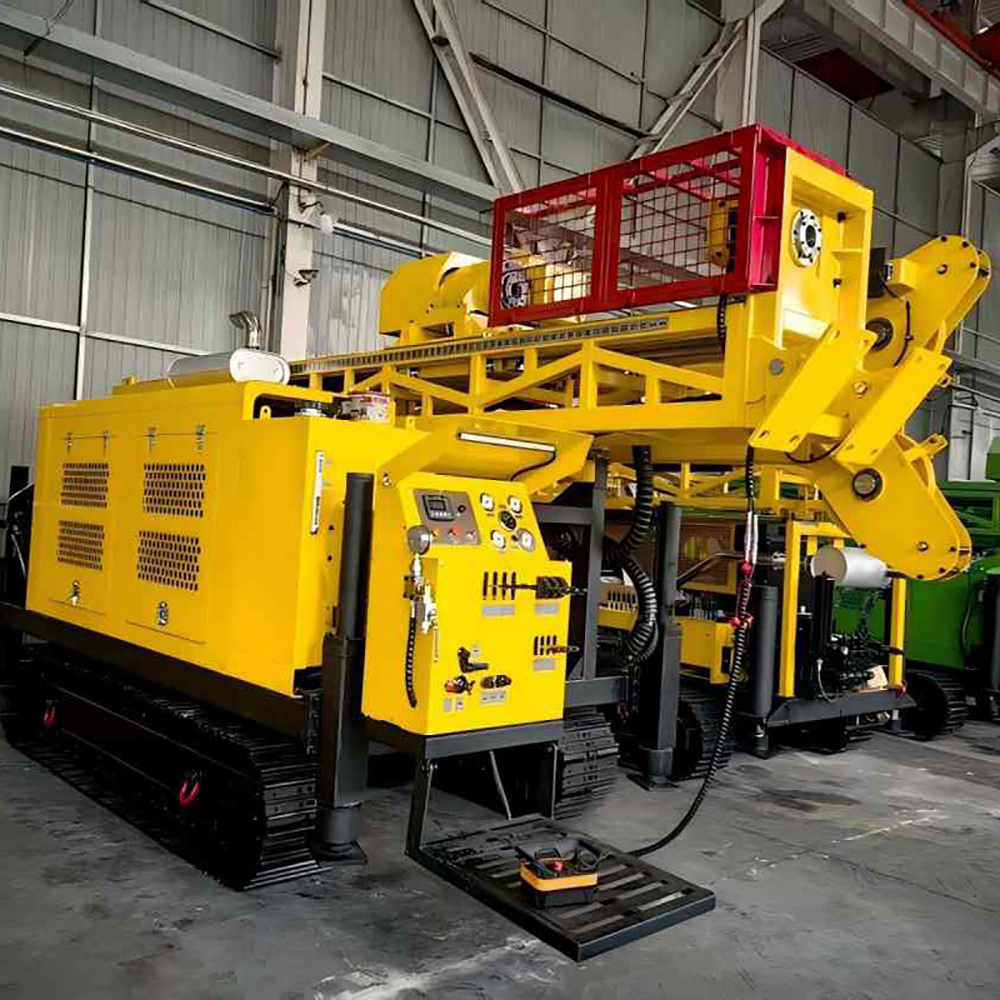
For a manufacturer like CORTECH, the strongest message is that feed stroke should be matched to the real drilling mission, not chosen as a standalone feature. In wireline core drilling, productivity comes from the full system: hydraulic power, mast stability, rod handling, feed control, and operator ergonomics.
If your buyers are evaluating rigs for mineral exploration, highlight the practical outcome they care about: more useful meters per day with fewer delays. That framing is stronger than simply saying a long stroke is "better," because experienced buyers know performance depends on the whole drilling package.

If your goal is higher daily footage, evaluate feed stroke together with hole depth, rig mobility, rod handling, and safety workflow. The right rig is the one that keeps production moving with the fewest non-drilling minutes.
No. It is better for deeper holes and longer continuous runs, but a standard feed stroke can be more efficient in shallow or highly mobile programs.
Yes. A well-matched feed system can reduce interruptions and improve handling efficiency, which supports safer workflows.
Both matter, but daily footage is usually driven by the full cycle time, including drilling, rod handling, and repositioning.
When site access is tight, holes are not extremely deep, or cost and mobility are more important than maximum continuous travel.
They should compare hole depth targets, rod handling design, rig stability, hydraulic performance, and total cycle efficiency rather than looking at feed stroke alone.
1. - Epiroc. “Core drilling.” [https://www.epiroc.com/en-us/applications/mining/exploration-and-geoscience/core-drilling] [epiroc]
2. - Boart Longyear. “Surface exploration drilling products.” [https://www.boartlongyear.com/products/exploration/exploration-surface/] [boartlongyear]
3. - Core Drilling Corp. “Equipment.” [https://www.coredrillingcorp.com/equipment.html] [coredrillingcorp]
4. - Drill Master Group. “The Four Typical Core Drilling Rigs.” [https://www.drillmastergroup.com/the-four-typical-core-drilling-rigs/] [drillmastergroup]


