
Views: 265 Author: AimLaser Publish Time: 2026-09-16 Origin: Site


Content Menu
● What Defines a Leading Core Drill Rig Manufacturer?
● Why Wireline Diamond Core Drilling Matters
● Leading Drill Rig Manufacturers in the Market
>> Sandvik
>> Epiroc
>> Caterpillar
>> Everdigm
>> CORTECH
● Surface Core Drill vs. Heli Drill vs. Underground Core Drill
>> Heli-Portable Core Drill Rigs
>> Underground Core Drill Rigs
● A Practical Rig Selection Framework
>> 1. Define the Geological Objective
>> 2. Confirm the Required Hole Size and Depth
>> 4. Assess Water and Drilling Fluid Needs
>> 5. Prioritize Safety Features
>> 6. Compare Serviceability, Not Only Specifications
>> 7. Calculate Total Project Value
● Common Buying Mistakes to Avoid
● Why Configuration Matters More Than a Generic "Best Brand" List
● Request a Core Drill Rig Recommendation
● FAQ
>> 1. What is a wireline diamond core drill rig?
>> 2. What is the difference between a surface core drill and a heli-portable core drill?
>> 3. When should I choose an underground core drilling rig?
>> 4. How do I determine the required drilling depth capacity?
>> 5. Why is core recovery important in mineral exploration?
>> 6. What should I ask a core drill rig manufacturer before purchasing?
>> 7. Can one core drill rig work for both surface and underground drilling?
Choosing a core drill rig manufacturer is not simply a question of brand recognition. For mineral exploration contractors, geological teams, and mine operators, the right fully hydraulic wireline diamond core drill rig can directly affect sample recovery, drilling uptime, crew safety, mobilization cost, and the quality of geological decisions.
This guide compares leading drill rig manufacturers through the lens that matters most to exploration buyers: application fit, wireline coring capability, operating environment, serviceability, modularity, and total project value. It also explains how to select the right surface core drill, heli-portable core drill, or underground core drilling rig for a real exploration program.

A leading drill rig manufacturer should not be judged only by fleet size, company history, or the number of drilling categories it offers. Those factors matter, but exploration drilling buyers need to assess whether a supplier can help them recover reliable core safely and efficiently in their specific ground conditions.
For diamond drilling projects, the practical questions are more focused:
- Can the rig support the required hole diameter and target depth?
- Is it designed for wireline coring, rather than general drilling alone?
- Can it operate effectively in remote, steep, cold, high-altitude, or confined environments?
- Does it offer adequate hydraulic power, torque, pullback, feed force, and water-handling compatibility?
- Can crews transport, assemble, maintain, and repair the rig with realistic site resources?
- Is there dependable access to spare parts, technical assistance, and drilling-tool compatibility?
A rig that appears powerful on a specification sheet may still be unsuitable if it cannot reach the drill site, fit inside an underground heading, or maintain productive wireline cycles in fractured ground.
For this reason, the best core drill rig manufacturer is usually not the company with the broadest product catalog. It is the supplier whose machine architecture, engineering support, and product configuration match the realities of the drilling program.
Wireline diamond core drilling is widely used in mineral exploration because it retrieves a continuous cylindrical sample of rock from depth. The recovered core can be logged for lithology, alteration, mineralization, structure, geotechnical characteristics, and other geological information needed to build subsurface models.
Unlike conventional rod-pull coring, wireline drilling allows the inner tube containing the core to be retrieved through the drill string. The outer rods remain in the hole during the retrieval cycle. This can reduce non-productive time, especially in deeper holes, because crews do not need to pull the entire drill string to recover each core run.
A typical wireline diamond drilling system includes:
- A fully hydraulic core drill rig
- A rotation head or spindle
- Drill rods and rod handling equipment
- A wireline core barrel system
- An overshot assembly
- A diamond-impregnated core bit
- Water or drilling-fluid circulation equipment
- A mud pump and support equipment
- Core boxes, logging tools, and site safety systems
The objective is not merely to drill faster. The objective is to obtain high-quality, representative core while maintaining safe, controlled drilling conditions.
Poorly matched drilling equipment can contribute to low core recovery, excessive deviation, rod failures, unstable boreholes, high consumable use, and expensive downtime. A well-matched rig can help drilling contractors keep production predictable and geologists receive more reliable information from every meter drilled.

The global drilling equipment market includes large multinational suppliers, specialized exploration-drilling brands, regional manufacturers, and OEM producers. The following companies are commonly recognized across mining, rock excavation, geotechnical drilling, blast-hole drilling, water-well drilling, and exploration applications.
However, buyers should remember that not every manufacturer's strongest product line is a dedicated diamond core drilling rig. Some brands are especially strong in production drilling, top-hammer drilling, DTH drilling, underground development, or water-well applications. Their relevance depends on the project.
| Manufacturer | Main Industry Strengths | Relevant Drilling Categories | Best Consideration for Core Drilling Buyers |
|---|---|---|---|
| Sandvik | Mining, rock excavation, underground equipment, surface drilling | Surface rigs, underground rigs, rock tools, mining equipment | Suitable for buyers seeking a global mining-equipment ecosystem and established service capabilities |
| Epiroc | Exploration, mining, underground drilling, rock reinforcement | Surface core drilling, underground core drilling, exploration rigs | Strong reference point for wireline core drilling and underground exploration applications |
| Furukawa Rock Drill | Rock drilling, construction, quarrying, hydraulic drilling | Top-hammer rigs, DTH rigs, crawler drills | More relevant where rock-drilling productivity and rugged crawler applications are priorities |
| Caterpillar | Mining equipment and large-scale industrial machinery | Rotary drilling, mining support equipment, track drills | Often considered for large mining environments and broader equipment fleet requirements |
| Everdigm | Construction, foundation, drilling equipment | DTH rigs, crawler drilling rigs, foundation-related equipment | May suit buyers evaluating drilling equipment for infrastructure or general drilling markets |
| CORTECH | Diamond core drilling and exploration-focused hydraulic rigs | Surface core drills, heli-portable core drills, underground core drills | Suitable for projects that require dedicated wireline coring solutions and configuration flexibility |
Sandvik is widely known in mining and rock excavation. Its equipment portfolio includes surface drill rigs, underground drill rigs, rock tools, loaders, trucks, and related mining systems. For mining companies operating large fleets, Sandvik can be attractive because of its broad equipment ecosystem and global industry presence.
From a core drilling buyer's perspective, Sandvik should be evaluated according to the exact exploration requirement. A project focused on deep wireline diamond coring needs different rig characteristics from a production blast-hole or development-drilling operation.
Key evaluation points include:
- Availability of exploration-specific drilling solutions
- Local service coverage for the project region
- Compatibility with the desired core barrel and rod system
- Ability to support underground or remote-site logistics
- Long-term parts and maintenance planning
Epiroc has a prominent presence in exploration and geoscience drilling. Its portfolio includes surface and underground core drilling rigs, including the Diamec range for underground exploration work and Christensen-branded solutions for deeper surface drilling applications.
For buyers comparing dedicated core drilling systems, Epiroc is often a relevant benchmark because the company focuses on applications involving geological core recovery. Its product range highlights the importance of matching rig design to site constraints, drilling depth, mobility requirements, and operator safety.
Epiroc's exploration materials also emphasize that wireline core drilling is commonly used to recover continuous core from depth. This reinforces an important purchasing principle: the rig, core barrel, diamond bit, drilling fluid system, and crew procedures must work as one system.
Furukawa Rock Drill is recognized for hydraulic rock drilling equipment, crawler drills, top-hammer rigs, and DTH drilling systems. Its products are commonly associated with quarrying, construction, infrastructure, and mining environments where robustness and drilling output are essential.
For diamond core drilling contractors, Furukawa may be considered when a project has broader rock-drilling needs beyond conventional exploration coring. Buyers should verify whether the chosen configuration is optimized for continuous core recovery, wireline operation, desired hole size, and the required depth.
Caterpillar is a major global supplier of heavy equipment used in mining, construction, and industrial operations. Its drilling-related equipment is often associated with large mining and production environments, particularly where customers value fleet standardization, dealer networks, and equipment integration.
For exploration drilling buyers, Caterpillar may be relevant when the drilling program is connected to a wider mine-development or production operation. However, for specialized wireline diamond coring, buyers should compare dedicated exploration-rig specifications rather than assume that a large mining-equipment supplier automatically provides the most suitable solution.
Everdigm supplies equipment for construction, drilling, and infrastructure-related applications. Its drilling portfolio can be relevant for operators working in DTH drilling, foundation work, quarrying, and certain crawler-based drilling environments.
The key question for a mineral exploration buyer is whether a specific rig is engineered for diamond wireline coring or for another drilling method. DTH, rotary, top-hammer, and wireline diamond drilling serve different purposes. Selecting the wrong platform can create avoidable operational compromises.
CORTECH focuses on the research, manufacturing, and sale of fully hydraulic wireline diamond core drilling rigs. Its product scope includes:
- CORE SURFACE DRILL for surface mineral exploration programs
- CORE HELI DRILL for remote and helicopter-supported exploration sites
- CORE U/G DRILL for underground exploration and confined mining environments
This application-focused structure is important. Instead of treating all drilling work as the same, CORTECH addresses three operational realities that often determine rig selection:
1. Surface drilling requires stable setup, drilling power, transportability, and reliable performance over changing terrain.
2. Heli-portable drilling requires modular components, controlled lifting weights, rapid site assembly, and practical access to difficult locations.
3. Underground drilling requires compact dimensions, maneuverability, safety-focused operation, and compatibility with restricted mine headings.
For exploration contractors and mine operators, this specialization can simplify equipment selection. Rather than adapting a general-purpose rig to a demanding coring environment, buyers can configure a platform around the actual drilling location and target requirements.

A core drill rig should be selected based on the drilling environment first, then refined by depth, hole size, rod size, logistics, power source, and safety requirements.
| Rig Type | Typical Operating Environment | Primary Buying Priority | Common Challenges |
|---|---|---|---|
| Surface core drill | Roads, exploration pads, open terrain, mine sites | Depth capability, power, stability, productivity | Variable ground, access roads, weather, water management |
| Heli-portable core drill | Mountains, forests, remote exploration zones | Modular design, low lifting weight, rapid assembly | Helicopter logistics, limited pad size, weather delays, restricted support resources |
| Underground core drill | Mine tunnels, declines, headings, underground chambers | Compact footprint, maneuverability, safe operation | Restricted space, ventilation, water control, limited access, crew safety |
A surface core drill rig is typically the best option when the drill site can be reached by road, track, trailer, crawler, or other ground transportation. These rigs are often selected for deeper exploration holes, programs requiring higher drilling capacity, and projects where a stable drilling pad can be prepared.
When evaluating a surface rig, buyers should examine:
- Rated depth capacity by core size, such as BQ, NQ, HQ, or PQ
- Rotation torque and spindle speed range
- Pullback and feed force
- Mast length and rod-handling arrangement
- Hydraulic system performance
- Compatibility with mud pumps and water systems
- Mobility method, including crawler, skid, trailer, or truck mounting
- Ease of daily maintenance and component access
A surface rig should not be selected based on maximum depth alone. The quoted depth rating may change depending on ground conditions, hole angle, rod size, borehole stability, drilling technique, and operator practices.
A heli-portable core drill rig is designed for exploration programs where roads are unavailable, environmentally restricted, uneconomical, or impossible to build. These programs may occur in mountainous terrain, dense forest, protected areas, remote mineral claims, or high-altitude locations.
The essential advantage of a heli-portable rig is not simply smaller size. It is the ability to divide the rig into manageable modules for air transport and site assembly.
A successful heli-drilling system should offer:
- Modular components with practical lifting weights
- Clearly defined transport modules
- Fast assembly and disassembly procedures
- Reliable hydraulic hose and connection systems
- Compact drill-pad requirements
- Effective power-to-weight balance
- Robust components suited to repeated mobilization
- Simple access for maintenance in remote locations
In remote exploration, logistics can become more expensive than drilling itself. A rig that saves one helicopter lift, shortens assembly time, or reduces the number of support modules may create meaningful project savings.
An underground core drill rig is designed for drilling inside mines, tunnels, underground exploration headings, or confined excavation areas. Underground projects often demand compact equipment that can operate where access, ventilation, ground conditions, and workspace are limited.
A suitable underground core drill should be evaluated for:
- Width, height, and overall transport dimensions
- Positioning flexibility in tight headings
- Hydraulic hose routing and protection
- Noise and operating conditions
- Drill-angle range
- Operator visibility and controls
- Rod handling and lifting safety
- Maintenance access in confined spaces
- Compatibility with underground water and power arrangements
Compact design does not mean reduced engineering requirements. In fact, underground drilling often requires even greater attention to machine layout, operator safety, and daily serviceability because crews work in a restricted environment.
Before requesting quotations, create a drilling requirement sheet. This helps manufacturers recommend the correct rig configuration and prevents suppliers from quoting a machine that is either undersized or unnecessarily expensive.
Use the following seven-step process.
Clarify what the drilling program must achieve.
Examples include:
- Early-stage mineral exploration
- Resource-definition drilling
- Geotechnical investigation
- Underground orebody extension drilling
- Structural geology and orientation work
- Infill drilling near an operating mine
- Deep drilling for deposit evaluation
The geological objective determines the required sample quality, expected hole depth, core diameter, orientation needs, and drilling accuracy.
Core size affects the equipment selection. Larger diameter core generally provides more geological information and can improve sample representativeness, but it also requires more power, water, rod capacity, and logistical support.
Ask these questions:
- What is the planned final hole depth?
- What core diameter is required at the target depth?
- Will the hole begin at HQ or PQ and reduce to NQ or BQ?
- Is directional drilling required?
- Are angled holes needed?
- Is the ground expected to be fractured, abrasive, broken, or water-bearing?
Site access often determines the rig category before any technical specification is reviewed.
For example:
- If a crawler or truck can reach the drill pad, a surface rig may offer stronger productivity and easier support.
- If equipment must be lifted by helicopter, a modular heli-portable drill is usually essential.
- If drilling will take place from a mine level or underground chamber, a compact underground core drill becomes the logical choice.
Water circulation cools the diamond bit, transports cuttings, and supports borehole cleaning. In some ground conditions, drilling fluids and additives may also be needed to manage borehole stability, fluid loss, swelling clays, or fractured formations.
A rig supplier should understand:
- Available water supply and delivery distance
- Pump pressure and flow requirements
- Recycling or settling requirements
- Environmental controls
- Expected use of polymer, mud, or lost-circulation materials
- Water storage limitations at remote sites
Safety must be designed into the equipment decision, not added afterward. Core drilling involves rotating drill strings, high-pressure fluid systems, suspended loads, hydraulic components, and potentially unstable ground conditions.
Important safety considerations include:
- Emergency-stop access
- Guarding around rotating components
- Safe rod handling
- Stable rig anchoring and leveling
- Hydraulic hose protection
- Clear operating controls
- Safe lifting points
- Operator training requirements
- Preventive maintenance procedures
A rig can have impressive drilling parameters and still create downtime if technicians cannot access routine service points easily. In remote drilling programs, simple maintenance can be one of the most valuable design features.
Ask the manufacturer:
- Which daily inspections are required?
- Which parts are considered high-wear items?
- Can the main hydraulic and mechanical components be serviced on site?
- Are spare-parts lists available before delivery?
- Is remote technical support available?
- Can the supplier provide commissioning and operator training?
The lowest purchase price does not always produce the lowest drilling cost. Buyers should compare total project value, including:
- Initial equipment investment
- Freight and mobilization cost
- Fuel or power consumption
- Crew requirements
- Spare parts and consumables
- Maintenance labor
- Rig uptime
- Core recovery performance
- Re-drilling risk
- Resale value and future adaptability
A slightly higher-capacity rig may be justified when it reduces project delays, avoids repeated mobilization, or improves the quality of geological information recovered per meter drilled.
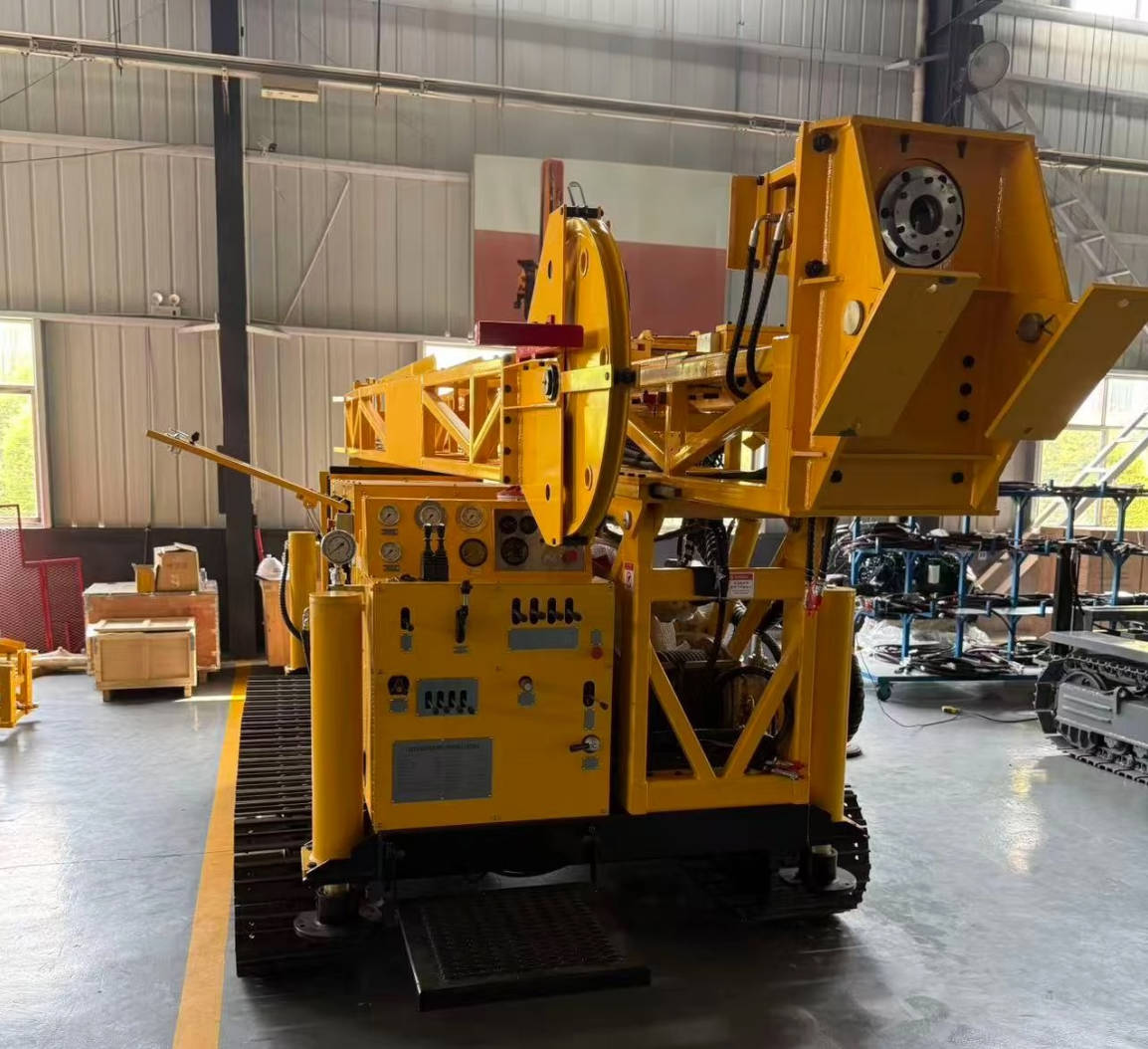
The most expensive drilling rig mistake is selecting equipment based on a single number, such as maximum depth, engine power, or purchase price.
Avoid these common errors:
- Choosing a general-purpose drill rig for a specialized wireline coring program
- Ignoring the effect of hole diameter on practical depth capacity
- Underestimating helicopter transport and remote-site assembly requirements
- Buying a compact underground rig without checking mine-heading dimensions
- Comparing quoted depth ratings without confirming core size and drilling conditions
- Neglecting water supply, mud pumping, and fluid-management equipment
- Treating rod handling as a minor issue rather than a safety and productivity factor
- Ordering a rig before confirming spare-parts availability
- Failing to request operator training and commissioning support
- Assuming all diamond drilling tools and wireline systems are interchangeable
A competent supplier should ask detailed technical questions before recommending a rig. If a manufacturer can quote immediately without understanding your depth, core size, site access, ground conditions, and logistics, the recommendation may not be sufficiently project-specific.
A "top drill rig brand" list can be useful as a starting point, but it should never replace engineering evaluation. Drilling projects differ too much for one universal ranking to be meaningful.
For example, a deep surface mineral exploration campaign in accessible terrain may need a high-capacity hydraulic surface core drill with strong pullback, stable mast design, and reliable mud-pump integration. A mountainous greenfield project may need a modular heli drill that can be flown in safely and assembled quickly. An operating underground mine may require a compact core drill that can be positioned in a restricted heading without disrupting mine traffic.
The correct decision is therefore a match between:
Rig configuration + drilling objective + site logistics + service support = project value
For CORTECH, the product approach is centered on this application match. A buyer can begin by choosing between a CORE SURFACE DRILL, CORE HELI DRILL, or CORE U/G DRILL, then specify the practical technical requirements that determine final configuration.
If you are planning a mineral exploration, geotechnical, or underground coring project, provide your drilling parameters before selecting equipment. CORTECH can help evaluate the most suitable fully hydraulic wireline diamond core drilling rig based on your target depth, core size, terrain, transport method, and operating conditions.
To receive a more accurate recommendation, prepare the following information:
- Planned hole depth and hole angle
- Required core size
- Surface, heli-portable, or underground application
- Site altitude and climate
- Ground conditions and expected borehole challenges
- Available power and water supply
- Transport restrictions
- Required delivery schedule
- Need for operator training, commissioning, and spare parts
Contact CORTECH today to discuss a customized surface core drill, heli-portable core drill, or underground core drilling rig solution for your next exploration project.
A wireline diamond core drill rig is a drilling machine used to recover cylindrical rock samples from below the ground. It uses a diamond-impregnated bit to cut the rock and a wireline system to retrieve the inner tube containing the core without pulling the complete drill string from the borehole.
A surface core drill is generally used where equipment can reach the drilling pad by road, crawler, trailer, or other ground transport. A heli-portable core drill is divided into modules that can be transported by helicopter, making it suitable for remote, mountainous, environmentally sensitive, or inaccessible locations.
Choose an underground core drilling rig when drilling must be carried out inside a mine, tunnel, underground chamber, decline, or confined heading. These rigs are designed for compact transport dimensions, restricted workspaces, and safer operation in underground conditions.
The required capacity depends on target depth, core diameter, borehole angle, ground conditions, drilling-fluid requirements, and the selected drill rod system. Always ask the manufacturer to state rated depth capacity by core size rather than relying on one general maximum-depth figure.
Core recovery affects the reliability of geological interpretation. High-quality, continuous core helps geologists identify rock types, structures, mineralization, alteration zones, and geotechnical conditions. Poor recovery can create gaps in the geological record and increase uncertainty in resource evaluation.
Ask about depth capacity by core size, torque, spindle speed, pullback, rod handling, modular weight, site-access requirements, hydraulic system design, water-pump compatibility, spare-parts support, training, commissioning, warranty terms, and remote technical assistance.
In some cases, a highly adaptable rig may be used in more than one environment. However, dedicated surface and underground rigs are usually more efficient because the operating conditions differ significantly. Surface drilling often prioritizes capacity and stability, while underground drilling prioritizes compact size, maneuverability, and confined-space safety.
1. [CORTECH / Hardrock Drills — TOP 6 BRAND / Manufacturer For Drill Rigs]
2. [Epiroc — Core Drilling Rigs for Underground and Surface Exploration]
3. [Epiroc — Core Drilling Methods]
4. [Epiroc — Core Drilling and Exploration Geoscience]
5. [Epiroc — Wireline Core Drilling Systems]
6. [Epiroc — Diamond Driller’s Technical Book]
7. [Sandvik Mining and Rock Solutions]
8. [Sandvik Group — Mining and Rock Excavation Solutions]
9. [Engineers and Geoscientists BC — Diamond Drill Core Logging: Structure]


