
Views: 272 Author: CORTECH Publish Time: 2026-09-13 Origin: Site


Content Menu
>> How Air Core Drilling Works
>> Main Advantages of Air Core Drilling
● What Is Diamond Core Drilling?
>> How Diamond Core Drilling Works
● Diamond Core Drilling vs. Air Core Drilling: Side-by-Side Comparison
● Sample Quality: The Most Important Difference
>> Why Intact Core Matters in Complex Geology
● Depth and Formation Conditions
● Cost Comparison: Look Beyond Cost Per Meter
>> Total Decision Value Framework
● A Practical Two-Stage Exploration Strategy
>> Stage 1: Use Air Core for Target Generation
>> Stage 2: Use Diamond Core for Target Validation
● How to Choose the Right Drilling Method
>> 1. Define the Decision You Need to Make
>> 2. Assess Formation Conditions
>> 3. Define Sample Quality Requirements
>> 4. Calculate the Cost of Rework
>> 5. Match the Rig to the Job
● Operational Factors That Affect Diamond Core Recovery
>> Bit Selection and Formation Match
>> Feed Pressure and Rotation Control
● When Should You Choose Diamond Core Drilling?
● When Should You Choose Air Core Drilling?
● Final Recommendation: Use the Method That Matches Your Risk Level
● FAQ
>> 1. Is diamond core drilling more accurate than air core drilling?
>> 2. Is air core drilling cheaper than diamond core drilling?
>> 3. Can air core drilling reach bedrock?
>> 4. Why is wireline diamond core drilling important?
>> 5. What formations are best for diamond core drilling?
>> 6. Can diamond core drilling be used for geotechnical investigation?
>> 7. Should a mineral exploration program use both air core and diamond core drilling?
Choosing between diamond core drilling and air core drilling can determine the quality of geological data, drilling productivity, exploration risk, and total project cost. Although both methods are widely used in mineral exploration, geotechnical investigation, and site assessment, they produce very different samples and serve different decision-making stages.
For exploration teams, the central question is not simply, "Which drilling method is cheaper?" It is: What level of geological confidence does this project require before capital is committed? Air core drilling is often an efficient first-pass method for shallow and unconsolidated ground. Diamond core drilling is the preferred solution when the project requires intact core, accurate structural information, deeper penetration, and defensible geological interpretation.
As a manufacturer focused on full-hydraulic wireline diamond core drilling rigs, CORTECH has seen an important operational reality: a lower-cost drilling method can become expensive if it does not provide the sample quality needed for the next exploration decision. The best choice is therefore based on formation conditions, target depth, sample requirements, budget, logistics, and the economic consequence of uncertainty.
Key takeaway: Air core drilling is generally used to screen broad, shallow targets quickly. Diamond core drilling is used to understand the geology in detail, confirm mineralization, and support high-confidence technical decisions.
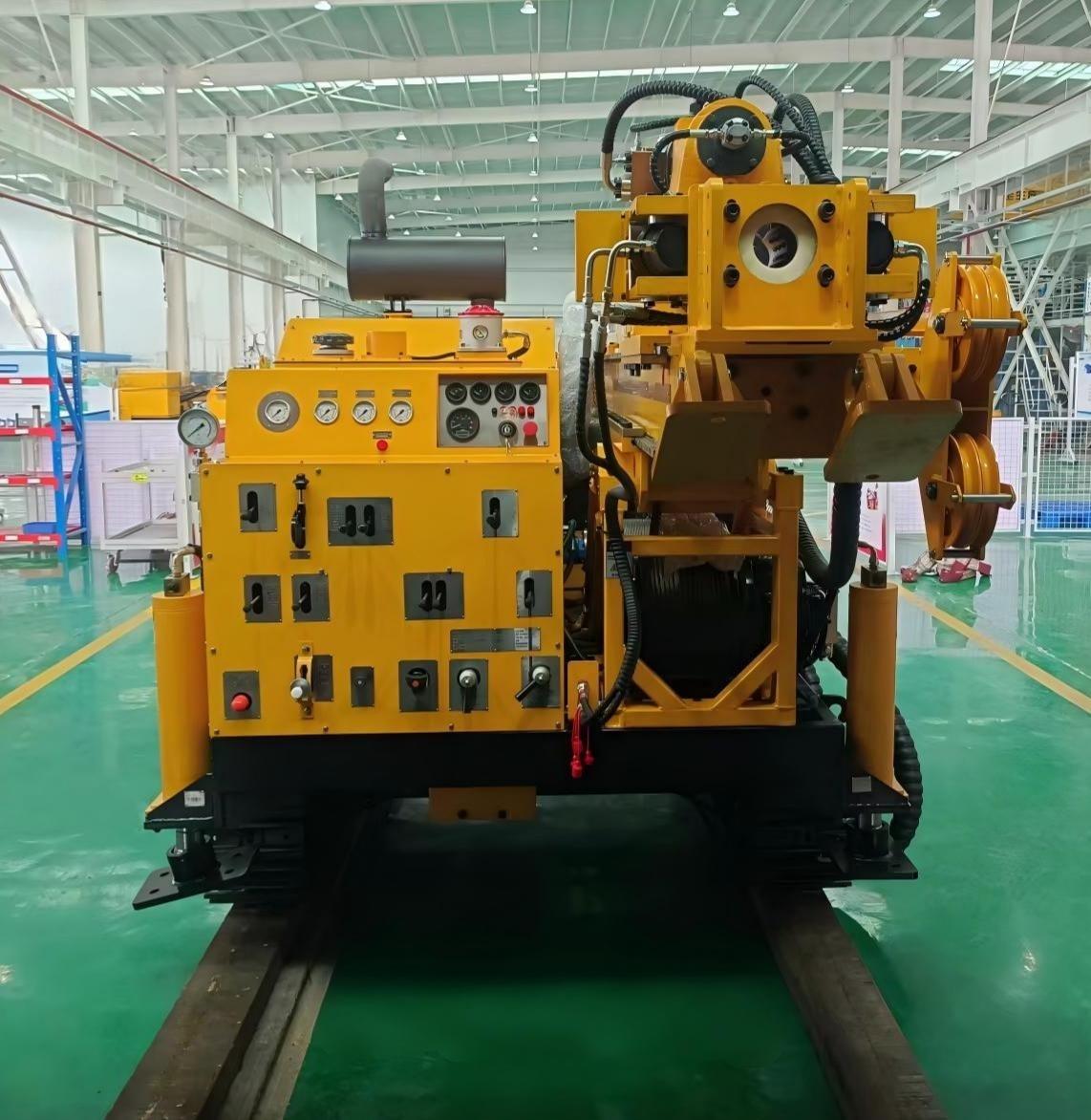
Air core drilling is a rotary drilling method that uses compressed air to remove drill cuttings from the hole. The drilling system commonly uses hardened steel or tungsten-carbide cutting tools rather than diamond-impregnated coring bits.
Instead of recovering a continuous rock cylinder, air core drilling brings fragmented cuttings to the surface. These samples can be collected at regular intervals and logged to identify lithology, alteration, weathering, mineral indicators, and possible ore zones.
Air core is especially useful in loose, weathered, sandy, clay-rich, or lateritic ground. It is often selected during the early stages of a program when the objective is to test a large area rapidly at relatively low cost.
The basic process is straightforward:
1. A rotary drill string advances into the ground.
2. Compressed air travels down through the drill rods.
3. The air lifts cuttings through the annulus or an inner tube system.
4. Drill cuttings are discharged at the surface.
5. The crew collects and labels samples by depth interval.
The result is usually a series of chipped, crushed, or pulverized samples rather than intact rock core.
Air core drilling can be a practical choice when broad coverage matters more than detailed geological interpretation.
- Fast drilling in shallow and soft formations
- Lower initial drilling cost per meter
- Reduced need for water in some operating conditions
- Useful for reconnaissance and regional target generation
- Efficient for soil, saprolite, laterite, sand, gravel, and weathered profiles
- Can support geochemical screening programs across large land packages
However, air core drilling has important limitations. Cuttings may be mixed, contaminated, poorly representative, or difficult to interpret in broken ground. It also offers limited information about fracture orientation, rock fabric, structural controls, and true geological contacts.
Diamond core drilling is a precision drilling method that recovers a cylindrical core sample from underground formations. A diamond drill bit cuts an annular path through the rock, leaving an intact central cylinder that enters a core barrel.
This core is retrieved to the surface, logged, photographed, measured, sampled, and stored in core trays. Because the sample remains substantially intact, geologists can evaluate rock type, mineralization, veins, fractures, foliation, faulting, alteration, recovery, and rock quality.
Diamond core drilling is widely used for:
- Mineral exploration and resource definition
- Deep geological investigation
- Geotechnical drilling
- Engineering site investigation
- Dam, tunnel, road, bridge, and foundation projects
- Groundwater and hydrogeological studies
- Structural interpretation in complex hard-rock environments
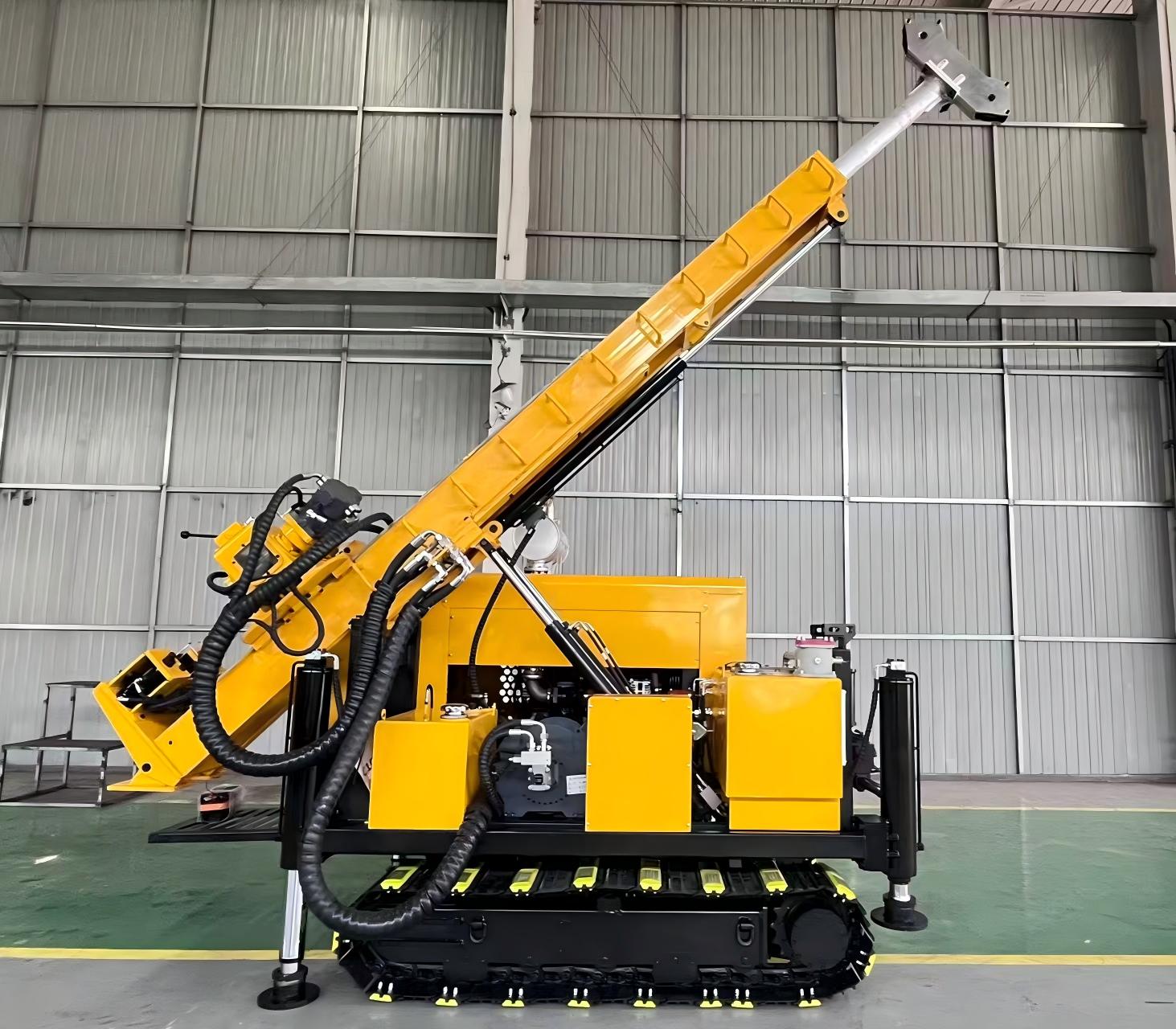
A full-hydraulic core surface drill with a wireline coring system can significantly improve operational efficiency because the inner tube is retrieved without pulling the entire rod string after each core run.
A diamond core drilling system typically includes a hydraulic drilling rig, drill rods, core barrel, diamond bit, fluid circulation system, and wireline retrieval equipment.
The process generally follows these steps:
1. The rig positions the drill string over the planned collar location.
2. A diamond bit cuts into the formation.
3. The core enters the inner tube of the core barrel.
4. Drilling fluid cools the bit and transports cuttings away from the cutting face.
5. A wireline overshot retrieves the inner tube when the run is complete.
6. The core is placed in labeled trays for geological logging and analysis.
7. Drilling continues to the planned depth or target zone.
This method requires more specialized equipment and experienced operators, but the quality of geological information is far higher.
The table below summarizes the key differences between the two drilling methods.
| Comparison Factor | Air Core Drilling | Diamond Core Drilling |
|---|---|---|
| Primary sample type | Crushed cuttings and chips | Continuous cylindrical rock core |
| Geological detail | General lithology and geochemical indication | High-detail lithology, structures, mineralization, fractures, and contacts |
| Best formation conditions | Loose overburden, weathered ground, soils, sands, clays, soft formations | Competent rock, fractured rock, deep formations, and complex geology |
| Typical exploration stage | Early-stage reconnaissance and target screening | Follow-up, resource definition, geotechnical work, and advanced exploration |
| Depth capability | Usually more limited | Suitable for much deeper drilling programs |
| Sample integrity | Lower; cuttings can mix or become contaminated | Higher; intact core supports detailed interpretation |
| Structural data | Very limited | Strong potential for structural, geotechnical, and oriented-core analysis |
| Drilling speed | Often faster in shallow unconsolidated ground | Typically slower per meter, depending on formation and depth |
| Initial cost per meter | Usually lower | Usually higher |
| Information value per meter | Lower for detailed geological decisions | Higher when accurate interpretation is critical |
| Water requirement | Can operate with air-based circulation | Usually requires managed fluid circulation |
| Equipment complexity | Comparatively simple | More specialized rig, tooling, crew, and fluid-control requirements |
Neither method is universally better. The right method is the one that produces the information needed to make the next project decision with confidence.
The greatest difference between air core and diamond core drilling is not the drill rig itself. It is the quality and reliability of the sample.
With air core drilling, the material reaching the surface consists of cuttings. These fragments can provide useful evidence of rock type, weathering, and mineral content. But they may not clearly show the exact position of a geological boundary, the angle of a vein, the orientation of a fracture, or the relationship between mineralization and host rock.
With diamond core drilling, the recovered core preserves geological context. A geologist can inspect the rock in sequence and identify meaningful features such as:
- Quartz veins and sulfide zones
- Fault gouge and shear zones
- Alteration halos
- Bedding, foliation, and cleavage
- Fracture frequency
- Rock competency
- Core recovery and rock quality designation
- Contacts between lithological units
For mineral exploration, these details can affect target ranking, drill-hole planning, resource modeling, and metallurgical sampling. For engineering projects, they can influence foundation design, slope stability evaluation, tunnel support planning, and construction risk management.
In many exploration programs, the most valuable geological information is not simply whether a mineral is present. It is how the mineralization occurs.
For example, a bag of air core cuttings may show traces of quartz and sulfide minerals. But it may not prove whether the mineralization is hosted in a narrow vein, a brecciated fault zone, a disseminated alteration zone, or a specific lithological contact.
Diamond core can show the geological relationship directly. This reduces interpretation risk and helps the exploration team decide where to drill next.
Air core drilling performs best where formations are relatively soft, shallow, and unconsolidated. Common applications include weathered profiles, transported cover, laterite, alluvium, clay, and sandy ground.
When drilling enters competent bedrock, highly fractured rock, hard formations, or deeper targets, air core performance may decline. Hole stability, sample recovery, and penetration can become more challenging.
Diamond core drilling is designed to work across a much broader range of geological conditions. With the correct bit selection, drilling fluid management, feed pressure, rotation speed, and core barrel configuration, diamond drilling can recover core from soft rock to very hard rock.
This is where equipment selection becomes critical. A reliable full-hydraulic wireline coring rig should provide stable rotation, controlled feed force, sufficient torque, dependable hoisting capacity, and efficient rod handling.
For example, CORTECH states that its full-hydraulic diamond core drilling rigs use high-torque power heads up to 9,700 N·m and are designed for surface exploration and geotechnical projects. The company's core surface drill portfolio includes track-mounted models intended to support mobility between drill locations and wireline diamond coring operations.
Many project teams initially compare drilling methods by cost per meter. This is useful, but incomplete.
Air core drilling often has a lower direct cost per meter, especially for shallow regional programs. It can cover a large area quickly and identify zones that deserve more detailed follow-up.
Diamond core drilling usually costs more because it requires specialized rigs, diamond tooling, drilling fluids, core barrels, experienced personnel, and more time per meter. However, the sample may eliminate uncertainty that would otherwise require repeat drilling, redesign, or additional investigation.
A better question is:
What is the cost of making a decision with incomplete geological information?
Before choosing a method, assess the project through four lenses:
| Decision Question | If the Answer Is "Yes" | Preferred Direction |
|---|---|---|
| Do you need continuous, intact rock samples? | Core quality is essential | Diamond core drilling |
| Is the target deep, hard, or structurally complex? | Greater drilling capability is required | Diamond core drilling |
| Are you screening many shallow targets over a large area? | Speed and broad coverage matter most | Air core drilling |
| Will the result support engineering, resource, or investment decisions? | Higher confidence is necessary | Diamond core drilling |
| Is the formation mainly loose overburden or weathered material? | Cuttings may be sufficient | Air core drilling |
| Is the budget limited and the program is exploratory? | Low-cost first-pass data is acceptable | Air core drilling |
The most effective exploration programs often use both methods strategically rather than treating them as direct substitutes.
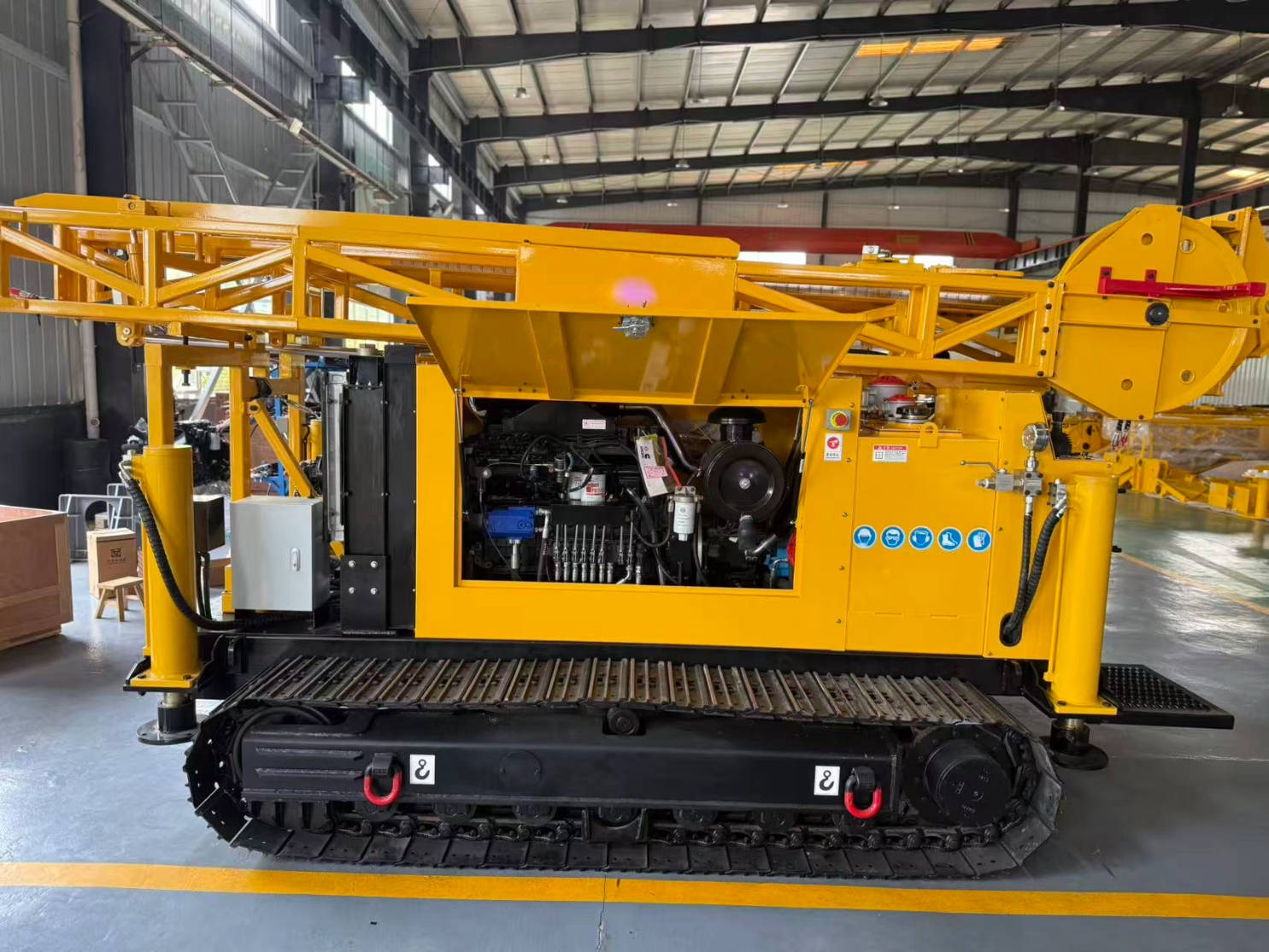
A common best-practice approach is to use air core drilling for initial screening and diamond core drilling for detailed follow-up.
Air core drilling can help exploration teams:
- Test broad geochemical anomalies
- Identify depth to bedrock
- Map weathered profiles
- Locate potential mineralized zones
- Screen multiple targets under cover
- Reduce the number of expensive deep holes
At this stage, the goal is not necessarily to define a deposit. The goal is to identify where detailed drilling investment is justified.
Once a target has been prioritized, diamond core drilling can provide the evidence needed to understand it properly.
Diamond drilling supports:
- Detailed lithological logging
- Mineralized interval verification
- Structural interpretation
- Assay sample selection
- Density and metallurgical sample collection
- Geotechnical assessment
- Resource modeling support
- Deeper target testing
Expert insight: Air core drilling can tell you where to look. Diamond core drilling can tell you what you have.
Use the following five-step selection process before mobilizing a drilling contractor or purchasing a drill rig.
Start with the project outcome, not the equipment.
Ask:
- Are we looking for early geochemical indications?
- Do we need to confirm lithology or mineralization?
- Is the objective resource definition?
- Do engineers need intact core for rock quality assessment?
- Will this data influence a major investment decision?
If the project depends on high-confidence geological interpretation, diamond core drilling is usually the stronger choice.
Review available geological maps, previous drilling records, surface mapping, geophysical surveys, and nearby project data.
Important factors include:
- Depth to bedrock
- Rock hardness
- Degree of weathering
- Fracture intensity
- Water conditions
- Hole stability risk
- Expected target depth
- Terrain and site access
Air core may be appropriate for shallow cover. Diamond core is generally more suitable for hard rock and deep geological targets.
If the laboratory only requires interval-based cuttings for broad geochemical screening, air core may be sufficient.
If the project needs orientation, structural data, continuous core recovery, geotechnical logging, or detailed mineralization analysis, choose diamond core drilling.
A cheap drilling method can become expensive if it produces uncertain results.
Consider the potential cost of:
- Redrilling poorly sampled intervals
- Misinterpreting a geological target
- Delaying a feasibility study
- Missing narrow mineralized structures
- Underestimating geotechnical risks
- Mobilizing a drilling crew twice
For diamond drilling, do not choose a rig based on depth alone. Evaluate the complete operating system.
A suitable full-hydraulic core surface drill should be assessed for:
- Torque and rotational speed range
- Hoisting capacity
- Feed stroke and feed force
- Wireline compatibility
- Rod-handling capability
- Mobility on rough terrain
- Mud pump compatibility
- Service accessibility
- Safety features
- Availability of spare parts and technical support
Selecting diamond drilling is only the first step. High core recovery depends on how the drilling system is configured and operated.
Different formations require different bit types. Diamond-impregnated bits are commonly used across a broad range of rock conditions, while surface-set diamond, PDC, tungsten-carbide, and other tooling options may be selected according to formation characteristics.
Epiroc notes that diamond-impregnated bits are applicable from soft to very hard rock, while surface-set diamond bits are used in soft to medium-hard formations. It also identifies tungsten-carbide tooling for soft rock and overburden conditions.
Drilling fluid performs several essential functions:
- Cooling the diamond bit
- Carrying cuttings from the hole
- Reducing friction
- Stabilizing the borehole
- Supporting bit life
- Improving drilling efficiency
Poor fluid management can lead to excessive bit wear, blocked waterways, lower penetration rates, unstable holes, and reduced core recovery.
Excessive feed pressure can damage the bit, cause deviation, grind the core, or reduce recovery in fractured formations. Insufficient feed can reduce penetration and waste drilling time.
Experienced operators adjust feed, rotation, fluid flow, and core-run length based on changing geology. This is one reason why a stable hydraulic system and responsive rig controls matter in professional diamond drilling operations.
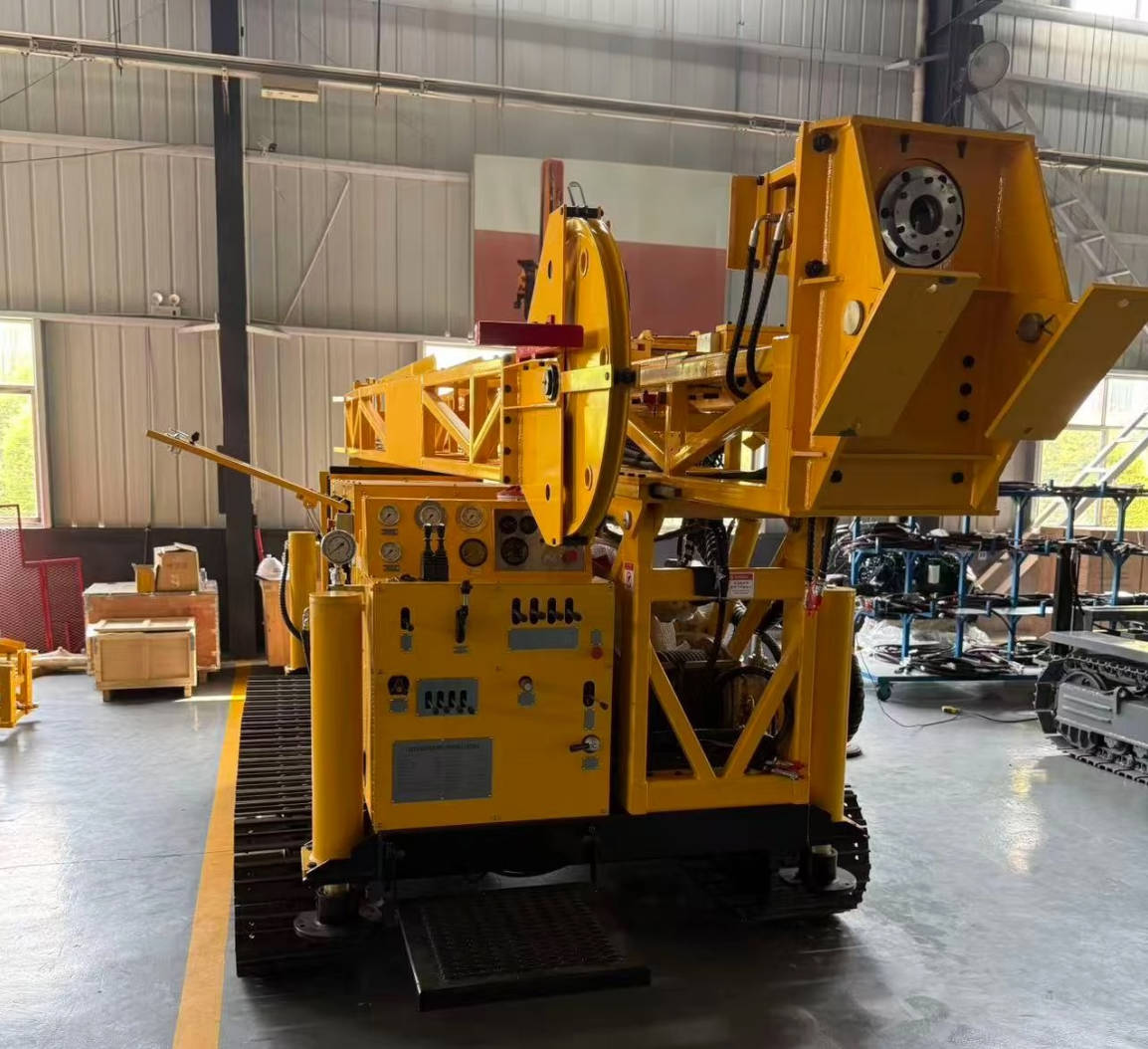
Choose diamond core drilling when your project requires accuracy, continuity, and confidence.
It is particularly suitable when:
- The target is deep.
- The formation includes hard rock.
- Geological structures affect the project outcome.
- You need intact samples for detailed logging.
- You need high-quality material for laboratory testing.
- You are defining mineral resources.
- You need geotechnical data for engineering design.
- You want to reduce uncertainty before making a high-value decision.
For these projects, the higher initial drilling cost is often justified by stronger data quality and lower downstream risk.
Choose air core drilling when your project needs speed, coverage, and lower-cost initial information.
It is often appropriate when:
- You are testing a large exploration area.
- Targets are shallow.
- The ground is weathered, sandy, clay-rich, or unconsolidated.
- The objective is early-stage geochemical screening.
- You need to identify bedrock depth.
- You need preliminary information before committing to diamond drilling.
Air core drilling is not a replacement for diamond core drilling when detailed geological or engineering information is required. Instead, it is a valuable early-stage tool that can make a later diamond drilling program more focused and cost-effective.
The comparison between diamond core drilling vs. air core drilling is ultimately a comparison between two different data-collection strategies.
Air core drilling is a fast and economical screening method. It is valuable for broad exploration coverage and shallow unconsolidated formations. Diamond core drilling is a higher-precision investigation method. It delivers intact core, detailed geological evidence, and the confidence needed for advanced exploration and engineering decisions.
For many projects, the strongest approach is a phased program: use air core drilling to narrow the search area, then use full-hydraulic wireline diamond core drilling to validate the target, understand the geology, and support the next investment decision.
Need a reliable core surface drill for demanding exploration or geotechnical work? Contact CORTECH to discuss your target depth, core size, formation conditions, mobility requirements, and wireline drilling objectives. A properly matched full-hydraulic diamond core drilling rig can improve core recovery, operational stability, and the long-term value of every drilled meter.
Yes. Diamond core drilling generally provides more accurate and detailed geological information because it recovers an intact, continuous rock core. Air core drilling produces cuttings, which are useful for preliminary screening but provide less structural and geological context.
In many shallow and early-stage exploration programs, air core drilling has a lower direct cost per meter. However, diamond core drilling can provide greater value when detailed geological information is needed, because it may reduce uncertainty, rework, and repeat drilling.
Yes. Air core drilling is frequently used to identify the depth to bedrock and collect samples through weathered cover. Its effectiveness depends on ground conditions, hole stability, target depth, equipment capacity, and the transition from unconsolidated material into competent rock.
Wireline diamond core drilling allows the operator to retrieve the inner tube and rock core without pulling the entire drill string after every core run. This can improve productivity, reduce handling time, and make deep drilling operations more efficient.
Diamond core drilling is suitable for a wide range of formations, including soft rock, hard rock, fractured rock, mineralized zones, and deeper bedrock targets. Tooling selection, drilling-fluid control, feed pressure, and operator experience are essential to achieving good results.
Yes. Diamond core drilling is commonly used for geotechnical investigation because intact core helps engineers evaluate rock quality, fractures, strength, weathering, and ground conditions for infrastructure, foundations, tunnels, dams, roads, and mining projects.
Often, yes. A staged program can use air core drilling for broad, low-cost target screening and diamond core drilling for detailed follow-up. This approach can improve exploration efficiency by directing high-value core drilling toward the most promising targets.
1. [PRD Rigs — Air Core vs Diamond Core Drilling: Differences & Uses] — Used for the foundational comparison of sample recovery, typical applications, relative cost, formation suitability, and general drilling-method selection criteria. [prdrigs]
2. [CORTECH Drilling — Full Hydraulic Diamond Core Drilling Rig Manufacturer] — Used for CORTECH’s company positioning, full-hydraulic drilling solutions, stated maximum power-head torque, wireline diamond coring focus, surface drill product range, CE certification statement, and quality-management claims. [cortechdrilling]
3. [Epiroc — Conventional Core Drilling] — Used for the discussion of coring-bit selection, including diamond-impregnated, surface-set diamond, PDC, and tungsten-carbide tooling across different formation conditions. [epiroc]


