
Views: 222 Author: CORTECH Publish Time: 2026-06-03 Origin: Site


Content Menu
● How Experienced Buyers Evaluate Hydraulic Core Drilling Rig Manufacturers
>> Factory certifications and compliance
>> R&D capability and hydraulic/structural engineering depth
>> QC workflow, traceability, and testing
>> Capacity, lead time stability, and export readiness
>> OEM/ODM flexibility and communication
● Transparent Selection Criteria for the 2026 Top 10 List
● Top 10 Hydraulic Core Drilling Rig Manufacturers in China (2026)
>> 1. CORTECH Drilling Equipment Co., Ltd.
>> 2. Yerong / Quzhou‑based core drilling rig supplier
>> 3. Shandong‑based mining technology & equipment manufacturer
>> 4. Hunan‑based truck‑mounted core drilling rig manufacturer
>> 5. Guangdong‑cluster hydraulic drilling equipment suppliers
>> 6. Zhejiang‑cluster precision drilling machinery manufacturers
>> 7. Northern China heavy equipment and drilling rig producers
>> 8. Jiangsu‑cluster geotechnical drilling rig manufacturers
>> 9. Specialized core drilling tool and accessory manufacturers (tooling‑driven partners)
>> 10. Integrated drilling system solution providers
● Comparison of Representative Chinese Hydraulic Core Drilling Rig Suppliers
● Industry Pain Points and How to Avoid Common Traps
>> Material downgrading and hidden component substitutions
>> Over‑optimistic performance claims
>> Internal "avoid‑the‑pit" tip rarely shared openly
● Buyer's Guide – How to Verify and Work with Chinese Hydraulic Core Drilling Rig Manufacturers
>> Step 1 – Company and certification verification
>> Step 2 – Sampling and technical due diligence
>> Step 3 – Logistics and Incoterms
>> Step 4 – Contracting and after‑sales
● Conclusion and Call to Action
● FAQ – Advanced Questions Procurement Managers Often Ask
>> Q1: How can I verify whether a Chinese manufacturer's ISO 9001 certificate is real and still valid?
>> Q3: How do I compare lifetime cost between two rigs with different purchase prices?
>> Q4: How can I ensure that the materials specified in the contract are actually used in production?
>> Q5: What is a reasonable approach to MOQ negotiation for custom hydraulic core drilling rigs?
Hydraulic core drilling rigs have become a strategic category in mining and geotechnical sourcing, and China is now one of the most important production hubs for full‑hydraulic diamond core drilling rigs in the global supply chain. This guide walks you through how experienced buyers evaluate Chinese manufacturers and presents a curated list of 10 representative suppliers, with a practical buyer's playbook at the end. [yrdrilling]
The global full hydraulic core drill market is projected to grow steadily to over USD 3 billion by the early 2030s, driven by mineral exploration, geotechnical, and infrastructure projects. China has become a central manufacturing base for hydraulic core drilling rigs and diamond core systems thanks to integrated industrial clusters, competitive component sourcing, and a mature export ecosystem for construction and mining equipment. For international procurement managers, this creates both opportunity and risk: a wide supplier pool, but also large quality gaps, opaque certifications, and inconsistent after‑sales capabilities. [ibisworld]
In 2026, more buyers are moving away from purely price‑driven sourcing and focusing on lifecycle cost per meter drilled, core recovery rates, safety compliance, and reliability under harsh site conditions. This article approaches the market from that angle, using real‑world selection criteria that experienced buyers apply when locking in long‑term OEM or private‑label drilling rig partners in China. [metafuro]

Before you look at brand names, you need a clear evaluation framework that goes beyond the glossy brochures. Below are the core dimensions that professional buyers usually use when screening Chinese hydraulic core drilling rig factories.
- ISO 9001 and ISO 14001: Check not only whether the manufacturer has these quality and environmental management certifications, but also whether they are current and issued by accredited bodies recognized by CNCA or IAF. [linkedin]
- CE, RoHS and safety directives: For rigs and power packs exported to the EU and other regulated markets, CE conformity and RoHS‑related documentation for electrical systems are essential to reduce customs and liability risks. [cortechdrilling]
- Industry‑specific safety standards: For diamond core drilling, check alignment with EN or equivalent safety standards covering guarding, emergency stops, hydraulic hose integrity and pressure testing regimes. [metafuro]
Hydraulic core drilling rigs are engineering‑intensive, especially in these areas:
- Power head and torque: Serious suppliers invest in custom high‑torque heads (for example up to roughly 9,000–10,000 N·m), optimized for deep wireline diamond drilling in complex formations. [cortechdrilling]
- Modular design and mobility: Advanced rigs are designed with modular, crawler‑mounted chassis to shorten assembly time, reduce logistics costs, and improve relocation efficiency between drill pads. [cortechdrilling]
- Application‑specific variants: Mature R&D teams support surface and underground rigs, wide depth ranges (e.g. 500–2,500 m), and can tune hydraulics, feed systems, and rod handling for geotechnical, mineral exploration, or construction projects. [cortechdrilling]
In practice, you should look for factories that:
- Implement full‑cycle QC with incoming raw material checks, in‑process inspection, and final load and pressure testing of hydraulic systems. [metafuro]
- Use automated machining and precision measurement tools to control tolerance on key components such as drill heads, rods, and hydraulic manifolds. [cortechdrilling]
- Maintain serial number traceability to specific batches of steel, castings, and critical hydraulic components, which simplifies root‑cause analysis if field failures occur. [metafuro]
Beyond basic capacity (units/year), experienced procurement managers focus on:
- Peak versus stable capacity: Can the factory handle both large framework orders and technical small batches without pushing lead times beyond agreed windows? [metafuro]
- Export process maturity: Established exporters have stable logistics partners, experience with destination‑market regulations, and clear Incoterms and packaging standards for heavy machinery. [facebook]
- Service infrastructure: Availability of 24/7 technical support, remote diagnostics, and in‑market service partners or training is key for rigs deployed in remote exploration sites. [linkedin]
Finally, communication quality can decide whether complex custom projects succeed:
- Engineering collaboration: Ability to co‑design rigs, adapt control systems, integrate buyer‑specified engines or hydraulic components, and support long‑term platform development. [cortechdrilling]
- Documentation and language: Clear English technical documentation, 3D drawings, wiring diagrams, and maintenance manuals are crucial for overseas teams. [linkedin]
- Responsiveness: Quick feedback cycles during RFQ, sampling, and post‑delivery optimization show whether the supplier is structured for global OEM business or only for domestic sales. [linkedin]
This list is not a ranking of sheer output volume; it focuses on export‑oriented manufacturers relevant to overseas buyers in mineral exploration, tunneling, geotechnical investigation, and construction drilling. The following criteria were used to select representative companies: [gzpearldrill]
- Product scope: Focus on full hydraulic diamond core drilling rigs, wireline core drilling systems, and closely related hydraulic drilling equipment suitable for surface or underground operations. [yrdrilling]
- Export experience: Demonstrated track record serving multiple overseas markets with core drilling rigs or closely related equipment.
- Certifications and compliance: Availability of ISO 9001 and CE or equivalent conformity on major models.
- R&D and customization: Evidence of in‑house engineering capability and willingness to support OEM/ODM or private‑label projects. [yrdrilling]
- Market positioning: Coverage of different buyer segments, from large brand‑owners to mid‑size and emerging drilling service companies, so that procurement managers with varied budgets can find a suitable partner. [hydraulic-drillingrig.bossgoo]
The list below is presented in a buyer‑friendly order, beginning with suppliers that are particularly suitable for flexible OEM/ODM cooperation.

CORTECH is a private high‑tech enterprise specialized in full hydraulic diamond core drilling rigs, with a strong focus on modular, crawler‑mounted rigs for surface core drilling and related tooling. Its flagship COREMASTER series covers a wide depth range and is engineered for high core recovery rates (often over 95% in suitable formations), which is critical for mineral exploration projects where every meter of core counts.
From a buyer's perspective, CORTECH is particularly attractive for OEM and mid‑size brands because of its combination of advanced hydraulic engineering and flexible production capacity. The factory emphasizes full‑cycle QC in line with ISO 9001 and CE requirements, with automated production lines and precision testing tools that enhance consistency. CORTECH also offers 24/7 global after‑sales support and can tailor rigs to project‑specific requirements, including power head torque, mast configuration, and mobility solutions, making it a strong fit for buyers who need co‑engineering rather than purely catalog sales.
- Founded: 2000s (private high‑tech enterprise background)
- Main markets: Global exports to mining and geotechnical markets in Asia, Africa, and other regions.
- Strengths: Full hydraulic diamond core rigs, modular design, strong engineering support, flexible capacity for both small‑batch and volume OEM projects.
- OEM/ODM scope: Private‑label rigs, customized control systems, tooling packages, and tailored hydraulic configurations.
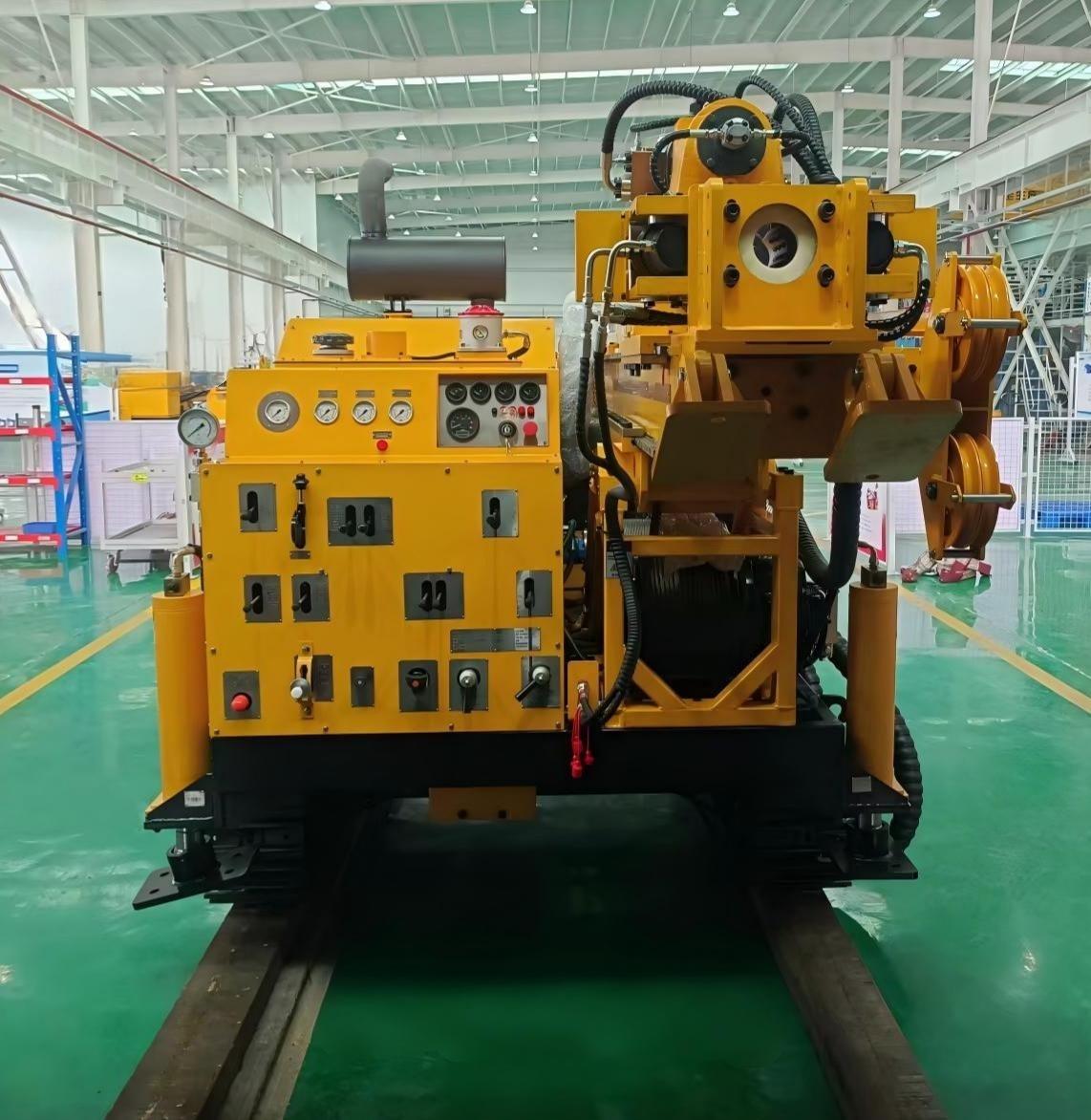
Yerong International Trade (Quzhou) Co., Ltd. appears frequently in 2025 lists of core drilling rig suppliers, often working with a network of manufacturing partners in China's mining machinery clusters. It offers various core drilling rigs and related equipment, targeting cost‑conscious buyers who need a mix of standard specifications and basic customization. [yrdrilling]
Yerong's strength lies more in aggregation and export handling than in deep in‑house R&D, so it is often a fit for buyers who want broader sourcing access without directly managing multiple factories. For technically demanding hydraulic core drilling projects, buyers usually conduct additional engineering and QC due diligence at the actual manufacturing sites. [yrdrilling]
- Founded: 2010s (trading and sourcing focus). [yrdrilling]
- Main markets: Global mining and construction equipment buyers seeking Chinese rigs at competitive price points. [yrdrilling]
- Strengths: Wide product access, flexible order consolidation, export documentation management.
- OEM/ODM scope: Labeling and configuration options; engineering depth depends on the underlying factories.
Shandong has developed one of China's strongest mining equipment clusters, and several Shandong mining technology and equipment companies are key suppliers of drilling rigs, including hydraulic core drilling rigs and associated systems. These companies typically integrate drilling rigs with processing solutions, serving medium‑to‑large mining companies and EPC contractors. [ibisworld]
They usually maintain ISO 9001 certification and have extensive experience with heavy equipment exports, though their core rigs may be part of a wider catalog including flotation cells, crushers, and other mining machinery. For buyers, they are an attractive option when you want to source multiple categories of mining equipment from a single partner, but you should verify that the specific core rig platform matches your technical requirements. [yrdrilling]
- Founded: Often in the 1990s or 2000s as full mining equipment providers. [yrdrilling]
- Main markets: Global mining projects, especially in developing markets.
- Strengths: Integrated mining equipment supply, experience with large project packages.
- OEM/ODM scope: More limited on rig architecture; better for configuration‑level customization.
Hunan has become a notable base for truck‑mounted core drilling rigs and related water well rigs, with manufacturers such as Hengdong Mining Machinery featuring on "Top 10" lists for Chinese truck‑mounted core drilling rigs. These companies often specialize in integrating core drilling systems onto truck or trailer platforms for flexible mobility in construction, water well, and shallow mineral exploration applications. [gzpearldrill]
For overseas buyers focused on vehicle‑mounted rigs, these factories can offer competitive pricing and mature designs, but you should pay particular attention to local chassis regulations in the destination country and ensure the truck brand and configuration are compliant. [gzpearldrill]
- Founded: Typically early 2000s as specialized drilling equipment providers. [gzpearldrill]
- Main markets: Domestic China plus Belt and Road markets for construction and water well drilling. [gzpearldrill]
- Strengths: Truck‑mounted solutions, road mobility, integrated vehicle‑rig platforms.
- OEM/ODM scope: Branding, layout, and certain hydraulic configuration customizations.
Guangdong, while better known for electronics and light industrial products, also hosts several hydraulic equipment and construction machinery manufacturers with export experience. Some of these companies produce hydraulic drilling rigs and core drilling equipment as part of a broader portfolio of construction and foundation equipment. [ibisworld]
These suppliers often excel in finishing quality, electrical integration, and export documentation, reflecting the province's mature manufacturing and export ecosystem. They can be a good fit for buyers needing mid‑volume orders with relatively stable lead times, but you will need to assess whether their core drilling rigs are as technically advanced as those from more specialized drilling clusters. [ibisworld]
- Founded: 2000s and later, often with strong export orientation.
- Main markets: Global construction machinery distributors and rental fleets.
- Strengths: Export process maturity, good finishing and electrical integration.
- OEM/ODM scope: Private labeling, control panel customization, and accessory packages.
Zhejiang's industrial base includes many precision machinery companies that supply drilling rigs, drilling tools, and related hydraulic systems. Some of these firms produce compact hydraulic core drilling rigs suitable for geotechnical and civil engineering applications, focusing on reliability and ease of maintenance. [ibisworld]
Zhejiang manufacturers are often strong in component machining and sub‑assembly quality, thanks to dense metalworking and machining clusters. For buyers, they can provide a good balance between cost and quality, especially for smaller to medium‑depth rigs. [metafuro]
- Founded: Early 2000s, often evolving from machining workshops to full equipment manufacturers.
- Main markets: Domestic China plus Asia, Eastern Europe, and emerging markets.
- Strengths: Component quality, compact rig designs, cost‑effectiveness.
- OEM/ODM scope: Good flexibility on component‑level customization and private labelling.
Northern provinces such as Hebei and Liaoning host heavy equipment plants that include drilling rigs for construction, piling, and sometimes core drilling applications in their catalogs. These companies benefit from access to steel production and heavy‑duty machining, giving them an edge in robust chassis and mast structures. [ibisworld]
However, hydraulic core drilling may not always be their core specialization, so buyers must check whether their rigs have adequate wireline handling, core barrel compatibility, and safety features for modern exploration standards. [yrdrilling]
- Founded: Often state‑linked or large private enterprises established in the late 20th century.
- Main markets: Infrastructure projects, domestic and international.
- Strengths: Heavy structures, robust frames, competitive large‑rig pricing.
- OEM/ODM scope: More constrained; better for standardized high‑tonnage rigs.
Jiangsu's manufacturing base includes geotechnical equipment makers who produce hydraulic drilling rigs for soil investigation, anchor drilling, and shallow core sampling. While not always focused on deep diamond core drilling, these factories are useful when your projects emphasize geotechnical parameters over deep mineral exploration. [ibisworld]
Buyers looking for multi‑purpose rigs (e.g., combining rotary drilling and limited core capabilities) often source from this region due to good access to components and ports like Shanghai. [metafuro]
- Founded: 2000s, often with roots in geotechnical instrumentation.
- Main markets: Construction, tunneling, and soil investigation contractors.
- Strengths: Geotechnical application know‑how, compact rigs, port proximity.
- OEM/ODM scope: Application‑specific layouts and tooling packages.
Several Chinese manufacturers focus primarily on core drilling tools—drill rods, core barrels, bits, and back reamers—but work closely with rig manufacturers as system partners. Companies in this category, often located in central provinces, can be strategic allies if you want to optimize the full drilling system, not just the rig. [cortechdrilling]
They may not build complete rigs, but their engineering input on bit design, rod selection, and back reaming can significantly improve cost‑per‑meter and core quality when matched with the right hydraulic rig platform. [researchandmarkets]
- Founded: Various, many in 2000s and 2010s.
- Main markets: Global drilling contractors and rig OEMs.
- Strengths: Tooling engineering, system‑level optimization.
- OEM/ODM scope: Branded tooling and co‑development of proprietary drilling systems.
Finally, there are Chinese companies that position themselves as integrated drilling system providers, combining rigs, tools, and technical consulting for exploration, water well, and HDD projects. These suppliers typically provide engineering support from feasibility to commissioning, training local crews and fine‑tuning rigs and tooling to local geological conditions. [researchandmarkets]
While not all of them are specialized purely in hydraulic core drilling, they can be valuable strategic partners when you need system‑level responsibility and multi‑year framework agreements. [intelmarketresearch]
- Founded: 2000s, as global solution‑oriented enterprises.
- Main markets: Mining majors, EPCs, and large drilling service providers.
- Strengths: System integration, training, long‑term technical support.
- OEM/ODM scope: High level of customization for large‑scale, long‑term projects.
Below is a simplified comparison table to illustrate typical differences between representative supplier types. Values are indicative ranges based on public information and common industry practice, and individual factories will differ. [gzpearldrill]
| Supplier type / example | Typical annual capacity (rigs) | Typical MOQ (rigs) | Key certifications | OEM/ODM flexibility |
|---|---|---|---|---|
| CORTECH (full‑hydraulic core rigs) hydraulic-drillingrig.bossgoo | Medium–high (hundreds) | 1–2 per model | ISO 9001, CE on main rigs | High – deep co‑engineering |
| Shandong mining equipment maker yrdrilling | High (hundreds–thousands) | 1–3 per model | ISO 9001, CE for exports | Medium – configuration level |
| Hunan truck‑mounted rig maker gzpearldrill | Medium | 1 truck rig | ISO 9001, CE options | Medium – truck layout, branding |
| Zhejiang precision rig manufacturer metafuro | Medium | 1–2 per model | ISO 9001; CE optional | High – compact rigs, tooling |
| Trading‑plus‑factory cluster (e.g. Yerong) yrdrilling | Aggregated from partners | Flexible | Varies by partner | Variable – depends on factories |
Hydraulic core drilling rigs are capital equipment with high lifetime cost, and certain recurrent issues appear in international sourcing. Experienced buyers focus on avoiding these pain points:
One recurring issue is the use of lower‑grade steels or cheaper hydraulic components than those specified in the technical agreement, especially for non‑visible parts such as internal structural members, rod threads, or seals. This may not be evident during initial inspection but can lead to premature failures under high torque, high pressure, or shock loads. [linkedin]
Mitigation steps include:
- Requiring mill certificates and traceability for critical structural components.
- Specifying brand and origin for key hydraulics (pumps, motors, valves) and cross‑checking them during factory audits. [linkedin]
- Conducting random third‑party inspections and, ideally, destructive testing on sample components.
Some suppliers advertise drilling depth, torque and feed force figures that assume ideal conditions and do not represent realistic field performance. Buyers who base decisions only on brochure numbers without clarifying test conditions often experience lower actual productivity. [cortechdrilling]
To reduce this risk, request:
- Detailed performance curves and hydraulic diagrams.
- References from similar projects (formation type, depth, bit size).
- Trial runs or field test reports demonstrating actual penetration rates and core recovery.
One insider practice rarely discussed online is that serious buyers quietly monitor the stability of the supplier's export customer mix to assess risk. If a factory's top customers change every year and there are frequent disputes or unpaid shipments, that is a red flag even if certifications and equipment look solid. [linkedin]
Practically, you can:
- Ask for long‑term customer references—if they cannot show multi‑year relationships, proceed cautiously.
- During factory visits, observe whether there are machines in the yard with foreign logos awaiting rework or unresolved issues.
- Use third‑party sourcing consultants or local industry contacts to understand the supplier's reputation beyond what is visible in official documents. [metafuro]

- Check business registration: Use China's National Enterprise Credit Information Publicity System (NECIPS) and local AIC websites (e.g., Beijing, Shanghai, Guangdong, Shandong) to confirm the legal entity name, registration status, and any serious violations. [metafuro]
- Validate ISO certificates: Verify ISO 9001 and other certificates with the issuing body and ensure they are accredited by CNCA or IAF; do not rely only on PDF copies. [linkedin]
- Confirm CE and other compliance documents: Ask for Declaration of Conformity, test reports and technical files for rigs destined for regulated markets. [cortechdrilling]
- Engineering review: Have your internal or third‑party engineers review hydraulic schematics, structural drawings, and bill of materials for the proposed rig. [linkedin]
- Sample rig or pilot project: For large orders, negotiate a prototype or pilot‑order rig to validate performance on your target geology before committing to a fleet. [intelmarketresearch]
- Tooling compatibility: Ensure the rig is compatible with your preferred drill rods, core barrels, and bits; ideally, involve a tooling specialist early. [researchandmarkets]
- Transport configuration: Confirm whether rigs are shipped fully assembled, partially knocked‑down, or in containerized modules, and check lifting points and packing protection. [cortechdrilling]
- Incoterms and risk: For high‑value rigs, many buyers prefer FOB or CIF from major ports; clarify who bears risk for loading, marine insurance, and inland transport at destination. [metafuro]
- Local compliance: For truck‑mounted rigs, verify chassis homologation and road regulations in the destination country in advance. [gzpearldrill]
- Technical attachment: Attach detailed technical specifications, configuration lists, and acceptance criteria to the contract, including test procedures at factory and on site. [linkedin]
- Warranty and spare parts: Define warranty coverage, response times, and minimum years for spare‑parts availability, including pricing mechanisms for long‑term support. [cortechdrilling]
- Training and documentation: Require operator and maintenance training (on‑site or remote), full documentation in English, and digital manuals where possible. [cortechdrilling]
China's hydraulic core drilling rig industry has matured into a diversified ecosystem of specialized rig manufacturers, mining equipment giants, truck‑mounted rig builders, and integrated system providers, underpinned by strong export growth in construction and mining machinery. For international buyers, this offers real leverage on technology, customization, and pricing—provided you apply disciplined verification, insist on transparent QC and documentation, and select partners that can support your projects over the full equipment lifecycle. [facebook]
If you are planning to source hydraulic core drilling rigs or build an OEM/private‑label program in 2026, consider shortlisting technically strong, export‑ready manufacturers such as CORTECH for detailed technical discussions and pilot projects. With the right partner and a structured verification and sampling process, you can significantly reduce risk while improving performance and cost per meter across your global drilling portfolio. [researchandmarkets]
You should check the certificate number on the website of the issuing certification body, confirm that the body is accredited by CNCA or IAF, and verify the expiry date directly with the issuer when in doubt. Cross‑checking the company name, address, and scope of certification with official Chinese registration records provides an additional layer of confirmation. [metafuro]
Beyond the CE mark, ask for the Declaration of Conformity, relevant test reports, and the technical file reference, then verify that any notified body listed is legitimate and appropriately designated for the applicable directives. Many serious buyers also engage specialized testing or inspection agencies to audit CE claims before large purchases. [linkedin]
You should calculate total cost per meter drilled, factoring in fuel consumption, bit and tooling life, unplanned downtime, and expected lifespan, rather than only the initial FOB price. Field data from reference projects and pilot trials is often more meaningful than catalog specifications for this purpose. [intelmarketresearch]
Include specific material grades, brands and models for critical components in the technical annex, require traceability documents, and allow for random third‑party inspections and, if necessary, destructive tests. Adding penalties or remediation clauses for non‑conforming materials can further discourage substitutions. [metafuro]
For highly customized rigs, many Chinese manufacturers accept MOQs as low as one or two units per configuration, but may spread engineering costs across the contract value. Long‑term framework agreements with forecasted volumes can usually secure better pricing and priority capacity allocation without requiring large initial orders. [intelmarketresearch]
1. - Full Hydraulic Core Drill Market Outlook 2026‑2034 – IntelMarketResearch. [intelmarketresearch]
2. - Diamond Core Drilling Market Report 2026 – Research and Markets. [researchandmarkets]
3. - CORTECH Drilling – Full Hydraulic Diamond Core Drilling Rig Manufacturer. [cortechdrilling]
4. - China industry and export trend reports – IBISWorld China. [ibisworld]
5. - Top 10 Core Drilling Rig Suppliers in China – Yerong blog. [yrdrilling]
6. - China truck‑mounted core drilling rig manufacturers – Pearl Drill article. [gzpearldrill]
7. - Verifying Chinese manufacturers – NECIPS/AIC and ISO guidance. [metafuro]
8. - How to verify Chinese suppliers – LinkedIn sourcing article. [linkedin]
9. - China export trends for construction machinery 2026 – news data. [facebook]


