
Views: 264 Author: CORTECH Publish Time: 2026-10-02 Origin: Site


Content Menu
● Why Source Surface Core Drills From China?
● How We Selected These Manufacturers
>> Technical Requirements for a Professional Surface Core Drill
>> 1. CORTECH Drilling Equipment Co., Ltd.
>> 2. China Geological Equipment Group Co., Ltd. (CGEG)
>> 3. Jiangsu Sinocoredrill Exploration Equipment Co., Ltd.
>> 4. JCDRILL
>> 5. H.H. Drill-Tech Drilling Machinery Co., Ltd.
>> 8. Henan Songte Machinery Co., Ltd.
>> 10. China-Based Specialized and Regional Core Rig Factories
● Manufacturer Comparison Table
● The Buyer's Guide: Avoiding Costly Mistakes
>> 1. Do Not Compare "Drilling Depth" Without Comparing Core Size
>> 2. Verify Hydraulic Components by Model, Not Brand Name Alone
>> 3. Require a Factory Acceptance Test
>> 4. Check the Factory's Actual Role
>> 5. Assess Logistics Before Production Begins
● An Industry "Inside Tip" Few Buyers Ask About
● How to Verify ISO and CE Certificates
>> ISO Certificate Verification Checklist
● FAQ
>> 2. What should be included in a Surface Core Drill FAT before I release final payment?
>> 3. Is a lower quotation from a smaller Chinese factory always risky?
>> 4. How do I compare two rigs that both claim a 1,000 m drilling depth?
>> 5. What spare parts should I purchase with a new hydraulic core drilling rig?
China is an important sourcing base for Surface Core Drill equipment because it combines engineering capacity, hydraulic-component supply chains, diamond-tool manufacturing, fabrication capability, and export-oriented machinery support. For procurement teams purchasing all-hydraulic wireline diamond core drilling rigs, the goal should not be simply to obtain the lowest quotation—it should be to secure stable drilling performance, documented compliance, available spare parts, and a supplier capable of supporting the rig after delivery.
This guide evaluates Chinese manufacturers from a professional buyer's perspective, with particular attention to full-hydraulic surface diamond core rigs used in mineral exploration, geological investigation, hydrology, geotechnical work, and related coring applications. China's broader geologic-prospecting and seismic-instrument manufacturing sector was estimated to generate about USD 4.2 billion in 2024, with exports accounting for an estimated 14.8% of industry revenue. This export orientation helps explain why many Chinese drilling-equipment suppliers have developed English-language technical documentation, international shipping experience, and overseas service arrangements.
At the same time, the market is highly fragmented. A supplier may advertise a "1,500 m core drilling rig," yet the real result varies substantially depending on drilling diameter, hole angle, altitude, rod condition, formation hardness, mud system, operator skill, and whether the stated capacity refers to BQ, NQ, HQ, or PQ wireline size. Therefore, professional buyers should assess suppliers through engineering evidence—not catalogue claims alone.
China's strength in the surface core drilling sector is not based on one single city in the way that Foshan is known for furniture or Shenzhen for electronics. Instead, the industry relies on several connected manufacturing clusters:
- Beijing and Hebei provide geological-equipment engineering, state-linked industrial resources, technical-service capacity, and access to large exploration projects.
- Jiangsu and Zhejiang contribute precision machining, drilling tools, hydraulic components, wireline systems, and export manufacturing.
- Shandong has a broad heavy-machinery ecosystem covering mining, construction, drilling, crawler systems, fabrication, and machining.
- Henan is active in drilling-rig fabrication, mining machinery, hydraulic rigs, DTH equipment, and cost-focused export manufacturing.
- Guangdong and Fujian support export logistics, electrical systems, trading infrastructure, and component sourcing.
For buyers, this ecosystem can create three practical advantages:
1. Broader configuration choice
Buyers can source standard crawler-mounted rigs, skid-mounted systems, heli-portable drilling rigs, underground core rigs, wireline tools, mud pumps, drill rods, diamond bits, and rig-upgrade packages from the same country.
2. Customization feasibility
Many Chinese manufacturers can adapt engine brands, mud-pump configurations, mast designs, rod-handling systems, control panels, safety guards, color schemes, labeling, documentation, and spare-parts kits.
3. Competitive total acquisition cost
Lower fabrication and supply-chain costs can reduce initial capital expenditure. However, the lowest ex-works price is not always the lowest lifecycle cost. A rig with insufficient commissioning support, weak parts traceability, or unsuitable hydraulic components can become more expensive after only one field season.
China's machinery-export scale is also relevant. In 2024, global trade in drilling machines was estimated at USD 3.23 billion, with China reported as the largest exporter at approximately USD 624 million. That figure covers a wider drilling-machine category rather than only wireline core rigs, but it indicates China's significant role in international drilling-equipment supply.
A credible supplier ranking should be transparent about what it measures. This is not a laboratory certification or a guarantee of performance. It is a buyer-oriented shortlist based on public product positioning, manufacturing focus, engineering relevance, export readiness, and suitability for professional surface core drilling procurement.
| Dimension | What to Verify | Why It Matters |
|---|---|---|
| Product specialization | Does the company actually manufacture hydraulic diamond core rigs — or only resell them? | Specialists understand wireline coring, hydraulics, and drilling parameters better. |
| R&D and engineering | Design team, product iterations, hydraulic layouts, technical drawings, customization process | Determines whether the rig can be adapted to real project conditions. |
| Quality-control process | Incoming inspection, welding checks, hydraulic pressure tests, no-load tests, FAT records | Reduces risk of leakage, misalignment, poor assembly, and early failure. |
| Certification evidence | ISO scope, validity date, issuing body, CE DoC, model coverage | Prevents misleading or expired compliance claims. |
| Export experience | Shipping documents, packing standards, English manuals, remote support, parts supply | Essential for international commissioning and long-term maintenance. |
| OEM/ODM capability | Branding, technical modification, documentation, supplier integration | Critical for distributors, rental fleets, and regional equipment brands. |
| Delivery reliability | Lead time, component availability, production planning, factory capacity | Avoids project delays from late equipment delivery. |
| After-sales readiness | Spare-parts list, electrical/hydraulic diagrams, troubleshooting process, remote support | Determines whether downtime can be controlled in remote exploration areas. |
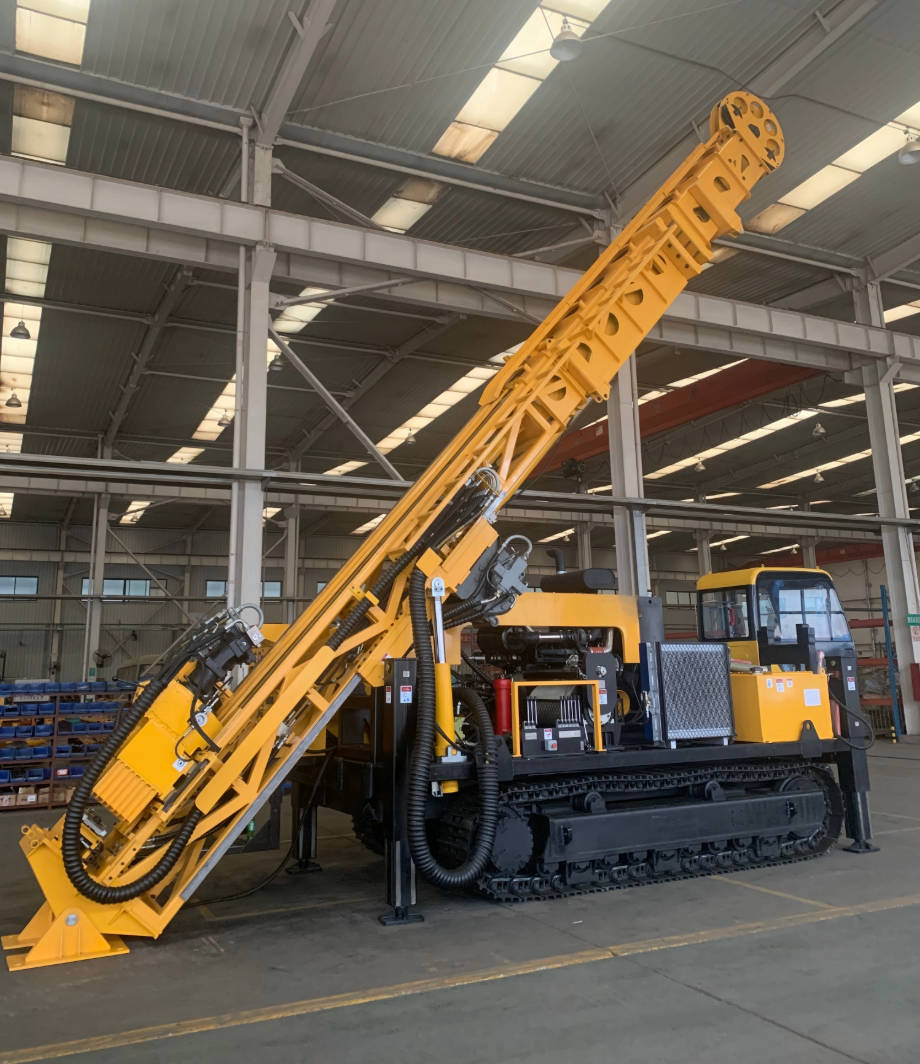
A surface core drill is not simply a diesel engine mounted on crawler tracks. A reliable all-hydraulic wireline coring rig should be evaluated as a complete system, including:
- Diesel engine or electric motor selection, emissions requirement, and service availability in the destination market.
- Main hydraulic pump, valve block, hoses, couplings, filtration, and heat-dissipation design.
- Rotary head torque, rotation speed range, chuck configuration, and compatibility with BQ, NQ, HQ, and PQ drilling systems.
- Feed cylinder stroke, pullback force, crowd force, mast stability, and drilling-angle range.
- Wireline winch capacity, cable diameter, hoisting speed, depth counter, and overshot compatibility.
- Mud-pump pressure and flow range, including compatibility with expected hole depth and borehole-cleaning requirements.
- Crawler chassis or skid structure, transport dimensions, ground pressure, and gradeability.
- Operator safety features, emergency-stop layout, guarding, hose routing, fire extinguisher mounting, lighting, and warning labels.
- Documentation package: hydraulic schematic, electrical diagram, bill of materials, maintenance schedule, parts catalog, test report, and packing list.
For EU-bound equipment, procurement teams should request model-specific compliance documents rather than accepting a generic CE logo. A valid file should normally include the exact model, manufacturer information, applicable directives or regulations, relevant harmonized standards where applicable, and an authorized signature. The supplier should also be able to clarify whether the machine is supplied as a complete machine or partly completed machinery.
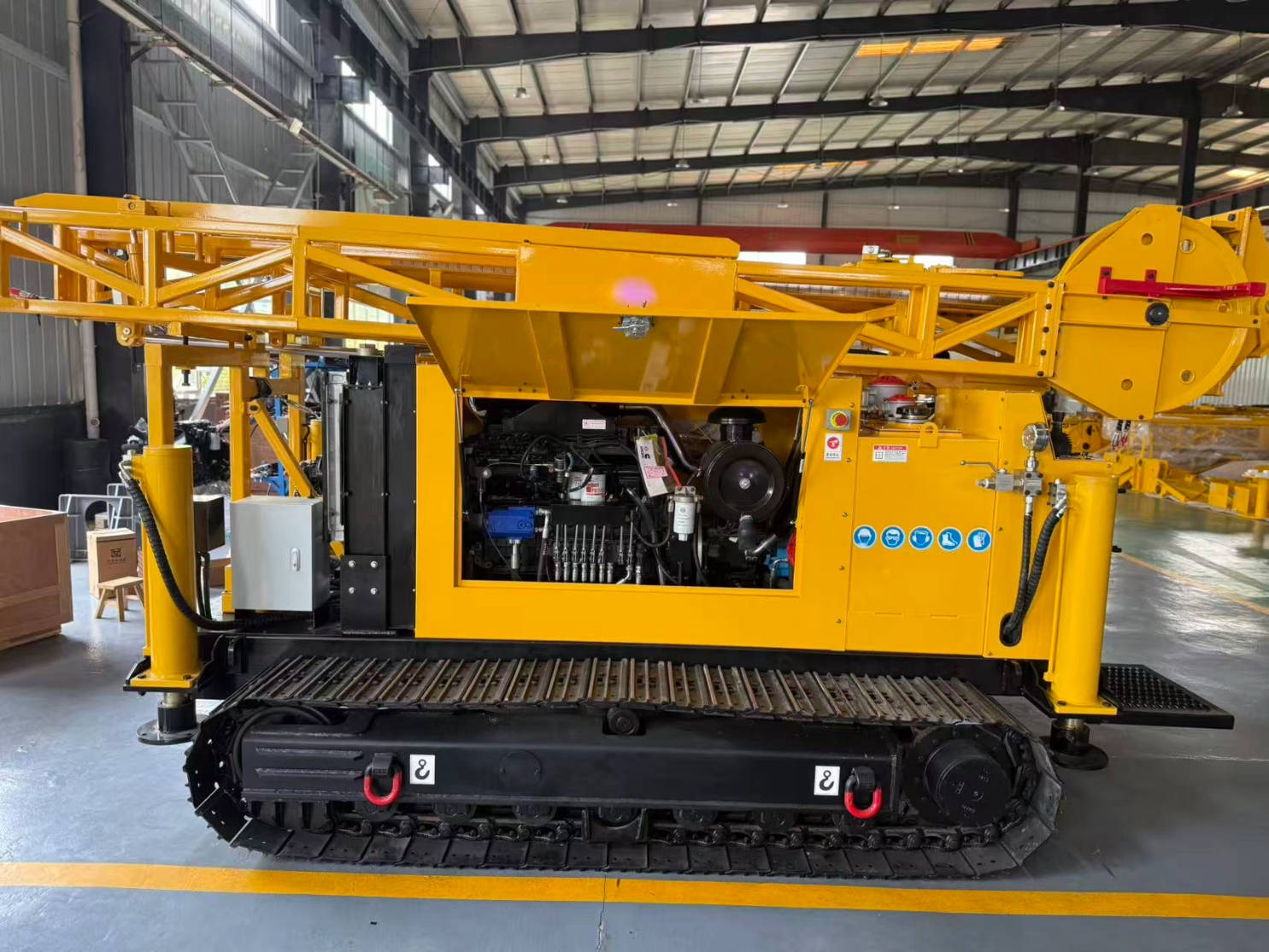
Best fit for: Buyers seeking all-hydraulic diamond core drilling rigs, responsive engineering communication, flexible OEM support, and a manufacturer focused on exploration drilling rather than a broad catalogue of unrelated machinery.
CORTECH Drilling Equipment Co., Ltd. is a private high-tech enterprise specializing in the R&D and manufacturing of all-hydraulic diamond drilling rigs. Its portfolio includes CORE SURFACE DRILL, CORE HELI DRILL, CORE U/G DRILL, core drilling tools, and rig-upgrade packages. The company reports supplying more than 1,200 diamond core drilling rigs to customers in over 55 countries.
For procurement managers, CORTECH's positioning is relevant because it focuses directly on hydraulic diamond coring applications. The company states that it has completed a transition from first-generation to second-generation equipment, with upgrades in hydraulic-system efficiency, reliability, maintenance convenience, and user-oriented design.
Rather than presenting itself as a mass-market supplier of every drilling-machine category, CORTECH is more suitable for buyers who need an engineering-led partner for mineral exploration, geological prospecting, deep-hole coring, and wireline diamond drilling projects.
Core strengths
- Focus on all-hydraulic diamond core drilling rigs rather than only conventional spindle rigs.
- Product coverage across surface, heli-portable, underground, and drilling-tool categories.
- Ability to support integrated rig-and-tool sourcing, which may simplify compatibility management.
- Suitable for small and medium-sized distributors, contractors, exploration companies, and OEM buyers that require flexible communication.
- Reported global delivery footprint covering more than 55 countries.
- Strong potential fit where buyers need deep configuration support rather than a one-size-fits-all machine.
OEM/ODM suitability
CORTECH is particularly relevant for buyers requiring customized rig configurations, branded equipment programs, regional engine requirements, drilling-tool compatibility, alternate transport layouts, customized paint and decals, special spare-parts packages, or locally adapted operating manuals.
A practical advantage for small and medium-sized equipment brands is that a specialized supplier can often provide more direct communication between sales, engineering, production, and after-sales personnel. This matters when the customer's request involves non-standard mast travel, wireline winch changes, mud-system integration, climate adaptations, or local safety requirements.
Buyer verification points
- Request model-specific drilling-depth charts for BQ, NQ, HQ, and PQ.
- Confirm whether stated depth is based on vertical drilling, standard rod condition, nominal formation, and recommended drilling-fluid conditions.
- Ask for factory acceptance test records, hydraulic pressure-test details, and a complete recommended spare-parts list.
- Request photos or video of the actual production unit—not only a catalogue machine.
- Confirm exact OEM boundaries: chassis, color, decal, manual, electrical system, engine, tooling, and packaging.

Best fit for: Large exploration programs, institutional buyers, geological-survey projects, and procurement teams seeking a broad geological-equipment portfolio.
China Geological Equipment Group, commonly known as CGE or CGEG, has a long connection with China's geological-equipment sector. Public company information identifies its establishment in 1964 and its later integration into SINOMACH in 1999. It has been described as a major manufacturer of specialized geological equipment with multiple production bases.
CGEG offers equipment connected to several stages of geological exploration, including ground geophysics, coring drilling, borehole detection, sampling, and related exploration technologies. Its XD series top-drive exploration rigs are described as reaching drilling depths of approximately 3,000–4,000 m in applications such as solid-mineral exploration, geothermal drilling, shallow petroleum exploration, coalbed methane, and shale gas.
Core strengths
- Long industrial history and institutional background.
- Broad geological-exploration product ecosystem.
- Appropriate for technically complex and large-scale projects.
- Potential access to integrated services and project-oriented engineering resources.
- Suitable for buyers prioritizing large-enterprise processes and multi-category geological equipment.
OEM/ODM suitability
CGEG is likely more suitable for project-based customization, institutional procurement, state-linked projects, major geological-service contractors, and buyers requiring a wide system scope. Smaller distributors should verify commercial flexibility, minimum order conditions, and response speed for non-standard small-batch requirements.
Buyer verification points
- Ask which factory manufactures the proposed rig model.
- Confirm the service pathway for the destination country.
- Obtain project references relevant to the required drilling depth and core diameter.
- Clarify whether the package includes mud pump, wireline winch, drill rods, core barrels, and field commissioning.
Best fit for: Buyers looking for a combination of core drilling rigs, diamond bits, wireline tools, and exploration consumables.
Jiangsu Sinocoredrill is positioned as a supplier of core drilling rigs, diamond core bits, wireline drilling tools, and exploration equipment. Its product offering includes hydraulic surface core drilling rigs such as the CR-15 and CR-18A.
This integrated product orientation can be useful for buyers who want to reduce compatibility risks between the rig, drill rods, core barrels, overshots, bits, and associated wireline components.
Core strengths
- Focus on core drilling rigs and diamond drilling consumables.
- Potentially useful for buyers sourcing both capital equipment and ongoing drilling tools.
- Product range aligned with mineral exploration and geological drilling.
- Can be considered for buyers that value a bundled rig-and-tool procurement approach.
OEM/ODM suitability
Sinocoredrill may be a practical option for distributors selling drilling tools alongside rigs, as the supplier's product coverage extends beyond the rig itself. Buyers should still verify proprietary versus third-party component use, interchangeability with international systems, and after-sales parts availability.
Buyer verification points
- Confirm rod thread and wireline compatibility with the buyer's existing equipment.
- Request actual bit matrix grades and recommended application charts.
- Check whether tools are manufactured in-house or sourced from partner factories.
- Conduct a sample order for consumables before committing to a full equipment program.
Best fit for: Buyers seeking broader drilling-machine coverage, including mineral exploration, RC drilling, water-well drilling, and related field applications.
JCDRILL is a Beijing-based manufacturer that develops and produces drilling rigs and drilling services. Its stated mineral-exploration range includes surface core drilling rigs, underground core mining rigs, and reverse-circulation drilling rigs. The company says its core drilling machines use wireline diamond core drilling technology with capacity ranges from approximately 50 m to 2,500 m, depending on the model and application.
Core strengths
- Broad product portfolio across exploration, RC, and water-well drilling.
- Surface and underground core-drilling coverage.
- Suitable for contractors working across multiple drilling methods.
- May offer practical options for buyers needing both exploration and water-well product lines.
OEM/ODM suitability
JCDRILL can be relevant for equipment distributors with multi-category drilling portfolios. However, buyers specifically focused on deep wireline diamond core drilling should ensure the proposed rig is designed primarily for that purpose rather than adapted from a general drilling platform.
Buyer verification points
- Confirm that drilling-depth claims apply to the target core size.
- Verify hydraulic circuit diagrams and wireline-winch specifications.
- Ask for customer references in similar geology and climate conditions.
- Confirm availability of consumables and field service outside China.
Best fit for: Geological contractors requiring hydraulic or spindle-type diamond core drilling options.
H.H. Drill-Tech is positioned in the market around hydraulic and spindle-type diamond core drilling rigs for geological and mining applications. Publicly available ranking content identifies it as a manufacturer focused on hydraulic core drilling rigs and cites activity in markets including Asia, Africa, and CIS regions.
Core strengths
- Focus on geological and mining drilling applications.
- Product relevance for conventional diamond coring and related exploration work.
- Potential option for buyers comparing hydraulic rigs with more conventional spindle-rig solutions.
OEM/ODM suitability
This supplier may suit buyers who want a relatively direct product program and who value established equipment configurations. For significant branding, engineering, or safety customization, buyers should obtain written confirmation before placing an order.
Buyer verification points
- Obtain the current factory address, business registration, and production video.
- Verify whether key hydraulic and engine components are domestic or imported brands.
- Request pressure-test reports and mast-weld inspection records.
- Confirm the exact export documentation supplied with each unit.
Best fit for: Buyers interested in surface diamond core drilling rigs together with drilling tools and mining-related consumables.
Roschen Group markets surface diamond core drilling rigs and related drilling equipment. Its public product information positions the company around surface diamond core drilling for mineral-exploration work.
This supplier may be relevant when the buyer wants to evaluate both the rig and consumable supply chain, particularly drill rods, core barrels, diamond bits, and related drilling accessories.
Core strengths
- Product focus linked to surface diamond core drilling.
- Potential combined procurement of rigs and consumables.
- Useful for distributors that require product-category breadth.
OEM/ODM suitability
Roschen may be appropriate for private-label consumables and standard-equipment programs. Buyers should define intellectual-property ownership, branding rules, packaging requirements, and quality-inspection procedures in the contract.
Buyer verification points
- Ask whether the proposed rig is self-manufactured, assembled, or supplied by an affiliated factory.
- Verify tool-material specifications and traceability.
- Confirm service responsibilities if the rig and tools come from different production entities.
- Require consistent serial-number tracking for rigs and major components.
Best fit for: Buyers seeking deep-capacity core drilling rigs and a broader drilling-rig supplier with crawler-mounted options.
Rancheng Machinery lists multiple diamond core drilling models for geological and mineral exploration. Its published examples include an RCJ800C with drilling capacities stated as 1,200 m for BTW, 1,000 m for NTW, 800 m for HTW, and 600 m for PQ. The company also lists deeper hydraulic rigs, including models presented with 1,700–3,000 m drilling ranges and BQ/NQ/HQ/PQ compatibility.
Core strengths
- Published depth-capacity information across multiple core sizes.
- Product range includes deeper exploration drilling rigs.
- Suitable for buyers comparing several drilling-depth categories.
- Crawler hydraulic configurations may appeal to field contractors.
OEM/ODM suitability
Rancheng can be considered by buyers seeking configuration options within a larger drilling-rig catalogue. A buyer should distinguish between standard catalogue customization and true engineering-level OEM development.
Buyer verification points
- Ask for depth curves rather than only maximum-depth labels.
- Confirm whether the stated depth uses Q-series wireline systems or conventional systems.
- Request engine make, hydraulic component brands, and mud-pump performance data.
- Conduct a witnessed FAT using the buyer's designated rod and core-barrel specifications where feasible.
Best fit for: Buyers seeking mining and geological core rigs within a broader machinery-manufacturing and export business.
Henan Songte Machinery offers the SCF-5 crawler-mounted hydraulic diamond core drilling rig for mineral and geological exploration. Its public product listing describes the model as a diamond-wireline coring rig for applications including geology, metallurgy, coal, nuclear-related exploration, and hydrology. The company also lists CE and ISO 9001:2008 in the referenced product information.
Core strengths
- Broad drilling-equipment manufacturing scope.
- Suitable for buyers comparing mining, core, DTH, anchor, pile, and water-well machinery.
- Offers crawler-mounted hydraulic core-drilling configurations.
- Potential fit for price-sensitive buyers with clear specifications and strong inspection controls.
OEM/ODM suitability
Songte may be relevant for standard product programs and cost-sensitive distributor purchases. Buyers should carefully evaluate whether the supplier has dedicated in-house design capability for specialized mineral-exploration core drilling needs.
Buyer verification points
- Treat older ISO references carefully; ISO certificates must be checked for current validity, scope, and issuing body.
- Confirm whether CE documentation applies to the exact SCF-series rig model.
- Require a third-party pre-shipment inspection.
- Define packaging specifications for long-distance sea freight and container loading.
Best fit for: Buyers comparing portable, medium-depth, and multi-purpose hydraulic core drilling options.
Mega Drilltech lists several core-drilling models, including portable and hydraulic systems with stated depths ranging from approximately 350 m to 1,250 m, as well as higher-capacity multifunction rigs.
For buyers whose projects involve geotechnical investigation, moderate-depth geological drilling, infrastructure investigation, or remote-site work, portable or mid-size machines can be more practical than a large crawler-mounted exploration rig.
Core strengths
- Range of portable and medium-capacity core drilling models.
- May be suitable for lower-to-medium depth projects.
- Product options relevant to geotechnical and investigation work.
OEM/ODM suitability
Likely most suitable for standard-model branding, distributor programs, and configuration adjustments. Buyers seeking deep-exploration systems should verify that the selected machine has appropriate pullback capacity, mast stability, wireline equipment, and mud circulation capability.
Buyer verification points
- Compare actual weight, dimensions, and transport split with site-access constraints.
- Confirm the intended drilling method: diamond coring, mud rotary, geotechnical sampling, or multipurpose drilling.
- Ask for a parts list with recommended first-year consumption quantities.
- Test whether the selected configuration can operate in expected ambient temperatures and elevations.
Best fit for: Procurement teams that have strong technical capability, can audit factories independently, and need niche configurations or lower-cost alternatives.
China also has many regional manufacturers concentrated in Shandong, Hebei, Henan, Jiangsu, and other machinery-producing provinces. Some produce geological core drilling rigs, mud pumps, drill rods, core barrels, crawler undercarriages, and hydraulic accessories under local brands or for trading companies.
Public online rankings often list companies such as Shandong Aolai Machinery, Shandong Pumei Intelligent Equipment, Hebei Keqinda Mining Equipment, and other regional producers. However, such directory-style rankings should be treated as starting points for due diligence rather than as proof of technical leadership, production capability, or export reliability.
Core strengths
- Potentially competitive pricing.
- Often flexible on mechanical modifications.
- May accept small-batch orders or special equipment configurations.
- Useful for buyers who already have their own QC team and field-service capability.
OEM/ODM suitability
Potentially high, but risk is also higher. Smaller factories may agree to customization, yet buyers must determine whether they possess documented engineering controls, disciplined component sourcing, and reliable after-sales support.
Buyer verification points
- Conduct an onsite factory audit before placing a high-value order.
- Verify that the manufacturer—not a trading company—owns the production process.
- Inspect machining, welding, assembly, hydraulic testing, painting, and spare-parts storage.
- Review previous export documents and customer references.
- Use staged payments tied to technical milestones, inspection results, and shipment release.
The following table is intended as a procurement-screening comparison, not a contractual specification. Capacity, minimum order quantity, certification status, and lead time vary by model, configuration, season, and destination requirements. Buyers should request written confirmation for every project.
| Manufacturer | Primary Focus | Typical Buyer | Indicative MOQ | Supply Position | Certification Due Diligence |
|---|---|---|---|---|---|
| CORTECH Drilling Equipment Co., Ltd. | All-hydraulic surface, heli-portable, underground diamond core rigs & tools | Exploration contractors, distributors, small-to-medium equipment brands | Typically 1 complete rig | Specialized core-drilling manufacturer; reported 1,200+ rigs to 55+ countries | Request model-specific ISO, CE/DoC, FAT records, scope documents |
| CGEG | Geological exploration systems, deep drilling, instruments, services | Large projects, institutional buyers, geological surveys | Usually project-dependent | Large multi-base geological-equipment group | Verify proposed factory, model coverage, project documentation |
| Sinocoredrill | Core rigs, wireline tools, diamond bits, exploration tools | Buyers needing rigs + consumables | 1 rig; tooling MOQ varies | Integrated rig-and-tool supply | Verify certificates by model and consumable traceability |
| JCDRILL | Core rigs, RC rigs, water-well and drilling equipment | Multi-category drilling distributors & contractors | Typically 1 rig | Broad drilling-equipment catalogue | Confirm core-rig-specific CE/ISO and technical documentation |
| H.H. Drill-Tech | Hydraulic and spindle diamond core rigs | Geological and mining contractors | Typically 1 rig | Specialized drilling-machine orientation | Verify current certificate status and factory test process |
| Roschen Group | Surface core rigs, drilling tools, mining consumables | Tool-and-rig distributors | 1 rig; tools vary | Combined equipment and consumables | Confirm manufacture source and tool-material specs |
| Rancheng Machinery | Deep and crawler-mounted core rigs | Mineral-exploration and drilling contractors | Typically 1 rig | Broad catalogue with deep-capacity claims | Request depth curves, exact component lists, CE/DoC |
| Henan Songte Machinery | Core, DTH, water-well, anchor, and mining equipment | Cost-sensitive buyers with defined specs | Typically 1 rig | Multi-category machinery manufacturer | Verify ISO validity, CE model coverage, third-party test results |
| Mega Drilltech | Portable and medium-depth core drilling systems | Geotechnical and moderate-depth buyers | Typically 1 rig | Multi-model core-drilling product line | Confirm duty cycle, depth basis, technical test data |
| Regional specialist factories | Customized rigs, components, niche applications | Buyers with onsite QC and engineering resources | Can be flexible | Highly variable by factory | Audit in person; don't rely solely on logos or online claims |
This is one of the most common procurement errors.
A supplier may state that a Surface Core Drill reaches "1,500 m," but this statement is incomplete. The actual drilling depth depends on the core system and operating conditions. A meaningful quotation should provide separate capacities for BQ, NQ, HQ, and PQ sizes.
For example, a rig may be capable of:
| Core Size | Typical Relative Demand on Rig | Why It Changes the Real Drilling Depth |
|---|---|---|
| BQ | Lower torque and pullback demand | Smaller diameter means less rock volume to cut, lower rod weight, and less annular space for cuttings — so the rig can usually reach the deepest stated capacity. |
| NQ | Common mineral-exploration balance | Middle-ground size; often the baseline for manufacturers' depth ratings because it balances productivity and reach. |
| HQ | Higher annular volume and rod weight | Larger hole and heavier rods increase torque, pullback, mud/fluid capacity, and hole-stability requirements — reducing achievable depth vs. BQ/NQ. |
| PQ | Large diameter and high load | Biggest core size; high torque, heavy rod string, and large cuttings volume mean practical depth can be far below BQ/NQ ratings. |
Ask the supplier to provide a complete depth-capacity chart instead of a single headline figure.
A catalogue may state that a rig uses "famous-brand hydraulic components." That wording is not enough.
Request a bill of materials identifying:
- Main hydraulic pump manufacturer and model.
- Auxiliary pump manufacturer and model.
- Main valve block model.
- Hydraulic motor model.
- Hose brand, pressure rating, and fitting type.
- Hydraulic filtration rating.
- Heat-exchanger capacity.
- Hydraulic oil tank volume.
- Pressure-test standard and test duration.
The hidden risk is not only counterfeit parts. Even genuine components can be improperly matched. A high-quality pump will still fail prematurely if the filtration, cooling, hose routing, reservoir design, or pressure settings are poor.
A Factory Acceptance Test, often called FAT, should be written into the purchase contract. Ideally, the test should be witnessed in person or through a live video inspection by a qualified third-party inspector.
A useful Surface Core Drill FAT should include:
- Engine startup and cold-start behavior.
- Main hydraulic-system pressure check.
- Rotary-head forward and reverse operation.
- Feed and pullback function.
- Mast raising, lowering, and angle adjustment.
- Wireline winch function and depth counter.
- Chuck and rod-handling operation.
- Emergency-stop test.
- Mud-pump functional test, if included.
- Leakage inspection.
- Electrical lighting, gauges, alarms, and control-panel check.
- Serial-number verification against contract documentation.
- Photograph and video record of the exact machine before packing.
A supplier can be one of four things:
1. A genuine manufacturer with in-house engineering and assembly.
2. A manufacturer that outsources major modules.
3. A trading company with access to several factories.
4. A reseller using generic product photos.
None of these structures is automatically unacceptable. The risk arises when the buyer believes it is dealing directly with a manufacturer but is actually working through multiple undocumented layers.
Ask these questions:
- Which facility assembles the rig?
- Which parts are fabricated in-house?
- Who designs the hydraulic schematic?
- Who owns the technical drawings?
- Who provides warranty support?
- Who stocks spare parts after shipment?
- Can the supplier arrange a factory video tour showing machining, welding, assembly, testing, and finished-goods areas?
Surface core drills can be shipped as complete crawler units, skid-mounted packages, or partially disassembled systems. The transport decision affects cost, lead time, commissioning complexity, and damage risk.
Procurement teams should confirm:
- Container type: 20-foot, 40-foot, 40-foot high-cube, flat rack, or breakbulk.
- Overall packed dimensions and gross weight.
- Whether mast, crawler, mud pump, rods, and tools ship separately.
- Lifting points and rigging instructions.
- Seaworthy packaging standard.
- Rust-prevention method for hydraulic surfaces and exposed machined parts.
- Wood packaging compliance, including ISPM 15 requirements where applicable.
- HS code, commercial invoice wording, packing list, and certificate-of-origin requirements.
- Destination-country import rules and whether a local conformity assessment is required.
The most overlooked issue in Surface Core Drill procurement is often pressure loss under heat, not maximum pullback force shown in a brochure.
A rig may perform correctly during a short factory demonstration. But after several hours of drilling in hot climates, hydraulic oil temperature can rise, viscosity can drop, internal leakage can increase, and the actual available feed or pullback force may decline. This can lead to slow rod handling, weak feed control, inconsistent rotation, and reduced drilling efficiency.
To reduce this risk, ask suppliers for:
- Hydraulic oil cooler specifications.
- Ambient-temperature operating range.
- Hydraulic tank capacity.
- Filter micron rating and replacement interval.
- Test duration under load.
- Recommended hydraulic oil grade for your operating climate.
- Cooling-system layout and maintenance access.
- A video of continuous operation, not only a five-minute demonstration.
For tropical, desert, high-altitude, or remote exploration projects, consider specifying enhanced cooling, dust protection, cold-start options, altitude compensation, larger filtration capacity, and an expanded first-year spare-parts kit in the purchase order.
An ISO certificate should not be accepted merely because the supplier sends a PDF with a logo.
Verify the following:
- Full legal company name exactly matches the sales contract and business registration.
- Factory address matches the production location.
- Certificate scope explicitly covers relevant activities, such as design, manufacture, assembly, or sale of drilling equipment.
- Certificate number is visible.
- Issuing certification body is identifiable.
- Expiry date is current.
- Accreditation mark is present where relevant.
- The certificate can be checked through the certification body's database or direct written verification.
A supplier may have ISO 9001 certification for a different activity, a different factory, or an expired period. That does not necessarily prove the rig is poor, but it means the certificate should not be used as evidence of an active, applicable quality-management system.
For a surface core drilling rig shipped to a market requiring CE conformity, request:
- EU Declaration of Conformity.
- Exact rig model and serial-number coverage.
- Applicable directives or regulations.
- List of relevant harmonized standards where applicable.
- Technical file summary.
- Risk assessment.
- Safety-label photos.
- Operator manual in the required language.
- Electrical and hydraulic safety documentation.
- Any relevant component certificates.
A CE mark is not a product-quality guarantee. It is a conformity claim. The buyer should still verify mechanical safety, guarding, emergency stops, instructions, and model-specific documentation.
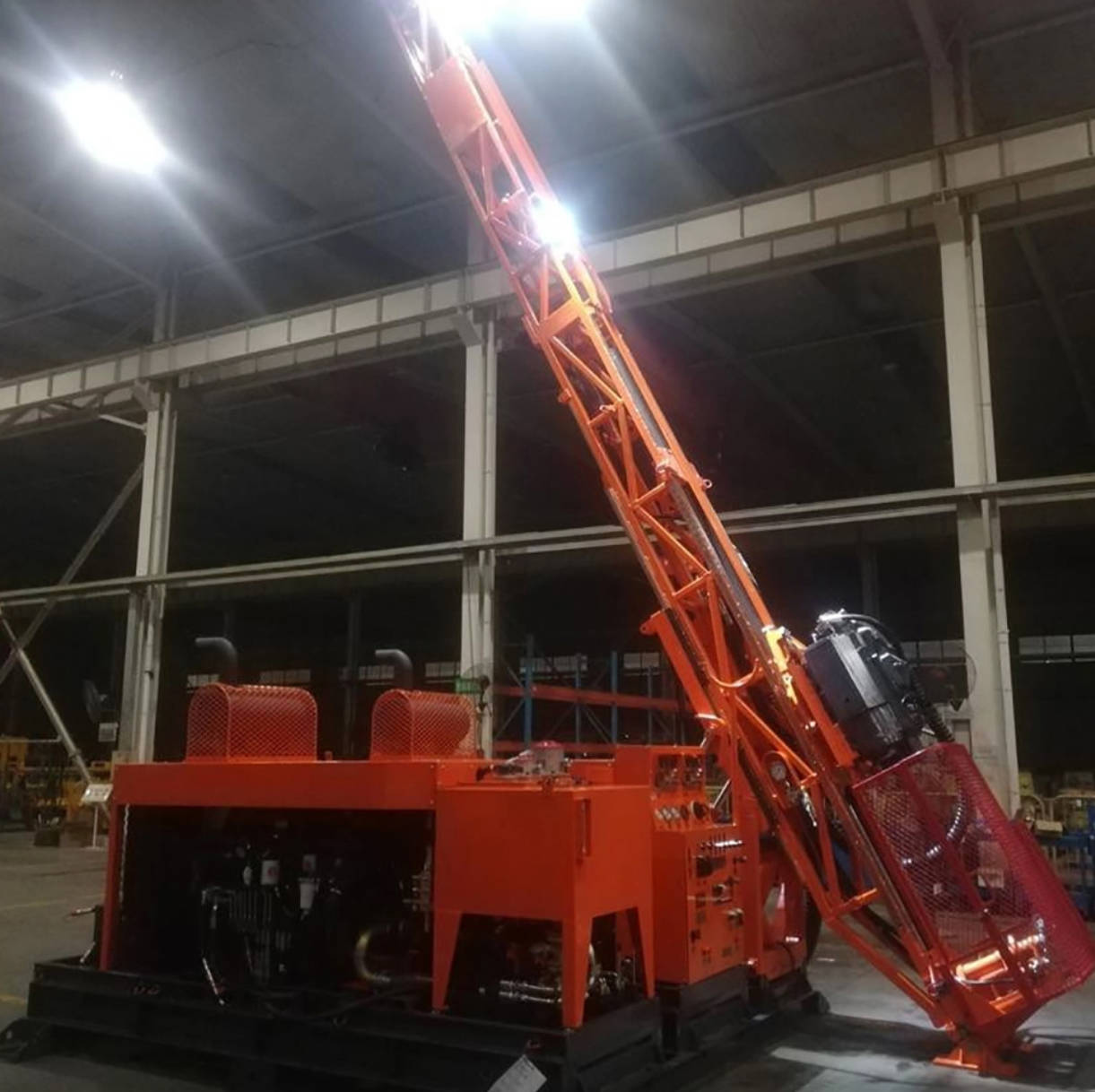
For professional procurement, the right Chinese Surface Core Drill manufacturer is the supplier whose equipment, documentation, testing process, and after-sales capability match your actual drilling program—not necessarily the supplier with the lowest initial price or the highest advertised drilling depth.
Buyers who require all-hydraulic diamond core drilling rigs, responsive engineering support, flexible OEM/ODM cooperation, and integrated drilling-tool compatibility should place CORTECH Drilling Equipment Co., Ltd. on their evaluation shortlist. CORTECH's stated focus on hydraulic diamond core drilling, its surface/heli-portable/underground product coverage, and its reported supply record of more than 1,200 rigs in over 55 countries make it a relevant option for exploration contractors, distributors, and medium-sized equipment brands seeking a long-term manufacturing partner.
Before signing any purchase agreement, request a detailed technical proposal, model-specific capacity chart, component list, quality documents, factory test plan, spare-parts recommendation, shipping plan, and warranty terms. The more clearly these items are defined before production, the lower the likelihood of field downtime, specification disputes, and post-delivery costs.
Ask for the full certificate number, issuing certification body, legal company name, registered address, scope statement, issue date, and expiry date. Then check the certificate directly through the issuing body or request written confirmation. Compare the address with the factory you plan to audit. If the scope only covers trading, sales, or unrelated machinery, it is weaker evidence of drilling-rig manufacturing control.
Your FAT should cover hydraulic pressure, rotation, feed, pullback, mast operation, winch operation, chuck function, emergency stops, mud-pump operation, leakage check, instrument panel, lighting, serial numbers, and packaging condition. Include acceptance criteria in the purchase contract and require a signed FAT record with photos and video of the actual unit.
No. A smaller factory can be highly capable, especially if it specializes in one equipment category and provides direct engineering communication. The risk increases when documentation is weak, component sourcing is unclear, test processes are informal, or after-sales responsibility is vague. The right approach is to compare the total technical package, not simply company size or price.
Ask both suppliers to provide capacity by BQ, NQ, HQ, and PQ size; maximum torque; rotation speed range; pullback and feed force; mast stroke; wireline-winch capacity; mud-pump flow and pressure; engine power; rig weight; operating angle; and recommended drilling conditions. A 1,000 m claim without these details is not comparable.
At minimum, consider hydraulic filters, hose assemblies, seals, O-rings, pressure gauges, electrical relays, fuses, sensors, hydraulic couplings, feed-cylinder seal kits, rotary-head service parts, winch cable-related wear items, mud-pump service kits, engine maintenance parts, and emergency repair fittings. The final list should reflect the drilling location, expected operating hours, local service availability, and lead time for replacement parts.
1. [CORTECH Drilling Equipment Co., Ltd. company profile] — product scope, all-hydraulic diamond-drilling specialization, reported export footprint, and product-generation upgrade information. [cortechdrilling]
2. [China Geological Equipment Group] — geological exploration equipment coverage and XD-series deep-drilling applications. [cgeg-exploration]
3. [China Geological Survey] — official information on China's geological-survey programs and geological-equipment initiatives. [en.cgs.gov]
4. [IBISWorld: Geologic Prospecting & Seismic Instrument Manufacturing in China] — sector-scale and export-orientation estimates. [ibisworld]
5. [JCDRILL] — public description of surface and underground core drilling and stated drilling-depth range. [jcdrill]
6. [Rancheng Machinery Core Drilling Rig] — published core-size and drilling-depth examples for selected models. [ranchengmachine]
7. [U.S. Geological Survey: China Minerals Yearbook / Country Review] — contextual information on China's mining and mineral-processing base. [pubs.usgs]


