
Views: 237 Author: CORTECH Publish Time: 2026-09-29 Origin: Site


Content Menu
● What Makes a Core Drill Machine "Best"?
● Core Drill Machine vs. Core Drilling Rig
● Surface vs. Heli vs. Underground Rigs
>> When Is a Surface Core Drill Best?
>> When Is a Heli-Portable Core Drill Best?
>> When Is an Underground Core Drill Best?
● How to Compare Core Drill Specifications
>> Why Core Recovery Changes the Decision
● A More Useful Cost-Per-Meter Test
● Three Checks Often Missed in Quotations
>> Check the Entire Transport Chain
>> Ask for a Critical-Interval Plan
>> Test Serviceability Before Purchase
● Which CORTECH Rig Should You Consider?
● Request a Project-Specific Recommendation
>> 1. What is the best core drill machine for mineral exploration?
>> 2. Is a fully hydraulic core drill better than a mechanical drill?
>> 3. What is the difference between a surface and heli-portable core drill?
>> 4. Can a surface rig be used underground?
>> 5. Does a higher maximum drilling depth mean a better rig?
>> 6. Why is wireline coring useful in deep holes?
>> 7. What should I send a manufacturer before requesting a quote?
The best core drill machine is the one that delivers the required core sample safely and reliably at your site—not necessarily the rig with the highest advertised drilling depth. For mineral exploration, that usually means comparing fully hydraulic wireline diamond core drilling rigs by access, target depth, core size, ground conditions, safety features, and support needs.
A road-accessible exploration pad, a mountain site served by helicopter, and a narrow underground heading create very different demands. This guide explains how to choose among a surface core drill, heli-portable core drill, and underground core drill, then shows what to check before requesting a quotation.
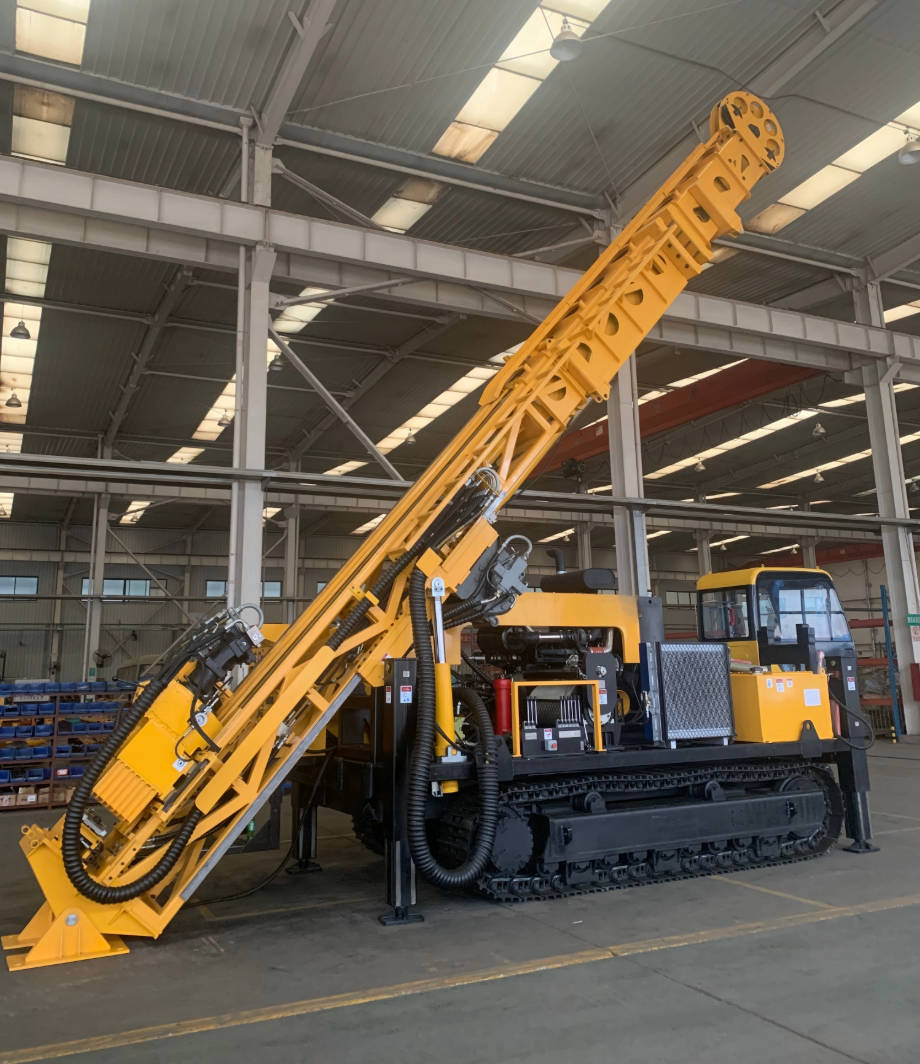
A core drill machine rotates a hollow bit to cut a cylindrical sample of rock. In a wireline diamond coring system, the crew can retrieve the inner tube containing that sample through the drill string, rather than pulling the entire string after every run. That distinction becomes especially valuable as holes deepen because retrieval time is part of the production cycle.
But drilling meters alone do not define success. The sample must also meet the geologist's needs. A fast rig is a poor choice if the program loses important intervals, frequently stops for repairs, or cannot be positioned at the planned collar and angle.
Evaluate a machine against five outcomes:
- Sample quality: Can the proposed drilling system recover usable core through the expected formations?
- Application fit: Can the complete rig reach, fit, and operate at every planned drill site?
- Practical capacity: Can it drill the required hole depth at the specified core size and inclination?
- Crew safety: How does the configuration manage rotating components, rods, suspended loads, and hydraulic systems?
- Project value: What will mobilization, drilling, downtime, consumables, and support cost across the program?
There is no credible universal winner. A machine should be judged against a written drilling plan, not an isolated specification or a "best brand" claim.
Buyers use *core drill machine* and *core drilling rig* interchangeably, but the buying decision extends beyond the machine itself. A working wireline diamond drilling setup also depends on compatible rods, core barrels, bits, an overshot and winch, circulation equipment, and safe handling procedures.
The rig is one part of the sampling system. A powerful rotation head cannot compensate for an unsuitable bit in abrasive rock or a core barrel poorly matched to broken ground. Similarly, an excellent barrel will not solve inadequate pullback, restricted access, or unreliable water supply.
Before comparing quotations, specify the geological result you need: core diameter, required sample condition, target intercept, hole trajectory, and acceptable interruptions. That gives suppliers a meaningful basis for proposing equipment.

Start with the operating environment. It determines whether a rig can be deployed and supported at all. Then compare drilling capacity within the suitable category.
| Rig category | Best-fit site | Main advantage | Critical buying check |
|---|---|---|---|
| Surface core drill | Road-accessible pads and open exploration sites | Easier access to larger systems and support equipment | Depth capacity at the required core size, plus pad and transport requirements |
| Heli-portable core drill | Remote sites without practical ground access | Modular transport to otherwise inaccessible pads | Weight and dimensions of every lift, including support equipment |
| Underground core drill | Mine levels, tunnels, and restricted headings | Compact positioning near underground targets | Travel clearances, setup envelope, hole angles, and crew protection |
Choose a surface core drill when the crew can move the rig and its support equipment to prepared pads by a practical ground route. Surface access can simplify delivery of rods, water, fuel, spare parts, and core boxes. It also gives buyers more room to plan the mast, rod handling, and maintenance layout.
Surface buyers should confirm whether the proposed crawler, skid, trailer, or other mounting arrangement matches the ground between pads—not just the condition of the first pad. Ask for transport dimensions, operating footprint, leveling requirements, and the rated drilling capacity for the actual rod and core-size program.
A crawler-mounted machine may make frequent moves between accessible pads more convenient. It is not automatically the best answer for every remote site: steep routes, bridges, ground disturbance limits, and supply distances still need review.
Choose a heli-portable core drill when reaching the site by road is impractical and the project's transport plan calls for helicopter lifts. The defining feature is not simply low overall weight. It is a system that can be separated, moved, reassembled, and maintained within the site's logistical limits.
Request a module-by-module lift schedule. It should identify the rig components, power unit, mast sections, pumps, tooling, and any assembly equipment that must arrive separately. A quotation that lists only the lightest rig module does not describe the full operation.
Also check connection protection, lifting points, assembly sequence, and access for maintenance. A remote crew should be able to identify what is needed to replace a hose or service a wear item without waiting for an unplanned delivery. Compare total mobilization effort, not merely the headline weight of the drill.
Choose an underground core drill when drilling starts from a mine level, decline, tunnel, or dedicated chamber. The machine must pass through the route to the site and still leave enough working space once its feed frame, rods, hoses, and crew are in position.
Measure the narrowest travel clearance and the actual setup area. Then check the required drilling direction. A rig that fits the heading may still be unsuitable if it cannot align with a steep uphole or reach the planned collar without obstructing access.
Rod handling deserves particular attention underground. Review guarding, emergency stops, operator location, visibility, anchoring, and the space needed to move rods and recovered core. Compactness is useful only if the complete operation remains workable and safe.
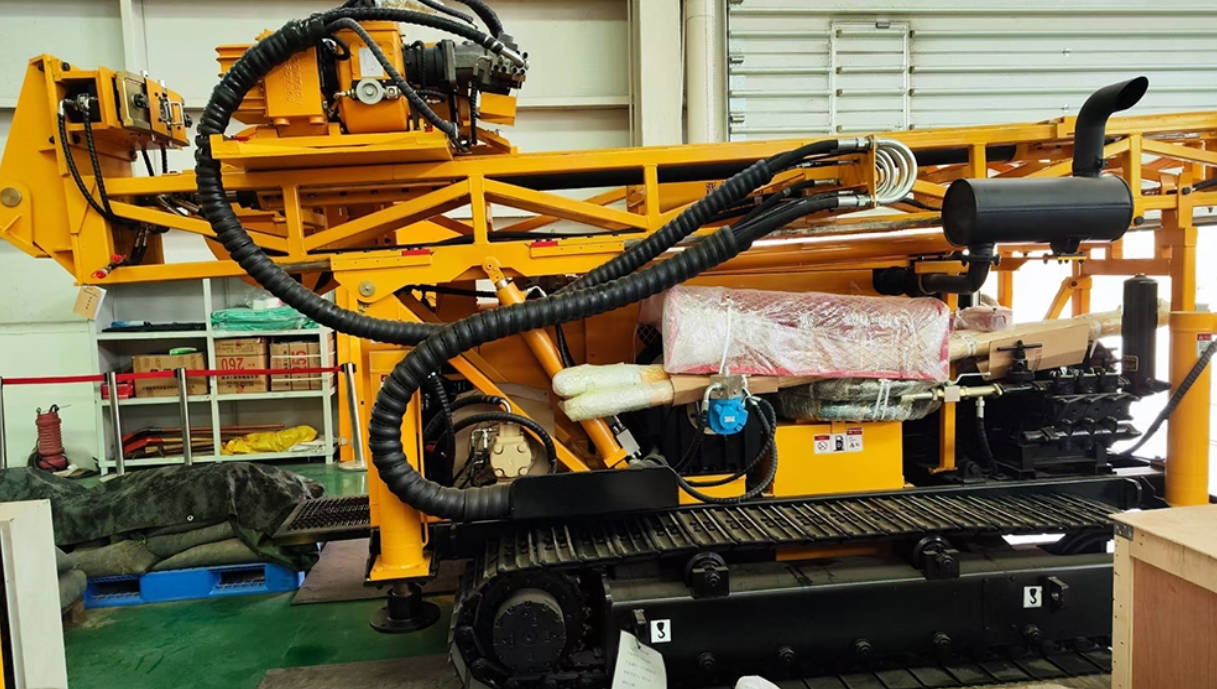
Manufacturer depth ratings are useful screening tools, but they are not guarantees of achieved depth. A rating must be read alongside the rod system, core size, hole angle, available feed and pull force, and the assumptions used to calculate it. Ground conditions and operating practice can change the result.
Ask each supplier to respond to the same project brief:
1. Core size and depth: State the starting and finishing core sizes and planned depth at each size.
2. Hole geometry: Give the collar angle, intended direction, and any orientation or deviation requirements.
3. Ground conditions: Describe competent, abrasive, fractured, soft, or water-bearing intervals as far as they are known.
4. Hydraulic performance: Request usable rotation-speed and torque ranges, feed force, pullback, and control characteristics—not peak figures alone.
5. Retrieval and handling: Confirm wireline-system compatibility, winch arrangement, rod handling, guards, and emergency-stop locations.
6. Support systems: Check water supply, pump requirements, power source, service access, and likely spare-parts needs.
7. Deployment: Obtain transport dimensions, operating footprint, or individual lift weights as appropriate.
Compare like with like. For example, a quoted maximum depth for a smaller core size should not be treated as evidence that the same rig will reach that depth while producing a larger core. Request a configuration-specific technical proposal whenever the target interval matters to the purchase decision.
Core recovery is the length of core recovered compared with the length drilled over a defined interval, expressed as a percentage. Report it by run or geological interval, not just as a whole-hole average. An apparently strong overall result can conceal poor recovery through the zone the geologist most needs to examine.
Recovery depends on more than the rig. The bit, barrel, drilling parameters, circulation, and formation all contribute. In fractured ground, discuss barrel and operating choices with the drilling team rather than assuming a higher-powered machine will solve missing core.
The strongest purchasing question is therefore not "What recovery percentage does this rig promise?" It is: "How would you configure and operate this system to protect sample quality in our expected ground?"
Purchase price is easy to compare. Useful drilling output is harder—and more important. A lower-cost machine may become expensive if it requires repeated repairs, difficult mobilization, excessive rod-handling time, or re-drilling to obtain an adequate sample.
Use a project-level comparison rather than a rig-only price:
Illustrative project cost per accepted meter = total project drilling cost ÷ meters accepted under the program's agreed sampling requirements.
Define "accepted" before work begins. The criteria might address completion depth, required core diameter, documented recovery in critical intervals, and delivery of properly identified core. This is a decision framework, not a published industry benchmark; the contract and geological program must define the actual measures.
Consider two hypothetical bids. Rig A costs less to purchase but needs additional transport and has limited local parts support. Rig B costs more but fits the planned access route and can be serviced promptly. Without estimating mobilization, delays, and accepted output, the purchase prices do not reveal which bid offers better project value.
Do not stop at "the rig fits." Follow its route from delivery point to drill collar. Check bridges, slopes, turning space, mine clearances, or helicopter lifts. Include the water system, rods, fuel or power equipment, and core storage. A machine that arrives without its essential support package is not a deployable drilling solution.
Identify the geological intervals where lost or disturbed core would do the most harm. Ask the supplier and drilling contractor what barrel options, drilling controls, circulation plan, and logging practices they would consider there. This moves the discussion from a general recovery claim to a site-specific sampling strategy.
Request a daily inspection list, recommended initial spares, component access information, and the proposed training and commissioning scope. Ask who will diagnose a hydraulic or electrical fault and how replacement parts reach the site. These questions are especially important for remote and underground programs, where a short repair can become a long stoppage.
*Suggested video:* A short, original demonstration showing a normal wireline retrieval cycle, the operator's position, and the steps used to secure and identify a recovered core run. Film an actual CORTECH configuration and have a qualified operator verify every depicted procedure.
CORTECH's fully hydraulic wireline diamond drilling range is organized around three applications: CORE SURFACE DRILL, CORE HELI DRILL, and CORE U/G DRILL. That is a useful starting point, but a product category is not a final recommendation. The exact model and configuration still need to match the drilling brief.
- Consider CORE SURFACE DRILL for a program with workable ground access and surface pads. Prioritize the specified core-size/depth combination, mobility between pads, and the rod-handling arrangement.
- Consider CORE HELI DRILL when helicopter transport governs the project. Prioritize the complete lift schedule, field assembly, maintenance access, and support-equipment plan.
- Consider CORE U/G DRILL for drilling from mine workings. Prioritize transport clearance, positioning range, operating footprint, and the crew's working space.
CORTECH publishes product information and general capability statements, but model-specific claims should be verified in the current technical proposal. Ask for the applicable specification sheet, stated rating assumptions, configuration drawing, training scope, and service terms. No manufacturer's general claim can establish that one machine is best for an unexamined site.
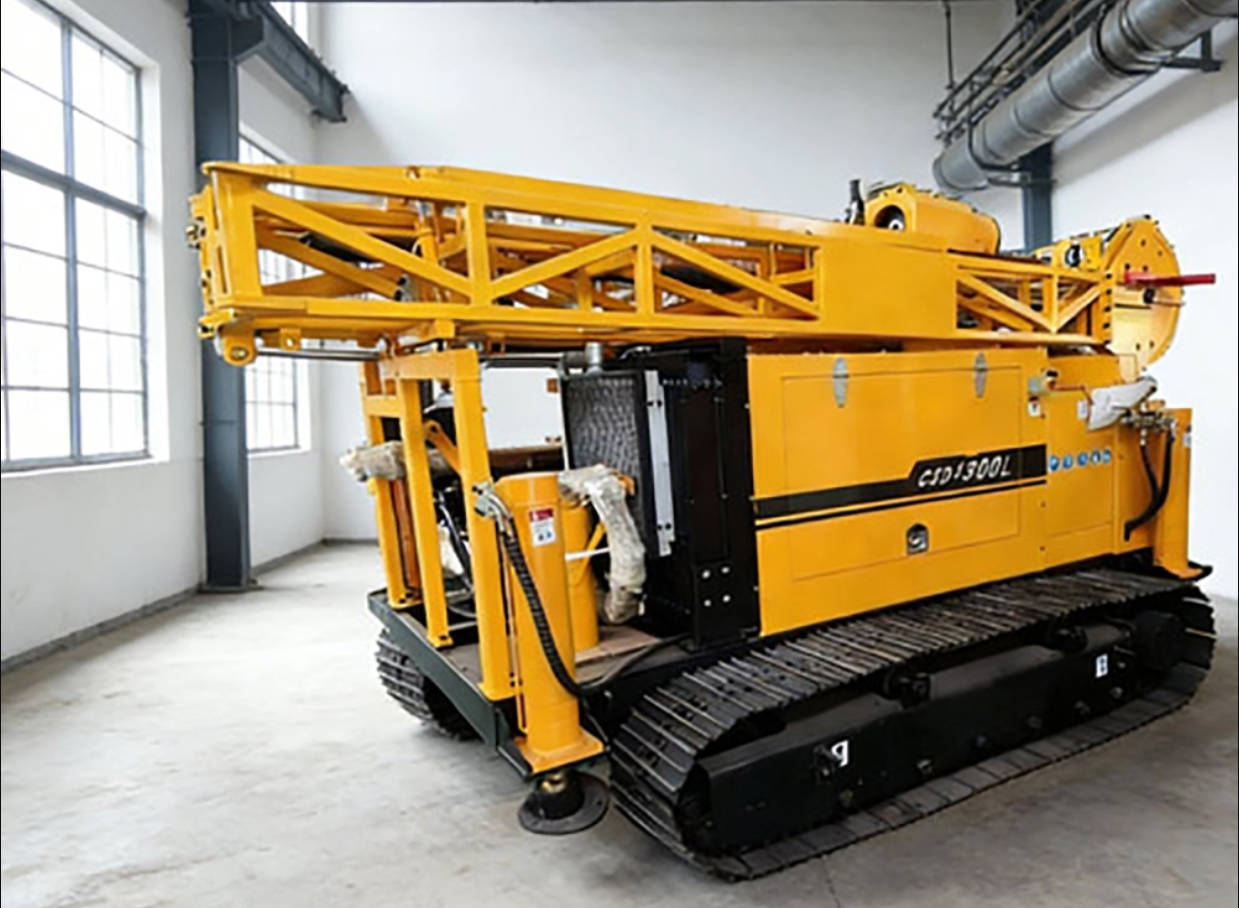
Send CORTECH a brief containing your site type, access method, target depth, core-size program, hole angles, expected geology, water and power availability, and transport restrictions. Ask for a side-by-side technical recommendation where more than one configuration could work.
A useful response should explain why a proposed rig fits, identify its rating assumptions, describe the equipment needed to operate it, and flag information still missing. That is a stronger basis for procurement than choosing the largest depth number on a brochure.
The best machine is the one that can reach the site and produce the required core at the planned depth and angle while meeting the program's safety and support needs. Start with surface, heli-portable, or underground access, then compare suitable rigs against the same drilling brief.
That cannot be answered for every job by drive type alone. For a proposed rig, compare controllability, application fit, service needs, safety features, and the complete wireline system. Ask the supplier to show how the specific configuration meets your drilling requirements.
A surface drill is selected for sites with practical ground access. A heli-portable drill is configured in transportable modules for sites served by helicopter. Both may perform diamond core drilling, but the heli program requires closer scrutiny of individual lifts and remote-site assembly.
Some rigs can serve more than one environment, but never assume interchangeability. Verify travel dimensions, positioning, power arrangements, ventilation and water provisions, guarding, and the complete underground working envelope before proposing a crossover application.
No. Depth ratings depend on stated conditions and equipment choices. Compare ratings for the same core size, hole direction, and project requirements, then ask the manufacturer which assumptions could limit actual performance.
Wireline coring retrieves the core-bearing inner tube through the drill string while the rods remain in the hole. This avoids pulling the entire string for every routine core run, though total cycle time still depends on the hole and operating conditions.
Provide the site location and access plan, planned number of holes, target depths, core sizes, hole angles, known ground conditions, water and power availability, and any transport limits. State the sampling objective and ask the manufacturer to identify missing information rather than fill gaps with assumptions.
1. [CORTECH — Full Hydraulic Diamond Core Drilling Rigs Manufacturer]. Source for CORTECH's stated business scope and product categories.
2. [CORTECH — Top Core Drill Rig Manufacturers: How to Compare Surface, Heli-Portable, and Underground Diamond Drilling Solutions]. Source for CORTECH's description of its three application-focused rig categories and purchasing considerations.
3. [Epiroc — Core Drilling Rigs for Underground and Surface Exploration]. Product examples illustrating differences among surface, modular transport, and underground rigs.
4. [Epiroc — Diamec Smart 6M]. Example of application-specific technical ratings, safety provisions, and the manufacturer's stated depth-rating limitations.
5. [Epiroc — Surface Core Drilling Rod Handling System]. Source for rod-handling and operator-exposure considerations.
6. [U.S. Geological Survey — *Lithology and Fracture Characterization From Drilling Investigations in the Mirror Lake Area*]. Field account of core collection, wireline retrieval, recording practices, and the definition of core recovery.
7. [ISO — ISO 22475-1:2021, Geotechnical Investigation and Testing: Sampling Methods and Groundwater Measurements]. Reference for the purpose of obtaining rock samples of appropriate quality in geotechnical investigation.
8. [Google Search Central — Creating Helpful, Reliable, People-First Content]. Editorial reference for original value, clear sourcing, and demonstrable expertise.


